kajuandouglas.com is reader-supported. When you buy through links on our site, we may earn an affiliate commission.
Where to Buy a Bridge Superzoom, and Why One Fixed Lens Still Wins Outdoors
A bridge superzoom is photography’s most unfashionable bargain: one camera, one fixed lens, and a zoom range so long it reads like a misprint. The best cameras for outdoor bridge superzoom use are not trying to out-resolve a mirrorless system. They are trying to put a distant heron, a lighthouse, a climber on a far ridge and a grandchild’s distant stage performance into the same camera bag — a bag that, in this case, is simply the camera itself, hanging from one strap.
The outdoor brief sharpens the category’s virtues. Trails punish weight, weather punishes lens changes, and wildlife punishes hesitation. A bridge camera answers all three: nothing to swap while the rain starts, nothing to leave in the car because the bag grew heavy, and a zoom lever that travels from landscape to telephoto in the time a system shooter spends uncapping a second lens. For walkers, travellers, birders and grandparents at sports days, that immediacy is not a compromise. It is the point.
Honesty about this guide’s construction: the classic long-zoom bridge models are recommended here in prose, because the verified pool for this site does not carry them, and we never attach links we cannot verify. Four of the six picks are therefore described without purchase links — judge them on the descriptions and check your usual retailers — while two pool-verified cameras, a rugged waterproof compact and a premium pocket zoom, cover the outdoor briefs where a traditional bridge is the wrong tool anyway.
Sensor size is the category’s permanent asterisk, and this guide will not hide it. Bridge cameras mostly use small sensors, which means their enormous reach is bought with modest low-light performance and files that reward good light. The sections after the picks explain exactly when that trade delights and when it disappoints, so the right readers buy with open eyes.
If your photography happens between the trailhead and the summit, on the pier, at the reserve, from the garden fence toward the bird feeder — read on. This is the camera category built for your actual life, written about without either snobbery or salesmanship.
One more framing note: reach changes behaviour. Photographers with a superzoom stop cropping hopefully and start composing at the distance the subject chooses, which for wildlife is the ethical distance as well as the practical one. The camera that keeps you far from the nest is a conservation tool as much as a photographic one.
Prices in this category deserve one honest sentence: bridge cameras ask for real money — the premium models especially — and the correct comparison is never the phone in your pocket but the mirrorless kit with a long lens that they replace. Against that comparison, every camera below is the frugal option, and against a decade of walks, even the dearest of them costs less per outing than the boots you will wear out carrying it.
Key Takeaways
- A bridge superzoom trades sensor size for reach: glorious in daylight, modest after dark.
- Four classic bridge picks here are prose-only recommendations; two pool-verified compacts cover the rugged and pocket briefs.
- The Nikon COOLPIX P1100-class reach is for birders and moon-watchers who compose from a tripod or a hide.
- Stabilisation, not megapixels, decides whether handheld shots at full zoom are keepers.
- The OM SYSTEM Tough TG-7 is the answer when the outdoors involves water, drops and frost.
- Buy a bridge for the walking you actually do, not the safari you might take once.
In this guide
Quick Picks
| Camera | Badge | Why it made the list |
|---|---|---|
| Nikon COOLPIX P1100 | Best extreme reach for birding | A telescope with a camera attached: extraordinary zoom for distant wildlife, the moon and far-off detail. |
| Sony Cyber-shot RX10 IV | Best premium all-round bridge | A larger 1-inch sensor and a superb 24-600mm lens make this the bridge for photographers who refuse to compromise. |
| Canon PowerShot SX70 HS | Best mid-range travel superzoom | A 65x zoom in a travel-friendly body with a proper viewfinder — the classic holiday and day-trip bridge. |
| Panasonic LUMIX FZ300 | Best weatherproof value bridge | A constant f/2.8 zoom and splash-proof construction make this the outdoors bridge for bad weather and tight budgets. |
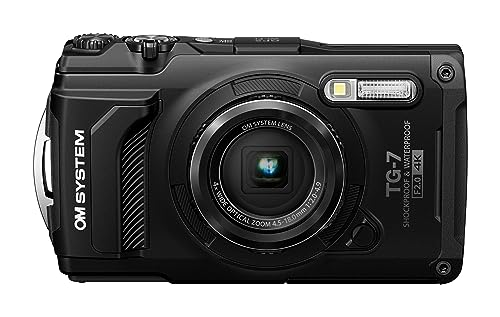
| OM SYSTEM Tough TG-7 | Best for water, drops and frost | A waterproof, crush-resistant compact that snorkels, skis and survives the drop onto the rocks. |
| Sony RX100 VII | Best pocketable long zoom | A 24-200mm zoom and a 1-inch sensor in a jacket pocket — the superzoom idea, miniaturised. |
How Did We Judge Bridge Cameras for Outdoor Work?
Reach was measured in usefulness, not millimetres. Beyond a certain zoom, the limiting factors become atmospheric shimmer, hand shake and the photographer’s ability to even find the subject in the frame, so we favoured cameras with strong stabilisation, honest viewfinders and zoom controls that can creep precisely rather than lurching from wide to telephoto in one motion.
Outdoor survivability came next: grip security with gloves, controls operable with cold fingers, viewfinders readable in hard sunlight, and construction that tolerates dust, drizzle and the inside of a walking pack. A bridge camera lives outdoors by definition; we judged it as outdoor equipment first and electronics second.
We also weighed the photographer’s day as a whole. Weight carried for six hours, battery life across a cold day, and the simplicity of a single device with a single charger all counted. The theoretical best camera that stays home loses to the good camera on the strap, and this category exists precisely for people who have learned that lesson.
Finally, file quality in the light the outdoors actually provides: bright midday, golden evening, flat overcast. Small sensors shine in the first, cope with the third and struggle nobly in the second’s aftermath after sunset. Our picks are honest about which hours of the day they own.
A note on how the two kinds of pick in this guide should be read: the linked pair were verified against this site’s catalogue pool and can be bought through the links provided, while the four bridge models are recommended purely on their records. That mixture is deliberate. A guide to bridge cameras that pretended the classic bridges did not exist, merely because they sit outside one pool, would fail its readers; a guide that linked them unverified would fail them worse.
Which Superzooms Earn Their Place on the Trail?
Nikon COOLPIX P1100 — Best extreme reach for birding
Every category has a legend, and in bridge cameras the legend is Nikon’s thousand-series: a fixed lens reaching to a 3000mm-equivalent view in its latest form, a figure so extreme it changes what a lone walker can photograph. Birds that are specks to the naked eye become identifiable portraits. The moon stops being a white coin and becomes a landscape. Distant lighthouses, ships and mountain weather arrive in your frame as if the distance had been politely reduced.
Working with that reach is a discipline the camera teaches you. At full extension, the atmosphere itself becomes a subject — heat shimmer over fields, haze over water — and the experienced P-series shooter works early and late, when the air is still, and treats midday mega-zoom shots as identification records rather than art. Birders, the camera’s natural congregation, value exactly that: a recognisable image of a rare bird at two hundred metres is a triumph, whatever the light was doing.
Stabilisation and technique share the labour. The camera’s vibration reduction is heroic but not magical, and the classic fieldcraft applies: brace against a tree, use a monopod, rest the lens on the pack, and let the self-timer or a remote settle the last vibration for static subjects. Photographers who adopt those habits bring home frames that make mirrorless owners ask uncomfortable questions about the size of their lens bills.
The viewfinder and control layout suit gloved, cold-weather work better than most compacts, and the camera’s bird-watching and moon modes are not gimmicks but distilled fieldcraft: starting points tuned by people who clearly use the thing. A dedicated mode that a beginner laughs at in the shop becomes, at dawn in a hide, a small act of respect from the manufacturer.
The compromises are the category’s own, amplified: the small sensor wants light, autofocus at extreme range can deliberate, and the camera is large — bridge cameras with this reach are not pocketable, merely self-contained. Judge it as what it is: the lightest way to carry this much reach, not a light camera in any absolute sense.
Who should buy it in prose, from wherever they find it honestly sold? The birder building a life list, the coastal walker, the moon photographer, the grandparent whose grandchildren play sport on far pitches. Who should not: anyone whose photography happens mostly indoors or after dark, where this camera’s talents invert into its limitations.
There is a community dimension worth knowing: P-series owners are a devoted fellowship with deep shared knowledge about settings for distant subjects, and a new owner inherits years of fieldcraft through their guides and forums. Buying the legend buys the library that comes with it.
Treat it as a specialist instrument that also takes holiday photographs, rather than the reverse, and it will delight you for a decade. Few cameras at any price can show you the craters of the moon from your garden fence on the first evening.
In the context of this guide, it stands as the purest expression of the bridge idea: reach above all, self-containment above convenience, and the outdoors — at its most distant and unapproachable — brought within a single lens’s honest grasp.
A practical word on buying it: because this model is recommended in prose, shop around the established camera retailers and compare the honest total — body, card, case and a spare battery — rather than the headline figure. The P-series holds value well, and a previous-generation example in good order is a legitimate route into extreme reach for a birder testing whether the discipline suits them before committing fully.
- Type: bridge superzoom, fixed lens — recommended here without a purchase link
- In one line: extreme telephoto reach for wildlife and the moon
- Handling: viewfinder and modes tuned for birding
- Carry style: shoulder strap, hide and trail use
Strengths
- Reach no interchangeable system matches at sane cost
- Bird and moon modes built on real fieldcraft
- One device, no lens changes in weather
Trade-offs
- Small sensor wants daylight
- Large for a fixed-lens camera
- Extreme zoom needs technique and still air
Best for: Birders, coastal walkers and moon photographers.
Not suited for: Low-light and indoor photographers.
Sony Cyber-shot RX10 IV — Best premium all-round bridge
If the P1100 is the category’s telescope, the RX10 IV is its argument that a bridge camera can be a serious photographer’s only camera. The recipe is different: a larger 1-inch sensor, a shorter but still generous zoom to 600mm-equivalent, and a lens of genuine optical quality built by a company that also makes professional glass. The result is the bridge that photojournalists, travellers and naturalists reach for when the system bag is too much and the pictures still matter.
The sensor difference is not a spec-sheet nuance; it is visible in the hours when outdoor photography is best. Dawn and dusk, the golden working hours of landscape and wildlife, are exactly where small-sensor bridges begin to smear detail — and where the RX10 IV’s larger sensor keeps feathers, fur and rock texture honest. Photographers who live at the ends of the day should weight this pick heavily.
Autofocus is the second dividing line. Borrowed from Sony’s professional line in spirit, the RX10 IV’s focusing is fast and confident in a way that transforms the bridge experience for moving subjects: birds in flight become a plausible subject rather than a lottery, and a grandchild’s football match stops being a blur with occasional luck. Combined with rapid continuous shooting, it is the bridge that behaves most like the mirrorless cameras it substitutes for.
Weather sealing completes the outdoor brief. A camera that must be bagged at the first drizzle is a fair-weather friend; the RX10 IV’s sealing lets the walk continue, the boat trip proceed and the waterfall viewpoint stay occupied. For travellers whose itineraries cannot be rescheduled around weather, that resilience is a creative feature, not merely a durability one.
The costs are literal and physical. This has historically been the most expensive bridge camera in its class, and it is not small — it occupies the bag space of a modest mirrorless kit, though it replaces a bag of lenses with one barrel. Buyers should hold one before committing; the photographers who bond with it tend to bond completely, and those who wanted pocketable should look at the RX100 VII further down this list.
Video, often an afterthought in this category, is a genuine strength, which makes the RX10 IV a quiet favourite of documentary travellers and nature videographers who need reach without a rig. One device that walks, zooms, films and survives weather is a production department in a single strap.
As a prose-only recommendation it sits at the top of the bridge price range, and the honest advice is to compare it against a small mirrorless kit at the same money. The bridge wins on self-containment, reach per gram and zero lens-changing; the system wins on low light and growth. Neither answer is wrong, and your walking habits know which is yours.
For the outdoor photographer who wants one camera, seriously made, that covers a mountain holiday and a bird reserve and a family wedding without a lens bag — this remains the benchmark the rest of the category is measured against.
It is, in short, the bridge for people who do not think of themselves as bridge-camera people, and its decade-long production reputation rests on converting exactly those sceptics.
Owners consistently single out one unglamorous virtue: the lens never comes off, so the sensor never collects the dust that haunts system cameras on windy ridges and beaches. For travel photographers who have cleaned sensors in hotel bathrooms, that sealed optical path is worth as much as the zoom range — and it is a benefit no specification table has ever thought to list.
- Type: premium bridge, 1-inch sensor — a prose recommendation in this roundup
- Core talent: 24-600mm quality lens and fast autofocus
- Build: weather-sealed for outdoor work
- Carry style: one-camera travel and nature kit
Strengths
- Best image quality in the bridge class
- Autofocus fast enough for birds in flight
- Weather sealing for real itineraries
Trade-offs
- Premium price within its category
- Not meaningfully pocketable
- Zoom range shorter than the extreme bridges
Best for: Travellers and naturalists wanting one serious camera.
Not suited for: Budget buyers or pocket-camera seekers.
Canon PowerShot SX70 HS — Best mid-range travel superzoom
The SX70 HS occupies the sensible middle of the bridge world: a 65x zoom covering everything from harbour panoramas to the seal on the far rock, a body sized for a day bag rather than a camera rucksack, and a viewfinder that keeps you shooting in the glare where rear screens surrender. It is the camera of the great ordinary outdoor days — the coastal path, the zoo, the viewpoint above the gorge — and it has served more family holidays than any other design in this guide.
Canon’s handling philosophy suits its audience. The zoom lever is progressive and calm, the image stabilisation forgiving, and the automatic modes genuinely well-judged, so a photographer can hand the camera to a companion and receive back properly exposed, properly focused pictures. Cameras that only their owners can operate fail the holiday test; this one passes it daily.
The zoom range deserves a traveller’s translation. Sixty-five times magnification means the castle across the valley, the eagle the guide is pointing at, and the detail of the cathedral roof all fit one camera with no planning. Travellers who have hauled interchangeable lenses through airports understand the liberation in that sentence; the SX70’s owner walks past the carousel with everything already on their shoulder.
Image quality follows the small-sensor covenant: excellent in the daylight that fills most itineraries, serviceable at dusk, and not the tool for a candlelit interior. Within those terms the files are pleasingly coloured — Canon’s rendering flatters holiday light — and the 4K video option covers the clips that modern travel albums expect.
Battery life across a sightseeing day is a quiet strength, and the camera’s USB charging friendliness suits the power-bank era of travel. Small mercies compound on the road, and this camera is a compendium of them: quick start, honest menus, a grip that suits a range of hands, and controls that survive being operated by a grandparent wearing reading glasses on a windy pier.
Its rivals at the extreme ends — the P1100’s reach, the RX10 IV’s sensor — both cost it something by comparison, and this guide will not pretend otherwise. The SX70’s claim is balance: the most outdoor photography, for the most people, in the most carryable form, at a mid-range price. Balance is an unglamorous virtue that ages exceptionally well.
As a prose recommendation, it is widely available through normal camera retailers, and second-hand examples are plentiful and generally honest, since its owners tend to be careful travellers rather than professionals who wear equipment out. A used SX70 HS is one of the sanest entries into superzoom photography that money can make.
Buy it for the trips you actually take — the day walks, the city breaks, the wildlife park with the grandchildren — and it will return more good pictures per gram than anything else you own.
That is the mid-range bridge’s whole philosophy, and after a decade of variations on this design, Canon’s version of it remains the one to beat.
Grandparents deserve a specific paragraph, because this camera has become a quiet fixture at school sports days and wildlife parks in their hands: the zoom finds the grandchild on the far pitch, the automatic modes forgive unfamiliarity, and the viewfinder works with glasses. If you are buying a camera to give rather than to keep, this is the one whose recipient will actually use it weekly.
- Type: bridge superzoom, 65x zoom — described in words rather than linked
- Known above all for: balanced reach, size and handling
- Viewfinder: electronic, for bright-light work
- Carry style: day bag and holiday travel
Strengths
- The classic one-camera holiday solution
- Friendly handling anyone can borrow
- Good battery manners for sightseeing days
Trade-offs
- Small sensor after dark
- Outreached by the extreme bridges
- Out-resolved by the 1-inch premium models
Best for: Travellers and day-trippers wanting one versatile camera.
Not suited for: Dedicated birders needing maximum reach.
Panasonic LUMIX FZ300 — Best weatherproof value bridge
The FZ300’s party trick is unique in this guide: a zoom lens that holds a bright f/2.8 aperture across its entire 24-600mm-equivalent range. Every other bridge here dims as it zooms; the Panasonic keeps gathering light at full reach, which translates directly into faster shutter speeds for wildlife, lower sensitivity in dull weather, and a consistency of exposure that simplifies the photographer’s whole day. For the outdoor shooter in a cloudy climate, that single specification argues like a manifesto.
Weather sealing is the second half of the manifesto. Splash and dust resistance on a camera at this price remains rare, and it changes the owner’s relationship with forecasts. The FZ300 goes out on the days when the light is dramatic precisely because the weather is awful — clearing storms, sea spray, moorland drizzle — and those are the days that fill portfolios and empty the viewpoints of less hardy photographers.
The zoom range is modest beside the extreme bridges, and the honesty of this guide requires saying so plainly: 600mm-equivalent is a serious telephoto, ample for large birds, deer, surfers and stage performers, but the small distant songbird remains the P1100’s parish. What the FZ300 trades away in reach it returns in light, sealing and price — a bargain that walkers in wet countries should consider carefully before paying for millimetres they will use in weather their camera fears.
Handling is enthusiast-grade: a proper viewfinder, a tilting screen, customisable controls and a grip that means it. Panasonic’s menus reward an evening’s learning, and the camera’s video — long a Lumix family strength — serves the outdoor vlogger and the wildlife clip-maker respectably. It feels like a camera designed by people who expected it to be used hard and long, which its decade of production confirms.
The sensor is the familiar small unit of its generation, so the low-light covenant applies — though the bright lens buys back a meaningful share of the dusk that other small-sensor bridges surrender. Judge sample images at the light levels you actually shoot in; the FZ300 surprises many sceptics at exactly the grey, wet light levels where its rivals are already packing up.
Value completes the case. As a prose-only recommendation it is frequently the most affordable serious bridge on the market, new or used, and its longevity in production means accessories, batteries and knowledge are everywhere. A beginner birder could start here, learn fieldcraft on a sealed and forgiving tool, and upgrade years later with skills fully formed.
There is also a teaching virtue: a constant-aperture zoom makes exposure intuitive, because zooming stops changing the light maths. Photography students on FZ300s learn the exposure triangle faster than peers whose lenses keep moving the goalposts. Instructors have quietly known this for years.
Buy it if your outdoors is wet, your light is grey, your budget is honest and your subjects are the size of deer rather than warblers. In that large and under-served country, this is the best bridge camera ever made.
Panasonic’s refusal to replace it for a decade is the market’s own review: when a design is right for its niche, the niche keeps it alive.
Winter walkers should note how the FZ300’s sealing and bright lens combine in the season’s short, grey days: where other bridges retreat at three in the afternoon, the constant aperture keeps shutter speeds workable through the last hour of usable light. In northern latitudes that hour is often the day’s only photography, which makes this modest camera, for its owners, the difference between a winter hobby and a winter pause.
- Type: bridge with constant f/2.8 zoom — covered as a prose-only pick
- Defining trait: bright lens plus weather sealing
- Zoom: 24-600mm equivalent, bright throughout
- Carry style: all-weather walking and wildlife
Strengths
- Constant bright aperture across the zoom
- Sealed against the weather it thrives in
- Outstanding value, new and used
Trade-offs
- Reach shorter than extreme bridges
- Small sensor of its generation
- Modest resolution by current standards
Best for: Wet-climate walkers and budget birders.
Not suited for: Photographers needing maximum reach or resolution.

OM SYSTEM Tough TG-7 — Best for water, drops and frost
Not every outdoor camera problem is about distance. Some are about survival: the kayak that ships water, the beach bag full of sand, the ski lift, the toddler, the rock pool. The Tough TG-7 is the pool-verified answer to those briefs — a compact that is waterproof well beyond snorkelling depth, resistant to being dropped and stood on, and happy working in frost that stiffens other cameras’ batteries and their owners’ fingers alike.
Its photographic personality is macro as much as adventure. The TG-7’s microscope modes focus almost at the front element, turning rock-pool life, frost crystals, wildflowers and insects into frame-filling subjects. Outdoor photographers who add this camera to a walk discover a second, miniature landscape at their feet that the superzooms sail past entirely. Many owners report it changed what they photograph, not merely what survives.
The zoom is modest — a sensible 25-100mm-equivalent range — and this guide presents the TG-7 honestly as the bridge category’s necessary counterweight: the camera for the metres rather than the kilometres. Paired with any long bridge above, it completes an outdoor kit that fears neither distance nor water. Alone, it serves the swimmer, the snorkeller, the skier and the parent at the water park better than any superzoom ever will.
Field aids deepen the outdoor brief: a built-in compass, GPS logging, temperature and altitude recording turn the camera into the expedition’s diarist, embedding where and in what conditions each frame was made. For citizen science, expedition records and plain trip storytelling, that data is a feature photographers grow unexpectedly attached to.
Image quality is compact-class: fine in the bright conditions where its owners play, limited after dark, and entirely secondary to the miracle of the camera being present and alive at all. A waterproof housing for a better camera costs more than this entire device and still makes its owner nervous; the TG-7’s owner jumps in.
Handling with gloves and wet hands is considered — chunky controls, a secure grip, menus that do not require dry precision — and the camera charges and transfers like a modern device rather than a piece of diving equipment. It is as happy at a school sports day in the rain as on a reef, which is why so many families keep one as the designated rough-duty camera.
Buy it when your outdoors is wet, cold, sandy or small-child-adjacent, and when the alternative is leaving the camera at home. In this guide’s terms it is the insurance policy that also happens to take delightful photographs.
Its macro modes alone justify the purchase for gardeners, beachcombers and frost photographers, constituencies the superzoom world underserves. Reach is not the only form of closeness a camera can offer.
Carry it in the pocket the bridge cannot fit, use it in the weather the bridge cannot stand, and the two cameras together cover the outdoors more completely than either tribe admits.
Citizen-science volunteers — beach surveyors, pond dippers, frost and tide recorders — have adopted the TG-7 as standard kit for a reason beyond toughness: its environmental logging turns every photograph into a small data record of place and condition. An archive of such images becomes evidence, not just illustration, and that elevates a holiday-proof compact into an instrument.
- Format: rugged waterproof compact (pool-verified)
- Strength in brief: survives water, drops and frost
- Modes: microscope macro for close nature
- Sensors: GPS, compass and environmental logging
Strengths
- Genuinely waterproof and shock-resistant
- Macro modes reveal a miniature outdoors
- Logs the conditions of every expedition
Trade-offs
- Short zoom by bridge standards
- Compact-class low-light performance
- Small controls despite glove-friendly design
Best for: Swimmers, skiers, beachcombers and rough-duty family duty.
Not suited for: Distant wildlife photographers.

Sony RX100 VII — Best pocketable long zoom
The RX100 VII answers the bridge question from the opposite direction: what if the zoom were shorter but the camera vanished into a pocket? Its 24-200mm-equivalent lens covers the distances most outdoor photography actually uses — the viewpoint, the harbour, the animal at the fence, the performer on the stage — behind a 1-inch sensor whose quality embarrasses the small-sensor bridges at dusk. For the walker who counts grams, this is the superzoom concept distilled.
Autofocus is the shock inside the small body. Derived from Sony’s professional line, it tracks eyes and subjects with an authority no traditional bridge matches, which transforms the pocket camera from a landscape accessory into a tool for birds on branches, dogs at full sprint and grandchildren at full everything. Photographers routinely describe their first RX100 VII wildlife session with the word ‘unfair’.
The pop-up viewfinder preserves the outdoor photographer’s dignity in bright light, and the tilting screen serves the low angles — flowers, fungi, a dog’s-eye view of the beach — that make outdoor albums feel alive. Everything about the handling assumes a photographer, not a tourist, is holding it, and the customisation depth rewards the assumption.
Video and burst capabilities ride along at a level the bridges cannot touch, courtesy of the same processing lineage. The walker who films as well as photographs — the trip vlog, the wildlife clip for the local group — carries one pocket device instead of a bag, and the simplification shows in how often the camera is simply there.
The trade is written plainly: 200mm is not 600mm, and the distant eagle remains a speck with excellent image quality. This camera serves the outdoors of paths and viewpoints rather than hides and reserves. Its owners accept the trade for the pocket, the sensor and the speed, and they make more photographs per outing than the bridge owners — because the camera attends every outing, including the ones that were only supposed to be a walk to the shop.
Battery life is the working constraint, managed by carrying a spare — a pocket camera’s batteries are pocket-sized too, so the discipline costs nothing. The small controls ask for bare fingers, making it a three-season camera in cold climates unless gloves are chosen carefully.
As the pool-verified premium compact on this list, it carries a proper dp link and a proper price; it is not the budget option, and it does not pretend to be. It is the option for photographers who have learned that the best camera is the carried camera, and who want the carried camera to be genuinely excellent.
Buy it when your outdoors is measured in miles walked rather than hours hidden, and when 200mm of quality serves your subjects better than 600mm of compromise. Pair it in spirit with the TG-7 for the wet days and you own the two pockets of the complete outdoor compact kit.
Between them, those two small cameras make the guide’s larger point: the bridge idea — one device, no lens bag, ready for the outdoors — survives at every size, and the right size is the one that matches your walking life.
One discipline this camera teaches better than any other here: because it is always present, its owner learns to photograph the walk itself — the changing light on the path, the heron at the usual bend, the same viewpoint across seasons — rather than only the destination. Those serial, ordinary photographs are frequently the ones photographers treasure most in a decade, and they exist because the camera never stayed home.
- Format: 1-inch premium compact (pool-verified)
- Strength in brief: pocketable zoom with pro-grade autofocus
- Lens: 24-200mm equivalent, retractable
- Carry style: jacket pocket, every walk
Strengths
- The camera that attends every outing
- Autofocus beyond any bridge here
- Sensor quality for dawn and dusk
Trade-offs
- Reach ends where bridges begin
- Premium price for a compact
- Battery life demands a spare
Best for: Walkers and travellers who count grams and want quality.
Not suited for: Birders needing true telephoto reach.
How Do the Six Outdoor Options Divide the Territory?
| Camera | Badge | Standout trait | Watch out for |
|---|---|---|---|
| Nikon COOLPIX P1100 | Best extreme reach for birding | The reach legend | Atmosphere, not optics, limits the longest shots |
| Sony Cyber-shot RX10 IV | Best premium all-round bridge | The bridge that converts sceptics | Compare honestly against a small mirrorless kit |
| Canon PowerShot SX70 HS | Best mid-range travel superzoom | Balance as a feature | Daylight is its native country |
| Panasonic LUMIX FZ300 | Best weatherproof value bridge | Light and sealing over millimetres | Know your subjects’ size before choosing reach |
| OM SYSTEM Tough TG-7 | Best for water, drops and frost | The survivor | It solves distance’s opposite problem |
| Sony RX100 VII | Best pocketable long zoom | The pocket superzoom, perfected | Know whether your subjects are near or far |
What Zoom Range Do You Actually Need Outdoors?
Translate millimetres into your real subjects before buying. Garden birds at a feeder, zoo animals and stage performers live happily within 200-600mm-equivalent. Wild birds at a reserve, seals on distant rocks and mountain details ask for the extreme bridges’ four-figure reach. Most photographers overbuy reach for one annual trip and underuse it for fifty ordinary walks; the honest inventory of last year’s photographs is the best buying guide ever written.
Remember that cropping is the poor relation of zooming: a small-sensor file at full stretch has little left to crop. Compose in the field with the lens you have, fill the frame honestly, and let the subjects you cannot reach become the reason for a return visit rather than a ruined file.
How Do You Get Sharp Pictures at Full Zoom?
Technique, in order of impact: raise the shutter speed beyond what feels necessary, because magnification multiplies shake as faithfully as it multiplies the subject; brace the camera against anything the landscape offers; squeeze the shutter like a trigger rather than jabbing it; and take a short burst, since the middle frame of three is statistically the stillest. Stabilisation assists all of this but replaces none of it.
Atmosphere sets the ceiling. Heat shimmer over summer fields and haze over water will soften the longest shots regardless of technique, which is why experienced superzoom photographers work the cool, still hours and treat midday mega-zoom images as records rather than prints. Schedule like a landscape photographer and your bridge will reward you like one.
What Settings Suit Wildlife on a Bridge Camera?
Continuous autofocus with the smallest focus area you can keep on the subject, a shutter speed that respects the magnification, and exposure compensation ready under a thumb — white birds and dark birds defeat automatic metering in opposite directions, and the compensation dial is the bridge photographer’s most-used control after the zoom lever itself.
Pre-focus where the subject will be: the branch the bird returns to, the gap in the hedge, the buoy the seal hauls out on. Superzoom autofocus at extreme range is rarely instant, and the photographers who fill cards with keepers are those who arrange for the camera to have less work to do at the decisive second.
How Should You Carry and Protect a Bridge Camera Outdoors?
One strap, worn across the body, camera resting at the hip: that is the bridge camera’s natural carriage, ready in two seconds and safe against the drop that ends trips. Add a rain cover or a simple plastic sleeve in the pack for the downpour, a lens cloth in every pocket you own, and a filter over the front element if your outdoors involves salt spray or sand.
Batteries fade faster in the cold, so carry the spare in an inside pocket where your body keeps it warm, and rotate it at midday whether the first battery admits to tiredness or not. The outdoors rewards these small logistics with the only currency that matters: the camera still working when the light turns beautiful at the end of the day.
When Should You Choose a Mirrorless System Instead?
When your outdoor photography is primarily about the ends of the day, fast action in poor light, or prints at serious sizes, a mirrorless system with a long lens earns its weight and cost. The bridge’s covenant — reach and convenience in exchange for sensor size — stops paying when the light is the subject rather than the condition.
Many photographers own both and choose per outing: the system for the planned dawn at the reserve, the bridge for the unplanned everything else. The cameras in this guide are not rivals to that system so much as its liberators, absorbing the walks, trips and holidays so the big kit can rest for the assignments that truly need it.
What About Phones, Which Now Zoom Too?
A flagship phone’s telephoto is a fine snapshot tool and a poor photographer’s instrument: the moment a subject is distant, moving and precious, the phone’s small sensor, digital zoom and touchscreen handling all argue against it. The bridge camera’s viewfinder, grip, optical reach and physical controls exist precisely for that moment.
The honest division of labour most outdoor photographers settle into: the phone for the panorama and the pub lunch, the bridge for everything they walked there to see. Both ride along; only one of them is a camera in the sense this guide means.
Which Mistakes Do New Superzoom Owners Make?
Shooting everything at maximum zoom is the beginner’s signature. The longest setting is the hardest to hold, the most vulnerable to haze, and usually the worst composition — yet new owners use it for subjects twenty metres away because it is there. Zoom with your feet first, use the lens’s middle ranges proudly, and reserve full stretch for subjects that genuinely live at a distance.
Judging the camera by its worst hour comes next. A small-sensor bridge tested at dusk indoors will disappoint anyone, and many are returned by buyers who never gave them the daylight they were designed for. Evaluate a superzoom on a bright walk with distant subjects — its home fixture — before concluding anything about its worth.
Ignoring the viewfinder in bright sun produces a harvest of mis-framed, mis-exposed shots, because the rear screen in glare is a liar. Bridge cameras include viewfinders precisely for the outdoors; use yours until it becomes the habit, and your keeper rate will climb without a single setting changing.
Forgetting that the subject can be frightened is an ethical mistake as much as a photographic one. The whole gift of reach is distance — use it to leave nests, dens and resting animals undisturbed, and let the long lens be the reason you never needed to creep closer. Wildlife photography’s first rule outranks every setting in this guide.
Chasing megapixels when comparing bridges misleads more buyers than any other habit. In this category, stabilisation quality, lens brightness and handling decide the keeper rate; resolution beyond a sensible point merely enlarges the noise. Read comparisons that show full-zoom photographs, not laboratory charts.
And the quiet mistake: leaving the bridge at home because it feels like the ‘big’ camera compared with a phone. It was bought to be the compromise that always comes along. Put it by the door, on its strap, next to the walking boots — placement is a feature, and the door-side camera attends ten times the outings of the cupboard camera.
Buying for the brochure zoom figure alone completes the set. Two cameras can share a headline magnification and differ wildly in stabilisation, lens brightness and handling, and it is those differences — not the number on the box — that decide how many of your full-zoom frames survive. Compare photographs taken at full stretch, in ordinary light, by ordinary hands.
Final Recommendation
Before the verdicts, one encouragement aimed at the walker hesitating between this category and a phone upgrade: the photographs that document a life outdoors — the summit weather, the distant wildlife, the grandchildren’s away matches — are rarely improved by the device that also answers email. A dedicated camera is a small declaration that the walk matters. Declarations, carried weekly, have a way of becoming albums.
Choose by territory. The distant-bird and moon photographer takes the Nikon P1100 and learns its fieldcraft; the serious one-camera traveller takes the RX10 IV; the holiday balancer takes the SX70 HS; the wet-climate walker takes the FZ300 and its bright, sealed lens. Those four are prose recommendations — find them at a reputable camera retailer and hold them before you commit, because bridge cameras are bought by the hand as much as by the eye.
The two linked picks complete the map: the TG-7 for the water and the rocks, the RX100 VII for the pocket and the long walk. Between the six, the outdoors is covered at every distance and in every weather it offers.
Whichever you carry, the discipline is the same: go out in good light, use the reach to respect your subjects’ distance, and come home with the frame filled honestly. That is all a bridge camera has ever asked, and it has never stopped being enough.
Frequently Asked Questions
What does ‘bridge camera’ actually mean?
A bridge camera bridges the gap between a compact and an interchangeable-lens system: a fixed but very long zoom lens, a viewfinder and manual controls in a single self-contained body. You gain reach and simplicity; you give up the option to change lenses and, usually, a large sensor.
Can a bridge camera really photograph birds well?
Yes, within its honest limits: perched and feeding birds in decent light are its home ground, and the extreme-reach models identify species at distances that astonish beginners. Birds in flight and dawn choruses in dark woods remain the territory of larger sensors and faster lenses.
Why are four picks in this guide prose-only without links?
Because we link only products verified in this site’s own catalogue checks, and the classic bridge models were not in the verified pool at the time of writing. They are recommended on merit; buy them from any reputable camera retailer, and treat the absence of a link as a sign of the rule working as intended.
Is a superzoom or a phone better for travel?
For snapshots they tie; for the photographs you travel to make — distant, sunlit, once-only — the superzoom’s optical reach, viewfinder and grip win decisively. Most travellers carry both and use each where it is strong.
How much zoom is too much?
When the atmosphere, your handshake and the subject’s movement soften more frames than the reach creates. For most walkers, a quality 600mm-equivalent covers their real subjects; beyond that, technique and timing matter more than additional millimetres.
Do bridge cameras shoot good video?
Respectably, and the RX10 IV and FZ300 in particular have long served nature and travel videographers. Stabilisation at full zoom is the limiting art; a tripod or a rested lens transforms superzoom video from novelty to genuinely watchable footage.
Should I buy a bridge camera or a mirrorless camera with a long lens?
Buy the bridge for self-containment, reach per gram and one-charger simplicity across walks and holidays. Buy the system when low light, fast action and large prints are your regular work. Many photographers end with both, using each where its covenant pays.
What accessories does a bridge camera actually need?
A spare battery, a fast card, a strap you trust, a rain sleeve and a lens cloth. The category’s beauty is how short that list is; resist the accessory spiral and spend the savings on getting to better places at better hours.
Are bridge cameras still being made, or is the category dying?
The category has narrowed to its strongest designs — which is why this guide can recommend decade-proven models without embarrassment. Manufacturers release fewer bridges than they once did, but the survivors persist because no phone or mirrorless kit replicates one-device reach. Buy a proven design with confidence; its longevity is evidence, not neglect.
Related Guides
The outdoor photographer’s reading continues naturally into neighbouring territory: our guide to cameras for wildlife photography the best waterproof cameras for kayaking and snorkelling a walker’s guide to carrying camera gear comfortably