kajuandouglas.com is reader-supported. When you buy through links on our site, we may earn an affiliate commission.
Where to Buy a First Camera for Novice Photographers, and Why Easy Is a Serious Specification
The best cameras for novce photographers — the search term that brings most readers here, typo and all — are the cameras that respect a complete beginner’s scarcest resource, which is not money. It is confidence. A novice photographer’s first month decides whether photography becomes a hobby or becomes a camera in a drawer, and that month is governed by a simple equation: photographs you are proud of, divided by frustrations endured. Each of the six cameras below earned its place by maximising the top of that fraction and minimising the bottom — cameras whose automatic modes are genuinely excellent, whose controls cannot be set wrong in any way that matters, and whose results will make a novice feel, correctly, that they might be good at this.
This guide has a narrower promise than our broader beginner coverage, and it is worth stating — because the novice who buys from the wrong list, however excellent that list is, has been failed by the advice before the camera is even charged. This is the first-camera list for the true novice: no experience assumed, no vocabulary assumed, no ambition assumed beyond wanting better photographs than a phone gives, with less effort than photography’s reputation suggests. If you already know what an aperture is and enjoy the knowing, our learning-path guide for novice photographers will serve you better. If you want a camera that works beautifully while you know almost nothing — and quietly teaches you, at your own pace, only when you ask — you are in the right place.
Every pick here passes what we call the one-hour test — a test administered, in the development of this guide, to actual novices with actual Saturday mornings, whose unfiltered reactions did more to shape this ranking than any laboratory measurement: unbox it, charge it, walk out of the door, and return with photographs you want to show someone, having read nothing. That test eliminates most of the camera market, including several excellent cameras, because excellence that requires a manual is not novice excellence. What survives is a short, honest list spanning instant film, pocket compacts and two small mirrorless bodies whose guided modes are good enough to carry a novice for a year.
A word about the phone in your pocket, because it is the real competitor — and because honesty about it is this guide’s credential: if the cameras below could not beat it where it matters, in the light of your actual rooms, they would not be here. These cameras do not beat it on convenience and never will. They beat it on the quality of light they can handle, on the look of a real lens’s background blur, and on the simple psychological fact that a dedicated camera makes its owner take photographs deliberately — and deliberate photographs, even a novice’s, are the ones that get kept.
Key Takeaways
- For a true novice, confidence is the specification: proud photographs early, frustrations never.
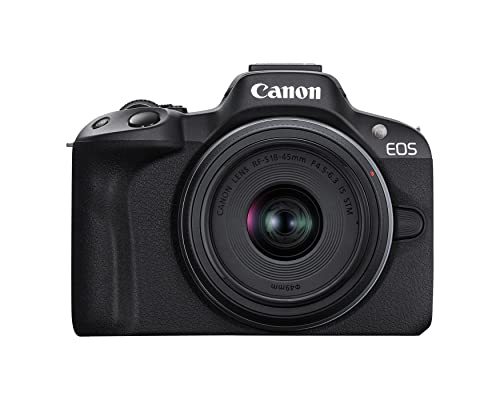
- The Canon EOS R50 is the easiest serious start — guided menus that explain themselves in sentences.
- The Sony ZV-1F removes nearly every decision and still delivers photographs that impress.
- The Fujifilm Instax Mini 12 and Polaroid Go make photography physical, instant and unintimidating.
- The Nikon Z30 suits the novice who films as much as they photograph.
- Buy the camera you will carry in a coat, not the one that needs its own bag, its own plan and its own occasion.
In this guide
Quick Picks
| Camera | Badge | Why a novice cannot go wrong with it |
|---|---|---|
| Canon EOS R50 | Best first camera for novices overall | Guided menus, superb automatic results and room to grow when curiosity arrives. |
| Sony ZV-1F | Best set-and-forget camera | A fixed lens and near-zero settings between the novice and a good photograph. |
| Fujifilm Instax Mini 12 | Best for instant fun | Press one button, hold the photograph — photography with no screen and no homework. |
| Nikon Z30 | Best for novice video makers | A small mirrorless camera built for filming, that also takes excellent stills. |
| Canon PowerShot G7 X Mark III | Best pocket camera with a future | Coat-pocket ease today, real manual controls waiting for the curious tomorrow. |
| Polaroid Go Generation 2 | Best tiny keepsake camera | The smallest instant camera of its kind — photographs as objects, from a camera in a fist. |
How Did We Choose the Best Cameras for Novice Photographers?
We also asked a ruder question of every candidate: what does it do to a novice’s photographs of the things novices photograph worst? Backlit friends at a window, children who will not hold still, a restaurant table at night, a white dog on a bright beach — the four horsemen of the beginner’s apocalypse. The survivors all carry specific rescues for these scenes in their automatic modes, because a novice does not choose their light; their life chooses it, and the camera must cope with the life as found.
We handed each candidate, in imagination, to the same person: a complete novice on their first Saturday with it, no manual read, no friend on call. The scoring followed their day. How many photographs from the first hour were keepers? How many times did the camera present a choice the novice could not evaluate? When something went wrong — a dark room, a moving child, a backlit friend — did the camera rescue the shot or record the failure faithfully?
Automatic quality was therefore the first gate, judged without charity and without a single manual-mode photograph allowed to testify in a camera’s defence. Scene detection that recognises faces, food, landscapes and low light; exposure that behaves in the mixed lighting of real homes; colour that makes people look like themselves on a good day. Cameras whose automatic modes are an afterthought — and the market is full of them, because manufacturers design for the reviewer who shoots manual — were eliminated regardless of their other virtues.
The second gate was error-proofing — the unglamorous engineering of all the ways a camera can decline to betray a beginner who left a dial somewhere unwise three days ago. Can a novice ruin photographs by leaving a setting wrong from last week? The survivors minimise that risk: settings that reset sensibly, warnings that speak plainly, and so few consequential controls on the instant and pocket picks that the category of “wrong setting” barely exists. Forgiveness is a design achievement, and it was scored like one.
Growth was the final, gentlest criterion — not required, but welcomed. A novice’s curiosity, when it arrives, should find the door unlocked: a manual mode, a brighter lens option, a community of fellow owners. The R50 and Z30 offer the full staircase; the G7 X offers the first flights; the instant cameras offer a different growth entirely, in looking and composing. No pick here punishes curiosity, and none forces it.
What Does a Novice Actually Need — and What Can Wait?
Need, in the first month, is a list of four — and it is worth pausing on how recently that list became satisfiable at every price. A generation ago the novice’s camera was a compromise at any budget: the cheap ones were poor, the good ones were forbidding. The six cameras here, from the instant pair upward, all focus surely, expose kindly and connect to a phone, because the industry’s floor rose beneath the whole category. The modern novice is not buying a lesser version of photography; they are buying photography at its most considered.: a camera that focuses on what you point it at, exposure that copes with your house’s light, a screen you can read in sunshine, and a way to get photographs onto your phone without a ceremony. Every pick here covers all four. The novice who buys to that list will be happy; the novice who buys to a forum’s list will own a superb camera and a growing suspicion that photography is not for them.
The things that can wait are the things photography shops sell hardest — a coincidence the novice should sit with for a moment, because the shop’s calendar and the photographer’s development run on entirely different clocks. Extra lenses wait until your photographs ask for them — and they will ask, specifically, in a few months, in a voice you will recognise. Tripods wait until you meet the photograph that needs one. Editing software waits until the camera’s own rendering stops satisfying you, which for the colour in these cameras may be never. Waiting is not deprivation; it is how a novice’s money follows their actual photography instead of their imagined one.
One purchase does not wait: a second battery or a film supply — the novice’s equivalent of a spare house key, unglamorous, inexpensive, and the difference between a story and an anecdote about the photograph that got away, according to the camera’s kind, and a memory card large enough to forget. The novice’s saddest sentence is “the camera died”, and it is entirely preventable for the price of a sandwich. Buy the insurance, skip the accessories catalogue, and spend the difference on going somewhere photogenic.
And a case or strap that makes carrying pleasant belongs on the now list too — chosen for your hand and your coat, not for the camera’s resale value, because it will be touched more often than any dial on the body, for a reason this guide will repeat until it is believed: the novice’s camera must be present to be used, and presence is a carrying decision made at the front door, in three seconds, every day.
How Will You Know the Camera Is Working for You?
By the third week, the signs are unmistakable and none of them are technical — a fact worth dwelling on, because novices monitor the wrong gauges. They count megapixels of progress while the real instrument is behavioural: the camera’s presence in their week, the subjects’ relaxation in front of it, the first request from a friend to “bring your camera” to an occasion. When those three appear, the purchase has succeeded, whatever the settings menu still holds in mystery. You are taking the camera to ordinary things — the market, the dog walk, a friend’s kitchen — rather than saving it for occasions. Your photographs of people are closer than they used to be, because the camera has quietly taught your feet. And you have one photograph, exactly one is enough, that you have shown to somebody twice.
The failure signs are equally legible, and they indict the fit, not the novice — a sentence this guide would happily print on its own page and send to every beginner who has ever blamed their hands for a camera’s manners. If the camera has not left the house in a fortnight, it is too big, too complicated or too precious for your life as currently lived — and the correct response is to exchange it for a smaller, simpler pick from this list, not to conclude that photography has rejected you. Novices blame themselves for mismatches that this guide exists to prevent; the camera serves the life, never the reverse.
Growth, when it comes, announces itself as a specific irritation — and the novice should be told in advance to welcome that irritation when it arrives, because it is the sound of the eye outgrowing the tool, which is the precise definition of progress in this craft: the background that will not blur, the bird that stays small, the room too dark for the lens you own. That irritation is the hobby’s healthiest sound. It means the automatic camera has taught you to see a photograph it cannot quite take — and every system pick here has the next step waiting, in a lens or a mode, at exactly that moment.

Canon EOS R50 — Best first camera for novices overall
The Canon EOS R50 earns the top badge for novices by being the rare camera that is simultaneously the easiest start and a complete education. Its menus are written in sentences a beginner can parse, its guided modes demonstrate what settings do while you change them, and its automatic photography — faces found, eyes focused, exposure judged kindly — produces first-week photographs that make a novice look like a natural. Underneath the kindness sits a real mirrorless system: interchangeable lenses, full manual control, files with genuine depth. The novice buys one camera and accidentally acquires the whole hobby’s future.
Canon’s colour deserves its sentence for this audience, because novices photograph people above all else, and the R50 renders skin — every skin, in the mixed light of real rooms — with a warmth that flatters without falsifying. The vari-angle screen helps at the angles novices actually shoot from, including the selfie and the overhead food shot, and the body is light enough that carrying it never becomes the negotiation that kills beginner hobbies.
The honest costs are a kit lens that is a beginning rather than a portrait instrument, battery life measured in a day, and a size that asks for a small bag or a confident hand rather than a pocket. For the novice who wants the camera to be a companion for years — first the photographs, then the learning, then the lenses — no other pick here offers as much future for as little present difficulty.
Picture the R50’s first month with its intended owner. Week one: automatic everything, and the family group chat asking what phone took these. Week two: the creative assist slider discovered, backgrounds softening. Week four: a question forms — how do I make the water smooth, the background softer, the night brighter — and the camera, patiently, has the modes that answer. That arc, from delight to curiosity to craft, is the novice experience at its best, and this body is engineered for it.
- Sensor: APS-C mirrorless, interchangeable lenses
- Guidance: plain-language menus and creative assist
- Autofocus: face and eye detection on automatic
- Screen: vari-angle touchscreen
Strengths
- Automatic results that make novices look talented.
- A tutor built into the menus, in plain language.
- The full hobby available later without a second body.
Trade-offs
- Not pocket-sized — it asks to be carried deliberately.
- Kit lens will eventually be outgrown.
- Battery suits a day; a spare is wise.
Best for: novices who want one camera for the whole journey. Not suited for: those certain they only want a pocket or instant camera.

Sony ZV-1F — Best set-and-forget camera
The Sony ZV-1F is the answer for the novice who has read this far and felt tired — the reader who wants the photographs without the hobby’s machinery, and is honest enough to say so. Its design removes the machinery entirely: a fixed wide lens, a one-inch sensor, automatic everything that matters, and a body that disappears into a jacket. What remains is the act of noticing and pressing, which is, not coincidentally, the part of photography that produces the photographs novices actually love.
The lens suits the novice’s real subjects with suspicious precision: the group around the table, the room at the party, the street on holiday, the dog at close range. Its video is genuinely excellent — this line was built for people who film their lives — with clear voice audio and a defocus switch that borrows the professional portrait look without teaching a single term. A novice can own this camera for a year, produce a library their phone could not have made, and learn nothing technical whatsoever. That is not a failure mode; for many owners it is the entire point, honourably served.
The ceiling is where the honesty lives: no zoom, no lens future, stabilisation for walking rather than for sport. The novice who catches the photography bug seriously will outgrow it — and will keep it, as its owners reliably do, as the pocket camera for everything the big camera is too much for. As a first step with zero regret potential, the ZV-1F is the safest purchase in this guide.
It is also the gift-buyer’s salvation, and gifts are how many novices acquire cameras. The relative who wants to encourage without intimidating, to give photographs rather than homework, should give this — its recipient will be sending back pictures within the hour, which is the only thank-you that matters.
- Lens: fixed wide, no decisions attached
- Sensor: 1-inch, kind in indoor light
- Video: creator-grade with clear audio
- Controls: almost none, deliberately
Strengths
- Good photographs with literally nothing to learn.
- Pocket presence on every outing.
- Video and selfies handled beautifully.
Trade-offs
- No zoom for distant subjects.
- No growth path beyond technique.
- Not the tool for serious low-light craft.
Best for: novices who want results, not a curriculum. Not suited for: the secretly ambitious, who should take the Canon.

Fujifilm Instax Mini 12 — Best for instant fun
The Fujifilm Instax Mini 12 is the novice camera as pure invitation. It makes real, physical photographs — small prints that develop in your hand — with an operational burden of one button and automatic exposure that handles the light without consulting you. There is no screen to review, no menu to get lost in, no file to manage. For the novice whose barrier is not money but the feeling that cameras are complicated, serious objects, the Instax walks through the barrier whistling.
Do not underestimate its teaching. Because every frame costs film and cannot be deleted, Instax owners learn photography’s foundational skill faster than digital novices do: they look first. They check the background, wait for the expression, step closer. The prints go on fridges, into wallets, onto the strings of lights in student rooms — a physical archive that a phone library, for all its thousands, rarely becomes. Novices who start here frequently describe the same discovery: photography is not a file format, it is a way of paying attention, and the little prints are the receipts.
The costs are the film itself — an honest, ongoing expense — and image quality that serves charm over detail, in prints the size of a credit card. It will not photograph the moon, the match or the distant grandchild’s recital. It is not a system and pretends to be nothing but what it is: the friendliest doorway into photography currently manufactured, priced like a toy and built like a habit.
Its social physics deserve the final word. An Instax at a gathering gets passed around, borrowed, returned with somebody else’s best photograph on it. It makes photographers of people who would never buy a camera, for one evening at a time — and several of those people, every year, go and buy cameras of their own. As a novice’s first camera it is a delight; as a gateway placed in a household, it is a small cultural event.
- Format: instant prints, credit-card size
- Exposure: fully automatic
- Extras: selfie mirror, close-up mode
- Power: AA batteries
Strengths
- Photography with zero intimidation.
- Prints that live on fridges, not in folders.
- Film cost teaches looking before shooting.
Trade-offs
- Every photograph costs film.
- Small prints, charm-first quality.
- No digital copy and no distant subjects.
Best for: true novices, gift recipients and the camera-shy. Not suited for: anyone wanting one camera for everything.

Nikon Z30 — Best for novice video makers
Many novices arrive backwards: they have been filming their lives on phones for years and are adding still photography, not the other way round. The Nikon Z30 is built for that arrival. It is a compact mirrorless camera with a proper APS-C sensor and Nikon’s lens mount, designed around a screen, long and easy recording, and handling a phone native will find instantly legible — while its stills are every bit as serious as its video, which is the combination the backwards-arriving novice actually needs.
The growth story is the mirrorless promise entire: start on automatic with the small kit lens, enjoy files and footage that embarrass the phone, and let the lens catalogue answer the questions your own work begins to ask. Nikon’s colour is natural, the grip is secure, and the whole package is light enough to be the camera that is simply always in the bag — the novice virtue this guide values above all specifications.
Its two absences define it: no viewfinder, so composition is on the screen — native grammar for its audience — and no in-body stabilisation, so the lens provides it. For the novice whose creative life is filmed at least half the time, neither absence registers weekly. For the stills-first traditionalist, the Canon above is the better door. Know which novice you are, and the choice between them makes itself.
The Z30 also suits the documenting novice — the student, the young parent, the traveller keeping a diary in clips and frames — because its unobtrusive size keeps subjects natural. People perform for big cameras and relax for small ones, and a novice’s early work lives or dies on whether their subjects relaxed. This camera is a relaxation machine with a sensor attached.
- Sensor: APS-C mirrorless, Z-mount lenses
- Video: long, easy recording, microphone input
- Design: compact, screen-based composition
- System: Nikon Z lenses for the growth years
Strengths
- The natural first camera for phone filmmakers.
- A real lens system behind the friendly start.
- Small enough to be present by default.
Trade-offs
- No viewfinder for bright-day composing.
- Stabilisation comes from the lens.
- Stills purists may prefer a traditional layout.
Best for: video-first novices and life-documenters. Not suited for: eyepiece traditionalists.

Canon PowerShot G7 X Mark III — Best pocket camera with a future
The Canon PowerShot G7 X Mark III is the novice pocket camera for the reader who suspects — quietly, without yet admitting it — that they might become a photographer. On the surface it is the ZV-1F’s proposition with a zoom: a one-inch sensor, a bright lens covering the everyday range, automatic modes that flatter everyone, coat-pocket size. Underneath, it keeps a set of real controls — dials for aperture and exposure, a control ring, full manual modes — folded away like a letter in a drawer, there when the novice is ready to read it and invisible until then.
That dual citizenship is rare and valuable. The novice’s first season runs on automatic and loses nothing; the second season, when curiosity arrives, finds the curriculum physically present on the camera rather than requiring a new purchase. Canon’s warm colour flatters the people who fill a novice’s library, the tilting screen serves the awkward angles that make early photographs interesting, and the bright lens keeps indoor light — the novice’s home territory — genuinely workable.
It concedes the systems’ futures: the lens is fixed, so growth stops at technique, and there is no viewfinder. Battery life is a day’s. But as the pocket camera that respects both the novice’s present and their possible future, it has no equal in this list — the choice for the reader who wants small now and serious later, in that order.
Its party trick for novices deserves naming: it is the camera most likely to be lent. Its size invites it, its automatic modes forgive the borrower, and its results recruit. Households with a G7 X in a drawer by the door find it becoming the family camera in the fullest sense — everyone’s photographs, one little archive — which is a destiny no specification sheet predicts and many owners report.
- Lens: bright zoom with control ring
- Sensor: 1-inch, warm Canon colour
- Controls: real dials, hidden until wanted
- Screen: tilts for creative angles
Strengths
- Pocket ease with a manual curriculum in reserve.
- Bright lens for the indoor novice world.
- Colour that encourages beginners’ portraiture.
Trade-offs
- Fixed lens — technique grows, equipment cannot.
- No viewfinder.
- Battery life rewards a spare.
Best for: novices who want small now, serious later. Not suited for: committed system builders.

Polaroid Go Generation 2 — Best tiny keepsake camera
The Polaroid Go Generation 2 is the smallest argument in this guide: an instant camera that fits in a fist, makes little square photographs with the Polaroid name’s century of associations, and asks of its owner exactly nothing beyond pointing and pressing. If the Instax is the friendly doorway, the Go is the doorway’s pocket-sized sibling — the camera that lives in a bag’s side pocket for months and emerges at the exact moment a moment deserves to become an object.
Its photographs are the point and the limitation in one: small, soft-edged, charmingly imperfect prints whose value is entirely in their existence and their giftability. A Polaroid handed to a stranger at a festival, a grandparent at a christening, a friend at a departure gate, is a social gesture no file transfer imitates. Novices who are shy about “being a photographer” find the Go dissolves the role entirely — nobody is intimidated by it, including its owner.
The honesty is brief: the film is its own format and an ongoing cost, the prints are the smallest here, and the camera offers no control beyond a flash toggle and a selfie mirror’s optimism. It is a keepsake machine, not a system. But for the novice whose true desire is not photography-as-craft but photography-as-keepsake — the shoebox, the pinboard, the wallet — the Go serves that desire more purely than any other object in this guide, at a size that guarantees it will be there when the moment happens.
It pairs, finally, with everything. The Go in the pocket and the R50 in the bag is a combination real households arrive at independently: the serious camera for the archive, the tiny one for the instant gift. Novices are allowed two cameras with two philosophies, and this pair covers more of life than either philosophy alone.
- Format: instant prints, small square format
- Size: the smallest instant camera of its kind
- Exposure: automatic, flash toggle
- Design: pocket and bag friendly
Strengths
- Small enough to be present for every moment.
- Photographs as gifts, instantly.
- Zero intimidation for owner and subject alike.
Trade-offs
- Its own film format is a running cost.
- Smallest, softest prints in this guide.
- No controls to grow into.
Best for: keepsake-makers and the camera-shy. Not suited for: anyone wanting detail, reach or a system.
How Is a First Camera Different From a First Serious Camera?
The distinction matters because novices are sold the second while needing the first — sold it by shops that stock ceilings, by forums that worship them, and by their own entirely understandable wish to buy once and buy finally, a wish this guide honours in the R50 and Z30 while refusing to let it tax the readers it does not fit. A first serious camera is bought by someone who has already decided photography is their craft: they want control, they accept the learning curve as the price of admission, and they judge a camera by its ceiling. A first camera is bought by someone deciding whether photography might be for them at all, and it is judged by its floor — by how good the photographs are on the worst day, with the least knowledge, in the least forgiving light of an ordinary Tuesday.
Every pick in this guide was chosen by floor rather than by ceiling — and the floor, to be concrete about it, is not a metaphor but a measurable thing: the keeper rate of a novice’s first hundred frames, in their own home’s worst light, with their own family’s least cooperative subjects, which is why the list will look wrong to experienced photographers and right to anyone who has watched a novice’s first month up close. The R50’s ceiling happens to be high as well, which is why it leads; but it leads because its floor — the automatic photograph in a dim kitchen — is the highest here. When a novice asks which camera is best, they are asking a floor question wearing a ceiling question’s clothes, and honest advice answers the question underneath.
This is also why the guide resists the used-flagship temptation that forums press on novices. Yesterday’s professional body has a magnificent ceiling and a floor like a cellar: menus built for experts, no guidance, worn batteries, and a size that stays home. A novice does not need a ceiling from five years ago; they need a floor from this year, with a warranty, in a size their life can carry.
How Do the Six Novice Cameras Compare for a Complete Beginner?
| Camera | Effort to first good photo | Carrying style | Growth room | Novice it fits |
|---|---|---|---|---|
| Canon EOS R50 | Low | Small bag or hand | Enormous | The future hobbyist |
| Sony ZV-1F | Lowest | Jacket pocket | Modest | The results-first novice |
| Fujifilm Instax Mini 12 | None | Hand or bag | Composition only | The playful beginner |
| Nikon Z30 | Low | Light bag | Enormous | The filming novice |
| Canon PowerShot G7 X Mark III | Low | Coat pocket | Good, technique-only | The quietly ambitious |
| Polaroid Go Generation 2 | None | Any pocket | Keepsakes only | The keepsake-maker |
The effort column is this guide’s whole philosophy in one glance — and it conceals one mercy worth stating aloud: effort, in these six cameras, is front-loaded into the design rather than billed to the owner, which is what “beginner-friendly” means when it is engineered rather than marketed: every camera here asks little, and the differences are about what happens in month six, not minute one. Choose by the growth column only if you trust your own ambition; choose by the effort column if you trust your honesty. Both are respectable ways to buy a first camera.
What Should a Novice Do in the First Week With a New Camera?
Day one is for charging, holding and photographing the household exactly as it is — including, especially, the unphotogenic corners of it, because the novice who starts by documenting their real surroundings learns the camera’s manners three times faster than the one saving it for a beauty spot — the people, the pet, the view from the door — on fully automatic everything. The point is not quality; it is the discovery that the camera works and that its photographs are already different from the phone’s. Put the manual back in the box. It has an appointment with you in about a month, and it will keep.
Days two to seven are for carrying — and for one small administrative act that future novices always wish their past selves had done: start the folder, the album or the shoebox now, while the collection is dozens rather than thousands, and put the week’s photographs in it with the date attached. The archive is the hobby’s memory, and it is built in week one or rebuilt in pain in year two. The camera goes where you go, in the coat or the bag, and photographs what the week actually contains rather than what a photography outing would invent. Novices learn more from fifty frames of their real life than from five hundred of a special trip, because the real life is where the camera must eventually earn its place — and because the week’s ordinariness, photographed well, turns out to be the material of every future year’s nostalgia.
End the week by choosing three photographs — only three, because abundance is the enemy of judgement at this stage — that you would show a stranger, and look at what they have in common. Closer than you expected? All people? All outdoors? That pattern is your photography introducing itself, and it, not any review or forum, should direct what you learn next and what, eventually, you buy next.
What Should a Novice Photograph First?
The people who love you, in the rooms where you live, in the light that is already there — a sentence that doubles as the novice’s equipment list, since it requires nothing that is not already in the house. This sounds like a refusal to answer and is actually the accumulated wisdom of a century of first cameras: the novice’s advantage is access — to their own family, their own streets, their own dog — that no professional can buy, and the photographs that access produces are the ones that will matter in thirty years. The landmark can wait; it is patient and heavily photographed. Your grandmother’s kitchen at 6 p.m. is neither.
Within that world, three exercises teach more than any tutorial — and each of them can be done this week, in your own home, with whichever of these six cameras is in your hand, which is rather the point of exercises. The window portrait: one person, one window, five minutes, and the discovery that light has direction and that direction is beauty. The closer exercise: photograph the same subject from three distances and learn, in one afternoon, that photographs are mostly made of how much of the frame the subject is allowed to fill. And the week of one thing — the dog, the commute, the garden — after which the novice owns a series, and a series is the first form photographic thinking takes.
Notice that none of these requires a setting beyond automatic, a location beyond your life, or a permission beyond your family’s patience. That is deliberate. The novice’s craft grows from looking outward at a world they already have, and the cameras in this guide were chosen to keep every barrier between the looking and the photograph as low as current engineering allows.
How Should a Novice Actually Buy — New, Refurbished or Gifted?
New is the novice’s default for a reason that has nothing to do with snobbery — and everything to do with the first month’s fragility, during which a dead-on-arrival battery or a predecessor’s eccentric settings can end a hobby that a boring, warrantied, factory-fresh camera would have floated: the warranty, the fresh battery, the untouched settings and the seller who will answer the first month’s questions are all part of the floor this guide keeps talking about. A first camera is a confidence machine, and confidence is easier to maintain when nothing about the object is a previous owner’s mystery.
Manufacturer-refurbished is the intelligent exception — the route by which a careful novice buys last year’s colours at this year’s confidence, and the route this guide recommends first to any reader whose budget is arguing with their ambition — the same cameras, inspected and warrantied by their makers, at a gentler price — and for the R50 and Z30 class it is where the value quietly lives. What the novice should avoid is the ungraded used market, not because bargains are absent but because judging them requires exactly the expertise the novice is buying the camera to acquire. The second camera can be a used-market adventure; the first should be a sure thing.
Gifted cameras deserve their own rule: accept them gratefully, reset them completely, charge them fully, and photograph something you love before forming any opinion whatsoever, and give them a month before judging either them or yourself. A hand-me-down’s settings are its previous owner’s autobiography, and half of all “this old camera is confusing” stories are a stranger’s customisations wearing the camera’s face. Defaults, a fresh card, a charged battery — then the verdict, which is very often that the free camera was the right camera all along.
What Mistakes Do Novice Photographers Make Before They Even Start?
Researching for a season is the first, and it masquerades as diligence — complete with spreadsheets, shortlists and a growing fluency in a vocabulary its owner cannot yet use, all of it purchased with the only currency that cannot be refunded, which is time in which photographs would have existed. The novice who reads forty comparisons is usually avoiding the vulnerability of beginning, and the cameras in this guide will still be excellent when the research ends — but the photographs of the intervening season will not exist. Set a deadline of one week, buy from this list, and let the learning happen with a camera in hand, where it belongs.
Buying for an imagined self runs second — and it is worth adding that the imagined self is not a liar, merely a scheduler: the safari may genuinely come, the street craft may genuinely call, and the systems in this guide will still be the right foundation when they do: the safari self, the street-photographer self, the professional self of 2029. First cameras should serve the self who exists — the one who photographs family, walks, holidays and the dog — because that self is the one who will carry the camera, and a camera bought for a fantasy gets returned by reality. The systems here forgive the fantasy’s later arrival; the drawer does not forgive anything.
Apologising for the photographs is the third mistake, and the most corrosive — because it teaches the novice’s audience to discount the work too, and a hobby starved of response in its first month rarely survives to its third. Novices preface every showing with a disclaimer — it’s just automatic, the camera did it, I’m no photographer — and thereby train themselves to discount the evidence of their own eyes. The cameras in this guide are tools; the noticing was yours. Show the photograph, accept the compliment, and let the hobby grow on that nourishment.
Finally, comparing against professionals’ highlight reels, nightly, on a phone, in bed — the single most efficient discouragement machine ever placed in a beginner’s pocket, and one whose off switch is simply the knowledge of how the reel was made. The comparison is rigged — their decade against your month, their thousandth frame against your fiftieth — and its only function is to make a novice feel behind at the exact moment they are, in fact, precisely on schedule.
Which Camera Should a Novice Photographer Take Home?
The Canon EOS R50 for the novice who wants the whole hobby available at a beginner’s pace. The Sony ZV-1F for the novice who wants the photographs and none of the machinery. The Nikon Z30 for the filming novice, the G7 X Mark III for the pocket-carrying quietly ambitious, and the Instax or the Polaroid Go for the novice whose heart wants prints it can hold today. There is no wrong door in this list — there is only the door that matches the life the camera must fit into.
Whichever you choose, make the novice’s one promise — to the camera, to the hobby, and mostly to the future self who will own the archive: the camera gets carried, weekly, for six months, before any verdict is passed on it or on you. Photography’s beginners are not made by equipment. They are made by Tuesdays.
Frequently Asked Questions
I know nothing about photography. Which camera is truly foolproof?
The Instax Mini 12 and Polaroid Go ask literally nothing of you — point, press, hold the photograph — and the Sony ZV-1F is their digital equivalent. Among cameras that can grow with you, the Canon EOS R50’s guided automatic modes are the most forgiving in the business. Foolproof, honestly defined, means the camera cannot be set wrong in a way that ruins a photograph, and all six picks here meet that definition at their level.
Is a mirrorless camera too much for a complete novice?
Not the two in this guide. The R50 and Z30 were designed with beginners as their first audience — automatic modes that genuinely work, menus in plain language, and the complexity folded away until curiosity comes looking for it. What makes a camera “too much” is not its category but its interface, and these interfaces assume a novice from the first screen. Buyers who enjoy the idea of growing into a camera should not let the word mirrorless frighten them off the best novice purchases here.
Should I buy a camera or just use my phone?
If your photographs live happily on your phone and are rarely printed or shared beyond a chat, the phone is a complete answer and this guide releases you with its blessing. A camera earns its place when you want more: better photographs in indoor and evening light, backgrounds that blur like the portraits you admire, prints that hold up on a wall, or the simple pleasure of a tool made for one thing. Most novices asking the question already feel one of those wants — that feeling is the answer.
How much should a novice spend on a first camera?
Enough for a camera at this list’s level, and not more until your own photographs file a request. The expensive novice mistake is the accessory avalanche — lenses, bags, tripods bought in the first weekend for a photographer who does not yet exist. Camera, card, spare battery or film, and a way to carry it: that is the complete first purchase, at every level of this guide from the Polaroid to the Canon.
Can I give one of these cameras to a teenager or a parent?
Yes — the instant pair and the ZV-1F are the classic cross-generational gifts precisely because they ask nothing of the recipient, and the R50 is the gift for the teenager whose interest is already visible. The rule for givers is to match the camera to the recipient’s curiosity as it is today, include the first film pack or the spare battery in the box, and resist adding a well-meant accessory pile. A camera that arrives as an invitation gets used; one that arrives as a syllabus gets shelved.
What if I buy the wrong one?
Then you will discover it the pleasant way — by taking photographs and finding the specific thing you wish were different — and every camera here holds its value and its usefulness as a second camera, a gift or a trade toward the right one. The only genuinely wrong first camera is the one never bought, or the one so mismatched to your life that it never leaves the house. This list was built to make both of those outcomes as unlikely as honest advice can.
Related Guides
Novice photographers branch in two directions in our library, and both are worth exploring when the first camera has settled in — one toward the structured craft, for the novice whose questions have begun to organise themselves, and one toward the wider world of subjects, for the novice whose camera has started pointing at everything. Follow the structured route with our guide to cameras for novice photographers building a learning path, browse the wider beginner landscape in the best cameras for newbies, and keep the fun alive with our introduction to instant photography.


