kajuandouglas.com is reader-supported. When you buy through links on our site, we may earn an affiliate commission.
Where to Buy Cameras for a Gas Station, a Small Business That Never Sleeps and Is Lit Like a Runway
A gas station is a surveillance problem wearing a retail business’s clothes. It operates all night, alone, in pools of artificial light surrounded by darkness; its customers arrive in vehicles, transact in minutes, and leave by road; its risks — drive-offs, pump tampering, forecourt incidents, till disputes, the occasional 3 a.m. event that becomes a police matter — are all, without exception, arguments that a camera either settles or fails to. The best cameras for gas station use are therefore judged as witnesses: can they read the scene, at the distance, in the light, for the hours that a forecourt actually keeps?
The forecourt’s light is the first fact: bright islands under the canopy surrounded by unlit approaches, which defeats cameras that expose for the average. The second fact is distance: the pump island to the road, the till to the door, the kiosk to the far pump — a station’s cameras work at ranges where faces and plates are earned by resolution and placement, not assumed. The third fact is solitude: at night the system is the staff’s second pair of eyes and the morning’s only reliable memory, so reliability, night vision honesty, and recording that cannot be argued with outrank every convenience feature.
Where to buy: each linked name leads to the camera’s Amazon listing, and station buyers should plan the system as a system in the same decision — which camera watches which zone, where the recordings live, how the night staff actually view them. The six picks here are the verified, obtainable building blocks of a small-station system: outdoor witnesses for the forecourt and approaches, a pan-tilt sentinel for the yard’s wide acres, and interior cameras for the store, the till, and the stockroom. Bought as a set with a placement plan, they cover a real station; bought as gadgets, they cover a shelf.
A word on scope and honesty: a large travel plaza with a compliance department needs an integrator and commercial-grade infrastructure, and this guide will not pretend otherwise. Its reader is the independent station — the family forecourt, the rural stop, the small chain’s single site — upgrading from one doubtful camera or none to a system that settles arguments. For that reader, the picks below are the difference between ‘the camera didn’t catch it’ and a file that ends the discussion.
And a boundary the guide observes throughout: station cameras are for safety, loss prevention, and the record — operated visibly, within the law of the reader’s jurisdiction, with staff and customers treated as people rather than suspects. The sections on placement and policy take that seriously, because a surveillance system that corrodes trust costs a small business more than the incidents it prevents.
Key Takeaways
The forecourt shortlist, for owners reading between customers:
- A station is zones, not a camera count: forecourt, pumps, entrance, till, and yard each need their own witness.
- The Blink Outdoor 4 anchors the perimeter — battery freedom and night manners for approaches and the yard’s edges.
- The REOLINK Argus PT Ultra is the wide-acre sentinel: pan, tilt, and zoom coverage for the whole forecourt from one mast.
- Interior picks divide the store: the Tapo C210’s pan-tilt at the till, the Arlo’s overview, the eufy E30’s detail at the counter.
- Placement beats specification: a modest camera at the right height and angle out-witnesses a flagship on the wrong wall.
In this guide
Quick Picks
Six witnesses for six zones. Badges name the post each camera is hired to stand.
| Camera | Badge | Why it earns its place here |
|---|---|---|
| Blink Outdoor 4 | Best Perimeter and Approach Witness | Battery-powered freedom for the yard’s edges, the road approach, and the posts wiring cannot reach. |
| REOLINK Argus PT Ultra | Best Forecourt Sentinel | Pan, tilt, and zoom coverage from one mast — the whole forecourt’s wide acres under one witness. |
| Wyze Cam v4 | Best Value Continuous Witness | Sharp, colour-night-capable coverage at a value that lets a small station actually finish its zone plan. |
| TP-Link Tapo C210 | Best Till and Counter Witness | Pan-tilt interior coverage for the counter, the till, and the dispute that needs a referee. |
| Arlo Essential Indoor Pan Tilt | Best Store Overview and After-Hours Eye | A wide interior overview with pan-tilt reach for the aisles, the entrance, and the closed hours. |
| eufy 4K Indoor Camera E30 | Best Detail Camera for the Counter’s Close Work | High-resolution interior detail for the register’s close questions and the stockroom’s door. |
How Did We Choose the Best Cameras for a Gas Station?
We zoned the station first and cast cameras second: the forecourt and pump islands, the road approaches and yard perimeter, the entrance’s choke point, the till and counter, the aisles and stockroom. Each zone has a witness’s brief — identification distance, light conditions, hours of solitude — and candidates were judged against their zone’s brief rather than against a generic ‘security camera’ ideal that serves no real building.
Night performance was weighted as the profession weights it: the station’s defining incidents happen in the dark hours, under the canopy’s contrast, so infrared and low-light honesty, motion detection that distinguishes a customer from a moth, and alerts a sleeping owner can act on all counted heavily. Recording architecture mattered equally — local storage that survives a network failure, cloud options whose costs are honest, and retrieval that a tired manager can operate at 4 a.m. without a manual.
What we discounted: doorbell thinking, nursery features, and any camera whose app assumes a hobbyist’s patience. A station’s system is infrastructure. It should be boring, legible, and awake — and the picks were chosen to be exactly that, in descending order of glamour and ascending order of usefulness.
What Are a Gas Station’s Camera Zones, and What Must Each Prove?
The forecourt must prove events: who was at which pump, in which vehicle, for how long, and what their hands did near the card reader and the nozzle. That is a wide, bright, high-contrast stage, and its cameras need the resolution and placement to keep faces and vehicle details legible at pump distance — plus the night manners to keep proving it at 3 a.m. when the canopy is an island and everything beyond it is rumour.
The approaches and perimeter must prove arrivals: the vehicle that entered and left without stopping, the pedestrian who crossed the yard to the air pump and kept walking, the activity at the dumpster, the propane cage, the car wash entrance — the zones where a station’s losses quietly accumulate. Battery and solar-friendly cameras earn their keep here precisely because these posts are far from power and walls, and a witness that needs wiring to a distant corner is a witness that never gets posted.
The interior must prove transactions: the till’s exchanges, the counter’s disputes, the aisle where stock walks, the stockroom door. Interior cameras work at conversational distances in controlled light — an easier brief than the forecourt’s — but they carry the system’s legal and human weight, because they watch staff as well as customers, and their placement and policy must be defensible to both. A station’s camera plan is therefore a document with two authors: the loss-prevention eye and the employer’s conscience, and the picks below were cast to serve a plan written by both.
Why Do Drive-Offs and Pump Incidents Defeat Bad Cameras?
Because they are fast, distant, and backlit by the canopy’s glare. A drive-off gives the system seconds: the vehicle leaves the island, crosses the forecourt’s bright pool into the dark, and reaches the road — and a camera that was exposing for the canopy’s brightness renders the plate as a white card, while one placed for the exit’s angle with honest night vision keeps the evidence. Placement is the whole countermeasure: a witness aimed along the exit lane, at plate height’s geometry, with the road’s darkness inside its exposure competence.
Pump incidents — tampering, skimming devices, spill disputes, the drive-away with the nozzle still in — are slower but smaller: hands at a card reader, a device that should not be there, a sequence whose truth lives in details at the edge of a wide shot. They argue for one camera per island’s working face rather than one camera per forecourt, a casting the zone plan makes explicit. The system’s job is not to watch everything vaguely; it is to be able to answer, for each pump, the question ‘what happened here?’ with a file.
And the system’s quiet third job is deterrence, which works only when it is credible: visible cameras, honestly signposted, at the posts where incidents begin. A station that looks witnessed has fewer arguments to settle — the cheapest footage is the incident that, seeing the cameras, decided to happen somewhere else.
Which Cameras Stand Which Posts? The Six Picks in Detail

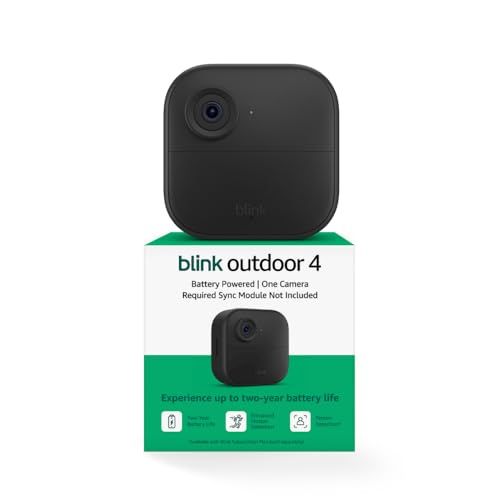
Blink Outdoor 4 — Best Perimeter and Approach Witness
Every station has posts that wiring forgot: the road entrance’s far side, the propane cage, the dumpster and delivery corner, the car wash’s exit. The Blink Outdoor 4 is the witness those posts can actually have — battery-powered for genuinely long stretches, weatherproof, and small enough to mount where the sightline is rather than where the electrician was. Its night vision and motion alerts turn the perimeter from a rumour into a record, and its two-way talk gives the night a voice: the owner, alerted at home, can address the yard’s visitor before the visit becomes an incident.
Its working style suits the perimeter’s rhythm: long quiet hours punctuated by arrivals, each captured as a clean event clip with the alert already on its way. For the independent station whose night staff is one person and a bell, that alert discipline is the system’s conscience — the difference between footage reviewed after a loss and a presence exercised during one.
Choose it for the approaches and the yard: two or three units zoned across the perimeter will out-witness one expensive camera at the building’s corner, because coverage is a geometry before it is a specification. It is also the fastest upgrade a camera-less station can make — mounted in an afternoon, watching by dark.
Its compromises are the battery camera’s constitution: clips rather than continuous recording, a wide view that identifies events better than faces at long range, and a battery rotation that becomes a staff ritual a few times a year. Cast it as the perimeter’s sentinel — where events, not portraits, are the brief — and those compromises are the correct price for posts that would otherwise have no witness at all.
- Type: battery outdoor camera
- Signature: wire-free posting anywhere
- Night: infrared event capture and alerts
- Talk: two-way voice to the yard
- Zone role: perimeter and approaches
Strengths
- Watches the posts wiring forgot.
- Alerts turn footage into presence.
- Mounted in an afternoon, whole yard.
Trade-offs
- Event clips, not continuous record.
- Faces at long range are events, not portraits.
- Batteries are a staff ritual.
Best for: road approaches, propane and dumpster posts, car wash exits, first systems.
Not suited for: till-side identification or continuous forecourt record.

REOLINK Argus PT Ultra — Best Forecourt Sentinel
The forecourt is one big room with no walls, and the Argus PT Ultra is the camera that can be assigned to all of it: a pan-and-tilt sentinel with the resolution to keep pump-distance detail honest, mounted high on the canopy’s edge or the yard’s mast, sweeping the islands, the entrance, and the exit lane in one patrol. For the station that can afford one serious outdoor camera before it can afford four, this is the one that behaves like four — with the discipline that it can only look one way at a time, which its patrol patterns and motion tracking exist to manage.
Its night work is the forecourt’s own: bright canopy, dark approaches, vehicles crossing between the two — the contrast exam this guide set — and its spotlight and infrared options let the owner choose the night’s philosophy per zone: deter with light where incidents begin, watch quietly where customers transact. Its battery-and-solar-friendly design suits the mast and the yard pole where power is a rumour, extending the sentinel’s post beyond the building’s wiring.
Choose it as the forecourt’s anchor: the camera the night staff checks first, the one whose view the morning review begins with, the witness for the islands’ general truth. Paired with the perimeter’s Blink units at the approaches, the station’s outdoor story is covered from arrival to departure.
Its honest limits are a single viewpoint’s: a pan-tilt camera patrolling is a camera not looking elsewhere, and determined detail at the far pump still belongs to a dedicated island camera in a grown system. As the first serious witness and the permanent wide eye, though, it is the forecourt’s best single hire — the difference between a station that is watched and a station that merely has cameras.
- Type: pan-tilt outdoor camera, battery/solar friendly
- Signature: whole-forecourt patrol
- Detail: pump-distance legibility
- Night: spotlight and infrared options
- Zone role: forecourt anchor
Strengths
- One mast witnesses the whole yard.
- Patrol and tracking manage the view.
- Posts beyond the building’s wiring.
Trade-offs
- One viewpoint at a time, always.
- Far-pump detail grows with the system.
- Height mounting is a planned job.
Best for: forecourt anchor, single-camera upgrades, yard masts.
Not suited for: per-pump dedicated detail in large plazas.

Wyze Cam v4 — Best Value Continuous Witness
Camera systems fail small businesses at the arithmetic: the plan needs six witnesses and the budget salutes two. The Wyze Cam v4 is the arithmetic’s friend — a sharp, colour-night-vision-capable camera at a value tier that lets the independent station complete its zones: the entrance’s choke point, the side door, the second island’s working face, the stockroom’s approach. A finished plan of good cameras out-witnesses a fragment of great ones, and this is the pick that finishes plans.
Its night colour is its signature in this company: where infrared witnesses render the night in monochrome, its low-light colour keeps vehicle colours, clothing, and the forecourt’s story in the spectrum evidence prefers. Local recording options give the station a record that does not depend on the network’s mood, and its compact weatherproof body posts indoors or out with equal indifference.
Choose it to complete the map: the second and third angles that turn a camera into a system, the entrance’s identifier, the delivery door’s diary. Multi-site small chains will appreciate the fleet logic — one model, one app, every post’s spare already on the shelf.
Its compromises are the value tier’s honest ones: an app ecosystem that asks the owner to keep subscriptions and settings deliberate, and build that prefers sheltered posts to the yard’s roughest corners. Within a zone plan that casts it at conversational and forecourt distances, those compromises stay theoretical while the coverage becomes real.
- Type: compact wired camera, indoor/outdoor
- Signature: colour night vision, value
- Recording: local storage options
- Fleet: one model across all posts
- Zone role: plan completer
Strengths
- Finishes zone plans on real budgets.
- Night colour aids identification.
- Local record survives network moods.
Trade-offs
- Settings need deliberate management.
- Prefers sheltered posts outdoors.
- App ecosystem is part of the deal.
Best for: entrances, side doors, second angles, small chains.
Not suited for: the roughest unsheltered yard posts.

TP-Link Tapo C210 — Best Till and Counter Witness
The counter is where a station’s money and arguments meet, and the Tapo C210 is its referee: a pan-and-tilt interior camera that covers the till, the counter’s length, and the door in one post, with the resolution to keep a transaction’s details — the note handed over, the item bagged, the card’s journey — legible enough to settle the dispute while it is still a conversation. Its motion tracking follows the room’s action without an operator, and its night vision keeps the record honest through the small hours when the counter’s staff is one person and the bell.
Its manner suits a working shop: discreet in size, quick to post on a shelf or mount, with local recording that keeps the till’s diary on the premises and privacy modes that let staff close the lens for the stockroom’s private moments — a feature whose existence this guide counts as a qualification, because interior surveillance that cannot be paused will eventually be resented, and resented systems get unplugged.
Choose it as the counter’s primary witness in the independent store: one unit at the till’s diagonal, a second — or its Wyze cousin — for the aisles. Owners who have settled one refund argument with its footage will describe the purchase price as the cheapest consultation the business ever bought.
Its limits are an interior camera’s: it is not weatherproof, its wide room view identifies transactions rather than distant faces, and pan-tilt means the counter’s far end is unwatched while the till is — mitigated by casting its patrol to the room’s rhythm and pairing it with a fixed overview. Within the shop’s walls, it is the hardest-working witness in this list per unit of money and shelf space.
- Type: pan-tilt indoor camera
- Signature: counter and till coverage
- Recording: local, on-premises diary
- Privacy: lens can be closed by policy
- Zone role: till and counter referee
Strengths
- Settles till disputes with footage.
- One post covers counter and door.
- Privacy mode keeps staff trust.
Trade-offs
- Interior only, by design.
- Patrol means moments elsewhere.
- Transactions, not distant portraits.
Best for: tills, counters, small station stores, night bell hours.
Not suited for: forecourt or yard duty.

Arlo Essential Indoor Pan Tilt — Best Store Overview and After-Hours Eye
If the Tapo is the counter’s referee, the Arlo Essential Indoor Pan Tilt is the store’s overseer: a wide, high view of the whole retail floor — aisles, entrance, coolers, counter — from one elevated post, with pan and tilt to interrogate the corner the overview cannot quite read. Its brief is the pattern rather than the transaction: the loitering that precedes the aisle incident, the after-hours movement that should not exist, the delivery’s arrival at the wrong door.
After hours is its signature shift. A closed station store is a small, valuable, unguarded room, and this camera’s night vision, motion alerts, and app discipline make it the owner’s remote presence — the phone’s buzz that distinguishes the cleaner’s Tuesday from the event that needs a drive back and a phone call. Its privacy shutter, closable when the store is staffed and open, embodies the same trust policy as its counter cousin: watched premises, unwatched people, by a schedule everyone knows.
Choose it as the interior’s second hire, or the first in a store whose problem is the floor rather than the till: the larger shop, the travel mart’s aisles, the premises whose nights are the worry. Its ecosystem polish — app, alerts, accessories — suits owners who want the system to feel like infrastructure rather than a hobby.
Its costs are ecosystem citizenship — the fuller feature set lives inside its subscription world — and the overview’s eternal trade: width against detail. Pair it with the counter’s referee for the till’s truth and the store is honestly witnessed, floor to till, open to closed.
- Type: pan-tilt indoor camera
- Signature: whole-floor overview
- Night: after-hours alerts and vision
- Privacy: shutter by schedule and policy
- Zone role: store overseer
Strengths
- The whole floor in one post.
- After-hours presence on the phone.
- Ecosystem polish, infrastructure feel.
Trade-offs
- Full features live in its ecosystem.
- Overview trades detail for width.
- Interior only.
Best for: larger stores, aisle oversight, after-hours worry.
Not suited for: till-level transaction detail alone.
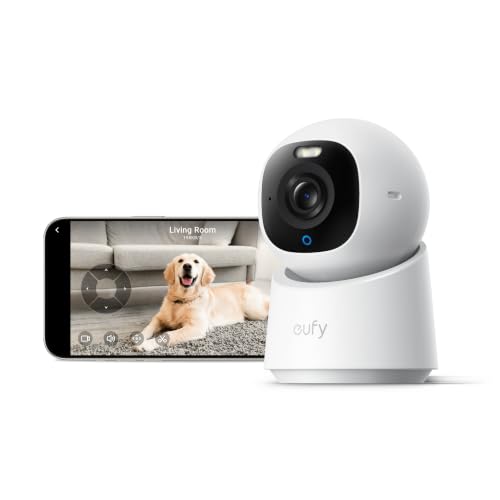
eufy 4K Indoor Camera E30 — Best Detail Camera for the Counter’s Close Work
Some interior questions are close ones: what exactly crossed the counter, which bottle left the shelf behind the till, what the delivery note said before it vanished. The eufy E30 is this list’s detail instrument — a high-resolution indoor camera whose sharpness at conversational distance turns the counter’s close work from allegation into record, with pan and tilt to serve the register, the premium shelves, and the stockroom door from a single considered post.
Its local-storage philosophy suits the station’s instincts: the record lives on the premises, under the owner’s hand, without the till’s diary depending on a subscription’s goodwill — a preference many independent businesses hold for reasons that are partly economics and partly temperament, and which this guide respects as a legitimate architecture. Its tracking keeps the subject centred as the counter’s action moves, and its night manners cover the closed hours’ close zones.
Choose it where detail is the brief: the register’s diagonal in a high-value store, the spirits and tobacco counter’s legal-grade record, the stockroom door whose losses are a line item. It is also the connoisseur’s single interior camera — the one whose footage a manager can actually zoom into during the morning review without the evidence dissolving.
Its boundaries are an indoor detail camera’s: no weather, no forecourt, and a resolution whose gifts are spent at close range — posted across a wide floor it becomes an expensive overview. Cast it close, pair it with the overseer for width, and the interior system has both its microscope and its window.
- Type: high-resolution indoor PT camera
- Signature: counter-distance detail
- Storage: local-first philosophy
- Tracking: subject kept centred
- Zone role: detail instrument
Strengths
- Close questions answered legibly.
- Record lives on the premises.
- Zoomable evidence at review.
Trade-offs
- Interior only.
- Detail wasted at wide posts.
- Premium among interior picks.
Best for: registers, premium counters, stockroom doors, high-value stores.
Not suited for: wide floors or outdoor posts.
How Do the Six Compare at a Glance?
Post by post: the table gives each camera its zone, its decisive evidence, and the limitation the owner accepts with it.
| Camera | Form | Decisive edge | What you give up |
|---|---|---|---|
| Blink Outdoor 4 | Battery outdoor camera | Posting freedom | Continuous recording |
| REOLINK Argus PT Ultra | PTZ outdoor camera | Patrol coverage | Simultaneity |
| Wyze Cam v4 | Compact security camera | Value and night colour | Ecosystem ceremony |
| TP-Link Tapo C210 | PTZ indoor camera | Counter truth | Outdoor use |
| Arlo Essential Indoor Pan Tilt | PTZ indoor camera | Floor overview | Transaction detail |
| eufy 4K Indoor Camera E30 | Indoor PT camera | Close detail | Width |
How Should a Station’s Cameras Actually Be Placed?
By the question each must answer, walked physically before a single mount is drilled. Stand at the pump and ask what the camera must prove; stand at the exit and measure the plate’s geometry with your own eyes; stand at the till and read a banknote where the camera will sit. Placement errors are almost never equipment errors — they are unasked questions — and the walk, done with a ladder and a sceptical friend playing the incident, is the system’s real design phase.
Height is the placement’s first argument: high enough to deter hands and see patterns, low enough at the identification posts — entrance, till, exit lane — to keep faces and plates out of the hat-shadow and the canopy’s glare. The choke points are the professional’s friends: every person and vehicle passes the door, the pay point, the exit — and a camera at a choke point witnesses the whole population, while a camera in a corner witnesses a corner.
Light the posts, not just the rooms: a camera staring into the canopy’s brightness or a window’s glare is a witness with the sun in its eyes, and the fix is angle before equipment — turn the post, shade the lens, move the question. Then test at the incident’s hour: the placement that reads beautifully at the installer’s noon must be re-read at 3 a.m., in the rain, with the yard empty — because that is the shift the system was hired for.
What Should the Recording and Review Routine Look Like?
A system no one reviews is a rumour with lenses. The working routine is short and scheduled: the morning’s five minutes — overnight alerts skimmed, the forecourt’s sentinel checked, any incident’s footage saved beyond the overwrite horizon before it is needed. Retention should be set by the business’s real claim windows — the card dispute that arrives in a fortnight, the incident reported in a week — with important clips exported to a separate home the day they are noticed, because every system eventually overwrites its own memory.
Access is part of the routine: who can view, who can export, who can delete — a short list, written down, with the owner’s credentials treated like the safe’s. Staff who know the rules trust the system; a system whose footage circulates as entertainment will be defeated by its own workplace within a season, and deservedly.
Test the retrieval, not just the recording: pull last Tuesday’s 2 a.m. forecourt clip on a quiet afternoon and time the operation. The morning a real incident needs that clip is the wrong day to discover the app’s export labyrinth, the full card, or the password’s new home. Infrastructure is what works on the bad day, and the bad day is the only audit that counts.
What Does the Law Ask of Station Cameras? A Plain-Language Orientation
This is an orientation, not legal advice — jurisdictions differ, and the station’s own counsel or insurer is the authority — but the shape of the obligations is consistent enough to plan around. Cameras in public-facing areas, visibly signposted, recording images for safety and loss prevention, stand on the firmest ground everywhere. Audio recording is more restricted than video in many places and should be treated as off unless its legality is confirmed. Bathrooms, changing areas, and anywhere a person has a reasonable expectation of privacy are not camera territory under any reading.
Staff areas carry the employer’s duties: employees should know the system exists, where it watches, and why — a written policy, honestly applied, that limits viewing to its stated purposes. Covert staff surveillance is legally and culturally radioactive in most jurisdictions and corrosive in all of them; the systems in this guide are built to be known, and their deterrent value depends on it.
Retention and sharing complete the picture: keep footage for the period the business can justify, share it with authorities and insurers through a simple logged process, and treat customers’ images with the same care as their card details. A station that can produce its camera policy as readily as its footage will find both are believed — by staff, by customers, and by the officials whose help the system exists to summon.
How Do You Keep Night Staff Safer With Cameras — Honestly?
By treating the camera as one layer in a safety system whose other layers are light, locks, layout, and procedure. The night worker’s real protections are a lit forecourt with no shadowed approaches, a till position with a clear view and a controlled door policy after certain hours, a phone within reach, and a manager whose alert settings mean the perimeter’s buzz reaches a human. The cameras in this list serve that system as its eyes and its memory — and the two-way talk at the perimeter posts gives the lone worker a voice that can address the yard without opening the door, which is the feature night staff themselves consistently rank first.
Rehearse the bad minute: what the worker does when the alert shows something wrong — which door locks, which number is called, where the safe position is — with the camera views arranged so the worker can see the forecourt without approaching a window. A safety system that exists only as equipment is a hope; rehearsed, it is a procedure, and procedures are what people actually execute at 3 a.m.
And review incidents with the staff, not just about them: the near-miss’s footage is training material whose value doubles when the person who lived it narrates it. Stations that do this build a safety culture the cameras merely record — which is, in the end, the correct relationship between a business and its witnesses.
What Do Insurers and Police Actually Need From the Footage?
Legibility, timestamps they can trust, and a chain of custody a tired manager can execute. The practical translation: system clocks synchronised and checked monthly, exports in common formats with the original files preserved, and a one-page log — date, incident, who exported, who received — that turns footage into evidence rather than content. The cameras here all produce exportable files through their apps; the discipline around them is the station’s own contribution to the evidence’s weight.
Framing expectations honestly helps everyone: a forecourt camera will usually establish the event, the vehicle, and the timeline beyond argument, and will sometimes — at the choke points, with the detail posts — deliver the face or the plate that closes the matter. Owners who place for the choke points, as this guide insists, maximise the second outcome; owners promised certainty by a brochure have been sold a courtroom drama rather than a camera system.
Build the relationship before the incident: many local forces and insurers will happily note a station’s camera plan, advise on the posts that serve their work, and move faster when the call comes from a known, competent system. The camera plan on file is a small business’s quiet asset — invisible in the accounts, decisive on the one night it is needed.
How Should a Station Handle the Customer Who Objects to Cameras?
As a person with a point, briefly and without defensiveness. The honest answer is short: the cameras are for everyone’s safety, they are signposted, the footage is kept briefly and viewed for incidents, and the policy is available to read. Most objections are really questions about that policy, and a station that has one — printed, calm, consistent — answers them in the time a pump takes to fill.
The harder cases are instructive rather than threatening: the customer who has been filmed elsewhere badly, the parent, the person whose work makes cameras a professional hazard. Staff trained to offer the policy, the manager’s ear, and the simple geography of what is not watched — no audio by default in this guide’s systems, no private spaces, ever — will de-escalate nearly all of them, because the objection is almost always to surveillance as a spirit, and the station’s answer is a system with visible manners.
Keep the manners visible in the small things: signs that are honest rather than threatening, cameras that are present rather than hidden, staff who can explain the system without reciting a threat. A forecourt’s atmosphere is a business asset in a trade where the next station is a mile away, and the camera system should be designed — like everything else on the site — to make decent people feel expected and watched-over, in that order.
What Does a Growing Station Add Next?
Dedicated island cameras, when the forecourt’s volume makes the sentinel’s patrol feel thin: one fixed witness per pump row’s working face, so the general truth and the specific pump are both on record simultaneously. Then the exit lane’s specialist — the post this guide keeps returning to — placed and lit for plates and departures alone. Growth in a camera system is the conversion of patrols into posts, one argued incident at a time.
Integration follows coverage: a single viewing habit for the owner — one app family where possible, one monitor position in the office, alerts tuned to a single phone’s sanity. The picks here were chosen partly for how peacefully they coexist in a small system’s daily operation, because a system that requires three rituals will be given none.
And the policy grows with the posts: retention reviewed, access re-listed, staff re-briefed at every addition. Camera systems decay socially before they decay technically — the unwatched monitor, the forgotten password, the new employee nobody told. The growing station that treats each addition as a recommissioning, policy and all, keeps a system; the one that merely adds cameras accumulates evidence of its own neglect.
How Do You Audit the System Before It Is Needed?
Stage the incidents, politely, on a quiet afternoon: a colleague drives off without the staged payment, a ‘device’ is mimed at the card reader, a dispute is acted at the till, a figure crosses the yard’s dark corner at the appointed hour. Then review the footage as the morning after would — can the system answer its zones’ questions, at the incident’s actual hour and light? Every gap the audit finds is a placement or a post to fix at leisure, rather than at a police officer’s shoulder.
Audit the human system with the same honesty: time the alert’s journey to a human decision, run the export drill, check the clock against a phone, read the retention setting against the claim windows. Most real-world camera failures are not optical; they are the full card, the stale password, the alert silenced in March and discovered in October. The audit exists to move those discoveries to a Tuesday afternoon.
Write the audit down and date it — a page in the office, beside the camera policy. When the insurer asks, when the new manager starts, when the system’s memory is questioned, that page is the difference between a business that runs witnesses and a business that owns cameras. It is also, not incidentally, the cheapest page in this entire guide to produce.
Why Does Deterrence Depend on Being Believed?
A camera deters only the person who believes it works, is watched, and will be used — which is why the system’s visible competence matters as much as its optics: signs that name a real policy, cameras at posts that make tactical sense, a forecourt whose lighting and layout already announce a managed business. The opportunist reads a site in seconds, and the read is holistic: the tidy yard, the lit approaches, the camera at the exit lane’s exact geometry. Each element vouches for the others.
The corollary is discipline about bluffing: dummy cameras and dead systems are debts that come due publicly, the first time an incident’s footage is requested and does not exist. A station is better served by two honest witnesses, maintained and believed, than by six ornaments — and the picks in this list were chosen at tiers that let a small business keep every post it mounts genuinely alive.
Maintain the belief internally too: staff who see footage used fairly — the dispute settled, the honest employee vindicated, the incident learned from — become the system’s allies and its informal auditors. A camera system in a small business is ultimately a social technology with lenses, and its deterrent radius is exactly the radius of its credibility.
What Are the Most Common Mistakes When Installing Cameras at a Gas Station?
The first is the single wide camera asked to prove everything: the whole forecourt in one frame, faces the size of punctuation, the exit’s plates a rumour. Stations are zones with different questions, and the system must be cast by zone — wide witnesses for events, choke-point cameras for identity, detail posts for the till — or it will answer every incident with the same useless panorama.
The second is mounting for the installer’s convenience: the camera where the ladder reached, aimed at where the wall was, exposing for the noon of its installation day. Placement is the system’s intelligence, and it is decided by walking the incidents — pump, exit, door, till — at the hours they happen, with the light they happen in.
The third is buying recording and neglecting retrieval: no review routine, no retention plan, no export drill, footage overwritten the day before the dispute letter arrives. A station camera system is a memory with a schedule, and the schedule — morning review, incident export, monthly clock check — is as much a purchase as the hardware.
How Do You Run the System on the Night Shift, Practically?
Give the night worker a single, simple picture: one screen or one phone view that opens on the forecourt sentinel and the perimeter’s alerts, arranged so a glance answers ‘is the yard as it should be?’ without a tour of menus. Complexity is the enemy at 3 a.m.; the system’s night face should be its simplest one, rehearsed with the worker rather than merely installed for them.
Set the alert thresholds with the night’s reality in the room: the perimeter should speak up for people and vehicles in the closed zones, and stay silent for the moths, the rain, and the cat whose biography the system would otherwise write nightly. Alert fatigue is a safety failure in slow motion — a silenced phone is a camera system with its eyes closed — and tuning is a monthly maintenance, not an installation detail.
Close the shift with the two-minute handover: anything the night noticed, saved and noted, however small. Small notes are how patterns announce themselves — the Tuesday visitor, the slow leak of stock, the light that is failing over pump four — and the camera system’s deepest value to a small station is exactly that pattern memory, accumulated by humans who were told their noticing matters.
What Should a Small Station Buy First, Second, Third?
First, the forecourt’s truth: the sentinel for the wide record and one perimeter witness for the darkest approach — the pair that converts the site from unwatched to witnessed, with the signage and policy that make the witnessing honest. This first stage, mounted in a weekend, changes the business’s nights immediately and its insurance conversation at renewal.
Second, the interior’s referee and overseer: the till’s witness and the floor’s overview, with the privacy policy briefed to staff before the lenses open. The interior stage is where trust is built or lost, and its order — policy first, cameras second — should be as deliberate as the mounts.
Third, the completion: the detail post at the counter’s close work, the exit lane’s dedicated eye, the second perimeter angle — bought against the first months’ evidence of where the questions actually come from. A station that grows its system by evidence ends with the right six cameras; a station that buys six on day one usually owns three right ones and a shelf. This list is arranged as that growth path, and reading it as one is the cheapest consulting the business will ever receive.
Final Recommendation
Post the REOLINK Argus PT Ultra over the forecourt, the Blink Outdoor 4 units around the perimeter, and the Wyze Cam v4 at the entrance and the plan’s remaining gaps. Inside, let the TP-Link Tapo C210 referee the till, the Arlo Essential Indoor Pan Tilt oversee the floor, and the eufy 4K Indoor Camera E30 keep the counter’s close record.
Then walk the incidents at 3 a.m.’s light, write the policy, and rehearse the export before any of it is needed. A gas station’s cameras are its memory and its character in one system — build both deliberately, and the forecourt will take care of the rest of the argument.
Frequently Asked Questions
How many cameras does a small gas station actually need?
Enough to answer each zone’s question: typically a forecourt sentinel, one or two perimeter witnesses, an entrance identifier, a till referee, and a floor overview — five to seven posts for an independent site, which is why this list has six picks. Count zones and choke points, not walls; a station that can answer ‘what happened at pump three, at the exit, and at the till?’ has a system, whatever the number.
Can battery cameras really protect a forecourt?
As perimeter and approach witnesses, yes — their wire-free posting puts eyes where incidents begin, and their alert discipline turns footage into presence. The forecourt’s continuous wide record belongs to the sentinel class, and the till’s truth to wired interior posts. Battery cameras are a layer with a genius for geography, not the whole system’s foundation, and this guide casts them exactly there.
Do I need to tell customers and staff about the cameras?
In most jurisdictions, yes for signage, and in every jurisdiction, wisely for staff: a written policy, visible notices, and honest answers are the system’s legal and cultural foundation. Staff who are briefed and protected by the policy — privacy shutters, stated purposes, fair use of footage — become the system’s allies; staff surprised by it become its saboteurs, and they will have public sympathy on their side.
Can these cameras read license plates?
At the right post, often: a camera placed for the exit lane’s geometry, at conversational distance from the plate’s path, with night exposure honest for that dark stretch, will keep plates legible in many conditions. What no honest guide promises is plates from a wide forecourt panorama at distance — that is a dedicated post’s job, and the zone plan in this guide treats it as one. Place for the plate if the plate matters.
What about audio recording at the pumps?
Treat audio as legally sensitive and default it off outdoors: many jurisdictions restrict audio recording more strictly than video, and the forecourt’s evidence rarely needs it. Interior audio at the till is a policy decision for the owner’s own legal advice, not a camera setting. The two-way talk on the perimeter picks is different — a live voice for safety, used deliberately — and even that should be covered in the written policy.
How long should a station keep its footage?
Long enough to cover the business’s real claim windows — chargeback and dispute cycles, incident reporting delays, the insurer’s requirements — and no longer than the policy can justify. In practice that is weeks, not days and not years, with specific incident clips exported and kept separately under the log. Retention is a setting, a policy line, and a habit; set all three deliberately rather than inheriting the card’s capacity as your archivist.
Will cameras stop drive-offs?
They change the arithmetic rather than abolish the act: visible, credible witnesses at the exit’s geometry make the attempt identifiable, and identification is what most drive-offs are betting against. Stations that pair the cameras with prepay or pay-at-pump policies for the risky hours remove the opportunity itself. The camera’s honest role is evidence and deterrence — decisive in the argument afterwards, influential in the decision beforehand.
What is the first thing to check when footage is needed and missing?
The system’s quiet failures, in order: was the post recording (power, card, subscription state), was the retention long enough, was the clock right so you are looking at the correct hour, and was the incident inside the post’s actual view? The audit habit this guide preaches — staged incidents, export drills, monthly checks — exists so that this checklist is a formality performed at leisure, once, rather than a discovery made in front of an officer.
Related Guides
Related premises-security guides in this series: best cameras for parking lots at night best commercial security cameras for retail stores best cameras for small office


