kajuandouglas.com is reader-supported. When you buy through links on our site, we may earn an affiliate commission.
Where to Buy a Camera for Filming Skating, a Culture That Invented Its Own Camera Language
Skateboarding did not adopt a camera language; it invented one. The fisheye pressed close to a rolling board, the filmer skating the line a half-step behind the trick, the night session under sodium lights with a handle-mounted lamp — skate video developed an aesthetic so distinct that fashion films and music videos now borrow it wholesale. The best cameras for filming skating are judged inside that culture first: can the camera ride, survive, and see the way a skate filmer needs it to see?
The demands are unlike any other sport’s. The filmer is often moving at the subject’s speed, on a board, holding the camera low and close, trusting stabilisation and instinct over viewfinders. The subject is fast, low, and close to hard ground. The environment — concrete, handrails, security guards, midnight — is hostile to equipment and schedules alike. A camera that films skating beautifully from a tripod has answered a question nobody in a skatepark asked.
Where to buy: each linked name leads to the camera’s Amazon listing, and skate buyers should think like filmers when they order — the handle or grip that makes a camera rideable, the fisheye or wide conversion the look requires, the case that survives being the heaviest object in a backpack full of boards. The camera is the beginning of the rig; the rig is what actually films the line.
This list spans the culture’s present tense: action cameras that mount to boards and helmets and film from inside the trick, a 360 that lets the filmer skate the line without aiming, a gimbal pocket camera that turns follow filming into silk, and a value action body that puts a whole crew’s worth of beginners into the game. The VX-era camcorder is honoured here in spirit — several of these picks exist because that look refuses to die — but the list is built from cameras you can buy new, charge tonight, and film with tomorrow.
One cultural note before the picks, because filmers will check: yes, the fisheye matters, and yes, this guide treats the wide, close, distorted grammar as skate filming’s native language rather than a defect. Cameras were scored on how faithfully they can speak it — natively, by conversion lens, or by reframing — because a skate video shot like a tennis broadcast is technically footage and culturally silence.
Key Takeaways
For filmers already rolling toward the park, the short version:
- Skate filming is a moving filmer’s craft — stabilisation and rideability outrank resolution in every pick here.
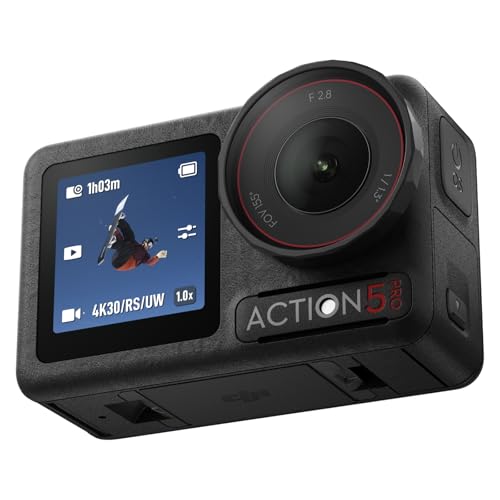
- The DJI Osmo Action 5 Pro leads for follow filming: stabilisation, low-light manners, and a filmer-friendly field of view.
- The Insta360 X4 is the cheat code for solo filmers — skate the line, aim in the edit, never miss the make.
- Night street sessions reward the action cameras with the strongest dusk manners; plan a light for the rest.
- The AKASO Brave 7 LE puts a whole beginner crew into filming for the price of showing up — the culture’s farm team.
In this guide
Quick Picks
Six cameras that understand the assignment. Badges name each one’s role in a skate crew’s kit.
| Camera | Badge | Why it earns its place here |
|---|---|---|
| DJI Osmo Action 5 Pro | Best Follow-Filming Camera | Stabilisation that understands a rolling filmer, dusk manners for street sessions, a filmer’s wide view. |
| GoPro HERO13 Black | Best Mounted and Second-Angle Camera | Boards, helmets, rails, and ledges — the camera that films the trick from the trick’s own address. |
| Insta360 Ace Pro 2 | Best Low-Light Action All-Rounder | Night-session files with action-camera freedom — the street filmer’s low-light specialist. |
| Insta360 X4 | Best for Solo Filmers Who Cannot Miss | Skate the line yourself — the sphere records the trick, the filmer, and the spot, and the edit aims. |
| DJI Osmo Pocket 3 | Best for Smooth Lifestyle and Follow Filming | A gimbal in your pocket: follow shots like silk, lifestyle footage like a documentary crew made it. |
| AKASO Brave 7 LE | Best Value Crew Camera | The farm team: a real action camera at a tier that lets a whole crew film, lend, and learn. |
How Did We Choose the Best Cameras for Filming Skating?
We judged as filmers judge: on a board, at board height, at board speed. Stabilisation was assessed in the follow position — camera low, filmer rolling — because that is where skate footage lives and where electronic systems reveal whether they understand lateral motion or merely tolerate it. Field of view was assessed against the culture’s grammar: wide enough to hold a skater and the obstacle in one close frame, with fisheye character available natively or by conversion.
Survival was the second screen. Skate cameras get dropped on concrete, run over by the session’s traffic, rained on at spots that took an hour to reach, and carried in bags that are mostly skateboard. Bodies were favoured for armour, for cheap-to-replace courage, or for a size that keeps them out of harm’s choreography. Low light was third: street skating is a nocturnal art in most cities, and dusk-to-midnight manners separate the session camera from the park-afternoon camera.
What we ignored: telephoto anything, studio anything, and stills pedigree except where a filmer’s second life needs it. A skate camera’s portfolio is a hard drive of makes and almosts, filmed at knee height, and this list respects that portfolio’s actual contents.
What Is the Skate Filmer’s Shot List?
The line is the basic unit: a sequence of tricks filmed as one travelling sentence, usually followed on a board, camera low, the filmer’s own skating invisible in the footage except as motion. The single-trick clip is the second unit — the hammer at the handrail, filmed close and wide from the landing’s edge, where the fisheye’s distortion makes height honest and danger legible. The third is the lifestyle tissue between tricks: the roll-up, the reaction, the session’s weather — the footage that makes a skate video a document of a day rather than a catalogue of landings.
Each unit taxes the camera differently. The line taxes stabilisation and the filmer’s legs in equal measure, and rewards cameras that can be held one-handed at hip height for a full street block. The hammer taxes nerve and proximity — the filmer is inside the fall zone, and the camera must be ready instantly, framed without a viewfinder, tough enough for the board that occasionally arrives without its rider. The lifestyle tissue taxes discretion and battery: hours of almost-nothing from which the edit will steal thirty golden seconds.
A complete skate camera — or a complete skate kit, which is the honest unit — serves all three. The picks divide the labour deliberately: some are line cameras, some are hammer cameras, one is the session’s always-running witness. Read the badges as a crew’s casting sheet.
Why Does the Fisheye Still Rule Skate Filming?
Because it tells the truth about speed and height in the only language that flatters both. A fisheye close to the ground makes a curb cut feel like a launch and a five-stair like a building — not by lying, but by translating the skater’s own felt experience, in which obstacles are enormous and speed is weather. The long-lens alternative, compressing a skater against a distant background, documents the trick and betrays the sensation, which is why skate culture keeps returning to the wide and the close across every camera generation.
The modern picks speak fisheye three ways. The action cameras are born wide, their native view already inside the culture’s grammar. The 360 manufactures any view in the edit, including a true fisheye framing chosen after the make. The gimbal pocket camera speaks a straighter dialect — wide, smooth, undistorted — which a growing school of filmers prefers for lines, where the follow motion supplies the drama the distortion used to provide.
New filmers should learn both dialects deliberately: shoot a month wide and close, a month smooth and straight, and let the footage argue. The culture’s elders did not choose the fisheye from ignorance of alternatives; they chose it from abundance of them, and a filmer who has shot both ways inherits the choice rather than the habit.
Which Cameras Film Skating Like They Mean It? The Six Picks in Detail

DJI Osmo Action 5 Pro — Best Follow-Filming Camera
Follow filming is skate video’s hardest job and the Osmo Action 5 Pro is built like it knows. Its stabilisation handles the specific violence of a filmer on a board — the lateral sway, the push-off rhythm, the crouch into the line — and returns footage that reads as intention rather than survival. Held low on a small grip, one-handed, it becomes the line camera of this list: close, wide, steady, and ready at the speed of a skater’s third attempt.
Its second gift is the session’s second half. Street skating starts at dusk in the serious cities, and this body’s low-light manners — cleaner files, colour that holds under sodium and LED street light — keep filming honest hours after the park cameras have gone home to charge. The night line, lamp-lit and half-empty streets, is skate video’s most beloved footage, and this is the pick that treats it as a first-class session rather than a degradation.
Choose it as the primary camera of a one-filmer crew: the body that films the lines, the hammers, and the night, with a microphone accessory path for the interviews and the ambient work. Its colour and dynamic range also flatter the sky above the spot — skate films live under big skies — and its files cut cleanly beside phone B-roll and the 360’s reframes.
The honest costs are the action camera’s constitution: a fixed wide eye that will not zoom to the far side of the plaza, and a small body’s battery discipline across a long session, answered by the swap-and-continue rhythm every action filmer learns. Neither cost has ever stopped a skate video that mattered, and the footage this one returns makes both easy to forgive.
- Type: action camera, waterproof
- Signature: follow-filming stabilisation
- Light: dusk and street-light manners
- Rig: grip-mounted, one-handed lines
- Session role: primary filmer’s camera
Strengths
- Lines filmed steady from a rolling board.
- Night sessions stay filmable for hours.
- Wide view speaks the culture’s grammar.
Trade-offs
- No zoom to the plaza’s far side.
- Battery swaps pace the longest sessions.
- Small body, big expectations to manage.
Best for: follow filmers, street crews, night sessions, one-camera productions.
Not suited for: tripod documentaries of distant contests.

GoPro HERO13 Black — Best Mounted and Second-Angle Camera
Every skate film needs the angle no filmer can occupy: the board’s-eye view of the stairs, the helmet’s record of the line, the ledge-cam that watches the grind arrive. The HERO13 owns those addresses. Its mounting ecosystem is the deepest in this list — a generation of skate-specific grips, board mounts, and magnetic quick-release habits — and its toughness treats the inevitable arrivals, board-first and camera-second, as working conditions.
As a filmer’s handheld it is equally fluent: the follow grip, the low crouch shot, the quick-draw clip when a stranger at the park does something unrepeatable on their second try. Its lens options and in-camera modes serve the culture’s grammar directly, and its time-lapse and long-session manners cover the spot’s establishing chapters — the park waking up, the lights coming on — that editors use to build a session’s geography.
Choose it as the crew’s utility camera: mounted for the specialty angles, handheld for the second filmer, planted for the unattended wide. Crews standardising on one action ecosystem for batteries and mounts will find this the natural citizen, and its footage intercuts with the Osmo-led A-camera as the insider’s perspective the audience feels in their stomach.
Its compromises mirror its sibling’s — wide eye, atmosphere-first native audio, daylight as its favourite shift — with one addition: its very ubiquity means its footage looks like everyone’s, and filmers chasing a signature look may cast it as the B-camera to a more distinctive lead. That is a casting note, not a criticism; every great crew needs a utility player who never misses a session.
- Type: action camera, waterproof
- Signature: mounting ecosystem depth
- Angles: board, helmet, ledge, grip
- Modes: time-lapse for spot geography
- Session role: utility and second angle
Strengths
- Films from addresses filmers cannot occupy.
- Toughness treats arrivals as routine.
- Second-angle footage cuts seamlessly.
Trade-offs
- Native look is the genre’s default.
- Dialogue audio needs accessories.
- Wide view only, by design.
Best for: mounted angles, second filmers, park crews, unattended wides.
Not suited for: signature-look leads or interview-led pieces.

Insta360 Ace Pro 2 — Best Low-Light Action All-Rounder
The Ace Pro 2 was designed in conversation with low light, and skate filming is where that conversation pays rent. Street spots live under mixed, meagre light — a lamp here, a shopfront there, the blue hour bleeding out of the sky — and this body’s files hold colour and detail in that murk with a composure its action rivals envy. For the filmer whose sessions start when other people’s end, it is the difference between filming the night and filming evidence of it.
Its flip screen changes solo filming specifically: the skater-filmer who is both crew and cast can frame the self-filmed line, check the angle at the spot, and run it again — a workflow the culture’s one-person productions depend on. Combined with stabilisation that handles the follow position and a build that shrugs off the park, it becomes the complete solo night kit in a single body.
Choose it when the session is nocturnal and the crew is you: the after-work street mission, the solo park diary, the travel spot filmed between dinner and the last train. Its daylight work is fully competitive, so it doubles as the general action camera of a small kit without apology.
Its costs are ecosystem youth — fewer skate-specific mounts and habits in the wild than the GoPro universe offers — and the usual action-camera audio story. Filmers who live at night will trade those happily; filmers who live on mounts should weigh the HERO13’s universe first and borrow this one’s low-light genius as the night body in a two-camera crew.
- Type: action camera, flip screen
- Signature: low-light file composure
- Solo: self-framing for skater-filmers
- Build: park-proof, session-ready
- Session role: night and solo specialist
Strengths
- Night spots film as scenes, not evidence.
- Solo filmers can frame themselves.
- Daylight work fully competitive.
Trade-offs
- Mount ecosystem still growing.
- Audio accessories needed for speech.
- Newer system, fewer wild habits.
Best for: night street filmers, solo skater-filmers, evening sessions.
Not suited for: mount-universe maximalists.

Insta360 X4 — Best for Solo Filmers Who Cannot Miss
The solo skater-filmer’s tragedy is arithmetic: one person, two jobs, and the camera always pointing where the trick is not. The X4 abolishes the arithmetic. Mounted on a pole, planted at the spot’s heart, or held by the filmer skating the line, it records the entire sphere — skater, filmer, obstacle, audience, sky — and the framing happens later, at a desk, with the make already safe. For crews of one, it is not a convenience; it is the difference between a video part and a rumour.
Its reframing manufactures the culture’s shots in post: the follow that tracks perfectly because it was aimed with hindsight, the fisheye framing chosen from the sphere, the cut from skater to reaction inside a single take. Editors raised on skate video will recognise the miracle — the line that can be re-filmed in the edit until it feels right — and traditionalists will recognise the heresy, which is how you know it matters.
Choose it as the solo production’s lead, the crew’s insurance camera at contests and demos, and the travel filmer’s whole rig — one body that films the spot from every side while its owner actually skates. Its pole-raised viewpoint also delivers the floating crane shots that make skate edits look budgeted, from a device that fits beside the boards in the car.
The costs are the known pair: an editing stage that reframing demands, and exposed lenses that must be guarded around concrete and grit with a case and a conscience. Solo filmers pay both gladly — the alternative is missing the make — while staffed crews may cast it as the insurance angle and let a dedicated filmer’s camera lead.
- Type: 360 camera, dual lens
- Signature: aim in the edit, miss nothing
- Solo: films skater and filmer together
- Viewpoint: pole crane without a crane
- Session role: solo lead and insurance
Strengths
- The make is never out of frame.
- Follow shots perfected in post.
- One body is a whole solo crew.
Trade-offs
- Reframing is real editing work.
- Lenses fear concrete and grit.
- Traditionalists will argue, endlessly.
Best for: solo skater-filmers, contest insurance, travel spot films.
Not suited for: edit-averse crews with a dedicated filmer.

DJI Osmo Pocket 3 — Best for Smooth Lifestyle and Follow Filming
Not every skate film is hammers; the genre’s beloved middle is the session itself — the cruise to the spot, the warm-up lines, the crew’s weather — and the Pocket 3 films that middle like a documentary unit. Its gimbal turns a walking or rolling follow into a glide, its face tracking holds the interview on the ledge, and its discretion lets the session forget it is being filmed, which is when sessions become films instead of performances.
As a follow camera it offers the straight dialect this guide described: wide, smooth, undistorted lines where the motion itself supplies the drama. A growing school of filmers prefers exactly this for long lines and hill cruises, cutting the Pocket’s silk against the action cameras’ grit for texture. Its low-light manners are respectable for its size, extending its day into the evening session’s social half even where the hammers have moved under lamps.
Choose it as the lifestyle and follow specialist: the crew’s documentary camera, the travel filmer’s glide, the contest weekend’s story beyond the runs. Creators filming skate culture — the shops, the builds, the road trips — will find it the most grown-up camera in this list, in the best sense: it films people like a filmmaker, not like a sport.
Its fragility is relative and real: a gimbal is a precision instrument in a culture of concrete, and it asks for a case, a wrist loop, and a filmer who keeps it out of the fall zone the action cameras inhabit. Cast it outside the impact choreography and it will repay the courtesy with the smoothest footage in the crew’s archive.
- Type: gimbal camera, pocket format
- Signature: glide follow and lifestyle
- Tracking: faces held for interviews
- Dialect: straight, smooth, undistorted
- Session role: documentary and follow silk
Strengths
- Follow footage glides like a dolly.
- Sessions relax and become films.
- Interviews and lifestyle at crew quality.
Trade-offs
- Gimbal asks care around concrete.
- Not a mounted impact camera.
- Fixed lens frames conservatively.
Best for: skate culture documentaries, follow silk, travel crews, interviews.
Not suited for: board mounts or fall-zone duty.

AKASO Brave 7 LE — Best Value Crew Camera
Skate culture runs on crews, and crews run on cameras that can be lent. The Brave 7 LE is this list’s act of cultural realism: a competent action camera — stabilised, waterproof-cased, dual-screen friendly — at a value tier where a filmer can own two, lend one, and lose neither sleep nor friendships when concrete collects its tax. More skate videos have been started on cameras like this than on any flagship, because starting is the whole game.
Its filming is honestly fit for purpose: park lines in daylight, follow shots at crew speed, the session’s B-roll and second angles, all recorded with a competence that edits respectably beside stronger bodies in daylight. For the beginner filmer it teaches the real curriculum — framing wide and close, holding the follow, managing batteries and cards across a session — on equipment whose loss would be a story rather than a catastrophe.
Choose it to equip the crew: the second filmer’s body, the loaner that recruits next season’s filmer, the mounted camera whose risk budget is cheerful. Shops, schools, and skate programmes building a filming culture on real-world money will find it the enabling purchase — several crews’ worth of participation for one flagship’s commitment.
Its limits are the tier’s: dusk files soften where the night specialists stay composed, stabilisation is a step behind the leaders at full follow speed, and the ecosystem is generic rather than skate-raised. Daylight crews will rarely meet those limits; night crews should cast it as the second body and let the low-light picks lead after dark.
- Type: action camera, value tier
- Signature: lendable, losable, capable
- Screens: dual, filmer-friendly
- Role: crew and beginner enablement
- Session role: second bodies and mounts
Strengths
- Whole crews can film at once.
- Teaches the craft without catastrophe pricing.
- Daylight footage edits respectably.
Trade-offs
- Dusk softens its files.
- Stabilisation trails the leaders.
- Generic ecosystem, fewer skate habits.
Best for: beginner filmers, crews, schools, loaner and mount duty.
Not suited for: night-led productions or signature footage.
How Do the Six Compare at a Glance?
Cast the crew before you buy the camera: the table gives each pick its session role, its decisive edge, and its honest cost.
| Camera | Form | Decisive edge | What you give up |
|---|---|---|---|
| DJI Osmo Action 5 Pro | Action camera | Follow stabilisation plus dusk | Telephoto reach |
| GoPro HERO13 Black | Action camera | Mounts and utility angles | Distinctive look |
| Insta360 Ace Pro 2 | Action camera | Night action files | Accessory universe |
| Insta360 X4 | 360 camera | Total capture insurance | Workflow and lens care |
| DJI Osmo Pocket 3 | Gimbal compact | Smooth follow and people | Impact toughness |
| AKASO Brave 7 LE | Action camera | Crew-wide value | Night and polish |
How Do You Actually Film a Line? A Filmer’s Walkthrough
Start before the skating: agree the line, walk it once with the camera off, and choose the filmer’s path — which side, which obstacles to pass, where the push rhythm fits between the skater’s tricks. The follow is choreography for two, and the sessions that look spontaneous on screen were agreed in the thirty seconds before the first attempt. Camera low, knees soft, board rolling before the skater drops in: the filmer’s own skating must be boring so the footage can be exciting.
During the line, film the skater, not the trick list. Keep the subject’s whole arc in frame — the roll-up’s intention, the trick’s shape, the roll-away’s verdict — and resist zooming, reframing, or celebrating mid-line; the edit needs your neutrality more than your enthusiasm. If the skater falls, keep rolling for the reaction and the walk back: skate edits are built from the session’s honesty, and the almosts are the makes’ supporting cast.
After the make, film ten more seconds: the crew’s noise, the skater’s face, the spot exhaling. Beginners stop recording at the landing and amputate the emotion the whole line was for. The picks here all start fast and record long for exactly this reason — the culture’s best footage is disproportionately the footage after the footage.
How Do You Light a Night Street Session?
Street light is found, not built: the lamp above the ledge, the shopfront’s spill, the headlights’ passing gift. The filmer’s first job is choosing spots by their light as much as their obstacles — which is why the night sessions cluster at the same blessed corners in every city. Work with the found light by positioning: skater crossing the lit pool rather than performing at its edge, filmer’s shadow cast away from the frame, the camera’s exposure locked so a passing car does not rewrite the scene’s brightness mid-trick.
Add light like a skater, not a studio: a small panel on the camera’s handle, a phone light held by the filmer’s free hand’s accomplice, the crew’s lamps aimed as a group. Portable light in skate filming is a culture of improvisation with a century of VX-era precedent, and the low-light picks here stretch whatever light exists furthest — but even they film better parties when the crew brings one honest light source to the spot.
Respect the night session’s social contract while lighting it: neighbours, security, the spot’s own fragile legality. Bright light and loud crews shorten sessions; the films that define night skating were made by crews who could stay. Film dim, film quiet, film long — the footage’s mood and the session’s survival are the same decision.
What Makes a Skate Video Feel Real?
Duration and imperfection, rationed by taste. Real skate footage keeps the roll-up’s wobble of anticipation, the filmer’s breath on a hard follow, the third attempt’s profanity bleeped by a passing bus. The edits that define the culture cut for the session’s truth — the makes land harder because the almosts were allowed to exist — and the cameras that serve that truth are the ones whose footage needs the least cosmetic surgery: honest colour, stabilisation that smooths without ironing the life out, sound that keeps the wheels in it.
Wheels, especially: skate audio is a signature — the roll’s rumble changing with the surface, the pop, the slide’s brief scream, the landing’s verdict. Filmers protect that track like dialogue, which is why this guide weighted wind and handling noise in cameras destined to work at knee height in moving air. A skate film muted into music alone has lost its documentary soul; the picks here all keep the session audible.
And geography: the real skate video knows where it is. Establishing shots of the spot, the city moving around the session, the weather of the day — the tissue beginners cut is the context elders prize. Film the place with the same camera, in the same session, and the tricks inherit a world to matter in.
How Do Filmers and Skaters Share a Session Fairly?
The filmer skates less. That is the contract’s first clause, and crews that honour it rotate the camera like a position in a game — everyone’s part gets filmed because everyone takes a filming shift. The value pick in this list exists partly for that rotation: a camera that can be handed over without a tutorial and a prayer makes the rotation real, and the crew’s archive becomes a democracy instead of a monarchy of the one who owns the good body.
The second clause is credit and custody: the footage belongs to the session, the filmer’s edit is a trust, and the skater’s veto over a clip that endangers a spot, a job, or a sponsorship is absolute. Cameras make these ethics concrete — whose card, whose drive, whose channel — and crews that settle custody before the session keep friendships that outlast any single video.
The third clause is the filmer’s own skating: filmers who never roll become resented, and skaters who never film become clients. The healthy crew’s camera — whichever of these six it is — circulates like the session’s talking stick, and the culture’s best filmers are, without exception, skaters whose filming is a form of participation rather than a job performed on participants.
Which Spots Demand Which Camera?
The plaza and the park reward the follow system: long sightlines, linked obstacles, lines that travel — the stabilised action cameras and the Pocket’s glide divide this ground by dialect, grit against silk. The street spot — a ledge, a gap, a set — rewards the close wide camera and the nerve to stand in the landing’s neighbourhood: the action pair again, with the 360 planted as the insurance that sees the make from the side the filmer could not occupy.
The bowl and the vert ramp are the sphere’s home fixtures: action orbiting a centre, skaters crossing every compass point, a filmer’s single viewpoint guaranteed to miss the far wall’s moment. Plant the X4 at the platform or raise it on the pole, and the whole bowl becomes one continuous record from which the edit can follow any skater anywhere — a coverage revolution the culture is still absorbing.
The DIY spot, the ditch, the schoolyard after hours: these reward the tough, cheap, and deniable — cameras whose loss is survivable and whose presence does not escalate a bust into a confiscation. The Brave 7 LE’s tier is a tactical virtue here, and the session’s real camera discipline is knowing which body the spot’s risk budget allows before the car is loaded.
How Should a Beginner Filmer Spend the First Season?
Film everything, edit weekly, and show the edits to the crew — that loop, not any camera, is the curriculum. The first season’s footage will be badly framed, wind-blown, and precious: it teaches the follow’s legs, the fisheye’s distances, the session’s rhythm, at the speed of honest feedback. A forgiving camera — the value pick, or the sphere that cannot be aimed wrong — keeps the loop’s morale alive while the skills arrive.
Study the culture’s canon with a filmer’s eye: pause the classics and name the camera’s position for every trick. Where was the filmer standing, rolling, crouching? The masters’ filmography is a position textbook disguised as entertainment, and a season of that study rewires a beginner’s instincts faster than any tutorial — because skate filming is ninety percent position, and position can be learned from a chair before it is practised on a board.
End the season by filming one skater’s part properly: planned spots, agreed lines, the lifestyle tissue shot deliberately. A finished part — however modest — teaches the whole production grammar that clips never do, and gives the beginner a portfolio object to be judged by. The camera that emerges as ‘yours’ from that process is the one to upgrade around; until then, every pick here is a worthy teacher.
What Does the Edit Do With Skate Footage?
It builds a session’s arc from fragments that were never shot as one: the arrival, the warm-up’s looseness, the hammer’s attempts tightening like a fist, the make, the crew’s weather afterwards. Skate editing is rhythm work — cuts on the pop, the roll’s sound bridging scenes, music chosen for the session’s tempo rather than the filmer’s taste alone. Footage that serves that edit is footage shot in sequences with handles: extra seconds at both ends, the reactions kept, the geography established.
Colour in skate edits is a dialect choice: the gritty night grade, the sun-bleached park look, the VX-nostalgia warmth that signals lineage. The picks’ files were assessed for how gracefully they accept those dialects — action files that grade without banding in the sky, night files that keep their colour under a push. A filmer choosing a lead camera should grade a test session before committing, because the edit’s dialect is where cameras quietly differ most.
And the archive matters beyond the edit: the raw session is the culture’s primary document, and skaters re-cut old footage for decades. Keep the cards’ contents whole, named by session and spot, backed up like the minor history they are. The filmer who archives well becomes the crew’s memory — a role with more tenure than any single video’s views.
How Do Contests and Demos Change the Filming?
Access replaces intimacy as the currency: the filmer works from assigned positions, the action is scheduled and repeated, and the camera’s job shifts from participation to coverage. Long lenses would rule here — and are absent from this list by design — so the picks adapt: the 360 planted at the course’s heart sees every run whole, the action cameras take the course-side and mounted angles, and the Pocket films the crowd, the signings, and the story around the runs that television’s cameras cannot be bothered with.
Sound at contests is a wall of music, commentary, and crowd — record it as atmosphere, protect the interviews by taking them to the venue’s quiet edges, and let the runs themselves be scored by the event’s own audio where rights and taste allow. Battery and media discipline tighten too: runs are back-to-back, the schedule is not yours, and the camera that needs a mid-final swap will choose its moment cruelly.
The contest film that endures is rarely the runs — broadcast owns those — but the weekend: the practice sessions, the hotel car park’s midnight game of skate, the winner before they knew. The lifestyle picks in this list exist for that film, and crews that shoot it come home with the weekend’s actual memory instead of a worse copy of the broadcast.
Why Do Skaters Still Romanticise the Old Camcorders?
Because the VX-era image is skateboarding’s home movies of itself: the colours of every classic part, the fisheye’s vignette like a signature, the low resolution that forgave night spots and flattered style over scrutiny. The romance is not nostalgia for inconvenience — tapes, batteries like bricks, footage captured in real time — but for an aesthetic coherence modern cameras must work to imitate, and for an era when filming was a crew role with a sacred object at its centre.
Modern picks answer the romance three ways: in-camera looks and grades that approach the era’s warmth, fisheye grammar preserved in native wide lenses, and — in the 360’s reframes — the ability to choose the vintage framing in post. None reproduces the ritual, and the honest filmer admits the ritual was part of the point: scarcity made filmers deliberate, and deliberation is visible in every classic frame.
The practical synthesis most crews land on: shoot the session on the modern body that serves the day, grade toward the lineage the crew loves, and keep one foot in the culture’s visual memory without surrendering the night performance, stabilisation, and survival the new cameras earned. Heritage as a grade, not as a handicap — that is where the romance and the picks in this list shake hands.
How Will You Know a Skate Camera Is Right?
Film one full session with it — not a test chart, a session: the roll to the spot, the warm-ups, the hammer’s attempts, the night half if your crew skates at night. Then watch the footage with the crew and count what is missing. If the missing things are positions and courage, the camera is right and the filmer is learning. If the missing things are whole categories — the night invisible, the lines seasick, the makes out of frame — the camera is wrong for your skating, whatever its reviews said.
Judge also by the session’s social physics: did the camera get passed around, trusted, forgotten between tricks? Skate cameras live in a crew’s hands, and a body that only its owner dares to hold will film a fraction of the session a lendable body films. The right camera increases the crew’s total footage, not just the owner’s best clips.
The six here divide the culture’s needs honestly: follow leads, mounted utility, night specialists, the unmissable sphere, the documentary glide, and the crew-wide enabler. Pick the role your sessions keep auditioning for, and the camera will feel less like a purchase than like a new crew member — which, in skate filming, is exactly what it is.
What Are the Most Common Mistakes When Filming Skating?
The founding mistake is filming from standing height, standing still, far away — the tourist’s geometry. Skate footage is made low, close, and moving, and a beginner with the cheapest pick here and the right position will out-film a flagship operated from the pavement’s edge. Learn position before purchasing anything; then purchase for the position you actually take.
The second is stabilisation worship: ironing the follow so smooth that the skating’s effort vanishes, the board’s speed becomes a screensaver, and the culture’s elders ask what happened to the filmer’s legs. Stabilisation should carry the shot, not anaesthetise it — the picks were chosen for systems that steady the frame while keeping the motion’s pulse, and owners should tune them toward life rather than levitation.
The third is neglecting the session’s sound and tissue: filming only tricks, muting the wheels, skipping the roll-ups and reactions, then wondering why the edit feels like a spreadsheet. The camera that is always rolling — battery budgeted, card capacious, positioned for the in-between — is the one whose footage becomes films. Buy endurance for the session, not specs for the trick.
How Do You Film Vert and Bowl Differently From Street?
Height and orbit replace the follow. In a bowl, the action circles the filmer rather than passing them, so position becomes elevation — the platform, the deck, the coping’s edge — and the camera’s job is to hold a skater through transitions that cross every compass point in seconds. The sphere earns its keep here most obviously, but a disciplined action camera on the deck, reframed by the skater’s predictable lines, covers a session respectably.
Timing replaces chasing: bowl skaters telegraph their runs, and the filmer who learns a skater’s line can pan with intention instead of reaction. Sound changes too — wheels on transitions are a continuous instrument, and the bowl’s acoustics give recordings a cathedral quality that street spots never offer. Protect that track from wind and crowd distance, and the bowl film gains its signature dimension.
Safety and etiquette are stricter in the bowl’s theatre: sightlines are everyone’s, a filmer on the deck is part of the furniture skaters plan around, and the dropped camera in the bowl is a hazard with a lens. Plant positions, agree them with the session, and let the unattended picks do the close work — the culture forgives a conservative filmer everything except becoming an obstacle.
What Should a Skate Filming Kit Bag Contain?
The camera, its grip or handle, and the means to keep both alive: batteries in a rotation your hands know in the dark, cards with the session’s whole appetite in them, a cloth for the lens that concrete dust treats as a target. Then the culture’s specifics — a small light for the night half, tape and a tool because skate sessions are also maintenance events, and the board the filmer arrived on, which is a camera accessory in this discipline whether shops list it or not.
Pack for the bust and the weather as seriously as for the skating: the bag that can be grabbed whole when the session relocates at speed, the rain plan that is a cover rather than a hope, the water and the wax and the spare hardware that make a filmer a useful crew member between shots. Filmers who contribute to the session get filmed spots’ best positions; the bag is part of that contribution.
Finally, the archive habit rides in the bag too: the drive or the laptop at the car, the naming discipline on the ride home, the backup before the session’s footage sleeps. Skate footage is uniquely unrepeatable — spots get demolished, crews scatter, knees retire — and the bag that treats it as history is the difference between a crew with a past and a crew with anecdotes.
Final Recommendation
Cast the DJI Osmo Action 5 Pro as your follow lead, the GoPro HERO13 Black as the mounted utility, and the Insta360 Ace Pro 2 when the night is the session. The Insta360 X4 makes solo filmers whole, the DJI Osmo Pocket 3 films the culture around the tricks, and the AKASO Brave 7 LE puts the whole crew in the game.
Then go and film a full session before judging any of it. Skate cameras are not reviewed in rooms; they are reviewed at spots, by crews, in the footage that survives the ride home — and every pick here has survived worse than your park.
Frequently Asked Questions
What camera do most skate filmers use today?
Working filmers split between action cameras for follow and mounted work — the two leads in this list — and larger bodies for productions. The culture’s centre of gravity is the rugged wide camera on a grip, because the follow shot is the genre’s sentence and those bodies speak it natively. The 360 and gimbal picks are the fastest-growing dialects, especially among solo filmers.
Do I really need a fisheye for skate filming?
Need is strong; the culture’s grammar is wide and close, and a fisheye or fisheye-equivalent view is its classic accent. The action picks are born wide enough for most filmers, the 360 manufactures a true fisheye framing in the edit, and the Pocket’s straight wide serves the modern school. What you need is closeness and width; the distortion itself is a dialect you can choose per project.
How do I film skating at night?
Choose spots by their light, use the strongest low-light body your kit allows — the two night picks here exist for this — add one small portable light as a crew, and lock exposure so passing cars do not rewrite the scene. Film the session’s social half too: night skating’s atmosphere is half its footage value, and it is available to every camera in this list.
Can I film skating with just a phone?
You can start, and many do — the phone teaches position and follow legs for free. Its limits arrive predictably: stabilisation at full follow speed, night files, battery across a session, and survival when (not if) it meets the concrete. The value pick in this list is the traditional graduation: real action-camera manners at a tier a crew can share.
What is the best camera for filming my own skating alone?
The Insta360 X4, by design: plant it or pole it, skate the line, and aim in the edit — it is the only pick that films the skater and the filmer when they are the same person. The Ace Pro 2’s flip screen is the runner-up for self-framed attempts. Solo filming is a workflow before it is a camera, and the sphere is that workflow’s purest tool.
How do I keep a camera safe at the skatepark?
Grip it like it matters — wrist loop, handle, both hands in the fall zone’s neighbourhood — case it between spots, and keep it out of the landing’s geometry when others are skating. The tough picks forgive the accidents that remain; the value pick prices them kindly. What no camera survives is being set down on a ledge in a busy park, so the bag or the hand, always.
Should the filmer skate or stand?
Both, by the shot’s need: follow lines demand a rolling filmer, hammers at obstacles often demand a planted one, and the session’s tissue rewards whoever is present with a camera ready. Crews that rotate both roles film more and resent less. The unforgivable positions are only two — too far, and in the way — and both are cured by asking the skater before the attempt, not apologising after it.
What settings help for fast skate action?
A shutter fast enough to keep the board’s shape honest, stabilisation tuned to smooth without levitating, and exposure locked per spot so tricks do not change brightness as they cross the light. Burst-thinking does not apply — this is film — but readiness does: pre-focus habits, instant-on discipline, and the camera configured at the car, not at the first drop-in.
Related Guides
Adjacent filming crafts get their own guides here: best cameras for shooting action sports best action cameras for vacations best cameras for filming outside


