kajuandouglas.com is reader-supported. When you buy through links on our site, we may earn an affiliate commission.
Where to Buy
The best cameras for close up video live in a world measured in millimetres: a watch movement’s gears meshing, a baker’s hands piping the final rosette, a jeweller turning a stone until it catches the light, a gardener’s seedling opening over a patient afternoon. Close-up video is its own craft with its own physics — depth of field measured in slivers, focus that breathes if you look at it, light that must be brought to a subject smaller than the light itself — and the cameras that serve it are judged by how gracefully they handle that smallness: close-focus distances, magnification, focus tools, and stabilisation that does not turn a millimetre of drift into an earthquake.
This guide separates the two honest species of close-up work. True macro — insects, mechanisms, textures at life size and beyond — belongs to interchangeable-lens systems with dedicated macro glass, represented here by the OM System body whose computational tools were built for exactly this world. Near close-up — products, food, crafts, beauty, the detailed demos that fill modern video — is served beautifully by compacts and creator cameras whose lenses focus startlingly close without any rig at all. Buy through the Amazon listings linked below, and be honest about which species your subjects are before choosing.
Key Takeaways
- OM System’s OM-5 Mark II is the true-macro pick — a deep macro lens system plus in-camera focus tools for tiny subjects.
- DJI’s Osmo Pocket 3 focuses close, stabilises like a tripod, and is the product-demo camera of the moment.
- Sony’s ZV-E10 II with a macro lens is the flexible creator route — interchangeable glass on a video-first body.
- Sony’s RX100 VII focuses close at the wide end and disappears into a product shoot’s smallest corner.
- Canon’s PowerShot G7 X Mark III remains the beauty and food creator’s close-up companion.
- The Canon EOS R7 is the magnification specialist’s step up — prose-only here, for crop-sensor reach with macro glass.
In this guide
Quick Picks
| Pick | Badge | Why it earns its place |
|---|---|---|
| OM SYSTEM OM-5 Mark II | Best true macro system | A Micro Four Thirds body at the centre of the deepest macro lens shelf in photography. |
| DJI Osmo Pocket 3 | Best product-demo close-up | Close focus, a gimbal’s calm, and a screen that flips for overhead detail shots. |
| Sony ZV-E10 II | Best flexible creator route | A video-first body that accepts real macro lenses when the work outgrows close focus. |
| Sony RX100 VII | Best pocket close focus | A serious zoom compact that focuses close at the wide end and vanishes into the set. |
| Canon PowerShot G7 X Mark III | Best beauty and food close-up | The creator compact whose close focus and colour built a million tutorial videos. |
| Canon EOS R7 | Best magnification step-up | Crop-sensor reach that makes macro subjects larger — prose-only in this guide. |
How Did We Judge Cameras for Work Measured in Millimetres?
Magnification and minimum focus distance came first — how close the camera, or its system lenses, can focus, and how large a small subject can fill the frame. Focus tools followed: peaking, magnification assist, focus bracketing and stacking where offered, and autofocus that hunts politely rather than panicking at close range, where every system struggles. We weighed stabilisation at macro distances, where handshake magnifies into landslides, and lighting friendliness — whether the camera’s shape and lens barrel leave room to actually illuminate a subject sitting centimetres from the front element. Finally, we scored the two species separately: dedicated macro systems on their depth, compacts on how much near close-up joy they deliver with zero rig.
Why Is Depth of Field the Close-Up Videographer’s Eternal Problem?
Move a camera close to a subject and the physics of optics presents its bill: the zone of acceptable sharpness shrinks to a sliver, sometimes a fraction of a millimetre on a true macro subject. A watch gear filmed at life size may have one tooth in focus and its neighbour dissolving into blur — beautiful when intended, ruinous when the client wanted the whole movement sharp. The videographer’s tools against the sliver are light and patience: more light permits smaller apertures, smaller apertures deepen the zone, and focus stacking — merging frames focused at different depths — extends it beyond optics, though traditionally for stills rather than moving footage. Camera choice enters through the sensor: smaller sensors yield deeper focus at the same framing, which is why the Micro Four Thirds system below is a macro stronghold and why tiny-sensor compacts can make a whole cupcake sharp where a full-frame camera gives you one poetic crumb. Choosing a close-up camera is therefore partly choosing a depth-of-field philosophy — sliver-thin and cinematic, or deep and documentary — and matching it to subjects before money moves.

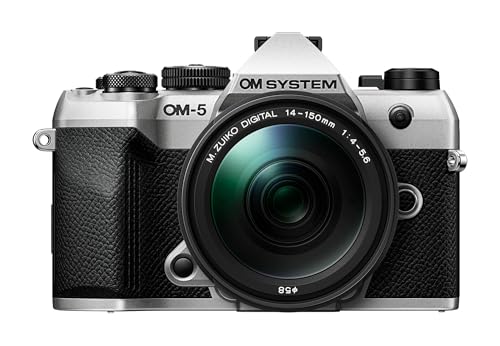
OM SYSTEM OM-5 Mark II — Best true macro system
For true macro video, this guide’s answer is a system rather than a camera, and the OM-5 Mark II is its door. Micro Four Thirds has cultivated macro like no other mount: dedicated macro lenses with serious magnification, a sensor whose depth of field at close range is a working advantage rather than a limitation, and computational tools — focus bracketing and stacking for stills, excellent stabilisation that calms the macro-distance shakes — born from a maker whose heritage is scientific and medical imaging. Filming a beetle, a movement, a circuit board, this is the body whose ecosystem has thought about your problem for decades.
The camera itself is compact, weather-sealed for field macro in damp grass at dawn, and stabilised to a degree that makes handheld close work plausible where other systems demand rails. Its video specification serves the macro filmmaker rather than the cinema department, which is the correct allocation for this keyword. Buy it as the foundation of a macro practice and the lenses will be the purchases you remember; the body simply makes them all behave.
- Format: Micro Four Thirds mirrorless
- System: deepest dedicated macro lens shelf
- Tools: focus bracketing and stacking for stills
- Stabilisation: class-leading, macro-friendly
- Role: true macro foundation
Strengths
- Macro ecosystem without rival here.
- Depth of field that helps at close range.
- Weather sealing for field work.
Trade-offs
- Video spec serves macro, not cinema.
- Smaller sensor in ordinary low light.
- Macro lenses are the real investment.
Best for: macro filmmakers and natural-history videographers. Not suited for: creators wanting a rig-free compact.

DJI Osmo Pocket 3 — Best product-demo close-up
Ask working product videographers what films their close-ups and a surprising number will produce this little gimbal from a pocket. The Pocket 3 focuses close enough for the demo grammar of modern commerce — the stitching on the wallet, the texture of the cream, the mechanism of the gadget — while its three-axis gimbal irons out the handheld tremor that close distances magnify into seasickness. Its flip screen makes the overhead shot, the default grammar of craft and food video, a one-handed affair, and its face and subject tracking keep a demonstrator’s hands and products centred without a crew.
Its limits are a fixed lens’s limits: magnification is by proximity, not optics, so true macro is beyond it, and tiny subjects stay tiny. But for the enormous middle kingdom of close-up work — products, food, beauty, crafts, unboxings — it delivers more usable detail footage per minute of setup than anything else in this guide, which is why it has become the category’s default tool.
- Type: pocket gimbal camera
- Focus: close focusing for product detail
- Stabilisation: three-axis mechanical gimbal
- Screen: rotating, overhead-friendly
- Role: demos, food, beauty, crafts
Strengths
- Close-ups without any rig at all.
- Gimbal calm at tremor-magnifying distances.
- Overhead shots made effortless.
Trade-offs
- No true macro magnification.
- Fixed lens, fixed perspective.
- Battery is a session, not a day.
Best for: product, food and craft videographers. Not suited for: insect-scale true macro.

Sony ZV-E10 II — Best flexible creator route
The ZV-E10 II is the close-up camera for the creator whose subjects keep shrinking. Out of the box, with a kit lens, it handles the near close-up world — products, desk demos, food — with the autofocus and product-showcase manners Sony built into the ZV line. When a subject demands true magnification, the E mount accepts dedicated macro lenses, and the same body becomes a genuine macro instrument with focus peaking and magnification assist to work at life size. That growth path, from rig-free to fully rigged inside one body, is unique at this price in the guide.
Its creator-first design pays close-up dividends: the product showcase mode that snaps focus to a held-up item is, functionally, a close-up demo tool, and its compact body leaves light a path to the subject. It asks for the usual disciplines — a tripod for serious macro, light brought close, patience with focus at the distances where autofocus everywhere gets humble — but as a single purchase spanning the whole close-up spectrum, it is the list’s most adaptable answer.
- Format: APS-C mirrorless, E mount
- Growth: accepts dedicated macro lenses
- Tools: peaking, magnification assist, showcase focus
- Body: compact, light-friendly shape
- Role: close-up all-rounder
Strengths
- One body from demos to true macro.
- Product showcase focus is a demo gift.
- Lens shelf grows with the work.
Trade-offs
- Macro glass is a second purchase.
- Autofocus humbles at macro distances.
- No in-body stabilisation for handheld macro.
Best for: creators whose close-up subjects keep shrinking. Not suited for: buyers wanting macro mastery from the box.

Sony RX100 VII — Best pocket close focus
The RX100 VII earns its place on a single elegant fact: at its wide end it focuses just centimetres from the front element, turning a pocket camera into a detail camera for the product photographer-videographer who works small and travels light. Its zoom then steps back for the establishing shot, its autofocus is the most assured in the compact class, and its video quality has served professional B-roll for years. On a jewellery shoot or a watch review, it is the camera that fits between the lights where the main camera cannot go.
Age is its honest caveat — this is a mature design in a market that has moved — and its close focus lives at the wide end, so magnification is proximity rather than optics. But as a precision instrument for the near close-up world, small enough to be present at every shoot and capable enough to rescue any of them, it remains the connoisseur’s compact for detail work.
- Format: 1-inch sensor compact, zoom lens
- Focus: very close at the wide setting
- Autofocus: class-leading for a compact
- Size: fits where rigs cannot
- Role: detail B-camera and travel close-up
Strengths
- Close focus from a pocket body.
- Autofocus that rarely embarrasses.
- Zoom range covers the whole product shoot.
Trade-offs
- Close focus only at the wide end.
- A mature design beside newer rivals.
- Small body, small battery.
Best for: product shooters needing a detail camera in the pocket. Not suited for: true macro magnification.

Canon PowerShot G7 X Mark III — Best beauty and food close-up
Beauty and food video run on close-ups — the brush loading with pigment, the sauce breaking over the pasta — and the G7 X Mark III is the compact that grammar was built on. Its lens focuses close at the wide end, its colour flatters skin and food with the same Canon kindness, and its flip screen serves the overhead and mirror-facing setups these genres live in. A generation of tutorial makers chose it for exactly the work this keyword describes, and its footage remains the visual dialect its audience recognises as home.
It is a specialist in the near close-up world only: no lens changes, no true macro, and a design whose years show beside the newest compacts. Within its kingdom — the vanity table, the kitchen counter, the café review — it still delivers the warm, close, appetising footage its genres demand, at a size that films a small kitchen without rearranging it.
- Format: 1-inch sensor compact
- Focus: close at the wide setting
- Screen: flips for overhead and self-filming
- Colour: flattering Canon rendering
- Role: beauty, food and lifestyle close-up
Strengths
- Genres’ native camera, proven daily.
- Colour that flatters skin and food.
- Films small spaces without a rig.
Trade-offs
- Near close-up only, forever.
- Design shows its generation.
- No lens flexibility to grow into.
Best for: beauty, food and lifestyle creators. Not suited for: macro or product-mechanism work.
Canon EOS R7 — Best magnification step-up
The R7 closes the list without a link, as the step up for the close-up shooter who has felt the compacts’ ceiling. Its APS-C sensor crops the frame in a way that flatters magnification — a macro lens’s life-size subject fills more of the picture — and Canon’s RF macro glass gives the system true macro credentials with autofocus and stabilisation engineered for close work. Its stills speed and subject detection also make it the wildlife-and-detail body for the shooter whose close-ups have wings.
The commitments are a system’s commitments: the body is the beginning, the macro lens is the point, and a focus rail and lighting will follow as surely as seasons. It is included as the honest horizon of the keyword — the camera for the reader who films a beetle and finds a compact’s proximity insufficient, and who is ready to build the small, serious rig that true magnification has always required.
- Format: APS-C mirrorless, RF mount, prose-only
- Advantage: crop reach flatters magnification
- System: RF macro lenses available
- Stills: fast, subject-detecting
- Role: the macro step-up
Strengths
- Magnification feels larger on crop.
- True macro via dedicated RF glass.
- Superb detail-stills body alongside.
Trade-offs
- A system purchase, not a solution in a box.
- Rail and lighting follow inevitably.
- Overkill for product demos.
Best for: close-up shooters graduating to true macro. Not suited for: rig-free content creation.
What Is the Difference Between Close-Up, Close Focus and True Macro?
The words are used loosely in marketing and precisely in this guide. Close focus simply means a lens can focus near — most compacts do, impressively, at their wide settings. Close-up video is the craft of filming small subjects large, achievable by close focus, by cropping, or by magnification. True macro is the measurable summit: the subject recorded at life size or greater on the sensor, a world that requires dedicated macro lenses or extension and rewards it with detail no crop can counterfeit — the facets of an insect’s eye, the engraving inside a ring shank. The distinction decides purchases. A product videographer filming handbags and headphones needs close focus and good light, and the compacts here will delight them for years. A natural-history filmmaker filming beetles needs true macro and should buy into a macro system on day one. Confusing the two is the category’s classic expensive error: a creator with a beetle problem sold a compact, or a handbag filmmaker sold a macro rig that turns a ten-minute shoot into an afternoon of focus rails.
Why Does Light Get Harder as the Subject Gets Smaller?
Because the camera itself becomes the eclipse. At macro distances the lens and body shadow the subject, the working distance shrinks to centimetres, and the large soft lights of portrait work cannot physically fit between camera and subject. Close-up videographers solve it with small, deliberate sources — LED panels on gooseneck arms, ring lights that surround the lens, fibre-optic wands for the tiniest work — and with cameras whose shape cooperates: a compact whose lens barely protrudes leaves the light a path, while a deep macro rig needs its lighting planned like scenery. Continuous light, not flash, is the video worker’s medium, and its heat and colour quality matter at these distances in ways a product listing never mentions. When judging the picks below for your own work, picture your actual subject — the ring, the circuit board, the cupcake — and ask where the light will stand. The best close-up camera is often simply the one that leaves the light somewhere to stand.
How Do You Focus at Macro Distances Without Losing Your Mind?
By surrendering the autofocus romance at the right moment. Autofocus systems, even excellent ones, hunt at close distances because the depth of field is thinner than their confidence; the macro craft’s answer is a layered method. Begin with autofocus to find the neighbourhood, then switch to manual and focus by moving — rocking the camera, or the rail, in micrometres while watching the magnified view, because at life size the focus ring’s travel is coarse and the body’s movement is fine. Focus peaking, coloured honestly and not trusted blindly, shows the sharp plane’s geography; the magnified preview confirms it at the exact point of interest — the insect’s eye, the engraving’s deepest letter. For video, plan the focus journey as a move: mark the start and end planes, rehearse the rack between them at the speed the edit will want, and accept that a beautiful focus pull at macro distance is a performed skill like a musician’s, built in repetitions. The OM System and Sony picks in this guide carry the best toolkits for this discipline; the discipline itself is the photographer’s, and it is learned in one honest afternoon of failures that teach faster than any tutorial.
What Is Focus Stacking, and Can Video Use It?
Focus stacking merges multiple frames, each focused at a different depth, into one image whose sharpness spans what no single exposure’s optics allow. For stills it is close-up photography’s great emancipation — the OM-5 in this guide automates the capture sequence — and the stacked macro still, sharp from foreground leg to background wing, is now the genre’s expected standard. Video cannot stack a moving world, which is why macro cinematography remains the harder craft: the filmmaker must choose the sharp plane as an artistic act, light for a smaller aperture to deepen it, or choreograph focus as movement. Where the subject is still — the product, the mechanism at rest, the specimen — the border blurs delightfully: a slow, motorised focus sweep through the planes, composited in post, can synthesise a stacked depth for a locked-off shot, and patient product filmmakers do exactly this. Know which side of the line your subject lives on. The living subject demands the classical crafts; the still one invites the computational ones, and the close-up camera wardrobe in this guide was chosen to serve both temperaments.
How Close Is Too Close? Working Distance and Living Subjects
Every macro lens negotiates a treaty between magnification and working distance — the space between the front element and the subject — and living subjects enforce the treaty’s terms. A butterfly tolerates a long lens at a respectful distance and vanishes from a short one no matter how silently it approaches; the longer macro lenses, and the crop-sensor reach of the R7 in this guide, exist to buy that distance. Inanimate subjects invert the preference: the watchmaker’s bench and the product table welcome short working distances, where control is total and the light can be placed with tweezers. Shadows are the treaty’s third party — at short distances the lens itself eclipses the light, which is why macro lighting is a specialism of small sources on articulated arms. When choosing your close-up system, measure your subjects’ tolerance before your own ambition: the kit that respects a skittish subject’s perimeter will return footage the braver kit never sees, and the history of nature filmmaking is largely the history of working distance, patiently extended.
How Do You Light a Subject Smaller Than the Light?
With small lights, close lights, and light treated as a sculptural material rather than a utility. The macro subject lives in a world where a business card is a softbox and a torch beam is a sunset; the craft is placing those small sources with intent — raking across a surface to excavate its texture, backing a translucent subject so it glows like stained glass, or ringing the lens with even light for the shadowless clarity that beauty and medical work demand. Diffusion scales down too: a scrap of tracing paper over an LED is the macro softbox, and its distance in centimetres tunes softness as surely as metres do in a portrait studio. Colour discipline tightens at this scale, because mixed sources that a wide shot averages out become, in close-up, visibly different worlds on either side of a coin. The cameras in this guide were partly judged on how their shapes admit this small lighting — the compact that leaves the subject’s sky open, the rig that mounts arms where they are needed. Buy lights before lenses in this genre; the close-up world is lit or it is nothing.
What Makes a Great Product Close-Up Sequence?
Grammar, mostly: the same sentence structure every good product film speaks. Establish the whole object in its world, so the audience owns its scale and purpose. Approach — a move or a cut — to the detail that carries the product’s claim: the stitch, the hinge, the ingredient’s texture. Dwell there long enough for the eye to read it, which is longer than beginners think and shorter than enthusiasts hope. Then release back to the whole, changed by what the detail taught. The close-up cameras in this guide divide this labour by temperament: the Pocket 3 performs the approach as a physical glide, the mirrorless bodies cut between dedicated setups, and both are correct. Sound joins the grammar at this scale — the click of the mechanism, the brush’s whisper — recorded close and clean, because at macro distances the audience expects intimacy in every sense. Shoot the sequence in more versions than the edit needs; product clients choose details the filmmaker did not predict, and the close-up archive of a single shoot serves the product’s whole campaign.
How Do Beauty and Makeup Videos Use Close-Up Differently?
Beauty close-up is a portrait discipline wearing macro’s clothes: the subject is skin, the detail is pigment and texture, and the audience’s judgement is forensic. The genre’s camera demands follow — colour that renders foundation shades truthfully rather than flatteringly vague, focus that holds an eye through a tutorial’s duration, and a flip screen because the presenter is the operator. The G7 X’s reign in this genre was built on exactly those virtues, and its successors are judged against them. Light is the genre’s other signature: large, frontal and forgiving, because beauty light erases the texture the camera would otherwise prosecute — except where texture is the lesson, when the light rakes and the macro honesty returns. Creators graduating within the genre move toward the ZV-E10 II’s interchangeable lenses for the dedicated close-focus glass, carrying the same lighting grammar with them. The lesson for any close-up buyer is that genres define ‘close’ for themselves; the beauty creator’s working distance is the product filmmaker’s establishing shot, and both are right.
Why Do Watch and Jewellery Videos Need Their Own Approach?
Because their subjects are mirrors with ambitions. A polished case and a faceted stone return the room to the camera — every light, window and the filmmaker’s own silhouette appears in the product — so the craft becomes the management of reflections: large white surfaces to give the metal something beautiful to reflect, black cards to carve the edges that define its shape, and movement, always movement, because a stone’s fire only exists when light travels across it. The camera’s role is stability and honesty — a locked frame, a slow turntable or a gliding Pocket 3 pass, colour that does not invent warmth the metal does not have. Macro magnification serves the hallmarks, the engraving, the setting’s claws, where the craft’s value is literally inspected. This genre is the close-up world’s finishing school: master reflections on a watch and every other product’s lighting becomes legible, because you have learned that at small scales, you do not photograph the object — you photograph the light it returns.
How Should a Beginner Practise Close-Up Video at Home?
With a coin, a leaf and a kitchen, in that order. The coin teaches focus discipline: film it at your camera’s closest, practise the rock-and-settle manual focus until the sharp plane lands where you intend, and learn what your depth of field actually is at three apertures by watching, not reading. The leaf teaches light: backlight it, rake across it, ring it flat, and watch one subject become three films — the cheapest cinematography education in existence. The kitchen teaches grammar: film the making of tea as a product sequence, establish-approach-dwell-release, with the kettle’s detail and the pour’s steam as your close-ups, and edit it to thirty seconds that a stranger enjoys. A weekend of these three teachers, on any camera in this guide, builds more close-up craft than a month of specifications. Keep the exercises; repeat them with every new lens or light, because the small world’s fundamentals do not change — only your fluency in them does.
What Goes Wrong With Stabilisation at Close Distances?
Stabilisation systems are tuned for the wide world’s movements, and macro distances confuse their assumptions. In-body stabilisation corrects angular shake beautifully, but at close range the damaging movement is translational — the camera drifting millimetres sideways or forward — which shifts the subject within the frame and slides the focus plane off it, motions no gyroscope fully understands. Electronic stabilisation adds its own hazard: the crop-and-correct dance can wobble the frame’s edges in a way that reads, at macro scale, as the subject breathing. The craft’s hierarchy of steadiness is therefore old-fashioned: a tripod first, a rail or a solid surface second, the gimbal third for moving work, and in-body systems as the valued last line rather than the plan. The OM-5’s stabilisation is the honourable exception that narrows the gap for field macro, where tripods cannot always go. Test your own combination on your own subjects before the paid day; at close distances, steadiness is a system property, and systems must be rehearsed, not believed.
How Do You Choose Between a Macro Lens and Extension for Video?
By asking what the work repeats. Extension tubes and close-up filters are the economist’s magnification — they convert lenses you own into close-focus tools for the price of a modest dinner, and for the occasional detail shot they are entirely honourable. Their taxes are light, working distance and convenience, paid on every shoot. A dedicated macro lens is the professional’s answer to repetition: full magnification with the light and distance engineered in, focus travel designed for the distances that matter, and rendering optimised for the flat, detailed fields close-up work lives in. The dividing line is frequency — the creator whose weekly work is close buys the lens and never regrets it; the one whose quarterly work is close rents, extends or adapts. This guide’s system picks, the OM-5 and the ZV-E10 II, were chosen because both mounts offer that graduation honestly, from accessory to dedicated glass, inside one body you already own. Magnification, like every craft in this batch of guides, rewards the buyer who matches the tool to the diary rather than to the dream.
How Do You Film Hands at Work Without the Hands Becoming the Problem?
Hands are the close-up world’s most common subject and its most difficult actor: they move, they shadow, they fill the frame with skin that exposes every colour error. The craft begins with light placed for the hands’ geography — high and soft for the general task, raking when texture is the lesson — and with the camera far enough back that the hands work inside the frame rather than entering it like weather. Focus strategy matters more than focus precision: pre-focus on the workpiece, let the hands come to the sharp plane, and resist the autofocus hunt that makes tutorials unwatchable. The Pocket 3’s tracking and the creator bodies’ product modes serve this grammar well, which is why they dominate the genre. Direct the hands as you would any performer — slower than feels natural, pauses at the moments the audience must absorb, nails and sleeves considered as costume. The close-up of working hands, done well, is the most persuasive shot in commerce and craft alike, because the audience’s own hands answer it with sympathy. Practise on your own hands making tea until the grammar is muscle memory.
What Is the Best Way to Show Scale in a Close-Up?
By contrast, arranged honestly. The audience cannot judge a tiny subject’s size from its portrait alone; scale is a relationship, and the filmmaker must supply the other term — the fingertip at the frame’s edge, the coin beside the mechanism, the wide shot that placed the subject in its world before the approach. The classic grammar is the reveal: begin wide, approach to the detail, and let the journey itself teach the dimensions. Within the close-up, familiar textures calibrate the eye — skin’s pores beside a seed, a match head beside the miniature — provided the comparison is truthful and the edit does not cheat the relationship for drama. Depth of field can lie about scale, making the miniature look monumental; sometimes that lie is the film’s point, as in the tilt-shift city rendered as a model, and sometimes it is merely a lie. Decide which film you are making. The close-up cameras in this guide give you the optics for either; the honesty, as in every genre in this batch, is the operator’s contribution.
How Do You Record Sound for the Very Small?
Closely, because the small world’s sounds are small. The click of the mechanism, the brush on paper, the seed pod’s crack — these are recorded in centimetres, with the microphone placed as deliberately as the light and shielded from the room’s larger noises. Contact and miniature microphones serve the specialist; for most close-up work, the discipline is proximity and quiet — the room’s hum silenced, the camera’s own handling noise kept out by mounting rather than holding, and the subject’s sounds performed at a pace the recording can honour. Sound is half of close-up’s intimacy: the audience leans toward a small sound exactly as they lean toward a small image, and the pairing of the two is what makes macro footage feel like access to a hidden world rather than a magnified one. Record the room tone of the small setup too, so the edit can lay the details on a bed of believable silence. The cameras here all accept real microphones; the genre’s beginners forget that the microphone, at this scale, is also a close-up instrument and must be focused like one.
How Should You Choose a Tripod and Head for Close-Up Work?
By the movements your subjects demand, at the distances they demand them. Close-up tripod work is mostly stillness punctuated by micrometres, so rigidity outranks height and a head that creeps under load is worse than none. A geared head — whose axes move by screw rather than by friction — is the close-up specialist’s quiet joy, composing in increments the hand cannot make. For video, the head must also pan and tilt without stick-slip at the start of the move, the flaw that ruins more close-up tracking shots than any focus error; test a head with your actual camera at your actual working distance before believing it. The rail, when it arrives in your practice, mounts between head and camera and turns focus into a translation, the smoothest focus pull macro owns. Buy support in the order the work reveals: tripod, then head, then rail, each purchase answering a named frustration of the last shoot. Support is the least glamorous line in the close-up budget and the one professionals protect most fiercely, because at these distances the camera is only ever as good as what it stands on.
What Does a Jeweller’s or Watchmaker’s Client Actually Want to See?
Proof, at magnification, delivered beautifully. The client’s customer is deciding whether the stone is honest, the movement is fine, the restoration was worth its price — and the close-up film is evidence in that decision, which raises its standard from pretty to forensic. Sharpness must be real, not sharpened; colour must be true, because a sapphire’s hue is its price; and movement must be slow enough for the eye to inspect, which means the turntable’s pace and the focus’s journey are set by the viewer’s need rather than the filmmaker’s flair. The OM-5’s macro system and the ZV-E10 II with dedicated glass serve this evidentiary work best in this guide, with lighting that rakes to reveal and never flatters away a flaw the buyer would find on delivery. Shoot the hallmarks, the serials, the settings’ undersides — the angles a hand would turn the piece to — because the film is a pair of hands by proxy. Get this genre right and the clients are for life: trust, at magnification, is the most renewable contract in close-up work.
How Can Food Videographers Make Texture the Star?
By lighting across, not at. Texture — the crumb’s crumb, the sear’s crust, the sauce’s gloss — is revealed by light travelling along a surface, casting the micro-shadows that the eye reads as touch. A small source placed low and to the side does more for a food close-up than any camera upgrade, and the cameras in this guide divide by how graciously they let that light in close: the compacts and the Pocket 3 leave the subject’s sky open, while a big rig must plan its lighting like scenery. Steam and gloss are the genre’s moving textures, caught against a dark background with the light behind them, and they wait for no one — the dish’s first minute is its most photogenic, so the close-up setup is built before the food arrives, focused on a stand-in, lit and rehearsed. Colour honesty matters commercially: the audience will eat the real dish, and the film that lied about its colour has committed a small fraud with a reservation attached. Shoot texture like evidence and appetite follows.
Why Do Unboxing and Review Videos Live or Die on Close-Ups?
Because the close-up is where a review keeps its promises. The wide shot makes claims — premium, compact, well-made — and the audience believes exactly as much of them as the detail shots prove: the port’s fit, the seam’s alignment, the screen’s behaviour, the texture the presenter’s adjectives described. Reviewers who understand this shoot their close-ups as testimony, with the product worked rather than posed — connectors seated, mechanisms cycled, materials flexed — at magnifications where flaws cannot hide, including the ones that complicate the review’s verdict. The Pocket 3 and ZV-E10 II dominate this genre in this guide because their close focus and subject manners make testimony effortless to gather. The ethical line is the genre’s foundation: a close-up that conceals a known flaw is an advertisement wearing a review’s clothes, and audiences learn to smell it. Shoot the detail that could embarrass your conclusion first; if the conclusion survives its own evidence, the review is worth publishing and the camera has done its whole job.
How Do You Keep a Close-Up Shoot Efficient?
By front-loading every decision the small scale makes expensive. The set is built and lit on a stand-in subject — a coin for the ring, a spare part for the mechanism — because focusing, lighting and framing at macro distances consume time at a rate wide work never teaches. The shot list is written in the grammar of establish-approach-dwell-release, with the details ranked by the client’s need so the essential testimony is captured before the schedule’s surprises arrive. Spares live within reach: batteries, cards, the second light, the cleaning kit whose absence at macro distance is a production halt rather than an inconvenience. And the shoot’s pace respects the craft’s paradox — close-up work hurries worst when rushed, its focus and light punishing haste with reshoots — so the schedule builds in the slowness as a line item and calls it professionalism. Review the takes at magnification on the day, not at the edit, because the flaw invisible on the camera’s screen is the headline on the client’s monitor. Efficiency at this scale is not speed; it is the absence of second visits.
How Do You Direct a Subject That Fits on a Fingertip?
With time, temperature and a respect for the subject’s own agenda. Living macro subjects — the beetle, the mantis, the jumping spider — work to schedules set by warmth and hunger, and the filmmaker’s first skill is husbandry: the set kept at the temperature where the subject is calm but active, the performance area small and furnished with the textures the subject trusts. Shoot in the subject’s active windows, in short, rested sessions, with the camera pre-focused on the stage where the behaviour will happen rather than chasing it through the viewfinder. The OM-5’s pre-capture habits and stabilisation serve this patient theatre well. Between sessions, review at magnification and adjust the set the way a stage manager adjusts a set — a leaf moved, a light lowered — because at this scale the filmmaker is a production designer for a world one inch wide. The footage that results, of a creature behaving naturally inside a composed miniature world, is macro cinema’s signature achievement, and it is earned in the husbandry hours the audience never sees.
What Mistakes Do Close-Up Videographers Make?
Breathing on the focus is the first: at macro distances, leaning in to admire your own shot shifts the camera enough to lose the subject’s sharp plane, so the discipline is tripod, remote or timer, and hands off. Second is lighting from behind the camera only, which flattens texture — the very thing close-up exists to reveal; rake a small light across the subject and watch detail appear like a landscape at dawn. Third is trusting autofocus at distances where every system hunts; manual focus with magnification assist is slower and infinitely more honest. Fourth is cleaning neglect — a front element’s fingerprint, invisible at portrait distance, is a fog bank at macro distances, and dust on a tiny subject is a boulder. Finally, creators forget scale cues: a close-up without an occasional wider shot leaves the audience admiring texture and understanding nothing, so grammar matters — establish, approach, dwell in detail, release.
Comparison Table
| Camera | Close-up route | Magnification | Watch out for |
|---|---|---|---|
| OM SYSTEM OM-5 Mark II | Macro lens system | True macro and beyond | Video spec is specialist |
| DJI Osmo Pocket 3 | Close focus, gimbal | Near close-up | No optical magnification |
| Sony ZV-E10 II | Kit to macro lenses | Grows to true macro | Macro glass costs extra |
| Sony RX100 VII | Close focus, wide end | Near close-up | Mature design |
| Canon G7 X Mark III | Close focus compact | Near close-up | Fixed lens forever |
| Canon EOS R7 | RF macro system | True macro, crop-flattered | A rig must be built |
Final Recommendation
Name your subject’s size and the list sorts itself. True macro — insects, mechanisms, the engraved and the miniature — belongs to the OM-5 Mark II’s system today or the R7’s tomorrow. The vast near close-up kingdom of products, food, beauty and craft belongs to the Pocket 3 for pure ease, the ZV-E10 II for growth, and the two compacts for pocketable specialism. Bring light close, focus manually when it matters, and let the small world have the production values of the large one — it rewards the attention out of all proportion to its size.
Related guides
- Best Compact Cameras for Close Up Photos: Macro Modes, Minimum Focus, and Lighting That Works
- Best Cameras Under 700 Dollars: 6 Picks Costed as Whole Kits, With One Labelled Step-Up
- Best Cameras for White Balance: Precision Colour Control for Product, Interior and Video Work
- Best Cameras for Shooting Miniatures Video: Macro-Ready Picks for Layouts, Dioramas and Painting Desks
- Best Cameras for Makeup Tutorials: Six Picks for Teaching Close-Up Technique on Camera
- Best Cameras for Macro Video: Six Picks for Tiny Subjects and Honest Focus
Frequently Asked Questions
Can I shoot macro video with a normal lens and cropping?
Up to a point. A sharp, high-resolution frame cropped hard can simulate close-up convincingly for web delivery, and many creators work exactly that way. The limits are resolution and depth of field — the crop magnifies noise and softness along with the subject. It is a legitimate technique for occasional detail shots and a poor foundation for a macro practice.
Why does my close-up footage shake so much?
Because distance is a magnifier of movement as well as of subjects: a tremor invisible in a wide shot is an earthquake at macro range. The cures are mechanical and behavioural — a tripod or gimbal, the camera’s stabilisation, resting your hands, and filming in shorter, deliberate takes. The Pocket 3’s gimbal and the OM-5’s stabilisation exist in this guide largely because of this question.
What lighting is best for close-up video?
Small, close and angled. A compact LED panel on a flexible arm, placed to rake across the subject, reveals texture that frontal light erases; ring lights give even, shadowless illumination for beauty and product work. Whatever the source, it must be continuous for video, colour-honest, and positioned after the camera is set — light follows framing at these distances, never the reverse.
Do I need a focus rail?
For true macro, eventually yes: a rail moves the whole camera in micrometres, which is a finer instrument than any focus ring at life size. For near close-up product and food work, a tripod and careful hands suffice. Buy the rail when your subjects shrink below a centimetre — it will announce its own necessity clearly enough.
Which is better for product videos, the Pocket 3 or a mirrorless camera?
For speed and ease, the Pocket 3 — it is the demo camera of the moment for a reason. For growth, look and longevity, the ZV-E10 II, whose lenses let the work evolve. Many professionals own the sequence in that order: the pocket camera funds the channel, the mirrorless body graduates it. Neither purchase is wasted; they are chapters, not rivals.
How do I keep a tiny subject in focus while it moves?
With difficulty, strategy and lowered pride. Widen the depth of field with more light and a smaller aperture, follow-focus manually with magnification, film the movement repeatedly rather than once, and let some drift be beautiful — a plane of focus travelling across a living subject is one of macro cinema’s signature pleasures when it looks intended. Plan for it, and it will.
Related Guides
Keep exploring: best cameras for macro video, best cameras for crafts, and best affordable cameras for close detailed picture.


