kajuandouglas.com is reader-supported. When you buy through links on our site, we may earn an affiliate commission.
Where to Buy
The best cameras for amazing photos are not, strictly speaking, cameras that take amazing photos — no such thing exists. They are cameras that maximise the number of things going right when an amazing moment offers itself: light rendered faithfully, detail held where the eye lands, focus placed exactly where the story is, and files with enough depth to survive the edit that turns a good capture into the frame on the wall. The six cameras below, all available through the Amazon listings linked in this guide, were chosen on precisely that definition. Match the model name on the listing to the pick before you buy, and read the honest part of this guide too: the section on what cameras cannot do for you is the most valuable one here.
“Amazing” also depends on the photograph you dream about. For some it is the landscape with impossible depth and colour at dawn. For others it is the portrait where the eyes carry the whole frame, or the street scene caught at the exact second of gesture, or the bird frozen mid-wingbeat. Each pick below owns one of those dreams more completely than the others, and the reviews name the dream rather than hiding behind all-rounder language — because the fastest route to amazing photos is a camera whose genius matches your subject.
One promise before the list: every camera here can produce a photograph that stops a scrolling stranger. The differences are in hit rate, in difficult light, in how large the result can print, and in how the camera behaves while you learn. Choose for those, and the amazing takes care of itself more often than the marketing of any brand would dare promise.
Key Takeaways
- The Fujifilm X100VI produces the most immediately beautiful straight-from-camera images here — its colour and lens make ordinary light look considered.
- The Sony Alpha 7 IV is the technical ceiling: full-frame detail, dynamic range, and autofocus that make difficult amazing photos achievable.
- The Canon EOS R6 Mark II is the action-and-low-light artist — faces, events, and night scenes rendered with confidence.
- The Fujifilm X-T5’s resolution rewards the deliberate photographer: landscapes and details that print large and hold together.
- The Sony RX100 VII proves amazing fits in a pocket, with a zoom that reaches the wildlife and candids other compacts cannot.
- The Panasonic LUMIX S5II is the quiet all-round image maker, with colour and stabilisation that flatter handheld, available-light shooting.
- Amazing is a rate, not a feature: light, timing, and editing decide most of it, and the sections below teach the parts the camera cannot.
In this guide
Quick Picks
| Badge | Pick | Why it stands out |
|---|---|---|
| Most Beautiful Straight From Camera | Fujifilm X100VI | Film-like colour and a superb fixed lens that make everyday scenes look like stills from a film. |
| Best Technical Ceiling | Sony Alpha 7 IV | Full-frame detail and range with autofocus that nails the moments other cameras miss. |
| Best for People and Night | Canon EOS R6 Mark II | Extraordinary low-light cleanliness and face tracking for events, portraits, and after-dark scenes. |
| Best for Detail and Landscape | Fujifilm X-T5 | The highest resolution here, rewarding careful composition with files that print beautifully large. |
| Best Pocket Wonder | Sony RX100 VII | A long zoom and fast focus in a coat pocket — amazing reach for travel and candid moments. |
| Best Handheld Image Maker | Panasonic LUMIX S5II | Full-frame colour and class-leading stabilisation for sharp, rich images in available light. |
How We Chose These Picks
We started by defining the qualities that actually separate an amazing photograph from a competent one, then mapped cameras to them. Those qualities are: tonal depth — skies and skin that graduate instead of banding; detail where it matters, which is a lens-and-sensor partnership, not a megapixel slogan; colour with a point of view or the neutrality to impose your own in editing; and focus accuracy at the decisive instant. Every pick excels in at least two of those and is respectable in all, which is a harder bar than it sounds.
We deliberately mixed philosophies. Two of these cameras render gorgeous images with minimal editing because their colour science does the artistry in-camera — a legitimate and joyful route to amazing. Others are capture machines: neutral, deep files built for a photographer who finishes images in software and wants maximum material to work with. Neither philosophy is superior; they suit different temperaments, and the reviews say which is which so you can buy your own temperament rather than a stranger’s.
Size was the final filter, applied in both directions. The list includes a pocket compact and full-frame bodies in the same breath because amazing happens at both scales — the RX100 VII’s photograph exists because the camera was in a pocket at the right second, and the Alpha 7 IV’s exists because its sensor drank light a smaller one could not. Presence and power are both image-quality features; the guide treats them that way throughout.
What Actually Makes a Photo Amazing — and How Much of It Is the Camera?
Decompose any photograph that has ever stopped you, and the ingredients recur: remarkable light, a subject with inherent pull, a composition that removes everything else, and a moment that will not repeat. The camera’s honest share of that recipe is perhaps a third — it can render the light faithfully, resolve the subject’s detail, and focus at the moment’s peak, but it cannot supply the light, choose the subject, compose the frame, or wait for the moment. Photographers who understand this buy cameras for the third they control and spend their real effort on the rest.
Within the camera’s third, the contributions rank clearly. The lens matters most — its sharpness, its rendering of out-of-focus areas, its behaviour pointed toward light. The sensor’s dynamic range and colour come next, deciding how much of a difficult scene survives into the file. Autofocus follows, invisible until the moment it saves or loses the one frame that mattered. Resolution is last for most subjects and first only for the landscape and detail work the X-T5 was chosen to serve. This ranking explains the shape of the list: it is a list of great lenses attached to worthy sensors, in bodies whose focus can be trusted.
The practical consequence is liberating. Because the camera’s share is bounded, the difference between the cheapest and dearest pick here is a difference in degree, not in kind — each can produce the amazing photograph when the other two-thirds align. Buy the one matched to your subjects and your temperament, then go and work on light, patience, and the ruthless edit, which is where amazing is actually manufactured.
Straight From Camera or Edited: Which Route to Amazing Is Yours?
The Fujifilm route — X100VI and X-T5 — treats colour as a decision made at the moment of capture. Their film simulations are not filters in the phone sense; they are considered renderings, modelled on film stocks, that give a body of work a coherent, finished look with no software involved. For photographers who shoot for the joy of the day and share from the camera, this route produces more amazing finished photographs per outing than any other, because the finishing never becomes a backlog.
The capture-and-edit route — Sony and Panasonic here, Canon straddling — treats the camera as a collector of maximum information: deep, neutral files whose amazing is finished at the desk. This route rewards the photographer who loves the darkroom half of the craft, and it rescues difficult light more completely. Its tax is time and honesty: an unedited capture is an unfinished photograph, and a backlog of thousands of raw files is a tax many photographers quietly stop paying.
Choose by self-knowledge, not aspiration. If your edited backlog already exists from a previous camera, buy the Fujifilm philosophy and be free. If editing is your meditation and your images live or die by it, buy the capture machines. The amazing photograph does not care which road it travelled; it cares that its photographer finished the journey.

Fujifilm X100VI — Most Beautiful Straight From Camera
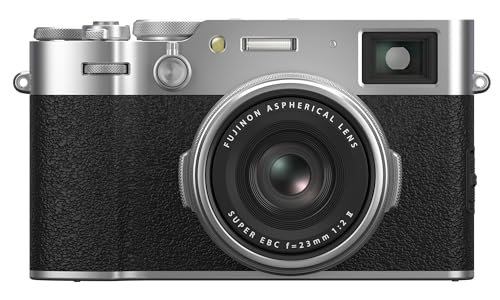
No camera in this guide produces more photographs that people describe as beautiful within a second of seeing them. The X100VI pairs a large APS-C sensor with a fixed lens of genuine excellence and Fujifilm’s film simulations, and the combination renders the everyday — café light, a wet street, a face at a window — with a richness that looks deliberate even when it was luck. Its hybrid viewfinder, leaf-quiet shutter, and flat profile make it disappear into the moment, which is where its best photographs come from: unposed life, caught cleanly.
The fixed lens is the philosophy and the limit in one. There is no zoom; you compose with your feet, and the frame it gives is the classic reportage width that flatters scenes and environmental portraits. Wildlife, sport, and anything distant are simply not its subjects. Owners divide into those who find the constraint liberating — one lens, one view, total fluency — and those who sell it within a year. If the idea of one perfect lens excites rather than worries you, this camera makes amazing photographs at a rate nothing else here matches.
- Sensor: large APS-C with Fujifilm film-simulation colour
- Lens: fixed wide-normal prime of excellent quality, no zoom
- Viewfinder: hybrid optical/electronic, unique in this guide
- Character: compact, quiet, and made for candid everyday beauty
Strengths
- Colour and rendering that finish photographs in-camera, beautifully and consistently.
- A lens-sensor pairing tuned as one instrument — sharp, characterful, flare-resistant.
- Size and discretion that get it into moments bigger cameras would disturb.
Trade-offs
- No zoom and no lens changes — distant subjects are permanently distant.
- High demand can make it genuinely hard to find in stock.
- Video is a sideline; this is a stills camera with convictions.
Best for: street, travel, and everyday-life photographers who want finished beauty with minimal editing.
Not suited for: wildlife, sport, or anyone who cannot live without a zoom.

Sony Alpha 7 IV — Best Technical Ceiling
Where the X100VI seduces, the Alpha 7 IV empowers. Its full-frame sensor delivers detail, dynamic range, and low-light cleanliness that give a photographer maximum raw material: skies that hold their gradient at dusk, shadows that open in editing without falling apart, files that crop boldly and print large. Its autofocus — eye tracking for people and animals that borders on the telepathic — removes focus from the list of things that can go wrong at the decisive moment.
This is the camera for the photographer who finishes images deliberately and wants no ceiling on the capture side. Sony’s lens ecosystem is the deepest available, from affordable primes to professional glass, so the system’s rendering can evolve with your taste for years. The honest costs are neutrality and price: its straight-from-camera colour is accurate rather than romantic, asking the editor to supply the mood, and the full-frame system is the most expensive direction here. For the photographer who edits, it is not a cost; it is the point.
- Sensor: full-frame, high resolution, wide dynamic range
- Autofocus: class-leading eye and subject tracking
- Files: deep, flexible raw files built for serious editing
- Lenses: the largest ecosystem in photography
Strengths
- Capture quality that survives aggressive cropping, printing, and editing.
- Focus reliability that converts fleeting moments into keepers.
- A system with no ceiling — every lens and accessory direction stays open.
Trade-offs
- Colour asks for editing to become beautiful rather than merely accurate.
- System cost is the highest here once lenses are counted.
- Size and seriousness can intimidate casual contexts where the X100VI glides.
Best for: editors, printers, and ambitious photographers who want maximum material and no ceiling.
Not suited for: photographers who want finished images straight from the camera with no desk work.

Canon EOS R6 Mark II — Best for People and Night
Amazing photographs of people are made in terrible light: candlelit dinners, stage glow, blue-hour streets, the last dance. The R6 Mark II is the camera in this guide built for exactly that territory. Its full-frame sensor stays astonishingly clean at sensitivities that would dissolve lesser files, its autofocus finds faces and eyes in near-darkness and holds them through movement, and its stabilisation lets a photographer handhold scenes that would otherwise demand a tripod and a prayer.
Canon’s colour — particularly skin tones under mixed light — flatters the human subject in a way wedding and event photographers build careers on, and the R6 II’s speed serves the unrepeatable gesture: the laugh, the leap, the confetti second. It is a larger, more serious body than the compacts here, and its resolution, while ample, sits below the Sony’s for the cropping-obsessed. But for the photographer whose amazing is spelled with faces and evenings, this is the most capable tool on the list.
- Sensor: full-frame with exceptional high-sensitivity cleanliness
- Autofocus: face and eye detection that works in very low light
- Stabilisation: powerful in-body system for handheld night work
- Speed: fast bursts for events, weddings, and performance
Strengths
- Night and event photographs that stay clean, sharp, and alive.
- Skin tones and colour that treat people kindly under mixed lighting.
- Speed and focus for the unrepeatable human moment.
Trade-offs
- Resolution is lower than the Sony’s — extreme cropping is not its game.
- A substantial body and system; not a discreet street companion.
- Full-frame lens prices apply across the kit.
Best for: portrait, event, wedding, and low-light photographers whose subjects are people.
Not suited for: minimalists, or landscape photographers who crop deeply and print huge.

Fujifilm X-T5 — Best for Detail and Landscape
The X-T5 makes its amazing slowly and deliberately, and then it makes it permanently. Its sensor carries the highest resolution in this guide, and in the hands of a photographer who composes on a tripod at dawn, that resolution becomes landscapes with foreground detail you can walk into and architectural frames that hold their geometry to the corners. Fujifilm’s colour gives those scenes the same finished beauty as its sibling’s, while the tilt screen, weather resistance, and dial-driven handling suit the outdoor photographer’s rhythm precisely.
Unlike the X100VI, it takes interchangeable lenses — Fujifilm’s range of compact, characterful primes and zooms — so its amazing can extend from wide landscapes to compressed mountain layers to macro detail. Autofocus is capable rather than class-leading for erratic action, and video is the second language. Neither matters to its intended photographer, who is out at 5 a.m. with a thermos, composing the one frame of the day. For that photographer, nothing here rewards the effort like the X-T5’s files.
- Sensor: highest-resolution APS-C in this guide
- Controls: traditional dials, tilting screen, weather resistance
- Colour: film simulations for finished landscapes in-camera
- Lenses: interchangeable Fujifilm range, strong primes
Strengths
- Detail that prints large and rewards meticulous composition.
- Colour that gives landscapes a coherent, signature look with little editing.
- Handling that slows the photographer down in all the productive ways.
Trade-offs
- Action autofocus trails the Sony and Canon for fast, erratic subjects.
- Resolution’s benefits demand good lenses and careful technique to appear.
- Video depth is modest beside the hybrid picks.
Best for: landscape, travel, and detail photographers who compose deliberately and print proudly.
Not suited for: fast action specialists or video-led creators.

Sony RX100 VII — Best Pocket Wonder
The RX100 VII’s claim on amazing is the oldest one in photography: it was there. Small enough for a jacket pocket, it carries a zoom that reaches from wide scenes to genuine telephoto — the range that frames the eagle, the distant lighthouse, the candid across the square — and autofocus fast enough to catch the moment at any of those lengths. A remarkable share of the amazing photographs taken each year are taken by small cameras that happened to be present; this is the most capable of them.
Its sensor is smaller than the others here, and physics collects its tax in deep darkness and in the depth of its files for editing. Within daylight and ordinary interiors, though, its images are sharp, vivid, and entirely capable of the wall. It is the photographer’s second camera and the traveller’s only camera, and for the person whose amazing arrives unannounced — on the commute, the hike, the holiday — its combination of presence and reach is unbeatable in this guide.
- Zoom: wide-to-telephoto range unique at this size
- Sensor: 1-inch type — smaller, but sharp and capable
- Focus: very fast tracking with burst shooting
- Size: genuinely pocketable, always present
Strengths
- Reach and speed that let a pocket camera take photographs others cannot attempt.
- Presence — the camera that is with you for the unplanned amazing moment.
- Strong video makes it a complete travel documentarian.
Trade-offs
- Low-light and editing depth trail the larger-sensor picks clearly.
- Small controls and deep menus in a tiny body.
- No interchangeable lenses — the zoom is the whole optical story.
Best for: travellers and everyday carriers who refuse to miss moments for want of a camera.
Not suited for: night specialists, heavy editors, or large-print landscape purists.

Panasonic LUMIX S5II — Best Handheld Image Maker
The S5II’s amazing is the handheld kind: the dim restaurant portrait, the dusk street, the interior where flash would murder the mood. Its full-frame sensor drinks available light, and its in-body stabilisation — the best in this guide — holds the camera steady enough to use slow shutter speeds handheld, turning motion into a choice rather than an accident. Panasonic’s colour is natural and filmic in a way that suits this available-light world, and its files grade gracefully for photographers who finish their images.
It is also the most video-serious body here, which matters to the photographer whose amazing increasingly moves. The system around it — the multi-brand L-mount — offers lenses at every level, and the body itself is built like a tool rather than a jewel, which suits photographers who work in weather and crowds. Autofocus, once Panasonic’s weakness, is now thoroughly modern. If your photography is handheld, human, and half in love with the night, the S5II is the quiet answer.
- Sensor: full-frame with strong available-light performance
- Stabilisation: best in this guide for handheld stills and video
- Colour: natural, filmic rendering with grading depth
- Video: professional-leaning tools alongside the stills
Strengths
- Sharp handheld images in light that defeats lesser stabilisation.
- Available-light colour and files that flatter people and places.
- A complete hybrid for the photographer who also films seriously.
Trade-offs
- Resolution is ample rather than maximal for deep cropping.
- A working tool’s size and weight — not a pocket or a jewel.
- Stills burst performance is modest beside the Canon.
Best for: available-light, handheld, hybrid photographers who work in real-world dimness.
Not suited for: deep croppers, or minimalists seeking the smallest possible kit.
Six Routes to Amazing, Compared
| Pick | Route to amazing | Sensor | Editing needed | Main limit |
|---|---|---|---|---|
| Fujifilm X100VI | Colour and candour | APS-C | Minimal | Fixed lens, no zoom |
| Sony Alpha 7 IV | Capture everything, finish later | Full-frame | Substantial | Cost, neutral colour |
| Canon EOS R6 Mark II | People in impossible light | Full-frame | Moderate | Lower resolution |
| Fujifilm X-T5 | Deliberate detail | APS-C, highest resolution | Minimal to moderate | Action focus |
| Sony RX100 VII | Presence and reach | 1-inch | Moderate | Low-light depth |
| Panasonic LUMIX S5II | Handheld available light | Full-frame | Moderate | Size, burst speed |
What Habits Produce Amazing Photos More Reliably Than Any Upgrade?
Chase light, not locations. The same street is ordinary at noon and amazing at the hour the sun rakes across it; the photographers with walls full of remarkable frames are mostly people who learned their home ground’s light the way sailors learn tides. Shoot in the kind hours, return to the same places as seasons change them, and let familiarity compound — every camera here rewards that patience identically, because patience is a lens no one can buy.
Get closer, then remove something. Amazing frames are usually simpler than the scene was: one subject, one gesture, nothing competing. The zoom cameras here help from a distance, the X100VI’s fixed lens forces the walk, but the discipline is the photographer’s — fill the frame with the story and amputate the rest. Finally, edit like an enemy. Show ten, not two hundred; print the best at a size that exposes it; live with it for a month. The amazing photograph is usually taken in a burst of ten frames and recognised in a ruthless review of one.
What Mistakes Stop Good Photographers From Taking Amazing Photos?
Midday complacency is the first: shooting when it is convenient rather than when it is beautiful, then blaming the camera for the flat result. The second is the centred, distant, everything-included composition — the snapshot’s grammar — which no sensor can rescue. Third is equipment churn: selling a camera just as its handling becomes instinct, resetting the fluency that amazing moments demand. The photographers in this guide’s audience who break through are almost always the ones who kept one body for years and learned its every reflex.
Fourth, and quietly fatal, is never printing. On a phone screen every photograph looks fine and none looks amazing; print is where focus, detail, colour, and composition are audited honestly. The X-T5 and Alpha 7 IV exist in this list partly to honour the printers. Make one large print a month and your standard for “amazing” — and your hit rate toward it — will rise faster than any purchase could raise it.
How Do You Photograph the Classic Amazing Subjects: Landscapes, Portraits, Street, and Wildlife?
Landscapes are won before the shutter: the dawn alarm, the viewpoint scouted the day before, the foreground found at ankle height. Technically they reward the deliberate kit — the X-T5’s resolution and the Alpha 7 IV’s range hold the shadowed valley and the bright ridge in one file — and they punish haste, because the light that makes them amazing lasts minutes. The amazing landscape is a logistics achievement photographed well, in that order.
Portraits are won with light position and lens choice. A face lit from the side by a window, photographed with a fast lens that dissolves the background, is most of what the masters do; the R6 Mark II’s eye focus and low-light cleanliness, and the S5II’s stabilised patience, exist to serve exactly that arrangement indoors and after dark. Street photography is won by invisibility and anticipation — a zone focused corner, a stage of light, waiting for the actor — which is the X100VI’s home ground and the RX100 VII’s stealth mode. Wildlife is won by reach, speed, and fieldcraft: the RX100 VII’s zoom from a pocket, the bigger bodies with telephoto lenses, and always the early hour when the animals are moving and the light is kind.
Notice the pattern across all four: the camera’s contribution is real but specific — resolution for the landscape, eye focus for the portrait, discretion for the street, reach for the animal — and the photographer’s contribution is everything else. That is why this guide matches picks to subjects so explicitly. A camera bought for the wrong amazing is a compromise; a camera bought for yours is an accomplice.
What Role Does Editing Play, and How Much Is Too Much?
Editing is the darkroom half of photography, and every amazing photograph you have ever admired passed through some version of it — the film-era masters dodged and burned in trays of chemistry. The modern sins are not editing but excess and dishonesty: saturation that turns a landscape into a screensaver, skin smoothed into plastic, skies replaced wholesale. The cameras here split by how much editing they invite — Fujifilm’s files arrive nearly finished, Sony’s arrive as raw material — but both philosophies converge on the same ethic: finish the photograph the camera started, do not fabricate a different one.
A practical discipline for the amateur editor: make the global corrections (exposure, white balance, contrast), then one local decision (darken the sky, lift the face), then stop and compare against the original. If the edit cannot be described in one sentence, it is probably two edits too many. Revisit the file after a week; the amazing version is usually the gentler one you choose with distance. Your future taste is the best argument for keeping the deep, honest raw files the capture cameras here produce.
How Large Can These Cameras’ Photos Print?
Larger than most living rooms require. At sensible viewing distances, the full-frame and high-resolution APS-C picks here produce prints that fill a wall with detail to spare; the X-T5 and Alpha 7 IV are the natural choices for the photographer whose amazing is destined for a metre-wide frame. The RX100 VII prints beautifully to the sizes most homes actually hang, its smaller sensor showing its limits only in very large, closely inspected work or in crops of crops.
Print size interacts with the whole chain: a sharp, well-exposed file from a modest sensor outprints a shaken, high-ISO file from a flagship, which is why the habits sections of this guide keep outranking the specifications. If printing large is your ambition, buy the resolution — and then earn it with a tripod, careful focus, and the best light, because the print will audit all three without mercy.
What Does a Year of Chasing Amazing Photos Actually Look Like?
It looks like a calendar, not a shopping list. The photographers who end a year with a portfolio of genuinely amazing frames share a rhythm: a weekly outing in good light, a monthly deliberate project — the market at dawn, the coast in a storm, the portrait series — and a quarterly honest review where prints are made and the weak work is culled without sentimentality. The camera’s role in that rhythm is reliability and pleasure: it must start fast, focus truly, and feel good in the hand at hour three, which is the unglamorous truth behind several picks here.
Expect the year’s amazing frames to number in the dozens, not the hundreds, and expect them to cluster — three from one golden evening when light, place, and readiness coincided. That clustering is the deepest lesson: amazing is an appointment you keep repeatedly until it keeps you. Every camera in this guide can keep the appointment. The only unforgivable choice is the camera so large, so precious, or so disliked that the appointments stop being made.
How Should You Share Amazing Photos So They Are Seen as Amazing?
Curate brutally and present largely. A single photograph posted alone, at a size that lets it breathe, receives the attention that a forty-image dump divides into nothing. Sequence small sets like sentences — establishing frame, detail, the human moment — and let each image carry one idea. Print for the spaces that matter: the wall at home is the one gallery whose audience you are guaranteed, and a photograph lived with daily teaches its maker more than a thousand likes.
Keep the masters. The deep files from the capture-oriented picks here, and the finished colour files from the Fujifilms, are the negatives of your photographic life; store them in two places, name them by date and place, and never let a platform’s compressed copy become the only version. Amazing photographs appreciate with time — the street scene becomes history, the portrait becomes the family’s treasure — and the archive is how they survive to do it.
Which Camera Should You Buy If You Can Only Ever Own One?
The desert-island question clarifies the list. If your world is people and evenings, the R6 Mark II’s low-light mastery makes it the one. If your world is everything, edited seriously, the Alpha 7 IV’s ceiling makes it the one. If your world is the daily street and the journey, the X100VI’s joy makes it the one — and its owners, notably, are the group most likely to answer this question without hesitation. The X-T5 is the landscape devotee’s one; the S5II the hybrid worker’s; the RX100 VII the traveller’s, for whom “one” also means “small enough to forget I am carrying it.”
Notice that every answer is a subject answer, not a specification answer. That is the guide’s whole argument compressed: amazing photographs come from alignment between a camera’s genius and a photographer’s obsessions. State your obsession honestly — the photographs you actually take, not the ones you admire in others — and the list chooses for you.
What About Lenses — the Other Half of Amazing?
For the interchangeable-lens bodies here, the lens is where amazing gets its accent. A fast prime gives the portrait its dissolved background and the night scene its possibility; a wide zoom gives the landscape its foreground drama; a telephoto gives the animal its frame. The mounts in this guide were chosen partly for their lens shelves — Sony’s depth, Fujifilm’s characterful primes, Canon’s growing RF range, the L-mount’s multi-brand value — because a camera body is a five-year decision and a lens system is a fifteen-year one.
The amateur’s lens path that this guide endorses is unfashionable in its patience: the kit or one prime first, a year of evidence about your focal lengths, then the lens your library begs for. Photographers who follow it own three lenses they know like instruments. Photographers who collect by review own nine they carry like regrets — and their amazing rate shows the difference, because fluency, not coverage, is what the decisive moment pays for.
How Do You Judge a Camera’s Images Before You Buy?
Download full-resolution sample files — every camera here has galleries of them — and judge them on your biggest screen at full magnification, in the subjects you shoot. Look at the edges of the frame, where lenses confess; at skin, where colour confesses; at the shadows of a dusk scene, where sensors confess. Then print one file at the largest size you realistically hang. Ten minutes of that audit teaches more than ten reviews, including this one, because it is your eye doing the judging of your subjects.
Judge also the unedited against the edited. If a camera’s samples only sing after heavy processing and you do not process, that camera is not for you whatever its reputation; if you do process, the neutral capture cameras here will show their depth in the shadow sliders of your editor. Match the file’s philosophy to your habits with the same honesty you matched the body to your subjects, and buyer’s remorse becomes a stranger.
What Is the Difference Between a Beautiful Photo and an Amazing One?
Beautiful is a quality of rendering; amazing is an event. A beautiful photograph pleases; an amazing one arrests — it has the moment, the rarity, the thing that will not happen again in quite that way. Cameras contribute disproportionately to beauty, which is why this guide can rank them for it, and only partially to amazing, which additionally requires the photographer’s presence, patience, and nerve. Knowing the distinction protects your wallet: you can buy beauty outright, in the X100VI’s colour or the Sony’s detail, but amazing must be earned on top of it, outing by outing.
That is also why the guide refuses to crown one winner. The amazing photograph of a bear belongs to reach; of a grandmother, to low-light kindness; of a dawn ridge, to resolution; of a stranger’s gesture, to discretion. Buy the beauty that serves your amazing, then go and be present for it — the cameras have done their part of the bargain in this list, each in its own dialect.
How Should a Beginner With Big Ambitions Start?
With the camera whose genius matches the dream and a year of deliberate practice, in that order. If the dream is the printed landscape, the X-T5 and a tripod; if it is the portrait that stops a room, the R6 Mark II and a fast prime when funds allow; if it is the documentary everyday, the X100VI and strong shoes. Begin with the subjects in your own life — the family, the town, the commute — because amazing hides there at higher density than at any famous viewpoint, and the photographer who can find it at home can find it anywhere.
Set the year’s structure early: the weekly outing, the monthly project, the quarterly print review described above. Study one master of your genre until their seeing starts to infect yours. And keep every frame for the first year, however painful the review — the archive of your own improvement is the most encouraging book a photographer owns, and it is written by exactly the cameras in this guide, one ordinary, increasingly amazing week at a time.
What Do Professional Photographers Know About Amazing That Amateurs Learn Late?
That the amazing photograph is usually the tenth frame of a scene, not the first. Professionals work a subject — around it, through its light, past its obvious angle — and the frame that stops people is typically made after the postcard version has been taken and discarded. Every camera here supports that working method with fast review, reliable exposure feedback, and buffers that do not stall the exploration; the habit itself is the photographer’s to build, and building it on any of these bodies takes a single season of deliberate practice.
They also know that amazing is local. The famous viewpoint has been photographed by everyone with the same tripod holes; the unphotographed corner of your own town, worked for a year, yields frames nobody else on earth possesses. A camera carried daily — the argument for the X100VI and RX100 VII in this list — is the professional’s real secret weapon, because locality plus presence plus patience manufactures rarity, and rarity is the soul of amazing. Buy the camera you will carry into your own unphotographed corners, and the walls will take care of themselves.
How Does Weather Separate Good Cameras From Amazing-Photo Cameras?
Bad weather is amazing photography’s home weather: storms clear to impossible light, rain empties streets into reflections, fog simplifies a landscape into a print. The cameras that serve those hours are the ones you dare to carry into them — weather resistance on the Fujifilm and the bigger bodies, the RX100 VII’s pocketability under a coat, stabilisation everywhere for the slow shutter speeds of dark skies. Photographers who stay home in weather own fair-weather portfolios; the amazing wall belongs to the ones whose cameras let them be out in it.
Practical care closes the loop: a cloth in every pocket, a bag that sheds water, the discipline of drying the kit slowly at home. None of the bodies here is waterproof, and the guide will not pretend otherwise — but all of them, handled with ordinary respect, survive the drizzle and spray that amazing weather actually delivers, as opposed to the deluges it threatens. Pack the cloth, go out in it, and let the empty streets and dramatic skies do what they do.
What Should You Do in the First Week With Your New Camera?
Shoot your own street, your own people, your own dog, at every hour you can steal — and review each evening with the ruthlessness of an editor who owes the photographer nothing. Learn where the camera’s exposure instincts differ from your eye, how its colour leans, what its lens does wide open and pointed at a window. By the week’s end you should have three photographs you would print and a written list of the camera’s three behaviours you most need to manage. That list, not the manual, is your real owner’s document.
Then make the print. One frame, large, on the wall where you will live with it. The print will teach you what your screen concealed — about sharpness, about colour, about the composition you thought you made — and it sets the standard every subsequent week is measured against. Photographers who print in week one improve at a visibly different rate; the wall is the strictest and kindest teacher in this entire guide, and every camera here produces files worthy of it.
One Last Honest Word About “Amazing”
Every photographer we know keeps a private list of the photographs that got away — the light that died while the lens cap was on, the gesture a second before the shutter. The cameras in this guide exist to shorten that list: faster readiness, truer focus, files that survive the rescue. They will not empty it. Nothing will, because the list is the tax on caring about the decisive second, and it is paid by the greatest photographers most of all. Buy the camera that shortens your list fastest — for your subjects, your light, your life — and then go out and add a few glorious failures to it. That is not a consolation. That is the entire sport.
Final Recommendation
Choose your route. For beauty with the least friction, the Fujifilm X100VI — provided its fixed lens frames your world. For maximum capture power and editing depth, the Sony Alpha 7 IV. For people, parties, and the night, the Canon EOS R6 Mark II. For deliberate, detailed, printable landscapes, the Fujifilm X-T5. For the amazing that happens when you are travelling light, the Sony RX100 VII. For handheld available-light work with a hybrid future, the Panasonic LUMIX S5II.
Then close this guide and go and stand in good light with whichever you chose. Amazing photographs are taken by photographers who are present, patient, and ruthless in the edit — the camera’s job is to be worthy of those moments, and every camera here is.
Frequently Asked Questions
Which camera takes the best photos automatically, with no skill involved?
None will make an amazing photograph from a careless snapshot, but the Fujifilm X100VI comes closest to beautiful-by-default: its colour, lens, and automatic exposure produce finished-looking images of ordinary scenes at an unmatched rate. Skill still decides composition and moment — the camera simply ensures that when you get those right, the rendering does not waste them.
Do more megapixels mean more amazing photos?
Only for specific ambitions: large prints, deep crops, and detail-led landscapes, where the X-T5 and Alpha 7 IV earn their resolution. For screens and ordinary prints, every camera here already exceeds what the eye can use, and light, lens, and moment dominate the result. Buy resolution for a purpose, not as a proxy for quality.
Is a fixed-lens camera like the X100VI a risky choice?
It is a committing choice. Photographers whose subjects live at its natural width — street, travel, daily life, environmental portraits — find it the most joyful camera they own. Photographers who need reach or variety find it a beautiful dead end. The honest test is your existing photo library: if most of your favourite frames sit at one moderate width, the risk is small and the reward is fluency.
Can a compact like the RX100 VII really produce amazing photos?
Yes — in good and moderate light, its sharpness, colour, and that long zoom produce images most viewers cannot distinguish from larger cameras’, and its presence means it captures moments the larger cameras never attend. Its limits appear in deep low light and heavy editing. Amazing is mostly moment and light; the RX100 VII is a moment-and-light machine.
What single upgrade most improves my photos after buying one of these?
Time in good light, which is free — followed by a fast prime lens for the interchangeable-lens bodies, which transforms portraits and low-light work. After that, printing: a monthly large print teaches more about your own photography than any accessory. Notice that none of the top three is a new camera body; that ordering is the most honest advice in this guide.
Should I shoot raw or jpeg for the best results?
Both philosophies in this guide are respectable. Fujifilm’s jpegs, with their film simulations, are finished photographs that many professionals deliver unedited; raw files from any of these cameras give the editor maximum rescue and reinterpretation power. The pragmatic answer for most photographers is raw plus jpeg while learning: the jpeg teaches you the camera’s taste, the raw preserves your options, and storage is cheaper than regret. Decide permanently once your editing habits — not your hopes — are clear.
Is it worth waiting for the next model instead of buying now?
Almost never, for this class of camera. The bodies here sit at a maturity where generational gains are refinements, while a season of photographs not taken is a total loss. The amazing frame you miss while waiting for a marginally better sensor will not be rescheduled. Buy the current tool that fits, master it for years, and let the industry’s treadmill run without you — the photographers with the amazing walls are never the ones who waited.
What is the most underrated route to amazing photos in this list?
The RX100 VII’s, and it is not close: photographers consistently underestimate what a long zoom in a pocket does to a body of work. It photographs the heron on the far bank, the grandchild’s expression across the garden, the detail on the cathedral roof — subjects that simply exit every other camera’s reach or presence. Amazing is often just the photograph nobody else present could take, and a pocketable telephoto manufactures that advantage daily.
How do I choose which of several similar frames is actually the one worth printing?
Lay the contenders side by side at the same size and step back, because the strongest frame usually announces itself at a distance before small details explain why. Look first for the clearest gesture or expression, the cleanest edges, and the moment where separate elements lock together rather than merely coexist. Then zoom in only to check the technical faults that would grow with printing, such as missed focus on the main subject, clipped highlights in an important area, or a distracting bright shape pulling toward a corner. Hide the set for a day and return with fresh eyes, opening each file briefly and noting which one you remember most vividly without peeking at the others. Show the final two to someone who was not there and watch where their attention settles first, asking what they notice rather than which they prefer. Keep the runner-up files archived, but commit to one print; a wall needs a decision, not a shortlist. Over time this ruthless choosing teaches you what to wait for in the field, so fewer near-duplicates reach the computer and the keeper reveals itself earlier, sometimes before you have even lowered the camera.
Related Guides
Keep exploring? See our guides to cameras with the best colour for portraits and people, travel cameras that produce print-worthy landscapes, and full-frame cameras for low-light photography.