kajuandouglas.com is reader-supported. When you buy through links on our site, we may earn an affiliate commission.
Where to Buy
The best cameras for an Alaska cruise have to solve a problem no other holiday sets quite so completely: everything you want to photograph is either far away, moving, wet, or all three at once. A whale surfaces for four seconds two hundred metres from the rail. A glacier calves while rain freckles your lens. Your one helicopter excursion happens under a sky the colour of wet slate. The cameras below are all available through the Amazon listings linked in this guide — confirm the model name on the listing matches the pick, and order early enough that the camera is familiar in your hands before you board, because the Inside Passage is no place to learn a menu system.
Think in terms of the three distances of an Alaska cruise. There is deck distance — landscapes, fjords, and glaciers, where wide views and image quality rule. There is excursion distance — kayaks, sled dogs, floatplanes, and your own family in oilskins, where toughness and speed matter. And there is wildlife distance — eagles, bears on a shoreline, sea otters, whales — where reach is everything and the camera either has a real telephoto zoom or it does not. No single compact wins all three, which is why this list is organised by which distance matters most to you.
Also plan for the weather as a photographic condition, not an inconvenience. Southeast Alaska is a rainforest; Ketchikan’s rain is famous enough to have its own gauge jokes. A camera you are willing to use in drizzle will take five times the photos of a better camera that stays in the cabin. Weather sealing, waterproofing, and the humble microfibre cloth feature in these reviews as heavily as sensors do, and that is deliberate.
Key Takeaways
- The Sony RX100 VII earns the wildlife slot: its long zoom reach is what turns a distant eagle or shoreline bear from a speck into a photograph.
- The OM SYSTEM Tough TG-7 is the excursion camera — waterproof, drop-proof, and unbothered by rain, spray, or a kayak’s bilge water.
- For pure landscape quality from the deck, the Fujifilm X100VI’s large sensor and film-like colours flatter Alaska’s moody light like nothing else its size.
- The GoPro HERO13 Black belongs on the adventures: sled tours, ziplines, and any moment when holding a camera properly is not an option.
- The Insta360 X4 removes aiming from the equation entirely — it records the whole scene, so a whale surfacing behind you is still captured.
- Cold drains batteries and condensation fogs lenses; whichever pick you choose, carry a spare battery warm in an inside pocket and let the camera adjust to cabin air slowly in its bag.
In this guide
Quick Picks
| Badge | Pick | Why it stands out |
|---|---|---|
| Best for Wildlife Reach | Sony RX100 VII | A pocketable compact with a genuinely long zoom and fast tracking for eagles, whales, and bears at honest distances. |
| Best for Excursions | OM SYSTEM Tough TG-7 | Waterproof and drop-proof, with underwater and macro modes for kayaking days and tide-pool stops. |
| Best Deck Landscape Camera | Fujifilm X100VI | Large-sensor image quality and beloved colour rendering in a flat, coat-pocket body made for wandering the deck. |
| Best for Adventure Days | GoPro HERO13 Black | Stabilised, mountable, waterproof video for sled dogs, ziplines, and small-boat tours where both hands are busy. |
| Best All-Round Compact | Canon PowerShot G7 X Mark III | A bright lens and capable zoom in a simple body that handles ports, dinners, and deck sunsets with equal ease. |
| Best for Never Missing the Moment | Insta360 X4 | Records in every direction at once, so the shot is chosen later — ideal when wildlife appears where you were not looking. |
How We Chose These Picks
We built this list from the itinerary backwards. A typical Alaska sailing mixes sea days in the Inside Passage, glacier viewing from the deck, and port excursions that range from gentle town walks in Juneau to kayaking, whale-watching boats, dog-sledding, and rail journeys. Each environment punishes a different weakness: sea days punish poor image quality because the light is gorgeous and the subjects are still; excursions punish fragility; wildlife encounters punish short lenses. A pick had to be excellent somewhere real on that itinerary, not merely adequate everywhere.
Size was the second filter, applied ruthlessly. Cruise cabins are small, excursion bags are smaller, and a camera that needs its own luggage loses to a camera that rides in a coat pocket. Everything here is a compact, an action camera, or a 360 camera — no interchangeable-lens bodies — because for most cruisers the best Alaska camera is the one physically present at the rail when the whale surfaces, and presence is a function of size and weight.
Weather behaviour formed the third filter. We favoured cameras that are waterproof outright, weather-sealed convincingly, or at least simple enough to use one-handed from under a jacket. We also weighed cold-weather practicality: buttons that work with gloves, batteries that can be swapped quickly, and screens that stay readable in the flat, bright gloom of an overcast fjord. Finally, we considered the journey home — how easily the photos move to a phone for sharing from the ship, because for many travellers the evening ritual of reviewing the day’s catch over dinner is half the pleasure.
Why Does Alaska Punish Ordinary Travel Cameras?
Distance, first of all. Cruise ships keep a respectful and legally required distance from wildlife and glaciers, and Alaska’s scale dwarfs everything: a fjord wall that looks near is a mile away, and the bear on the shoreline is a small brown comma to the naked eye. Cameras with short zooms produce souvenirs of where you stood rather than photographs of what you saw. That is why the longest-reaching compact tops this list and why every review below is honest about what its lens can and cannot do at range.
Water is the second punishment, and it arrives from every direction: rain in the rainforest ports, spray on whale-watching boats, paddle drips in a kayak, meltwater mist at a glacier’s face, and the simple condensation of stepping from cold deck air into a warm buffet. Consumer cameras die of this trip quietly — a fogged internal element, a corroded contact — often weeks later at home. The picks here either seal water out entirely or are cameras whose value you can protect with cheap, simple habits we describe below.
Light is the third. Alaska in cruise season gives you very long days and frequently low, soft, silvery light under cloud — beautiful for landscapes, demanding for cameras, because shutter speeds drop and small sensors smear detail. Bright lenses and larger sensors earn their keep in the fjords in a way they never do in the Caribbean. Add the cold’s effect on batteries at glacier viewing — the one hour you most want the camera alive — and you have the full exam paper these six cameras were chosen to pass.
Should You Film Alaska, Photograph It, or Both?
Alaska moves. Glaciers calve with a sound like artillery, sled dogs howl and strain, floatplanes skim harbours, and the ship itself threads through water full of drifting ice sculptures. Video captures what stills cannot: the white thunder of a calving face, the creak of ice, the sheer scale revealed by a slow pan. If your instinct is to film, the GoPro and the Insta360 in this list are built for exactly that, and the compacts all shoot respectable video as a second mode.
Stills, though, are what you will print. The framed photograph on the wall in five years will be a still: the eagle, the blue ice, the ship in a mirror-calm fjord at ten in the evening with the light still gold. Stills cameras also behave better in the cold, sip battery instead of gulping it, and demand less storage management on a week-long trip. Our honest advice is to pick a primary medium and let the camera choice follow it, rather than buying a compromise that films adequately and photographs adequately and thrills in neither role.
One hybrid habit works beautifully on a cruise: shoot stills all day, and switch to video only for the set pieces — the calving, the sled run, the floatplane takeoff, the whale’s fluke. You return with a tight, watchable set of clips instead of hours of deck railing, and your stills never suffered from a camera left in the wrong mode at the wrong second. Several picks below make that switch a single button or dial turn, which sounds trivial until you try it with gloves on, in drizzle, as a glacier lets go.

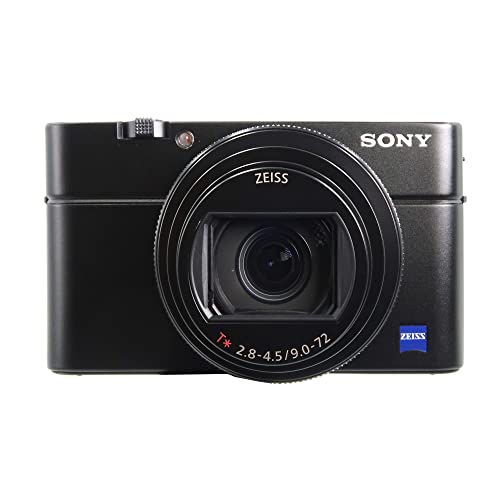
Sony RX100 VII — Best for Wildlife Reach
Every Alaska cruise has a moment that separates the cameras: something wild appears at distance — an eagle leaving a spruce top, a bear working a shoreline, a humpback’s back rolling through grey water — and the deck divides into people with photographs and people with anecdotes. The RX100 VII is the compact built for that moment. Its zoom reaches far beyond what a pocket camera should manage, its autofocus tracks moving subjects with technology inherited from Sony’s professional bodies, and it fires bursts fast enough to catch the exact frame of a tail fluke tipping under.
The rest of the camera keeps up. The lens is bright enough at the wide end for port towns and cabin dinners, the electronic viewfinder pops up for bright days when screens wash out, and the whole thing genuinely fits a jacket pocket, which means it is at the rail with you instead of in the cabin safe. On our three-distance framework it owns wildlife distance outright and handles deck distance gracefully; only on wet excursions does it want a dry bag and a little respect.
- Lens: long-reach zoom, the strongest telephoto in this guide
- Focus: fast tracking autofocus with burst shooting for fleeting wildlife
- Body: pocketable compact with pop-up viewfinder for bright decks
- Video: strong 4K video for calving glaciers and whale surfaces
Strengths
- Reach that converts distant wildlife from specks into frame-filling photographs.
- Autofocus and burst speed made for four-second whale surfaces and departing eagles.
- Pocket size means it is present for unplanned moments, which on a cruise is most of them.
Trade-offs
- Not weather-sealed to the standard of the TG-7; rain and kayak spray call for a dry bag and care.
- The long zoom dims at full reach, so overcast wildlife shots push its sensitivity hard.
- Menus run deep, and the small body makes gloved operation fiddly at the telephoto end.
Best for: wildlife-focused cruisers who want real reach without carrying a big camera and lenses.
Not suited for: kayaking and small-boat excursions in spray, or travellers who want a camera they never have to think about.

OM SYSTEM Tough TG-7 — Best for Excursions
The TG-7 is the camera you take off the ship. Waterproof to real depths, sealed against dust and crush-resistant, it kayaks, snorkels, hikes in rain, and rides in the pocket of a life vest without a flicker of complaint. Alaska’s excursion list reads like a durability test protocol — sea kayaking among icebergs, snorkelling in kelp forests, glacier hikes, zip-line platforms in drizzle — and this is the one camera in the guide that treats all of it as normal working conditions.
Its photographic tricks suit the environment precisely. Underwater modes correct the colour cast of cold northern water, the macro capability turns a tide pool in Sitka or Ketchikan into a studio of starfish and anemones, and the bright lens keeps shutter speeds sane under rainforest canopy on forest trails. It also logs GPS and temperature data, so the photo of the glacier hike carries the evidence. What it will not do is reach distant wildlife; its zoom is modest, and pairing it with binoculars for spotting and the TG-7 for everything close is the honest way many travellers use it.
- Build: waterproof, drop-proof, dustproof, freeze-proof — the toughest camera here
- Modes: underwater colour correction and remarkable close-up/macro settings
- Lens: bright zoom, modest reach, strong in low forest light
- Extras: GPS and field sensors that record the story of each excursion
Strengths
- Goes everywhere the cruise goes, in any weather, with zero protective anxiety.
- Macro and underwater modes unlock photographs no other pick here can take.
- Bright lens performs in the dim green light of rainforest trails where excursions spend their hours.
Trade-offs
- Short zoom means distant bears and eagles stay distant — this is the close-range camera.
- Image quality is good-compact rather than class-leading; big landscape prints show its limits.
- The rugged design and deep menus take an evening to learn properly.
Best for: excursion-heavy itineraries — kayakers, snorkellers, hikers, and anyone whose camera must survive the trip’s wettest day.
Not suited for: wildlife specialists who need telephoto reach, or travellers planning to print very large landscapes.

Fujifilm X100VI — Best Deck Landscape Camera
If the Inside Passage is the point of your cruise — the slow theatre of fjords, forested islands, and water changing colour under a moving sky — the X100VI is the camera that does it justice. Its large sensor and fixed prime lens produce files with a depth and tonal richness that small-sensor compacts simply cannot reach, and Fujifilm’s film simulations render Alaska’s silvery light and deep greens in a way that makes straight-from-camera images look finished. Photographers plan trips around this camera for a reason.
The fixed lens is the honest caveat: there is no zoom, at all, and the framing is a classic wide-normal view that suits landscapes, street scenes in port towns, shipboard life, and environmental portraits beautifully — and wildlife not in the slightest. Owners treat the constraint as a discipline and come home with a coherent, beautiful set of images. The body is weather-resistant with an optional adapter, flat enough for a coat pocket, and a joy to operate with real dials that work through thin gloves better than touchscreens do.
- Sensor: large APS-C sensor, the finest image quality in this guide
- Lens: fixed wide-normal prime — no zoom, by design
- Colour: celebrated film simulations that suit moody northern light
- Controls: tactile dials, hybrid viewfinder, weather resistance with adapter
Strengths
- Landscape and shipboard image quality a clear class above the other picks.
- Film simulations make overcast fjord light look cinematic straight from the camera.
- Flat, pocketable, and pleasurable to shoot with all day on deck.
Trade-offs
- No zoom whatsoever: whales and bears will be tiny in a wide landscape frame.
- High demand has made it the hardest camera here to find in stock at times; order early.
- Weather resistance is not waterproofing — glacier mist is fine, a kayak soaking is not.
Best for: photography lovers whose Alaska is landscapes, light, and shipboard atmosphere, and who pack light on purpose.
Not suited for: wildlife photography of any kind, or travellers who want one camera to cover every distance.

GoPro HERO13 Black — Best for Adventure Days
The HERO13 earns its passage on the days when a normal camera would stay in the bag: the dog-sled run, the zipline, the RIB boat bouncing toward a glacier, the snorkel, the bike ride down a mountain road in Haines. Mounted on a chest strap, helmet, or handheld grip, waterproof without a case, and stabilised to an almost implausible smoothness, it films the adventure from inside it. Its stills are wide and dramatic, and the newest generation’s lens options and improved battery endurance make it the most flexible action camera GoPro has shipped.
On a cruise its other gift is expendability of attention: start it, forget it, and enjoy the excursion with your own eyes while it records. Time-lapse modes turn the ship’s passage through a fjord into a thirty-second film that will make everyone at home jealous, and it shrugs off the rain that sends other cameras under jackets. Battery still dislikes deep cold, so the glacier-day routine — spare battery warm in an inner pocket, swap at the viewpoint — applies here as everywhere.
- Type: waterproof action camera with class-leading stabilisation
- Mounts: helmets, chest, bikes, boats, and grips for every excursion type
- Modes: time-lapse for fjord transits, slow motion for sled dogs and waterfalls
- Build: waterproof out of the box, tiny enough for any excursion bag
Strengths
- Films adventures from the participant’s view while surviving all of them.
- Stabilisation turns bouncy boats and sleds into smooth, watchable footage.
- Set-and-forget operation lets you experience the excursion instead of directing it.
Trade-offs
- The ultra-wide view is wrong for wildlife and weak for considered still photography.
- Low-light footage is its soft spot; evening deck scenes belong to the compacts.
- Footage needs downloading and editing to shine, so it creates homework after the trip.
Best for: active cruisers whose itinerary is full of motion, water, and once-only experiences to relive.
Not suited for: stills-first photographers or anyone hoping to photograph distant wildlife.

Canon PowerShot G7 X Mark III — Best All-Round Compact
Not every cruiser wants a specialisation. If your Alaska is a bit of everything — a morning of glacier viewing, a wander through Juneau, a whale-watching afternoon, dinners and deck parties and one golden evening in the fjords — the G7 X Mark III is the balanced answer. Its one-inch sensor and bright lens deliver the best low-light and indoor quality among the zoom compacts here, its zoom covers the everyday range from wide landscapes to modest telephoto, and its flip screen handles both selfies at the rail and low-angle shots of tide pools.
It is also the easiest camera in this guide to simply enjoy. The controls are friendly, the colours are Canon’s famously pleasing rendering of skin and sky, and the video quality is strong enough for the family film of the trip. It is not sealed like the TG-7 or long-reaching like the RX100 VII; it is the camera for the cruiser who wants one good tool, carried everywhere, that never becomes the story of the day. Keep a small dry pouch in the excursion bag for wet landings and it will serve the whole itinerary without drama.
- Sensor: 1-inch type with a bright zoom lens — excellent in low light
- Screen: tilts for selfies, rail portraits, and low angles
- Video: capable 4K for the trip’s highlight film
- Handling: friendly controls and pleasing colour straight from the camera
Strengths
- The best balance of quality, zoom, and simplicity for a mixed itinerary.
- Bright lens shines in dim interiors, evening light, and rainforest shade.
- Flip screen and strong video make it the natural family documentarian.
Trade-offs
- Zoom reach is everyday, not wildlife-grade; distant animals stay small.
- No meaningful weather sealing, so wet excursions need a pouch and care.
- Autofocus, while good, is a step behind the Sony’s wildlife tracking.
Best for: most cruisers, most itineraries — one camera, carried daily, good at everything the trip contains.
Not suited for: dedicated wildlife shooters or fully wet adventure days without protection.

Insta360 X4 — Best for Never Missing the Moment
The X4 solves the oldest Alaska problem — the whale that surfaces where you were not looking — by refusing to be pointed at anything. It records a full sphere of high-resolution video, and you choose the framing afterwards, in the app, from your cabin. On deck during a wildlife alert, that changes everything: you watch with your eyes, hold the camera up on its small grip, and direct the shot later. Sled tours, kayak rolls of scenery, and the ship’s wake curving through a fjord all become footage you can reframe into normal video or keep as immersive 360.
It is also waterproof, pocketable, and equipped with an invisible-selfie-stick trick that makes solo travellers look filmed by a drone — a shot of you on the glacier hike with nobody’s arm in frame. The honest costs are workflow and stills: 360 footage demands the app and some editing patience, file sizes are hefty, and as a stills camera it is outclassed by every compact here. Think of it as a second camera for set pieces and insurance, or as the primary camera for video-first travellers who hate aiming.
- Type: 360-degree action camera, reframed after shooting
- Build: waterproof, pocket-sized, works on a selfie stick that vanishes from footage
- Workflow: shots are directed in the app after the moment, not during it
- Stills: available, but video is unmistakably the main event
Strengths
- Impossible to miss a moment directionally — the camera sees the whale wherever it surfaces.
- Lets you watch Alaska with your own eyes while it records everything.
- Produces both immersive footage and ordinary reframed clips from one take.
Trade-offs
- Editing in the app is part of the deal; unedited 360 files are not the finished product.
- Large files eat storage across a week-long trip if you shoot freely.
- Still photography is its weakest suit by a distance.
Best for: video-first travellers, solo cruisers who want to appear in their own footage, and anyone haunted by the one that got away.
Not suited for: stills photographers, or travellers who want finished photos with zero editing step.
Which Alaska Pick Wins at Each Distance?
| Pick | Reach | Weather behaviour | Best Alaska job | Main limit |
|---|---|---|---|---|
| Sony RX100 VII | Longest zoom here | Needs a dry bag in rain | Wildlife from the deck | Fiddly with gloves |
| OM SYSTEM Tough TG-7 | Modest zoom | Fully waterproof and drop-proof | Kayaks, hikes, tide pools | Distant animals stay distant |
| Fujifilm X100VI | Fixed wide-normal, no zoom | Resistant, not waterproof | Landscapes and shipboard light | No wildlife capability |
| GoPro HERO13 Black | Fixed ultra-wide | Waterproof, mountable | Sled, zipline, boat adventures | Weak stills and low light |
| Canon PowerShot G7 X Mark III | Everyday zoom range | Needs a pouch on wet days | The whole trip, balanced | Not wildlife-grade reach |
| Insta360 X4 | Everywhere at once | Waterproof | Insurance footage of set pieces | Editing step, poor stills |
How Should You Handle Cold, Condensation, and Batteries at a Glacier?
Glacier viewing is the coldest hour of most itineraries — wind off the ice, spray in the air, and everyone on deck for the duration. Batteries lose capacity in the cold, so the professional habit is simple: keep the spare in an inside pocket against your body, swap when the gauge drops, and warm the “dead” battery back to life in the same pocket, because it often recovers a useful fraction of its charge. Cameras with swappable batteries — most of this list — make the routine painless.
Condensation is the quieter threat. A camera chilled at a glacier face and carried straight into a warm, humid dining room fogs internally as moisture condenses on cold elements, and repeated cycles are how lenses grow haze. The fix costs nothing: before coming inside, put the camera in a sealed bag or its case while still out in the cold air, and let it warm slowly inside that barrier so the moisture settles on the bag, not the lens. Photographers in polar regions do this religiously, and it is the single habit that most extends a travel camera’s life.
Rain management is the third routine. A microfibre cloth in every pocket, a cheap shower cap or the ship’s complimentary one over the camera between shots, and the discipline to wipe the front element before the important frame rather than after. Alaska’s drizzle is usually light but constant; the photographers who come home with clean images are not the ones with the most expensive sealing — they are the ones with a cloth within reach at all times.
What Mistakes Do Cruisers Make With Their Cameras in Alaska?
The most expensive mistake is bringing only a phone and assuming the zoom will cope. Digital pinch-zoom on a bear at three hundred metres produces a watercolour, and Alaska is the trip of a decade for many people; the disappointment is permanent. The second mistake is the opposite: bringing a large camera system, finding it heavy and conspicuous, and leaving it in the cabin — a compact at the rail beats a professional body in the safe, every single sailing.
Third, travellers underestimate the ship’s own rhythm. Wildlife announcements come without warning, glacier viewing happens in the coldest wind of the trip, and the golden light in cruise season arrives late in the evening when cameras are often charging in the cabin. The photographers who thrive keep the camera on their person from breakfast to bedtime, batteries rotating, which is precisely the behaviour this list’s pocketable picks are designed to support.
Finally, people forget the people. Alaska albums fill with ice and animals and somehow contain no photographs of the travellers themselves — no portrait at the rail, no group shot in Juneau, no evidence anyone was there. Build in the flip-screen selfie, the asked-a-stranger group photo, the crew member pressed into service at the glacier. The Canon and Sony in this guide make that effortless; whichever pick you sail with, schedule the human photographs as deliberately as the wildlife.
Which Camera Should You Carry on Each Classic Alaska Excursion?
Whale-watching boats reward reach and speed above all. You are on a moving platform, the animals surface where they please and stay up for seconds, and spray comes over the bow on the run out. The RX100 VII is the natural tool — long zoom, fast tracking, bursts — ideally with a wrist strap and a cloth for the front element between surfacings. The X4 is the clever alternative for travellers who would rather watch the whale than hunt it through a viewfinder; hold it high, enjoy the moment, reframe at dinner.
Kayaking and snorkelling belong to the TG-7 without argument, with the GoPro as the filming companion on a chest or paddle mount. Everything else in this guide stays in the dry bag on those days, and even the TG-7 benefits from a floating strap, because the bottom of a glacial lagoon is not a retrieval service. On glacier hikes, the calculus shifts: hands are busy with poles, the light on the ice is dazzling, and the TG-7 and GoPro again lead, while the X100VI — in a case, out for composed shots at stops — produces the finest ice landscapes of the trip for photographers willing to work carefully.
Dog-sledding, whether on a glacier by helicopter or on wheeled carts in summer, is motion, noise, and joy: GoPro territory, chest-mounted, forgotten until the run ends. The railway journeys — the White Pass line from Skagway is the famous one — reward the opposite: a window seat, a polarising-friendly bright lens, and the Canon or the Fujifilm for the slow parade of gorges and trestles. Port-town days in Juneau, Ketchikan, and Sitka are the all-rounders’ home ground; take the G7 X or the X100VI, wander, and photograph the Alaska that lives there all year rather than the one performing for visitors.
The pattern underneath the pairings matters more than any single match: wet and violent days go to the sealed cameras, distant and fleeting subjects go to the long zoom, beautiful and slow subjects go to the big sensor, and everything goes better when the camera chosen the night before matches the excursion booked for the morning. Cruisers who plan that pairing over dinner — camera charged, card emptied, pouch packed — are the ones whose albums look effortless.
How Do You Photograph a Calving Glacier or a Surfacing Whale Without Missing It?
Both events share a cruelty: they are over before an unprepared camera is ready. The technique for each is anticipation. At a glacier face, watch and listen. Calving announces itself — cracks like rifle shots, groans, small showers of ice from the face — minutes and seconds before the main fall. Compose on the active section of the face, focus once, and hold the composition; when the crack comes, shoot a burst or start video and do not chase the fall with the lens, because the splash and the wave afterwards are half the photograph and they arrive in the frame you already chose.
Whales ask for the same discipline in reverse: predict the surfacing. A feeding humpback works a pattern; watch where it last dove, note the direction, and pre-aim at the water ahead of its travel with the zoom already at length and focus tracking engaged. The fluke-up dive is the money frame, and it comes at the end of a surfacing sequence — so shoot the whole sequence in bursts rather than sniping single frames, and review nothing until the animal is down. Every second spent chimping at the screen is a second the next whale spends unphotographed.
Two settings habits serve both subjects. Keep the camera awake — sleep timers set to minutes, not seconds — because a camera waking and focusing is a moment missed. And keep the mode simple: shutter-priority or the camera’s intelligent auto with burst enabled beats a manual masterpiece you are still adjusting when the ice falls. Alaska rewards the ready, not the elaborate; the six cameras in this guide were chosen partly because each can be made ready in one motion and kept ready all day.
What Are the Best Techniques for Photographing From the Ship Itself?
The ship is your largest tripod and your trickiest platform. It moves gently but constantly, and at long zoom that motion is the difference between a sharp eagle and a smear. Brace against the rail rather than leaning on it with your elbows floating, keep shutter speeds brisk — the RX100 VII’s speed is built for this — and shoot in short bursts so one frame in each set catches the ship’s motion at its stillest point. On windy glacier days, stand in the lee of a superstructure block; the wind shake you remove is worth more than any stabilisation system.
Choose your deck position like a photographer, not a spectator. The bow fills instantly for glacier viewing; the side decks along the passage give you the working angles on wildlife the naturalist announces, and the stern offers the ship’s wake, following birds, and a surprisingly peaceful view of the fjord receding. Move between them through the day rather than defending one railing spot — the light changes sides as the ship turns through the passage, and the photographers with the best sets are the ones who kept walking the decks with the camera in hand.
Glass is the enemy everyone discovers once: shooting through cabin or lounge windows costs contrast and adds reflections and grime. Go outside for anything that matters. For the inevitable through-glass attempt — the whale that appears while you are at lunch — press the lens hood or the phone flat against the glass to kill reflections, and accept the result as a record shot. The compacts in this guide with real viewfinders, the Sony especially, also save the day when low sun makes screens unreadable at the exact moment the fjord turns to gold.
Evenings deserve their own paragraph, because in cruise season the ship sails through scenery at ten and eleven at night that would be the highlight of any other trip. The light drops low and sideways, the water calms, and the fjords photograph like paintings for an hour or more. This is X100VI and G7 X territory — larger sensors and bright lenses — and it is when the day’s best landscape is most often made. Keep the camera at dinner. The number of photographers who describe the previous night’s light wistfully, from a cabin, with their camera charging beside them, is one of cruising’s quiet tragedies.
Finally, photograph the ship’s life as deliberately as the scenery. The naturalist mid-lecture, the railing lineup in matching rain jackets, the glacier margarita, the map being traced at breakfast — these are the photographs that will mean the most in twenty years, because the fjords will still be there and the people will have changed. Every camera in this guide handles that social documentary work easily; the discipline is simply remembering, once a day, to turn the lens around.
How Should You Organise, Back Up, and Share a Week of Alaska Photos?
A seven-day Alaska cruise produces more photographs than most people take in a season, and the travellers who enjoy them afterwards are the ones with a small daily system. Ours is deliberately modest: at dinner or after, spend ten minutes with the camera doing three things — delete the obvious failures while the day is fresh, star or protect the dozen frames that matter, and confirm the card and battery state for tomorrow. Ten minutes nightly prevents the end-of-trip mountain of three thousand unsorted images that nobody ever quite faces, and it doubles as the day’s debrief, which families consistently say becomes a favourite ritual of the trip.
Back up with whatever redundancy you already own. The simplest robust pattern is camera card plus one copy elsewhere: transfer the starred images to a phone or tablet each evening — every pick in this guide can do this wirelessly — so the best of the trip exists twice even if the card fails or the camera is lost. Travellers shooting heavy video with the GoPro or X4 should offload nightly to a laptop or portable drive, because those files are too large for casual wireless transfer and too precious to exist in one copy in a ship’s cabin.
Sharing from the ship is a pleasure worth pacing. Ship Wi-Fi is a shared, precious resource, and uploading full-resolution albums mid-fjord is how travellers burn their package and their goodwill simultaneously. Send a handful of small, chosen images to the family chat each day — the whale, the glacier, the group at the rail — and save the full albums for home broadband. The daily drip of three great photographs also lands better with the audience than a four-hundred-image dump a week later; your landlocked relatives will actually look at all of them.
And when you get home, print something. Alaska earns wall space like few trips do: one large print of the fjord evening or the eagle, a small book of the week for the coffee table. The cameras in this guide all produce files that print beautifully at sensible sizes, and the act of choosing thirty frames for a book is the final, best edit — the one that turns a folder of files into the story of the trip. Do it within a month, while the choosing is still easy and the memories still label themselves.
What Should You Practise at Home Before You Sail?
An Alaska cruise is an expensive classroom, so do the learning at the kitchen table. In the fortnight before departure, carry the new camera on ordinary days: photograph the dog at distance in the park to learn your zoom’s honest limits, film a walk to feel the stabilisation, shoot indoors at night to see what the lens does with low light. Ten casual outings teach more than the manual does, and they surface the questions — where is the burst mode, how do I lock focus, why did the battery fade — while answers are still free.
Set the camera up once, deliberately, before you board. Date and time to destination, sleep timer lengthened, burst mode found and tested, the Wi-Fi transfer to your phone rehearsed end-to-end, cards formatted in-camera, and the strap fitted. Photographers who do this half-hour of preparation describe their cruise cameras as effortless; photographers who skip it describe the same cameras as complicated. The camera did not change — the readiness did.
Finally, decide your one photographic ambition for the trip and tell your travelling companions. “I want one great eagle photograph.” “I am filming the sled run properly.” A declared ambition gets you positioned — at the right rail, on the right excursion, awake for the evening light — in a way that vague intentions never do. The rest of the trip can be snapshots and joy; one ambition, pursued with a prepared camera, is usually what produces the frame that ends up on the wall.
Should You Pack Binoculars Alongside the Camera?
Yes — and the pairing explains this whole guide. Binoculars are for seeing Alaska; the camera is for keeping it. Wildlife spotting from the deck is a binocular activity: you find the bear, watch the eagles squabble, follow the whale’s pattern through glasses that never run out of battery. The camera then works the moments worth keeping, at the ranges this guide has been honest about. Travellers who bring only a camera spend the trip experiencing Alaska through a small screen at arm’s length; travellers with both keep their eyes in the scene and their camera ready, which is the correct division of labour.
Practically, one pair of mid-size binoculars shared between two travellers, plus whichever pick from this list matches your excursion style, covers an Alaska cruise completely. The naturalist’s announcement gives you the bearing, the binoculars give you the animal, and the camera — zoom already out, if it is the Sony — gives you the photograph. It is a well-worn rhythm on Alaska decks, and joining it is the easiest upgrade this guide can offer beyond the cameras themselves.
Final Recommendation
Choose by the distance that matters most to you. Wildlife first: the Sony RX100 VII, and accept the dry-bag discipline. Excursions first: the OM SYSTEM Tough TG-7, and let it live in your life-vest pocket. Landscapes and light first: the Fujifilm X100VI, and embrace the fixed lens as a creative frame. Adventure filming first: the GoPro HERO13 Black for participation, or the Insta360 X4 if you would rather watch the moment and direct it later. A bit of everything, with the family in frame: the Canon G7 X Mark III, the balanced compact that never becomes a burden.
Whichever you choose, do the two things that matter more than the model name: learn it at home before you sail, and carry it everywhere once you are aboard. Alaska does not repeat its moments. The camera that is charged, pocketed, and familiar is the one that brings them home.
Related guides
Frequently Asked Questions
Is a phone camera enough for an Alaska cruise?
For deck landscapes and port towns, a good phone does surprisingly well. For wildlife — the eagle, the bear, the whale at respectful distance — phone zoom falls apart, and those are the photographs people most want from Alaska. A compact with a real optical zoom, like the RX100 VII or the G7 X Mark III here, is the upgrade that changes what you bring home.
How much zoom do I actually need for whales and bears?
Ships keep a respectful distance and excursions keep a safe one, so reach matters more in Alaska than on almost any other trip. In practice, the longest-zoom compact you are willing to carry is the right answer; that is why the RX100 VII leads this guide. A modest zoom still beats none, but expect distant animals to be small in the frame and plan to crop thoughtfully at home.
Will my camera survive the rain in ports like Ketchikan?
The TG-7, GoPro, and X4 are waterproof and will not notice rain at all. The X100VI is weather-resistant and copes with drizzle sensibly. The Sony and Canon compacts want a pouch, a cloth, and shelter between shots — with those habits they complete Alaska trips routinely, but they should never be left out in sustained rain.
How many batteries and memory cards should I pack?
Two batteries minimum, three if your itinerary is glacier-heavy, rotating the warm spare as described above. For storage, a week of stills fits comfortably on one large card for most travellers; video shooters with the GoPro or X4 should bring several cards or a small drive to offload in the cabin, because 360 and high-frame-rate footage fills space quickly.
Can I rent a big telephoto lens instead of buying a camera?
Rental suits travellers who already own a compatible camera body and know it well. For everyone else, a long-zoom compact bought for the trip is simpler, smaller, and keeps working on every holiday afterwards. Learning an unfamiliar rented system during the cruise is the version of this mistake we most advise against.
When is the light actually best for photographing the fjords?
In cruise season the evenings are long, and the finest light often arrives after dinner, when the sun drops low over the water and the fjords turn gold and blue. Keep the camera with you at dinner’s end. Overcast midday, meanwhile, is ideal for rainforest trails and waterfalls — soft, even light that the TG-7 and the Canon’s bright lens handle beautifully.
Is it worth bringing two cameras on an Alaska cruise?
For keen photographers, yes — the classic pairing is a long-zoom compact for wildlife with a tough or quality compact for everything else, and this list is quietly built to pair that way: the RX100 VII with the TG-7 for excursions, or with the X100VI for evenings. For most travellers one well-chosen camera, carried constantly, beats two cameras carried alternately. Decide by honesty about yourself: if a second camera would live in the cabin, it is not a pairing, it is luggage.
What if it rains every single day of the cruise?
Then you are in the Alaska that residents recognise, and it photographs beautifully — mist on the water, saturated greens, waterfalls at full strength, and harbours full of working boats. The sealed cameras in this guide will not care at all, and the others need only the cloth-and-pouch routine described above. Some of the finest Alaska albums we have seen came from fully wet weeks; the travellers who struggled were not the rained-on ones but the ones who left the camera in the cabin waiting for a sunny day that the rainforest had never promised.
Related Guides
Planning more of the trip’s photography? See our guides to travel cameras that fit a jacket pocket without giving up image quality, action cameras for kayaking, boats, and wet adventures, and compact cameras with the longest zooms for wildlife trips.


