kajuandouglas.com is reader-supported. When you buy through links on our site, we may earn an affiliate commission.
Where to Buy
Getting the best battery life for trail cameras is not really a shopping problem — it is a visiting problem. Every trail camera owner knows the arithmetic in their bones: the camera hangs on a tree an hour from the road, the batteries are its only lifeline, and the day they die is the day the buck of the season walks past a blind witness. Worse, every visit to change them costs more than the cells do — in fuel, in time, and in the human scent and disturbance that push wary animals off a pattern for days. Battery life, on a trail camera, is therefore measured in the only unit that matters: how rarely you must go back.
This guide treats battery life as a system with four levers, because owners who pull only one lever — usually “buy the biggest cells” — leave most of the endurance on the table. The levers are the cells themselves, the camera’s own appetite and settings, the site you choose, and the external help you are willing to bolt to the tree. The six picks below are arranged along those levers: a benchmark camera whose frugality is famous, the cell strategy that feeds most trail cameras best, the solar and external-power hardware that can stretch a season into a year, and the camera classes whose efficiency — or whose connectivity — changes what “battery life” even means.
Buy the hardware wherever you buy your hunting and camera gear — the usual online shelves carry all of it — but buy it in the order this guide presents: settings first, because they are free; cells second, because they are cheap; external power third, because it is a project; and a new camera last, only when the first three levers have proven that the old camera’s appetite, and not its feeding, is the problem. Most owners who work the levers in that order discover their existing camera was never thirsty. It was just being asked to photograph every squirrel in the county at maximum ceremony.
Key Takeaways
- Battery life on a trail camera is measured in avoided visits — every trip to the tree costs fuel, time and animal disturbance.
- Settings are the free lever: trigger intervals, photo bursts and video length decide appetite more than any cell can.
- AA lithium cells are the trail standard for a reason — cold-proof, steady and light — and buying them in season-sized quantity is the cheapest endurance there is.
- Solar panels and external battery boxes can turn a season of visits into a year of near-silence, on sites with honest sun or room for a box.
- The Blink Outdoor 4 is this guide’s frugality benchmark: a camera designed around sipping, included to show what appetite control looks like.
- Cellular cameras spend battery on every transmission — their endurance is a settings and signal problem before it is a cell problem.
In this guide
Quick Picks
| Pick | Badge | Why it earns its place |
|---|---|---|
| Blink Outdoor 4 | Best Frugality Benchmark | A camera engineered to sip power for seasons on one set of cells — the standard other appetites are judged against. |
| AA Lithium Cells in Season Quantity | Best Cell Strategy | The cold-proof, steady-voltage fuel most trail cameras were designed around, stocked for the whole season at once. |
| Solar Panel Kit for Trail Cameras | Best Endurance Multiplier | Daylight converted into months: the panel that refills the camera while you stay away from the tree. |
| External Battery Box | Best for Shaded Sites | A weatherproof reservoir of power at the tree’s base for the sites where no panel can see the sun. |
| Low-Glow Efficiency-First Trail Camera | Best Camera-Class Choice | A trail camera chosen for appetite discipline — fast sleep, honest triggers, no ceremony wasted on squirrels. |
| Cellular Trail Camera Run on a Power Plan | Best Connected Endurance | Transmitting cameras managed as a system: batch uploads, signal-aware placement and power sized to the plan. |
How Did We Choose These Battery-Life Picks?
We chose by avoided visits. Every candidate was judged on a single imagined ledger: a camera hung in September, on a real property, in real weather — how many times does its owner have to walk back before spring, and what does each walk cost the hunting or the watching? Products that reduced that count earned their place; products that merely promised large numbers on a box did not, because a trail camera’s endurance is not a laboratory figure but a relationship between appetite, weather, wildlife traffic and the owner’s shoe leather.
Three filters did the heavy work. The first was cold honesty: endurance claims are made in mild rooms, while trail cameras earn their living in frost, and the gap between those two worlds has ended more seasons than any other lie in this category. The second was appetite discipline — how a camera behaves between events, in the long sleeps that make up ninety-nine percent of its life — because a camera that sips at rest and gulps only for genuine triggers will outlast a bigger battery in a restless camera every single season. The third was failure grace: what happens at the end. A system that warns you, through an app or a battery gauge you can trust, beats a slightly longer system that dies silently mid-rut.
We also refused to treat “trail camera” as one job. The deer property, the security-minded landowner and the researcher counting a season’s wildlife all hang cameras, but their endurance problems differ — traffic volume, night ceremony and connectivity pull the levers in different directions. The picks below are labelled by the job they serve, and the guide’s later sections translate between them, because the most expensive battery mistake in this field is solving another owner’s problem beautifully.
What Actually Drains a Trail Camera?
Begin with the honest anatomy of a trail camera’s appetite, because most endurance advice fails by blaming the cells for the settings. The camera spends its life asleep — or should. A well-mannered camera wakes on its passive infrared sensor’s command, decides in a fraction of a moment whether the heat-and-motion signature deserves a photograph, fires its illuminators if it is night, writes the file, and returns to sleep. The energy budget of a season is the sum of those brief ceremonies, plus the tiny continuous cost of staying ready. Anything that multiplies the ceremonies — a branch waving in the sensor’s view, a setting that fires three frames and a video for every sparrow — multiplies the season’s cost with it.
Night is the expensive shift. The infrared array that lets the camera see in the dark is its hungriest component, and a busy night — a feeder, a water source, a game trail in the rut — can cost more than a quiet week of days. This is why two owners of the same camera report endurance differing by months: they are not running the same camera in any sense that matters. One hangs over a silent ridge; the other over a corn pile with a raccoon parliament in nightly session. Battery advice that ignores traffic is astrology, and the first diagnostic for a “thirsty” camera is always its own photo count.
Cold writes the third chapter, as it does in every battery story. Cells deliver less of themselves as temperatures fall, and the trail camera’s season peaks exactly when the cold does. The chemistry that shrugs at frost — lithium, again — is the chemistry this category standardised on, and owners who feed a trail camera alkaline cells in November are running an experiment whose result the guide can save them the trouble of learning. Add the fourth factor, signal hunting in cellular models — a camera straining for a distant tower spends like a phone in a basement — and the anatomy is complete: ceremonies, nights, cold and, for the connected, the tower. Every pick and every setting in this guide exists to tax one of those four less heavily.
What Gives the Best Battery Life for Trail Cameras?

Blink Outdoor 4 — Best Frugality Benchmark
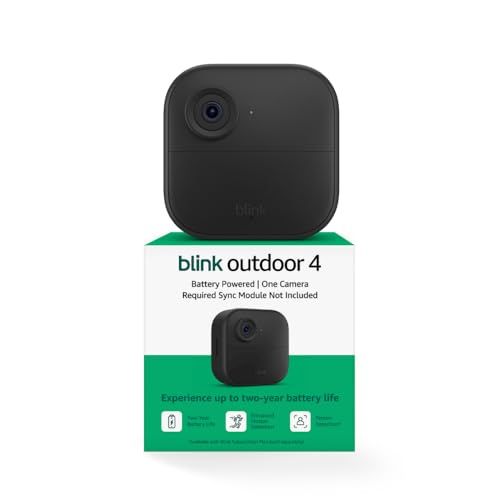
The Outdoor 4 is not a trail camera in the hunting sense — it has no camouflage, no game-caller pedigree — and it opens this guide anyway, because it is the purest available lesson in what appetite discipline achieves. Blink engineered this camera around a single obsession: sip. It sleeps deeply, wakes for genuine motion, records a short clip and returns to sleep, and on that regime its pair of AA lithium cells lasts not weeks but seasons — the maker speaks of its endurance in years, and owners’ experience, while rarely that theatrical, confirms the order of magnitude. Hung on a gate, a barn or a property entrance — the security end of the trail world — it demonstrates the ceiling that settings and sleep discipline build.
Its presence here is partly a standard to judge the true trail cameras against. When a camouflaged camera with the same cell format dies in a month on a busy post, the Outdoor 4’s example proves the cells were innocent: the appetite was the crime. Its compromises are equally instructive — it is a Wi-Fi camera, bound to a home network’s reach and a sync module, so the deep-woods post is beyond it, and its clips serve security questions rather than wildlife study. Within its parish — the farmyard, the gate, the outbuilding, the property an owner watches from the house — it is close to a finished answer.
Choose it if your “trail” is really the edge of your property and your network reaches the post. It will teach you, by example, how long a camera can live when every design decision bows to endurance — and it will likely still be on its early cells when the lesson is complete.
- Type: wire-free outdoor camera, Wi-Fi with home sync module (pool pick, linked)
- Power: AA lithium cells, engineered for season-scale endurance
- Appetite lesson: deep sleep, short ceremonies, no wasted wakes
- Best posts: gates, barns and property edges within network reach
- Limit: not a deep-woods or cellular wildlife camera
Strengths
- The frugality benchmark every other camera is judged by
- Season-scale life on a single set of lithium cells
- App alerts mean a dying battery is announced, not discovered
Trade-offs
- Needs Wi-Fi reach and its sync module at the property
- Clips serve security, not wildlife study
- No camouflage or game-trail ceremony
Best for: property-edge posts where the network reaches and visits are a nuisance.
Not suited for: remote woods, research transects or off-grid hunting land.
AA Lithium Cells in Season Quantity — Best Cell Strategy
If the benchmark above is the lesson, this pick is the homework most trail cameras actually need. The majority of trail cameras are built around AA cells — often eight at a time — and the chemistry those cameras were designed, tested and rated around is lithium. Not alkaline, whose voltage sags and whose cold manners are a scandal; not rechargeable NiMH, whose lower voltage can leave some trail cameras under-fed and whose self-discharge argues against season-long posts. Lithium: flat voltage to the end, indifferent to frost, light in the pack, and patient across months of standby. Feeding a trail camera anything else and then shopping for endurance is tuning a car while it runs on the wrong fuel.
The strategy half of this pick is quantity and timing. Buy cells for the whole season in one purchase — the full fleet’s sets, plus one spare set per camera — because the per-cell cost falls with quantity, the lots are consistent, and the mid-season emergency purchase at a rural markup is a tax on poor planning. Date each set as it goes in, and record the camera’s photo count beside the date; by season’s end you will own the only endurance figures that describe your property, your traffic and your weather, and next year’s planning becomes arithmetic instead of folklore.
Resist two temptations. The first is mixing a fresh set’s remainder with last season’s survivors — a set performs as its weakest member, and mystery cells make dying cameras undebuggable. The second is stretching a set past its honest end because the gauge still shows a bar: the end of a lithium set’s life, when it comes, comes quickly, and the week it chooses will be the week you most wanted witnessed. Retire sets on your schedule. The animals keep theirs regardless.
Choose the season-quantity lithium strategy as the foundation under every other pick in this guide. Panels and boxes multiply endurance; this is the endurance they multiply.
- Type: AA lithium primary cells, bought per-season (prose-only pick — no pool ASIN)
- Fit: the cell format and chemistry most trail cameras are rated around
- Behaviour: flat voltage, frost-indifferent, slow self-discharge
- System: date every set; record photo counts; retire whole sets
- Buying: season quantity at once — consistent lots, no rural markup
Strengths
- The cheapest real endurance in this guide
- Cold performance no other AA chemistry matches
- Predictable end-of-life you can plan a season around
Trade-offs
- Single-use cells — a running cost and a waste stream
- Up-front season purchase is a noticeable lump
- Wrong chemistry habits (mixing sets) quietly ruin it
Best for: every AA-powered trail camera, as the default foundation.
Not suited for: cameras with proprietary packs, or owners committed to rechargeables.
Solar Panel Kit for Trail Cameras — Best Endurance Multiplier
A solar panel changes a trail camera’s relationship with time. Instead of a countdown — cells spending themselves toward a death you must attend — the camera becomes a small, self-keeping system: the panel harvests the day, the internal or external battery buffers the night and the cloudy week, and the owner’s visits shrink to card swaps and curiosity. On the right site, owners describe the transformation in the same words solar converts always use: the camera simply stopped being a chore. Seasons pass. The panel, the tree and the deer keep their appointments; the owner keeps their distance, which the deer appreciate most of all.
The right site is the whole qualification, and this guide will not soften it. A trail panel wants direct sun for a meaningful part of the day, across the season — a clearing’s edge, a field border, a south-facing ride — and it wants its cable run protected from the teeth and antlers of its own audience. The deep-woods post under a closed canopy is not a solar site, whatever the panel’s box claims, and owners who force the pairing get a panel-shaped decoration and a camera that dies on schedule. Walk the site at midday and at the season’s low sun before buying; the sky is the specification sheet.
Installation rewards an unhurried hour: panel angled for the season’s sun, mounted above casual interference, cable slack managed, connectors seated like you mean it — because you will not be back soon to seat them again, which is rather the point. Pair the panel with a healthy set of cells or the camera’s rechargeable arrangement as its buffer, and understand the division of labour: the panel is the income, the cells are the savings account, and a wise owner keeps both. Even in a kind site, a fortnight of storms draws on savings.
Choose solar when the post is sunny, the property is distant and the camera’s job is measured in seasons. It is the closest thing this category has to permanence.
- Type: trail-camera solar panel with cable, maker-matched (prose-only pick — no pool ASIN)
- Role: daily income for the camera’s battery savings
- Site rule: hours of direct sun across the season — no canopy posts
- Installation: angled mount, protected cable, seated connectors
- Pairing: works with the camera’s cells as buffer, not instead of them
Strengths
- Can stretch a season of visits into a year of near-silence
- Removes the owner — and their scent — from the site
- Running cost after installation is effectively zero
Trade-offs
- Useless under closed canopy or on shaded north faces
- Cable and panel are visible, chewable and storm-tested
- Winter’s short days shrink the income exactly when nights lengthen
Best for: field edges, clearings and distant sunny posts.
Not suited for: deep woods, shaded hollows or restless, frequently moved cameras.
External Battery Box — Best for Shaded Sites
Where the sun will not cooperate, capacity must. The external battery box is the trail world’s answer to the shaded hollow and the north-facing wood: a weatherproof reservoir — typically a sealed box housing a large rechargeable battery — cabled to the camera and strapped or set at the tree’s base, holding many times the energy of the camera’s internal cells. It is unglamorous, faintly agricultural hardware, and on the posts where panels starve it is the difference between a monthly visit and a seasonal one.
The arithmetic is its whole personality. A box multiplies the camera’s stored energy by a large factor, and since a trail camera’s appetite is fixed by its settings and its traffic, endurance multiplies with it — the same ceremonies, the same nights, simply funded from a deeper well. The box itself asks for a recharge between deployments, which moves the battery chore from the tree to the kitchen: swap the box, or swap its battery, at card-check time, and let the deep discharge happen at home where chargers live. For research posts and security-minded landowners — the owners whose cameras must simply not die — this is the professional pattern, and its reliability is the point.
Its costs are physical rather than financial. A box is weight to carry in, a presence at the tree that camouflage must account for, and a cable that the local wildlife will eventually audition as a chew toy unless it is run and armoured with respect. Theft-conscious owners should note that a box announces a camera’s value to anyone who finds it; on public-adjacent land, discretion in placement is part of the installation. None of this dents the box’s case at its proper posts — shaded, important, long-duration — where it remains the only honest route to season-scale endurance.
Choose the battery box when the site is shaded, the camera is critical and the visits are expensive. It is endurance by capacity, honestly bought and honestly carried.
- Type: weatherproof external battery box with camera cable (prose-only pick — no pool ASIN)
- Role: a deep energy reservoir at the tree’s base
- Best sites: shaded woods where solar cannot feed
- Routine: swap or recharge the box at card-check visits
- Installation: armour the cable; consider visibility and theft
Strengths
- Season-scale endurance regardless of sun
- Moves the charging chore from tree to kitchen
- The professional pattern for must-not-die posts
Trade-offs
- Weight to carry and a presence to camouflage
- Cable is a wildlife and weather liability
- Announces value — place discreetly on shared land
Best for: shaded, critical, long-duration posts.
Not suited for: lightweight run-and-gun scouting across many trees.
Low-Glow Efficiency-First Trail Camera — Best Camera-Class Choice
Eventually the levers point at the camera itself, and when they do, the efficiency-first class is where the smart money looks — not the camera with the longest claimed endurance, a figure measured in a quiet room against no traffic, but the camera whose design decisions all bow to appetite: a sensor that sleeps truly deeply, a trigger that wakes fast and judges honestly, illuminators sized to the job rather than to a specification war, and firmware that lets the owner shape ceremonies precisely — delays between triggers, modest bursts, video lengths with a ceiling. In the field, these unglamorous virtues compound into months.
The low-glow half of the name matters to the endurance story in a way owners underestimate. A camera whose night flash startles its subjects changes the traffic it feeds on: animals that flare at a bright array visit less, or visit at a run, and the owner reads the resulting calm as efficiency. Choose the glow for the quarry — low-glow for wary game, no-glow where invisibility is the whole assignment, accepting that true no-glow illumination reaches less far and spends accordingly — and understand that the most efficient camera is the one whose subjects never learn it exists. Endurance is partly a relationship, and the camera is one of the parties.
Judge this class in the field’s currency: ceremonies per set of cells, on your property, at your traffic. The settings menu is where the judgement happens — a camera that offers a sane trigger interval, a photo-first mode that treats video as the luxury it energetically is, and a time-lapse discipline for the posts that need watching rather than triggering will outlast a specification champion locked into extravagant defaults. Read menus before megapixels. The season will thank you in the only coin it deals in: unvisited weeks.
Choose an efficiency-first camera when the first three levers — settings, cells, external power — have proven the old camera’s appetite is the binding constraint. It is the last lever, and pulled correctly, the one that resets the whole ledger.
- Type: trail camera selected for appetite discipline (prose-only pick — no pool ASIN)
- Design signs: deep sleep, fast honest trigger, shapable ceremonies
- Illumination: low-glow for wary game; no-glow for invisibility
- Settings that matter: trigger interval, burst size, video ceiling
- Judgement currency: ceremonies per cell set on your own property
Strengths
- Efficiency compounds across every season it serves
- Low-glow manners keep wary subjects on pattern
- Settings depth lets one camera serve several kinds of post
Trade-offs
- Claimed endurance figures still need your traffic’s audit
- No-glow variants trade reach for invisibility
- Costs more than the extravagant-default bargains it outlasts
Best for: owners replacing a proven-thirsty camera on a serious post.
Not suited for: buyers who have not yet pulled the free settings lever on their current camera.
Cellular Trail Camera Run on a Power Plan — Best Connected Endurance
The cellular camera changes the meaning of battery life, because it spends energy on a second job: talking to a tower. Every transmitted photograph is a small radio ceremony, and a camera hunting for a weak signal performs those ceremonies the way a phone in a basement makes calls — desperately, repeatedly, at ruinous energetic cost. Owners who blame cellular cameras for thirst are usually blaming geography. The same camera, moved one ridge closer to signal, can double its season without a single cell changing.
Run as a system, though, the connected camera earns its appetite honestly. Its transmissions are also its warnings: battery state reported to your phone, the low-cell alert arriving while there is still time to plan a visit rather than discover a corpse. Its settings offer the levers that matter — batching uploads instead of transmitting every frame, sending thumbnails and fetching full images on demand, scheduling the radio’s working hours — and an owner who pulls them converts the cellular camera from a spendthrift into a managed utility. On distant property, that management is worth more than raw endurance: a camera that tells you it is dying in November is worth three that die silently in October with fuller theoretical tanks.
Power it accordingly. Cellular posts are the natural first customers for this guide’s multipliers — the panel on the sunny lease, the box in the shaded one — because the radio’s appetite is exactly the kind of predictable extra load external power exists to fund. Pair the connected camera with a season of lithium cells as its buffer and an honest signal survey as its placement survey, and the result is the modern form of trail endurance: not the longest silence, but the most informed one.
Choose the cellular path when the property is far, the news is valuable and the visits are the costliest part of your season — and run it as a power plan, not as a camera with a radio attached.
- Type: cellular trail camera managed as a power system (prose-only pick — no pool ASIN)
- Appetite driver: transmissions, multiplied by weak signal
- Levers: batched uploads, thumbnail-first delivery, radio schedules
- Dividend: battery state reported — no silent deaths
- Pairing: first in line for solar or battery-box support
Strengths
- News and battery warnings arrive without a visit
- Settings can tame the radio’s appetite substantially
- The right answer for distant, high-value posts
Trade-offs
- Weak signal can halve a season by itself
- Data plans join cells in the running-cost ledger
- Demands the most management of any pick here
Best for: distant leases, security-minded landowners and research that cannot wait for card swaps.
Not suited for: signal deserts, or owners wanting a hang-and-forget season.
How Do the Six Endurance Picks Compare?
| Pick | Lever it pulls | Visits it can save | Site it needs |
|---|---|---|---|
| Blink Outdoor 4 | Appetite discipline | Most, within network reach | Property edge with Wi-Fi |
| AA Lithium Season Strategy | Cell chemistry | The foundation under all others | Any AA trail camera |
| Solar Panel Kit | External income | A season’s worth, on sunny posts | Clearings and field edges |
| External Battery Box | External capacity | A season’s worth, anywhere | Shaded, critical posts |
| Efficiency-First Trail Camera | Camera design | Compounds across years | Serious long-term posts |
| Cellular on a Power Plan | Information | Turns emergencies into appointments | Distant posts with honest signal |
The levers stack. A shaded, distant, cellular post might honestly need three rows of this table at once — lithium cells as buffer, a box as the well, and batched uploads as the discipline — while a gate camera on the home network needs only the first row and a free afternoon. Price your own post against the table before pricing any product. And notice the table’s quiet lesson about order: the rows near the top are disciplines and consumables, the rows near the bottom are hardware, and a season’s endurance is almost always decided nearer the top than the bottom — which is fortunate, because the top is also where it is cheapest.
How Do You Set a Trail Camera to Sip Instead of Gulp?
Work the settings menu in the order of energetic consequence. First, the trigger interval: a delay between ceremonies — long enough that one wandering animal becomes one event rather than forty — is the single largest saver most owners ever find, and it costs nothing but the twentieth photograph of the same raccoon. Second, the burst: a single frame, or two, tells you what passed; the five-frame ceremony is for the posts where behaviour, not presence, is the question. Third, video: treat it as the luxury it is, with short lengths and a deliberate reason, because a minute of night video spends like a pocketful of photographs.
Then shape the sensor’s world. Aim the camera along the trail rather than across it where possible, so subjects stay in frame longer at lower ceremony counts; clear the waving branch and the tall grass from the sensor’s parish; and set sensitivity for the quarry’s size and distance rather than at maximum out of enthusiasm. A camera triggered by weather is a weather station with a battery problem. Finally, schedule the camera’s ambitions: many posts need full ceremony only at dawn, dusk and night, and a camera allowed to rest through the empty midday hours banks that rest as weeks by season’s end.
Keep a settings card with each camera — the configuration that produced last season’s endurance, written down, because memory is the first casualty of a long season. When a camera underperforms, the card lets you debug against a known-good past instead of guessing in the woods with cold fingers. Fieldcraft, in the battery era, includes paperwork.
What Mistakes Shorten a Trail Camera’s Season?
The champion mistake is feeding the camera alkalines because they were cheap and near — a false economy that the first frost exposes, usually mid-rut, in the camera watching the year’s best scrape. Second is the enthusiastic default: maximum sensitivity, maximum burst, video on every trigger, the camera shipped ready to document a nature film and dying like it was funded for one. Third is the forgotten site audit — a panel mounted under canopy, a sensor aimed at a waving thicket, a cellular camera hung in a signal shadow — each a case of the hardware being blamed for the geography.
Two quieter mistakes deserve their sentences. One is the mixed cell set, assembled from drawer survivors, whose weakest member sets the whole camera’s curfew and makes every endurance figure a lie of averaging. The other is visiting too often out of impatience — swapping cards weekly on a post whose batteries would have lasted the season, and disturbing the very pattern the camera exists to witness. Battery life and fieldcraft are the same discipline wearing two hats: the owner who learns to stay away gets both the longest seasons and the best photographs, and those two rewards are not a coincidence.
How Do the Seasons Rewrite the Battery Plan?
Autumn is the audit season: fresh lithium sets in, settings cards reviewed, panels angled for the lowering sun, boxes charged and placed before the weather makes the placing miserable. It is also the traffic season, when the woods fill with ceremony and appetites peak — the worst month to discover a tired set, which is why the audit belongs to its first weeks rather than its first failure. Winter is the endurance exam itself, sat in frost: the season when chemistry tells the truth, when visits are costliest in every currency, and when the systems built in autumn either earn their keep or become spring’s cautionary tale.
Spring is the reckoning and the record-keeping: sets retired whole, photo counts logged beside the dates they were installed, the true ceremonies-per-set figure for every post on the property finally known. Summer, for the owners who run cameras year-round, is the gentle shift — heat replacing cold as the cells’ critic, vegetation invading sightlines and sensor parishes, panels feasting on the long days. A battery plan that breathes with this calendar stops being a purchase and becomes a property rhythm, and rhythms, unlike resolutions, tend to survive contact with the year.
How Do You Audit a Post Before Blaming the Batteries?
When a camera dies young, the disciplined owner audits before shopping, because four of the five usual suspects are free to fix. Suspect one is traffic: pull the card and count. A camera that took nine thousand photographs did not have a battery problem; it had a popularity problem, and the cure is settings and siting, not cells. Suspect two is vegetation — the branch that grew into the sensor’s parish in June and has been triggering ceremonies in every breeze since. Suspect three is the sun’s daily theatre: a sensor aimed where morning light rakes across a cold background can fire at shadows and warmth illusions, filling a card with beautifully lit emptiness.
Suspect four is the cell set itself, audited honestly: were they lithium, were they one matched set, were they fresh in autumn or survivors pressed into a second season out of thrift? A remarkable share of “camera faults” are set faults wearing the camera’s name. Only suspect five — the camera’s genuine appetite, proven across matched fresh sets on a sane post — justifies the replacement conversation, and by the time an owner has eliminated the other four, they know their property’s traffic, vegetation and light well enough to choose the replacement like a professional. The audit is never wasted. It is the education the whole hobby runs on, delivered one disappointing card at a time.
What Can a Researcher’s Season Teach the Rest of Us?
Wildlife researchers run trail cameras the way airlines run aircraft: in fleets, on schedules, with logs. Their endurance practices look obsessive from the garden fence — standardised cells across the fleet, settings templates per study type, service routes planned like milk rounds, every set’s install date and photo count recorded against its camera’s serial number. But their constraint is the home owner’s constraint, magnified: a dead camera is not an inconvenience, it is a hole in a dataset that a season cannot refill. The practices survive because the cost of failure is priced honestly.
Three of their habits transfer to a two-camera property without any of the fleet’s bureaucracy. The first is standardisation: one cell chemistry, one settings template per post type, so that any camera’s behaviour can be compared with any other’s and anomalies indict themselves. The second is the service rhythm — visits batched, purposeful and logged, rather than impulsive — which protects both the batteries’ accounting and the animals’ patterns. The third is the post-mortem: every retired set gets its numbers read before it is recycled, because a fleet that learns from its dead cells stops killing them the same way twice. A home owner who adopts even the third habit will, within two seasons, know things about their land that no product page could have told them — which is, in the end, what the cameras were for.
How Does Placement Steal or Save a Season?
Two cameras of the same model, fed the same cells on the same day, can live seasons of different lengths purely because of where they hang — placement is the silent multiplier on every other decision in this guide. Height is the first variable: a camera hung at the height its sensor was tuned for detects its quarry cleanly and rests otherwise, while a camera hung too high spends its life straining at partial signatures, waking for the undergrowth’s theatre and missing the main act. Distance is the second: a post placed so subjects cross at the sensor’s sweet range produces one ceremony per animal, while a post staring down a long approach produces a ceremony per step of the approach.
Direction is the third and most forgiving variable to fix. A sensor facing the rising or setting sun inherits a daily false-trigger season as light and shadow perform their warm illusions; the same camera turned a quarter-circle away keeps the post and loses the theatre. And the fourth variable is the one owners resist because it feels like surrender: moving the camera twenty metres to a quieter crossing is worth more endurance than any product in this article. The tree does not care which tree it is. The deer, within reason, do not either. The batteries care enormously — and they express their gratitude in the only way they can, by still being alive when the season’s best week finally arrives.
What Does All of This Cost, Honestly?
The endurance programme in this guide is cheaper than the problem it replaces, and it is worth laying the two ledgers side by side once. The failing programme costs: emergency cells at rural prices, fuel for unplanned trips, a camera replaced early because its appetite was blamed on its character, and — the line no invoice prints — the photograph that does not exist, of the animal that came once, in the week the camera was dead. Against that, the working programme costs a season’s lithium bought in one sensible lump, perhaps a panel or a box for the posts that earn one, and an hour of settings discipline per camera per year. The comparison is not close, and it becomes less close every season, because the working programme’s hardware persists while the failing programme’s costs recur.
There is a hierarchy inside the spending, and this guide’s order has been consistent throughout: free settings before cheap cells, cheap cells before external hardware, external hardware before a new camera. Owners who honour the hierarchy rarely reach its expensive end, because each stage honestly applied removes most of the need for the next. Owners who invert it — new camera first, questions later — fund the category’s marketing and furnish the second-hand shelves with nearly new cameras whose only fault was a waving branch. Buy in order, log what you learn, and let the property itself tell you when a stage has done all it can.
Final Recommendation
Pull the levers in order. Set the camera to sip — interval, burst, video discipline — before spending anything. And keep the faith the numbers justify: a trail camera is one of the few devices in modern life that genuinely rewards patience over purchase, where an hour of thought at the kitchen table outperforms a cart of hardware at the tree. The owners whose cameras are still alive in February are not the ones who spent the most. They are the ones who understood, earliest, that endurance is a system — cells, settings, site and season in conversation — and who let that system, once built, do its quiet work unvisited. Build yours before the leaves turn, log what it teaches you, and spend the winter where the animals cannot smell you: at home, watching the evidence arrive. Feed it lithium cells, bought for the season, dated and retired whole. Then, if the post still dies young, fund it externally: a panel where the sun is honest, a box where it is not. Replace the camera itself only when its appetite is proven to be the binding constraint, and let the Blink Outdoor 4’s example — and your own logged numbers — be the standard the replacement must beat. Battery life, pursued this way, stops being a specification you hope for and becomes a property of the system you run.
Frequently Asked Questions
How long should trail camera batteries actually last?
On a quiet post with disciplined settings, a lithium set can carry a camera through a full season and beyond; on a feeder in the rut, the same set may last weeks. Anyone who quotes you a single figure without asking about your traffic is selling, not advising. Your own logged photo count per set — which this guide urges you to keep — is the only figure that describes your property.
Are rechargeable batteries a good idea in trail cameras?
Usually they are the second choice for this job. NiMH cells run at a lower voltage that some trail cameras read as tiredness, and their self-discharge argues against season-long unattended posts. They earn a place in high-traffic cameras near home, where swaps are easy and volume makes disposables expensive — and in cameras whose makers explicitly bless them. For the distant post, lithium remains the professional answer.
Does cold really kill trail camera batteries?
It taxes them heavily, and the tax depends on chemistry. Lithium cells pay the least, which is why they are the category’s standard; alkalines pay so much that a November set can fail while still holding energy a warm room would release. Keeping the camera’s sets fresh going into winter — rather than nursing autumn’s tired cells — is the simplest cold defence there is.
Is a solar panel worth it for one camera?
On a sunny post guarding distant property, yes — the visits it saves repay it quickly, in fuel and in undisturbed game. On a shaded post, no panel at any price manufactures sunlight; the battery box is that post’s honest multiplier. Judge the sky at the tree, across the season, before judging the panel.
Why does my cellular camera eat batteries so fast?
Most often, signal. A camera straining to reach a distant tower repeats its transmissions at high power, and a busy post multiplies the ceremonies. Batch uploads, thumbnail-first delivery and — above all — a placement with honest signal are the fixes, in that order of effort. If the post cannot be moved, fund the appetite with a panel or a box rather than fighting it with cells alone.
How often should I check a long-life setup?
On the rhythm the least reliable component sets — usually the card’s capacity at your traffic, not the batteries. A sensible pattern is a mid-season service visit: swap the card, read the battery state, clear the sensor’s parish of the season’s growth, and leave everything else untouched. Owners who check more often rarely learn more; they mostly teach the local wildlife their schedule. The discipline this guide keeps recommending — visits as appointments, not impulses — is itself a battery technology.
Does a bigger memory card help battery life?
Indirectly, yes — and the mechanism surprises people. A camera whose card fills up does not retire gracefully; depending on its design it may overwrite, stall or keep triggering ceremonies whose photographs go nowhere, spending cells on evidence that evaporates. A generous card, sized to your traffic with room to spare, removes that failure from the season entirely and stretches the interval between visits to the battery’s rhythm rather than the card’s. Cards are cheap, visits are not, and the card is the one component whose capacity you should buy the way pessimists buy fuel — more than the arithmetic says, because the arithmetic has never met your November.
Can I mix leftover cells from last season into a fresh set?
You can, and this guide advises against it in the strongest terms a battery article can muster. A set performs as its weakest cell; one tired survivor in a fresh set shortens the whole set’s season and makes the camera’s death impossible to diagnose when it comes early. Last season’s leftovers have honourable second careers in remotes and torches around the house. The trail camera, an hour from the road in the rut, is not where they should spend their retirement.
Should I use video mode if I want the longest battery life?
Sparingly, and on purpose. Night video is the most expensive ceremony a trail camera performs, and a season of it can cost what several seasons of photographs cost. Use video where behaviour is the question — a scrape, a feeder dispute, a security post — keep the clips short, and let photographs carry the long, quiet posts. Endurance is a budget; spend it on the evidence you actually need.
Related Guides
The chemistry behind this guide is explored cell by cell in our roundup of the best batteries for digital cameras AAA and its AA companion. For cameras that guard the home rather than the woods, see the best backup battery for smart cameras, and for choosing the camera itself, our guide to beginner cameras for nature starts the journey at the right end.