Disclosure: As an Amazon Associate, kajuandouglas.com earns from qualifying purchases. Links on this page are affiliate links; they cost you nothing extra. Prices and availability change often, so check the current Amazon listing before you buy.
Few rivalries in the switch world carry the history packed into holy pandas vs glorious pandas tactile switch compared debates, because the two switches share more than a name — they share a bloodline. The Holy Panda began life as a frankenswitch, a community-built hybrid marrying a Halo stem to an Invyr Panda housing, and its rounded, emphatic bump became the reference tactile of its era. The Glorious Panda arrived later as a manufactured homage from a major brand, promising the same spirit in a tidy retail pack. This comparison separates the bloodline from the branding and asks the only question that matters at checkout: which bump deserves your board?
Expect this page to take sides section by section rather than crown a single champion in the abstract, because the four products genuinely partition the audience. By the end, the reader who types alone, the reader who types beside a sleeping partner, the reader with a brush already in hand, and the reader counting coins should each be able to point at a different pack and say: that one, for reasons that survived scrutiny.
The short answer is that both switches honour the original recipe — a strong, rounded tactile event with a snappy return — while differing in polish, price tier, and how much work they ask of you. The Holy Panda line, in its current Drop-made forms, is the more refined and more expensive expression. The Glorious Panda is the accessible one, sold in lubed and unlubed editions that let you choose between convenience and a tuning project. Neither is a fraud and neither is a clone to be dismissed; they are two legitimate answers separated by budget and temperament.
One clarification before the details, because the naming invites confusion. The original frankenswitch’s story is told in the frankenswitches complete guide; the switches linked on this page are the manufactured descendants — Drop’s Holy Panda and Holy Panda X on one side, Glorious’s Panda in its two factory states on the other. When this page says Holy Panda without qualification, it means the current Drop + Invyr production switch, the one you can actually buy in a box.
Key Takeaways
- Both families chase the same tactile ideal: a large, rounded bump that occupies most of the press, with minimal pre-travel and a lively return.
- Drop’s Holy Panda is the smoother, more consistent factory product; the Holy Panda X trades a little of the original’s theatre for a quieter, softer landing.
- Glorious Panda’s unlubed version is a tuner’s starting point, while the factory-lubed version narrows the gap to the Drop switches for buyers who refuse to open a housing.
- Spring weights cluster in the same heavy-tactile neighbourhood across all four packs, so the decision rides on bump texture, sound, and finish rather than force.
- On a tester, most typists separate the pairs within one paragraph: Drop feels composed, Glorious feels eager.
In this guide
Holy Pandas vs Glorious Pandas Tactile Switch Compared: The Origin Story
The original Holy Panda was never designed in a boardroom. Enthusiasts discovered that the stem from one switch, dropped into the housing of another, produced a tactile event unlike anything sold at the time: the bump started immediately, swelled large and round, and the return snapped with an almost wooden tactility. Word travelled the way it does in hobbies — through sound tests, forum threads, and the quiet envy of anyone who typed on a friend’s board. Drop eventually commercialised the recipe with Invyr, and the Holy Panda became a product instead of a project.
Glorious, watching a beloved switch sell at enthusiast prices through enthusiast channels, did what large accessory brands do: it engineered its own panda. The Glorious Panda uses a polycarbonate top and nylon bottom with its own stem geometry, aiming at the same large-bump experience in a mass-market pack. Purists cried homage with an raised eyebrow; pragmatists noted that a panda-shaped switch a person could simply order had its own virtue. Years on, the market has rendered its verdict in the most boring way possible: both sell, both get recommended, and the argument continues because the switches genuinely differ in the fingers even while they agree on paper.
The Holy Panda X complicates the family portrait productively. It is Drop’s own reimagining — a quieter, softer evolution with a gentler landing, designed for the many typists who loved the bump and wished the switch would stop announcing it. Think of the X as the panda that learned indoor manners, and of this comparison as a four-way conversation: two Holy Pandas, two Glorious states of lube, one beloved bump philosophy.
Quick Verdict Table
| Trait | Holy Panda | Holy Panda X | Glorious Panda (unlubed) | Glorious Panda (lubed) |
|---|---|---|---|---|
| Bump shape | Large, rounded, theatrical | Rounded, calmer | Large, rounded, raw | Large, rounded, smoothed |
| Sound character | Full, snappy | Muted by design | Brightest of the four | Rounder, quieter |
| Factory finish | Most polished | Polished, soft landing | Expects owner tuning | Ready to install |
| Mounting in listings | Plate mount, 67g spring | 5-pin, 65g | 3-pin, 67g bottom out | 3-pin, 67g bottom out |
| Price tier character | Enthusiast premium | Enthusiast premium | Accessible | Accessible-plus |

Drop + Invyr Holy Panda — the Original, Manufactured
Badge: The reference bump
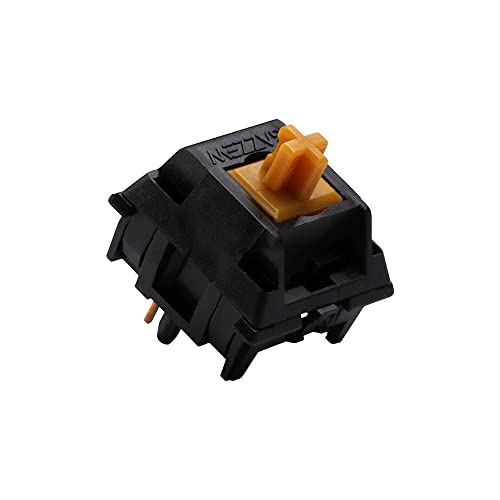
- Configuration in its listing: plate-mounted tactile, 67g spring, made by Kailh
- Stem and housing: the production version of the frankenswitch recipe
- Pack format: 70 pieces in the listed configuration
- Personality: the fullest, roundest tactile event of the four
Strengths
- The bump is the one the others are measured against: immediate, generous, and clean through the crest.
- Unit consistency across a pack is the strongest here, which matters when eighty switches must feel like one instrument.
- The return snap gives fast typists a rhythmic confirmation that borders on percussive pleasure.
Trade-offs
- Plate-mount legs mean 5-pin boards accept it happily while some sockets prefer a pin trim for a perfectly flush seat.
- It is the loudest personality in this comparison, and shared rooms will hear your enthusiasm.
- The premium tier pricing makes a full-size build a considered purchase rather than an impulse.
Best for: tactile devotees who want the canonical experience with the least tuning. Not suited for: quiet offices, light wallets, or typists who prefer a gentle bump.

Drop Holy Panda X — the Panda With Indoor Manners
Badge: Quiet tactile evolution
- Configuration in its listing: PCB mount, 5-pin, 65g, described as quiet and tactile
- Character: the family bump with a softened landing
- Pack format: 35 pieces in the listed configuration
- Personality: composed, rounded, discreet
Strengths
- Lets tactile loyalists keep a real bump in spaces where the original’s voice would be unwelcome.
- The 5-pin legs seat securely in PCB-mount boards and forgive slightly loose plates.
- Factory consistency carries the family standard into the quieter design.
Trade-offs
- Purists may find the landing too polite; the original’s snap is part of their devotion.
- Smaller listed pack size means full-size builders order multiples and should plan the count.
- It competes with dedicated silent tactiles like the subject of the boba u4 silent tactile review, which out-quiet it.
Best for: panda fans who type near other humans and want the bump without the broadcast. Not suited for: sound-first builders chasing the full original voice.
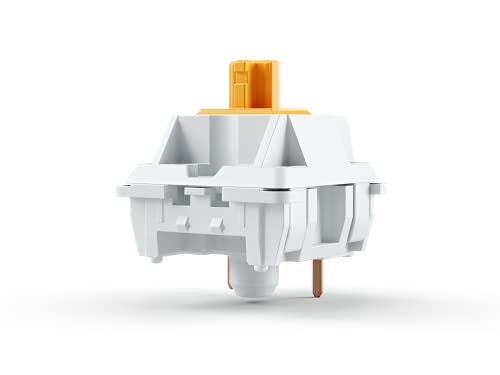
Glorious Panda, Unlubed — the Tuner’s Canvas
Badge: Raw material, honestly sold
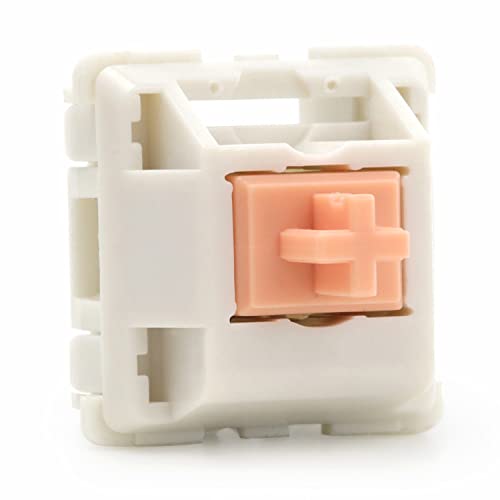
- Configuration in its listing: 36 pack, 67g spring bottom out, 3-pin
- Materials per its listing: premium polycarbonate and nylon construction
- Factory state: unlubed, deliberately
- Personality: eager, bright, unfinished in the productive sense
Strengths
- The most affordable doorway into the panda bump philosophy.
- Arrives ready for your own lube recipe, with no factory grease to clean out first.
- The bump itself is legitimately large and rounded — the family resemblance is not marketing.
Trade-offs
- Stock, it is the scratchiest and spring-noisiest switch on this page.
- Judging it unlubed against finished rivals is unfair to it and misleading for you.
- Three-pin legs ask plate-mount boards for their grip, and wobbly plates will show it.
Best for: modders who lube every switch they own and enjoy the ritual. Not suited for: anyone who wants to install a switch and never think about it again.

Glorious Panda, Lubed — the People’s Panda, Finished
Badge: The value verdict
- Configuration in its listing: 36 pack, 67g spring bottom out, 3-pin
- Factory state: lubed by Glorious, per its listing
- Materials: the same polycarbonate and nylon construction as its sibling
- Personality: rounded bump, calmed manners, ready on arrival
Strengths
- Delivers most of the panda experience at the friendliest tier in this comparison.
- Factory lube removes the scratch that defines the unlubed pack’s homework.
- An ideal first strong tactile: characterful enough to teach you what you like.
Trade-offs
- Factory lube, applied at production speed, cannot match a careful hand-lubed set for consistency.
- The last degree of refinement — the composed crest of the Drop switches — remains on the other side of the price gap.
- Pack sizing suits compact and mid-size boards better than full-size builds.
Best for: buyers who want the panda bump finished and fairly priced. Not suited for: perfectionists who will re-lube them anyway and should buy the unlubed pack.
Criterion Rounds: Bump, Sound, Smoothness, Value
The bump itself
All four switches agree on architecture: the tactile event begins almost immediately, occupies the heart of the travel, and resolves into a short fall. Within that agreement, texture separates them. The Holy Panda’s bump crests like a well-built speed bump — one continuous swell with no gravel in it. The Glorious bump carries a faint grain, most audible in the unlubed pack and mostly polished away in the lubed one, as if the same hill were surfaced in slightly coarser asphalt. The Panda X rounds its hill further and lowers it a touch, trading theatre for civility. A typist pressing each switch once, slowly, will rank them exactly this way; the ranking survives at speed, where the Drop switches keep their composure longest.
Sound
The original Holy Panda is the extrovert: a snappy, mid-pitched voice with a woody edge that recording artists in the hobby have chased for years. The Glorious pair speak a similar dialect at a slightly brighter pitch, the unlubed pack adding spring chatter to the conversation until lube civilises it. The X is the diplomat, engineered down to a level where a nearby microphone stops complaining. If sound is your primary criterion — and for many tactile fans it secretly is — the order on this page is a ladder: X for discretion, Glorious lubed for balance, Holy Panda for the full performance.
Smoothness and consistency
Smoothness is where manufacturing discipline shows. Drop’s pair travel with the least friction noise and the tightest unit-to-unit agreement; across a full board, your fingers meet the same switch ninety times. The Glorious lubed pack is honestly close in the middle of the distribution, with the occasional outlier switch that a careful builder relocates to a function key. The unlubed Glorious is not a smoothness contestant at all until its owner spends an evening with a brush — after which, to be fair, a hand-lubed Glorious set can embarrass factory efforts from any brand, because hand work beats line work when the hand is patient.
Value, framed qualitatively
The Drop switches occupy the enthusiast premium tier; the Glorious switches live a tier or two below, with the unlubed pack the most accessible panda of all. The value question is therefore really a labour question. Money buys finish in this comparison: pay Drop’s tier and the finish arrives in the box. Pay Glorious’s tier and you supply the finish yourself, or accept the factory’s good-enough lube in the pre-lubed pack. Readers who value their evenings will find Drop cheap; readers who value the ritual will find Glorious unlubed cheap. Both are correct, which is why this rivalry refuses to die.
The Frankenswitch Question: Why Not Build the Original?
Romantics ask why anyone buys a manufactured panda when the original was a home build. The answer is supply and sanity. The donor switches for the classic recipe have their own availability cycles and price moods, and a frankenswitch build means buying two switches to make one, then opening, swapping, and tuning a board’s worth of hybrids. The full romance is documented in frankenswitches a complete guide, and it is a wonderful weekend. It is not, however, a sensible default recommendation in a comparison article: the manufactured switches on this page exist precisely because Drop and Glorious industrialised the recipe, quality control included. Build the original for love; buy these for a keyboard you need on Monday.
Buying Guide: Matching a Panda to a Person
One more buying variable hides in plain sight: the board you already own. A panda set dropped into a board with a stiff plate and a heavy case will read firmer than the same set in a flexy, foam-filled build, so readers replacing switches in an existing board should judge testers in that board rather than on a standalone tester block. The tester tells you about the switch; the board tells you about your keyboard. Both testimonies matter, and confusing them is how a switch gets blamed for a case’s personality — or credited with it.
Start with your room. Solo room, sound welcome: the original Holy Panda is the fullest expression and the comparison’s reference point. Shared room, bump non-negotiable: the Panda X, or the Glorious lubed if the budget is steering. Shared room and strict silence: leave this page entirely and read about genuinely silent tactiles, because even the X is a tactile with manners rather than a silent switch.
Continue with your hands. All four packs live in the heavier tactile neighbourhood, so writers with light touches or fatigue concerns should test before committing a full board; a tester row of each is cheaper than a drawer of regrets. Heavy-handed typists, by contrast, often find these switches revelatory — the bump finally pushes back with authority, and accidental presses decline.
Finish with your temperament. If opening a switch housing sounds like a chore, buy finished: Drop either way, or Glorious lubed. If it sounds like a hobby, the Glorious unlubed pack plus your favourite grease is the best value in tactile switches anywhere near this family, and the skills transfer to every switch you will ever own — the technique itself is taught step by step in how to lube keyboard switches properly.
How to Test Pandas Fairly Before Committing
Step one: build a mixed tester row
Place all four switches in one tester or one sacrificial board row, under identical keycaps. Mixed rows expose differences that sequential unboxings hide, because your fingers compare neighbours rather than memories.
Step two: type the same paragraph four ways
Use a paragraph with mixed punctuation and capitals, and type it once per switch at your natural speed. Note where errors cluster: a bump that delights at slow presses can bully at speed, and vice versa.
Step three: listen from the doorway
Have someone type while you stand where your housemates and colleagues actually live. Switches are judged at the desk and sentenced at the doorway; the X and the lubed Glorious pass doorway tests that the original cheerfully fails.
Step three-and-a-half: weigh the room’s vote
Before the finalist graduates to a full board, let the people who share your air cast their ballots. A partner, a flatmate, or the colleague at the next desk will hear the board differently from the typist, whose perception is cushioned by intention and bone conduction. Their verdict is not the whole decision — it is your keyboard — but a switch chosen against the room’s evidence tends to be typed on apologetically, and apologetic typing is the one style no bump can improve.
Step four: live with the winner for a week
Strong tactiles are a relationship, not a tasting. A full board of the finalist, typed on for a working week, reveals fatigue patterns no tester can. Only then order the full count with confidence.
Common Mistakes in Panda Shopping
A sixth mistake belongs to the specification sheet: treating bottom-out force as the switch’s whole personality, when two switches sharing a spring weight can present entirely different bumps because the stem’s leg geometry writes the story the spring merely punctuates. Buyers who cross-shop by grams alone will keep being surprised by switches that match on paper and diverge in the hand, in this family and every other.
The first mistake is buying the unlubed Glorious and judging the whole comparison by its scratch, when that pack is explicitly a semi-finished material. The second is assuming the X is a lesser Holy Panda rather than a different brief — quieter by design, not by deficiency. The third is ignoring pin format: the Glorious packs and the original Holy Panda are 3-pin plate-mount designs, the X is 5-pin, and while the fixes are trivial, discovering them mid-build is not. The fourth is spring tunnel vision — all four live near the same weights, yet buyers agonise over grams while ignoring bump texture, the variable their fingers will actually report on. The fifth is filling a board before testing a row, the evergreen error this page’s how-to section exists to prevent.
Final Recommendation
If the budget allows one answer, the Drop Holy Panda remains the tactile this family is named for, and the X is its thoughtful sibling for shared spaces. If the budget is a real constraint, the Glorious Panda lubed is the comparison’s value champion, and the unlubed pack is the champion’s raw ore for readers with a brush and an evening. There is no trap door in this comparison — no bad switch wearing a panda costume — which is exactly why the debate has lasted years. Choose by room, hands, and temperament, and any of the four will explain, within a paragraph of typing, what all the fuss was about. For a wider map of the tactile landscape, see keyboard switches explained for beginners and the family survey in durock jwk tecsee boutique switches guide.
Inside the Switches: Stems, Housings, and Why the Details Matter
Open a Holy Panda and a Glorious Panda side by side and the family resemblance survives disassembly. Both use a stem whose legs are shaped to produce that long, rounded interaction with the leaf — the bump is a conversation between leg geometry and leaf tension, stretched over more of the travel than a conventional tactile allows. Where they diverge is in the supporting cast. Drop’s production, made by Kailh to the Invyr recipe, pairs its stem with housings whose tolerances keep the stem’s path disciplined; the Glorious construction, polycarbonate above and nylon below, pursues a brighter acoustic and a slightly looser embrace. Neither approach is naive. They are different allocations of the same budget: precision of travel on one side, resonance and accessibility on the other.
The springs deserve a paragraph of their own because panda owners swap them more than most. A spring in this weight class does double duty — it sets the bottom-out force and it shapes how the bump’s crest feels, since the finger fights spring and bump together on the way down and rides the spring alone on the way back. A slightly longer spring of the same nominal weight adds preload, which firms the initial press and makes the bump feel even earlier. Owners who find any of these four switches almost right should experiment with springs before abandoning the stem; in the panda family, spring tuning is the cheapest personality transplant in the hobby, and it is fully reversible.
Films are the third internal variable. A switch film — a thin gasket between housing halves — tightens the housing’s grip and deepens the voice. The Drop housings, snug from the factory, gain the least; the Glorious housings gain more, particularly in older production runs. Filming a panda build is a meditative evening rather than a chore, and the audible difference concentrates in the top-out, where a filmed housing closes with a tidier, lower note. As with lubing, film one row and compare before committing the board.
Pandas in Real Boards: Cases, Plates, and Keycaps
A panda switch does not sound like itself in the abstract; it sounds like the board around it. In a heavy aluminium case with a brass plate, the Holy Panda’s snap turns woody and authoritative, the kind of sound that makes a desk feel furnished. The same switches in a polycarbonate case soften into a rounder, quieter register — the pairing many X owners choose deliberately, stacking the switch’s own discretion on the case’s. The Glorious pair, brighter by birth, benefit most from foam and from thicker keycaps, which pull their pitch down toward the Drop switches’ neighbourhood.
Keycap profile conducts the bump as surely as it conducts sound. Tall profiles add leverage and make the panda bump feel larger; if the standard experience borders on too much for your hands, a lower profile calms it without changing a single switch. This is worth knowing before a return: many a panda set has been blamed for a keycap’s leverage. Conversely, a typist who finds the Glorious bump almost sufficient under low caps may find it perfect under tall ones, the cheapest upgrade in this entire comparison being a keycap set already in a drawer.
Gasket-mounted boards introduce a final variable — bounce. A strong tactile on a bouncy mount can feel seasick to some typists, the bump and the board’s give arriving as two events instead of one. Firmer gasket implementations and tray mounts keep the panda’s single, decisive character intact. If your board offers gasket hardness options, the firmer setting is the panda’s friend.
The Sound-Test Culture, and How to Listen Past It
No switch family lives more thoroughly in recordings than the pandas. Sound tests — the same board, the same caps, a microphone at a standard distance — are the hobby’s way of letting strangers audition a bump. They are genuinely useful for pitch and character, and genuinely misleading for volume and feel, because microphones flatter low frequencies and no recording transmits the crest of a tactile event into your fingers. Use recordings to shortlist, exactly as this page intends its own descriptions to be used, and let a tester row make the final decision. The buyer who orders ninety switches on the strength of a beautiful recording has confused a concert with a contract.
There is a subtler trap in panda recordings specifically: the famous ones are often frankenswitch originals or heavily tuned builds, filmed, lubed, and housed in cases chosen to flatter them. A stock Glorious set in a thin case will not sound like that video, and the disappointment belongs to the comparison, not the switch. Judge each of these four by what it is — a manufactured starting point with a known ceiling — and the tuning sections of this site will happily help you raise whichever one you choose toward the recordings that inspired you.
Long-Term Ownership: A Year With Each Switch
Switches change as they break in, and the pandas change in characterful directions. The Holy Panda’s bump smooths at the crest over the first months, like a path worn into a hillside — owners describe the switch becoming more itself, the grain leaving the swell. The Glorious pair break in faster and slightly less evenly, which is why the outlier-relocation trick matters: after a month, swap the two or three switches your fingers keep noticing into the function row, and the board homogenises. The X ages the most gracefully of the four, its soft landing indifferent to wear, which suits its brief as the set-and-forget panda.
Spring ping is the other long-term variable, appearing in some units of both brands as springs settle. It is a five-minute fix with lube on the spring ends and a decade of annoyance if ignored, because a strong tactile board is otherwise quiet enough in its mechanics for the ping to headline. Build the spring-lube step into your first maintenance pass — pull the board’s most-used row at the six-month mark, service those springs, and the whole set will likely follow the same schedule into old age.
Pandas Against the Wider Tactile Field
Step back from the family feud and the pandas occupy a specific parish in the tactile church: the maximalists. Conventional tactiles — a mainstream brown, say — offer a polite nod of a bump, a suggestion of feedback. The pandas offer a sermon. Against the other maximalist traditions, the differences sharpen. The Durock T1 family, surveyed in the boutique switches guide covering durock and tecsee, delivers a shorter, snappier event — a crack rather than a swell. Zealios-style switches split the difference with a bump that starts high and resolves crisply. The pandas remain the roundest of the strong tactiles, and roundness is their whole argument: a bump you roll over rather than snap through, which is why their devotees describe typing as kneading and their detractors describe it as wading.
That detractor view deserves its due. A bump this large is not free: it taxes small hands, it can smear at very high typing speeds into a general resistance, and it makes the switch a poor choice for gaming that demands rapid repeated presses on one key, where the long tactile event becomes a toll booth. The pandas are typing instruments first and gaming switches a distant second, and the comparison is healthier for admitting it. A player who needs tactile confirmation in games should take a shorter bump; a typist who writes the day away should take the pandas’ long, rolling confirmation and never look back.
Two Grams of Difference: Living With 65g and 67g
The specification gap between the Panda X at 65g and its 67g cousins looks trivial and feels anything but, because bottom-out weight is the number your fingers meet at the end of every single press, thousands of times a day. Two grams is roughly the difference between a bump you crest and a bump you conquer. On the X, the lighter spring and the softer brief conspire: the whole event is the panda idea at conversational volume. On the 67g switches, the same geometry reads as declaration. Writers with long days ahead should weight this section heavily — spring fatigue is cumulative and unglamorous, and it is the reason most often given by owners who sold a panda set they otherwise loved. The tester-row advice elsewhere on this page exists largely to let your hands, rather than this paragraph, arbitrate those two grams.
Use Cases, Honestly Assigned
The novelist: choose the original Holy Panda if the room allows it. Long sessions reward the fullest bump, and the snap becomes a metronome the prose can lean on. The X is the understudy for deadline weeks in a shared flat. The programmer: the Glorious lubed earns the desk more often than pride expects — code involves bursts of typing separated by thought, and the accessible panda’s eagerness suits the rhythm, while its price leaves budget for the second board every programmer eventually builds. The student: the unlubed Glorious plus a lube kit is practically a curriculum — a strong tactile, a new skill, and a board that improves as its owner does. The gamer who types: be honest that the typing is the point; any panda will serve the games adequately and the essays beautifully, which reverses the usual purchasing logic and is the healthier for it.
Community, Resale, and the Switch Drawer
Panda switches hold an unusual position in the hobby’s economy of leftovers: they are among the easiest switches to rehome. The names are known, the behaviour is documented across years of community writing, and a used set in honest condition finds a buyer who knows exactly what the bump will feel like. This matters to the comparison because it lowers the cost of being wrong. A reader who buys the Glorious set, types for a season, and graduates to the Drop pair has not burned the first purchase; the drawer, the marketplace, or a friend’s first build absorbs it. Switches with obscure names and undocumented manners enjoy no such mercy, and the pandas’ fame — so often mocked as hype — functions in practice as liquidity.
The same fame sustains a library of tuning knowledge: spring curves measured by community members, lube pairings tested across hundreds of builds, film thicknesses compared in threads that read like dissertations. Whichever panda you choose, you inherit that library free. It is a genuine, if unglamorous, advantage over equally good switches that nobody wrote down anything about.
Reading a Force Curve Without a Graph
Enthusiasts describe these switches with force curves, and the curves can be translated into plain sensation for readers who prefer words. Picture the press as a hill on a graph of force against distance. A conventional tactile draws a small hillock a third of the way along the journey. The panda family draws a mountain range that starts at the trailhead: force climbs almost from the first tenth of a millimetre, keeps climbing across the middle of the travel, crests in a broad summit rather than a spike, and then falls away quickly into the valley of bottom-out. The return journey redraws the same mountain in reverse, which is why pandas feel present in both directions — many tactiles are interesting only going down.
The four switches on this page draw that mountain with different pencils. The Holy Panda’s line is the smoothest, a draughtsman’s curve. The Glorious line carries a faint tremor in the climb — the grain discussed in the criterion rounds — which the lubed version’s pencil mostly steadies. The X draws the same range at a slightly reduced altitude. None of the four draws the sharp cliff of a clicky switch or the steep spike of the snappiest T1-style tactiles, and that restraint is the design: the panda event is about duration, not surprise. A bump you spend time inside feels luxurious; a bump that ambushes you feels efficient. Both philosophies have congregations, and this page’s congregation is the first.
Pack Maths: How Many Pandas Does a Board Need?
Buyers routinely misjudge counts because the four products package differently — seventies, thirty-sixes, thirty-fives. Work from your layout instead of the pack. A 60 or 65 percent board lives in the high sixties for switch count, so one large pack or two small ones cover it with the customary spares. A tenkeyless board wants the mid eighties. A full-size board crosses one hundred, at which point pack arithmetic starts steering the purchase: the Holy Panda’s larger listed pack and the Glorious thirty-sixes reach that total by different multiples, and the wise buyer rounds up to the configuration that leaves a tuning reserve rather than the one that lands exactly on the key count. Spares matter more in this family than most, because panda owners open housings — for springs, for films, for curiosity — and every opening is a small opportunity for a leg to bend or a leaf to sulk.
Availability rhythms deserve a sentence too. Enthusiast-tier switches move in production waves, and a sold-out panda is usually a between-batches panda rather than a discontinued one. Readers mid-build should buy the full count in one order when stock allows, because batch-to-batch variation, while small in both brands, is real — and a board built from two batches can carry a faint accent difference between its halves that only its owner will ever hear, which is to say its owner will hear it forever.
Gaming on Pandas, Revisited Without Romance
Because this comparison has twice steered gamers elsewhere, fairness demands the fuller picture. Pandas game perfectly well in the genres most people actually play: adventures, RPGs, strategy, simulation, and any title where a keypress is a decision rather than a drumbeat. The bump’s confirmation is even pleasant in menu-heavy games, where each press feels ratified. The genres that expose the design are the athletic ones — rhythm titles at high difficulty, fighting games with rapid repeats, shooters where a movement key must reset instantly — and there the long tactile event and the absence of rapid trigger are physics, not preference. The two-board household resolves this neatly, and readers building toward one will find the magnetic side of the fence surveyed in hall effect switches versus mechanical switches. Everyone else can let the pandas do what they were born to do, which is make typing feel like an event worth attending.
If You Bought the Wrong Panda: A Recovery Ladder
Regret in this family is unusually fixable, and the fixes ascend in effort. Rung one is keycaps: if the bump feels overwhelming, lower profiles reduce its leverage; if it feels underwhelming, taller caps amplify it. Rung two is springs: a lighter spring set softens any panda’s declaration, a heavier set sharpens the X toward its cousins. Rung three is lube, which can civilise a Glorious set or — applied to springs only — quiet a Drop set’s chatter without touching its crest. Rung four is relocation: a board need not be monoculture, and many owners run pandas on the letter keys with gentler switches on modifiers and the number row, a mixed ecology that keeps the bump where fingers live and removes it where palms rest. Only rung five is resale, and as the community section noted, pandas rehome gracefully. Climb the ladder before descending into the marketplace; most wrong pandas are one rung from right.
Care, Cleaning, and the Five-Year Board
Panda switches ask for nothing exotic in service. Dust is the enemy of every tactile, because grit in the stem’s path reads as scratch in the bump, so a board cover or a weekly blast of air preserves the crest you paid for. Spills are the emergency: a sugared panda rarely recovers its manners, and the hot-swap socket is your salvation — pull the affected switches, replace from spares, and let the casualties soak and dry as a weekend experiment rather than a weekday crisis. Springs can be re-lubed at the year mark if ping creeps in. Housings, treated gently with a proper opener, survive many openings; treated with a screwdriver and impatience, they survive one. The five-year panda board is not a fantasy — it is the default outcome for owners who keep crumbs at a respectful distance and treat the switch drawer as a first-aid kit.
A Field Guide to Panda Names, So You Order the Right Animal
The panda namespace has grown suburbs. Beyond the four switches compared here, the wider market carries other panda-branded switches — Tecsee’s Purple Panda among them, a tactile with its own PME-material personality, covered alongside its boutique cousins elsewhere on this site. These are relatives by naming convention and tactile ambition, not by recipe, and their existence is the strongest argument for buying by listing title rather than by the word panda. The four products in this comparison are the two households the keyword asks about: Drop’s Holy line and Glorious’s line. If a listing’s panda cannot be traced to one of those households, it is a different switch wearing a familiar coat, and it should be evaluated on its own merits rather than borrowed glory.
Within the households, the naming traps are smaller but real. Holy Panda without the X is the loud original recipe; the X is the quiet evolution, and the single letter carries the entire difference in brief. Glorious’s pair differ only in factory lube state, a distinction some marketplace listings bury in variant selectors — the same variant discipline this site preaches for the Boba family applies here, and a buyer who wants the finished switch should confirm the word lubed appears in the exact variant being ordered, not merely somewhere on the page.
What a Panda Board Does to Your Typing
A closing observation from long-term owners, offered because no specification captures it: a strong tactile board changes typing behaviour itself. The bump’s confirmation encourages a lighter bottom-out over time — fingers learn they can trust the crest and stop slamming through it — and many panda owners report their typing growing quieter and more economical across the first season, the switch training the hand. Typing speed effects vary by person and should not be promised, but accuracy on first drafts is the benefit owners cite most, because a press that announces itself is a press that rarely half-happens. That, more than the sound tests and the lineage and the two grams, is why the panda idea has survived a decade of challengers: it makes the act of typing feel attended to.
Frequently Asked Questions
Are Glorious Pandas just Holy Panda copies?
They are an homage engineered by a different company with different materials — a polycarbonate and nylon construction of Glorious’s own — aimed at the same tactile ideal. The bump philosophy clearly descends from the frankenswitch original, and Glorious has never pretended otherwise. Whether homage reads as flattery or opportunism is a values question; the functional question, how the switches differ under the finger, is the one this comparison answers: close in spirit, distinct in finish and voice.
Which panda is best for a first strong tactile?
The Glorious Panda in its lubed form is the friendliest first step: the bump is full-sized and characterful, the finish is handled, and the tier is gentle enough that a change of heart later does not sting. Readers certain of their devotion can start with the Drop Holy Panda and skip the apprenticeship, but certainty is rarer than enthusiasm, and the lubed Glorious teaches the same lessons at a kinder price of admission.
Does the Holy Panda X feel like the original?
The family resemblance is unmistakable — the same rounded, early bump in a calmer register. What changes is the landing and the volume: the X arrives softer and quieter, with less of the snap that makes the original theatrical. Typists who loved the original’s bump and disliked its announcement will feel recognised by the X. Typists who loved the announcement will feel the X is the original with the volume knob turned down, because that is precisely what it is.
Should I lube Holy Pandas?
Most owners should not, at least not immediately. The Drop switches arrive with a finish that heavy-handed lubing can only round off, and the classic error is greasing the tactile legs until the bump dissolves. If you intervene at all, confine lube to the springs to calm any ping, and leave the stem’s working surfaces alone. The Glorious unlubed pack inverts the advice entirely: there, lubing is not an intervention but the intended final manufacturing step, performed by you.
Will these switches fit my keyboard?
Any board with MX-style hot-swap sockets or a soldered MX footprint accepts the panda family. The practical distinction is pin count: the 5-pin X seats most securely in PCB-mount boards, while the 3-pin packs rely on the plate for alignment and may need their legs left untrimmed in plate-mount sockets. In soldered boards all four solder in without drama. When in doubt, one test switch in your board’s socket answers more than any specification table.
Can I mix pandas with other switches on one board?
Yes, and mixed boards are a quiet tradition in this family. The common patterns put the strongest bump under the letters, a gentler switch under the pinky-served keys, and something calm under the spacebar’s stabilised expanse. Keep the spring weights within a comfortable family so the board does not feel like two instruments glued together, and test the mixed row before filling the board. A panda monoculture is purer; a panda-led mixture is often kinder to real hands.
Is the price gap between the brands justified?
Justified is a word each buyer defines at their own desk, but the gap is at least explicable: it buys tighter unit consistency, a smoother factory finish, and the production recipe closest to the celebrated original. Whether those virtues are worth the tier step depends on how many switches you are buying and how sensitive your fingers are to outliers. A 60 percent build narrows the absolute gap to the cost of a modest dinner; a full-size build widens it into a decision. The Glorious lubed pack exists precisely for readers who run that arithmetic and land on the sensible side.
How long do panda switches last in daily service?
The contacts and leaves inside are rated for the same long service as other quality MX-style switches, which in household terms means years of heavy typing before any unit thinks about retiring. The parts that age first are cosmetic and acoustic — a spring that develops a ring, a housing that loosens its voice — and both are serviceable with the maintenance described on this page. Owners replace pandas out of curiosity far more often than out of necessity.
Why do all four use such similar spring weights?
Because the panda bump needs the spring as a partner. A large tactile event on a light spring feels mushy — the finger blows through the bump before it registers — while a heavy spring gives the bump a wall to push against, which is what makes the crest feel round and deliberate. The clustered weights across both brands are convergent engineering rather than copying: this is simply where a bump of this size behaves best.