Affiliate disclosure: this article contains affiliate links. If you buy through a link on kajuandouglas.com, the site may earn a commission at no extra cost to you.
This keychron vs gmmk vs drop best keyboard brand comparison puts the three names that dominate the modern enthusiast-mainstream border into one ring. Keychron is the broad catalogue: every size, every tier, wireless as a default assumption, aluminium flagships above and plastic value lines below. GMMK — Glorious’s keyboard line — is the gaming-rooted kit specialist: barebones boards built to be finished by their owners, with an accessory ecosystem of plates, knobs and cables sold from the same shelf. Drop is the enthusiast curator: the company born from group buys, selling designed objects — the ALT, the CTRL, keycap sets with genuine authorship — to buyers who want the hobby’s taste without its waiting rooms. Three philosophies of what a keyboard company should be, at overlapping prices, which is why the comparison is asked for so often.
The honest method for a brand comparison is to compare what the brands reliably do rather than what any single model does once: their ranges and who each range serves, their firmware and software character, their build and sound tendencies, their ecosystems and aftercare, and the buyer each philosophy fits. Verified representatives of each house are reviewed in the middle — a flagship platform from each — and the closing sections give criterion-by-criterion verdicts, a decision guide by buyer type, the mistakes made when brands are bought as identities rather than as tools, and the questions that survive every comparison thread.
Key takeaways
Keychron wins on range, wireless and value breadth — the safest default for most buyers. GMMK wins on the kit-and-accessory experience at mainstream prices — the builder’s on-ramp. Drop wins on design authorship and enthusiast curation — boards and keycaps as objects. All three run hot-swap and respectable firmware stories (Keychron and Drop on open QMK/VIA; Glorious on its own software with QMK on flagship kits). Choose by the ownership experience you want, then the model within it.
In this guide
Three Philosophies of a Keyboard Company
Keychron’s philosophy is coverage. The catalogue spans 60 percent to full-size, low-profile to full-height, plastic value lines to machined flagships, with tri-mode wireless treated as a standard expectation rather than a premium. The strategic effect for a buyer is that Keychron is rarely the wrong answer and often the only answer at a specific intersection — the ISO low-profile board, the southpaw flagship, the budget VIA board — because no rival stocks as many intersections. Its house character follows from the breadth: engineering-led, specification-rich, aesthetically restrained, with the occasional inspired flourish (the lemokey keyboards guide in this cluster covers its gaming sub-brand, where the restraint is deliberately relaxed). Buying Keychron is buying the market’s centre, with the centre’s virtues and its one vice — a catalogue so wide that variant-checking becomes the buyer’s core skill.
GMMK’s philosophy is the kit. Glorious came from gaming accessories and built its keyboard line around barebones boards — case, PCB, plate, stabilisers — that the owner completes with switches and keycaps, surrounded by a first-party accessory shelf (plates in several materials, knobs, coiled cables, wrist rests) that keeps the whole customisation journey inside one brand’s boxes. The GMMK Pro became the era’s default first kit on the strength of that completeness. The house character is gamer-fluent and modular: everything swaps, everything has an upgrade path, and the software story (its own Core application, with QMK on the flagship kits) reflects a brand serving players first and typists warmly. Buying GMMK is buying a platform and a parts shelf, and the ownership pleasure it sells is assembly and iteration.
Drop’s philosophy is curation. Born as Massdrop, the group-buy platform, Drop’s own hardware — the ALT and CTRL above all — carries the DNA of designed, limited-feeling objects sold at retail: aluminium cases with real presence, enthusiast layouts, keycap collaborations with genuine designers (the MT3 profile’s home, among others). Its range is narrow by design — a handful of boards, a deep keycap catalogue — and its house character is the hobby’s taste made purchasable without the group buy’s calendar, a story this cluster’s how to buy keyboard group buy guide tells from the other side. Buying Drop is buying authorship: fewer choices, each one somebody’s deliberate decision, at prices that assume the buyer can tell.
Firmware, Software and the Long Ownership
The software comparison separates the houses more durably than any specification. Keychron builds on open QMK/VIA across most of its range and now layers its own web Launcher above it — the strongest position in this comparison, because the owner’s layout authority cannot be discontinued and the community’s knowledge applies wholesale, per the keyboard firmware QMK VIA guide in this cluster. Drop’s boards are likewise QMK citizens — the ALT and CTRL are configurator-native, with Drop’s own configurator tooling in its history — and their enthusiast buyers expect nothing less. Glorious is the comparison’s mixed case: its mainstream boards run its proprietary Core software (capable, gaming-oriented, and exactly as durable as the company’s support for it), while the flagship GMMK Pro speaks QMK/VIA — a split that buyers should note model by model, since it decides whether the board’s intelligence is open or rented.
Aftercare follows a similar gradient. Keychron’s scale brings the mainstream’s infrastructure — regional sellers, warranty channels, a spare-parts trickle — with support quality that owners describe as adequate at volume. Drop’s smaller scale has historically meant slower, more personal support, with a community forum carrying part of the load. Glorious sits between, a gaming-accessory company’s retail machinery applied to keyboards, generally responsive on defects and quieter on exotica. None of the three is a boutique with a phone number and a first name; all three are real companies whose boards will be supported in the ordinary commercial senses. The buyer choosing for a decade should weight the firmware line most heavily, because software is where boards actually age — the aluminium will outlast every one of these support desks, and the open-firmware boards will still be configurable when it does.
Sound and build tendencies, stated as tendencies and no more: Keychron’s flagships aim for the modern deep-and-governed register out of the box, its value lines are brighter and lighter in hand. GMMK’s kits sound like their owner’s choices — the platform is neutral, the plates and switches decide — with stock stabilisers the line’s known tuning homework. Drop’s boards carry the older enthusiast voicing: firmer, brighter, more defined, the keyboard sound thock clack guide‘s clack end inhabited with intent. Tendencies are not verdicts — each house sells exceptions — but a buyer whose ears have a register should know which house’s centre of gravity is nearest it before the model shortlist forms.
Ranges and Ecosystems: Where Each House Is Strongest
Keychron’s range is its argument, so its strongholds are intersections: wireless everything, low-profile done seriously (the Air-class rivals in the keychron vs nuphy keyboard brand compared comparison), southpaw and ISO variants stocked rather than promised, and a value tier whose firmware embarrassed the market into following. Its ecosystem is breadth itself — cases, keycaps, switches, accessories — competent across the board rather than deep at any single point. The buyer who does not yet know which keyboard person they are is statistically safest here, because the catalogue contains their answer at three price points and the returns path is well worn.
GMMK’s stronghold is the build experience at mainstream money: the Pro and its siblings, the plates and knobs and cables of the same brand, the wrist rests and desk gear that complete a setup from one shelf. Its keycap and switch shelves (its own Panda and Fox switch lines among them) make the one-brand build genuinely possible, which no other house in this comparison attempts as seriously. The buyer who knows they are a builder — whose pleasure is the assembly and the iteration — is GMMK’s natural citizen, and the ecosystem’s job is to keep that pleasure supplied without leaving the brand’s warranty umbrella.
Drop’s stronghold is the designed object and the keycap catalogue: the ALT and CTRL as authored boards, MT3 and DCX keycap families as authored sets, collaborations that bring genuine designers into the hobby’s material culture. Its ecosystem is a gallery rather than a supermarket. The buyer who wants their keyboard to be a piece of design — who reads the keycap profiles explained families as a collection to be curated — is Drop’s citizen, and the premium they pay is for taste exercised on their behalf by people whose taste the market has repeatedly ratified. None of the three strongholds is a consolation prize; they are three different goods, and the comparison’s remaining work is matching goods to buyers.
Keychron Vs Gmmk Vs Drop Best Keyboard Brand: The Shortlist
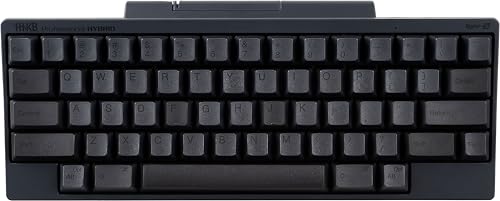
One verified flagship platform per house — Keychron’s Q1, Glorious’s GMMK Pro kit, Drop’s ALT — so the philosophies can be compared as purchasable objects at similar money. Every flagship below was confirmed in the Amazon catalogue records that this site verified for its sources.
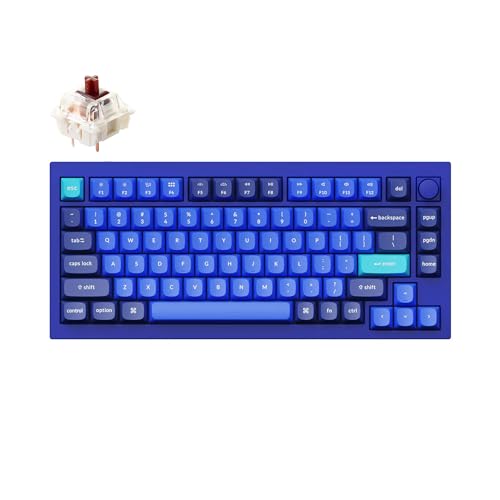
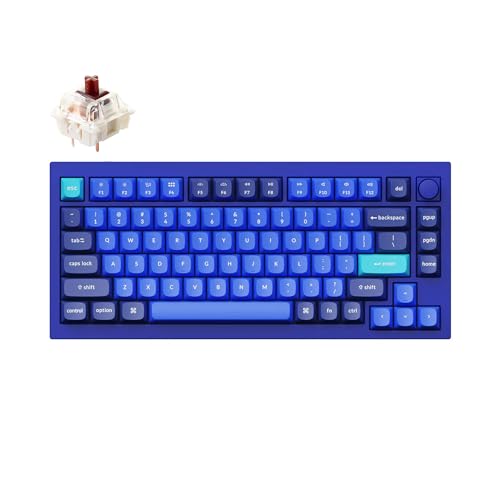
Keychron Q1
Keychron’s flagship argument
- 75 percent aluminium, gasket mount
- QMK/VIA + Launcher
- Hot-swap, knob versions
- Wireless generations in the line
The Q1 is Keychron’s philosophy at flagship scale: a complete specification — machined case, gasket mount, open firmware, hot-swap, encoder options, wireless generations — at a price that undercuts the boutique tier it competes with. It demonstrates the house’s essential move, which is to make the flagship boring in the best sense: nothing missing, nothing exotic, everything documented, and a variant for every desk. As a comparison object it sets the bar the other two must clear in their own currencies — GMMK with build experience, Drop with authorship — because on specification per unit of currency, the Q1 is the comparison’s control condition.
Its honest debits are the house’s: the variant maze (generations, knob and connectivity configurations under one name) demands the listing discipline this cluster preaches, and its aesthetic is competence rather than character. Buyers who want the board to disappear into work will call that a virtue. The verified listing in the sources file fixes the configuration described.
Strengths
- Complete flagship specification, fairly priced
- Open firmware, deepest variant choice
- Wireless and ISO paths the rivals lack
Trade-offs
- Variant maze under one model name
- Aesthetic restraint
- Support at scale, not boutique
Best for: Most buyers, most desks — the comparison’s default.
Not suited for: Builders who want a kit, collectors who want authorship.

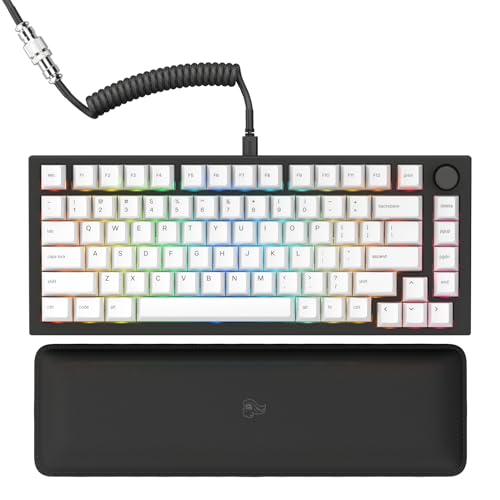
Glorious GMMK Pro
GMMK’s platform argument
- 75 percent aluminium barebones kit
- Hot-swap, gasket mount, knob
- QMK/VIA on the Pro
- Deep first-party plate and accessory shelf
The GMMK Pro is the kit philosophy’s flagship: you buy the platform — case, PCB, plate, stabilisers — and the ownership experience is completing and iterating it, with Glorious’s own switches, caps, plates and cables waiting on the same shelf. Against the Q1’s completeness it offers a different good: authorship of the final object by its owner, and an upgrade path (the plate swaps this cluster’s keyboard plates guide materials types sound teaches) that keeps the board evolving without replacement. Its QMK/VIA support on this model answers the firmware question in the open stack’s favour, which has not always been the house’s position and matters to the comparison.
Its debits are the kit’s: the sticker price is a beginning (switches and caps complete the board at real additional cost), the stock stabilisers ask for tuning, and the software story across the wider GMMK line is proprietary where the Pro is open. As a flagship argument it succeeds on its own terms — the build is the product — and buyers who share those terms will not be persuaded by the Q1’s completeness, correctly.
Strengths
- The build experience, fully supplied by one brand
- Plate and accessory iteration path
- Open firmware on the flagship
Trade-offs
- Total cost exceeds the sticker substantially
- Stabilisers want tuning
- Line-wide software is proprietary below the flagship
Best for: Builders and iterators; gaming-leaning desks.
Not suited for: Buyers who want a finished board in one box.

Drop ALT
Drop’s authored object
- 65 percent, 67 keys
- Aluminium case, high-profile option
- Hot-swap, QMK
- Per-key RGB, enthusiast layout
The ALT is curation made physical: a 65 percent board whose every choice — the case’s profile, the layout’s discipline, the firmware’s openness — was made by people selling taste as the product. It is smaller than its rivals here by design philosophy rather than by accident: Drop’s citizen wants the enthusiast object, not the complete specification, and the ALT’s completeness is of a different kind — nothing on it is generic. Its voicing and feel inhabit the firmer, brighter register the house favours, and its keycap ecosystem (MT3 above all) extends the authorship across the owner’s whole setup.
Its debits are the curator’s: a narrow range means the ALT is the answer only if its size is your size; the price assumes design value that specification shoppers will not find in the numbers; and availability follows Drop’s retail rhythms rather than the mainstream’s constant stock. As a flagship argument it is the comparison’s reminder that keyboards are also objects — and that for a real population of buyers, that is not the soft criterion but the deciding one.
Strengths
- Designed, authored, distinctive
- Enthusiast platform with open firmware
- Keycap ecosystem of genuine originality
Trade-offs
- One size, one philosophy
- Premium for design, not specification
- Availability is episodic
Best for: Design-led buyers; the 65 percent committed.
Not suited for: Specification-per-currency shoppers.
Criterion by Criterion: the Scorecard Buyers Actually Use
Range and availability: Keychron, decisively — sizes, standards, profiles and tiers no rival here approaches. Firmware freedom: Keychron and Drop tie on open QMK foundations, with Keychron’s Launcher adding polish; Glorious takes the criterion only at its flagship, losing it line-wide. Wireless: Keychron alone treats it as a default; the others are wired-first houses with wireless exceptions. Value at the entry tier: Keychron’s V-line stands alone in this ring; GMMK’s value is in the kit tier; Drop does not contest the floor. Build experience and iteration: GMMK, decisively — the kit plus the shelf is a product neither rival sells. Design and keycap authorship: Drop, decisively, with MT3 as the criterion’s Exhibit A.
Sound out of the box: Keychron’s flagships are the most governed; Drop’s are the most characterful in the bright register; GMMK’s are the most owner-dependent, which is either the criterion’s win or its forfeit depending on the buyer. Gaming fluency: GMMK’s heritage shows in its feature priorities and its sub-brand-free focus on players, with Keychron answering through Lemokey rather than through the main line. Support and scale: Keychron’s infrastructure is the broadest, Drop’s the most personal, Glorious’s the most retail-conventional. No house sweeps the card — which is the comparison’s real finding, and the reason the decision guide below is organised by buyer rather than by trophy.
The Decision Guide: Matching the House to the Buyer
If your requirement list contains an intersection — a size plus a standard plus wireless, a profile plus a firmware — begin with Keychron, because intersections are its catalogue’s reason to exist. If your pleasure is the build and the iteration, and your desk is gaming-leaning, begin with GMMK and budget for the completion and the plates. If your keyboard is furniture and art as much as tool, and your size is among the few Drop authors, begin with Drop and let its keycap catalogue finish the sentence. If you are buying a first serious board with no strong self-knowledge yet, the comparison’s honest default is Keychron’s middle — the Q and V lines — because its mistakes are the cheapest to reverse: the catalogue contains your second board too, whatever the first one teaches you.
Two cross-cutting notes complete the guide. First, the houses are not religions: a Keychron on the desk, GMMK plates in the drawer and Drop keycaps on top is a coherent, even common, setup, because the ecosystems interoperate at the MX standard’s level. Brand loyalty is a marketing outcome, not an ownership strategy. Second, model beats brand at the moment of purchase: a specific board’s variant, revision and listing deserve the verification discipline of this cluster’s other guides, because each house’s range contains its own weakest model, and the badge has never typed a sentence. Choose the house by philosophy, the model by evidence, and the listing by reading it twice.
Software Ecosystems as the Real Product
The main comparison grades the three brands’ hardware; this expansion argues the decisive layer is the one above it, because a modern keyboard’s software ecosystem is the part its owner interacts with for a decade, long after the case’s novelty has become furniture. Keychron’s ecosystem is the open standard’s: QMK and VIA beneath its own Launcher’s polish, which means the board’s intelligence is documented by a world community, portable across the owner’s future boards from any maker in that world, and independent of the company’s survival. Drop’s ecosystem is the same open standard viewed from the configurator’s other end — its boards speak QMK, and its configurator history taught the market what web-based keymapping should feel like. Glorious’s ecosystem is the proprietary one: Core, a vendor utility whose quality has swung with versions, governing boards whose hardware openness stops at the switch sockets. The comparison’s deepest line is therefore not among three brands but between two philosophies — the keymap as the owner’s document, in an open format, versus the keymap as a setting inside a vendor’s application — and the keyboard firmware QMK VIA guide‘s whole teaching is that the first philosophy ages better, because documents outlive applications.
The ecosystems’ practical differences surface at predictable moments. The operating system upgrade that breaks a vendor utility leaves the QMK boards’ owners untouched — their tool is a web page and a file. The new computer’s setup is a file copy for one philosophy and a software installation, an account and a version negotiation for the other. The board’s resale carries its intelligence with it in the open world, the keymap exported as the previous owner’s gift; in the closed world the buyer starts from the vendor’s defaults and the vendor’s current software’s mercy. None of this makes the proprietary board bad — Glorious’s hardware earns its place in this comparison on its merits — but it prices the ecosystem as what it is: a durability term in the purchase, exactly like the PCB’s revision and the case’s construction, and buyers should weigh it with the same seriousness.
And the ecosystems have a direction of travel worth betting on: web configurators have eaten the category, open formats have become the expectation at the enthusiast tier, and the proprietary utilities that survive are converging on the open boards’ feature set from behind. A buyer choosing today is choosing a board for the ecosystem’s future as much as its present — and the open standard’s future is the only one whose roadmap is written by its users, in public, which is the closest thing to a guarantee this industry offers.
Availability, Pricing Behaviour and the Sale Calendar
The three brands sell in different rhythms, and the rhythms are part of the comparison for any buyer whose purchase has a date. Keychron’s catalogue is a standing inventory: the boards are stocked, the prices are stable-ish with periodic promotions, and the buyer’s skill is variant selection rather than timing. Drop’s rhythm is the drop itself — scheduled runs, pre-orders, group-buy mechanics with retail polish — which rewards the patient buyer with prices the standing inventory cannot match and taxes the urgent one with waits the how to buy keyboard group buy guide teaches its readers to price. Glorious sits between: a retail catalogue with aggressive promotional seasons, where the list price is a negotiating position and the sale price is the product’s real address for much of the year. The same board, in other words, has three prices depending on its brand’s rhythm, and the comparison’s value table should be read at the prices each rhythm actually charges a buyer who shops it competently.
The rhythms also decide the second-hand markets’ shapes. Keychron’s standing inventory makes its used boards plentiful and honestly priced — the buyer of a used Q1 competes with a stocked new one. Drop’s runs make its used boards the market’s only supply between productions, with prices that hold or climb on the anointed models. Glorious’s promotional calendar anchors its used prices to the last sale, and the patient used buyer lets the calendar do their negotiating. None of these is a better market; they are different games, and the comparison’s service is to say which game each brand is running, so the buyer’s patience is spent where patience is the currency that brand accepts.
There is a final rhythm difference in the product cycles themselves: Keychron revises relentlessly, its lines accreting Max and Pro and Ultra variants until the catalogue needs its own guide (which this cluster provides); Drop iterates slowly, its boards becoming fixtures; Glorious moves in generations, GMMK to GMMK 3, with the line’s whole philosophy renegotiated at each. The buyer who wants the current best-specified board shops Keychron’s frontier; the buyer who wants the board the community has finished debugging shops Drop’s fixtures or Keychron’s year-old revisions — the PCB guide’s revision doctrine, applied to brands. All three postures are rational. The comparison exists so that the posture is chosen, not stumbled into.
The Sound and Feel Philosophies, Compared
Each brand tunes its boards toward a house sound, and the comparison is incomplete until the houses’ philosophies are stated as philosophies. Keychron’s Q line aims at the governed middle-deep — gasket-mounted, foam-layered, the voice of a board that expects to work in offices and be admired in the evenings — and its tuning is the most system-complete of the three, the keyboard sound thock clack guide‘s recipe applied at the factory. Drop’s boards speak in the older enthusiast accent: metal-forward, definition over depth, the ALT and CTRL’s voices closer to the instrument’s structure than to its damping — a philosophy that grades its boards by their honesty about their materials. Glorious’s GMMK Pro generation pursued the custom scene’s sound with a modular gasket system whose results depend, more than either rival’s, on the owner’s assembly choices — the board as a kit of acoustic decisions, for better and worse, in direct proportion to its owner’s patience.
The feel philosophies track the sound: Keychron ships finished, its boards’ typing character decided and consistent out of the box; Drop ships characterful, its boards’ feel a property of their fixed designs; Glorious ships potential, its boards’ feel a range the owner’s plate, gasket and switch choices navigate. None of these is the correct philosophy — they are the three answers to the question every board must answer, of how much of itself the maker finishes — and the buyer’s self-knowledge is the comparison’s real input. The owner who wants the object complete buys Keychron’s answer. The owner who wants the object theirs buys Glorious’s. The owner who wants the object honest buys Drop’s. The main guide’s picks were staged by brief; this section stages them by temperament, and temperament, across a decade of evenings, outlasts specification.
And the philosophies converge at the limit, which is worth noticing: all three brands now ship gasket mounts, foam stacks, hot-swap sockets and open-ish firmware at their flagship tiers, because the market’s centre has moved to the governed, customisable middle. The differences that remain are of degree, emphasis and execution — which is precisely why this comparison’s verdicts are framed as fits rather than ranks. When three good answers converge, the buyer’s remaining work is self-description, and a comparison that teaches the reader to describe their own brief has done more for them than any podium could.
Support, Warranty and the Long Tail of Ownership
A brand comparison that ends at the checkout has graded the courtship and ignored the marriage, so this section grades the ownership’s long tail: support, warranty and the parts economy. The support question has a structure the buyer can test before purchase — the documentation’s depth, the firmware files’ availability, the community’s size (which is a support channel in itself, often faster than the official one) — and the three brands present three profiles. Keychron’s support is industrial: vast catalogue, documentation of varying depth per model, a community large enough that most faults have a public solution with the board’s name attached. Drop’s support is curatorial: fewer boards, deeper per-model knowledge, a community of the boards’ long-term owners. Glorious’s is retail: a large company’s channels, with the responsiveness that scale both enables and dilutes. The buyer’s fault, when it comes, will be handled by one of these profiles, and the profiles are as much a product feature as the switches.
Parts are the long tail’s second term. The board that can be re-PCBed, re-cabled and re-capped from its maker’s store has a lifespan the sealed board cannot match, and the three brands’ stores tell their philosophies again: the kit-adjacent brands sell components because their boards are systems; the catalogue brands sell accessories because their boards are products. Neither is a criticism — a product, finished and warranted whole, is a legitimate thing to sell — but the buyer pricing a decade should count the parts shelf as part of the price’s justification, exactly as the keyboard pcbs guide types features guide counts the spare PCB as the build’s best insurance.
Warranty’s fine print closes the section with the comparison’s least glamorous and most decisive data: the term’s length, the switch and socket coverage, the region’s service reality for buyers outside the brand’s home market. A two-year warranty with a local service path can be worth more than a longer promise administered across an ocean, and the international buyer’s comparison should weight the service geography as heavily as the product’s. Brands are, in the end, promises about the future administered by organisations; the comparison that reads the promises’ terms has done the buyer a service no benchmark can.
Which Brand for Which Desk: The Verdicts, Argued
The main guide’s verdicts were compressed; this expansion argues them at the length they deserve, desk by desk. The dual-life desk — work by day, play by night, one board for both — is Keychron’s home ground, and the argument is the ecosystem’s: Mac and Windows parity, the wireless done properly, the catalogue’s breadth letting the same brand serve the desk’s evolution, the Q line’s finish passing in both rooms. The argument’s strength is that it survives the desk’s changes; its weakness is that the desk pays for breadth it may not use, in the catalogue’s complexity and the flagship’s price. The battlestation desk — one game, high stakes, the board as equipment — reads the comparison differently: Drop’s fixtures and the GMMK line’s gaming generations compete on the input chain’s terms, and the verdict there is title-shaped, decided by the keyboard latency input lag explained chain’s audit of the whole system rather than by brand loyalty.
The builder’s desk — the board as a project with a long future — is Glorious’s strongest claim and Keychron’s Q ecosystem’s close second, and the argument between them is the parts economy against the catalogue’s depth: the GMMK’s modularity invites the hand; the Q line’s ecosystem invites the decade. The writer’s desk — the board as a typing instrument above all — finds all three brands’ flagships competent and their differences secondary to the switch and keycap decisions, which is the verdict the comparison owes its most numerous readers: at the flagship tier, brand is the third decision, after fit and switches, and any of the three, fitted and switched correctly, will type beautifully for years. The comparison’s honesty peaks in that sentence, and it is not a small one.
And the budget desk — the comparison’s most price-sensitive reader — should hear the rhythms section’s conclusion as its verdict: the best brand at a budget is the one whose rhythm is currently discounting the tier you need, because the three brands’ value lines are close enough in quality that the sale calendar, competently shopped, outweighs the badge. Brand loyalty at the value tier is a luxury the value tier cannot afford; at the flagship tier it is a preference the evidence permits. Know which tier you are shopping, and let the comparison’s weights adjust themselves accordingly — that adjustment, performed consciously, is the whole skill this article exists to teach.
The Comparison Method Itself, For Your Next One
A closing transfer of the method, because this comparison’s real product is a way of comparing that the reader can carry to brands this guide has never met. The method’s order: ecosystem before hardware (the software and parts that decide the decade), rhythm before price (the calendar that decides what the price is), philosophy before specification (the maker’s answers about finish and tuning, which predict the unlisted properties), service before checkout (the promise’s terms), and specification last — because the specifications, at any given tier, converge, while everything above them does not. Run any three brands through that order and the comparison writes itself, with verdicts that survive the next product cycle, because they were never really about the products.
The method also disciplines the evidence: reviews graded by whether they grade the ecosystem or merely the unboxing; community reports weighted by the reporter’s tenure with the board; the maker’s own documentation read as the support channel’s audition. And it prices the reader’s own temperament as an input — the finisher versus the tinkerer, the loyalist versus the opportunist — because brand fit is temperament fit at the decade scale, and a comparison that ignores it will crown the wrong brand beautifully. The how to choose a mechanical keyboard the buyers guide is this method generalised to the whole market; this article has been its three-brand demonstration, and the demonstration’s success is measured by whether the reader’s next comparison — run alone, on brands unnamed here — comes out as clearly as this one did.
Which returns the verdict to its proper size. Keychron, Glorious and Drop are three good answers to the enthusiast keyboard, differentiated by philosophy, rhythm and ecosystem more than by quality, and the desk that chooses among them by the method will be well served by any of them. The brands will revise, merge their features and chase each other’s innovations; the method will still be standing when they do, because it was never about them. It is about the questions — and the questions, unlike the boards, do not go out of production.
The Next Comparison You Will Actually Face
This comparison’s brands will not hold their positions, and a closing section should prepare the reader for the comparison that replaces this one, because its shape is already visible. The three philosophies are converging under market pressure: the proprietary ecosystems are opening (web configurators, standard formats), the open brands are polishing (launchers that feel like products rather than tools), and the group-buy rhythm is being absorbed into retail pre-orders with better manners. Within a few product cycles, the axes this article graded — ecosystem openness, rhythm, finish philosophy — will grade closer, and the comparison’s decisive axis will move to the territory the brands are currently colonising: the analog frontier, where Keychron’s and Glorious’s gaming generations and Drop’s choices will be read by the latency chain’s audit rather than by the catalogue’s. The reader who has learned this article’s method will run that comparison without help, because the method was never the brands’: ecosystem, rhythm, philosophy, service, specification — in that order, at any tier, for any three names the market puts in a row.
And the method’s final step, when the next comparison is run, is the one this article ends on: after the axes are graded and the verdicts argued, take the finalists to the hands. A comparison can narrow three brands to two boards and two boards to a fortnight’s audition; it cannot type. The brands know this, which is why their returns windows exist and why the honest ones make them generous. Use the window, file the verdict, and let the comparison close the way this one does — not with a podium, but with a desk, a board and a pair of hands that have stopped shopping and started typing, which was the point of every page before this one.
Running the Three-Way Shortlist in One Evening
A method for buyers torn among the houses, using their actual flagships rather than their reputations.
- Write your non-negotiables first: size, connection, standard, firmware stance, and whether the board must arrive finished or may arrive as a kit. Any house failing a non-negotiable leaves the shortlist without rancour.
- Price the complete ownership, not the sticker: for GMMK, add switches and keycaps; for all three, add the accessories you will actually buy in year one (a plate, a case, a cable) at each house’s own shelf prices.
- Read one long-term owner review per flagship — a month or more into ownership — and note specifically the software and support passages, where brand differences compound over time.
- Check the exact listings’ variants against the makers’ specification pages: generation, connectivity, layout standard, included contents. The comparison’s most common failure is a variant error wearing a brand debate’s clothes.
- Decide by the ownership experience you are buying — coverage, building or authorship — and let the model within the house be chosen by the evidence of the previous steps. Then keep the receipt and the returns window’s date with equal care.
Brand-Comparison Mistakes
Comparing flagships and buying entry models.
The Q1’s virtues do not descend automatically to every Keychron, nor the ALT’s authorship to every Drop sale item. Brand comparisons describe centres of gravity; purchases are specific models with specific revisions. Run the comparison to choose the house, then research the model as if the comparison had never happened.
Counting the GMMK sticker against finished boards’ prices.
A barebones kit’s price excludes the switches and keycaps that complete it — an arithmetic error that has launched a thousand unfair reviews. Total cost of ownership is the only honest column, and the how-to’s second step exists because this mistake is the comparison’s most reliable one.
Treating firmware as a feature checkbox.
‘Programmable’ spans everything from a macro recorder to full QMK, and the difference decides whether the board’s intelligence is yours or rented. The houses’ positions differ precisely here, model by model. Read the firmware line as a governance question — who can change this board’s mind in five years — and the comparison sharpens immediately.
Buying the brand as an identity.
Keyboards are interoperable tools in an MX-standard world; the badge on the case has never improved a sentence. Owners who buy identities defend purchases instead of enjoying boards, and miss the cross-brand combinations — Drop caps on a Keychron, Glorious plates in a rotation — that the ecosystem exists to allow. Choose per purchase, not per tribe.
Assuming the gaming brand games best and the typist brand types best.
Heritage is a prior, not a result: GMMK’s flagship is a fine typing instrument, Keychron’s Lemokey line games seriously, and Drop’s boards serve programmers by the thousand. Judge the model against your work’s actual demands — the polling and latency guides in this cluster quantify the gaming side — rather than inheriting the marketing’s sorting.
Comparing the brands’ flagship marketing instead of their ownership.
The unboxing comparisons — case finish, switch feel, the first evening’s sound — grade the ten percent of a board’s life that happens in its first week. The ownership comparison grades the ecosystem, the parts shelf, the support profile and the rhythm — the ninety percent. Buyers who comparison-shop the courtship and improvise the marriage repeat the pattern across categories; this guide’s method exists to marry the two, in the right order.
Frequently asked questions
Which brand is best overall?
The comparison’s honest answer is that ‘overall’ dissolves into the criteria: Keychron takes range, wireless and value breadth; GMMK takes the build experience; Drop takes design authorship. For a buyer with no strong self-knowledge, Keychron’s middle lines are the safest default because their coverage makes a wrong first board cheapest to correct. For a buyer with a known pleasure — building, or design — the corresponding house wins outright. Best is a matching, not a ranking.
Are Keychron keyboards good quality?
At their price points, yes — the flagships’ machining and the value lines’ specifications are the market’s reference for what money should buy, which is precisely why the brand anchors so many of this cluster’s guides. Quality varies across a catalogue that wide, as it must; the Q and V lines’ reputations are earned, and the variant discipline this site preaches applies to Keychron more than to any rival because there is simply more of it to check.
Is GMMK only for gamers?
No — the heritage is gaming, but the GMMK Pro in particular is a generalist custom platform whose owners type professionally on it in large numbers. The gaming inheritance shows in feature priorities (and in the wider line’s software), not in any typing deficiency. Builders who game a little and type a lot are among its most satisfied citizens; the brand sorting that exiles it to the arena is marketing’s, not the hardware’s.
Why do Drop keyboards cost more for similar specifications?
Because the specification is not the whole product: Drop sells design authorship, smaller production runs, and keycap and board aesthetics developed as originals rather than as catalogue entries. Whether that premium is rational depends entirely on whether the buyer values the authorship — the comparison cannot decide it, only name it accurately. Specification-per-currency shoppers have two other houses in this ring; design buyers know exactly what the money is for.
Which brand has the best software?
Keychron, on the strength of openness plus polish: QMK/VIA underneath, its Launcher above, and a community knowledge base that assumes both. Drop’s QMK foundation matches the openness without the same first-party polish. Glorious’s Core is capable proprietary software on the mainstream line — the comparison’s clearest software divide — with the flagship kits escaping to QMK. Software is where the houses’ philosophies are most legible, and this criterion deserves its weight in the decision.
Can I mix brands — Drop keycaps on a Keychron, GMMK plates elsewhere?
Keycaps, switches, cables and accessories interoperate across all three houses at the MX standard’s level, and mixed setups are the ecosystem’s normal state. Plates are the exception — cut for specific boards, they stay within their model’s ecosystem. Buy each component from the house that does it best for your purpose; the brands’ rivalry is a shelf arrangement, not a technical boundary.
Is Keychron a budget brand compared to Drop and Glorious?
No — Keychron is a broad brand, which is a different thing: its catalogue spans from value lines that undercut almost everyone to flagships priced against any board in this comparison, and its average price says more about its breadth than its tier. Drop sits at the enthusiast middle-to-premium with a group-buy rhythm; Glorious spans gaming retail from value to flagship. The useful comparison is always model against model at a tier, never badge against badge — the badges are catalogues, and catalogues have ranges, not prices.
Which of the three has the best software?
By the ecosystem philosophy this comparison grades: the open-standard boards — Keychron’s Q and V lines and Drop’s QMK boards — share the strongest position, because their keymaps live in open formats, configurable by web tools, documented by a world community and independent of any company’s application surviving. Glorious’s Core has improved across versions and serves its boards’ gaming features well, but it remains a vendor application whose future is a company’s decision. For a decade-long purchase, the open position is the safer one; for a board bought for a season’s play, the distinction may never be felt.
Keychron, GMMK and Drop are three answers to the question of what a keyboard company is for: to cover the market’s every intersection, to supply the builder’s platform and parts, or to author objects worth choosing slowly. The comparison finds no champion because the question has no single answer — it has buyers, whose pleasures differ, and the houses’ virtues are real exactly where those pleasures live. The reader who finishes this guide knowing which pleasure is theirs has everything the comparison can give; the model shortlist, the variant checks and the ownership that follows are the buyers guide’s familiar work, now aimed at the right house.
Choose the philosophy, verify the model, total the real cost, and keep the ecosystems’ interoperability as your freedom rather than the brands’ loyalty as your cage. The board that results — whichever badge it wears — will have been bought the way this cluster believes all keyboards should be: by evidence, against your own work, with the returns window noted and the firmware open. That is the best brand outcome available, and all three houses, at their best, sell it.