Disclosure: As an Amazon Associate, kajuandouglas.com earns from qualifying purchases. Links to Amazon on this page are affiliate links; they cost you nothing extra. Listing details such as price and availability change often, so check the current Amazon listing before you buy.
Where to buy
The fastest way to buy any of the flashes for Nikon cameras in this guide is through Amazon, where you can check the current price, stock and delivery estimate on the listing itself before you commit. Prices and bundle contents for the best flash for nikon cameras contenders move around a lot, so treat the listing — not any roundup, including this one — as the final word at checkout. Orders are placed with Amazon, and qualifying purchases made through the links on this page may earn a commission at no extra cost to you.
- Godox TT685II-N for Nikon — the system builder: GN60 power, i-TTL and Godox’s 2.4G radio in one body
- Nikon SB-700 — Nikon’s own all-rounder: seamless CLS integration and commander ability
- Nikon SB-500 — the compact hybrid: a small flash with an LED video light built in
- Nikon SB-5000 — the professional flagship: radio control and cooling for all-day event pace
- Nikon SB-300 — the pocket flash: bounce light for compact Nikon bodies, almost no bulk
- Nikon SB-400 — the classic compact: a long-running small flash for everyday bounce
Read the full guide ↓
There is no shortage of options when you shop for the best flash for nikon cameras, and that is precisely the problem. Manufacturers segment their line-ups finely, retailers bundle the same camera six different ways, and last year’s model often sits beside its replacement at a confusingly similar position. This guide narrows the field to six picks that genuinely suit nikon cameras, explains exactly where each one shines and where it compromises, and gives you a buying framework you can reuse even if your shortlist changes.
Each pick below was checked against the manufacturer’s published specifications and its current Amazon listing, and the reviews focus on the things listings do not tell you: the honest limitation, the accessory you will end up needing, and the buyer who should skip the model entirely. Prices are deliberately not printed here, because they change too often to be trustworthy in a written guide — every pick links to its listing so you can check the live figure before you decide.
It is also worth deciding, before you fall for any single model, what success looks like for you: the kind of results you want from nikon cameras, how much you are willing to learn, and how much kit you are willing to carry or manage. The picks below are ordered for the typical buyer matching this brief, but your answer to those questions may legitimately move a lower-ranked pick to the top of your personal list — the reviews are written to let you do exactly that.
Readers in a hurry often ask for the short version, so here it is: the Godox TT685II-N for Nikon leads this list for nikon cameras, two or three picks below it will suit narrower versions of the brief better, and the differences that matter are in autofocus behaviour, real-world handling and total kit cost — not in the headline numbers the listings shout about. Everything after this introduction is the evidence for that summary, organised so you can stop reading the moment your decision is made.
Key Takeaways
- Our top pick for this brief is the Godox TT685II-N for Nikon — the full review below explains why it leads the list.
- A flash is only the start: a small diffuser or bounce card multiplies its value.
- AA-powered flashes trade endurance for convenience you can fix at any shop.
- TTL compatibility with your exact Nikon body is the first check — not all flashes speak to all bodies.
- Recycle time decides whether you catch the follow-up expression or miss it.
- Bounce range matters more than raw power for flattering indoor light.
In this guide
Quick Picks
If you only have a minute, this table is the whole argument in miniature: six flashes for Nikon cameras that earned their place for nikon cameras, what each one does better than the rest, and where to check it. The detailed reviews below explain the trade-offs behind every row.
| Badge | Pick | Why it stands out | Link |
|---|---|---|---|
| Best Overall | Godox TT685II-N for Nikon | the system builder: GN60 power, i-TTL and Godox’s 2.4G radio in one body | Check price on Amazon |
| Best Budget | Nikon SB-700 | Nikon’s own all-rounder: seamless CLS integration and commander ability | Check price on Amazon |
| Runner-Up | Nikon SB-500 | the compact hybrid: a small flash with an LED video light built in | Check price on Amazon |
| Best Premium | Nikon SB-5000 | the professional flagship: radio control and cooling for all-day event pace | Check price on Amazon |
| Best for Nikon cameras | Nikon SB-300 | the pocket flash: bounce light for compact Nikon bodies, almost no bulk | Check price on Amazon |
| Best Specialist | Nikon SB-400 | the classic compact: a long-running small flash for everyday bounce | Check price on Amazon |
How These Picks Were Chosen
The shortlist started wide: every credible model that plausibly fits nikon cameras was listed, then cut against the criteria below. Models were removed when a specification that matters for this brief fell short, when the listing bundles were misleading, or when a newer model made them hard to recommend honestly. What survived is the six reviewed here.
Within the shortlist, ordering reflects the typical buyer for this keyword: reliability and results first, novelty last. The top pick is the one we would hand to camera buyers with the fewest caveats. Lower-ranked picks are not poor choices — each is the right answer for a narrower version of the brief, and its review says exactly which version.
- TTL metering compatibility with Nikon bodies, confirmed for your model
- Guide number and zoom head range matched to the rooms you shoot in
- Recycle time at full power, which decides whether you miss the next frame
- Bounce and swivel range for soft, indirect light
- Wireless commander and receiver options for off-camera work later
- Power source: AA convenience against lithium pack endurance
Every product named with a link was cross-checked against the manufacturer’s specifications and its current Amazon listing before it earned a place here. Because prices change constantly, this guide never prints a fixed price for a product: when a pick fits the best flash for nikon cameras brief, the listing is where you confirm what it costs today.
The Best Flash for Nikon Cameras
Six flashes for Nikon cameras made the final cut for nikon cameras. They are ordered the same way as the quick-picks table, with the strongest all-round choice first. Read the badge line and the verdict at the end of each review if you are skimming — together they tell you exactly who each pick is for and who should walk past it.

Godox TT685II-N for Nikon
Badge: Best Overall
| Guide number | GN60 class |
| TTL | Nikon i-TTL with HSS to 1/8000s |
| Wireless | 2.4G X system built in |
| Power | 4x AA batteries |
The Godox TT685II-N is a full-size speedlight for Nikon with i-TTL metering, high-speed sync to 1/8000s and Godox’s 2.4G X wireless system built in. Its roughly 330 full-power flashes per battery set and fast recycling make it the flash Nikon event shooters standardise on.
Start with what the Godox TT685II-N for Nikon is: the Godox TT685II-N is a full-size speedlight for Nikon with i-TTL metering, high-speed sync to 1/8000s and Godox’s 2.4G X wireless system built in. Its roughly 330 full-power flashes per battery set and fast recycling make it the flash Nikon event shooters standardise on. For nikon cameras that formula works because it prioritises the things that decide outcomes — guide number: GN60 class; ttl: Nikon i-TTL with HSS to 1/8000s; wireless: 2.4G X system built in — over decorative extras. Nothing about it chases a spec-sheet headline at the expense of the basics, and that restraint is exactly why it ranks where it does in this list.
Day to day, the pattern that emerges is consistency. It starts quickly, behaves the same in week ten as in week one, and does not develop the small annoyances — a laggy interface, a fussy connector, a setting that resets itself — that quietly push gear into a drawer. For camera buyers, whose time is better spent on the work itself than on managing equipment, that consistency is a feature in its own right and a large part of why this model has stayed recommendable while rivals rotated around it.
Compared with the picks around it, the difference is one of emphasis rather than quality. It trades a little of the top pick’s polish for a different strength — and depending on how your version of nikon cameras actually looks, that trade may be the correct one. The verdict line below is written to make that call easy.
A few ownership details deserve space because they decide long-term satisfaction. Support and documentation for the Godox TT685II-N for Nikon are easy to find, the accessories it needs are standard rather than proprietary wherever possible, and its controls reward muscle memory quickly — after a week of nikon cameras you stop thinking about operating it, which is the highest compliment camera gear can earn. If you buy one, spend the first session on setup rather than results: configure it once, properly, using the how-to section of this guide, and it will repay you every time you pick it up.
Strengths
- Built-in radio for off-camera growth
- Strong GN60 output for big-room bounce
- HSS for daylight fill at wide apertures
Trade-offs
- Full-size body is heavy on small cameras
- AA recycling slows as cells fade
- Menu system takes an evening to learn
Choose it if your version of nikon cameras matches its strengths and you want a pick that stays dependable long after the newness wears off. Skip it if the trade-offs above hit the exact thing you care about most — in that case the neighbouring picks in this list cover that ground better, and forcing this one to fit will only frustrate you.
Best for: event and wedding photographers building a Nikon system / Not suited for: casual users who want the smallest flash

Nikon SB-700
Badge: Best Budget
| TTL | Nikon i-TTL |
| System | Nikon Creative Lighting System commander and remote |
| Power | 4x AA batteries |
| Design | Mid-size speedlight |
The Nikon SB-700 is Nikon’s mid-size speedlight, with full i-TTL integration and the ability to act as a commander in Nikon’s Creative Lighting System. It is the flash that simply behaves like part of the camera, which is why it anchors so many Nikon kits.
For nikon cameras, the Nikon SB-700 makes its case on ttl: Nikon i-TTL; system: Nikon Creative Lighting System commander and remote; power: 4x AA batteries. That combination matters more than it might look on a spec sheet: camera buyers do not get to choose their light, their distance or their second chances, and a tool that handles the fundamentals without fuss is worth more than one with a longer feature list and weaker basics. In the hand it feels like a product designed by people who understood the assignment — the important controls are where your fingers expect them, and the menus stay out of the way once the initial setup is done.
There are limits, and the trade-offs list below names them plainly. The honest summary is that this pick spends its budget on the core job and economises elsewhere — on materials in places you rarely touch, on bundled extras, or on a feature that a rival includes and most owners of this product never miss. For nikon cameras, that is usually the right allocation, but if the economised area is precisely the one you care about, the review of the pick ranked nearest to it is where to look next.
Compared with the picks around it, the difference is one of emphasis rather than quality. It trades a little of the top pick’s polish for a different strength — and depending on how your version of nikon cameras actually looks, that trade may be the correct one. The verdict line below is written to make that call easy.
It is also worth saying who has historically been happiest with this class of pick: buyers who matched it to a clear job rather than a vague ambition. For nikon cameras the Nikon SB-700 has a defined job and does it without drama. Its resale market is healthy, its quirks are documented in a thousand forum threads, and its manufacturer has a track record of supporting this line with firmware rather than abandoning it at launch. None of that photographs anything by itself — but all of it predicts whether you will still be glad you bought it in two years’ time.
Strengths
- Flawless Nikon metering integration
- Can command other Nikon flashes
- Intuitive controls and included accessories
Trade-offs
- Optical wireless, not radio
- Less raw power than the SB-5000
- Premium over third-party equivalents
Choose it if you value the strengths listed above and can live with the compromises, which for most people doing nikon cameras are the right compromises to accept. Skip it if shooting for you happens in conditions this pick handles worst, or if you already own accessories built around a rival system.
Best for: Nikon loyalists and CLS users / Not suited for: radio-system builders

Nikon SB-500
Badge: Runner-Up
| TTL | Nikon i-TTL |
| Lighting | Built-in LED video light |
| Power | 2x AA batteries |
| Design | Compact speedlight |
The Nikon SB-500 is a compact i-TTL speedlight running on two AA batteries, with a built-in LED light for video. For mirrorless and smaller DSLR bodies it adds bounce flash without the bulk of a full-size unit, and doubles as a video light for hybrid shooters.
Start with what the Nikon SB-500 is: the Nikon SB-500 is a compact i-TTL speedlight running on two AA batteries, with a built-in LED light for video. For mirrorless and smaller DSLR bodies it adds bounce flash without the bulk of a full-size unit, and doubles as a video light for hybrid shooters. For nikon cameras that formula works because it prioritises the things that decide outcomes — ttl: Nikon i-TTL; lighting: Built-in LED video light; power: 2x AA batteries — over decorative extras. Nothing about it chases a spec-sheet headline at the expense of the basics, and that restraint is exactly why it ranks where it does in this list.
Ownership is where this pick quietly scores. The ecosystem around it — cases, mounts, chargers, replacement parts and community knowledge — is deep enough that problems have known answers, and the accessories you will inevitably want actually exist. Battery and media costs are predictable, firmware support from the manufacturer has been steady, and resale values hold up if you outgrow it. None of that appears in a comparison table, and all of it decides whether a purchase still feels smart a year later.
Against the rest of this list, its position is clear: it is not the cheapest route into nikon cameras, nor the most exotic, but it is the one with the fewest asterisks. Buyers who know exactly which specialism they need may prefer a more specialised pick below; buyers who want one confident recommendation should start here and only move down the list if a specific trade-off rules it out.
A few ownership details deserve space because they decide long-term satisfaction. Support and documentation for the Nikon SB-500 are easy to find, the accessories it needs are standard rather than proprietary wherever possible, and its controls reward muscle memory quickly — after a week of nikon cameras you stop thinking about operating it, which is the highest compliment camera gear can earn. If you buy one, spend the first session on setup rather than results: configure it once, properly, using the how-to section of this guide, and it will repay you every time you pick it up.
Strengths
- Small and light on mirrorless bodies
- LED video light is genuinely useful
- Simple two-AA power
Trade-offs
- Modest output for large rooms
- Limited swivel compared with bigger units
- Recycle speed is leisurely
Choose it if you value the strengths listed above and can live with the compromises, which for most people doing nikon cameras are the right compromises to accept. Skip it if shooting for you happens in conditions this pick handles worst, or if you already own accessories built around a rival system.
Best for: hybrid shooters and travellers with Nikon bodies / Not suited for: event photographers in big venues
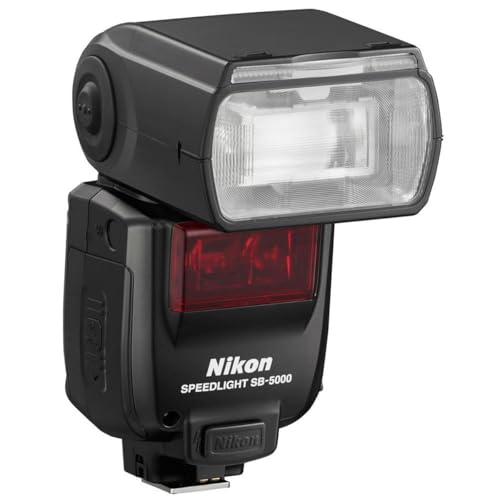
Nikon SB-5000
Badge: Best Premium
| Guide number | 113 guide number (feet rating) |
| Wireless | Radio control built in |
| Cooling | Internal cooling system for sustained bursts |
| TTL | Nikon i-TTL |
The Nikon SB-5000 is Nikon’s professional speedlight: radio control, an internal cooling system that sustains rapid-fire flash, and a 113 guide number rating. It is built for wedding and press pace, where the hundredth full-power frame matters as much as the first.
The Nikon SB-5000 earns its badge by being the pick that fits nikon cameras with the least friction. Its headline figures — guide number: 113 guide number (feet rating); wireless: Radio control built in; cooling: Internal cooling system for sustained bursts — translate into real behaviour: consistent results when conditions are ordinary, and enough headroom when they are not. Camera buyers will notice the difference most in the unglamorous moments, the third hour of a session or the rushed setup, when a well-sorted product keeps working instead of demanding attention.
Day to day, the pattern that emerges is consistency. It starts quickly, behaves the same in week ten as in week one, and does not develop the small annoyances — a laggy interface, a fussy connector, a setting that resets itself — that quietly push gear into a drawer. For camera buyers, whose time is better spent on the work itself than on managing equipment, that consistency is a feature in its own right and a large part of why this model has stayed recommendable while rivals rotated around it.
Compared with the picks around it, the difference is one of emphasis rather than quality. It trades a little of the top pick’s polish for a different strength — and depending on how your version of nikon cameras actually looks, that trade may be the correct one. The verdict line below is written to make that call easy.
It is also worth saying who has historically been happiest with this class of pick: buyers who matched it to a clear job rather than a vague ambition. For nikon cameras the Nikon SB-5000 has a defined job and does it without drama. Its resale market is healthy, its quirks are documented in a thousand forum threads, and its manufacturer has a track record of supporting this line with firmware rather than abandoning it at launch. None of that photographs anything by itself — but all of it predicts whether you will still be glad you bought it in two years’ time.
Strengths
- Cooling system sustains fast sequences
- Radio control with Nikon’s pro bodies
- Professional build and output
Trade-offs
- Flagship pricing
- Radio features need compatible bodies or controllers
- Overkill for occasional use
Choose it if you value the strengths listed above and can live with the compromises, which for most people doing nikon cameras are the right compromises to accept. Skip it if shooting for you happens in conditions this pick handles worst, or if you already own accessories built around a rival system.
Best for: professional event and press photographers / Not suited for: occasional flash users

Nikon SB-300
Badge: Best for Nikon cameras
| TTL | Nikon i-TTL |
| Power | 2x AAA batteries |
| Design | Ultra-compact speedlight |
| Head | Bounce tilt up to 120 degrees |
The Nikon SB-300 is a tiny i-TTL flash powered by two AAA batteries, with a bounce head tilting up to 120 degrees. It exists for one job: giving compact Nikon cameras soft, bounced light without turning them into a rig.
Start with what the Nikon SB-300 is: the Nikon SB-300 is a tiny i-TTL flash powered by two AAA batteries, with a bounce head tilting up to 120 degrees. It exists for one job: giving compact Nikon cameras soft, bounced light without turning them into a rig. For nikon cameras that formula works because it prioritises the things that decide outcomes — ttl: Nikon i-TTL; power: 2x AAA batteries; design: Ultra-compact speedlight — over decorative extras. Nothing about it chases a spec-sheet headline at the expense of the basics, and that restraint is exactly why it ranks where it does in this list.
Ownership is where this pick quietly scores. The ecosystem around it — cases, mounts, chargers, replacement parts and community knowledge — is deep enough that problems have known answers, and the accessories you will inevitably want actually exist. Battery and media costs are predictable, firmware support from the manufacturer has been steady, and resale values hold up if you outgrow it. None of that appears in a comparison table, and all of it decides whether a purchase still feels smart a year later.
Compared with the picks around it, the difference is one of emphasis rather than quality. It trades a little of the top pick’s polish for a different strength — and depending on how your version of nikon cameras actually looks, that trade may be the correct one. The verdict line below is written to make that call easy.
It is also worth saying who has historically been happiest with this class of pick: buyers who matched it to a clear job rather than a vague ambition. For nikon cameras the Nikon SB-300 has a defined job and does it without drama. Its resale market is healthy, its quirks are documented in a thousand forum threads, and its manufacturer has a track record of supporting this line with firmware rather than abandoning it at launch. None of that photographs anything by itself — but all of it predicts whether you will still be glad you bought it in two years’ time.
Strengths
- Genuinely pocketable
- Bounce head despite the size
- Simple automatic operation
Trade-offs
- Low output — small rooms only
- Slow recycling
- AAA cells are an extra to carry
Choose it if your version of nikon cameras matches its strengths and you want a pick that stays dependable long after the newness wears off. Skip it if the trade-offs above hit the exact thing you care about most — in that case the neighbouring picks in this list cover that ground better, and forcing this one to fit will only frustrate you.
Best for: compact-camera Nikon owners wanting softer light / Not suited for: event work of any scale

Nikon SB-400
Badge: Best Specialist
| TTL | Nikon i-TTL |
| Design | Compact legacy speedlight |
| Head | Bounce tilt |
| Power | 2x AA batteries |
The Nikon SB-400 is a long-serving compact i-TTL speedlight with a tilting bounce head. It lacks modern wireless tricks, but for everyday indoor photography on Nikon DSLRs it remains a simple, honest upgrade from a pop-up flash.
The Nikon SB-400 earns its badge by being the pick that fits nikon cameras with the least friction. Its headline figures — ttl: Nikon i-TTL; design: Compact legacy speedlight; head: Bounce tilt — translate into real behaviour: consistent results when conditions are ordinary, and enough headroom when they are not. Camera buyers will notice the difference most in the unglamorous moments, the third hour of a session or the rushed setup, when a well-sorted product keeps working instead of demanding attention.
Day to day, the pattern that emerges is consistency. It starts quickly, behaves the same in week ten as in week one, and does not develop the small annoyances — a laggy interface, a fussy connector, a setting that resets itself — that quietly push gear into a drawer. For camera buyers, whose time is better spent on the work itself than on managing equipment, that consistency is a feature in its own right and a large part of why this model has stayed recommendable while rivals rotated around it.
Against the rest of this list, its position is clear: it is not the cheapest route into nikon cameras, nor the most exotic, but it is the one with the fewest asterisks. Buyers who know exactly which specialism they need may prefer a more specialised pick below; buyers who want one confident recommendation should start here and only move down the list if a specific trade-off rules it out.
It is also worth saying who has historically been happiest with this class of pick: buyers who matched it to a clear job rather than a vague ambition. For nikon cameras the Nikon SB-400 has a defined job and does it without drama. Its resale market is healthy, its quirks are documented in a thousand forum threads, and its manufacturer has a track record of supporting this line with firmware rather than abandoning it at launch. None of that photographs anything by itself — but all of it predicts whether you will still be glad you bought it in two years’ time.
Strengths
- Simple, proven design
- Bounce improves indoor photos immediately
- Compact enough to live in the bag
Trade-offs
- Discontinued-era feature set
- No wireless capability
- Compatibility is DSLR-focused
Choose it if your version of nikon cameras matches its strengths and you want a pick that stays dependable long after the newness wears off. Skip it if the trade-offs above hit the exact thing you care about most — in that case the neighbouring picks in this list cover that ground better, and forcing this one to fit will only frustrate you.
Best for: DSLR owners wanting a simple bounce flash / Not suited for: mirrorless and wireless users
Comparison Table
Side by side, the six picks differ less in headline numbers than in how those numbers behave in real use. Use this table to narrow the field to two finalists, then read their full reviews above.
| Pick | TTL System | Power Source | Head Movement |
|---|---|---|---|
| Godox TT685II-N for Nikon | Nikon i-TTL | 4x AA | Bounce and swivel |
| Nikon SB-700 | Nikon i-TTL | 4x AA | Bounce and swivel |
| Nikon SB-500 | Nikon i-TTL | 2x AA | Bounce tilt |
| Nikon SB-5000 | Nikon i-TTL | 4x AA | Bounce and swivel |
| Nikon SB-300 | Nikon i-TTL | 2x AAA | Bounce tilt |
| Nikon SB-400 | Nikon i-TTL | 2x AA | Bounce tilt |
Buying Guide: How to Choose a Flashes for Nikon cameras for Nikon cameras
Specifications only become useful when they are translated into outcomes, so this buying guide works through the decisions in the order you will actually face them: what to prioritise, what to ignore, and how to check a listing before money moves. Everything here is framed for nikon cameras specifically — general camera advice would point you at several expensive features this brief does not need.
With no fixed ceiling in this keyword, think in tiers. The entry tier covers the brief competently and is the right answer for occasional use. The mid tier is where durability, speed and support improve noticeably, and where most regular users should land. The premium tier buys refinement and headroom that only pays off if your work will genuinely use it — be honest with yourself about which tier your version of nikon cameras belongs to.
TTL, Manual and When Each Wins
TTL metering lets the camera and flash negotiate exposure automatically, which is the right default for moving events — weddings, parties, reportage — where distance changes constantly. Manual power wins in static setups: product shots, portraits in one room, anywhere the flash-to-subject distance stays fixed and consistency frame-to-frame matters more than automation.
The picks in this guide all handle TTL with Nikon bodies; they differ in how gracefully they also support manual and wireless work. If you plan to grow into off-camera flash, check the radio or optical receiver options in each review now — retrofitting triggers later is possible but never as tidy.
Bounce Light: The Technique That Justifies the Purchase
A flash pointed straight at a subject produces the harsh look people associate with bad flash photography. The same flash bounced off a ceiling or wall becomes a large, soft light source that flatters everyone. That is why bounce and swivel range appears in every review here: a head that tilts and rotates fully is not a luxury, it is the mechanism of good flash photography.
Practice the geometry once and it becomes instinct: the wall behind you is a softbox, a coloured wall tints the light, and a high ceiling eats power — which is where the guide number and recycle time in the comparison table stop being abstract. Start with bounce for your first event and add a small diffuser for the rooms where bouncing fails.
Power Sources and Recycle Reality
Recycle time — the wait between full-power flashes — is the specification event shooters feel in their bones. AA-powered units are convenient and their cells are available everywhere, but recycle slows as the cells fade. Lithium-pack models cost more and recycle fast to the last frame. Neither is wrong; match the choice to how many full-power pops your typical job demands.
Whichever system you choose, treat batteries as part of the flash purchase. A spare set, charged and rotated, is the difference between a professional and a hopeful amateur when the first dance starts. The battery guide elsewhere in this programme covers the cells these flashes eat.
How Do You Set Up a Nikon Flash for Bounce Lighting?
- Mount the flash, power it on, and confirm the camera recognises it and that TTL mode is active for your first session.
- Set the camera to its flash sync-friendly settings: a moderate ISO, an aperture for the depth of field you want, and a shutter speed that balances ambient light.
- Tilt the flash head up to the ceiling — or back over your shoulder — so the bounce becomes your light source, and check the head’s zoom follows your lens.
- Take a test shot of a person at your working distance and judge the exposure on the subject’s face, not the room.
- Adjust flash exposure compensation rather than camera exposure when only the flash-lit subject is too bright or dark.
- If the ceiling is high or coloured, switch the bounce to a wall, or fit a diffuser and accept a stop of lost power.
- Watch recycle behaviour during a burst of test shots so you know your working pace before the event does it for you.
- Finish by setting the standby and wireless modes you actually use, so the flash wakes ready rather than asleep or draining.
Problem: Flash photos look harsh despite bouncing → the head is not fully tilted or the surface is too far away — increase ISO or aperture to help the bounce, or move the bounce point closer.
Problem: The flash fires but photos are dark → you have exceeded the sync or the bounce distance; raise ISO, open the aperture, and confirm TTL is active rather than a low manual power.
Problem: Recycle takes too long between shots → the cells are fading or the power demands are high — fit fresh batteries of the kind recommended in the battery guide and reduce power by moving closer.
Problem: Wireless flash will not trigger → check commander and channel settings on both units and that the receiver’s sensor can see the commander if the system is optical.
Common Buying Mistakes
Skipping the returns test. Specifications cannot tell you whether a camera suits your hands, your light or your patience. Buy from a listing with workable returns, then test deliberately in your first days: your subjects, your rooms, your routine. A camera returned in week one costs nothing; a camera endured for a year costs the year.
Believing a bundle is automatically a bargain. Bundles pad. A kit listing stuffed with filters, toy tripods and cleaning cloths is rarely worth more than the clean body listing beside it, and sometimes hides a grey-import body or missing charger. Strip every bundle to its real contents before comparing prices.
Forgetting the cost of the complete kit. The camera is the down payment. Cards, batteries, mounts, chargers, cases and the occasional subscription decide the real total, and discovering them after purchase turns a good deal sour. Price the working kit for every finalist — the buying guide above shows how — and compare totals, not bodies.
Buying the headline specification instead of the working one. Listings lead with the biggest number — megapixels, zoom, night range — because it is easy to print. The specification that decides your results is usually the second one: autofocus behaviour, stabilisation at your frame rate, recycle time, detection quality. Read reviews for the working specification and let the headline be a tiebreaker, never the reason.
Neglecting setup and then blaming the hardware. Most disappointing first results trace back to defaults: wrong focus mode, unformatted cards, detection zones unset, firmware a year old. The how-to section in this guide exists because twenty minutes of setup outperforms a model upgrade for most buyers.
Final Recommendation
Start with the Godox TT685II-N for Nikon. For the majority of camera buyers, it is the pick in this list that balances capability, handling and long-term ownership sense most completely for nikon cameras, and it is the one we would buy first with our own money. The runner-up is the Nikon SB-700: choose it if its particular strengths — covered in its review — match your version of the brief more closely, or if the top pick’s trade-offs land on something you cannot accept.
If neither fits, do not force the decision. Listings change, new models arrive in this category constantly, and a camera bought in haste for the wrong reasons is the most expensive outcome of all. Every linked pick in this guide was verified against its manufacturer’s specifications before inclusion, so whichever you choose, you are starting from checked facts rather than listing copy. Re-read the two reviews that bracket your budget and needs, check both listings on the day you buy, and then commit — the differences that remain at that point are smaller than the cost of another month of indecision.
Related Guides
- action-camera-vs-regular-camera
- best-16-channel-dvr-for-security-cameras
- best-18650-battery-for-doorbell-cameras
- best-35mm-cameras-for-beginners
Frequently Asked Questions
Should I buy last year’s model instead and save money?
Sometimes, yes. When a replacement model changes little that matters for nikon cameras, the outgoing model is often the smartest buy in the category while stock lasts. The risk is support: check that firmware updates, batteries and accessories remain available. Where an older model appears in this guide, it is because it survived exactly that test against its newer rivals.
How do I know a listing is the right version of the model I want?
Match the full model name and the included items line by line against the review above — manufacturers reuse similar names across generations, and marketplace bundles vary widely. Confirm the sensor or format, the lens or accessories included, and the seller’s returns terms. If a listing’s contents cannot be reconciled with the manufacturer’s specification, walk away and choose a clearer listing of the same product.
When is it better to wait rather than buy now?
Wait if a replacement model has been announced and your need is not urgent, if your current gear still covers the brief adequately, or if the only available listings are bundles padded with accessories you will never use. Buy now if your current setup is actively costing you results. Chasing the perfect moment usually costs more in missed work than it saves in money.
Why are there no prices printed in this guide?
Because camera prices, bundle contents and stock change constantly, and a printed figure would mislead more readers than it helped. Each linked pick takes you to its current Amazon listing, where the live price and delivery estimate are shown before you commit. Use the budget framing in the buying guide to decide what tier you are shopping in, then confirm the exact figure on the listing on the day you buy.
What else do I need to budget for besides the camera itself?
The essentials that listings rarely include: memory cards fast enough for the modes you will use, a spare battery, a protective case or bag, and any mount or adapter your setup requires. Together they are a modest fraction of the total spend, but a camera that arrives without them cannot do its job. The how-to section above lists what to have ready before your first session.
Is the top pick in this guide right for a complete beginner?
It depends on the pick and on you. The top pick here was chosen for the typical buyer of this keyword, who usually has some intent to learn. If you are an absolute beginner, the review badges flag the most forgiving options, and the buying guide explains the specifications in plain terms. A slightly simpler pick that you understand fully will produce better results than an advanced one left on automatic everything.


