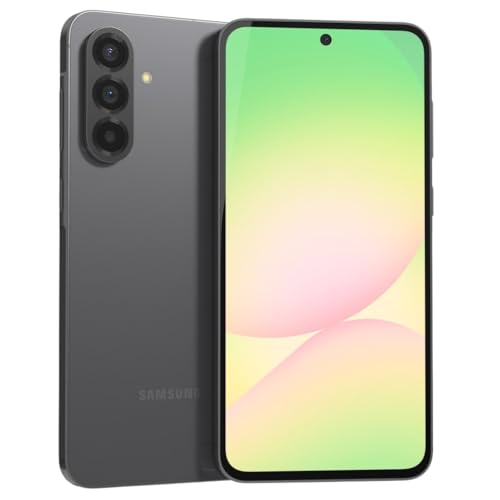
The 5g phone vs lte phone comparison confuses people mostly because of vocabulary: LTE is simply the technical name of 4G — Long Term Evolution — so this is the same generational question as 5G versus 4G, asked with the labels you see in carrier stores and phone spec sheets. If a phone says LTE, it means 4G. If it says 5G, it includes LTE inside it as a fallback. Nothing about that is obvious from the marketing, which is why this guide exists.
Because the terminology trips people up, this comparison spends its first section on names — including the genuinely misleading labels carriers have used over the years — then compares the lived experience: speed by band, coverage, congestion, battery, and buying advice for the situations where an LTE phone is still on the table, like a discounted older model or a hand-me-down.
Disclosure: As an Amazon Associate, kajuandouglas.com earns from qualifying purchases. Links to Amazon on this page are affiliate links; they cost you nothing extra. Listing details such as price and availability change often, so check the current Amazon listing before you buy.
Quick verdict: LTE is 4G. A 5G phone does everything an LTE phone does, plus the 5G layers where they exist — so for any new purchase at a similar price, 5G wins by default. An LTE phone remains a rational buy only when it is dramatically cheaper, serves as a secondary device, or covers an area where 5G adds nothing yet — and even then, its remaining security-update life matters more than its network badge.
Gear for This Guide
Two verified 5G phones that show why the LTE-only new purchase has become the exception.

OnePlus 12R, 8GB RAM+128GB, Dual-SIM, US Factory Unlocked Android Smartphone, 5500 mAh Battery, 50MP Camera, 80W Fast Charging, 2024, Iron Gray — The current value-5G benchmark: an unlocked phone whose spec sheet leads with exactly what this comparison says matters — band support, battery, charging — at a tier where LTE-only holdouts used to live. Check price on Amazon.

Samsung Galaxy S24 Ultra Cell Phone, 256GB AI Smartphone, Unlocked Android, 200MP, 100x Zoom Cameras, Fast Processor, Long Battery Life, Edge-to-Edge Display, S Pen, US Version, 2024, Titanium Gray — The flagship expression of the 5G side: every band that matters in the US market, in an unlocked phone built for a long, update-supported life. Check price on Amazon.
In this guide
Side-by-Side: 5G vs LTE (4G)
One row deserves emphasis: a 5G phone contains LTE. The choice is never 5G instead of LTE — it is LTE with or without the new layers on top.
| Aspect | 5G phone | LTE phone |
|---|---|---|
| What the name means | Fifth-generation network technology, with LTE included as fallback | LTE = Long Term Evolution = 4G, the fourth generation |
| Speed where it shines | Mid-band 5G: several times typical LTE; mmWave far beyond | Consistent, mature speeds fine for streaming and calls |
| Speed at coverage edge | Low-band 5G performs much like LTE | Same baseline — they are effectively the same layer |
| Coverage today | Low-band wide and growing; mid-band urban and suburban | The widest blanket of all; the rural standard |
| Crowded places | Mid-band capacity holds up far better | Noticeable slowdowns at peaks and events |
| Battery | Slightly hungrier modem, smart modes mitigate | The efficient, known quantity |
| New-phone availability | Standard across current lineups | Mostly older stock and the cheapest entry models |
| Buying horizon | Aligned with where networks invest | Years of service left, but no growth |
Names, Labels, and One Historical Trick
Start with the honest glossary. LTE is 4G — the terms are interchangeable in every store conversation that matters. 5G NR is the fifth generation. Your phone status bar may show LTE, 4G, 5G, or carrier-branded variants of the 5G icon indicating which layer you are on. Two wrinkles deserve knowing. First, years ago one carrier famously relabeled its advanced 4G as a 5G-sounding name on phone icons, which taught a generation of buyers to distrust badges — a healthy instinct this guide encourages: trust band support and speed tests, not icons.
Second, most current 5G runs in a mode technically anchored to LTE infrastructure behind the scenes, which is why the icon can say 5G while some behavior feels familiar. None of this changes your decision — a current 5G phone on a mid-band network delivers a real, measurable leap — but it explains the fuzzy edges people notice, and it arms you against both hype and cynicism. The technology is genuinely better where it is built out; the labels are genuinely imperfect everywhere.
Experience: Speed, Crowds, and Responsiveness
In open mid-band coverage, a 5G phone downloads large files, uploads video, and loads heavy pages at speeds an LTE phone cannot approach — the difference between planning downloads and never thinking about them. In low-band-only territory, the same 5G phone behaves like a good LTE phone, because it effectively is one there. LTE own experience is the definition of adequate: every mainstream app was designed in its era and runs well on it, and its consistency across the map remains its charm.
The two experiential gaps that survive averaging are congestion and latency. Mid-band 5G serves crowds with far more grace — the network equivalent of extra lanes — and its lower latency tightens video calls and competitive games. If your LTE frustration has a specific address and hour — the train, the stadium, the evening peak — 5G mid-band at that address is a precise remedy. If your LTE life is genuinely content, 5G will feel like a pleasant upgrade rather than a rescue, and you should price it accordingly.
Coverage, Battery, and the Rural Question
LTE blanket remains the coverage champion, and for rural users it is not close yet: low-band 5G is spreading along the same towers, but mid-band economics favor population. A rural buyer should weight the carrier with the strongest LTE and low-band map at their addresses, and treat any phone 5G capability as future-proofing rather than present value. Suburban and urban buyers live in the opposite world, where mid-band likely already covers home and work and the 5G phone advantage is immediate.
Battery differences are real but modest on current hardware, and they cut both ways: the 5G modem works harder on weak signal, yet finishes big transfers faster and rests sooner. LTE phones sip predictably. For a buyer choosing between a new 5G model and a discounted LTE one, battery should rarely decide — the LTE model is usually older, and its battery age matters more than its modem generation. Judge the actual devices, not the radio labels, on this criterion.
Who Each Option Suits
Choose the 5G phone if…
The price gap is small — the usual case now — or you keep phones three-plus years, or mid-band covers your addresses, or you upload, tether, game, or gather in crowds. In short: almost every new-phone buyer, because the 5G phone is also an LTE phone, and the extra layers only add.
Choose the LTE phone if…
It is dramatically cheaper and the budget is real; it is a backup, a child first phone, or a spare for the glovebox; or your world is rural LTE country where 5G adds nothing yet and the specific LTE model still has years of security updates left. The badge is forgivable; an expired update policy is not.
Final Recommendation: 5G Phone vs LTE Phone
Strip the labels away and the decision simplifies: never pay a meaningful premium for an LTE-only phone in a world where 5G models include LTE and cost about the same — and never sneer at an LTE phone that still serves its owner well, because the network beneath it has years of life and the experience it delivers is the one the entire app ecosystem was built on.
If you are mid-decision in a store, run this sequence: confirm the 5G model supports your carrier mid-band, confirm both models update commitments, compare total cost including any plan differences, and then — only then — let cameras and screens charm you. Network and longevity first; delight second; labels nowhere.
Looking More Closely at the Details That Decide It
Most discussions of understanding a 5G phone alongside an LTE phone, and knowing which labels matter stay at the level of headlines, yet the outcome is usually decided by smaller details that only appear once you live with the decision. Three of those details deserve attention before anything else: voice services that may use LTE even on a 5G handset, future network refarming that gradually shifts spectrum between generations, and data-plan provisioning that can limit what the icon suggests. None of them looks dramatic on a specification sheet. That fallback is a strength rather than a failure, because the LTE layer underneath modern 5G is deep, fast and almost everywhere, because low-band parity and mid-band transformation are different purchases.
Start with voice services that may use LTE even on a 5G handset. In the end the badge matters less than the band, and the band matters less than the address, which makes your busiest address the honest referee of this contest. Streaming, banking and browsing will not reveal the difference, while big downloads, cloud backups and shared hotspots reveal it within minutes, because low-band parity and mid-band transformation are different purchases. Write that estimate down before shopping, because showroom icons have a way of inflating it, and field test mode will confirm which radio actually did the work.
Points to keep in mind
- Judge voice services that may use LTE even on a 5G handset in your own setting before trusting a general verdict.
- Treat future network refarming that gradually shifts spectrum between generations as a first-order factor, not a footnote.
- Count how often 5G would serve you across a normal week.
Then consider future network refarming that gradually shifts spectrum between generations. Hotspot allowances and throttling policies sometimes differ by plan generation, so read the terms rather than assuming the radio decides everything, and field test mode will confirm which radio actually did the work. Test first, count honestly, and the LTE-versus-5G question answers itself for your streets, which is why the serving band, not the status icon, belongs in your notes. Plan labels add another wrinkle, as some carriers gate their fastest 5G layers behind particular plans while LTE access stays universal, which is why the serving band, not the status icon, belongs in your notes.
Finally, weigh data-plan provisioning that can limit what the icon suggests alongside the first two rather than in isolation. Similar-age handsets make the only fair comparison here honestly, because low-band parity and mid-band transformation are different purchases. A mature decision about 5G and LTE comparison names that trade-off out loud. A calm week of alternating modes teaches more about this choice than any advertisement using the word evolution, which makes your busiest address the honest referee of this contest.
How This Plays Out in Real Situations
Abstract advice becomes useful when it meets a real household, so consider a shopper comparing a discounted LTE flagship with a newer mid-range 5G model. LTE is 4G by another name, not a separate generation, because low-band parity and mid-band transformation are different purchases. A week in each mode turns this argument into simple arithmetic, because low-band parity and mid-band transformation are different purchases. The address decides more than the generation ever will alone, because low-band parity and mid-band transformation are different purchases.
Contrast that with a family member confused by a relative’s phone showing LTE while theirs shows 5G in the same room. An old 5G phone can lose to a new LTE flagship honestly, and field test mode will confirm which radio actually did the work. The honest summary is layered, because at any given address the answer depends on which 5G layer reaches it and how loaded the LTE cell is, and field test mode will confirm which radio actually did the work. This is why copying a friend’s conclusion about 5G and LTE comparison so often disappoints: the friend optimised for a life that is not quite yours, with rooms, routines and patience that differ from your own.
Points to keep in mind
- Treat LTE and 5G labels carefully here, since American carriers sometimes market advanced LTE confusingly.
- Use other owners’ LTE stories to find questions, then judge 5G gains on your own streets.
- Check international band support if you travel with the phone.
A third pattern appears with a rural household where LTE reaches the house but faster 5G does not. Upload performance separates them under load, with LTE uplinks typically surrendering earlier when a sector fills with evening traffic, and field test mode will confirm which radio actually did the work. Congestion relief is the practical heart of the upgrade, since 5G’s new capacity matters most exactly where LTE struggles in public, and field test mode will confirm which radio actually did the work. Icons take credit for work the LTE layer quietly did alone, and field test mode will confirm which radio actually did the work.
There is also the quieter case of a second-hand buyer checking whether an older handset still suits local networks. Standalone 5G cuts that cord, and phones that support it gain the latency and efficiency benefits that LTE-anchored connections cannot fully deliver, and field test mode will confirm which radio actually did the work. A home covered only by low-band 5G will feel little different from strong LTE, and owners there can choose on price and battery with a clear conscience, and field test mode will confirm which radio actually did the work. Rural daily life still runs on LTE for most people today, because low-band parity and mid-band transformation are different purchases.
A Practical Method You Can Repeat
When opinions conflict, a repeatable method settles the question of understanding a 5G phone alongside an LTE phone, and knowing which labels matter better than another hour of reading. The method has four moves. First, treat any 5G E style label as LTE until the band proves otherwise. Second, gather evidence in that exact setting. Third, change or compare one variable at a time. Fourth, check field test mode to see the real serving band, not the icon.
In practice that means actions such as these: ask whether a plan, SIM or setting is steering the phone towards LTE; keep an LTE handset in service when it remains reliable and well supported; and translate every marketing label back to the generation and bands underneath it. Each is deliberately unglamorous. Mid-band access is the one thing LTE can never gain later. Either way, judge by the serving band and the busy-hour result at your addresses, not by the letters printed on the box. For a laptop tethered at a crowded station, the two feel like different products, with 5G headroom keeping pages moving while LTE queues.
Points to keep in mind
- compare real responsiveness and consistency, not icons alone
- choose 5G for longevity when prices and condition are otherwise close
- read the full band list for the exact regional model you are buying
Equally important is what to record. Useful notes for 5G and LTE comparison include the date and time, the place, what else was happening at the time, and a simple verdict in your own words. A 5G phone set to LTE-only mode for a week gives the cleanest personal baseline, after which a week on automatic shows what the new radio adds. Marketing labels muddy this contest badly, because an icon reading 5G E on some networks describes an advanced LTE service rather than any 5G radio at all.
Check the exact band list, not the badge, before buying. The serving band matters more than the letters on screen, because low-band parity and mid-band transformation are different purchases. Most people do not need more information about 5G and LTE comparison; they need their own information, gathered calmly in their own setting, and this method is simply a way of collecting it without drama.
Living With the Decision Over Time
The first week with any choice about understanding a 5G phone alongside an LTE phone, and knowing which labels matter is a poor predictor of the first year. That frequency, counted honestly across your week, is the number the whole comparison turns on. The purchase question is therefore about your future streets as much as your current ones, because the 5G map will grow during the phone’s life while the LTE map stays largely as it is, and the network’s investment keeps landing on the newer side.
Long-term satisfaction usually rests on unexciting qualities connected to imported models whose LTE bands differ from local networks and LTE Advanced features such as carrier aggregation. Standalone 5G finally cuts the old LTE anchor away completely, because low-band parity and mid-band transformation are different purchases. If it would serve you monthly, the LTE phone’s saving is real money kept for something you will feel more often, and the network’s investment keeps landing on the newer side. Fallback to strong LTE is a feature, not a failure, so count a normal week’s usage before the showroom counts it for you.
Points to keep in mind
- Check periodically whether your carrier has rebranded or upgraded LTE towers near your home.
- Long-term LTE users upgrading late often report coverage consistency matters more than peak downloads.
- Reconsider LTE-only savings whenever your streaming, hotspot, or gaming habits noticeably increase.
Maintenance deserves a plan rather than good intentions. If the extra radio would serve you daily, the 5G phone earns its premium quietly and repeatedly, and field test mode will confirm which radio actually did the work. Watch what the phone reports in field test mode during a busy hour, because the serving band tells you which network you are really comparing, and the network’s investment keeps landing on the newer side. In the context of 5G and LTE comparison, that plan mainly means keeping an eye on future network refarming that gradually shifts spectrum between generations before it turns into a bigger problem.
Finally, judge rural use on the LTE layer you will actually live on. Moving home, changing work, a new household member or a new device can all reorder the priorities around 5G and LTE comparison. Carrier aggregation lets good LTE embarrass basic low-band 5G results, because low-band parity and mid-band transformation are different purchases. A 5G E label describes advanced LTE, not real 5G radio, so count a normal week’s usage before the showroom counts it for you.
Mistakes to Avoid and Signs You Chose Well
Every 5G phone is also an LTE phone underneath the badge. One is this: expecting a carrier helpline to explain labels consistently without checking the device settings. Another, just as common, is the opposite excess — assuming a 5G phone never needs good LTE performance. And a third, quieter error is treating LTE and 4G as two separate generations in a comparison table. Count your weekly 5G moments before paying for the extra radio. Remember that every 5G phone is also an LTE phone, so the real purchase is the extra radio and bands, priced against how often they will serve you.
Avoiding them does not require expertise, only a pause. At your busiest regular place, does LTE already queue and stutter, which is the exact problem new 5G capacity exists to relieve? When the 5G phone falls back to LTE at home, does anything you care about actually get worse? What am I assuming about LTE as the technical name behind most 4G services that I have not verified? Ten minutes of hostile questioning, aimed at your own favourite option, is the cheapest insurance available in the whole process of understanding a 5G phone alongside an LTE phone, and knowing which labels matter.
Points to keep in mind
- Inspect the band list on second-hand 5G phones carefully.
- Judge success by quiet, ordinary evidence over several weeks.
- Try small corrections before concluding that replacement is necessary.
How will you know the decision was right? Watch for ordinary evidence: update support remaining on an older LTE model; whether maps, payments and tickets load promptly under pressure; and the clarity of the deal once bands, condition and storage are compared like for like. None of these announces itself with fanfare. The second-hand market reflects all this, with LTE flagships remaining capable bargains and early 5G models needing their band lists checked carefully. Your future self, standing in a crowded terminal, will be glad the estimate was honest either way, and the network’s investment keeps landing on the newer side.
Rural daily life still runs on LTE for most people today. Many disappointments with 5G and LTE comparison yield to a small correction — a setting, a position, a habit, an accessory — rather than a complete replacement. A week in each mode turns this argument into simple arithmetic. Latency separates them on paper and in games, though for email and social feeds the difference dissolves into the background. Test first, count honestly, and the LTE-versus-5G question answers itself for your streets.
One More Round of Checks Before You Settle
Choose the LTE phone when its price saving is large, your usage is light and your local 5G is low-band only, and that choice is defensible in writing. It concerns 5G New Radio working alongside an LTE anchor in many areas and status-bar labels that vary between carriers and regions, two aspects that reveal themselves slowly. A phone that only supports LTE cannot ever use the new mid-band capacity, no matter how good the local 5G build becomes during its life. Testing the two fairly means using phones of similar age and modem class, since comparing a new flagship with a tired budget handset proves nothing about networks.
A 5G E label describes advanced LTE, not real 5G radio. A setup for 5G and LTE comparison is a household system, not a personal gadget, and other people’s routines will find edges yours never touches. Non-standalone 5G literally stands on LTE, using it for signalling while adding a 5G carrier for extra data capacity where available. Yet an LTE phone bought cheaply for light duties is no mistake, because the LTE network beneath everything is not being switched off, which makes your busiest address the honest referee of this contest.
Points to keep in mind
- Choose on the serving band and the address, not the badge.
- Write down which icon, LTE or 5G, appears at work for each household member.
- Write your weekly 5G estimate down before visiting a shop.
Then stop optimising. Rural buyers often find LTE is the network they actually live on, with 5G appearing as a bonus in town rather than a replacement at home. Check the exact band list, not the badge, before buying, because low-band parity and mid-band transformation are different purchases. The address decides more than the generation ever will alone. Security and updates argue for the newer handset generally, though that is an argument about phone age rather than about LTE itself, because low-band parity and mid-band transformation are different purchases. With 5G and LTE comparison, that stopping point usually arrives once the clarity of the deal once bands, condition and storage are compared like for like stops changing from week to week.
Worked Examples That Make the Trade-Offs Concrete
Fallback to strong LTE is a feature, not a failure. Imagine a second-hand buyer checking whether an older handset still suits local networks. Similar-age handsets make the only fair comparison here honestly, and the network’s investment keeps landing on the newer side. Yet the binding constraint in that picture is usually voice services that may use LTE even on a 5G handset, and no amount of spending elsewhere relaxes it. The letters LTE and 5G describe generations, but your experience will be written by spectrum, load and signal at the places you stand.
What to watch for
- Compare phones of similar age and modem class.
- Run a week in LTE-only mode, then a week on automatic.
- Note upload behaviour on LTE when the local sector fills.
Now change one variable: imagine a family member confused by a relative’s phone showing LTE while theirs shows 5G in the same room. The serving band matters more than the letters on screen, and an honest weekly count deflates most showroom enthusiasm. This is the single most transferable lesson in the whole subject of understanding a 5G phone alongside an LTE phone, and knowing which labels matter: context is not a detail around the decision, it is the decision. Neither label guarantees a good experience at a fringe address, where a weak signal on either generation loses to a strong signal on the other.
A third example works as a warning. Picture a household that skipped the early checks, committed quickly, and spent the following month applying fixes for assuming a 5G phone never needs good LTE performance and then for dismissing an LTE flagship without weighing its camera, screen and battery. Carrier aggregation lets good LTE embarrass basic low-band 5G results. The cost was not only money; it was confidence. Standalone 5G finally cuts the old LTE anchor away completely. Longevity tilts the argument toward 5G, since network investment, new spectrum and capacity growth all land on the newer side of the comparison.
Use these examples as templates rather than stories. Your future self, standing in a crowded terminal, will be glad the estimate was honest either way. In the end the badge matters less than the band, and the band matters less than the address. If you travel internationally, LTE’s near-universal support still wins today, while 5G roaming depends on agreements and band overlap between countries, because low-band parity and mid-band transformation are different purchases. Applied to 5G and LTE comparison, the detail that most often changes the conclusion is data-plan provisioning that can limit what the icon suggests.
A Decision Flow When You Feel Stuck
Indecision about 5G and LTE comparison usually means two good criteria are pulling in opposite directions, not that you lack information. When that happens, stop researching and start ranking. Check the exact band list before choosing, because a 5G phone missing your carrier’s main mid-band is an LTE phone with extra marketing. The real comparison is between that mature LTE network and the newer 5G radio, which uses new spectrum and, in standalone form, a new core network behind it, so ask what is being built on your streets, not just what is lit today.
What to watch for
- Test tethering on both phones with the same laptop.
- Watch battery drain where the 5G phone hunts between networks.
- Choose between similar LTE and 5G plans by call quality and coverage, not marketing names.
Next, apply a simple elimination pass connected to imported models whose LTE bands differ from local networks. Choose the 5G phone when mid-band reaches your regular places or you keep handsets for years, because you are buying the network’s direction as well as its present, so count a normal week’s usage before the showroom counts it for you. This pass is often brutal and always useful. A calm week of alternating modes teaches more about this choice than any advertisement using the word evolution.
Then test the survivors against battery use when the handset switches between generations and update support remaining on an older LTE model in your own setting, on the same day if you can, so conditions stay comparable. If the extra radio would serve you daily, the 5G phone earns its premium quietly and repeatedly. Where a 5G phone pulls clearly ahead is on mid-band spectrum that LTE never had access to, in the busy places where new capacity was added, so count a normal week’s usage before the showroom counts it for you.
When your phone shows a 5G-style icon, is the serving cell in field test mode actually a 5G band or an LTE band wearing a friendlier label? Voice calling feels identical across the two, with calls carried by similar systems whether the data icon says LTE or 5G. A home under mid-band 5G experiences a different category of connection, and an LTE phone simply cannot join that category later. For 5G and LTE comparison, the easiest option to live with is usually the one that handles imported models whose LTE bands differ from local networks with the least fuss.
Seasonal, Household and Long-Term Angles Worth Planning For
Conditions change across the year, and a decision about understanding a 5G phone alongside an LTE phone, and knowing which labels matter that is tested in only one season carries hidden risk. That frequency, counted honestly across your week, is the number the whole comparison turns on, because low-band parity and mid-band transformation are different purchases. If your local 5G is low-band only, what would the 5G phone do for you that a good LTE phone does not already do?
What to watch for
- Imagine rural holiday coverage, where LTE usually reaches farther than early 5G signals.
- Ask a less technical relative whether the LTE or 5G icon difference actually matters daily.
- Keep an exit path from any LTE contract in case local 5G improves sharply.
Households also change from inside. Count your weekly 5G moments before paying for the extra radio, and field test mode will confirm which radio actually did the work. An older 5G phone can be worse than a newer LTE phone if it lacks the mid-band support your carrier now uses, so the spec sheet matters more than the badge. When you evaluate 5G and LTE comparison, spend one minute imagining the least technical person in your life facing it alone. That minute is a surprisingly accurate quality test.
LTE is 4G by another name, not a separate generation, and an honest weekly count deflates most showroom enthusiasm. LTE is simply the name of the 4G technology most networks still run, so a phone described as LTE and a phone described as 4G are usually talking about the same radio. Mid-band access is the one thing LTE can never gain later, and field test mode will confirm which radio actually did the work. Icons take credit for work the LTE layer quietly did alone, because low-band parity and mid-band transformation are different purchases. With 5G and LTE comparison, the recurring effort worth counting most honestly is the effort tied to voice services that may use LTE even on a 5G handset.
Finally, think about the exit before you need it. Can you name the band serving your sofa at the busy hour, on each phone, before choosing between them? If you travel internationally, LTE’s near-universal support still wins today, while 5G roaming depends on agreements and band overlap between countries. That is not pessimism; it is what turns one purchase into accumulated household knowledge, so the next decision about 5G and LTE comparison starts from experience instead of from a search box.
Questions Worth Asking Before You Spend Anything
Every 5G phone is also an LTE phone underneath the badge, because low-band parity and mid-band transformation are different purchases. First: does the 5G handset you are considering support your carrier’s main mid-band, or would it live on LTE anyway? Battery behaviour differs subtly, as a 5G phone hunting between two networks at a fringe can drain faster than an LTE phone sitting calmly on one. Solutions chosen for a life-shaped problem age far better than solutions chosen for a catalogue-shaped one, especially with 5G and LTE comparison.
What to watch for
- Test at your busiest regular place during its busy hour.
- Ask which network investment is landing on your streets next.
- Weight longevity if you keep a handset for three years.
Second: what evidence do I already have? If it would serve you monthly, the LTE phone’s saving is real money kept for something you will feel more often. An old 5G phone can lose to a new LTE flagship honestly, and the network’s investment keeps landing on the newer side. Streaming, banking and browsing will not reveal the difference, while big downloads, cloud backups and shared hotspots reveal it within minutes. For messaging, browsing and maps, an LTE phone and a 5G phone feel like twins, because none of those jobs strain what LTE already does well. For 5G and LTE comparison, that existing evidence usually includes what you already know about future network refarming that gradually shifts spectrum between generations in your own setting.
Third: did your trial compare phones of similar age and modem class, or did an old handset quietly rig the result? Plan labels add another wrinkle, as some carriers gate their fastest 5G layers behind particular plans while LTE access stays universal. A choice with a calm answer to that question, involving steps like choose 5G for longevity when prices and condition are otherwise close, is worth more than a choice with a slightly better specification and no answer at all. Congestion relief is the practical heart of the upgrade, since 5G’s new capacity matters most exactly where LTE struggles in public.
Fourth, and last: who else should have a say? Decisions about understanding a 5G phone alongside an LTE phone, and knowing which labels matter often affect people who were not in the room when the research happened, and their late objections can sink an otherwise sound setup. The icon itself deserves suspicion in this comparison, since phones may show 5G while anchored to LTE for control and carrying much of the experience on the older radio. Fallback behaviour defines daily life with a 5G phone, since it will still spend plenty of time on LTE indoors, rurally and at the edges of 5G cells.
Related Guides
- best 5g phones for t mobile
- best phones for 5g
- best 5g phones under 200
- best security app for android phones
- best browser for android phones
- how to check coverage for a 5g phone
- 5g vs 4g phone
- what is 5g and do you need it
Frequently Asked Questions
Is LTE the same as 4G?
Yes. LTE — Long Term Evolution — is the technology standard that the industry markets as 4G. A phone described as LTE and a phone described as 4G are describing the same capability. The confusion is purely historical branding, and it is why this comparison and the 5G-versus-4G one are really the same conversation wearing two different sets of labels. When in doubt, translate LTE to 4G and proceed.
Will my LTE phone become useless when networks change?
Not on any near horizon. LTE is structurally part of the 5G era — 5G phones lean on it constantly — and carriers will operate it for many years. Your LTE phone will retire because its battery fades, its security updates end, or its apps outgrow it, in roughly that order, long before the LTE network itself is switched off. The 3G shutdown stories do not map onto LTE timeline.
Why does my 5G phone sometimes show LTE?
Because it is using LTE at that moment — outside 5G coverage, deep indoors, or when its smart network mode judges LTE the better tool for battery or stability. That is the system working as designed, not a fault. The icon follows the active layer, and layers change block by block. If it never shows 5G anywhere, including mapped outdoor mid-band areas, that is a settings, update, SIM, or plan question — our troubleshooting guide walks that checklist.
Is a discounted LTE flagship better than a new mid-range 5G phone?
Sometimes — the flagship brings better cameras, screen, and build. Run two checks: remaining security-update years on the flagship (support runs from its launch date, and flagships from several years ago may be nearly done), and mid-band availability at your addresses (if there is none, the 5G advantage is theoretical anyway). If the flagship has three-plus update years left and your map is low-band country, it can be the smarter buy. If updates end next year, the mid-ranger wins on safety alone.
Does 5G improve call quality over LTE?
Voice on both rides similar modern voice technology — LTE calls use VoLTE, and 5G areas increasingly carry voice over the new network with comparable or better quality. In practice, call quality differences you notice will track coverage and congestion far more than the generation label. The clearest voice upgrade available to most people is not 5G at all — it is enabling Wi-Fi calling at home, which both phone types support.
What should I check on an LTE phone I am given for free?
Free changes the math — an LTE hand-me-down can be a fine phone. Check three things: its security patch date and whether updates still arrive, its battery health in daily use, and whether it is unlocked or locked to a carrier you do not use. Pass those, set it up fresh with your own account, and enjoy the most economical phone there is. Fail the update test, and relegate it to media and backup duty rather than banking.
How much hands-on time do I need to judge 5G against LTE fairly?
For most households, a focused week of ordinary use tells you more than a month of occasional reading about understanding a 5G phone alongside an LTE phone, and knowing which labels matter. Yet an LTE phone bought cheaply for light duties is no mistake, because the LTE network beneath everything is not being switched off. Security and updates argue for the newer handset generally, though that is an argument about phone age rather than about LTE itself.
What should I verify first if a 5G phone feels no faster than LTE?
Return to the simplest explanation before replacing anything. Recheck the basics connected with band combinations rather than a single headline generation, repeat your most reliable test in your most familiar setting, and change one variable only. Voice calling feels identical across the two, with calls carried by similar systems whether the data icon says LTE or 5G, which makes your busiest address the honest referee of this contest.
Is stepping up from LTE to a pricier 5G handset worth it for me?
Only when the higher tier improves something your own routine actually stresses, such as the way a 5G handset still depends on LTE for fallback. That fallback is a strength rather than a failure, because the LTE layer underneath modern 5G is deep, fast and almost everywhere. Write that estimate down before shopping, because showroom icons have a way of inflating it, because low-band parity and mid-band transformation are different purchases.