The 5g vs 4g phone comparison matters in two situations: you are deciding whether your next phone must have 5G, and you are wondering whether the 5G phone you own is actually giving you anything over your old 4G one. The honest answer to both is that 5G is not one thing. On its mid-band frequencies it is a genuine leap — several times faster, stronger under congestion. On low-band it is essentially 4G with a new name. And 4G itself is far from dead: it remains the coverage backbone everywhere and will for years.
This comparison separates the marketing from the physics: speeds by band, coverage, battery, latency, and what it all means for buying and keeping phones in the real world. If you finish it knowing which 5G you would actually get at your addresses, it has done its job.
Disclosure: As an Amazon Associate, kajuandouglas.com earns from qualifying purchases. Links to Amazon on this page are affiliate links; they cost you nothing extra. Listing details such as price and availability change often, so check the current Amazon listing before you buy.
Quick verdict: a 5G phone is the right default for any new purchase — it costs little or nothing extra, includes full 4G capability, and grows into the network. Mid-band 5G beats 4G decisively on speed and congestion; low-band 5G roughly ties it. Keep a good 4G phone without guilt if your area lacks mid-band and your phone still gets security updates — replace on the phone merits, and 5G will come along automatically.
Gear for This Guide
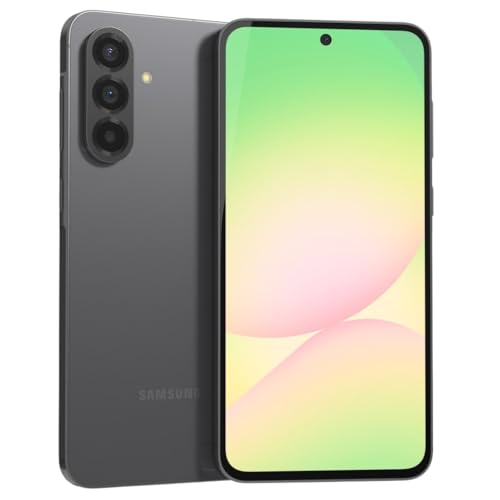
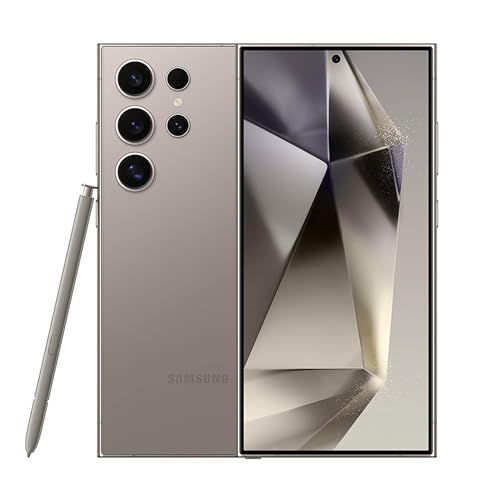
Verified 5G phones at two tiers — the capability is identical in kind, differing in degree.

Samsung Galaxy S24 Ultra Cell Phone, 256GB AI Smartphone, Unlocked Android, 200MP, 100x Zoom Cameras, Fast Processor, Long Battery Life, Edge-to-Edge Display, S Pen, US Version, 2024, Titanium Gray — A current unlocked flagship shows 5G done completely: broad bands including mid-band and millimeter-wave, plus the battery and modem efficiency of the latest generation. Check price on Amazon.

OnePlus 12R, 8GB RAM+128GB, Dual-SIM, US Factory Unlocked Android Smartphone, 5500 mAh Battery, 50MP Camera, 80W Fast Charging, 2024, Iron Gray — The value-tier proof that 5G no longer costs flagship money: full US band support and fast charging in the sensible-money class. Check price on Amazon.
In this guide
Side-by-Side: 5G vs 4G
Notice how many 5G rows contain the words depends on band. That dependency is the whole story.
| Aspect | 5G phone | 4G phone |
|---|---|---|
| Peak real-world speed | Mid-band: several times typical 4G, with high bursts; mmWave: extreme in tiny areas | Solid, mature speeds adequate for streaming, calls, and browsing |
| Typical everyday speed | Depends on band — mid-band transforms, low-band resembles good 4G | Predictable and consistent almost everywhere |
| Coverage | Growing; mid-band concentrated in cities and suburbs, low-band wide | Near-universal in populated areas; the rural standard |
| Congestion behavior | More capacity — holds up better at events and peak hours where mid-band exists | Can sag noticeably in crowds and evening peaks |
| Latency | Lower, improving responsiveness for gaming and calls | Higher, but fine for most uses |
| Battery impact | Modest extra drain, worst on weak signal | The efficiency baseline |
| Phone availability and price | Standard on virtually all new phones at every tier | Mostly older and entry models now; disappearing from new lineups |
| Future | Where networks invest; support horizons are long | Will operate for years as the fallback layer, but no new investment |
Speed: The Band Decides Everything
Averaged across a whole country, 5G looks moderately faster than 4G. Lived at a specific address, it is either dramatically faster or barely different, and the band explains which. Mid-band 5G — the capacity layer carriers built on 2.5 GHz and C-band frequencies — delivers the experience in the advertisements: app downloads in seconds, 4K streams without a thought, uploads that make creators weep with gratitude. Low-band 5G, built for reach, performs like the good 4G it essentially extends. Millimeter-wave is a third story: faster than home broadband, available in places you mostly visit rather than live.
4G honest strengths deserve their sentence: it is fast enough for every mainstream task — HD and most 4K streaming, video calls, navigation, social everything — and its maturity means consistent behavior. Nobody with good 4G is suffering. The 5G advantage concentrates in big downloads and uploads, congested environments, and future headroom. If your phone life is messaging, music, maps, and video at normal resolutions, mid-band 5G will feel nicer; it will not feel necessary.
Coverage and Congestion: Where 5G Quietly Wins
Coverage today favors 4G on breadth and 5G on trajectory. The 4G blanket covers effectively everywhere people live and drive; 5G low-band matches much of it, while mid-band blankets cities, suburbs, and increasingly towns, with rural mid-band the ongoing project. Your phone on 5G uses all of it opportunistically, falling back without drama — the networks are designed as layers of one system, not rivals.
Congestion is 5G underappreciated win. Capacity — how many users a tower serves well at once — is where mid-band architecture shines: stadiums, festivals, rush-hour trains, and the 7 p.m. streaming peak all degrade more gracefully. If your 4G pain is specifically it dies when everyone is online, mid-band 5G at your addresses is a targeted cure, and worth more to you than any peak-speed figure.
Battery, Latency, and Daily Feel
5G modems use more power, full stop — though the gap narrows every generation and smart network modes close much of the rest. The worst case is weak-signal 5G, where the modem strains; the best case, strong mid-band, can actually finish downloads so fast that total energy per task drops. In practice, current 5G phones deliver normal all-day life for most users, and the 4G phone battery advantage is real but small. Anyone who remembers the first 4G phones battery disaster can relax: this transition was designed by people who lived through that one.
Latency — the delay before data starts moving — is lower on 5G, which competitive mobile gamers and video-call-heavy users can genuinely feel, though home Wi-Fi still beats both for gaming. For everyone else, latency differences hide beneath app and server behavior. File it under nice, not necessary, unless your thumbs earn money.
Who Each Option Suits
A 5G phone suits you if…
You are buying new anyway — which settles it, since 5G is standard — or your addresses sit under mid-band coverage, or your 4G pain is congestion and big downloads. Creators uploading video, households tethering laptops, and anyone keeping a phone four-plus years should treat 5G as close to mandatory: the network will only grow into your phone.
Staying on 4G suits you if…
Your current phone still receives security updates, performs well, and your map shows little mid-band at your addresses. A good 4G phone in a low-band-only area loses almost nothing today. Replace it when the phone itself — battery, updates, damage — says so, and let 5G arrive as a passenger on that decision rather than its driver.
Final Recommendation: 5G vs 4G Phone
The verdict hides in a sentence: 5G is a network upgrade that phones now include for free, not a phone feature worth contorting a purchase around. Buy the phone you want, with the update policy and battery and camera that fit your life, on the carrier that covers your addresses — and in 2026-era lineups, it will be a 5G phone, and where mid-band reaches you, you will feel why the industry bothered.
If you are keeping a 4G phone, keep it proudly and maintain it well. Its replacement, when its time comes, will be 5G by default, and the network will be better for the wait. Technology transitions reward the patient almost as reliably as the early — and charge them less for the privilege.
Looking More Closely at the Details That Decide It
Most discussions of choosing between a 5G phone and a 4G phone for everyday use stay at the level of headlines, yet the outcome is usually decided by smaller details that only appear once you live with the decision. Three of those details deserve attention before anything else: congestion at stadiums, stations and festivals, the resale and hand-me-down value of a newer radio, and low-band 5G behaving much like good 4G. None of them looks dramatic on a specification sheet. The best comparison ends with a sentence about your streets, naming which generation serves your home, your commute and your workplace better, because a single quiet-morning test flatters 4G beyond recognition.
Start with congestion at stadiums, stations and festivals. If the verdict comes out even in your area, choose on battery, price and how long you keep phones, because the network will keep improving under a 5G handset, and repeating the run three times stops one lucky result from deciding the question. Where 5G wins consistently is headroom, the sense that the connection has capacity in reserve when the neighbourhood leans on it, because a single quiet-morning test flatters 4G beyond recognition. Mid-band is where 5G stops being subtle entirely, because a single quiet-morning test flatters 4G beyond recognition.
Points to keep in mind
- Judge congestion at stadiums, stations and festivals in your own setting before trusting a general verdict.
- Treat the resale and hand-me-down value of a newer radio as a first-order factor, not a footnote.
- Note which 5G layer the phone reports before judging the result.
Then consider the resale and hand-me-down value of a newer radio. Older 5G phones missing newer bands complicate the comparison, as the handset rather than the generation can be the limiting factor, and repeating the run three times stops one lucky result from deciding the question. That trajectory matters more than today’s snapshot for anyone who keeps a phone three years or longer, and that headroom is what a three-year ownership actually buys. Over a contract’s life the balance keeps tipping toward 5G, as carriers add mid-band sectors and refarm older spectrum toward the newer radio, so note the layer the phone reports alongside every figure you record.
Finally, weigh low-band 5G behaving much like good 4G alongside the first two rather than in isolation. Latency, not downloads, is 5G’s most honest everyday advantage, because a single quiet-morning test flatters 4G beyond recognition. A mature decision about 5G versus 4G choice names that trade-off out loud. Equally, dismissing 5G because low-band tests look similar ignores the mid-band streets where the generations are not comparable at all, because a single quiet-morning test flatters 4G beyond recognition.
How This Plays Out in Real Situations
Abstract advice becomes useful when it meets a real household, so consider a city user whose flat sits in a busy mid-band area. Strong rural 4G still beats an imaginary rural 5G signal, because a single quiet-morning test flatters 4G beyond recognition. For a household sharing one hotspot, 5G’s extra capacity is the difference between one stream buffering and everyone watching comfortably, and repeating the run three times stops one lucky result from deciding the question. Disable Wi-Fi before any comparison test you run today, and that headroom is what a three-year ownership actually buys.
Contrast that with a light user who mainly messages, browses and takes photos. Repeat every test three times and keep the middle figure recorded, and repeating the run three times stops one lucky result from deciding the question. Hotspot work exposes the difference quickly, as a laptop tethered over mid-band 5G feels like a different product from the same laptop queued behind congested 4G. This is why copying a friend’s conclusion about 5G versus 4G choice so often disappoints: the friend optimised for a life that is not quite yours, with rooms, routines and patience that differ from your own.
Points to keep in mind
- Compare 5G and 4G on your actual journeys, because headline speeds rarely describe a crowded train carriage.
- Ask friends how 5G feels on their commute, then time both networks on yours.
- Test tethering a laptop on 4G and then on 5G.
A third pattern appears with a parent handing a phone down to a teenager after two years. Low-band 5G and good 4G often finish surprisingly close together, because a single quiet-morning test flatters 4G beyond recognition. Battery testing tells a split story, as mid-band and millimetre-wave radios draw more power while low-band 5G sips at roughly 4G levels, and the busy hour is where the generations genuinely part company. Same chair, same hour, both generations: that is a fair test.
There is also the quieter case of a rural user whose nearest mast carries strong 4G but only low-band 5G. In short, test the generations where you live, at the hour you suffer, and let that evidence outrank any national advertising claim. Congested 4G collapses exactly where new 5G capacity helps most, which is why the same chair and the same hour matter more than the app you use. Tethering a laptop exposes the generational gap within five minutes, and that headroom is what a three-year ownership actually buys.
A Practical Method You Can Repeat
When opinions conflict, a repeatable method settles the question of choosing between a 5G phone and a 4G phone for everyday use better than another hour of reading. The method has four moves. First, toggle the preferred network type and rerun the same test in the same chair. Second, gather evidence in that exact setting. Third, change or compare one variable at a time. Fourth, lock the phone to 4G for a week, then compare your notes.
In practice that means actions such as these: look at total ownership over the time you realistically keep a phone; keep the 4G phone if it still meets your needs and coverage is the limiting factor; and check which network bands each handset supports, not just the badge on the box. Each is deliberately unglamorous. Standalone 5G answers requests faster than its 4G-anchored predecessor ever did. A fringe 5G signal loses to strong 4G fairly often, so note the layer the phone reports alongside every figure you record. Your own streets, not national charts, referee this contest properly, which is the only honest way to price the upgrade for your streets.
Points to keep in mind
- consider battery health and update support alongside the radio generation
- compare the two phones in the places you visit every week
- test hotspot use if you ever work away from home Wi-Fi
Equally important is what to record. Useful notes for 5G versus 4G choice include the date and time, the place, what else was happening at the time, and a simple verdict in your own words. Battery tests must separate the radio drain from the screen, which is why the same chair and the same hour matter more than the app you use. Large downloads, cloud photo backups and game updates are where a 5G phone earns its keep, finishing in minutes what keeps a 4G phone busy far longer.
Uploads surrender first when a busy 4G sector fills up. A calm side-by-side evening tells you more about 5G versus 4G than a month of reading national speed rankings. Most people do not need more information about 5G versus 4G choice; they need their own information, gathered calmly in their own setting, and this method is simply a way of collecting it without drama.
Living With the Decision Over Time
The first week with any choice about choosing between a 5G phone and a 4G phone for everyday use is a poor predictor of the first year. The status icon is a poor referee between the two generations. A fair 5G versus 4G comparison starts with the same phone, the same SIM and the same chair, toggling the preferred network type between runs so the only thing that changes is the radio generation, because a single quiet-morning test flatters 4G beyond recognition.
Long-term satisfaction usually rests on unexciting qualities connected to 4G carrier aggregation on mature networks and voice calls staying on established technology in many places. Headroom under load is what 5G ownership actually feels like daily, because a single quiet-morning test flatters 4G beyond recognition. A 4G phone bought today keeps working for years, because carriers still run their voice and fallback layers on the older network, because a single quiet-morning test flatters 4G beyond recognition. Thermals belong in the test notes, because a phone that heats up on millimetre-wave will throttle and hand the speed crown back mid-download.
Points to keep in mind
- Retest both networks monthly if your carrier is still building out local 5G sites.
- Owners keeping a phone three years often value wider 4G reliability over early 5G peaks.
- Revisit the 5G versus 4G balance after a house move or a new office location.
Maintenance deserves a plan rather than good intentions. A traveller should compare roaming behaviour too, as 5G roaming agreements still lag behind the near-universal reach of 4G partnerships, because a single quiet-morning test flatters 4G beyond recognition. Mid-band is where the comparison stops being close, with downloads pulling far ahead of anything a congested 4G carrier can manage in the same spot, and that headroom is what a three-year ownership actually buys. In the context of 5G versus 4G choice, that plan mainly means keeping an eye on the resale and hand-me-down value of a newer radio before it turns into a bigger problem.
Finally, write the verdict for your streets, not for the national average. Moving home, changing work, a new household member or a new device can all reorder the priorities around 5G versus 4G choice. A fringe 5G signal loses to strong 4G fairly often, because a single quiet-morning test flatters 4G beyond recognition. The status icon is a poor referee, because phones display 5G in some places while anchored in ways that deliver a largely 4G experience.
Mistakes to Avoid and Signs You Chose Well
Headroom under load is what 5G ownership actually feels like daily. One is this: expecting 5G to fix poor indoor Wi-Fi or a slow home broadband line. Another, just as common, is the opposite excess — forgetting that a worn battery can matter more than a new network standard. And a third, quieter error is judging by one speed test taken beside a mast. Strong rural 4G still beats an imaginary rural 5G signal. On low-band 5G the two generations often finish a speed test within a whisker of each other, because that layer was built for reach rather than raw pace.
Avoiding them does not require expertise, only a pause. How much extra battery did a day locked to 5G cost compared with a day locked to 4G on the same routes? Does the gap survive the evening peak, or does congested 4G close it while loaded 5G pulls away? What am I assuming about mid-band capacity during busy hours that I have not verified? Ten minutes of hostile questioning, aimed at your own favourite option, is the cheapest insurance available in the whole process of choosing between a 5G phone and a 4G phone for everyday use.
Points to keep in mind
- Run a full-day battery comparison on each network setting.
- Judge success by quiet, ordinary evidence over several weeks.
- Try small corrections before concluding that replacement is necessary.
How will you know the decision was right? Watch for ordinary evidence: responsiveness when many people nearby are online; how smoothly large app updates complete away from Wi-Fi; and whether the phone still feels supported near the end of your ownership. None of these announces itself with fanfare. If your streets carry mid-band, the upgrade stops being subtle, and side-by-side tests at home will show it within a single evening. A 5G phone that falls back to 4G indoors is not broken, since building materials tax the newer higher bands harder than the old low ones.
Tethering a laptop exposes the generational gap within five minutes. Many disappointments with 5G versus 4G choice yield to a small correction — a setting, a position, a habit, an accessory — rather than a complete replacement. Low-band 5G and good 4G often finish surprisingly close together. Disable Wi-Fi before any comparison test you run today, because next year’s mid-band build-out will keep moving that line. Congested 4G collapses exactly where new 5G capacity helps most.
One More Round of Checks Before You Settle
Dynamic spectrum sharing explains many disappointing 5G results, since a shared carrier splits its capacity between 4G and 5G users instead of giving either generation the whole road. It concerns battery drain when a phone hunts for a weak 5G signal and how long software support will keep either phone useful, two aspects that reveal themselves slowly. Video calling sits between the two stories, stable on either generation in good signal but noticeably steadier on 5G when the local cell is crowded. Testing both generations at the evening peak is essential, because at quiet hours 4G looks heroic and the real difference hides until the sector fills up.
Battery tests must separate the radio drain from the screen. A setup for 5G versus 4G choice is a household system, not a personal gadget, and other people’s routines will find edges yours never touches. Battery drain comparisons must separate the radio from the screen, because a brighter display during testing can fake a generational difference. Keep the comparison honest by disabling Wi-Fi during tests, since a phone quietly using the house network has ended many arguments wrongly, so note the layer the phone reports alongside every figure you record.
Points to keep in mind
- Try the comparison at the station or stadium you actually use.
- Record which network mode each family phone uses, so nobody wonders why speeds differ.
- Judge streaming and calls as well as raw speed tests.
Then stop optimising. A two-week trial with the network type locked to 4G for one week and automatic for the next gives a personal verdict no review can supply. Latency, not downloads, is 5G’s most honest everyday advantage, and that headroom is what a three-year ownership actually buys. Your own streets, not national charts, referee this contest properly. The resale and longevity argument favours 5G, because each year more of the network’s investment and capacity lands on the newer generation, because a single quiet-morning test flatters 4G beyond recognition. With 5G versus 4G choice, that stopping point usually arrives once whether the phone still feels supported near the end of your ownership stops changing from week to week.
Worked Examples That Make the Trade-Offs Concrete
Mid-band is where 5G stops being subtle entirely. Imagine a delivery driver relying on maps and job apps all day. Uploads surrender first when a busy 4G sector fills up, because a single quiet-morning test flatters 4G beyond recognition. Yet the binding constraint in that picture is usually hotspot performance for a laptop or tablet, and no amount of spending elsewhere relaxes it. The honest price question is about the plan rather than the handset, since some carriers reserve their fastest 5G layers for higher plan tiers.
What to watch for
- Compare hotspot comfort with the whole household connected.
- Repeat each speed test three times and keep the middle result.
- Compare both generations during the evening peak, not at dawn.
Now change one variable: imagine a light user who mainly messages, browses and takes photos. In rural areas the comparison often flips, with mature 4G coverage delivering the dependable connection while 5G remains a town-centre treat. This is the single most transferable lesson in the whole subject of choosing between a 5G phone and a 4G phone for everyday use: context is not a detail around the decision, it is the decision. If your area offers only low-band 5G, the practical upgrade over a good 4G phone is modest, and the money may serve you better elsewhere.
A third example works as a warning. Picture a household that skipped the early checks, committed quickly, and spent the following month applying fixes for forgetting that a worn battery can matter more than a new network standard and then for buying a 4G-only import that misses local bands. That trajectory matters more than today’s snapshot for anyone who keeps a phone three years or longer. The cost was not only money; it was confidence. Voice calls sound the same on either generation for most people, since both route through similar voice systems in everyday use. Non-standalone 5G still leans on a 4G anchor for control signalling, so early deployments inherited some 4G behaviour along with the new badge.
Use these examples as templates rather than stories. The status icon is a poor referee between the two generations, because a single quiet-morning test flatters 4G beyond recognition. Repeat every test three times and keep the middle figure recorded, because a single quiet-morning test flatters 4G beyond recognition. A 4G phone on a strong uncongested carrier can feel faster than a 5G phone clinging to a fringe cell, which is why generation alone never settles the argument. Applied to 5G versus 4G choice, the detail that most often changes the conclusion is congestion at stadiums, stations and festivals.
A Decision Flow When You Feel Stuck
Indecision about 5G versus 4G choice usually means two good criteria are pulling in opposite directions, not that you lack information. When that happens, stop researching and start ranking. Streaming video rarely separates the generations, since even high-quality streams need only a fraction of what either network can supply in decent signal. Measure at the places you actually wait, the platform, the school gate and the sofa, because generational gaps appear at specific addresses rather than in averages, which is why the same chair and the same hour matter more than the app you use.
What to watch for
- Check uploads separately, since busy 4G uplinks fade first.
- Ask whether your local 5G is low-band only before upgrading.
- When performance feels identical, favour the handset with stronger battery life and better updates.
Next, apply a simple elimination pass connected to voice calls staying on established technology in many places. Latency separates the generations more honestly than downloads do, since a standalone 5G connection answers requests with a snappiness that busy 4G rarely matches, which is why the same chair and the same hour matter more than the app you use. This pass is often brutal and always useful. Equally, dismissing 5G because low-band tests look similar ignores the mid-band streets where the generations are not comparable at all.
Then test the survivors against how smoothly large app updates complete away from Wi-Fi and call reliability in buildings you enter often in your own setting, on the same day if you can, so conditions stay comparable. Same chair, same hour, both generations: that is a fair test, because a single quiet-morning test flatters 4G beyond recognition. Congestion is 5G’s quiet victory, because the extra capacity on newer spectrum keeps speeds usable at stations and stadiums where 4G collapses to a trickle, and repeating the run three times stops one lucky result from deciding the question.
Standing in the same spot, how much faster does the speed test run with the phone set to 5G than with it locked to 4G? A 4G phone remains a rational buy for light users in strong 4G areas, and pretending otherwise helps nobody make a calm decision. The generations also differ in how they fail, with 4G degrading gradually while fringe 5G sometimes drops sharply at the cell edge. For 5G versus 4G choice, the easiest option to live with is usually the one that handles voice calls staying on established technology in many places with the least fuss.
Seasonal, Household and Long-Term Angles Worth Planning For
Conditions change across the year, and a decision about choosing between a 5G phone and a 4G phone for everyday use that is tested in only one season carries hidden risk. Carrier aggregation lets a 4G phone bond several carriers into one faster pipe, which is why flagship LTE results sometimes embarrass basic 5G results. If both generations feel identical on your streets today, how much do you value the headroom 5G adds over a three-year ownership?
What to watch for
- Consider festival crowds and summer travel, when 4G congestion can change the comparison completely.
- Let the least confident phone user try switching modes before deciding the household standard.
- Plan to reassess both networks annually as masts, tariffs, and handset support keep shifting.
Households also change from inside. Ping a familiar server on both settings and the latency gap, though small on paper, shows up as pages that start loading sooner. For ordinary browsing and messaging the generations are nearly indistinguishable, because those jobs were never limited by 4G in the first place, because a single quiet-morning test flatters 4G beyond recognition. When you evaluate 5G versus 4G choice, spend one minute imagining the least technical person in your life facing it alone. That minute is a surprisingly accurate quality test.
Standalone 5G answers requests faster than its 4G-anchored predecessor ever did, because a single quiet-morning test flatters 4G beyond recognition. Standalone 5G removes that anchor, and with it much of the latency and battery overhead that made first-generation 5G phones feel compromised, and the busy hour is where the generations genuinely part company. Speed tests flatter both generations equally, so judge the contest on repeated real tasks, downloads, uploads, calls and tethering, at your busiest hour. A traveller should compare roaming behaviour too, as 5G roaming agreements still lag behind the near-universal reach of 4G partnerships. With 5G versus 4G choice, the recurring effort worth counting most honestly is the effort tied to hotspot performance for a laptop or tablet.
Finally, think about the exit before you need it. Which generation holds a steadier ping when you repeat the test during a busy hour at your nearest station? Uploads widen the gap in 5G’s favour during busy hours, when 4G uplinks are usually the first thing a loaded sector sacrifices. That is not pessimism; it is what turns one purchase into accumulated household knowledge, so the next decision about 5G versus 4G choice starts from experience instead of from a search box.
Questions Worth Asking Before You Spend Anything
Gamers notice the generations diverge under load, with 5G holding a steadier ping while 4G jitter grows as the cell gets busier. First: did your comparison disable Wi-Fi and repeat each test, or did one flattering run settle the question too early? Coverage maps flatter 5G in this comparison, as the icon can appear wherever low-band reaches while the transformative mid-band layer covers far fewer streets. Solutions chosen for a life-shaped problem age far better than solutions chosen for a catalogue-shaped one, especially with 5G versus 4G choice.
What to watch for
- Weigh how long you keep phones against the network’s direction.
- Separate screen brightness from radio drain in battery tests.
- Record latency and jitter beside the headline download speed.
Second: what evidence do I already have? Where 5G wins consistently is headroom, the sense that the connection has capacity in reserve when the neighbourhood leans on it. Standalone 5G removes that anchor, and with it much of the latency and battery overhead that made first-generation 5G phones feel compromised. A 4G phone bought today keeps working for years, because carriers still run their voice and fallback layers on the older network. The modem inside the phone matters across both generations, as a newer 4G modem with better aggregation can outrun an older entry-level 5G modem. For 5G versus 4G choice, that existing evidence usually includes what you already know about the resale and hand-me-down value of a newer radio in your own setting.
Third: is the 5G reaching your home the low-band layer that resembles 4G, or the mid-band layer that leaves it behind? Battery testing tells a split story, as mid-band and millimetre-wave radios draw more power while low-band 5G sips at roughly 4G levels. A choice with a calm answer to that question, involving steps like keep the 4G phone if it still meets your needs and coverage is the limiting factor, is worth more than a choice with a slightly better specification and no answer at all. The resale and longevity argument favours 5G, because each year more of the network’s investment and capacity lands on the newer generation.
Fourth, and last: who else should have a say? Decisions about choosing between a 5G phone and a 4G phone for everyday use often affect people who were not in the room when the research happened, and their late objections can sink an otherwise sound setup. Older 5G phones missing newer bands complicate the comparison, as the handset rather than the generation can be the limiting factor, because a single quiet-morning test flatters 4G beyond recognition. Battery drain comparisons must separate the radio from the screen, because a brighter display during testing can fake a generational difference, because a single quiet-morning test flatters 4G beyond recognition.
A Note on Hotspots and Shared Connections
One use case deserves a final word of its own: sharing a phone connection with other devices. When a 5G phone feeds a laptop or a family tablet, the capacity advantage of a good mid-band connection becomes easier to feel than it is on the phone itself, because several devices draw on the same link at once and a congested 4G cell shows the strain sooner. Test this properly if it matters to you: connect the devices you actually travel with, open the applications you actually work in, and do it at the hour you would really be working rather than in a quiet moment. Also watch how the phone’s battery and temperature behave during a long shared session, since a connection that is fast for ten minutes but exhausting for the handset is a mixed blessing on a working day away from a socket. Judged that way, the hotspot test often settles the wider 5G versus 4G question more honestly than any single speed result taken on the phone alone.
Related Guides
- best 5g phones for t mobile
- best phones for 5g
- best 5g phones under 200
- best external hard drive for android phones
- best headset for android phones
- how to set up a 5g phone
- how to check coverage for a 5g phone
- 5g phone vs lte phone
Frequently Asked Questions
Is 5G really faster than 4G?
On mid-band frequencies, yes — decisively, in downloads, uploads, and crowded conditions. On low-band, it is roughly a tie, by design: that layer trades speed for reach. So the truthful answer is that 5G is faster where the capacity layer reaches you, which is why this site keeps steering you to check your own addresses rather than national averages. Your street, not the statistic, is your answer.
Will 4G phones stop working soon?
No. Carriers retired 3G to make room for newer networks, but 4G is the foundation layer of the 5G era itself — 5G phones rely on it constantly — and it will operate for many years. A 4G phone bought years ago will lose usefulness through expiring security updates and aging hardware long before the 4G network itself goes anywhere. Plan replacements around the phone support life, not network shutdown fears.
Does 5G cost more per month?
On the major carriers, mainstream current plans include 5G access without a separate 5G fee, though the fastest tiers, hotspot data, and deprioritization thresholds vary by plan level. The phone itself no longer carries a meaningful 5G premium either — it is standard equipment across tiers. Check your specific plan fine print once, particularly for hotspot and premium-data allowances, and the cost question is closed.
Why does my 5G phone show 4G speeds?
Usually because you are on low-band 5G — the icon reflects the connection family, not the band — or indoors where mid-band fades, or in a congested or fringe area. Test outdoors in a mapped mid-band zone and compare. If speeds never rise anywhere, run through our 5G-not-working troubleshooting guide: settings, updates, SIM, and plan are the four usual suspects, in that order.
Is 5G safe?
5G uses radio frequencies in the same non-ionizing family as 4G, Wi-Fi, and broadcast radio, regulated under the same long-standing exposure standards, and health agencies internationally have consistently found no evidence of harm at permitted levels. The millimeter-wave frequencies are higher but penetrate skin even less. You are, of course, free to read the regulators primary material — but as a buying factor, this question has an unusually settled answer for a technology debate.
Should I buy a 4G phone now because it is cheaper?
Only in narrow cases: a very tight budget, a backup or child phone, or an area with no 5G roadmap that matters to you. Even then, compare honestly — entry 5G phones have compressed the price gap to very little, and the 4G-only model usually also carries the shorter update policy and older hardware. The apparent saving often buys a phone that ages out years sooner, which is the most expensive kind of cheap.
How long should I compare 5G and 4G before picking a phone?
For most households, a focused week of ordinary use tells you more than a month of occasional reading about choosing between a 5G phone and a 4G phone for everyday use. Over a contract’s life the balance keeps tipping toward 5G, as carriers add mid-band sectors and refarm older spectrum toward the newer radio. For ordinary browsing and messaging the generations are nearly indistinguishable, because those jobs were never limited by 4G in the first place.
What should I retest first if 5G barely beats 4G in my tests?
Return to the simplest explanation before replacing anything. Recheck the basics connected with hotspot performance for a laptop or tablet, repeat your most reliable test in your most familiar setting, and change one variable only. Non-standalone 5G still leans on a 4G anchor for control signalling, so early deployments inherited some 4G behaviour along with the new badge, because a single quiet-morning test flatters 4G beyond recognition.
Is a 5G phone worth the extra cost over a cheaper 4G model?
Only when the higher tier improves something your own routine actually stresses, such as latency under load rather than headline download speed. The best comparison ends with a sentence about your streets, naming which generation serves your home, your commute and your workplace better. Keep the comparison honest by disabling Wi-Fi during tests, since a phone quietly using the house network has ended many arguments wrongly.