Learning how to check coverage for a 5g phone before you buy — or before you switch carriers — is the highest-value ten minutes in the whole 5G decision. Coverage maps are optimistic by design, phones differ in which bands they support, and the only coverage that matters is at the handful of addresses where your life happens. A flagship on the wrong network for your street is a worse phone than a mid-ranger on the right one.
This guide combines the three evidence sources that together tell the truth: the carriers official maps, independent crowd-sourced data, and your own testing during a return window. Any one source alone will mislead you sometimes; together, they rarely do. Work through them in order, and write down what you find — coverage research evaporates from memory exactly when the sales conversation starts.
Disclosure: As an Amazon Associate, kajuandouglas.com earns from qualifying purchases. Links to Amazon on this page are affiliate links; they cost you nothing extra. Listing details such as price and availability change often, so check the current Amazon listing before you buy.
Quick answer: check your exact addresses — home, work, commute endpoints — on each carrier official 5G map, paying attention to which tier of 5G (mid-band versus low-band) covers them; cross-check with crowd-sourced coverage apps; then verify with a real phone and your own SIM during a return window, testing indoors and out, at your real hours.
Gear for This Guide
Verified unlocked phones that double as coverage-testing tools, thanks to broad bands and dual-SIM flexibility.

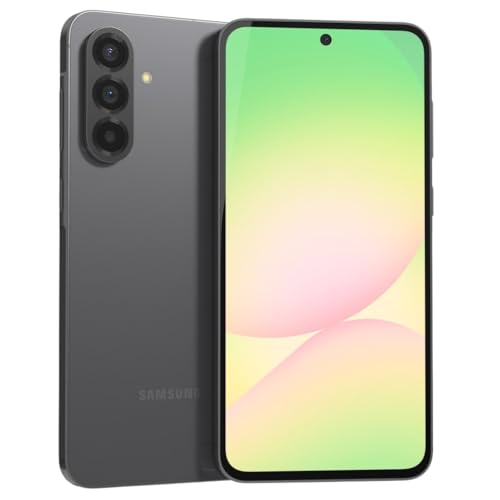
Samsung Galaxy S24 Ultra Cell Phone, 256GB AI Smartphone, Unlocked Android, 200MP, 100x Zoom Cameras, Fast Processor, Long Battery Life, Edge-to-Edge Display, S Pen, US Version, 2024, Titanium Gray — An unlocked flagship with broad band support is the ideal coverage-testing instrument: one phone that can trial multiple carriers via eSIM without band compromises muddying your results. Check price on Amazon.

OnePlus 12R, 8GB RAM+128GB, Dual-SIM, US Factory Unlocked Android Smartphone, 5500 mAh Battery, 50MP Camera, 80W Fast Charging, 2024, Iron Gray — Dual-SIM capability makes this unlocked model a practical A/B tester — your current line and a trial line, side by side, at every address that matters. Check price on Amazon.
In this guide
What You Need
- Your key addresses: home, workplace, and any regular location like a school, gym, or second home
- Your current phone, to observe the signal you live with today
- Each carrier coverage map — all are free on their websites
- A crowd-sourced coverage app or website for a second opinion
- A notebook: coverage findings are worthless unrecorded
Check the map legend carefully. Carriers color their maps generously, and the difference between their mid-band tier and basic 5G tier is the difference between transformed speeds and a new icon. Zoom to street level; the neighborhood view hides exactly the gaps you care about.
How to Check Coverage for a 5G Phone: Step by Step
Step 1: Map your addresses on the official carrier maps
Enter each key address into each carrier 5G coverage map and zoom in to street level. Note two things per address: whether 5G covers it at all, and which tier — the premium mid-band layer has its own color or label on every carrier map. A home covered by mid-band and a workplace covered only by low-band predicts a specific, mixed experience; write it down carrier by carrier. Repeat for your commute endpoints and any place you spend hours weekly. This table you are building is the core research artifact of the whole process.
Step 2: Understand what the tiers mean at your addresses
Translate the colors into expectations. Mid-band at home means fast downloads, strong uploads, and a network that shrugs off the evening congestion peak. Low-band-only means 5G in name with 4G-like speeds — fine for messaging, maps, and music, unremarkable for large downloads. No 5G means the phone lives on 4G there, which for many rural users remains a perfectly good daily experience. Being honest about which tier covers your life prevents both overbuying and disappointment; our explainer on whether you need 5G, linked below, helps weigh it.
Step 3: Cross-check with crowd-sourced data
Official maps model coverage; crowd-sourced apps measure it, from real phones in real places. Open one, look at your addresses, and compare the measured signal and speed reports with the official story. Where they agree, believe them. Where the official map glows and the crowd data is silent or weak, trust the crowd — and weight indoor reports heavily if your days are spent inside large buildings, where every network weakest claims go to be tested.
Step 4: Interrogate your current experience
Your present phone is a coverage probe you already own. Note where it drops to one bar, where calls go ragged, where data crawls at lunch. Those places are your personal coverage frontier, and they are where a new network must prove itself. If your current carrier fails at your desk specifically, a rival glowing map matters less than a rival measured test at that desk. Write the failure list down; it becomes your test script for step five.
Step 5: Test with a real phone before you commit
Maps and data end the argument only when a phone in your hand agrees. Options, in order of strength: buy your chosen phone and carrier with a clear return window and test ruthlessly in week one; borrow a friend phone on the rival network for an afternoon at your addresses; or use a prepaid or trial eSIM on your current unlocked phone if it supports the bands. Test indoors and outdoors, at your busiest hours, with speed tests and a real call at each key address. Evidence gathered this way outranks every map ever published.
Step 6: Decide with the whole picture — including indoors
Weigh the results by hours: the network that wins your home and workplace wins your life, even if it loses at the stadium you visit twice a year. Factor in indoor reality — if your building defeats all carriers equally, Wi-Fi calling at home and work neutralizes the gap and should lower its weight in your decision. Then choose the carrier-and-phone pair together, because bands bind them: the phone must support the winning network mid-band, which our 5G choosing guide covers in detail.
Common Mistakes
Reading the map at city zoom
A glowing city tells you nothing about your street, your building, or the hollow behind the hill your house sits in. Coverage dies at the edges of cells and the shadows of terrain, and those edges are exactly street-level details. Every address check in this guide means zoomed in, on the exact building, or it did not happen.
Confusing any-5G with fast-5G
Carrier maps lead with total 5G coverage, which is dominated by the low-band layer that behaves like 4G. The mid-band tier — smaller on the map, transformative in life — is the layer worth shopping for. Buyers who miss the legend difference end up technically correct and practically disappointed, holding a 5G phone on a 4G-feeling network.
Testing only at the store
Stores sit in strong-signal retail corridors and are the worst possible proxy for your home and office. A phone that flies in the mall tells you nothing about your basement flat. The return window is the honest test environment; use it at your addresses, or accept that you bought on faith.
Ignoring the evening peak
Networks are shared, and a street that tests beautifully at 10 a.m. can sag at 7 p.m. when every household streams at once. If you can, include one evening test at home in your trial. Mid-band extra capacity shows its worth precisely then — it is one of its main real-world advantages.
Forgetting the people factor
Ask neighbors and coworkers on each network one question: how is your signal at home, honestly? Humans who live on your street and sit in your building hold data no map models — the dead corner in the office, the one reliable window. Their answers are anecdotes, but they are anecdotes about your exact geography.
Pro Tips
Save screenshots of each carrier map at your addresses, dated. If a carrier later claims coverage was always there — or a promotion hinges on it — you hold the record.
Check coverage again before any carrier switch, even if you checked last year. Mid-band build-outs are still landing neighborhood by neighborhood, and last year gap may be this year strength.
Remember Wi-Fi calling in the equation. A home with strong broadband and Wi-Fi calling forgives weak indoor signal entirely; judge the mobile network on the places Wi-Fi cannot follow you.
Rural buyers: weight low-band and 4G quality over mid-band dreams. Range is your tier, and the carrier with the strongest low-band blanket in your county is your carrier, whatever the city ads say.
Looking More Closely at the Details That Decide It
Most discussions of checking 5G coverage before you commit to a phone or carrier stay at the level of headlines, yet the outcome is usually decided by smaller details that only appear once you live with the decision. Three of those details deserve attention before anything else: band support in the exact phone model, mid-band coverage at your home address, and roaming and partner coverage on rural roads. None of them looks dramatic on a specification sheet. Document which rooms fall back to 4G, because a household that knows its fallback rooms stops experiencing them as random failures, and that pattern, repeated across three evenings, settles most arguments.
Start with band support in the exact phone model. Coverage also changes as networks refarm spectrum, so a check repeated yearly keeps the decision honest without much effort, and that pattern, repeated across three evenings, settles most arguments. Screenshots of field test readings at each address turn a vague impression into evidence you can compare carrier against carrier, and that pattern, repeated across three evenings, settles most arguments. Field test figures tell you more than the signal bars ever will, and that single observation is worth more than a street-level screenshot of the carrier map.
Points to keep in mind
- Judge band support in the exact phone model in your own setting before trusting a general verdict.
- Treat mid-band coverage at your home address as a first-order factor, not a footnote.
- Record the band and RSRP figure at each address you test.
Then consider mid-band coverage at your home address. The busy hour is the only honest testing hour here, so the next carrier you test faces precisely the same examination. New housing, scaffolding and even a neighbour’s extension can shadow a signal path, which is why last year’s verdict deserves a fresh test before a long contract. A carrier store almost always sits in strong signal, so a glowing in-store demonstration tells you about the shop’s postcode rather than yours, so treat the reading as provisional until a second visit confirms it.
Finally, weigh roaming and partner coverage on rural roads alongside the first two rather than in isolation. Screenshot every dated map result for your key addresses, and that pattern, repeated across three evenings, settles most arguments. A mature decision about coverage check names that trade-off out loud. Check the route as well as the rooms, walking or riding your commute with the test phone awake, because dead stretches between towers never appear on a static map.
How This Plays Out in Real Situations
Abstract advice becomes useful when it meets a real household, so consider a student house shared by several people streaming at the same time in the evening. A fringe cell makes the phone hunt, drain and drop, and that pattern, repeated across three evenings, settles most arguments. Uploads expose a weak cell edge before downloads admit trouble, and that pattern, repeated across three evenings, settles most arguments. Believe your own kitchen test over any coloured coverage map, and that pattern, repeated across three evenings, settles most arguments.
Contrast that with a commuter route that passes through a valley and two cuttings. Record the serving band beside every speed test result you keep. Note the weather and the crowd when you test at events or stations, because a quiet Tuesday result can flatter a sector that match days overwhelm. This is why copying a friend’s conclusion about coverage check so often disappoints: the friend optimised for a life that is not quite yours, with rooms, routines and patience that differ from your own.
Points to keep in mind
- When checking 5G coverage, trust tests at your own addresses over a broadly coloured carrier map.
- Ask neighbours which carrier works on your street, then verify it yourself indoors.
- Walk your commute with the test phone awake and logging.
A third pattern appears with a flat above a shop where the living room faces away from the nearest tower. Judge each carrier address by address, never by national reputation, and that pattern, repeated across three evenings, settles most arguments. Evening congestion is a coverage fact, not a speed footnote, and it belongs in the notes beside signal strength whenever you test, so the next carrier you test faces precisely the same examination. Wi-Fi calling quietly forgives a weak indoor mobile signal at home.
There is also the quieter case of a suburban house where the home office sits at the back of the building. A trial eSIM costs little and answers the coverage question honestly, so the next carrier you test faces precisely the same examination. The check is finished when you can predict, address by address, which layer the phone will use and roughly how it will behave at the busy hour. Two carriers compared on one day beat weeks of reviews, and that pattern, repeated across three evenings, settles most arguments.
A Practical Method You Can Repeat
When opinions conflict, a repeatable method settles the question of checking 5G coverage before you commit to a phone or carrier better than another hour of reading. The method has four moves. First, pin every regular address on the map instead of searching by town name. Second, gather evidence in that exact setting. Third, change or compare one variable at a time. Fourth, test indoors room by room, not just beside the front window.
In practice that means actions such as these: note the band and signal figures the phone reports, not just the bars; walk the rooms you actually use instead of testing only by the front window; and keep a short written log of places where calls or uploads struggled. Each is deliberately unglamorous. Mid-band reception indoors is the single result that predicts daily life. Street-level map checks beat postcode-level searches at every address that matters, so the next carrier you test faces precisely the same examination. The carrier map models a whole neighbourhood, never your back bedroom, so treat the reading as provisional until a second visit confirms it.
Points to keep in mind
- compare weekday evening results with quiet morning results
- borrow or trial a device on the same network before signing a long contract
- pin every regular address rather than searching by town name alone
Equally important is what to record. Useful notes for coverage check include the date and time, the place, what else was happening at the time, and a simple verdict in your own words. Indoor coverage deserves its own line in your notes, as the difference between the front window and the sofa is often the difference between two network tiers. Wi-Fi calling can forgive a weak indoor mobile signal entirely, so a home with strong broadband should weight outdoor and commuting coverage more heavily in the verdict.
Low-band reach decides rural coverage verdicts long before headline speed does. Coverage also changes as networks refarm spectrum, so a check repeated yearly keeps the decision honest without much effort. Most people do not need more information about coverage check; they need their own information, gathered calmly in their own setting, and this method is simply a way of collecting it without drama.
Living With the Decision Over Time
The first week with any choice about checking 5G coverage before you commit to a phone or carrier is a poor predictor of the first year. Test at the evening peak or do not trust the result. A map that shows 5G at your postcode says nothing about the back bedroom, where brick walls and low-emissivity glass can strip mid-band signal down to a weak low-band thread, which is exactly the sort of detail a postcode-level search can never show you.
Long-term satisfaction usually rests on unexciting qualities connected to the difference between a coverage icon and usable throughput and tower distance versus tower direction. The cheapest coverage upgrade is often information, moving heavy downloads to the room or hour where your existing signal already performs. Judge a carrier by its worst performance at your most important address, not by its best performance anywhere on the map, and that pattern, repeated across three evenings, settles most arguments. Partner and roaming coverage decides rural journeys, so the check should follow your longest regular drive and not stop at the town boundary.
Points to keep in mind
- Recheck coverage after moving home, changing carrier, or starting a new commute.
- Ask neighbours on the same network whether indoor signal holds through winter evenings.
- Repeat your coverage checks whenever you change handset, tariff, or daily travel route.
Maintenance deserves a plan rather than good intentions. The legend matters as much as the colour, because the palest 5G shade usually means low-band alone while the darkest shade is the fast mid-band layer you actually feel. When a map and your own test disagree, believe your test, because the map models a neighbourhood while your phone measured a room, so treat the reading as provisional until a second visit confirms it. In the context of coverage check, that plan mainly means keeping an eye on the difference between a coverage icon and usable throughput before it turns into a bigger problem.
Finally, compare both carriers on the same day in the same places. Moving home, changing work, a new household member or a new device can all reorder the priorities around coverage check. The busy hour is the only honest testing hour here, and that pattern, repeated across three evenings, settles most arguments. The strongest result in the wrong place is worthless, so weight the address where you spend the most hours far above a holiday destination.
Mistakes to Avoid and Signs You Chose Well
A trial eSIM costs little and answers the coverage question honestly. One is this: testing in a carrier shop that sits almost underneath a tower. Another, just as common, is the opposite excess — trusting a single coloured patch on a map as a promise for every room. And a third, quieter error is assuming a neighbour on a different network proves anything about yours. Street-level map checks beat postcode-level searches at every address that matters. The 5G icon is not evidence, as the phone may be anchored to a distant 5G cell or displaying availability while most traffic still rides the 4G layer.
Avoiding them does not require expertise, only a pause. Does the darkest shade on the carrier map actually reach your street, or does it stop at the main road two blocks away? Have you tested the candidate network at the evening peak, when the local sector carries the whole neighbourhood at once? What am I assuming about upload performance for video calls that I have not verified? Ten minutes of hostile questioning, aimed at your own favourite option, is the cheapest insurance available in the whole process of checking 5G coverage before you commit to a phone or carrier.
Points to keep in mind
- Write the verdict per address and per network layer.
- Judge success by quiet, ordinary evidence over several weeks.
- Try small corrections before concluding that replacement is necessary.
How will you know the decision was right? Watch for ordinary evidence: signal strength in the rooms where you sit for long periods; whether navigation and music survive a familiar journey without gaps; and how quickly pages respond when the local area is busy. None of these announces itself with fanfare. Low-band strength is the most predictive check for rural homes, where range rather than capacity decides whether the phone works at all. A coverage verdict should name the layer as well as the carrier, for example strong low-band but no mid-band indoors, because that phrasing predicts daily life accurately.
The carrier map models a whole neighbourhood, never your back bedroom. Many disappointments with coverage check yield to a small correction — a setting, a position, a habit, an accessory — rather than a complete replacement. Believe your own kitchen test over any coloured coverage map. Screenshot every dated map result for your key addresses, so the next carrier you test faces precisely the same examination. Uploads expose a weak cell edge before downloads admit trouble.
One More Round of Checks Before You Settle
Note which band the test phone reports, not just the headline speed, because a fast result on mid-band and a fast result on low-band predict very different evenings. It concerns indoor signal loss through brick and low-emissivity glass and millimetre-wave pockets near dense streets, two aspects that reveal themselves slowly. Check coverage at the school gate, the station platform and the supermarket car park if those are your real waiting places, not just at home. A trial eSIM on your existing unlocked phone is the cheapest honest test available, letting the candidate network prove itself at your addresses before any contract exists.
Judge each carrier address by address, never by national reputation. A setup for coverage check is a household system, not a personal gadget, and other people’s routines will find edges yours never touches. Test the garden, the driveway and the upstairs rooms as separate places, since a house is several coverage environments wearing one address. Signal that survives a video call from the back room is worth more than a spectacular speed test run standing in the street, so the next carrier you test faces precisely the same examination.
Points to keep in mind
- Believe your own room test over the carrier map colour.
- Note which rooms, floors, and garden corners lose 5G so everyone at home knows.
- Log the rooms where the phone falls back to 4G.
Then stop optimising. A single dropped call proves little, while the same corner dropping calls three days running is a pattern no map colour should talk you out of. Screenshots of field test readings at each address turn a vague impression into evidence you can compare carrier against carrier. Two carriers compared on one day beat weeks of reviews. Tower direction matters as much as tower distance, because a nearer mast behind a hill or a concrete block can serve you worse than a farther mast with a clear line. With coverage check, that stopping point usually arrives once how quickly pages respond when the local area is busy stops changing from week to week.
Worked Examples That Make the Trade-Offs Concrete
A fringe cell makes the phone hunt, drain and drop. Imagine a village home where one carrier follows the main road and another follows the railway. Where two carriers both claim coverage, the tiebreaker is usually indoor mid-band depth at your home address rather than anything visible outdoors. Yet the binding constraint in that picture is usually band support in the exact phone model, and no amount of spending elsewhere relaxes it. Compare carriers on the same day where you can, because weather, events and roadworks make tests taken weeks apart hard to line up fairly.
What to watch for
- Retest after changing handset, home or workplace.
- Ask neighbours on the same network about winter evenings indoors.
- Trial the network on an eSIM before signing any contract.
Now change one variable: imagine a student house shared by several people streaming at the same time in the evening. Mid-band reception indoors is the single result that predicts daily life, and that pattern, repeated across three evenings, settles most arguments. This is the single most transferable lesson in the whole subject of checking 5G coverage before you commit to a phone or carrier: context is not a detail around the decision, it is the decision. A good check treats the phone you will actually buy as part of the test, since its modem and antennas are half of the result.
A third example works as a warning. Picture a household that skipped the early checks, committed quickly, and spent the following month applying fixes for ignoring a workplace or school address because home coverage looks strong and then for checking download speed while forgetting upload and latency. Wi-Fi calling quietly forgives a weak indoor mobile signal at home, and that pattern, repeated across three evenings, settles most arguments. The cost was not only money; it was confidence. Test at the evening peak or do not trust the result, and that pattern, repeated across three evenings, settles most arguments. A careful check takes an afternoon of testing and a week of notes, and it protects every day of the contract that follows.
Use these examples as templates rather than stories. Document which rooms fall back to 4G, because a household that knows its fallback rooms stops experiencing them as random failures. Low-band reach decides rural coverage verdicts long before headline speed does, and that pattern, repeated across three evenings, settles most arguments. A coverage check is only as good as the address you type in, because a carrier map colours whole census blocks while your phone lives at one specific front door. Applied to coverage check, the detail that most often changes the conclusion is upload performance for video calls.
A Decision Flow When You Feel Stuck
Indecision about coverage check usually means two good criteria are pulling in opposite directions, not that you lack information. When that happens, stop researching and start ranking. Repeat the check after any change of handset, because two phones with different band support can report opposite verdicts on the same doorstep. If the phone hunts between 5G and 4G at your desk, that hunting itself is data, pointing to a fringe cell that will drain battery and interrupt calls, and that single observation is worth more than a street-level screenshot of the carrier map.
What to watch for
- Repeat the speed test during the evening peak hour.
- Check the 4G blanket underneath the 5G layer as well.
- If two carriers cover you equally, pick the one with clearer indoor reception downstairs.
Next, apply a simple elimination pass connected to roaming and partner coverage on rural roads. Record the upload figure as carefully as the download figure, because video calls, photo backups and sending large files expose a thin uplink that downloads hide, and that single observation is worth more than a street-level screenshot of the carrier map. This pass is often brutal and always useful. Record the serving band beside every speed test result you keep, and that pattern, repeated across three evenings, settles most arguments.
Then test the survivors against time taken to send a large photo or short video and whether navigation and music survive a familiar journey without gaps in your own setting, on the same day if you can, so conditions stay comparable. Judge a carrier by its worst performance at your most important address, not by its best performance anywhere on the map. Keep the dated screenshots from each map, because coverage claims are easier to challenge, and contracts easier to escape, when your evidence carries a date, which is exactly the sort of detail a postcode-level search can never show you.
Did the borrowed or trial phone support the same bands as the handset you plan to buy, or did it quietly test a different network experience? Mid-band reach indoors is the single most predictive check for city homes, because that is the layer that carries fast data through ordinary walls. Evening congestion is a coverage fact, not a speed footnote, and it belongs in the notes beside signal strength whenever you test. For coverage check, the easiest option to live with is usually the one that handles roaming and partner coverage on rural roads with the least fuss.
Seasonal, Household and Long-Term Angles Worth Planning For
Conditions change across the year, and a decision about checking 5G coverage before you commit to a phone or carrier that is tested in only one season carries hidden risk. A phone that shows full bars beside a window may still fail a call from the hallway, and only room-by-room testing exposes that gap. What does field test mode report at your sofa, in RSRP and signal quality, rather than the four bars the status bar prefers to show?
What to watch for
- Picture coverage during a busy holiday weekend, not just a quiet Tuesday morning test.
- Have a family member run the speed check unaided to confirm the instructions make sense.
- Refresh your coverage notes yearly, especially before renewing a contract or buying another handset.
Households also change from inside. A carrier store almost always sits in strong signal, so a glowing in-store demonstration tells you about the shop’s postcode rather than yours. Latency belongs in a coverage check too, since a connection can post a fine download number while feeling sluggish page after page when the round trip is slow. When you evaluate coverage check, spend one minute imagining the least technical person in your life facing it alone. That minute is a surprisingly accurate quality test.
Field test figures tell you more than the signal bars ever will, and that pattern, repeated across three evenings, settles most arguments. Field test mode tells you more than the bars ever will, because the RSRP, RSRQ and SINR figures show whether the signal reaching the phone is strong, clean or barely hanging on. Signal that survives a video call from the back room is worth more than a spectacular speed test run standing in the street. When a map and your own test disagree, believe your test, because the map models a neighbourhood while your phone measured a room. With coverage check, the recurring effort worth counting most honestly is the effort tied to band support in the exact phone model.
Finally, think about the exit before you need it. Which of your regular addresses have you still only checked on a map, without a real phone ever standing there? Write the verdict per address instead of globally, since a carrier can be the right answer at home and the wrong answer at the office. That is not pessimism; it is what turns one purchase into accumulated household knowledge, so the next decision about coverage check starts from experience instead of from a search box.
Questions Worth Asking Before You Spend Anything
Borrowed evidence beats bought evidence at this stage, so a friend on the same network standing in your kitchen is worth more than any advertisement. First: what happened on your longest regular journey, in the cuttings and villages where maps turn pale and calls usually drop? Ask neighbours on the same network one specific question, whether indoor signal holds on winter evenings, because foliage, weather and heating-season crowds all change the answer. Solutions chosen for a life-shaped problem age far better than solutions chosen for a catalogue-shaped one, especially with coverage check.
What to watch for
- Zoom to street level before trusting any carrier coverage colour.
- Judge rural coverage on low-band reach before anything else.
- Note upload speed and latency beside the download figure.
Second: what evidence do I already have? If uploads stall while downloads fly, suspect a weak uplink at the cell edge and test again closer to a window before blaming the handset. Rural addresses should be judged on low-band reach first, since the long-range layer and the 4G blanket underneath it decide whether calls hold on country roads. An unlocked phone and a short trial protect you from the costliest error in this whole subject, which is signing two years against an untested address. Crowd-sourced coverage maps add the evidence carrier maps leave out, since they are built from real phones reporting the band and speed they actually got on your streets. For coverage check, that existing evidence usually includes what you already know about the difference between a coverage icon and usable throughput in your own setting.
Third: when the map and your own kitchen test disagreed, which one did you believe, and what did the next day’s test say? Keep the dated screenshots from each map, because coverage claims are easier to challenge, and contracts easier to escape, when your evidence carries a date. A choice with a calm answer to that question, involving steps like keep a short written log of places where calls or uploads struggled, is worth more than a choice with a slightly better specification and no answer at all. Record the upload figure as carefully as the download figure, because video calls, photo backups and sending large files expose a thin uplink that downloads hide.
Fourth, and last: who else should have a say? Decisions about checking 5G coverage before you commit to a phone or carrier often affect people who were not in the room when the research happened, and their late objections can sink an otherwise sound setup. A map that shows 5G at your postcode says nothing about the back bedroom, where brick walls and low-emissivity glass can strip mid-band signal down to a weak low-band thread. If the phone hunts between 5G and 4G at your desk, that hunting itself is data, pointing to a fringe cell that will drain battery and interrupt calls.
Related Guides
- best 5g phones for t mobile
- best phones for 5g
- best 5g phones under 200
- best controller for android phones
- best keyboard for android phones
- how to choose a 5g phone
- how to set up a 5g phone
- 5g vs 4g phone
Frequently Asked Questions
How accurate are carrier coverage maps?
They are modeled estimates — useful for comparing carriers and spotting obvious gaps, optimistic at the edges, and silent about your specific building. Treat a strong official showing plus strong crowd-sourced data as reliable, and any single-source claim as a hypothesis your own testing must confirm. Regulators in several countries have pushed carriers toward more honest mapping, but the return-window test remains the gold standard this guide builds toward.
What is the difference between the 5G tiers on the map legend?
Every carrier brands them differently, but the structure is constant: a wide-coverage basic layer (low-band, 4G-like speeds), a premium capacity layer (mid-band, the big speeds) shown in a distinct color, and sometimes millimeter-wave spots in dense cores. When you check an address, the question is never just is there 5G — it is which layer, because your daily experience will be that layer experience, not the logo experience.
Can I check coverage without buying a phone?
Yes, several ways: the maps and crowd data in steps one to three cost nothing; a friend or coworker phone on the network you are considering is a free afternoon test; and many carriers and phone makers offer trial eSIMs or network passes that run on a compatible unlocked phone you already own. Only the final commitment needs money, and by then your evidence should be stacked three sources deep.
My home shows coverage but my phone struggles indoors. Why?
Because maps model outdoor signal, and buildings tax it — concrete, brick, metal roofing, and energy-efficient glass all attenuate signal, mid-band more than low-band. Your mitigations: Wi-Fi calling at home, which removes the issue for calls and texts entirely; positioning near windows for heavy downloads; and weighting low-band strength in your carrier choice if indoor life dominates. A phone is not broken for obeying physics.
How often should I recheck coverage?
Before any phone purchase or carrier switch, and roughly annually if you are coverage-dissatisfied — build-outs continue, and a rival network gap at your address may have closed. Also recheck after moving house or changing jobs; coverage is an address property, not a personal one, and your addresses just changed. The ten minutes this takes has an outsized effect on the next two to three years of daily experience.
Does 4G coverage still matter in a 5G check?
Absolutely. Your phone will spend real time on 4G — indoors, rurally, at coverage edges — for years to come, and the carriers 4G blankets differ as much as their 5G layers. A carrier with slightly less mid-band but a far stronger 4G foundation often delivers the better total experience. Check both maps; buy the combination, not the headline.
How many days of testing do I need before choosing a carrier?
For most households, a focused week of ordinary use tells you more than a month of occasional reading about checking 5G coverage before you commit to a phone or carrier. The cheapest coverage upgrade is often information, moving heavy downloads to the room or hour where your existing signal already performs, and that pattern, repeated across three evenings, settles most arguments. Test the garden, the driveway and the upstairs rooms as separate places, since a house is several coverage environments wearing one address, and that pattern, repeated across three evenings, settles most arguments.
What should I check first if my 5G coverage test disappoints me?
Return to the simplest explanation before replacing anything. Recheck the basics connected with low-band reach inside older buildings, repeat your most reliable test in your most familiar setting, and change one variable only. Where two carriers both claim coverage, the tiebreaker is usually indoor mid-band depth at your home address rather than anything visible outdoors, and that pattern, repeated across three evenings, settles most arguments.
Is a pricier plan worth it for better 5G coverage at home?
Only when the higher tier improves something your own routine actually stresses, such as evening congestion on a shared sector. Low-band strength is the most predictive check for rural homes, where range rather than capacity decides whether the phone works at all, and that pattern, repeated across three evenings, settles most arguments. Run the same speed test at breakfast and again during the evening peak, because a sector that flies at eight in the morning can crawl when the whole street streams at eight at night.