The short throw vs long throw projector choice is about where the projector can live in your room. Throw describes the relationship between the projector distance from the screen and the width of the image it produces. A long throw projector needs a room length of clear space, typically from a ceiling mount or rear shelf. A short throw projector produces the same large image from a few feet away, and its ultra short throw cousins do it from inches, sitting on a unit against the wall.
Neither is a picture quality category; both include excellent and ordinary models. The decision is driven by your room dimensions, whether people walk between projector and screen, how you feel about ceiling installation, and how flat your wall or screen is. This comparison works through those practicalities with the throw ratio maths explained, so you can measure your room once and know which family fits it.
Disclosure: As an Amazon Associate, kajuandouglas.com earns from qualifying purchases. Links to Amazon on this page are affiliate links; they cost you nothing extra. Listing details such as price and availability change often, so check the current Amazon listing before you buy.
Quick answer: Quick verdict: choose long throw for a dedicated room with a ceiling mount or rear shelf and the most flexible model choice. Choose short throw for smaller rooms, rented spaces and setups where people would walk through a long beam. Choose ultra short throw if the projector must sit on furniture against the screen wall and you have a suitably flat screen.
Short Throw vs Long Throw Projector: Side-by-Side Comparison
The table below summarises the contest before the detailed sections argue each criterion in full.
| Criterion | Long throw | Short throw (including ultra short throw) |
|---|---|---|
| Distance for a large image | Across the room, from rear shelf or ceiling | A few feet for short throw; inches from the wall for ultra short throw |
| Shadows and interruptions | Viewers can walk through the beam and cast shadows | Beam is short, so interruptions are rare; ultra short throw almost eliminates them |
| Installation | Usually ceiling mount or fixed rear shelf, planned permanently | Table, unit or low mount near the screen; simpler and renter friendly |
| Surface demands | Forgiving of minor wall unevenness | Demanding: ultra short throw exaggerates every wall ripple, so a flat fixed screen is strongly advised |
| Model choice and tiers | Widest choice across all classes and light sources | Good choice, narrower at the premium home cinema end |
| Room light behaviour | Pairs with any screen type including ambient light rejecting designs for standard throw | Ultra short throw pairs specifically with fresnel style ambient light rejecting screens |
In this guide
Throw Ratio: The One Number That Defines Both
Throw ratio is the distance from lens to screen divided by the image width. A ratio around two or more is long throw territory: for every unit of image width you need roughly two units of distance. Short throw models work well below that, and ultra short throw models use special optics to work at a small fraction of the image width. Every projector specification lists its ratio or range, and makers provide calculators that convert your screen width into exact distances, which removes all guesswork.
The practical consequence is a room measurement exercise. Measure the maximum distance your room offers from screen wall to the furthest sensible projector position, and the image width you want. Divide distance by width. The result tells you which family you are shopping in before you read a single review. Buyers who do this first never face the classic disappointment of a projector that cannot fill the screen from the only place it can sit, or one that must sit in the middle of the room to work at all.
Living With Each: Shadows, Heat, Noise and Furniture
A long throw beam crosses the whole room, which looks magical and keeps the projector far from the screen, but anyone standing for a snack becomes a shadow puppet. Ceiling mounting solves most of that by lifting the beam above head height, at the cost of a permanent installation. A short throw beam is a shallow wedge near the screen that nobody crosses, which suits family rooms, gaming where players move, and presentations. The projector itself, however, sits near the viewers action at the front, so its fan noise and exhaust heat are closer to the screen end of the room.
Ultra short throw changes the furniture equation completely: the projector lives on a low unit under the screen like a soundbar, cables are short, and installation can be renter friendly. Its weakness is geometry sensitivity. At such a steep angle, a wall that is not perfectly flat distorts the image visibly, and even screen tension matters, which is why a flat, fixed frame screen is the recommended partner. Long throw, by contrast, forgives modest wall imperfections that ultra short throw would announce in every scene.
Picture Quality, Screens and Choosing by Room
There is no inherent picture quality winner. Both families include lamp and laser models, DLP and 3LCD designs, and resolutions from high definition to 4K. Short throw optics are more complex, so at equal tiers a long throw model may offer a slightly better lens or more shift flexibility, but the difference is model specific, not categorical. Judge shortlisted models on brightness honesty, lens quality and lag as you would any projector, once the throw family fits your room.
Screen pairing completes the decision. Standard screens suit both. Ambient light rejecting screens divide by design: lenticular types pair with standard and short throw positions, while fresnel types are made for ultra short throw. If daytime viewing in a bright room is your goal, let the screen and projector be chosen together as a system. The room, as always in projection, has the casting vote: measure it honestly, and the right throw family usually chooses itself.
Who Each Option Suits
- Choose long throw if: You have a dedicated room or a long living room, you are happy to ceiling mount or use a rear shelf, and you want the widest model choice at every tier.
- Choose short throw if: Your room is small, you rent and cannot install a ceiling mount, or people and players move around in front of the screen during viewing.
- Choose ultra short throw if: You want the projector on furniture against the screen wall with minimal installation, and you will pair it with a properly flat fixed screen.
Final Recommendation
Final recommendation: measure your room, divide the available distance by your target image width, and let that ratio shortlist the family. Then choose the model inside it on brightness, lens and features. Rooms decide throw; projectors decide pictures; confusing that order is how the wrong projector gets bought.
Gaming, Presentations and Other Beam Crossing Activities
Some uses live in the beam. Motion controlled gaming, fitness content you follow along with, presentations where the speaker stands at the screen, and children acting out a film all put bodies between a long throw projector and its image. Short throw was practically invented for the presentation case, and it serves the others equally: the shallow beam near the screen stays clear of the action, and nobody is dazzled turning towards the audience or the room. If your viewing includes people standing, the throw decision is already made.
The mirror case is the seated, still audience of pure cinema, where a long throw beam passes overhead and is never interrupted in months of viewing. That audience gains nothing from short throw and keeps the wider model choice and easier surface demands of the traditional arrangement. Naming your dominant use honestly, standing or seated, active or still, settles more real purchases than any specification in this comparison, because it describes the room in motion rather than the room at rest.
Rental, Resale and Changing Rooms Over the Years
Rooms change more often than projectors. A long throw ceiling install is a commitment to one room geometry; a short throw on furniture moves house in a box and adapts to the next room by being placed closer or further within its range. Renters, students and the frequently relocated should weight that adaptability heavily, because a projector that fits three successive rooms is worth more than a marginally better one that fits only the first. Ultra short throw is the most portable of all, provided its screen travels or a flat wall awaits it.
There is also a second hand dimension. Mainstream long throw models have the deepest resale market because they fit the most rooms. Specialist ultra short throw models hold value with buyers seeking exactly that convenience. None of this should lead the decision, but for buyers whose lives are in motion, it belongs on the scale, and it consistently favours the throw family that asks the least of the room it lands in.
Real-World Scenarios and Examples
Abstract advice lands differently in real rooms. These scenarios apply the guidance above to the situations readers describe most often.
- The golf and fitness room: Bodies moving in front of the screen by design. Short throw keeps the beam clear of swings and workouts entirely.
- The small rental flat: No drilling, short wall distance, furniture against the screen wall. Ultra short throw delivers the huge image the room could never host traditionally.
- The dedicated long room: Length to spare and a ceiling that accepts a mount. Long throw, with the widest model choice and the beam sailing overhead.
- The classroom: A teacher at the screen all day. Short throw ends the shadow and dazzle problem that defines long throw teaching.
- The wavy walled cottage: Old walls, charming and uneven. Long throw forgives the surface that ultra short throw would map in light; choose accordingly.
Gear for This Guide
These verified examples show the short throw family in real models, from room friendly short throw to ultra short throw that lives against the wall.

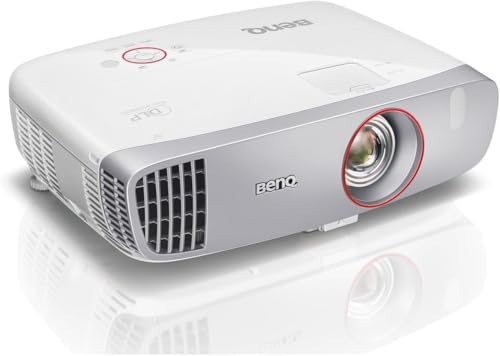
BenQ HT2150ST 1080P Short Throw Projector — A short throw DLP model that makes a large image from a few feet, illustrating the short throw family for gaming and smaller rooms. Check price on Amazon.

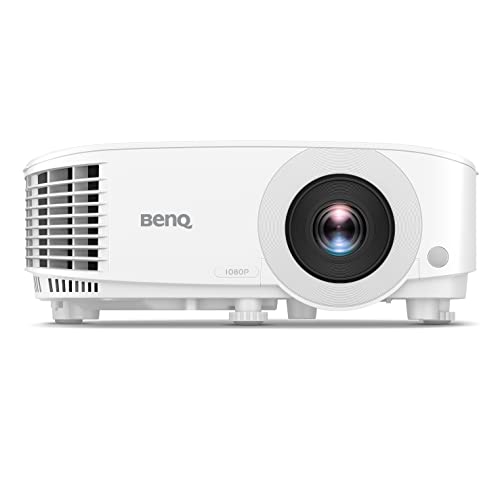
BenQ TH671ST 3000 Lumens 1080p Short Throw Home Entertainment Projector — Another short throw example with auto keystone convenience, showing the furniture friendly placement this family enables. Check price on Amazon.

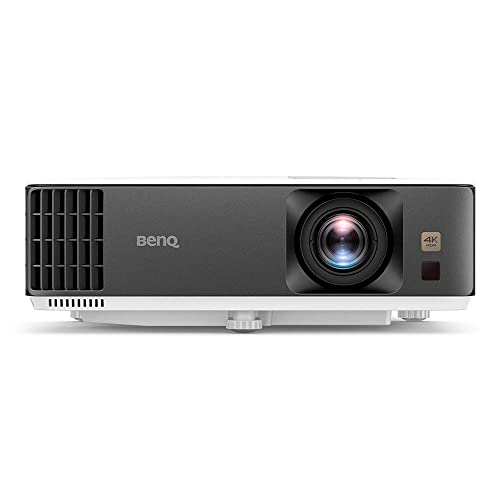
ViewSonic X10-4K True 4K UHD Short Throw LED Portable Smart Home Theater Projector (2019 Model) — An ultra short throw LED model that sits close to the wall, representing the extreme end of the short throw family and its flat screen demands. Check price on Amazon.
Planning the Room Around Throw Distance
Throw choice is really a room-planning decision disguised as a product decision. Before comparing models, map the room honestly: where the screen must go, where people sit, where a projector could physically live, and what else competes for that space — ceiling fans, lights, beams, doors that swing, and the tall person who always stands up during the match.
Measuring your true available throw
Measure from the screen surface to the front of where the lens would sit, not to the back wall or the mount’s centre. Projector bodies are deep, ceiling mounts drop the lens below the ceiling, and a shelf’s usable depth is less than its full depth once cables bend behind the unit. Then check that distance against the throw range for your target image size using the model’s throw ratio range, keeping some margin at both ends of the zoom: a setup that only works with the zoom pinned at its extreme leaves no room for error, screen changes or a slightly different mount position. A comfortable setup lands in the middle third of the zoom range, where lenses also tend to perform at their most even.
Seating, shadows and walkways
A long-throw projector behind the seating throws over everyone’s heads, and the picture survives people standing only if the beam passes high enough — check the sightline from the projector to the bottom of the screen against the height of a standing person in the walkway. A short-throw unit in front of the seating removes most shadow problems but places the projector where drinks, children and vacuum cleaners also live. Ultra short throw removes the audience from the beam entirely, which is why it suits family rooms, but it trades that freedom for extreme sensitivity to screen flatness and placement precision, covered below.
Light control interacts with throw
The further light travels, the more a bright room’s ambient glow competes with it on the way — not because the beam dims meaningfully in air, but because long-throw rooms tend to be larger, with more window area washing the screen. Short-throw setups often pair with smaller rooms that are easier to darken. Treat throw and light control as one decision: a modest-brightness long-throw projector in a dark cinema room will satisfy more than a brighter short-throw fighting a wall of glass, and the reverse holds when the room cannot be darkened and the screen is modest in size.
Installation Realities: Mounts, Cables and Alignment Tolerance
Why ultra short throw is the least forgiving
An ultra short throw projector sits centimetres from the wall and fires upward at a steep angle, so geometry errors multiply: a millimetre of tilt or a screen that bows slightly becomes a visibly wavy top edge or a soft corner. These models demand a flat, fixed screen — ideally a rigid or tensioned one — and a stable, level surface or mount that will not be bumped. Retractable screens that curl are a poor match. The reward for that precision is a television-like experience with no ceiling work, but buyers should budget the same care for placement that a long-throw owner spends on the ceiling mount; the work is different, not absent.
Cable runs and signal integrity
Long-throw ceiling installs need long cable runs, and long HDMI runs at high resolutions and refresh rates are a genuine engineering constraint: passive copper cables have practical length limits that shrink as bandwidth rises, and the reliable answers are active cables, fibre-optic HDMI, or relocating the source near the projector with a short run. Short-throw and tabletop setups keep cables short and swappable, which makes them friendlier to games consoles that move between rooms and to troubleshooting generally. Decide where sources will live before choosing throw, because the cable plan can quietly veto an otherwise perfect layout.
Ventilation and noise placement
A long-throw projector on the ceiling sits above and behind the audience, where its fan noise is least noticeable and its exhaust heat rises away from viewers. A short-throw unit on a low table sits near ear height and near the front, where both noise and warm exhaust are part of the seating experience. In small rooms this matters more than specifications suggest. If the projector must live close to the seats, prioritise a quiet model and a placement that vents away from people, whatever its throw category.
Picture Quality Consequences of Throw Choice
Brightness uniformity and hot-spotting
Short-throw lenses bend light hard, and on some screen materials — especially ambient-light-rejecting screens designed for standard throw — the result can be a brighter centre and dimmer corners, or a visible hot spot that follows the projector’s position. Standard and long-throw lenses illuminate screens more evenly and pair predictably with a wider range of screen materials. If you already own a screen, its material may quietly favour one throw category; if you are buying both together, choose them as a pair and check the screen maker’s guidance on compatible throw distances.
Focus evenness across the frame
Extreme wide-angle short-throw optics work hardest at the edges of the frame, and budget designs can show softer corners than their long-throw equivalents at the same screen size. For films this is barely noticeable; for spreadsheets, code or strategy games with text in the corners, it is a daily irritation. Judge a short-throw candidate with text at the corners, and judge a long-throw candidate with the zoom at the setting your room actually requires, since lens performance varies across the zoom range too.
Screen size ambitions
Long throw is the natural partner of very large screens in long rooms, and of anamorphic or constant-height cinema setups. Short throw reaches large sizes in small rooms where long throw physically cannot — a small flat can have a genuinely big picture precisely because the projector needs so little depth. Frame the choice by the image size you want and the room you have: the correct category is the one that produces that size from a position the room can actually offer, with the zoom in its comfortable range.
When the Hybrid Answers Win
Between the extremes sit standard-throw projectors with wide zoom ranges, and for many rooms they are the pragmatic winner: flexible enough to sit on a rear shelf or a ceiling mount, tolerant of imperfect placement, and compatible with almost any screen. The short-versus-long framing matters most at the edges — very small rooms, very large screens, television-style living-room installs, dedicated long cinema rooms. If your room is ordinary and your screen size moderate, let other factors lead: brightness for your light conditions, lens shift for your mounting position, and noise for your seating distance. Throw should qualify a projector for your room, not disqualify every model but one.
Finally, think about the room’s second life. A long-throw ceiling install is a commitment that rewards a stable room layout; a short-throw tabletop setup follows you to a new flat, a garden screening or a borrowed hall. Renters, students and frequent movers get real value from portability that never appears in a specification table, while settled homeowners get value from the invisible, permanent install. Match the throw to the life, and the picture tends to take care of itself.
Sound, Sources and the Furniture Around the Throw
Throw distance decides where the projector sits, and where the projector sits decides several things buyers forget to plan: where the sound comes from, where the sources plug in, and what furniture the room needs. Sorting these alongside the throw choice prevents the classic outcome — a perfect picture in a room that does not work.
Audio geography
Sound should come from the screen, not from the projector. A long-throw projector sits behind the audience, so its built-in speaker — or an output wired to a speaker near it — places voices behind your head, an effect the brain never stops noticing. Long-throw setups therefore budget for sound at the screen: a soundbar, powered speakers or an AV system, fed by an audio return channel or a separate run. Short-throw and especially ultra short throw projectors sit at the screen, where their often-decent built-in sound at least originates in the right place, and many living-room ultra short throw setups legitimately use the projector as the sound system. When comparing total costs, the long-throw column should carry a sound line item the short-throw column may not need — it regularly closes what looked like a price gap between the two approaches.
Sources and switching
Consoles, players and streaming devices want to live where people can reach them, load discs and point remotes. In a long-throw ceiling install they live at the screen or in a rack, and the signal travels the room’s length to the projector — which is where the cable engineering discussed earlier comes from. In a short-throw living-room setup, sources sit in the same unit as the projector, cables are short and swaps are trivial. Households that change sources often — children with consoles, borrowed players, laptops for work presentations — feel this difference weekly, and it deserves a vote alongside the optical arguments. A projector is a system, and the throw choice quietly designs the whole system.
Furniture and the look of the room
An ultra short throw projector wants a low, deep, stable unit directly under the screen, and that unit becomes a piece of the room’s furniture whether you planned it or not; a long-throw projector wants a ceiling mount and otherwise leaves the room’s floor plan entirely alone, which is why interior-minded households often prefer it despite the installation work. A short-throw tabletop setup wants nothing permanent at all, and pays for it with a projector that must be positioned, and its cables tidied, at every session. Decide which piece of furniture you are really choosing, because you will look at it far longer than you will look at specification tables.
Children, Pets and the Physics of Real Households
Beam safety and behaviour
All projector beams deserve respect — nobody should stare into a lens — but the risk geography differs by throw. A tabletop short-throw beam crosses the room at exactly the height of a curious child’s face and a standing adult’s eyes, and people will walk through it, casting shadows and getting dazzled, unless the room’s layout disciplines the traffic. A ceiling long-throw beam passes overhead, out of the traffic and mostly out of temptation. An ultra short throw beam hugs the wall in a thin wedge, the hardest of all to intercept accidentally. In homes with small children, this ordering — ultra short throw safest by geometry, ceiling long throw next, tabletop short throw most exposed — is a legitimate deciding factor that has nothing to do with picture quality.
Bumps, tails and gravity
Projectors on tables get bumped; projectors on low units get investigated by toddlers and swept by cat tails; ceiling projectors get neither, but their mounts must be trusted absolutely because gravity is involved in every ceiling decision. If your household is lively, price the stability honestly: a fixed installation of either extreme — ceiling long throw or a secured ultra short throw unit — survives family life better than the flexible middle. The alignment you do once and keep is worth more than a theoretically better alignment redone weekly, and the best throw for a chaotic household is the one nobody can knock.
Heat and noise near little ears
Exhaust heat and fan noise concentrate where the projector is. A short-throw unit at the front of a family room vents near the people sitting closest to the screen — often the children on the floor — while a ceiling unit keeps both heat and noise above and behind. None of this is dangerous with sensible placement and vents kept clear, but comfort is cumulative, and a room that runs warm and loud at child height will be quietly renegotiated by the family until the projector loses. Plan the placement for the audience you have, including the smallest members.
Future Changes: Which Throw Forgives a Different Tomorrow
Rooms change: sofas move, screens grow, households relocate. The throw categories differ sharply in how gracefully they absorb change, and buyers planning to keep a projector for many years should weigh this flexibility as a feature in its own right.
Changing screen size
A long-throw projector with a wide zoom range can usually serve a larger or smaller screen from the same ceiling mount, because distance is plentiful and zoom has room to work. An ultra short throw model is married to its screen size band: move it a few centimetres and the size changes dramatically, but the geometry is so sensitive that a different screen — especially a different screen type — can mean starting the installation from zero. If a bigger screen is a known ambition, the forgiving categories are standard and long throw; ultra short throw rewards households whose screen decision is final.
Changing rooms and houses
Portability runs in reverse order to permanence: the tabletop short-throw setup moves house in a box and works the same evening; the ceiling install leaves holes, a mount and a cable run behind, and its projector may not suit the new room’s dimensions at all. Renters and the frequently relocated should hear this plainly — your projector choice is also a housing-flexibility choice. Owners settled for the long term can safely take the ceiling route’s benefits, because the cost of permanence is only paid when you move.
Changing technology around the projector
Sources, resolutions and refresh expectations will evolve under any projector. Long cable runs installed for today’s signals may not carry tomorrow’s, and the long-throw owner should install conduit or accessible routes rather than sealed-in cable if the ceiling is being opened anyway — the cheapest future-proofing in the entire hobby. Short runs forgive everything: the cable is swapped in minutes. As with so much in this comparison, the pattern repeats — long throw invests in a room, short throw invests in flexibility, and the right answer is the one whose bet matches your life.
Throw and Screen Technology: Pairs That Work and Pairs That Fight
Projector and screen are bought separately and live together, and certain combinations are quietly incompatible in ways neither product page volunteers. Knowing the pairings is part of choosing a throw.
Ambient-light-rejecting screens and their throw demands
Screens that reject ambient light for standard-throw projectors work by reflecting the projector’s light toward the audience while absorbing or deflecting light from other angles — a trick that depends on the projector’s light arriving from a sufficient distance and a predictable angle. Fire one from too close, as a short-throw model must, and the geometry breaks: hot spots, uneven brightness and a picture that changes as you move seats. These screens publish a minimum throw ratio for exactly this reason. The ultra short throw world has its own dedicated screen types built for its steep angle, and the two families do not interchange. If a light-rejecting screen is in your plan, its minimum throw is a hard constraint that eliminates categories before preference gets a vote.
Acoustically transparent screens and speaker placement
Enthusiasts who place speakers behind the screen need a woven or perforated screen, and those screens want the projector far enough back that the texture does not interact with the pixel structure — a moiré risk that grows as throw shortens and pixels enlarge relative to the weave. Long throw is the natural partner here, and the dedicated cinema room it implies usually has the depth to indulge it. This is a niche consideration that becomes a decisive one instantly if hidden speakers are part of your design.
Painted walls and improvised surfaces
At the opposite pole, a painted wall forgives almost everything except extreme angles: an ultra short throw beam raking across a wall at a shallow angle turns every plaster undulation into a visible wave in the image, while a long-throw beam striking near-perpendicularly hides the same wall’s sins. Households planning to project on a wall should hear the implication plainly — the cheaper the surface, the more it prefers a conventional throw, and the money saved on a screen is partly spent constraining the projector choice.
Installation Day: What Each Throw Actually Demands of You
The long-throw day
Expect measuring, a mount fixed into structure rather than plaster, cables routed and tested before the ceiling closes, and an alignment session with the mount’s fine adjustments. It is the biggest day of the three and the last one you should ever need: done properly, a long-throw install disappears from your life entirely, which is its deepest selling point. Budget the day honestly, test the cable run with your real sources before anything is sealed, and photograph the routing for the future.
The ultra short throw afternoon
No ladders, no ceiling — but an afternoon of millimetres. The unit and screen must agree precisely, the surface must be level and stable, and the screen must be flat to a standard that surprises buyers graduating from a wall. Most of the session is patience: place, check the top edge, adjust a foot, check again. The consolation is that every adjustment is at arm’s length, and the result, once dialled, is the most television-like experience projection offers.
The short-throw ten minutes
Tabletop short throw asks almost nothing: a surface, a rough position, focus, done — which is precisely its charm and its trap, because a setup that takes ten minutes gets redone casually, moved for parties, and borrowed for other rooms, and each return is a small renegotiation. Owners who love the category formalise it slightly: a marked position, a dedicated surface, cables that live in place. Ten honest minutes, made repeatable, is the whole discipline.
Whichever day you choose, notice what it buys: permanence, precision or freedom. The throw categories are, in the end, three different relationships with a room — and the comparison resolves the moment you decide which relationship yours should be.
Throw Choice for Gamers and Presenters
Gaming: latency travels with the room, not the throw
Throw category does not determine input lag — processing does — but throw shapes the gaming room around the lag. A long-throw ceiling setup puts the console at the screen and the player at a distance, favouring wireless controllers and a proper sound system; a short-throw tabletop setup keeps everything within cable reach and lets a player sit close to a very large image, which competitive players either love or find overwhelming depending on genre. Ultra short throw’s television-like arrangement suits living-room gaming best of all: console in the unit, picture huge, nobody’s shadow crossing the screen mid-match when a household member walks to the kitchen. Choose by the room’s traffic and your seating distance, and check the specific model’s game mode and measured lag as a separate, non-negotiable step.
Presenting: the presenter’s body is the variable
A presenter stands beside the screen, which rearranges the throw logic completely: a long-throw beam from behind the audience passes through the presenter, blinding them and shadowing the slides, while a short-throw or ultra short throw projector at the screen lets the presenter work beside the image, untouched by the beam. This is why classrooms and meeting rooms standardised on short throw years ago, and any home user who teaches, presents or leads calls with a big shared screen should borrow the lesson. The presenter’s comfort is a specification too, and throw is where it is decided.
Resale, Borrowing and the Social Life of a Projector
A final, human consideration: projectors get lent, borrowed and sold. A portable short-throw model is the one friends ask for — garden matches, wedding slideshows, village hall quizzes — and the one whose owner becomes the neighbourhood’s cinema. A ceiling long-throw model is unlendable by design, which some owners count as a feature. On resale, portable models find buyers easily because they fit any room; installed models sell to a narrower audience that must want that throw for their space. None of this should lead the decision, but in a close call between categories, the projector’s social life is a legitimate tiebreaker — it is, after all, a machine for gathering people, and the category that gathers yours most easily has a claim that no specification table will ever print.
Costs Across Five Years, Compared Honestly
The purchase prices of the categories overlap so much that the interesting money is in the installation and the entourage. A long-throw setup’s true ticket includes the mount, the long cable run done properly, sound at the screen, and possibly an electrician or installer — a sum that can rival the projector itself and should be written into the comparison from the start. An ultra short throw setup’s true ticket includes the dedicated screen its geometry demands and the furniture it lives on. A tabletop short-throw setup’s true ticket is close to the box price, which is its quiet financial superpower, paid instead in daily convenience. Across five years the running costs converge — light sources and electricity dominate and are category-neutral — so the decision is really about where you prefer to spend: once, on an installation that disappears; on a screen-and-furniture system that behaves like a television; or not at all, accepting a setup ritual as the rent. Stated that way, most households recognise their answer immediately, and it is a more honest recognition than any formed while comparing projector prices alone.
A Note on Trying Before Committing
Because throw is a relationship with a room, it can be rehearsed: a borrowed or returnable projector, an evening in your actual space, the screen size taped on the wall in painter’s tape. Live with the tape rectangle for two days before anything arrives — sit in every seat, walk the room’s paths, notice the light at your viewing hours. The rehearsal costs almost nothing and answers the questions specifications cannot: whether the size feels right, whether the traffic crosses the beam’s path, whether the unit’s position pleases or irritates. Buyers who rehearse rarely exchange projectors, and exchanges in this category are almost always throw mistakes discovered too late. Tape is cheap; learn from it.
Related Guides
- best projectors for bright rooms
- best projectors for living room
- best projectors for bedroom
- best projectors for small rooms
- best projectors for outdoor movies
- how to fix blurry projector image
- how to choose a projector
Frequently Asked Questions
How do I calculate which throw type my room needs?
Measure the distance from the screen wall to the furthest position where a projector could realistically sit, and decide the image width you want. Divide the distance by the image width to get the throw ratio your room demands. A result around two or more suits long throw models, well below that you need short throw, and a tiny fraction means ultra short throw. Then check individual models with the maker throw calculator, because zoom ranges give each model flexibility around its headline ratio.
Is short throw picture quality worse than long throw?
Not inherently. Both families include excellent and ordinary models across resolutions and light sources. Short throw optics are more complex to design, so lens quality varies and budget short throw models can show softer corners or geometry quirks, but quality models are sharp across the image. The fair comparison is model against model at your tier, judged on ANSI brightness, focus uniformity on text in the corners, and lens features. The throw family should be chosen by your room first, then quality within it.
Can I use a short throw projector on a plain wall?
A short throw model can work on a wall, but be aware that its steep projection angle reveals wall unevenness far more than a long throw beam does. Ultra short throw is the most demanding of all: small ripples become visible waves in the image geometry. If you choose ultra short throw, a flat fixed frame screen is strongly recommended. For standard short throw, a smooth matte wall is acceptable, and any waviness you can see in raking light across the wall will show in the picture.
Why do people walk through my projector image, and which type fixes it?
With a long throw setup the beam crosses the room at body height unless the projector is ceiling mounted high enough to lift the beam over heads. Short throw fixes it by keeping the beam in a shallow zone near the screen that nobody crosses, and ultra short throw reduces the beam to inches. If ceiling mounting is not possible and your household moves around during films, sport or gaming, short throw is the practical answer, with the projector on a stable unit near the screen.
What is ultra short throw and how is it different?
Ultra short throw projectors use special mirror and lens optics to produce a large image from a few inches away, sitting on furniture directly under the screen like a media unit component. They remove installation almost entirely and eliminate shadows and beam interruptions. Their demands are a very flat screen, precise placement on a stable surface, since tiny movements shift the image noticeably, and a screen type matched to their angle if you want ambient light rejection. They suit living rooms that want a huge image without any ceiling work.
Can I ceiling mount a short throw projector?
Yes, short throw models can be ceiling or wall mounted close to the screen, which is common in classrooms and in living rooms that want the unit off the furniture. The mount must hold the projector at the exact short distance its ratio demands, and alignment needs care because small angles create large geometry errors at close range. Ultra short throw models are generally designed for furniture placement rather than ceiling mounting, though some support it. Check the manual for supported orientations before planning any mount, and keep keystone at zero by positioning precisely.
Can I use a short-throw projector on a normal screen?
Yes — standard matte screens work with short-throw projectors, with attention to flatness, since short-throw geometry exaggerates ripples and curl. The pairing to avoid is a short-throw projector with an ambient-light-rejecting screen designed for standard throw, whose optics expect light from further away and can hot-spot badly when fed from close.
Is long throw always better quality?
No. Long throw is a placement category, not a quality tier; excellent and poor projectors exist in every category. Long throw’s genuine advantages are placement flexibility in deep rooms, even illumination and freedom from the audience’s traffic — not an inherent picture superiority over a well-chosen short-throw model in the room it suits.
What if my room falls between categories?
Choose a standard-throw projector with a wide zoom range, which is precisely the bridge product the market makes for in-between rooms. Land mid-zoom, use lens shift for the fine placement, and you will have a setup with no extreme compromises in any direction.