The laser vs lamp projector decision is really about how you will live with the machine over five to ten years, not how it looks on day one. Both light sources can produce excellent pictures. They differ in purchase tier, how brightness holds up over time, how quickly they start, what maintenance they demand and what happens when the light finally fades. Those ownership differences, more than any single specification, should drive your choice.
If you watch a film or two a week, a lamp model may serve you for many years before its first lamp change. If the projector is your daily television, lives on a ceiling mount, or serves a family room all day, laser low maintenance and stable brightness compound into a decisive advantage. Work through the comparison with your weekly hours honestly estimated, because usage is the variable that flips this verdict.
Disclosure: As an Amazon Associate, kajuandouglas.com earns from qualifying purchases. Links to Amazon on this page are affiliate links; they cost you nothing extra. Listing details such as price and availability change often, so check the current Amazon listing before you buy.
Quick answer: Quick verdict: choose laser for heavy use, ceiling mounts and stable brightness with almost no maintenance. Choose lamp for lower purchase cost and lighter use, accepting gradual dimming and a lamp replacement every few thousand hours. Estimate your weekly hours first; that number decides this comparison.
Laser vs Lamp Projector: Side-by-Side Comparison
The table below summarises the contest before the detailed sections argue each criterion in full.
| Criterion | Laser projector | Lamp projector |
|---|---|---|
| Light source life | Very long, commonly rated in the tens of thousands of hours | A few thousand hours per lamp, then replacement |
| Brightness over time | Holds brightness steadily, then fades slowly late in life | Dims gradually from new, noticeably in the second half of lamp life |
| Start up and shut down | Near instant on, quick off, tolerant of frequent switching | Warm up and cool down periods; fans run on after shutdown |
| Maintenance | Essentially none beyond filters and lens care | Lamp replacements, plus filters and lens care |
| Purchase tier | Higher upfront for equivalent picture class | Lower upfront, with running costs spread over years |
| Best fit | Daily use, ceiling mounts, family rooms, presentations | Occasional film nights, portable use, tight upfront budgets |
In this guide
Brightness Over Time: The Difference You Live With
A lamp is at its brightest when new and dims continuously, slowly at first and faster late in its life, so the picture you calibrated in month one is not the picture of year three. Most owners adapt unconsciously until a new lamp reveals how much light was lost. Laser output also declines, but far more slowly and evenly, holding a high proportion of its brightness across a span measured in tens of thousands of hours, which for most households is the practical life of the projector itself.
This matters most in rooms with some ambient light, where brightness is the margin between a vivid image and a washed out one. A lamp projector in a bright room spends its later lamp life below the threshold the room demands, tempting an early lamp change. A laser model in the same room simply keeps working. In a dark dedicated room, both have brightness to spare, and the lamp dimming curve is far less punishing, which is why room and usage together decide this criterion.
Running Costs, Maintenance and Ceiling Mount Logic
Total cost is purchase price plus lamps plus your time. A lamp model bought for less may need one or more replacement lamps over a heavy use life, each a modest purchase and a half hour job on a table unit. On a ceiling mount, that job involves a platform, realignment checks and more planning, which is why mounted and heavy use installations tilt so strongly to laser: there is effectively nothing to change for years, and the picture does not drift as the hours accumulate.
Laser models also start almost instantly and tolerate being switched on and off like a television, which changes how a family uses the big screen: short sports highlights or a single episode become worth projecting. Lamp models prefer fewer, longer sessions, with cool down time respected. Neither behaviour is a flaw, but they suit different households. Count your typical sessions honestly: many short ones point to laser, a few long film nights point comfortably to either.
Picture Quality: Does the Light Source Change the Image?
The light source itself is not the picture; the imaging chip, lens and processing make the image, and both sources feed excellent examples of each. Laser illumination can support wide colour and very stable output, and it enables compact, sealed designs. Lamp models include some of the most refined home cinema projectors ever made, with superb lenses and processing. Judged purely on a new unit in a dark room, a top lamp model and a top laser model are peers, and choosing between specific models matters more than the source category.
Where the source does touch picture quality is consistency. Laser colour and brightness stability means a calibration holds, while a lamp model benefits from occasional brightness checks as it ages. For most buyers the honest summary is: buy the picture you love in your room today, then let your usage pattern and mounting plan choose the light source that will keep that picture true with the least effort over the years you will own it.
Who Each Option Suits
- Choose laser if: The projector is your daily screen, it will be ceiling mounted, your household switches it on and off frequently, or you simply never want to think about lamps.
- Choose lamp if: Your use is a few film nights a week, the unit will sit accessibly on a shelf or table, and a lower upfront cost matters more than long term maintenance.
- Either serves you well if: You have a dark room and moderate use; then decide by the specific model picture quality, lens features and throw fit for your room.
Final Recommendation
Final recommendation: estimate your weekly hours and multiply by your expected years of ownership. If the total approaches or passes a single lamp life, or the projector will live on a ceiling, choose laser and enjoy the absence of maintenance. If the total is a fraction of a lamp life, a lamp model gives you the same evening of film for less money today, and the choice is equally rational.
Total Cost Over Five Years: A Worked Comparison
Run the ownership arithmetic with your own hours. A household projecting ten hours a week accumulates roughly five hundred hours a year, so a lamp rated for a few thousand hours lasts most of a decade of such use, with one replacement likely. The lamp model lower purchase price survives that arithmetic comfortably. A household projecting forty hours a week passes two thousand hours a year, meeting a lamp change roughly every eighteen months, plus the dimming that precedes each one; across five years the lamp purchases, the inconvenience and the brightness drift together outweigh the laser premium for most buyers.
The crossover point is the useful output of this entire comparison: somewhere in the mid teens of hours per week, sustained over years, laser stops being a luxury and becomes the economical choice, earlier if the unit is ceiling mounted, later if it sits on an accessible shelf. Find your side of that line with honest hours, not aspirational ones, because households reliably overestimate film nights and underestimate the daily background use that actually consumes light sources.
Brightness Modes, Eco Settings and Squeezing More From Either Source
Both sources offer brightness modes that trade light for life and quiet. A lamp in its eco mode can stretch its hours substantially and run its fan slower, at a brightness cost a dark room never notices. A laser at reduced output similarly extends its already long life and dims gracefully for evening viewing. Choosing a projector with brightness headroom for your room, then running it below maximum, is the ownership strategy that makes either technology feel effortless, because the machine is never straining at its limit.
Heat is the hidden variable in both stories. Lamps run hot and age faster in hot, poorly ventilated installs; laser units run cooler but still depend on their cooling. The manual ventilation clearances, a room that is not itself overheated, and clean filters extend the life of whichever source you choose more reliably than any purchasing decision. Light sources do not die of hours alone; they die of hours at temperature, and the installation decides the temperature.
Real-World Scenarios and Examples
Abstract advice lands differently in real rooms. These scenarios apply the guidance above to the situations readers describe most often.
- The daily driver family room: Forty hours a week across the household. Laser, decisively: the lamp changes and dimming cycles of the alternative would become a household chore.
- The Friday film ritual: Three hours a week in a dark room. A lamp model will serve for many years on its first lamp; the laser premium buys almost nothing here.
- The ceiling mounted cinema: Access is a platform and a realignment check. Laser removes the only recurring reason the unit ever needs to come down.
- The portable presenter: Short sessions, many rooms, frequent switching. Laser instant on and off behaviour suits the pattern perfectly.
- The bright room battler: Ambient light eats brightness margin monthly as a lamp ages. Laser stable output holds the room line for years.
Gear for This Guide
These verified examples put real models on both sides: current laser designs at two sizes, and a mainstream lamp class projector.

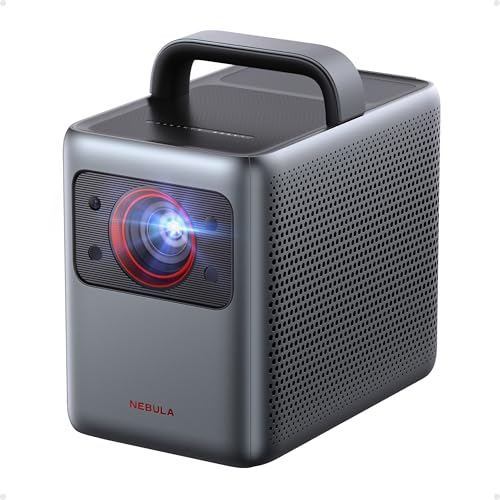
NEBULA Cosmos Laser 4K Projector, 2200 ANSI Lumens, Android TV with Dongle, Autofocus, Auto Keystone Correction, Screen Fit, Home Theater Projector with Wi-Fi & Bluetooth, for Office and Business Use — A laser 4K model whose long life light source and auto focus features embody the laser ownership case in this comparison. Check price on Amazon.
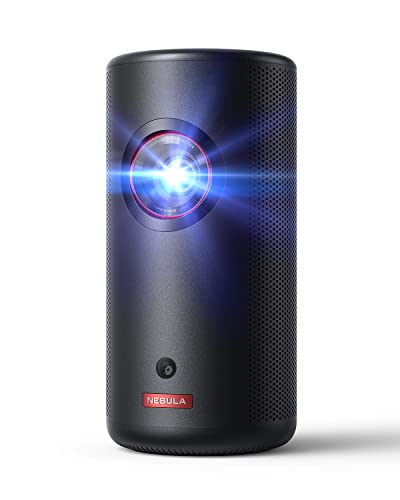
NEBULA Capsule 3 Laser Outdoor Portable Mini Smart TV Projector — A compact laser portable showing that laser now spans small models too, with instant on behaviour for casual rooms. Check price on Amazon.

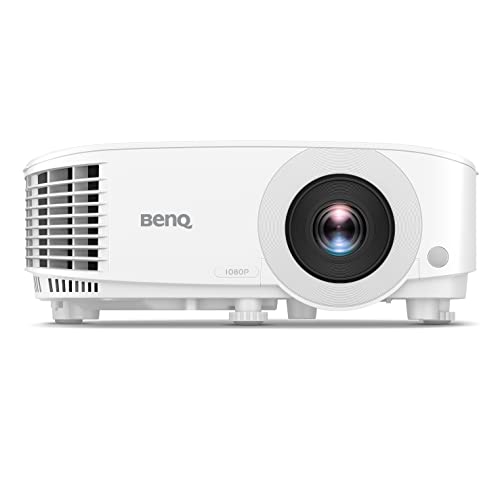
Epson Home Cinema 1080 3-Chip 3LCD 1080p Home Theater Projector — A bright lamp class 3LCD example representing the traditional route: strong picture, replaceable lamp, sensible for film night use. Check price on Amazon.
How the Two Light Sources Age Across Years of Ownership
The headline difference between laser and lamp projectors is lifespan, but the way each one ages matters as much as the total hours. They fade differently, fail differently and ask different things of you along the way, and those patterns shape the ownership experience far more than the number printed on the box.
Brightness fade: gradual dimming versus the long plateau
A lamp loses brightness throughout its life, noticeably in the first few hundred hours and then more slowly, so the image you calibrated in month one is not the image you have in year two. Owners compensate by raising brightness settings or closing curtains they once left open, often without realising the lamp is the reason. A laser light source holds its output far more steadily across thousands of hours, so a setup tuned at installation stays close to that tuning for years. For a dedicated room with a fixed screen and controlled light, that stability is arguably worth more than the raw lifespan figure: calibration, screen choice and seating decisions all assume a brightness level, and the laser simply keeps the promise the lamp slowly breaks.
Failure style: sudden death versus planned decline
Lamps usually give warning — dimming, flicker, colour shift, longer strike times — then fail, sometimes inconveniently mid-film but rarely without symptoms first. The replacement ritual is familiar: cool down, swap the module, reset the timer. Laser engines do not offer a user-swappable module; when the light source or its phosphor components eventually degrade beyond use, the repair is a service-centre job or the end of the projector’s economic life. That is a fair trade for most buyers because the timescale is so much longer, but it changes the buying question from “what does a lamp cost” to “will I still want this projector when the light source is tired” — and for buyers who upgrade every few years anyway, the laser’s longevity may never be fully used.
Colour behaviour over time
As lamps age their spectrum shifts, typically warming and losing punch in the colours the lamp produces least efficiently, which is why an ageing lamp projector can look yellow-green in scenes you remember as neutral. Laser-phosphor designs hold colour more consistently because the blue laser ages slowly and evenly, though the phosphor wheel is itself a wear component. In practical terms, a lamp projector benefits from a picture-mode check and a white-balance touch-up at each lamp change, while a laser projector tends to keep the settings it was installed with. Neither is a reason to panic; it is a reason to budget a little attention, not just money, for lamp ownership.
Room-by-Room: Where Each Light Source Earns Its Keep
The dedicated cinema room
In a light-controlled room used for evening films, both technologies can look superb, and the deciding factors shift to consistency and convenience. Sessions are long, the projector may run most nights, and a lamp’s hours accumulate faster than casual owners expect — a household watching three hours nightly passes a thousand hours in well under a year. The laser’s steady output and instant on-off suit the ritual of a cinema room, where nobody wants to plan around lamp warm-up or ration hours during a series binge. The lamp counters with lower purchase cost for equivalent picture quality in some ranges, which can free budget for the screen and sound that a cinema room also needs.
The bright living room
Living rooms punish projectors with ambient light, and here the argument becomes about usable brightness across the day. A laser model that holds its rated output for years keeps daytime sport and children’s films watchable long after a lamp at half life would have faded into the curtains. Instant start matters too: a projector used like a television — on for the news, off, on again for a match — cycles a lamp hard, since each strike stresses it, while the laser treats short sessions as normal use. For this room the laser’s habits match the family’s habits, and that match is the real specification.
Classrooms, offices and shared spaces
Shared spaces add a management dimension: nobody owns the lamp timer, projectors get left on, and filters and lamps are replaced only when someone complains. Laser models reduce that maintenance burden to filter cleaning and little else, and their consistent brightness keeps text legible for the back row year after year. Lamp models remain rational where use is light and supervised, or where a tight budget must cover several rooms and the per-unit saving buys an extra projector. The honest comparison in shared spaces is not lamp price versus laser price; it is total attention required, and attention is the scarcest resource in most organisations.
Running Costs Worked Through Honestly
Ownership cost comparisons often go wrong by counting only the lamp. Work through the full picture for your own usage pattern before deciding which technology is cheaper for you.
Counting your real hours
Estimate weekly hours honestly, including the sessions you forget: background television, gaming marathons, children on weekend mornings. Multiply by fifty-two and by the years you expect to keep the projector. That total, compared against a lamp’s realistic life at the brightness mode you will actually use — high-power modes shorten lamp life considerably compared with eco modes — tells you how many lamp changes to budget. Many households discover their total is one lamp, not three, which narrows the laser’s cost advantage considerably; heavy users discover the opposite.
The hidden line items
- Replacement lamps: genuine modules cost more than compatibles, and cheap compatibles can be dimmer, shorter-lived or, in the worst cases, damaging.
- Filters and cleaning: both technologies need airflow kept clean; neglected filters shorten lamp life and can overheat any projector.
- Electricity: broadly similar between comparable models; eco modes matter more than light-source type.
- Downtime: a failed lamp before a planned event has a cost that never appears in spreadsheets.
- Resale: a lamp projector with a fresh lamp is an easier used sale than one with an unknown lamp; a laser’s remaining life is hard for a buyer to verify, which cuts both ways.
When the cheaper purchase is the expensive one
The pattern to avoid is buying the lamp model to save money, then running it in its brightest mode in a bright room — the combination that consumes lamps fastest and satisfies least. If your room and habits demand maximum brightness for many hours a week, the laser’s economics usually win even before convenience is counted. If your room is dark, your sessions are films in eco-friendly modes and your hours are modest, the lamp model’s lower entry cost is a genuine saving, not a false economy. The technology is not expensive or cheap in itself; the match between technology and usage is what costs or saves money.
Picture Character: Differences You Can Actually See
Black levels and contrast behaviour
Light source alone does not set black level — the imaging chips and iris do most of that work — but the source influences how contrast features behave. Laser models can dim or shut off their light almost instantly, enabling aggressive dynamic contrast that deepens fade-to-black moments convincingly. Lamp models rely on a physical iris or accept a fixed floor. In mixed scenes both look similar; in dark films with frequent fades, the laser’s speed shows. Judge with the content you actually watch rather than a contrast specification measured under different conditions.
Colour volume and the rainbow question
Laser light can support wide colour gamuts, and many laser models hold saturated colour at high brightness better than lamp equivalents, which matters for animated films and sport. The rainbow artefacts some viewers see come from single-chip DLP colour sequencing, not from the light source, and both laser and lamp DLP models can show them to sensitive viewers. If you are rainbow-sensitive, the fix is choosing a different imaging technology, not a different light source — a point buying guides often blur.
Noise, heat and the room’s comfort
Both technologies exhaust heat and both use fans; claims that one is silent should be treated with suspicion. Lamp projectors run hot at the exhaust and their fans often work harder in high-brightness modes, while many laser models spread the thermal load and keep a steadier fan note. In a small room the practical difference is fan behaviour during quiet scenes: a fan that changes speed draws attention, while a steady fan disappears. Check noise specifications at the mode you will use, and remember the projector’s distance from your ears matters more than a decibel or two on paper.
The Shopping Decision: Questions That Separate the Two in a Showroom
Specification sheets make laser and lamp models look interchangeable at a glance. The differences that matter emerge from a few pointed questions and tests that you can apply to any pair of projectors you are choosing between, whatever the brands involved.
Ask about brightness in the mode you will use
For both technologies, the headline output is measured in the least accurate mode. Ask — or find in detailed reviews — what each projector delivers in its cinema or film mode, because that is the brightness your films will actually have, and the gap between the two technologies often narrows or reverses there. Laser models commonly hold a higher share of their headline in accurate modes, while some lamp models sacrifice a great deal for their peak number. Comparing accurate-mode figures is the single fairest brightness comparison you can make, and a retailer who cannot or will not engage with it is telling you something about how the after-sale support will feel.
Ask what happens at year five
Project the ownership forward. For the lamp model: how many lamps will your estimated hours consume, are genuine replacements readily stocked for this model, and what does the swap involve? For the laser model: what is the light source rated to, what does the maker say about service when it eventually fades, and is the rest of the projector — its inputs, its resolution, its features — something you will still want at that age? Projectors are replaced more often for obsolete connections and features than for dead light sources, and a laser’s longevity only pays if the projector around it stays relevant to your system. Buy the light source for the years you will genuinely keep the machine, not for an imaginary decade.
Test with your content, in your light
If a showroom visit is possible, bring the scenes you know: a dark film passage for black levels and dynamic contrast behaviour, a saturated animation clip for colour brightness, and a subtitle-heavy scene if you watch with subtitles, because that is where artefacts and focus character show. View at the screen size you plan, from your seating distance, with the room lighting as close to yours as the shop allows. Ten honest minutes like this outweigh any number of specification comparisons, because the laser-versus-lamp question is finally about which picture you prefer living with, and preferences cannot be read off a chart. If the shop will only show a bright demo loop, treat that as information too — about the shop.
Environmental and Practical Considerations Buyers Miss
Heat, power and the small room
Both technologies convert most of their electricity into heat in your room, and in a small or poorly ventilated space that heat is part of the experience — the room warms, the fans work harder, the noise rises. Laser models at a given brightness are often somewhat more efficient, but the difference is a nudge, not a category change; the bigger lever is the brightness mode you run. Eco and cinema modes that suit your room’s darkness also suit its temperature. If your viewing room already runs warm, factor a projector’s heat into the decision the way you would a gaming computer’s, because a summer-evening film should not require opening windows against the noise and light you bought the projector to escape.
Start-up, shut-down and the rhythm of daily use
Lamp projectors ask for patience at both ends of a session: a warm-up before full brightness and stable colour, and a cool-down with fans running after you switch off — during which unplugging is genuinely harmful to the lamp. Laser models reach full output in seconds and can be switched off and left immediately. For a cinema-room ritual this difference is trivial; for a family projector used like a television in twenty-minute bursts, it shapes whether the device feels appliance-easy or like equipment that must be managed. Match the rhythm to the household: households that will not manage cool-downs should not own lamps, whatever the savings, because lamps die early in unmanaged homes and the savings die with them.
Disposal, spares and the second-hand market
Lamps contain materials that should be disposed of through proper channels rather than household waste, and keeping a spare lamp is the lamp owner’s insurance against a failure before a big occasion — an insurance with a shelf life and a cost. Laser models remove the consumable entirely, which simplifies both ownership and resale conversations, though a used buyer cannot easily verify a laser’s remaining life, while a lamp projector with a documented new lamp is a known quantity. If you expect to sell the projector on in a few years, consider which story you would rather tell a buyer; if you expect to run it into the ground, the laser’s absence of consumables is the simpler road to the same destination.
Myths on Both Sides, Corrected
Laser always looks better — and the reverse myth
Light source is one ingredient in picture quality, behind the imaging chips, the lens, the processing and the screen. Excellent lamp projectors outperform mediocre laser ones, and the best laser models outperform everything with a lamp at their level; the source sets tendencies — stability, instant operation, fade behaviour — not a quality ranking. Buy the projector, not the technology label, and let the source break ties between models whose pictures you already respect. Reviewers who declare a winner by light source alone are reviewing a specification sheet, not a picture.
Lamps are obsolete
Lamp models persist because they solve real problems: lower purchase cost for strong picture quality, a user-replaceable light swapped in minutes, and a mature ecosystem of parts. For a dark room, moderate hours and an owner happy to change a lamp every few years, they remain a rational, satisfying choice — which is why manufacturers keep making good ones. Obsolescence is a marketing word; suitability is the engineering one. The lamp’s genuine weaknesses are specific — fade, warm-up, consumable cost — and a buyer whose life avoids all three is not behind the times, just well matched.
Laser lasts so long that brightness does not matter
A laser source rated for a very long life still delivers only the brightness the model was built with, and an underpowered laser in a bright room disappoints for exactly as many years as it lasts. Longevity multiplies whatever you buy — including a mistake. The correct reading of the long rating is permission to invest in getting the brightness and the picture right, because you will be living with the result, unchanged, for a very long time. Choose the room’s brightness requirement first, the picture quality second, and only then enjoy the fact that the light source will outlast your interest in counting its hours.
Strip the debate to its frame and the choice is simple to state, if not always to make: lamps rent you excellent pictures cheaply in exchange for attention and periodic renewal; lasers sell you stability and indifference to hours at a higher entry price. Your room, your hours and your temperament already know the answer — the work of this comparison is just making them say it out loud.
Second Rooms, Second Projectors and the Mixed Household
Many households end up with two projection setups over time — a main room and a bedroom, a house and a holiday place — and the laser-versus-lamp answer often differs between them, which is a useful reminder that the question was never about the technologies in the abstract.
The occasional-use room argues for laser
A projector used twice a month suffers lamp ownership’s worst ratio: the lamp ages by calendar as seals and materials degrade, warm-up dominates short sessions, and the cool-down discipline is hardest to maintain in casual spaces where someone will unplug the extension lead. A laser in the same room simply waits, instantly ready, indifferent to the pattern. If one of your rooms is occasional, that is where the laser premium earns most per hour of actual use — the reverse of the intuitive calculation, which assigns the best technology to the most-used room.
The heavy-use room argues by hours alone
In the main room the arithmetic of total hours dominates: high weekly hours consume lamps on a schedule you can predict, and either technology can be defended — the lamp with eyes open about consumables, the laser with eyes open about the entry price. What heavy use does not forgive is the under-bright model of either kind, because hours spent with a dim picture are the one cost no lamp swap or laser longevity refunds. In heavy rooms, buy brightness first and light source second; in occasional rooms, reverse the order.
Handing down and upgrading
When the main room upgrades, the old projector migrates — to the children, the spare room, a relative. Lamp models hand down with a caveat (the next lamp is the new owner’s problem, and a fresh lamp fitted before the handover is a genuinely kind gesture), while laser models hand down silently, their remaining life a mystery the recipient discovers over years. Households that cascade equipment should count this in the original purchase: the technology you choose today is also the technology you will explain, or not explain, at the handover.
A Note on Hybrids and Newer Variations
The market increasingly blurs the binary: LED projectors occupy the low-brightness, ultra-portable end with laser-like longevity; laser-phosphor dominates serious home models; some designs combine sources. The framework in this guide survives the blurring, because the questions were never really “laser or lamp” — they were: how does it fade, how does it fail, what does renewal cost, how does it behave in short sessions, and how bright is it in the mode you will use. Ask those five of any light source, including ones not yet marketed, and the comparison makes itself. Technologies change; ownership arithmetic does not.
Brightness Modes, Fan Noise and the Light Source’s Hidden Influence
One more practical thread ties the light source to daily experience: the relationship between brightness mode and fan noise. A lamp projector driven at full power runs its lamp hot and its fans hard, and many owners actually live in eco mode for the quiet — accepting, in effect, a dimmer projector than they bought. A laser model at the same perceived brightness often spreads its thermal load more evenly, and its eco modes sacrifice less. When you compare models, compare them at the noise level you will tolerate in a quiet film scene, because that constraint, not the specification, decides the brightness you truly own. Ask of each candidate: how bright is it in the mode whose noise I can ignore? That figure — unprinted anywhere — is the honest headline for both technologies, and finding it in measured reviews is worth more than any other single research step in this comparison.
Warranties and What They Quietly Reveal
Manufacturers warranty light sources differently, and the terms are a rare moment of corporate honesty about expected life. Lamp warranties are short and hour-capped, because lamps are consumables with wide variance; laser sources are typically covered with the machine for longer, because the maker expects them to outlast the warranty’s relevance. Read the light-source clause before purchase, note whether a lamp’s failure in the first months is covered or considered wear, and factor a spare lamp’s cost into a lamp purchase the way you would factor any consumable. None of this decides the comparison alone, but a maker confident in its light source writes different paperwork from one that is not, and paperwork, unlike marketing, is legally binding.
What Renters, Venues and Shared Owners Should Choose
One more constituency deserves direct advice: people who do not fully control the space or the machine. Renters who cannot ceiling-mount often pair portable projectors with short sessions and frequent moves — a pattern that punishes lamps through handling, warm-up overhead and cool-down interruptions, and rewards laser’s indifference. Venue and community-hall owners face the opposite profile: many users, no single caretaker, equipment switched by whoever books the room. There, every maintenance task a technology eliminates is a task that will actually be eliminated, because nobody was going to do it; the laser’s sealed, consumable-free life is worth more in a hall than in a home, and its instant start forgives a hundred unfamiliar hands. Shared ownership clarifies the comparison’s deepest principle one final time: the right light source is the one whose demands match the care the situation will actually supply. Homes with a devoted owner can make either technology sing. Situations without one should buy the technology that asks for nothing — and that, more than any specification, is the laser’s true headline feature.
The Answer for the Undecided
If you have read this far and remain genuinely torn, that indecision is itself diagnostic: your usage sits near the crossover where either technology serves well, and the decision should fall to the secondary virtues — the specific models’ picture quality, the noise at your seat, the deal available this month. Buy the projector whose picture you preferred in the flesh, keep the receipt, and do not relitigate the light source afterwards. At the crossover, both answers are right, and the only wrong one is the year spent deciding while the wall stayed blank.
Related Guides
- best projectors for gaming and movies under 200
- best portable projectors for outdoor movies
- best projectors for phones
- best projectors for iphone
- best projectors for camping
- how to align a projector
- dlp vs lcd projector
Frequently Asked Questions
How long does a projector lamp actually last?
Lamp life is quoted in hours and varies by model and brightness mode, typically a few thousand hours, with eco modes extending it and full brightness shortening it. The figure is usually the point at which brightness has fallen substantially, not the point the lamp stops working, so many owners replace a lamp when the picture feels dim in their room rather than at a fixed hour count. Check the hour counter in your projector menu periodically so the timing never surprises you before an important viewing.
Is a laser projector worth the extra cost?
It depends on your hours and mounting. For daily use, laser stable brightness, instant start and zero lamp changes repay the premium in convenience and avoided lamp purchases, especially on a ceiling mount where lamp changes are a project in themselves. For a few film nights a week on an accessible shelf, the same premium buys little you will notice, because a lamp will last you many years. Estimate total hours over your ownership first; that arithmetic, not the showroom, answers the question.
Do laser projectors need maintenance?
Very little. There is no lamp to replace, and the light source is rated for spans that exceed most ownership periods. You still clean the lens with a blower, keep vents clear and service any air filter the manual describes, because dust and heat management matter for every projector. The electronics and imaging components age as in any device, but the routine maintenance burden that defines lamp ownership, dimming, lamp shopping and replacement sessions, is effectively absent with laser.
Can I replace a laser light source when it fades?
Generally no, not as a home procedure. Laser light engines are integrated assemblies, and replacement is a manufacturer service matter rather than a user part. In practice the rated life is so long, commonly tens of thousands of hours, that most households will replace the projector for resolution, features or size reasons long before the laser fades beyond use. This is the mirror image of the lamp model, where the light is cheap and user replaceable but needs that replacement regularly.
Which is better for a ceiling mounted projector, laser or lamp?
Laser, for most households. A ceiling mount makes every maintenance task slower and more awkward, and lamp changes also disturb alignment, which must then be checked. A laser unit can stay mounted for years with nothing but occasional lens and filter attention from a platform. The exception is a dedicated cinema room with easy access and light use, where a flagship lamp model chosen for its picture may still be the right projector. For family rooms and daily use, laser removes the main reason mounted projectors ever come down.
Does a lamp projector picture get worse over time?
It gets dimmer, gradually and then more noticeably in the second half of lamp life, which reduces punch in brighter rooms and can shift colour slightly as the lamp ages. In a dark room with brightness to spare, owners often notice little until the lamp is replaced, when the restored brightness reveals how much had been lost. Checking the hour counter and judging a familiar bright scene a few times a year keeps you informed, and a lamp change restores the projector to its original performance completely.
Can a laser projector’s light source be replaced at all?
Not by the user, and usually not economically by a service centre — the light engine is integrated rather than modular. In practice the source is rated to outlast the projector’s useful life for most owners, so replacement rarely arises; but buyers who keep equipment for a very long time should weigh that finality honestly against a lamp model’s five-minute renewal.
Do laser projectors really turn on instantly?
Very nearly: they reach full brightness and stable colour within seconds, with no warm-up ritual and no cool-down period before they can be switched off or moved. For households that use a projector like a television, in short bursts across the day, this is one of the most felt differences between the technologies.
Is a lamp projector a bad choice for a bright room?
Not inherently — plenty of high-output lamp models serve bright rooms well. The caution is about fade: a lamp that is merely adequate when new becomes inadequate as it ages, so bright-room lamp buyers should choose headroom generously or accept more frequent lamp changes as the price of consistent daytime performance.