The oled vs qled tv debate is really a debate about light control. An OLED panel lights every pixel individually and can switch pixels completely off, while a QLED television is an LCD panel with a quantum dot colour layer and an LED backlight divided into zones. Neither is simply better; each wins in different rooms, for different content and at different viewing angles, which is why this comparison works through the criteria that change what you actually see.
If you watch films in a dark room and sit fairly centrally, OLED strengths dominate. If your television lives in a bright, open room, stays on for long daytime stretches and needs to punch through reflections, a good QLED set fights back strongly. Read the quick verdict, compare the table, then work through each criterion with your own room and habits in mind before choosing.
Disclosure: As an Amazon Associate, kajuandouglas.com earns from qualifying purchases. Links to Amazon on this page are affiliate links; they cost you nothing extra. Listing details such as price and availability change often, so check the current Amazon listing before you buy.
Quick answer: Quick verdict: choose OLED for dark room films, perfect blacks, instant response and wide viewing angles. Choose QLED for bright rooms, long daytime viewing, larger sizes on a tighter tier and viewers who worry about static image retention. Mixed households should decide by their most common viewing condition, not their rarest.
OLED vs QLED TV: Side-by-Side Comparison
The table below summarises the contest before the detailed sections argue each criterion in full.
| Criterion | OLED | QLED (LCD with quantum dots) |
|---|---|---|
| Black level and contrast | Pixels switch off fully, so blacks are true black and contrast is effectively unlimited | Backlight zones dim locally, so blacks are very good on premium sets but can glow slightly around bright objects |
| Peak brightness | Good and improving, but full screen brightness is limited to protect the panel | Typically higher, especially across the whole screen, which suits bright rooms and punchy HDR highlights |
| Viewing angles | Colour and contrast hold up well far off centre | Varies by panel type; many sets narrow noticeably from side seats without wide angle layers |
| Motion and gaming response | Near instant pixel response, excellent for fast motion and gaming | Good on higher tiers with high refresh panels; response is slower than OLED but fine for most viewers |
| Static image risk | Small risk of image retention or burn in with fixed logos and HUDs over very long periods | No burn in risk of that kind, which suits news, sport tickers and long static use |
| Room fit | Best in controlled, dim lighting | Best in bright, multi use living spaces |
In this guide
Black Levels, Contrast and Why OLED Looks Different at Night
Contrast is the difference between the darkest and brightest parts of the picture, and the human eye reads it as depth and realism. Because OLED pixels emit their own light and can turn fully off, a starfield, a night street or a candlelit scene shows bright points against genuine black, with no halo around them. That precision also helps shadow detail: dark coats, hair and furniture keep their separation instead of merging into a glowing grey mass, provided brightness is set correctly.
A QLED set controls light in zones behind the panel. Premium models use many zones and clever processing to get impressively close, and in a lit room the difference shrinks because ambient light lifts both screens blacks anyway. The gap appears in a dark room, in letterboxed films where the bars should vanish, and around small bright objects on dark backgrounds, where zone based dimming can create a faint glow. Neither result is a defect; it is the physics of the two designs.
Brightness, Reflections and Daytime Viewing
Brightness is where QLED earns its place. A strong QLED panel sustains high brightness across the whole screen, which keeps sport, news and games vivid in daylight and helps HDR highlights sparkle even when the room is not dark. Combined with an effective anti reflection coating on many models, that makes QLED the safer choice for open plan rooms, kitchens and spaces where curtains stay open.
OLED brightness has improved steadily and is entirely sufficient for evening viewing, but a bright room works against it twice: reflections compete with a less bright image, and automatic brightness limits protect the panel during long, bright scenes. If your serious viewing is films after dark, this barely matters. If the television is the family hub from breakfast onwards, weight this criterion heavily, and judge both technologies in lighting that matches your home rather than a darkened showroom corner.
Gaming, Motion and Long Term Image Retention
For gaming, OLED offers near instant pixel response, so fast pans stay clean with minimal smearing, and most OLED sets support the high refresh and variable refresh features modern consoles use. QLED gaming sets are also strong, often brighter for daytime play, with high refresh panels on higher tiers. Input lag on both is low in game mode, so the practical difference is response clarity and brightness rather than delay.
The one long term consideration unique to OLED is image retention from static elements displayed for very long cumulative periods, such as news banners, game interfaces or a paused screen. Modern sets include pixel shifting, logo dimming and refresh routines that make this a small risk for varied viewing. Households that leave a news channel or a static dashboard on all day, every day, are the exception where QLED freedom from that worry is a genuine deciding factor.
Who Each Option Suits
- Choose OLED if: Your best viewing happens in the evening, you love films and prestige drama, your seats face the screen fairly directly or spread wide, and you play fast paced games where response clarity matters.
- Choose QLED if: Your room is bright, the television runs for long daytime hours, you watch a lot of sport and news with static graphics, or you want the largest screen your tier allows without panel care worries.
- Either serves you well if: You watch a mix of streaming, sport and films in a normally lit room at moderate hours; then decide by size, smart platform and the specific model picture quality rather than the badge.
Final Recommendation
Final recommendation: let your room decide. Dark room film lovers and gamers should put OLED first and manage static content sensibly. Bright room, all day family viewing points to QLED, ideally a higher tier model with many dimming zones and a good anti reflection finish. If you sit between those camps, visit a store in daylight, view a dark scene and a football match on both, and trust the one that suits your dominant habit.
Two Rooms, Two Winners: Worked Comparisons
Take a north facing living room with floor to ceiling glass, used from breakfast television through evening sport. Ambient light is the dominant condition for most of the day. A premium QLED set with high sustained brightness and a strong anti reflection finish keeps every hour watchable, and its freedom from static image worries suits the news ticker that lives at the bottom of the screen all morning. In this room, choosing OLED for its midnight contrast would optimise the rarest hour of the day at the expense of all the others.
Now take a converted garage cinema room, blackout blinds, two rows of seats and a diet of films and prestige series. Here the QLED brightness advantage is worthless, because there is no light to fight, while its zone based blacks would glow gently in exactly the scenes the room was built for. OLED wins every criterion that matters in this room, including the wide angles the second row needs. Same two technologies, opposite answers, decided entirely by the room and the content, which is the lesson of this entire comparison.
What About Price Tiers and Sizes Between the Two
The families overlap in tiers but not perfectly. QLED ranges run from entry models to flagships, so the badge alone guarantees nothing; an entry QLED set is an ordinary LCD television with a quantum dot film. OLED starts higher and concentrates in premium tiers. At the largest sizes, QLED and its Mini LED variants usually offer more screen for the same spend, while at mid sizes the two compete head on and individual model quality decides.
The disciplined comparison is therefore always model against model at your size and tier: dimming quality or pixel control, sustained brightness, reflection finish, viewing angles and gaming ports, scored against your room. Reviews that measure these things are worth more than any badge debate. If the scores tie, let the room break it, bright to QLED, dark to OLED, and you will have made the decision the way installers make it, which is why their customers rarely regret it.
Real-World Scenarios and Examples
Abstract advice lands differently in real rooms. These scenarios apply the guidance above to the situations readers describe most often.
- The all day family hub: News in the morning, cartoons after school, sport at night. QLED, for brightness, static content freedom and durability of the everyday picture.
- The Friday film club: Four friends, lights low, a film every week. OLED, because the room and the ritual are built around exactly the scenes where pixel level blacks shine.
- The competitive gamer: Fast games daily in a controlled room. OLED for response clarity, with sensible habits around static interfaces and varied content between sessions.
- The sunroom extension: Glass on two sides, daytime viewing. The brightest QLED class set you can justify, with its reflection finish checked in person at midday before buying.
- The wide L shaped sofa: Seats wrapping around two walls. OLED viewing angles protect the corner seats that an LCD panel would leave washed out.
Gear for This Guide
Panel choice comes first, but these verified examples show typical partners for either route: mainstream LED class sets to compare in store, and sound that upgrades both.

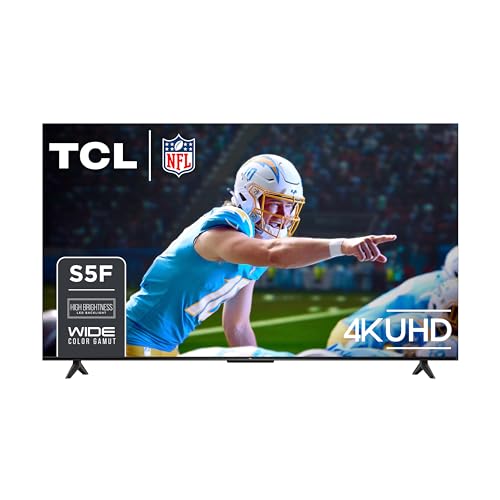
TCL 55-Inch Class S5 UHD 4K LED Smart TV with Fire TV (55S551F, 2024 Model), Dolby Vision, HDR PRO+, Dolby Atmos, Alexa Built-in with Voice Remote, Apple AirPlay 2 Compatibility, Streaming Television — A mainstream 4K LED class set that represents the QLED side of the market in everyday form, with Dolby Vision support for streaming films. Check price on Amazon.

Hisense 55″ Class U6 Series Mini-LED 4K UHD Smart Fire TV (55U65QF, 2025 Model) – QLED, Native 144Hz, HDR10+, Dolby Vision IQ, Dolby Atmos, Game Mode Pro, ALLM, Alexa Built in, Black — A Mini LED model that narrows the contrast gap to OLED while keeping high brightness, useful as a comparison point when you shop the QLED family. Check price on Amazon.

Sony HT-S400 2.1ch Soundbar for TV with Powerful Wireless Subwoofer — A soundbar with a wireless subwoofer that pairs equally well with either panel choice when built in television sound is not enough. Check price on Amazon.
The Technologies, Honestly Described
What each name actually promises
- One name describes a technology where every pixel makes its own light and can switch off entirely; the other describes a backlit technology whose light comes from behind the panel, filtered and zoned, using a film of tiny crystals to enrich colour. Everything in this comparison flows from that single structural difference. Self-lit pixels give perfect blacks, pixel-level contrast, and viewing angles that hold from the sides of the room. Backlights give higher full-screen brightness, freedom from the self-lit technology’s particular ageing concern, and strong value at large sizes. Neither description contains a winner; both contain a set of rooms and viewers they serve beautifully.
- Marketing layers complicate the names further, with variants and sub-brands multiplying yearly. Judge by the structure and the measured behaviour of the exact model, not by the family name’s reputation: backlit models differ enormously in their zone counts and processing, and self-lit models differ in brightness and features across their own tiers. The comparison that matters is between the two specific televisions on your shortlist, in your room’s light, at your size, and this section’s framework exists to make that specific comparison intelligible.
Brightness, measured the way rooms experience it
- Brightness figures invite a single-number contest that rooms do not recognise. What matters is brightness in the content you watch: a backlit flagship’s advantage is largest on bright, full-screen scenes, sport on a sunny afternoon, a winter landscape, where its sustained output fills the room’s ambient light. The self-lit panel’s advantage appears in mixed scenes, where its highlights sparkle against true black and its average brightness is entirely sufficient, especially as evening falls. A television that wins the midday argument can lose the evening one in the same room, which is why this guide insists on judging at your viewing hours.
- Reflections mediate everything. A brighter panel fights a bright room partly by force; screen finish fights it by scattering. In a room with unavoidable reflections, the combination of panel brightness and finish on the exact models matters more than the technology label, and a shop’s lighting will not reproduce your window’s angle. If your room is reflection-prone, the returns window is part of your research equipment, and using it is not indecision but method.
Dark Rooms, Bright Rooms, and the Hours Between
The evening cinema test
- In a darkened room with a film, the self-lit panel’s case is at its strongest: blacks that are truly black, so letterbox bars vanish into the bezel, night scenes hold their detail without a grey wash, and bright objects carry no halo of leaked light. Viewers who watch films seriously, in the dark, as a ritual, feel this difference in every scene and rarely accept substitutes afterwards. If your viewing life is built around evening cinema, weight this section above all others in the comparison, because it describes your actual hours with the television.
- The backlit flagship in the same dark room performs admirably in most scenes and reveals its compromise in the hardest ones: a candle in a black room, credits on black, a starfield, where zones brighten around the light they serve. Modern processing minimises this impressively, and many viewers never notice it until it is pointed out, after which, it must be admitted, some cannot stop noticing. Your sensitivity to it is personal and testable: watch the hardest dark scenes you own on both, in the dark, and let your own eyes file the report.
The daytime and sport test
- Reverse the conditions and the verdict can reverse with them. In a bright room, for daytime sport, news, and family viewing with curtains open, the backlit panel’s sustained brightness and freedom from brightness-limiting behaviour give it a punch and ease that suit the hours. The self-lit panel remains perfectly watchable, but its strengths are idling while the backlit model’s strengths are working. Households whose viewing is mostly daytime, sport-led, and socially lit should weight this section as heavily as the cinema household weights the dark.
- Many households, of course, live in both rooms across a week, which is why this comparison resists a universal winner so stubbornly. The deciding move is an honest audit of your hours: count a typical week’s viewing by light condition and content, and let the majority rule, with a tiebreak given to the viewing you care about most, the film ritual or the match, rather than the background hours that any good television serves adequately.
- Self-lit pixels: perfect blacks, no haloing, superb dark-room cinema, wide viewing angles.
- Backlit with local dimming: higher sustained brightness, strong bright-room and sport performance, no burn-in concern.
- Judge brightness in your content at your viewing hours, not by a single peak figure.
- Count your week’s viewing by light and content; let the majority, and your most valued viewing, decide.
Gaming, Longevity, and the Ownership Questions
Gaming performance in practice
- Both technologies serve gamers well at their upper tiers, with low input lag, high refresh support, and the modern HDMI features consoles use. The differences are in the margins: the self-lit panel’s instantaneous pixel response gives motion a clarity that competitive players prize, while the backlit panel’s brightness gives HDR games a punch in lit rooms and removes any anxiety about static game interfaces during very long sessions. For most players either is a delight; for the player who competes seriously or plays one game for thousands of hours, those margins become the decision, and they point in opposite directions depending on which margin is yours.
- Check the exact model’s gaming specification as you would in the choosing guide: which ports carry the full features, whether variable refresh is supported in the form your console or computer uses, and whether game mode preserves the picture qualities you care about. Gaming is where brochure claims and port realities diverge most often in this category, and the divergence is always discovered on the first evening unless you check beforehand.
Image retention, burn-in, and honest risk
- The self-lit technology carries a known, specific risk: static elements displayed for very long cumulative hours, news tickers, game interfaces, channel logos, can age those pixels unevenly and leave a permanent ghost, called burn-in. Modern panels include multiple mitigations and the risk for varied, ordinary viewing is low, but it is not zero, and it concentrates in particular habits: the television that lives on one news channel all day, the game played exclusively for years. Buyers with those habits should choose the backlit technology with a clear conscience, because a risk matched to your actual behaviour is not a theoretical one.
- The backlit technology’s ageing story is gentler but not empty: backlights dim over many years, and uniformity can drift. Both technologies, treated as their makers intend, serve for the long lives televisions are expected to live. The ownership question is therefore not which lasts, but which risks rhyme with your habits, and honesty about habits, the all-day news channel, the single game, the sunlit room, is the entire method of this section.
Sizes, Prices, and the Shape of Value
Where each technology’s value concentrates
- At smaller and mid sizes, the self-lit panels’ pricing has become competitive and their dark-room virtues are available without extravagance. At the largest sizes, backlit models often deliver the diagonal more affordably, and their brightness suits the big, bright rooms large screens tend to live in. The value map therefore bends by size and room together, which is why generic declarations about which technology is better value always dissolve on contact with a specific household’s measurements.
- Consider also the second-order costs: a television this good deserves its sound planned, its light controlled, and its content fed properly, whichever technology wins. The household that buys the flagship panel and watches it in a bright room through its own speakers, uncalibrated, has purchased a badge. The household that buys either technology thoughtfully, sets it up with the guides in this series, and matches it to its room has purchased the experience the badge was advertising.
Two Households Decide: The Method in Action
The film society household
- Consider a household whose television exists for films: curtains drawn most evenings, a soundbar already owned, seating square to the screen, and a viewing diary dominated by cinema and prestige drama. Their audit is unambiguous, and the self-lit panel’s dark-room virtues answer every line of it. Their remaining work is the good ownership this series describes: varied content enough to keep the panel’s mitigations meaningful, the accurate picture mode set and left alone, and brightness used at levels the room’s darkness makes generous. For this household the comparison was never really open, and recognising that early saved them months of specification anxiety.
- Their neighbours, a sport-led family whose television anchors a bright, open-plan room and runs all weekend, reach the opposite conclusion by the same method and are equally right. The backlit flagship fills their room’s light, serves every seat’s angle at a family gathering, and asks nothing of their habits. Placed side by side, the two households prove this guide’s thesis: the technologies are not rivals for a crown but answers to different questions, and the quality of the answer depends entirely on the honesty of the question. Ask yours in the form of a week’s viewing, counted, and the comparison resolves itself.
Sound, Software, and the Rest of the Television
The parts of the purchase the panel debate ignores
- Two televisions with different panels can share a smart platform’s frustrations, a remote’s genius, or a sound system’s inadequacy, and those shared parts will shape daily satisfaction as much as the panel does. When the panel comparison runs close, as it often does for mixed viewing, let the rest of the television decide: the platform your household prefers, the remote you will hold nightly, the sound path you already own, the gaming ports your console needs, and the maker’s record for updates and support. A panel is the television’s face, but the household lives with the whole animal.
- This is also where brand ecosystems quietly vote. A household invested in one maker’s phones, speakers, and services may find its televisions integrate with a grace that outweighs a rival panel’s marginal advantage in their room. Integration is not a specious benefit; it is paid out daily, in setup minutes saved, in remotes that simply work, in content that appears where expected. Count it, as this series counts everything, by the week and the year rather than by the launch presentation.
The second television and the mixed household
- Households with two viewing rooms can refuse the either-or entirely: the self-lit panel where the films live in darkness, the backlit one where the sport and the daylight live, each chosen for its room by the method of this guide. The mixed household is not indecisive; it is correctly specified, and its experience quietly demonstrates the comparison’s real conclusion every evening, in two rooms at once. If a second television is in your future, today’s choice can be made more purely for today’s room, knowing the other technology may get its own room and its own hours later.
- Even a single-television household should notice what this implies: the technologies are complements across conditions more than they are rivals for a throne. The industry’s framing serves the industry; the household’s framing, room by room and hour by hour, serves the household. Choose by your rooms, and let the crown go unclaimed.
Calibration and Care: Getting Each Technology’s Best
Settings that flatter each panel honestly
- Both technologies arrive in modes designed to win showrooms rather than serve rooms, and both are transformed by the same discipline: the accurate picture mode, black and white levels set by pattern, dynamic enhancers retired. Their emphases differ afterwards. The self-lit panel rewards brightness restraint in dark rooms, where its contrast does the work and its panel-care routines can run undisturbed. The backlit panel rewards attention to its local dimming settings, whose levels trade black depth against blooming and brightness, and to its motion handling for sport. An hour with the calibration guide in this series is worth more, on either, than the price step between adjacent tiers, a sentence this comparison offers as its most practical paragraph.
- Care divides similarly. The self-lit panel asks for varied content, sensible brightness, and its pixel-refresh cycles left to run; the backlit panel asks for nothing but dust-free vents and the ordinary respect due to any large screen. Neither regime is onerous, and both are cheapest when adopted on the first day rather than after the first symptom. Buy the technology whose care regime matches your household’s temperament as honestly as its picture matches your room, because a decade of small compatibilities is what ownership actually consists of.
The audition protocol, spelled out
- If you audition in a shop, impose your protocol on the environment rather than accepting its theatre. Ask for the accurate picture modes on both sets, play the same scenes from the same source at the same time if the shop allows, include a dark scene with a small bright object, a bright sports passage, a face in mixed light, and a panning shot across detail. Stand at your home viewing distance, then sit, then move to your room’s widest seat angle. Note brightness behaviour across a full scene rather than a frozen highlight, because sustained performance is what your evenings will actually watch.
- If the shop cannot or will not support the protocol, weight the returns window accordingly and conduct the audition at home, in your light, across a full week of your real viewing. Retailers of televisions at these prices expect a proportion of exchanges; the household that uses the window methodically is not being difficult but scientific, and its eventual keeper television will be loved with the confidence of a decision that survived evidence. That confidence, in the end, is what this entire comparison is for.
Resale, second rooms, and the long game
- Both technologies hold their value in the ways televisions do: size, brand support, and condition dominate, with the panel’s care history mattering in the self-lit case, where a well-kept example with varied use behind it is the used purchase to seek. Households that cascade televisions to other rooms should think in cascades at purchase: today’s flagship becomes the second room’s treasure in five years, and its technology should suit that future room too, or at least not fight it. A self-lit panel bought for a dark cinema may retire awkwardly to a bright kitchen; a backlit one makes the journey without complaint, and such trajectories, humble as they sound, are real components of value.
- None of this should paralyse the purchase. Televisions are bought for evenings, not for their eventual migration, and the household that chooses for its present room with this guide’s method will find the future rooms take care of themselves more often than not. Choose for the light you have, the content you love, and the habits you actually keep, and either technology will repay you nightly, which is the only dividend that was ever really on offer.
Environmental and Practical Footnotes
Power, heat, and the room’s ecology
- The two technologies spend electricity differently: the self-lit panel’s consumption follows the picture, frugal in dark content and thirstier in bright scenes, while the backlit panel’s follows its backlight setting, steadier across content and higher at the brightness levels bright rooms demand. Across a year in an ordinary household the difference is real but modest, and it should rank below room fit in any sane decision. Heat follows the same pattern, worth a thought only in small, enclosed installations where every device contributes to the room’s warmth and the television’s own ventilation, which the mounting and cleaning guides in this series address, must be respected whichever panel you choose.
- Packaging, delivery, and the physical purchase deserve their footnote too: large televisions of either technology arrive as two-person logistics exercises with fragile cargo, and the household should plan the delivery day, the route through the house, and the old set’s destination before the van is booked. The comparison that began in photons ends, as all television purchases end, in doorways and stairwells, and the prepared household enjoys its first evening while the unprepared one is still negotiating with a box.
The verdict for the undecided, restated plainly
- If, after the audits, you remain undecided, the tiebreakers in order are these. Your most valued viewing, the film ritual or the match, outranks your most frequent viewing. Your room’s light at those valued hours outranks its light at all others. Your habits’ relationship to static content outranks theoretical longevity. And the complete television, platform, remote, sound, and support, outranks the panel when the panels run close. Apply the tiebreakers in that order and a decision will emerge that you can defend to yourself in five years, which is the only defence that matters, because you are the audience.
Two More Rooms Decide: The Bedroom and the Games Room
Where each technology sleeps best
- The bedroom television watches in darkness, at close range, at low brightness, often for the last hour of the day, and those conditions read like the self-lit panel’s own description of home: perfect blacks at low light, no halo around the bedside lamp’s reflection of the plot, and viewing angles that forgive a reclined, off-centre audience of two. Provided the household’s bedroom viewing is varied, as bedroom viewing almost always is, the self-lit panel is the natural bedroom choice, and its modest size in that room keeps its price gentle. The backlit alternative serves perfectly well, but it is playing an away fixture in the dark, and the score usually shows it.
- The games room reverses the fixture when the gaming is social and the room is lit: brightness for the room’s life, indifference to the static interfaces of the household’s favourite games across years, and size for spectators all argue backlit, while the solo competitive player in a darkened room argues the other way with equal force. The two rooms, decided in a paragraph each once their conditions are stated honestly, demonstrate for the last time this guide’s entire method: state the room, state the hours, state the habits, and the technology, which was never really in doubt, steps forward on its own.
What Reviewers Measure and What Evenings Reveal
Reading reviews of these televisions usefully
- Reviews of flagship televisions are written in measurements, and the measurements are real, but their translation into evenings requires the reader’s own room as the exchange rate. A brightness advantage measured in a laboratory becomes, in your curtained lounge, a difference you may never perceive; a contrast advantage that sounds incremental becomes, in your dark room, the difference between a night scene and a grey one. Read reviews for the behaviours this guide has named, blooming in the hardest scenes, sustained brightness in bright ones, angle behaviour from your widest seat, gaming features on the ports you own, and discount every conclusion that assumes a room unlike yours.
- Owner reports, read in aggregate, add the dimension reviews cannot: the platform’s behaviour after updates, the remote’s survival, the maker’s support when a panel fault appears in year two. A flagship television is a decade-long relationship with a manufacturer as much as a panel, and the crowd of existing owners is the only focus group that has actually lived it. Consult them, weigh their patterns over their anecdotes, and then return to your room, your hours, and your habits for the verdict, because the crowd does not sit in your seats and their evenings, however honestly reported, are not the ones you are buying.
A Closing Note on Confidence
Living with the choice you made
- Whichever technology you choose, choose it completely: set it up with the accurate modes and the calibration guide in this series, arrange its sound and its room with the same care, and then retire from the comparison. The internet will continue the argument without you, annually, with new model names and the same underlying physics, and none of it will describe your evenings, which are being spent, correctly, in front of a television chosen from evidence about your own life. Comparison has a natural term, and it ends at the purchase; beyond it lies ownership, which rewards attention to entirely different things, the films unwatched, the matches unmissed, the family gathered. Go and collect those, and let the crown this comparison never awarded rest undisturbed.
One Year On: The View From the Sofa You Actually Own
Fluency beats specifications
- Live with either panel for a year and a quiet change occurs: you stop seeing the technology and start seeing through it, noticing its character only at the extremes, the darkest scene, the brightest match, where it either pleases you as it did on the first evening or argues, faintly, forever. That is why this guide has insisted on testing the extremes against your real habits rather than averaging the specifications. A panel chosen for its extremes, in your room, becomes invisible the rest of the year, and invisibility, in a television, is the whole of the art. Choose the panel whose extremes are your extremes, and the year will make you fluent rather than wistful.
Related Guides
- best 4k tvs under 1000
- best 4k tvs under 500
- best tvs for gaming and movies
- best tvs for living room
- best tvs under 1500
- how to choose a tv
- how to clean a tv
Frequently Asked Questions
Is OLED or QLED better for movies?
In a dark or dim room, OLED usually looks better for movies because its pixels switch off completely, giving true blacks, no halo around bright objects and excellent shadow detail in night scenes. In a brighter room the advantage fades, and a good QLED set with strong local dimming can look equally rich while handling reflections better. Choose by the light in the room where the films will actually be watched, not by a showroom demo in a darkened corner.
Can OLED TVs get burn in?
Permanent image retention is possible in principle when the same static element, such as a news banner or game interface, is displayed for very long cumulative hours, but modern OLED sets include pixel shifting, logo brightness limits and panel refresh routines that make it uncommon for varied, normal viewing. Risk rises with all day static content at high brightness. Viewers who mostly watch films, series and varied sport have little to worry about; all day news channel households may prefer QLED.
Which is better for gaming, OLED or QLED?
Both are strong. OLED offers near instant pixel response, so fast motion stays exceptionally clean, and most models support high refresh and variable refresh gaming features. QLED gaming models counter with higher brightness for daytime play and no static image concerns during long sessions with fixed interfaces. In game mode, input lag is low on both. Decide by your room light and how much static interface content your typical session shows, rather than by response specifications alone.
Why do QLED TVs look brighter in stores?
QLED sets are LCD panels with powerful backlights, and they can sustain high brightness across the whole screen, which reads as punch in a bright showroom. Store modes exaggerate this further. At home, that brightness genuinely helps in sunlit rooms and with reflections, but in a dark room OLED contrast often looks more impressive despite lower peak numbers. Always compare both with the accurate picture modes and ordinary content if the store allows it, in lighting close to your own room.
Do viewing angles really differ between OLED and QLED?
Yes. OLED keeps colour and contrast consistent far off to the side, which suits wide seating arrangements. Many QLED panels, particularly VA type panels, lose contrast and colour saturation from side seats, although some models add wide angle layers that improve matters considerably. If your sofas spread across the room, check the specific model from your actual seat positions in store. A centre seat comparison alone will not reveal the difference that your family will see every evening.
Is QLED the same as Mini LED?
Not exactly. QLED describes the quantum dot colour layer used in many LCD televisions, while Mini LED describes a backlight built from much smaller LEDs that allows many more local dimming zones. The two are often combined, so a set can be both QLED for colour and Mini LED for backlight control. That combination is currently the strongest form of the LCD approach, closing much of the contrast gap to OLED while keeping a brightness advantage for bright rooms.
Is burn-in still a real risk with OLED televisions?
It is a real but manageable risk that concentrates in specific habits: the same static content, such as a news channel’s ticker or one game’s interface, displayed for many hours daily over years. Modern panels include pixel-refresh routines, logo dimming, and other mitigations, and varied ordinary viewing carries low risk. If your television will live on one channel or one game, a QLED or other backlit model removes the concern entirely and is the honest recommendation.
Which is better for a bright living room, OLED or QLED?
For predominantly bright-room viewing, especially daytime sport and family viewing with curtains open, a good QLED or similar backlit model usually has the advantage through higher sustained brightness. An OLED remains watchable and can be excellent in rooms where light is controlled even part of the day. Judge by your viewing hours: mostly bright and social points one way, mostly evening and cinematic points the other.
Which technology is better for gaming?
Both are excellent at their upper tiers, with low lag and modern console features. OLED’s instantaneous response gives exceptional motion clarity, prized by competitive players, while QLED’s brightness suits lit rooms and removes any concern about static game interfaces over very long sessions. Check the exact model’s ports and variable refresh support for your console or computer, because gaming features vary by model more than by technology.