Disclosure: As an Amazon Associate, kajuandouglas.com earns from qualifying purchases. Links to Amazon on this page are affiliate links; they cost you nothing extra. Listing details such as price and availability change often, so check the current Amazon listing before you buy.
Learning how to choose a speaker starts with a simple truth: there is no single best speaker, only the right speaker for your room, your sources and the way you actually listen. A speaker that thrills in a large living room can overwhelm a desk, and a neat desktop pair that sounds perfect for podcasts will disappoint under a film soundtrack. This guide walks through the decisions in the order that matters, so you can shortlist with confidence.
We will cover where the speaker will live, what it needs to connect to, whether it should be powered or passive, how much bass your content really needs, and how to judge specifications without being misled by them. By the end you will have a short checklist you can take to any product page or shop and know, within minutes, whether a speaker fits your life or not.
How to choose a speaker: The Short Answer
Decide the job first (music, TV, desk, parties), then the type (powered, passive, portable or smart), then check connections against your sources, and only then compare sound and specifications. Room size and placement options narrow the field more honestly than any review score.
In this guide
What You Need
- The room’s rough dimensions and where you will sit
- A list of your sources: phone, TV, turntable, computer, games console
- Whether you already own an amplifier or receiver
- Where the speaker can physically go: shelf, stands, desk, floor or wall
- The content you play most: music genres, films, sport, podcasts, games
Step by Step
Step 1: Define the main job
Write down the one thing this speaker must do well. Background music in a kitchen, focused listening in a living room, TV dialogue in a flat, or parties in a garden all point to different products. A speaker bought for everything usually does the main job worst, because its design compromises multiply. If two jobs matter, rank them and let the winner drive the choice; the runner-up can be served later by a second, cheaper speaker rather than forcing one product to do both.
Step 2: Match the speaker to the room
Small rooms and desks reward small speakers placed close to you; large, open rooms need bigger drivers, more power or a subwoofer to fill the space. Measure where the speaker will sit and how far you will be from it. Nearfield listening — within about a metre — suits compact powered monitors and desktop speakers. A sofa three or four metres away needs a speaker designed to project, such as bookshelf speakers on stands or floor-standing towers.
Step 3: Choose powered, passive, portable or smart
Powered (active) speakers have amplifiers built in, so they connect straight to a phone, TV or turntable and suit simple setups. Passive speakers need a separate amplifier or receiver, which costs more but lets you upgrade parts independently and is the classic route for home theatre. Portable Bluetooth speakers trade ultimate sound for a battery and ruggedness. Smart speakers add voice control and multi-room streaming. Pick the family that matches how much gear you want to manage.
Step 4: Check the connections against your sources
List every source and its output. TVs offer HDMI ARC, optical or a headphone socket; turntables need a phono input or a powered speaker with one built in; computers give USB, 3.5 mm or Bluetooth; phones are Bluetooth or nothing. The speaker — or the amplifier feeding it — must accept all of them, or you will be buying adapters and switch boxes later. This single check eliminates more wrong purchases than any other step in this guide.
Step 5: Decide how much bass you need
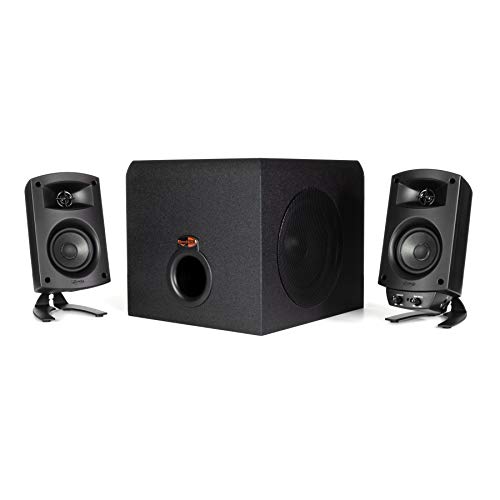
Bass is where speaker size shows. Small speakers cannot move enough air for film rumble or bass-heavy music at distance, whatever the marketing says. If your content is films, gaming or electronic music, plan for a subwoofer — either a system that includes one, like a 2.1 desktop set, or speakers with a subwoofer output for later. If your content is speech, acoustic music and radio at modest volume, a good pair of bookshelf speakers alone will satisfy you and save money and space.
Step 6: Read specifications sceptically
Use specifications to shortlist, not to decide. Sensitivity tells you how loud a speaker plays per watt; frequency response only counts with a tolerance figure; impedance matters for matching passive speakers to an amplifier. Ignore peak wattage numbers entirely — they describe a momentary burst, not sustained output. Weight, cabinet build and driver materials are quieter but more honest signals of quality. Two speakers with identical printed specifications can sound completely different, which is why the final step matters most.
Step 7: Listen, or protect yourself if you cannot
If you can listen before buying, bring your own music — tracks you know intimately — and listen at your normal volume from your normal distance. If you buy online, choose a seller with a genuine returns window and test the speaker in your room in the first week. Your room is half the system, so a home trial beats any shop demo. Trust a structured comparison: same tracks, same volume, same position, and notes written down rather than impressions remembered.
As you work through this guide, keep the bigger picture in mind. Our roundup of best speakers for music shows how the main options compare, and the companion piece on speaker buying guide covers the neighbouring decision in the same detail.
How to Choose a Speaker for Music, TV or a Desk
Music-first systems reward accuracy and stereo imaging: a pair of speakers that places instruments convincingly between and beyond the cabinets. Bookshelf speakers on stands, or quality powered monitors, are the usual answer, with a subwoofer added if your genres run deep. Prioritise a smooth midrange — that is where voices and most instruments live — over spectacular treble or inflated bass, because you will listen for hours and fatigue is the enemy of enjoyment.
TV-first systems reward dialogue clarity and easy connection. A centre-focused setup, simple remote control and an HDMI ARC or optical input matter more than audiophile refinement, because the speaker must work every night without fuss. Desk systems reward compact size and nearfield tuning: small powered speakers angled up at your ears, with a headphone socket and front volume control, beat a big living-room pair crammed behind a monitor every time.
Budget Tiers in Plain Language
Entry-tier speakers cover small rooms, desks and first systems; spend here goes on competent powered pairs and simple 2.1 sets, and the sound is a clear step up from TV or laptop speakers. Mid-tier is where component quality jumps — better cabinets, better drivers, real amplifiers — and where most listeners find their long-term sweet spot for living-room music and film. Premium speakers buy refinement, build and consistency rather than a different category of sound, and they only make sense once placement, room and sources are already sorted.
Whatever the tier, keep some budget for the unglamorous parts: stands that put tweeters at ear height, adequate speaker wire for passive systems, and a subwoofer if your content needs one. A mid-tier speaker on proper stands, positioned well, routinely outperforms a premium speaker shoved onto a crowded shelf. Allocate money in that order — speaker, placement, then accessories — and the system will sound like more than you spent.
Gear for This Guide
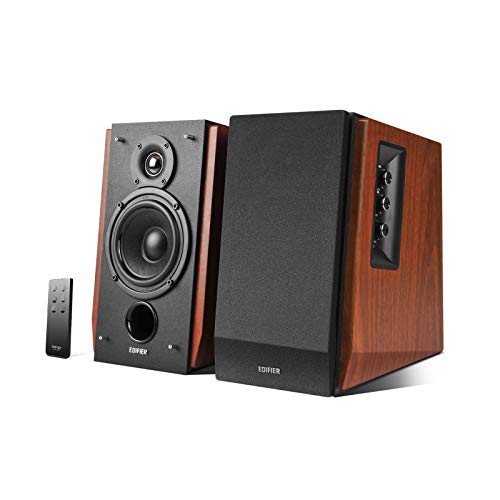
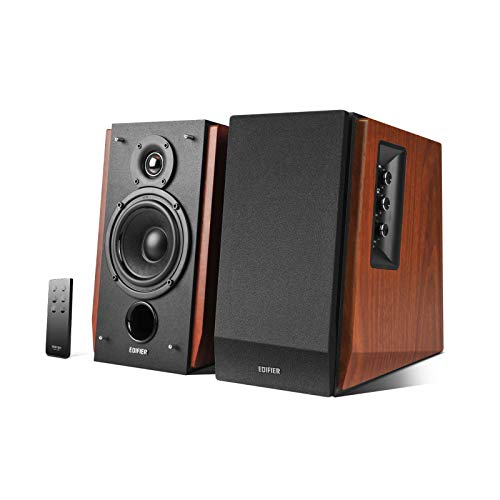
Edifier R1700BT Bluetooth Bookshelf Speakers
A powered bookshelf pair with Bluetooth for phones and wired inputs for a turntable or TV, plus a remote for volume and input switching from the couch. The angled front baffle aims sound slightly upward when the speakers sit on a low shelf or desk. Check price on Amazon.

ELAC Debut 2.0 B6.2 Bookshelf Speakers
A passive bookshelf pair with a 6.5-inch aramid-fibre woofer, designed for use with a separate amplifier or AV receiver. It is a long-standing reference point for people building a first component stereo or home-theatre front stage. Check price on Amazon.

JBL Charge 5 Portable Speaker
A portable Bluetooth speaker with an IP67 waterproof and dustproof rating, designed for bathrooms, gardens and trips away. Its rugged build also makes it a forgiving speaker to clean and to move from room to room. Check price on Amazon.

Sonos Era 100 Smart Speaker
A compact Wi-Fi and Bluetooth smart speaker with voice control, designed to work alone, as a stereo pair, or as rear surrounds with a Sonos soundbar. It is a tidy option for kitchens, bedrooms and offices. Check price on Amazon.
Common Mistakes
Buying on wattage alone
Peak watts are a marketing figure. A sensitive speaker on modest power plays louder than an insensitive one on a big amplifier, so wattage by itself predicts almost nothing about how a speaker will sound in your room.
Ignoring the sources you own
A wonderful speaker with no input for your turntable or TV is a paperweight. Check connections before sound quality, every time, and count the cables and adapters the setup will really need.
Oversizing for the room
Large towers in a small room produce boomy, uneven bass and dominate the space. Match speaker size to room size and listening distance; smaller and well placed beats bigger and crammed in.
Forgetting placement until afterwards
If the only available spot is inside a cabinet or hard against a wall, choose a speaker designed for that — front-ported or sealed designs forgive walls; rear-ported speakers need breathing room.
Pro Tips
- Shortlist three models, not ten — decision fatigue leads to random choices.
- Photograph your space and measure it before shopping; dimensions end arguments.
- If a household will use it daily, ease of use is a feature, not a compromise.
- Keep packaging until the returns window closes and you have tested in your room.
Going Deeper: Context That Helps
Listening level matters for judging any speaker. Human hearing perceives bass and treble as weaker at low volumes — the Fletcher-Munson effect — so a speaker auditioned quietly can seem thin, and the same speaker loud can seem bass-heavy. Many receivers and some speakers compensate with loudness or dynamic EQ features for late-night listening. When you compare speakers or settings, match the volume between them as closely as you can, because the louder option almost always sounds ‘better’ in a quick comparison even when it is not. A cheap sound-level app on a phone is accurate enough to level-match for home comparisons.
Multi-room and streaming speakers add a networking layer to ordinary audio problems. A speaker that drops off the network, lags behind its partner in a stereo pair, or refuses to appear in an app is usually suffering from weak Wi-Fi at its location, a congested 2.4 GHz band, or a router setting — not a failed speaker. Placing the router centrally, keeping speakers within a room or two of it, and updating firmware through the maker’s app solves most of these cases. Wired Ethernet, where a speaker offers it, removes the variable entirely and is worth using for a fixed living-room setup.
Protecting speakers is mostly about restraint. Amplifiers damage speakers in two ways: too much power can overheat or over-extend a driver, but far more commonly a small amplifier driven into distortion — clipping — produces harsh high-frequency energy that burns out tweeters. If the sound turns harsh, gritty or compressed as you raise the volume, turn it down; that harshness is the warning sign. Children, pets and parties are the other risks: a volume limit in the receiver’s settings, grilles left on, and speakers placed where they cannot be knocked over will prevent most household speaker casualties.
Speaker specifications reward careful reading. Frequency response figures only mean something with a tolerance attached — ’60 Hz to 20 kHz’ without a plus-or-minus figure could hide a response that is already far down at 60 Hz. Driver size tells you about potential, not results: a well-designed 5-inch woofer in a solid cabinet can sound cleaner than a cheap 8-inch driver in a resonant box. Weight is an unfashionable but useful clue, because rigid cabinets and real magnets are heavy. Treat specifications as a way to shortlist, then let placement, room and your own ears make the final decision.
Ageing affects speakers slowly and mostly at the edges. Foam woofer surrounds on older speakers can crumble after a couple of decades, rubber surrounds last longer, and capacitors in crossovers drift with age, subtly changing the balance. None of this matters for a new purchase, but it explains why a vintage speaker may not sound as its measurements once promised. For modern speakers, dust, sunlight and humidity are the main enemies: keep them out of direct sun, wipe dust with dry or barely damp cloths, and avoid placing drinks on top of cabinets, where one spill can stain veneer and swell the wood beneath.
Whatever the product, the cheapest upgrade is usually time spent with the manual and the settings menu. Manufacturers bury genuinely useful options — EQ presets, dialogue modes, level trims, firmware updates — several layers deep, and most owners never find them. An hour spent exploring settings with familiar content playing will teach you more about your system than a week of reading reviews, and it costs nothing. Keep notes of what you changed so you can undo anything that makes things worse, and change one thing at a time so you know which adjustment caused which result.
Returns windows are part of the buying process for audio gear, and you should use them deliberately. Sound is personal and room-dependent, so a product that reviews well can still disappoint in your space. Buy from sellers with clear return policies, keep packaging until you are sure, and test with your own content at your own volumes in the first days — not the night before the window closes. A structured test, with the same three songs or scenes each time, reveals differences that casual listening misses and turns a vague feeling into a decision you can act on.
Hearing safety deserves a mention in any audio guide. Comfortable TV and music listening sits well below the levels that risk hearing damage, but portable speakers at parties, and headphones especially, can creep upward in noisy environments as you compete with background sound. If you have to shout to be heard over your own system, it is too loud for long sessions. Many devices offer volume limiting — worth enabling for children — and taking listening breaks during long sessions protects both your ears and your enjoyment, because tired ears judge sound poorly.
Speaker sound is shaped as much by the room as by the speaker itself. Hard floors, bare walls and large windows reflect sound back at you, which can make even a good speaker seem harsh or echoey, while soft furnishings, rugs and curtains absorb those reflections and calm the result. Before blaming a speaker for disappointing sound, look at the room: a rug between the speakers and your seat, curtains over a large window, or a bookshelf filled with books behind you can change the sound more than a modest upgrade would. This is why the same speaker can sound impressive in a shop demo room and merely ordinary at home — the demo room was treated, and yours is not.
Stereo imaging depends on symmetry. When the left and right speakers are at different distances from you, or one is tucked into a corner while the other sits in open space, the stereo image pulls toward the closer or louder side and voices stop sounding centred. Aim for a rough triangle: the two speakers and your head at the corners, with both speakers the same distance from your seat and at the same height. Small adjustments — ten centimetres here, a slight toe-in there — are free, reversible and often more rewarding than new cables or accessories, so always finish placement before spending money on upgrades.
Bass behaves differently from the rest of the sound. Low frequencies are long waves that build up in corners and along walls, which is why a speaker can sound boomy in one spot and thin a metre away. Moving a speaker even slightly out from a wall reduces the wall’s reinforcement of the bass; moving your seat away from the back wall often fixes boominess that no tone control can. If your system has a subwoofer, its position matters even more, because a single subwoofer excites the room unevenly and your seat may sit in a peak or a null in the bass response.
Frequently Asked Questions
What is the difference between powered and passive speakers?
Powered speakers contain their own amplifier, so they plug into the wall and connect directly to a phone, TV or turntable. Passive speakers are just the speaker cabinets and drivers; they need a separate amplifier or AV receiver to make sound. Powered designs are simpler and often better value for a single-room setup, while passive designs let you upgrade the amplifier later and are the standard building blocks of expandable home-theatre systems.
How many watts do I actually need?
Far fewer than advertising suggests. In a typical living room, a few watts produce comfortable listening levels with most speakers; more power buys headroom for loud peaks and large rooms rather than everyday volume. Sensitivity matters more: a speaker rated a few decibels more sensitive will play noticeably louder on the same amplifier. Judge by sensitivity and room size, and treat big watt numbers on small speakers as the marketing figures they are.
Do I need a subwoofer?
Only if your content and room demand it. Films, games and bass-heavy music contain low frequencies that small speakers physically cannot reproduce, and a subwoofer adds them without forcing the main speakers to strain. For speech, podcasts, acoustic music and radio in a small room, a good pair of bookshelf speakers is complete without one. Many powered speakers offer a subwoofer output, so you can add the sub later if you change your mind.
Are expensive cables worth it?
No controlled listening test has shown exotic cables outperforming ordinary oxygen-free copper wire of adequate gauge, once connections are clean and tight. Spend on sufficient thickness for the length of your runs — longer runs need thicker wire — and on secure connectors such as banana plugs if you move things often. Put the savings toward the speakers themselves, stands or room treatment, where the difference is real and audible.
Can one speaker really fill a room with stereo sound?
A single speaker can fill a room with enjoyable sound, but not with true stereo, which needs two separated sources to create the illusion of instruments placed in space. Single smart and portable speakers use processing to widen their sound and work well for casual listening. For focused music listening or films where imaging matters, a stereo pair — even a modest one — is a clear step up, and many single speakers can be paired with a second unit later.
Should I buy speakers online without hearing them?
You can, if you protect yourself: buy from sellers with clear returns, shortlist using specifications and measurements rather than hype, and test in your own room during the first week with familiar music. Your room changes the sound more than small differences between competent speakers, so a home trial is actually the most reliable audition there is. Keep all packaging until the window closes, and write down what you hear rather than relying on memory.
Listening Tests That Reveal What Specifications Hide
If you can hear speakers before buying, arrive with a method rather than a mood, because shops and demo rooms are designed to flatter. Bring three recordings you know intimately: one voice-forward track, because voices expose the midrange where speakers live or die; one recording with genuine low bass, to learn whether the speaker produces it, fakes it with a hump higher up, or honestly omits it; and one busy, dense recording, to hear whether instruments stay separate or collapse into soup at the moments that matter. Listen at the volume you will actually use, which for most homes is far below demo volume, because some speakers only wake up loud and others only behave quiet. Then turn it up once, briefly, to check for strain, rattling and the hardness that signals a speaker at its limit. Compare candidates on the same tracks in the same session if you possibly can, because auditory memory is measured in seconds and yesterday’s impression of another speaker is nearly worthless. Finally, listen from where you will actually sit, including off to the side, because a speaker that only sounds right on a narrow axis will disappoint everyone else in the room every day.
What to do when you cannot listen first
Most speakers are now bought unheard, so protect the purchase structurally. Buy from sellers with a genuine home trial and a return route you have actually read, because the only room that matters is yours and the only ears are attached to you. Read measurements where they exist, since independent measured reviews reveal tonal balance and distortion behaviour that prose reviews argue about. Weight reviews that describe your kind of room and your kind of music over those that merely rank. And keep the packaging until the trial is honestly over, because the speaker that impresses for an hour and fatigues for a week is a known species, and the return window is its only cure.
Room First: The Speaker’s Real Partner
Every speaker you audition is auditioning your room as well, and the room usually wins. Hard floors, bare walls and glass make almost any speaker sound bright and echoing; soft furnishings, rugs and bookshelves calm the same speaker into balance. This is why the same model earns opposite reviews from different owners, and why the wisest first upgrade in many rooms is not a speaker at all but a rug and curtains. When choosing, describe your room to yourself honestly: its size, its surfaces, where the speakers can physically go, and where people actually sit. A speaker chosen for that room beats a nominally better speaker chosen for a showroom, every time, because sound is the speaker and the room multiplied together, and no specification sheet includes your curtains.
Nearfield, farfield and the distance decision
How far you sit from the speakers quietly decides which speakers can work. At a desk, you listen in the nearfield, a metre or so away, where small speakers designed for that distance image beautifully and room problems shrink. Across a living room you are in the farfield, where a speaker must move real air, fill a volume and survive the room’s reflections, and where the little desktop marvel runs out of breath. Matching the speaker’s intended distance to yours is one of the least discussed and most decisive choices in this whole guide: many disappointed owners simply bought a nearfield speaker for a farfield life, or paid for farfield power they use at arm’s length. Name your distance before you shop, and half the catalogue eliminates itself helpfully.
The Upgrade Path: Buying a System, Not a Moment
Speakers reward those who think in sequences. A sensible path starts with the best pair of main speakers the budget allows, because they carry the music and cannot be upgraded by adding boxes around them. Sources and amplification come next in honesty: a modest source into excellent speakers sounds far better than an excellent source into modest ones, because the speaker is where electricity becomes sound and where most of the character lives. The subwoofer, if your room and tastes want one, joins later and integrates better once you know the main speakers’ true bass in your room. Surrounds, centre channels and height speakers belong to a home-cinema path that should be planned as a family, ideally from the same range, so voices pan across the front without changing character. The mistake the sequence prevents is the scattered system: a little spent everywhere, excellence nowhere, and no single upgrade that can redeem it. Buy the mains well, live with them, and let each later purchase be a deliberate addition to a system you already enjoy.
Second-hand speakers: the market’s gift to the patient
Speakers are among the safest second-hand purchases in technology, because they have few moving parts, age slowly, and announce their faults honestly to anyone who listens. A used pair from a reputable maker, a generation or two old, often outperforms a new pair at the same spend by a wide margin. Inspect the drivers for damage, listen for buzzes and rattles at moderate volume, check that both speakers sound alike, and ask why they are being sold; upgraders are the market’s best sellers. Foam surrounds on very old speakers can perish and are a known, repairable item rather than a scandal. Buy the used speakers, spend the savings on placement and the room, and you will have outmanoeuvred most of the new market.
Special Cases Worth Naming
Speakers for small flats and thin walls
Where neighbours are close, the goal shifts from maximum bass to controlled sound at modest volumes. Smaller speakers, placed near the listening seat rather than across the room, deliver intimacy at levels that stay home. Low-volume clarity — a speaker that sounds complete when quiet — becomes the key specification, and it is rarely advertised, so listening tests at genuinely low volume matter. Subwoofers in such flats are diplomatic instruments: placed and levelled with restraint, they add foundation without warfare, and left booming they end friendships and leases alike.
Speakers for the hard of hearing and for dialogue clarity
Where hearing is reduced, the priorities sharpen: clear midrange, strong dialogue intelligibility, and, for television, a centre-focused solution or a soundbar with a dedicated dialogue mode often serves better than louder stereo speakers. Volume is a blunt instrument that raises everything, including the music and effects that mask speech; clarity is the surgical one. Test with actual dialogue, ideally a programme with quiet or accented speech, and choose the option where the words stop being work. This is one of the most satisfying purchases in audio when it is gotten right, because it returns programmes, films and family video calls to people who had quietly stopped enjoying them.
Outdoor and portable realities
For gardens, workshops and travel, durability and battery join the specification, and sound expectations should be set by physics: small portable speakers cannot produce deep bass, and the honest ones do not pretend to. Choose for clarity at conversational distance, for controls you can work with wet or gloved hands, and for a build that survives being knocked off a table, because it will be. The best outdoor speaker is the one still working, and still charged, at the end of the summer.
A Final Decision Framework You Can Run in Ten Minutes
When the research blurs, run this sequence. Name the main job in one sentence: music at a desk, films in a living room, a portable for everywhere, a voice for the television. Name the room and the listening distance in one more. Set the complete budget, including amplification, stands and cables where they apply, because the system price is the real price. Shortlist only speakers designed for that job, that distance and that budget, and ignore everything else no matter how glowing its reputation. Choose between the finalists by listening if you can, by measurements and return policy if you cannot. Then stop researching. The last step matters: audio is a hobby that monetises doubt, and the difference between the best two candidates on a honest shortlist is smaller than the difference made by placing either of them well and living with them happily. Buy once, place carefully, and let the music, rather than the market, have your attention from then on.
That discipline — job, room, distance, complete budget, shortlist, decision — is the whole guide compressed, and it will choose better speakers for your life than any ranking of speakers in the abstract ever could.
Understanding the Numbers on the Box, One by One
Specification literacy is the buyer’s armour, so here is the short course applied to choosing. Frequency response claims a range, but without a tolerance the range is theatre; a response quoted with a tight tolerance is a promise, and one quoted with none is a wish. Sensitivity tells you how loud a speaker plays for a standard input, and it predicts whether a modest amplifier will suffice far better than wattage headlines do. Impedance describes the load the speaker presents, and while most modern combinations behave, very low or wildly varying impedance argues for an amplifier with genuine current ability. Driver sizes hint at bass and dispersion behaviour but decide nothing alone, because execution outweighs dimension. Cabinet construction matters invisibly: a well-braced, inert box lets the drivers speak, while a resonant one joins in uninvited, and you can assess it with a knuckle tap in the shop, listening for a dull thud rather than a hollow ring. None of these numbers picks a speaker by itself. Together, read sceptically, they tell you whether the maker’s engineering or the maker’s marketing wrote the box.
Why two speakers are (almost) always the answer for music
Stereo exists because music is recorded for it, and a single speaker, however clever, collapses a landscape into a point. Two modest speakers placed well will image, stage and satisfy in ways one expensive speaker cannot, because the information between the speakers is created by the pair. The exceptions are honest ones: kitchens, bathrooms, workshops and portable use, where a single speaker’s convenience is the entire point and stereo would be jewellery. For a main listening seat, though, choose the pair, place them as the positioning guidance in this series describes, and spend any remaining budget on the room before the electronics. New listeners are often startled by how much of what they attributed to expensive speakers was simply two speakers, correctly placed, in an ordinary room.
Buying for a Household, Not a Hobbyist
Many speakers are bought by one enthusiast and used by a whole household, and the systems that survive are the ones the household can operate. If a partner, parent or child must perform a sequence of inputs, modes and remotes to hear the radio, the system will be bypassed, resented or both. Weight simplicity honestly: automatic input switching, a television remote that controls volume, and a speaker that wakes when the source wakes are worth more, in a family living room, than a measurable edge in sound that only one person can hear. The enthusiast’s counter-move is not to surrender but to hide complexity: set the system up so the daily path is one button, and keep the tweaks for your own sessions. Speakers chosen this way get used for everything, by everyone, for years, which is the highest compliment a household can pay them.
The gift purchase: choosing speakers for someone else
Buying speakers as a gift reverses the usual logic: their room, their sources and their patience for complexity rule, and your taste should stay politely out of it. The safest gifts are self-contained — a good powered speaker or a portable — because they ask nothing of the recipient’s existing equipment and work within minutes of unwrapping. Match the size to the room you have actually seen, choose controls a non-enthusiast will enjoy, and include the cable or accessory the setup needs so the gift is complete. A speaker that arrives as a project is a chore wearing a bow; a speaker that plays music before the wrapping paper is cleared away is a triumph.
Keep the receipt available and the return route painless, and say so. Audio taste is personal, rooms are personal, and a gift that can be exchanged without embarrassment is a gift that will be enjoyed either way.
After the Purchase: The First Week With New Speakers
New speakers deserve a fair first week. Place them properly before judging them at all, because a speaker assessed in a bad position is being blamed for geometry. Play your most familiar recordings first, at ordinary volumes, and listen for what is different rather than what is better, because difference registers instantly and quality takes days. Resist rearranging the system hourly; change one thing, live with it through several recordings, and keep brief notes, because auditory memory lies cheerfully and notes do not. Expect your ears, more than the speakers, to be the thing that adjusts: a more honest speaker can initially sound less exciting than the flattering one it replaced, right up until the moment the old exaggerations start to sound like what they were. If, after a week of fair placement and familiar music, the speakers still do not move you, use the return route without guilt. That is what it is for, and a speaker you keep out of politeness will be resented at leisure for years.
And when the week ends in satisfaction, stop shopping. Write down what you bought and why it works in your room, file it with the paperwork, and let the system disappear into the life it was bought to soundtrack. That disappearance is the true end of choosing a speaker, and everything in this guide exists to bring it about.
One last question to ask any seller
Before you pay, ask what the speaker needs to sound its best in a room like yours, and listen to the answer carefully. A good seller talks about placement, distance and the rest of your system. A seller who talks only about the discount is telling you which part of the purchase they understand. Buy from the first kind whenever you can, because their advice will still be working for you long after the transaction is forgotten.
Then go home, place the speakers well, put on the recording you have loved longest, and notice how much of it you had never actually heard before. That moment is the return on every careful step in this guide.
Choose by job, room and distance, buy the complete system your budget honestly allows, and let placement finish what purchasing started. Do that, and the speakers will not merely sound good; they will sound inevitable, as if the room had been waiting for them.
That inevitability is what good choosing feels like from the inside.
Trust the method, trust your ears in your own room, and be suspicious of anyone, including this guide, who claims a speaker is right for you without asking where it will live.
The room is half the system. Choose for it, and the other half will reward you for years.
Decades, if the speakers in this guide are anything to go by.
Buy once, buy well, and spend the savings on music.
That was always the point of the equipment anyway.
Let it have the last word, starting tonight.
And when friends ask how you chose so well, tell them the truth: you started with the room, the job and the distance, and the speakers almost chose themselves.
That is not modesty; it is method, and method is repeatable.
Use it for the next room, the next system and the next decade of listening, and it will keep choosing well long after this particular pair has become an old friend.
Old friends are what great speakers become.
Choose the pair you would like to grow old with.
Chances are, you will.
Speakers outlast almost everything else in the rack.
Related Guides
These guides and roundups cover the closest decisions and fixes in this category:
- best speakers for music listening
- best wireless speakers for home
- best bookshelf speakers under 500
- best speakers for small room
- how to position a speaker
- active vs passive speakers
How long should good speakers last?
Decades, with luck and sane treatment. Speakers have few wear parts, and a well-made pair can outlive several generations of the electronics feeding them, which is why buying the main speakers generously is the soundest spending in a system.
Should I match my speakers to a particular music genre?
Only loosely. A genuinely good speaker plays everything competently; genre matters mainly at the extremes, where bass-heavy electronic music argues for low-frequency capability and intimate acoustic music argues for midrange honesty. Buy balance, and your whole library benefits.