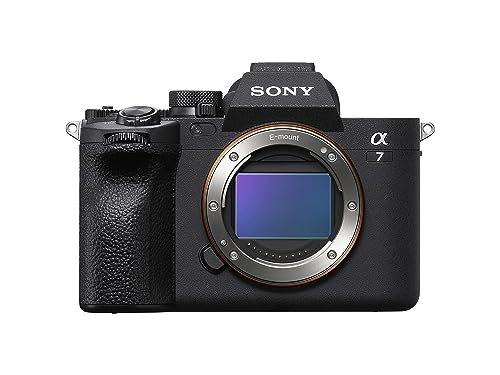
If you are asking what is ibis on a camera, you have met the acronym that transformed handheld photography: IBIS stands for in-body image stabilisation, a system that physically moves the camera’s sensor to counteract your hand shake. Where older stabilisation lived inside individual lenses, IBIS stabilises every lens you mount — including old manual lenses with no electronics at all — and on modern cameras it can keep images sharp at shutter speeds that would once have guaranteed blur.
This guide explains how IBIS works, what its stop figures really promise, how it cooperates with lens stabilisation, and where its limits lie — because IBIS is powerful but not magic, and it does nothing at all for one whole category of blur. Understanding that boundary will save you money and disappointment, and it connects directly to fixing soft images in how to fix blurry photos.
Disclosure: As an Amazon Associate, kajuandouglas.com earns from qualifying purchases. Links to Amazon on this page are affiliate links; they cost you nothing extra. Listing details such as price and availability change often, so check the current Amazon listing before you buy.
How IBIS Works: A Sensor on a Stage
Inside an IBIS camera, the sensor sits on a movable stage driven by tiny motors and guided by gyroscopes that detect the camera’s rotation and shift hundreds of times per second. When your hands pitch the camera up, the stage shifts the sensor down by a compensating amount, so the image projected by the lens stays registered on the same photosites during the exposure. Systems stabilise up to five axes: pitch, yaw, roll, and horizontal and vertical shift — the last two mattering most for close-up work.
The engineering constraints are real: the sensor must float within the lens’s image circle, which is one reason IBIS arrived first in smaller formats and why full-frame IBIS needs lenses with generous coverage. The stage locks or centres when power is off, and you may hear a faint rattle from a powered-down IBIS camera — that is the floating sensor, and on most models it is entirely normal.
In this guide
What ‘Stops of Stabilisation’ Actually Mean
Manufacturers rate stabilisation in stops: a 5-stop system claims you can hand-hold at shutter speeds five stops slower than the traditional rule of thumb (1/focal length) and still get sharp results — so a 50mm lens, normally needing about 1/50s, might manage 1/2s in steady hands. Top current systems claim seven or eight stops in laboratory tests. Treat those figures as optimistic comparisons between models rather than guarantees: they are measured under standardised conditions with specific lenses, and your hands, stance, caffeine and wind all vote too.
The honest way to learn your system’s real limit is a home test: photograph a detailed target at descending shutter speeds, several frames each, and find where sharpness collapses. Most photographers find their personal limit one to two stops inside the headline claim — still a transformative margin that turns dim interiors, museums and dusk streets into handheld territory.
IBIS vs Lens Stabilisation, and Working Together
Lens-based stabilisation (called IS, VR, OSS or OIS depending on brand) moves an element group inside the lens. It has two advantages: it is tuned to that lens, especially valuable for long telephotos, and it stabilises the viewfinder image on DSLRs. IBIS counters with universality — it stabilises primes and vintage glass that have no stabilisation of their own — and with roll correction no lens system provides. On modern mirrorless systems the two cooperate: the lens handles some axes, the body the rest, and the combination (often marketed with its own name) beats either alone, particularly at telephoto lengths.
Practical settings follow from this. Leave stabilisation on for handheld shooting; turn it off on a solid tripod, where some systems hunt and introduce the very movement they exist to cancel — though many cameras now detect tripods automatically. For panning shots of moving subjects, choose the panning mode if offered, which stabilises vertical shake while letting you follow horizontal motion. And remember that stabilised lenses on non-IBIS bodies, and IBIS bodies with unstabilised lenses, both work fine — you simply get one system’s worth of help.
The Limit IBIS Cannot Cross: Subject Motion
IBIS corrects camera movement only. A child sprinting, a dancer mid-leap or a bird in flight blurs at slow shutter speeds no matter how perfectly the sensor floats, because the subject itself moves across the frame during the exposure. This is the most common misunderstanding among new IBIS owners: they shoot at 1/8s in a dim hall, marvel that the architecture is sharp, and wonder why every person is a ghost. The camera performed flawlessly; the shutter speed was simply wrong for the subject.
So the working rule pairs IBIS with intent: for static subjects — landscapes, buildings, still life, posed portraits — exploit IBIS aggressively and enjoy low ISOs at dusk. For moving subjects, shutter speed remains king and IBIS merely tidies the background. Video is the exception that delights: IBIS smooths walking shots and handheld filming noticeably, working with electronic stabilisation on many cameras to approach gimbal-like results for casual work, though a gimbal like those in our best gimbal for cameras under 4 pounds roundup still wins for professional smoothness.
Gear for This Guide
All four of these bodies carry IBIS — compare their claimed stop figures, then remember the home test above tells you your personal reality:

Sony Alpha 7 IV Full-Frame Mirrorless Camera — Check price on Amazon. A solid, widely available option that fits this guide; confirm the exact kit contents and lens mount on the listing before ordering.

Nikon Z 6II Full-Frame Mirrorless Camera — Check price on Amazon. A solid, widely available option that fits this guide; confirm the exact kit contents and lens mount on the listing before ordering.

Panasonic LUMIX G7 4K Mirrorless Camera with 14-42mm Lens — Check price on Amazon. A solid, widely available option that fits this guide; confirm the exact kit contents and lens mount on the listing before ordering.

Canon EOS R50 Mirrorless Camera with RF-S 18-45mm Lens Kit — Check price on Amazon. A solid, widely available option that fits this guide; confirm the exact kit contents and lens mount on the listing before ordering.
Common Misconceptions
Misconception one: IBIS lets you shoot anything handheld at any shutter speed. It compensates for your shake, not your subject’s motion, and its benefit fades exactly where beginners lean on it hardest — dim rooms full of moving people. Misconception two: IBIS replaces a tripod. For long exposures — waterfalls, night skies, light trails — exposures run to seconds or minutes, far beyond any stabilisation; the tripod remains non-negotiable, and IBIS should usually be off when you use one.
Misconception three: more stops claimed means proportionally sharper photos. Ratings are laboratory maxima with specific lenses; real gains depend on focal length, technique and the individual. Misconception four: IBIS is only for video. In fact stills photographers gained first and most — the low-light, low-ISO handheld shot is IBIS’s signature gift, and video benefits, while real, lean heavily on electronic help as well.
What Is IBIS on a Camera With a Telephoto Lens Attached?
IBIS behaviour changes with focal length, and telephoto shooting exposes its character best. At long focal lengths, tiny angular shakes magnify into large image movements, so stabilisation works hardest and helps most visibly in the viewfinder — yet the sensor’s physical travel limits how much correction is available, which is why lens-based stabilisation, correcting inside the optical path, retains an advantage at 400mm and beyond, and why coordinated body-plus-lens systems exist. At wide angles the situation reverses: angular shake matters less, shift and roll matter more, and IBIS — the only system that corrects roll — comes into its own.
The practical synthesis: wide and standard shooters can rely on IBIS alone with complete confidence; telephoto shooters should prefer stabilised lenses, ideally coordinated with the body; and everyone should test their own combination at their own focal lengths, because the published figure describes one lens under laboratory hands. Stabilisation is a partnership between a specification and a stance — elbows in, feet planted, breath managed — and the photographers who exploit IBIS best treat it as assistance, not absolution.
IBIS and the Rest of Your Kit: Tripods, Flash and Long Exposures
IBIS interacts with three staples of technique in ways worth fixing in memory. On tripods, the rule from the main guide stands: off, or tripod mode, unless your system detects support automatically — and for very long exposures, also consider locking the sensor stage if your camera offers a ‘sensor lock’ for transport and storage. With flash, IBIS remains helpful for the ambient portion of mixed-light exposures — the background rendered by a slow shutter — while the flash itself freezes the subject regardless of shake, a combination (slow shutter, IBIS on, flash for the subject) that produces the classic sharp-subject, glowing-background event photograph.
For deliberate motion — panning racing cars, blurring waterfalls on a tripod — IBIS is a tool to configure, not just enable: panning mode for the former, off for the latter. The thread connecting every case is intent. Stabilisation serves a shutter-speed decision you have made consciously; photographers who choose the shutter speed first and set stabilisation second get IBIS’s full value, while those who let it substitute for decisions get its brochure value, which is lower.
Worked Examples: What Stabilisation Buys You, Scene by Scene
Consider a museum or a historic interior where tripods and flash are forbidden and the light is a polite gloom. Without stabilisation, a careful photographer might manage sharp results at a moderately fast shutter speed and accept a higher sensitivity. With effective IBIS, the same photographer can slow the shutter by several stops, keep the sensitivity low, and produce a clean, detailed file of a perfectly still subject. The gain is real and sometimes decisive. Now change the subject to a child crossing that same room: the shutter must stay fast enough to freeze the child regardless of stabilisation, and IBIS contributes almost nothing except steadiness of framing. Same room, same camera, opposite verdicts, because the limiting factor changed from camera movement to subject movement. Most arguments about stabilisation dissolve once that distinction is kept in view.
Consider, second, a landscape at dusk with a standard lens, the tripod left in the car. IBIS turns a hopeless handheld exposure into a sharp one often enough that photographers plan around it, shooting static scenes at speeds that would have been unthinkable unstabilised. Consider, third, a telephoto shot of a perched bird: lens stabilisation does the heavy lifting at that focal length, IBIS assists, and the photographer’s stance and breathing matter as much as either system. And consider video of a market walk, where IBIS smooths the small tremors of handheld filming into something watchable, while the deliberate movements, pans and turns, remain the operator’s craft. Four scenes, four different stabilisation stories, one consistent principle: IBIS widens the territory of handheld photography for still subjects, and leaves moving subjects to shutter speed, exactly as the main sections explain.
Stops of stabilisation, translated into shutter speeds
The stops language becomes practical when you attach it to the reciprocal rule of thumb, which suggests a minimum handheld shutter speed around one over the focal length for a still subject. A rating of several stops means, in the idealised version, that a lens that wanted a fast setting by that rule might be hand-held successfully several stops slower, into genuinely slow territory for static scenes. Treat ratings as optimistic laboratory figures measured under favourable conditions, expect your personal yield to be a stop or two less depending on stance, fatigue and focal length, and verify with your own test: photograph a detailed still subject at descending shutter speeds and find where your sharp results stop. That personal figure, not the box figure, is your real stabilisation budget, and knowing it changes how confidently you shoot in low light.
IBIS and Lenses: Adapted, Vintage and Third-Party Glass
One of IBIS’s most loved consequences is that it stabilises every lens that can be mounted, including decades-old manual lenses used through adapters, which gain a modern capability their designers never imagined. This is a genuine renaissance for vintage glass: a fast prime from the film era, unstabilised by nature, becomes a low-light tool on a modern body. There are practicalities to manage. The camera needs to know the lens’s focal length to stabilise correctly, which it learns automatically from electronic lenses but must be told, through a menu setting, for manual glass; set it wrong and the stabilisation can work against you. Zoom lenses adapted manually need the setting updated as you zoom, which most photographers solve by setting it for the focal length they use most. None of this is difficult, and all of it is worth knowing before concluding that IBIS is not working with an old favourite lens.
When IBIS should be off, and when it simply does not matter
Beyond the tripod guidance in the main sections, there are a few specific situations to file away. On a fully locked tripod for long exposures, stabilisation has nothing to correct and is best switched off or set to its tripod mode where one exists, because some systems can introduce a slow drift as they hunt for movement that is not there. In a vehicle or on any platform that vibrates continuously, results vary by system and experimentation beats doctrine. For fast action at high shutter speeds, IBIS neither helps nor meaningfully harms, and most photographers leave it on for the viewfinder steadiness alone, which at long focal lengths is a real compositional aid. Panning is its own case, covered by the panning modes many systems offer, which stabilise the vertical axis while allowing the horizontal sweep that conveys motion.
Holding the Camera So IBIS Can Do Its Best Work
Stabilisation multiplies good technique; it does not replace it. The handheld fundamentals remain: elbows into the body rather than winged out, the camera braced against the face at the finder, feet planted in a stance that would survive a gentle push, and the shutter released with a squeeze rather than a jab. Breathing matters at slow speeds, with many photographers releasing the shutter at the end of a calm exhale. Leaning against a wall, a tree or a lamppost adds a free stop or more that no specification can sell you, and bracing the lens on a bag or a railing does the same for telephoto work. Photographers who combine these habits with IBIS routinely produce sharp results at shutter speeds that sound implausible, while photographers who rely on the system alone conclude it was oversold. Both are reporting their technique as much as their technology, which is the honest final word on what IBIS is: a powerful assistant to a steady photographer, and a modest one to an unsteady one.
The Five Axes, Explained Without Engineering Mystique
Modern IBIS is described as five-axis, and the five are worth naming because they explain what the system can and cannot correct. Two axes are the familiar side-to-side and up-and-down shifts of the camera. A third is rotation around the lens axis, the twisting motion that tilts horizons. The remaining two are the tilting motions, pitch and yaw, the nodding and turning of the camera that matter increasingly as focal lengths grow. A system that measures and counters all five handles the full vocabulary of handheld shake, which is a mixture of all of them in proportions that change with the photographer, the lens and the fatigue of the moment. What no axis corrects is translation of the whole camera through space over longer timescales, the sway of a body standing in wind, for example, which is why stance and bracing remain in this guide alongside the technology. IBIS is superb at tremor; it is not a tripod that fits inside the body, and marketing that blurs that line sets owners up for the disappointment the main sections work to prevent.
How IBIS talks to lens stabilisation
On systems where body and lens stabilisation cooperate, the work is divided intelligently: the lens, which understands its own optics, typically handles the tilting motions that matter most at long focal lengths, while the body handles rotation and shift, and the two exchange information many times per second. On systems where they do not cooperate, using both can occasionally produce conflict, and the maker’s guidance for that combination should be followed rather than forum folklore. The practical takeaway is to leave the defaults alone unless you have a specific reason and a test that proves your case. Engineers tuned the cooperation with more data than any individual experiment can gather, and the overwhelming majority of owners should spend their experimentation budget on shutter speeds and subjects instead.
IBIS for Specific Kinds of Photography
Macro photography uses stabilisation at the edge of its competence, because at high magnifications even tiny movements are enormous in the frame and the effective shake grows with magnification. IBIS helps framing and focusing in handheld macro and can salvage moderately slow shutter speeds, but serious macro work still belongs on support, with focus stacking and controlled light, and IBIS’s honest role is to widen the handheld possibilities at the casual end of the subject. Street photography is nearly the opposite case: moderate focal lengths, static architecture and slower-moving scenes in falling light are IBIS’s home ground, and it quietly enables the unobtrusive, tripod-free style the genre loves. Concert and theatre work splits the difference, stabilising the camera for the static stage while shutter speed handles the performers, and the silent shooting that often accompanies IBIS-equipped bodies matters there as much as the stabilisation itself.
Astro and night-sky photography is the case where IBIS steps aside almost entirely, because exposures are long, support is mandatory, and the Earth’s rotation becomes the movement that matters. Its contribution to night work is at the edges: handheld shots of lit streets, monuments and people after dark, where it performs the same service it performs at dusk. Knowing where a technology’s territory ends is part of understanding it, and IBIS’s territory, handheld photography of still and slow subjects in limited light, is large, valuable and honestly bounded.
Testing your own system in twenty minutes
Every claim in this explainer can be verified with your own camera in one short session, and doing so converts reading into knowledge. Choose a detailed still subject in soft light, a bookshelf serves well. Photograph it at your lens’s focal length across a descending ladder of shutter speeds, several frames at each, with stabilisation on, and review at full magnification to find the speed where sharp results become reliable rather than lucky. Repeat a shorter ladder with stabilisation off for comparison. Note the difference in stops and your own consistency, because your hands are part of the system. That personal figure now governs your low-light decisions more truthfully than any figure printed on a box, and the twenty minutes will repay themselves on the first dim evening you shoot with confidence instead of hope.
IBIS, Lenses Without Stabilisation and the Prime Lens Renaissance
Before IBIS, a fast prime lens was an unstabilised instrument, and its low-light use was bounded by shutter speed discipline. IBIS removed that boundary, and the consequence has been a renaissance in prime-lens photography: compact, bright, optically superb lenses now work handheld deep into the evening, stabilised by the body behind them. This changes buying advice in a way worth stating directly. On an IBIS body, an unstabilised prime is no longer a compromise; it is often the lightest, brightest and most enjoyable low-light tool in the system. On a body without IBIS, stabilised zooms carry more of the low-light burden. The same lens can therefore be a first choice in one system and a specialist in another, and lens reviews that ignore the body behind the lens are missing half the instrument. When you read that a lens lacks stabilisation, translate it correctly: it lacks stabilisation of its own, and whether that matters is a question about your camera.
Care, transport and the moving sensor assembly
An IBIS sensor floats on its mechanism when the camera is off, and owners sometimes notice a faint rattle or clunk from the body when it is handled unpowered. On most systems this is normal and documented, the parked assembly moving slightly, and it is not a fault or a reason for concern. The care implications are modest: treat the body with the same respect you would give any precision instrument, avoid hard knocks in transport, and use a padded bag rather than letting the camera ride loose among hard objects. Manufacturers design the mechanism for a working life of travel and use. What IBIS does not need is special rituals, and owners should be wary of forum folklore that treats a mainstream, warranty-covered technology as fragile. It is a mechanism, like the shutter, built to be used.
IBIS and Flash, IBIS and Tripods: Two Short Relationships
Flash photography freezes subjects with the brevity of the flash itself, so IBIS’s role shrinks to steadying the framing and the ambient portion of the exposure, which in slow-sync work, where a longer shutter speed records the room behind a flashed subject, becomes genuinely valuable again: the background you are deliberately including stays steadier. Tripods have been covered in this guide, but the summary deserves repeating in one place: locked down solid, stabilisation off or in its tripod mode; working loosely from a monopod or a resting surface, stabilisation on and welcome. Between those poles sits the beanbag, the wall and the car roof, photography’s informal supports, where IBIS and improvisation cooperate beautifully and where many of the best travel photographs in difficult light are actually made.
IBIS Generations and Why Newer Systems Feel Different
Not all IBIS is equal, and the differences between generations explain many contradictory owner reports. Early systems corrected two axes modestly and were most valuable at standard focal lengths. Modern systems correct five axes, communicate with lenses, and coordinate with electronic stabilisation for video, producing results that early adopters would not recognise. Between generations, the gains came from faster sensors measuring movement, stronger actuators moving the sensor assembly, and better algorithms predicting the rhythm of a particular photographer’s shake. For a buyer, the implication is to weight recent reviews and your own test over the technology’s general reputation, which was formed across all its generations at once. For an owner of an older IBIS body who found it underwhelming, the modern version of the same idea may genuinely be a different experience, and a shop test with a slow shutter speed on a still subject will show the gap in thirty seconds.
Stabilisation and sharpness myths, cleared away
- IBIS makes lenses sharper. It does not change a lens’s optics; it raises the proportion of frames in which the lens’s sharpness survives your movement.
- More stops of rating always means sharper photographs. Ratings are measured under specific conditions with specific lenses; your yield depends on focal length, stance and subject, and is usually lower.
- Stabilisation can freeze a moving subject. It cannot, at any rating. Subject movement is governed by shutter speed alone.
- IBIS replaces the tripod. It replaces the tripod for a growing set of handheld situations and not for long exposures, precise compositions or time-based techniques.
- Turning stabilisation off improves sharpness on a tripod in every case. Many modern systems detect the tripod and behave correctly; follow your camera’s guidance and your own test rather than a universal rule.
The Bottom Line for Buyers Weighing IBIS
If your photography is handheld, in ordinary to poor light, of subjects that hold still, portraits, interiors, travel, street, family life at home, IBIS is one of the most valuable features a modern camera offers, worth weighing alongside autofocus and lens choice. If your photography is tripod-based, flash-lit, or devoted to fast-moving subjects, IBIS drops down the priority list and may not justify choosing one body over another at all. And if you own wonderful older lenses, IBIS may be the single feature that transforms them, which for some photographers settles the question by itself. Judge it, as this explainer has tried to judge it throughout, not as a number on a box but as a widening of the hours and places in which your photography can happen handheld, which is, for the right photographer, a very large thing indeed.
IBIS in the Buying Decision: A Practical Weighing
Place IBIS in the context of a whole purchase and its weight becomes clearer. Between two otherwise similar bodies, the one with strong IBIS effectively upgrades every lens you will ever mount on it, including lenses that do not exist yet and classics from decades past, which makes it one of the few body features whose value compounds across a system’s life. Between a body with IBIS and a cheaper body without it, the honest comparison includes the stabilised lenses you would otherwise need to buy to compensate, and on that total the IBIS body often wins on cost as well as convenience. The exceptions are the tripod photographer, the flash photographer and the fast-action specialist, for whom the feature is close to weightless and the money is better spent on the tripod, the lighting or the autofocus system respectively. Every buyer is one of these people more than the others, and naming which one you are, before the shortlist hardens, is the whole of the weighing.
Learning to trust, and to verify, your stabilisation
New IBIS owners go through a predictable arc: disbelief at the first slow-shutter successes, overconfidence as they push speeds lower and start losing frames to subject movement and their own sway, and finally a calibrated trust based on their personal test figures. Shorten the arc deliberately. Run the twenty-minute test from this explainer in your first week, write your reliable speeds for your main lenses on a note in the camera bag, and revisit them when you change bodies or lenses. Trust that is verified behaves differently from hope: you will choose the slow shutter speed in the dim interior knowing your number, rather than guessing, and your keeper rate will show the difference on the first evening out.
Putting It All Together: Stabilisation as a Working Habit
Everything in this explainer compresses into habits as much as hardware. Know your personal reliable shutter speeds for your main lenses, from your own test rather than the rating on the box. Keep stabilisation on for handheld work as the default, manage it deliberately for tripods, vehicles and panning, and tell the camera the focal length of any manual lens you mount. Pair the system with honest technique: stance, bracing, breath and the free stops available from every wall and railing in the world. Remember the boundary that no generation of the technology crosses: still subjects are IBIS’s kingdom, moving subjects belong to shutter speed, and confusing the two is the source of nearly every disappointed report ever written about it.
Hold those habits and IBIS becomes what it should be, invisible. It will not announce itself in your best photographs; it will simply be the reason there are more of them, taken in the dim interiors, the dusk streets and the quiet venues where unstabilised photography used to pack up and go home. Technologies earn their place in a camera by disappearing into the work, and by that measure, for the handheld photographer of still and gentle subjects, few features of the modern camera have earned their place more completely than this one.
A Final Exercise: Mapping Your Own Stabilisation Territory
Take the twenty-minute test from this explainer one step further and map the territory properly. For each of your main lenses, record the slowest shutter speed at which you reliably produce sharp results on a still subject, first in a rested state and then, honestly, at the end of a long day’s shooting when your hands are tired. The gap between those two figures is your fatigue factor, and it is real information for planning evening work. Add one line for your video walking, noting the lens and mode that gave the calmest footage. Keep the map in the camera bag and update it when bodies or lenses change. Within a month you will stop thinking about stabilisation as a feature and start using it as a known quantity, which is the moment the technology has done everything this guide promised it could.
One closing thought belongs to every photographer who has blamed stabilisation for a blurred photograph, or credited it for a sharp one, without checking which kind of movement was actually involved. The discipline this explainer has returned to in every section, separating camera movement from subject movement and asking which one limited the frame, is worth more than any single feature on the camera, because it generalises: it explains your tripod results, your flash results, your panning successes and your action failures in one unified account. Carry that one distinction into the field and IBIS takes its proper place in your thinking, neither magic nor marketing, but a known, tested, genuinely useful widening of the light in which your photography can happen.
The shortest honest summary
IBIS moves your camera’s sensor to counteract your hands’ movement, buying you slower shutter speeds and steadier video for subjects that hold still. It works with every lens you can mount, cooperates with stabilised lenses where the system allows, and reaches its limits exactly where shutter speed takes over: anything that moves. Its rated stops are optimistic; your own tested figures are the truth. Used with decent handheld technique and managed sensibly around tripods and panning, it quietly extends your photography into light and places that used to require support or surrender. That is a complete account of the technology, and it is enough to use it well for the life of the camera.
Keep one small promise to yourself as you finish this explainer: the next time a photograph blurs, diagnose before you adjust. Ask whether the subject moved or the camera moved, and let the answer, not frustration, choose the remedy, a faster shutter for the one and your stabilisation, stance and bracing for the other. A month of that single diagnostic habit will do more for your sharpness than any specification you could buy, and it will make you the kind of owner manufacturers quietly design for: one who understands what the technology in their hands is actually doing, frame by frame, in the real light of real places.
That is the explainer complete: the mechanism understood, the axes named, the limits drawn exactly where shutter speed takes over, and a personal test that converts the manufacturer’s rating into your own working numbers. Take those numbers into the next dim interior, historic building or dusk street you photograph, and shoot the still subjects there at speeds that would once have sent you home. The frames you bring back are the technology’s real specification sheet, written in your own light, and they will say more for IBIS than this or any other article can.
One last, practical encouragement: do not wait for a special occasion to learn your stabilisation’s behaviour. The dim hallway, the evening kitchen and the garden at dusk are perfect laboratories, available tonight, and twenty frames shot there in deliberate experiment will teach your hands what they need to know. Skill with a feature like this is not built on the important shoot; it is built on the unimportant evenings that make the important shoot feel easy.
Hold still subjects steady, give moving subjects shutter speed, and know which of the two every frame in front of you is asking for. Trust the stabiliser for still scenes, respect its limits with movement, and your handheld frames will stay calm.
Everything else, every stabilised lens and every future body you will ever own, is simply a stronger or gentler version of that same assistance, offered to the same pair of hands, in the same beautiful, difficult, fading light.
Use it well, use it often, and let it quietly widen the world your photography can reach.
Related Guides
- best cameras for photography
- best cameras for low light under 3000
- best cameras for travel
- best cameras for videography
- best cameras under 1000
Frequently Asked Questions
Does IBIS work with every lens?
Yes — that is its defining advantage. Because stabilisation happens at the sensor, any lens mounted on the body benefits, including manual-focus and vintage lenses with no electronic contacts. With very old lenses you may need to enter the focal length manually in the menu so the system calibrates its movements; zoom lenses with contacts report it automatically. Adapted lenses from other systems generally work too.
Should I turn IBIS off on a tripod?
Traditionally yes, because a stabilisation system with nothing to correct can drift and soften long exposures. Many modern cameras detect a tripod and idle the system automatically, and some lenses have tripod-sensing modes. The safe habit: if your camera or lens manual advises switching off on a tripod, do so; if it claims automatic detection, trust but verify with a test frame at full magnification.
How many stops of IBIS do I need?
For general photography, a system rated around five stops already transforms handheld low-light shooting. Higher figures help most at telephoto lengths and for video walk-and-talk work. Technique matters as much as the specification — a braced stance and controlled breathing can be worth two stops on any system — so do not pay a large premium for a one-stop laboratory advantage you may never feel.
Why are my handheld shots still blurry with IBIS on?
Work through the usual suspects: the subject moved (IBIS cannot help), the shutter speed was beyond even the stabilised limit for that focal length, autofocus missed so the image is defocused rather than shaken, or stabilisation was in the wrong mode — panning mode during static shooting, for instance. Compare a tripod shot of the same scene: if it is sharp, your handheld technique or settings are the variable to fix.
Is IBIS or lens stabilisation better?
For short and standard lenses, IBIS alone is excellent and covers every lens you own. For long telephotos, lens-based stabilisation — tuned to that lens and stabilising the viewfinder — has an edge, and the best results come from both systems cooperating on compatible mirrorless bodies and lenses. If your photography is telephoto-heavy, prioritise stabilised lenses; if it is prime-heavy, prioritise an IBIS body.
Does IBIS help with video?
Yes, noticeably: it removes the high-frequency jitter that makes handheld footage look amateur, and combined with electronic stabilisation it can produce smooth walking shots for casual and travel work. It cannot match a gimbal for deliberate cinematic movement, and aggressive electronic modes crop the frame and can wobble with wide lenses. For most creators, IBIS plus careful walking technique is the point where extra gear stops being necessary.
Does IBIS wear out or need servicing?
IBIS is a mechanical system and, like a shutter, it is built for a long working life of normal use rather than being a consumable. It does not need routine servicing on any schedule owners need to track. If stabilisation begins behaving erratically, producing vibration in the finder or blurred results at ordinary speeds, that is a fault to have assessed, not wear to accept. In ordinary ownership across many years, IBIS is one of the parts of a modern camera owners think about least, which is a compliment to its engineering.
Can IBIS help with a telephoto lens for sports?
It helps the framing rather than the freezing. At the fast shutter speeds sports demand, subject movement is governed by the shutter, but stabilisation steadies the view through a long lens, making it far easier to follow a subject and keep it in the frame and under the focus points. Panning modes exist precisely for this work, stabilising the axis you are not sweeping. Sports photographers value stabilisation greatly, just for a different reason than low-light photographers do.
Should I choose a camera mainly for its IBIS rating?
No. Choose for your subjects, lenses and autofocus first, and let IBIS break ties and shape lens choices afterwards, as this guide’s weighing section explains. The exception is the photographer whose work is overwhelmingly handheld in poor light, for whom stabilisation is close to a primary feature. For everyone else, the difference between good and excellent IBIS is smaller than the difference made by one lens chosen well.


