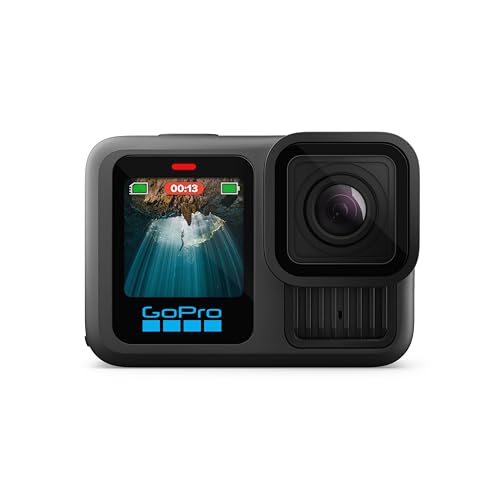
The action camera vs regular camera question arises the moment a trip involves water, speed or a helmet. An action camera is a small, rugged, waterproof box with an ultra-wide lens and superb stabilisation, built to be mounted and forgotten. A regular camera — compact, mirrorless or DSLR — is a versatile photographic instrument with a larger sensor, real zoom or interchangeable lenses and controls designed for deliberate image-making. They overlap in video, and diverge almost everywhere else.
This comparison is practical: image quality, durability, stabilisation, audio, battery and the kinds of footage and photos each produces. The verdict depends entirely on your adventures. A surfer and a portrait photographer need opposite tools, and the growing middle ground — creators who film active lives for an audience — need to know exactly where each camera stops being enough.
Disclosure: As an Amazon Associate, kajuandouglas.com earns from qualifying purchases. Links to Amazon on this page are affiliate links; they cost you nothing extra. Listing details such as price and availability change often, so check the current Amazon listing before you buy.
Action Camera vs Regular Camera: The Quick Verdict
Choose an action camera for sports, water, mounting on helmets, bikes and boards, and any filming where the camera might be dropped, soaked or shaken — its stabilisation and toughness have no rival. Choose a regular camera for image quality, zoom, portraits, low light, audio quality and stills photography. Many active creators carry both: the action camera goes where the regular camera cannot, and the regular camera does everything else better.
In this guide
Action Camera vs Regular Camera at a Glance
| Criterion | Action Camera | Regular Camera |
|---|---|---|
| Durability | Waterproof and shock-resistant by design; cheap to replace if lost | Fragile by comparison; weather sealing at best, rarely waterproof |
| Lens | Fixed ultra-wide; everything in focus; distortion corrected in-camera | Zoom or interchangeable; natural perspective; background blur possible |
| Stabilisation | Excellent electronic stabilisation, even while running or riding | Good in-body/lens stabilisation; gimbals needed for action-level smoothness |
| Image quality | Small sensor; great in daylight, weaker in low light | Larger sensors; far better low light, dynamic range and stills |
| Audio | Basic built-in mics; wind noise a constant battle | Better mics plus external microphone inputs on most models |
| Battery | Small batteries; roughly an hour or so of recording each | Larger batteries; hours of stills, longer video per charge |
| Mounting | Huge mount ecosystem: helmets, chest, boards, vehicles | Tripods and gimbals; body-worn mounting impractical |
| Stills photography | Capable snapshots; limited control and no real zoom | Full photographic control, lenses and quality |
Where the Action Camera Genuinely Wins
Stabilisation is the headline: modern action cameras smooth running, mountain biking and skiing footage to a gimbal-like glide using electronic stabilisation fed by motion sensors, in a device the size of a matchbox. Add waterproofing without a housing, voice control for gloved hands, and a mount for every sport, and the action camera becomes the only practical way to film many activities at all. Its ultra-wide lens keeps everything in focus and captures the scene even when you cannot aim — point it roughly at the action and the frame will contain it.
Durability changes behaviour, too. You mount an action camera on a surfboard, a car bonnet or a dog harness precisely because losing it would be annoying rather than devastating. That willingness to risk the camera produces footage a regular camera owner would never attempt. For pure adventure documentation, no regular camera — however good — competes, because it cannot go where the action camera goes. See the current leaders in our best action cameras under 100 roundup.
Where the Regular Camera Pulls Away
Image quality is not close. A regular camera’s larger sensor delivers cleaner low-light footage, wider dynamic range for contrasty scenes, and stills that withstand cropping and printing. Zoom and interchangeable lenses give natural perspectives and background separation that an ultra-wide fixed lens cannot imitate — faces shot on an action camera at arm’s length distort in ways flattering to no one. For interviews, travel films, wildlife and any photography beyond snapshots, the regular camera is simply the serious tool.
Audio widens the gap for creators. Regular cameras accept external microphones, monitor levels and record usable dialogue; action cameras capture enthusiastic wind. Battery endurance, screens you can actually compose on, and manual control over exposure complete the regular camera’s case. If your filming is mostly on foot, on a tripod or at events, the action camera’s toughness buys you nothing while its quality limits cost you daily. Compare creator-focused models in best cameras for vlogging.
The Hybrid Creator’s Compromise
Many working creators run both, assigning each its scene: the action camera films the ride, the swim and the point-of-view shots; the regular camera films everything spoken, scenic or photographic. The footage cuts together acceptably in daylight, where the action camera is at its best. Budget-wise, an action camera added to a regular camera kit costs less than upgrading the regular camera one tier, and expands what you can film far more.
If you must choose one, let your dominant content decide. Mostly sports and water with occasional stills: action camera. Mostly stills, people, travel scenes and talking footage with occasional adventure: regular camera, and rent an action camera for the ski trip. The mistake is buying by the most extreme day of your year rather than the typical one — the same trap as in how to choose a camera, where honesty about your usual subjects wins.
Ready to Buy? Start Here
The two action cameras show the category’s current state; the Sony and Panasonic show what a creator-focused regular camera adds in audio, lenses and low light:

GoPro HERO13 Black Action Camera — Check price on Amazon. A solid, widely available option that fits this guide; confirm the exact kit contents and lens mount on the listing before ordering.

GoPro HERO12 Black Action Camera — Check price on Amazon. A solid, widely available option that fits this guide; confirm the exact kit contents and lens mount on the listing before ordering.
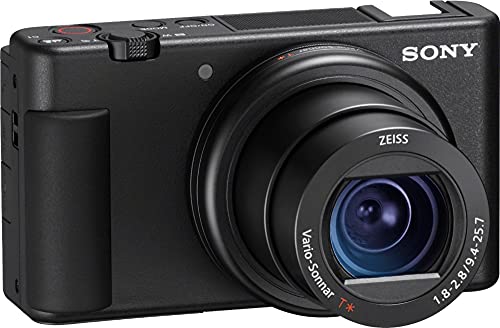
Sony ZV-1 Digital Camera for Content Creators — Check price on Amazon. A solid, widely available option that fits this guide; confirm the exact kit contents and lens mount on the listing before ordering.

Panasonic LUMIX G100 4K Mirrorless Camera — Check price on Amazon. A solid, widely available option that fits this guide; confirm the exact kit contents and lens mount on the listing before ordering.
Who Each Option Suits
Choose an action camera if your filming involves motion, water, mounts or risk; if you want stabilisation without a gimbal; or if your camera must survive being lent to a teenager on a snowboard. It is also the best second camera a creator can buy.
Choose a regular camera if stills matter, if you film people talking, if you shoot in low light, if you need zoom or portrait lenses, or if one device must do everything reasonably. It is the only choice that grows into a full photographic system.
Final Recommendation
These cameras are complements miscast as rivals. The action camera is a specialist that owns its niche completely; the regular camera is the generalist that owns everything else. Buy for your typical week: adventure-dominated lives start with the action camera, photography-dominated lives start with the regular camera, and creators who do both will eventually — happily — own both.
Audio, Battery and the Unglamorous Deciders
Creators comparing these cameras obsess over resolution and ignore the two factors that actually shape a filming day. Audio: an action camera’s built-in microphones fight wind, water housings and distance, and while media mods and wireless microphones exist for major models, a regular camera with a proper microphone input and monitoring simply records dialogue on another level. If your content involves people talking, weight audio as heavily as video. Battery: action cameras sip from small cells sized for short action clips, so a day’s filming means a pocket of batteries and constant swaps; a regular camera’s larger battery, or USB power on a tripod, suits long-form recording far better.
Workflow differs too. Action footage arrives ultra-wide and stabilised, often needing perspective correction and colour matching to sit beside regular footage; regular footage arrives flexible but unstabilised. Editing time is a real cost of the action camera’s convenience. None of this dethrones either tool — it relocates the decision from spec sheets to shoot days, which is where cameras are actually chosen well.
Renting the Other Camera for One Trip
Because these tools complement rather than replace, the cheapest education is a single rental: take an action camera on one adventure holiday, or a creator compact on one trip you would normally film by action camera alone. You will learn in three days what your content actually needs — whether the underwater and mounted shots carried the film, or whether you kept reaching for zoom, audio and low-light quality the action camera could not give. Rental fees are trivial beside a wrong purchase, and both categories rent widely.
Whichever you buy, buy the ecosystem honestly: the action camera’s true price includes mounts, cases and spare batteries; the regular camera’s includes a microphone and probably a small gimbal or tripod. Compared whole, the gap narrows — and the creator who budgets the accessories up front films on day one, instead of discovering the missing mount at the trailhead.
Mounting, POV and the Shots Only One of Them Can Get
The action camera’s defining trick is not toughness alone; it is point of view. Chest mounts, helmet mounts, handlebar and board mounts, suction cups on vehicles and poles that place the camera inside the action produce perspectives a regular camera physically cannot occupy while its owner is busy doing the activity. A mountain biker cannot hold a mirrorless camera mid-descent; a surfer cannot cradle one in a wave; a skier’s pole mount tells the story of the run in a way a slope-side camera never will. When you evaluate this comparison, list your intended shots honestly. If several of them are first-person or mounted shots, the action camera is not the accessory in the pairing; it is the main camera, and the regular camera is the one providing cutaways and portraits.
Mounting has its own craft worth learning. Every mount adds vibration, wind noise and a new failure point, so experienced users tether mounted cameras with a short safety line wherever a fall would lose or endanger them, check mounts before the activity rather than during it, and test angles with short clips reviewed on a phone before committing to the main event. A camera pointed at your knees for an hour is the classic beginner result, and it is entirely preventable with a two-minute test. Regular cameras have their own support craft, tripods, gimbals and straps, but the stakes differ: a failed tripod shot is a missed photograph, while a failed mount at speed can be a lost camera.
Stabilisation, honestly compared
Action camera stabilisation is genuinely remarkable, smoothing running, riding and shaking into watchable footage, and it achieves this with a combination of wide lenses, electronic correction and high frame rates. Its costs are a slight crop, occasional warping at the edges in extreme movement, and weaker performance in low light, where electronic stabilisation has fewer clean frames to work with. A regular camera’s stabilisation, in-body or in-lens, is optical and elegant for walking and handheld stills, but it was designed for a photographer’s tremor, not for a handlebar on a rocky trail. A gimbal closes that gap for regular cameras and adds bulk, cost and setup time. The fair summary is that action cameras stabilise violence, regular cameras stabilise gentleness, and gimbals exist for regular-camera owners who need to cross over occasionally.
Sound, Battery and the Working Day
Audio decides more viewer satisfaction than resolution does, and here the regular camera’s microphone inputs and monitoring give it a structural advantage for interviews, vlogging with dialogue and any scene where voices matter. Action cameras have improved their built-in microphones and offer media mods and wireless microphone support on some models, but wind remains their enemy: a waterproof housing or the camera’s own exposed position in moving air produces roar that no setting fully cures. Foam wind protection, mounting the camera out of the direct airflow, and recording key dialogue separately on a phone in a pocket are the working fixes action users rely on. For pure activity footage with music laid over, none of this matters, which is why so many action films are scored rather than voiced.
Battery behaviour differs in character. Action cameras record continuously in small bodies that generate heat, so their endurance per battery is modest, and owners carry several small batteries and swap without thinking, the way film photographers once carried rolls. Regular cameras sip power for stills all day but drain faster in continuous video, and their larger batteries swap less often. For a long event, a regular camera on a tripod with mains power or a large external battery is the dependable tool. For a day of intermittent adventure, a pocket of small action batteries is the lighter answer. Heat links the two stories: both camera types can overheat in long, hot, high-resolution recording, and the action camera’s small body gives it less room to hide from the sun, so shade, airflow and shorter clips are part of its working method.
Photographs from each, judged fairly
Still photographs from an action camera in good light are sharp, vivid and extremely wide, with computational help that flatters contrasty scenes. Their limits are fixed perspective, modest detail for cropping and weak low-light results. A regular camera’s stills are simply in another class for detail, depth of field and editing freedom, which is why action cameras are best judged as video-first tools that take perfectly good snapshots, rather than as stills cameras that happen to film. If your trip is remembered mainly in photographs, the regular camera leads. If it is remembered in clips, the action camera does, and the happiest travellers, as the main comparison concludes, increasingly carry both and let each do the job it was born for.
Choosing by Activity: A Quick Tour
Cycling, skiing, surfing, climbing and motorsport belong to the action camera, with a regular camera appearing at the start and finish lines for portraits and atmosphere. City travel, food, architecture and family history belong to the regular camera, with the action camera contributing the occasional rain-soaked or underwater flourish. Underwater itself is action territory unless you invest in a housing for the regular camera, which is a specialist path. Children’s sports split the difference beautifully: the regular camera and a modest telephoto from the sideline for the photographs you will print, the action camera on a fence post or a coach’s vantage for the film the team will actually watch. The activity chooses the camera, every time, and choosing by activity rather than by specification is the shortest route out of this comparison and into making things.
Durability and Failure Modes in the Field
Each camera fails in its own characteristic ways, and knowing them is practical protection. Action cameras die by water ingress after a door was closed on a grain of sand, by mounts that vibrate loose, by lenses scratched because the small front element sits unprotected in the middle of the action, and by heat during long static recording in the sun. Their replaceable lens protectors on many models, their cheap mounts and their sheer smallness are the mitigations, along with the discipline of checking seals and doors before water, every time, without exception. Regular cameras die by drops, by shutter and dial wear over years, by sensor dust that was really neglect, and by being left behind, which is a failure mode no specification measures. Their mitigations are straps, bags, sealing and the photographer’s habits.
There is an asymmetry worth stating plainly: an action camera is close to expendable in a way a regular camera is not. It is bought to be risked, mounted where a fall, a wave or a crash is plausible, and its footage from those places justifies the risk. A regular camera is protected so it can keep working for years. That difference in philosophy explains most of the design divergence between them, and it should inform your budget thinking: the action camera is the one you insure lightly and replace without grief, the regular camera is the one you insure properly and handle like the long-term tool it is.
Files, editing and the hidden time cost
Action footage demands editing time in a way newcomers underestimate. Hours of continuous recording become watchable only after cutting, stabilising where needed, correcting the wide-angle look and grading colour that was recorded in a flat profile or an oversaturated default. Regular camera stills demand a different labour, selecting and editing photographs, which many owners enjoy as part of the craft. Before choosing, consider which post-production life you actually want. The creator who loves editing film will extract magic from an action camera’s raw material. The traveller who wants finished results with minimal desk time may find a regular camera’s photographs, good straight from the camera, the kinder tool, and action footage an accumulating debt of unedited hours.
Lenses and Light: Why the Regular Camera Sees in the Dark
The low-light gap between these cameras is not a matter of settings but of physics and glass. A regular camera gathers light through a large lens onto a large sensor, and can trade depth of field for brightness by opening its aperture, a lever the fixed, small-lensed action camera simply does not have. That is why evening city footage, indoor family scenes and any scene lit by lamps or candles belong to the regular camera, and why action footage after dark quickly becomes grainy regardless of resolution. Night is also where the action camera’s stabilisation is weakest, because long exposures per frame and electronic correction fight each other. Plan adventures accordingly: action camera for the day’s motion, regular camera for the evening’s story, and a phone’s night mode as the honest third option many travellers quietly use for both.
Zoom, framing and composition freedom
Framing is the regular camera’s other structural gift. Zoom lenses and interchangeable primes let its owner choose perspective deliberately: step back and zoom for compressed, flattering portraits and layered landscapes, or go wide and close for immersion. The action camera offers one perspective, extremely wide and close, which is glorious inside an activity and limiting everywhere else; its digital zoom modes crop rather than zoom, spending resolution to buy framing. Composition with an action camera is therefore done with the body, moving the mount, the chest, the board, closer or further, which is a physical, athletic kind of photography with its own joys. Neither approach is lesser. They are different crafts sharing a name, and most owners know within a week which craft feels like theirs.
The Hybrid Kit, Priced and Packed Honestly
For the traveller or creator who concludes they need both, the practical questions are weight and workflow. The action camera adds very little of either: it disappears into a pocket of the regular camera’s bag, shares USB charging with everything else you carry, and asks only for a small case of mounts chosen for the trip rather than the whole collection. The workflow that works is to decide each morning which camera leads. On an activity day, the action camera is primary, mounted and ready, and the regular camera comes out at stops. On a sightseeing day, the regular camera leads and the action camera waits for water, rain or motion. Photographers who try to run both at full intensity all day end up serving two cameras instead of experiencing one trip, and the footage shows it. Choose the lead each day, and the hybrid kit becomes the best of this comparison rather than the burden of it.
Weather, Water and Environmental Honesty
An action camera’s waterproof rating applies to the camera with its doors sealed and, on many models, without any additional housing only to a specified depth; beyond that depth, or for long immersion, a dive housing takes over. Owners should also know that waterproofing depends on seals that age, on doors closed over clean gaskets, and on the lens protector being intact, so the camera that was waterproof last summer deserves a gasket check and a shallow test before this summer’s deep work. Regular cameras divide into weather-sealed models, which handle rain and spray with sealed lenses fitted and sensible care, and unsealed models, which should be treated as fair-weather tools. A plastic cover or even a well-arranged bag extends any regular camera’s weather tolerance for occasional showers, and professionals have shot in storms under such improvisation for decades, but immersion is simply not in a regular camera’s world without a serious housing.
Sand deserves its own warning in both camps. For the action camera, sand in a door seal is the usual cause of the leak that ruins the camera on the next swim, so doors get opened and closed away from the beach or over a towel, and seals get inspected as a ritual. For the regular camera, sand attacks lens barrels, dials and zips, and the discipline is the same one used by desert and beach photographers everywhere: change nothing in the open if you can avoid it, blow rather than wipe, and clean the bag when you get home. Environment does not care which camera you chose; it tests the habits you brought with it.
Learning curves and who each camera flatters
An action camera flatters the beginner at activities and exposes them at everything else: its automation, stabilisation and forgiving wide view produce exciting footage from day one, provided the mount angles are tested. A regular camera flatters nobody at first and rewards study for years, because its controls put exposure, focus and lens choice in the owner’s hands, for better and worse. That difference explains a common ownership arc: the action camera delivers its best results in week one and improves slowly thereafter, while the regular camera’s results climb steadily with its owner’s skill. If you enjoy learning a craft, the regular camera’s curve is a feature. If you want the activity documented while you concentrate on the activity, the action camera’s flat curve is exactly the point.
Resale, Upgrades and How Each Purchase Ages
Action cameras iterate quickly, with new generations arriving frequently, and older models lose value fast while remaining perfectly capable, which makes used action cameras one of the bargains of the camera world for a buyer who does not need the newest stabilisation. Regular cameras and especially their lenses age slowly and hold value in proportion to their tier, and a lens bought well can serve across bodies for a decade. The purchasing philosophies therefore differ: buy the action camera for the trips in front of you, at the tier your activities need, and replace it when it dies or a generation genuinely changes your footage. Buy the regular camera and its lenses as long-term equipment, slowly, and expect them to compound in value to you even as their market price gently falls.
The one-camera trip, decided in advance
If a trip forces a single choice, decide by naming the trip’s three most important visual memories in advance. If they are experiences, motion, water, speed, heights, the journey itself, take the action camera and accept its stills as souvenirs. If they are places, people, food, light and evenings, take the regular camera and accept that the wildest moments will be remembered rather than recorded, or recorded on a phone. Naming the memories first turns a specification argument into a values question, and values questions, unlike specification arguments, actually have answers.
Accessories and Total Cost, Compared Honestly
The action camera’s low headline cost conceals a mount collection, spare batteries, a case, lens protectors and, for many owners, a second action camera angle within a couple of seasons. The regular camera’s high headline cost conceals its own tail of lenses and support gear. Compared as working kits for a defined job, the gap narrows considerably, though the regular camera kit remains the larger investment by a clear margin. The fair way to budget either is to write the whole kit for your actual activity before buying any of it: for a cycling channel, that is camera, chest and bar mounts, two spare batteries, cards and a small case; for family and travel, that is body, the lens you will live with, a spare battery, cards and a bag. Totals written in advance prevent the drip of accessories from ambushing either budget, and they make the comparison between the two honest for the first time.
Insurance and risk budgeting differ too
Owners sensibly insure the regular camera and self-insure the action camera, because the action camera’s whole purpose involves risks no policy loves, and its replacement cost is the smaller one. That difference belongs in the total-cost comparison. So does loss tolerance on a trip: losing the action camera on day two of a holiday is an annoyance with footage already copied to a phone; losing the regular camera can end the photographic holiday entirely, which is why regular cameras travel with straps, trackers in bags where owners use them, and copies of the day’s files made nightly. Risk, like cost, is part of the specification, and the two cameras ask to be managed as differently as they ask to be used.
A Closing Framework: Three Questions That Decide It
First, where will the camera physically be during your best moments: mounted on you or your equipment in the middle of an activity, or in your hands with your attention free? Second, what will you show people afterwards: moving clips that recreate an experience, or photographs that distil it? Third, how much camera do you want to think about: a tool you set and forget while you live the moment, or an instrument you play deliberately? Action, clips and forget points one way; hands, photographs and play points the other. Most people find two of their three answers agree, and that majority, not any specification in this long comparison, is their camera.
Phones, and Why This Comparison Still Matters
Every buyer now owns a third camera, the phone, and it is fair to ask whether it dissolves this comparison. For casual clips and everyday photographs the phone is superb, and for many travellers it has already replaced the compact and the casual video camera. What it has not replaced is dedication. A phone is a fragile, expensive, notification-filled slab that cannot be chest-mounted on a descent, left recording on a fence post, or fitted with a telephoto for the school match, and its battery is also your maps, your tickets and your contact with home. The action camera and the regular camera both exist to be single-purpose tools that can be risked, mounted, specialised and relied on without negotiation. That is why the comparison survives the phone, and why owners of excellent phones keep buying both kinds of dedicated camera for the jobs described throughout this guide.
Two Cameras, Two Relationships With Risk and Craft
Underneath every section of this comparison sits a simple human difference. The action camera asks its owner to live first and review later: mount it, start it, and go and do the thing, trusting the wide lens and the stabilisation to bring the experience home. The regular camera asks the opposite: pause, look, choose, craft the frame before it exists. Adventurers who hate fiddling will always love the first bargain, and photographers who find the looking itself to be the pleasure will always choose the second. Neither temperament is a phase to grow out of, and knowing yours predicts your satisfaction with either camera better than any resolution figure, frame rate or sensor dimension in this guide.
So let the comparison end where it should have begun. Picture your best day with a camera, in the detail you would use to describe it to a friend. If the camera in that picture is strapped to a helmet, a board, a bike or a chest while you are busy being alive, you have your answer. If it is in your hands, at your eye, while the light does something you waited for, you have the other one. Buy that camera, learn it properly, and go and have the day you pictured.
Storage, Cards and Keeping the Footage Safe
The two cameras produce different data problems. Action footage is bulky, continuous and easy to lose track of, because an afternoon’s activity can fill a card with material nobody has reviewed. The working discipline is to copy each day’s card before it is reused, skim the footage while it copies and mark the moments worth keeping, because unmarked hours are effectively lost even when the files survive. Regular camera files are smaller per moment and arrive pre-edited by the act of choosing to press the shutter, which is a hidden archival advantage of stills photography. Both kinds deserve the two-copies rule from the protection guidance: a photograph or a clip that exists in one place is a memory on loan. Whichever camera you choose, its footage is only as safe as your least careful evening, so build the copying habit before the trip, not after the loss.
How the choice feels after the first season
After a season, specification memories fade and two different satisfactions remain. The action camera owner has a library of experiences relived: the descent, the wave, the storm ride, moments that would otherwise live only in fallible memory, captured from inside the moment itself. The regular camera owner has a smaller set of crafted images, each one deliberate, that hang on walls and anchor albums. Ask a room of owners which library they would keep if they could keep only one and the room divides exactly along the lines of this comparison, not by budget or by expertise, but by whether they experience their best moments from inside them or by standing, happily, just outside with a camera at their eye. There is no third answer, and there does not need to be.
Whichever you choose, commit to learning its one core skill properly in the first month. For the action camera, that skill is mounting and angle-testing: a weekend spent learning where the camera wants to sit for your activity pays for itself in every clip afterwards. For the regular camera, it is the exposure and focus discipline covered in the beginner guidance on this site: a month of deliberate practice turns a capable camera into an extension of your eye. Owners who invest that first month rarely reopen this comparison. Owners who skip it tend to blame the camera, buy the other one, and repeat the lesson at greater expense. The tool matters, the month matters more, and the season after that is where the photographs you actually wanted finally come from.
Finally, remember that both cameras reward the same unglamorous habit: reviewing your own results critically in the first weeks. Watch your early action footage for the angle errors, the wind noise and the clips that run a minute too long, and adjust the mounts and the settings rather than the camera. Review your early regular-camera photographs for the focus misses and the exposures you would correct, and adjust your technique rather than your shopping list. In both camps, the second month’s results are dramatically better than the first month’s for owners who review, and indistinguishable for owners who blame. That, more than the choice between these two very different and very capable tools, is what separates the footage and the photographs people keep from the ones they quietly delete.
Buy the camera your best day described, learn its one core skill in the first month, and review your early results like a coach rather than a critic. Do that, and a year from now the question of which camera you chose will matter far less than the library of moments it quietly built for you, which was the point of choosing anything in the first place.
Related Guides
- best action cameras for under 100
- best cameras for travel
- best cameras for hiking
- best cameras for youtube
- best underwater cameras for snorkeling
Frequently Asked Questions
Can an action camera replace a regular camera?
For adventure filming and casual snapshots, it can. For general photography it cannot match a regular camera’s sensor size, lenses, zoom, low-light quality or control, and its ultra-wide perspective suits some subjects poorly. Most people who try to replace a regular camera with only an action camera miss it first at a family event indoors, where the small sensor and fixed wide lens struggle.
Why does action camera footage look so smooth?
Electronic stabilisation: the camera records a slightly larger image than it outputs and uses gyroscope data to shift the frame against your movement many times per second, cropping a small margin. Combined with horizon levelling, it produces gimbal-like results from a device bolted to a helmet. The cost is a modest crop and some quality loss in very low light, where the system has less data to work with.
Are action cameras good for vlogging?
For active vlogging — walking, cycling, travelling light — yes: they are tiny, stabilised and forgiving of framing. For sit-down vlogging, their weak built-in audio, wide distorted close-ups and limited screen options lose to a creator compact or mirrorless camera with a microphone input. Many vloggers use an action camera outdoors and a regular camera at the desk, which is the pattern this guide recommends.
How waterproof are action cameras really?
Current models from the major brands are waterproof to around 10 metres without a housing, and deeper with one — enough for swimming, surfing, snorkelling and rain of any violence. Check the depth specification for the specific model, ensure doors and seals are clean and closed before immersion, and rinse in fresh water after sea use. Regular cameras, by contrast, should be treated as water-averse even when weather-sealed.
Which is better for travel videos?
A regular camera produces the better-looking travel film: varied lenses, pleasing depth of field, good audio and low-light ability for evenings. An action camera adds the shots that make travel films memorable — underwater, on the move, in the rain. If weight forces one choice, pick by your travel style: city and culture trips favour the regular camera; adventure trips favour the action camera or the pair.
Do action cameras take good photos?
In daylight, their photos are sharp, wide and perfectly shareable, with effective HDR handling of contrasty scenes. The limits are the fixed ultra-wide lens, modest resolution for cropping, no optical zoom and weak low-light results. As a snapshot tool attached to an adventure, an action camera is excellent; as a photographer’s only camera, it frustrates within weeks.
Can I use an action camera for family events?
You can, and its wide view captures a whole room or a whole table in a way that suits parties and gatherings, especially mounted in a corner recording the event unfolding. Its weaknesses at family events are the ones covered in this guide: indoor light, voices competing with room noise, and a perspective that makes distant faces small. For the birthday speeches and the grandparents’ stories, a regular camera, or even a phone on a small tripod, will serve the memory better. Use each where it is strong and the event is covered from both ends.
Which camera is better for a beginner’s first year?
The one matched to the beginner’s actual plan. A beginner whose year is travel, sport and the outdoors will learn happily on an action camera and produce exciting results immediately. A beginner whose year is learning photography itself, portraits, streets, landscapes, should start with a regular camera, because its controls teach the craft and its lenses let the hobby grow. Buying the other person’s beginner camera is the mistake; the first year should be spent inside your own interests, with the tool that was designed for them.
Do action cameras work for timelapse and long recordings?
Yes, timelapse is one of their quiet strengths, because they are small enough to leave in places a regular camera would be conspicuous or at risk, and their wide view suits skies, construction, journeys and crowds. For long continuous recording, manage heat and power: external power where possible, shade from direct sun, and a resolution your cards and batteries can sustain. A regular camera on a tripod with mains power remains the better tool for a fixed, hours-long record of an event, but for timelapse in the wild, the action camera is frequently the practical winner.


