Disclosure: As an Amazon Associate, kajuandouglas.com earns from qualifying purchases. Links to Amazon on this page are affiliate links; they cost you nothing extra. Listing details such as price and availability change often, so check the current Amazon listing before you buy.
The soundbar vs home theater system choice is no longer the walkover it once was. A traditional home theatre — AV receiver, five or more separate speakers, a subwoofer, cables everywhere — still sets the ceiling for film sound. But modern soundbar systems, with wireless subwoofers and real rear speakers, have closed much of the gap while keeping the installation to an afternoon and the living room intact. Choosing between them is now a genuine decision about room, budget and temperament.
This comparison works through sound performance, surround authenticity, setup and space, cost as complete systems, and upgrade paths, with a side-by-side table and verdicts by use case. It treats the modern soundbar system — bar, sub and rears — as the soundbar side’s strongest form, because comparing a component theatre against a lone budget bar would answer a question nobody is actually asking.
Soundbar vs home theater system: The Short Answer
Choose a home theatre system for the best possible surround, large rooms, high volumes and a system that grows for a decade. Choose a soundbar system for near-theatre immersion with minimal installation, no receiver, tidy rooms and renters. The gap is real but narrower than ever; your room and patience decide.
In this guide
Side-by-Side Comparison
| Factor | Soundbar | Home Theater System |
|---|---|---|
| Surround authenticity | Simulated to genuinely immersive, depending on system | True discrete surround and height, precisely placed |
| Setup time | Under an hour, mostly wireless | Half a day or more; cable runs and calibration |
| Space and appearance | One bar under the TV; sub and rears discreet | Receiver plus five-plus speakers to house and place |
| Maximum performance | Excellent for most rooms and volumes | Higher ceiling: power, dynamics, large rooms |
| Dialogue | Strong centre channel performance | Excellent with a dedicated centre speaker |
| Cost as a complete system | Predictable; everything in one purchase | Spreads across receiver, speakers, cables, stands |
| Upgrade path | Within the brand ecosystem only | Component by component, indefinitely |
| Portability | Move house and reinstall in an hour | A project to dismantle and rebuild |
How to Decide, Step by Step
Step 1: Start with the room, not the equipment
A dedicated film room or a large living room with a permanent layout can exploit a component system’s placement freedom; a multipurpose family room with furniture that moves cannot. Renters and anyone who cannot run cables to rear positions should weight soundbar systems heavily — wireless rears exist precisely for them. Measure the room, note where rear speakers could honestly live, and let the architecture vote before the audio does.
Step 2: Decide how much installation you will tolerate
A home theatre system is a project: receiver setup, speaker placement, cable runs, calibration menus. Some people love that project; for others it is the reason a boxed system sits unopened for a month. Soundbar systems compress the same ambitions into an hour. Neither answer is shameful, but be honest — an uninstalled theatre has worse sound than an installed soundbar, and a resented receiver gets its settings fiddled with by no one, ever.
Step 3: Compare complete costs at your target performance
Price the whole destination, not the first step. A soundbar system’s price is essentially final. A theatre’s price includes the receiver, five or more speakers, a subwoofer, stands or mounts, and a great deal of cable — and it invites incremental upgrades forever, which is either its charm or its trap. Set the performance target first (how immersive, how loud, how large the room), then price both routes to that target; the comparison often surprises in both directions.
Step 4: Think in years: upgrades, moves and failures
Component systems age gracefully: replace the receiver when formats change, keep the speakers for decades, repair single parts. Soundbar systems age as units: when the bar’s formats date, the system is replaced whole — but they also move house in a box and reinstall before lunch. If you expect to move, rent or rearrange, the soundbar’s portability is a long-term feature. If this room is settled for a decade, the theatre’s longevity compounds.
As you work through this guide, keep the bigger picture in mind. Our roundup of best soundbars for home theater shows how the main options compare, and the companion piece on 2.1 vs 5.1 soundbar covers the neighbouring decision in the same detail.
Sound Performance, Honestly Compared
A well-installed component theatre still wins on the merits: separate speakers placed at the correct angles create surround and height effects with a precision no single bar can simulate, dynamics are greater, and large rooms are filled without strain. Against that, a quality soundbar system with real rear speakers delivers perhaps the majority of that experience — discrete rears make surround genuine rather than virtual, the subwoofer supplies real bass, and the centre performance is excellent — with none of the installation burden. The remaining gap shows in big rooms, at high volumes and in the finest placement of effects.
Music widens the gap again in the theatre’s favour, because its front speakers are proper stereo speakers, widely placed. Soundbar systems play music pleasantly, especially in their music modes, but stereo imaging is physically limited by the bar’s width. Households where films dominate will feel the two options are close; households where albums matter will feel the difference nightly. As ever, let the content calendar arbitrate — it is a more reliable guide than any specification sheet on either side.
Who Each Option Suits
Home theatre systems suit dedicated rooms, film devotees, larger spaces, confident installers and anyone building for a decade. They also suit upgraders and hobbyists, for whom the system’s evolution is part of the pleasure. If you have the room, the permanence and the inclination, the component route remains the reference standard, and its second-hand market makes gradual building genuinely affordable.
Soundbar systems suit family living rooms, renters, the installation-averse and anyone whose priority is great film sound tonight rather than perfect film sound eventually. They also suit secondary rooms absolutely — a component theatre in a bedroom is a cry for help. The honest summary: the theatre is the better instrument; the soundbar system is, for most households, the better purchase. Knowing which household you are is the entire decision.
Ready to Buy? Start Here

Sonos Arc Ultra Soundbar
Sonos’s flagship all-in-one Atmos soundbar, built for large TVs and main living rooms, with the option to add a Sonos subwoofer and Era speakers as rears. It is the expand-later path in a single bar. Check price on Amazon.

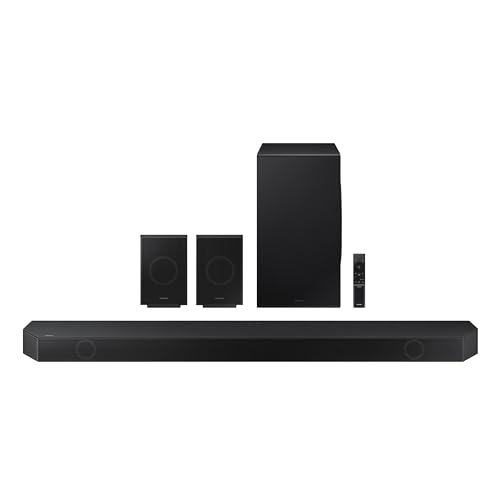
Samsung Q-Series HW-Q990F Soundbar System
A flagship 11.1.4-channel soundbar system with a wireless subwoofer and separate rear speakers included — the closest a soundbar package gets to a full home-theatre layout while keeping a single main bar. Check price on Amazon.

Polk Audio Monitor XT70 Tower Speaker
A large floor-standing tower with dual 6.5-inch woofers and a passive radiator, sold individually. Towers like this anchor a living-room stereo or the front left and right channels of a home-theatre system without needing stands. Check price on Amazon.
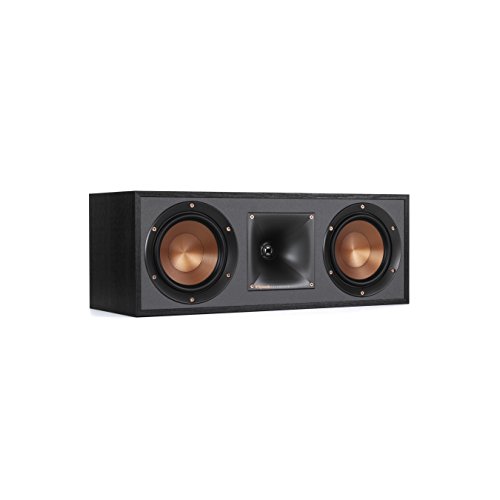
Klipsch R-52C Center Channel Speaker
A dedicated centre-channel speaker for component home-theatre systems, handling the dialogue that makes up most of a film soundtrack. It shows what a soundbar’s built-in centre channel is replacing in a separates system. Check price on Amazon.
Common Mistakes
Comparing a flagship theatre to a basic bar
Compare at equal ambition: a soundbar system with sub and rears is the soundbar side’s real contender, and its price belongs in the comparison too.
Underestimating the theatre’s hidden costs
Cable, stands, mounts and the receiver are not accessories; they are the system. A theatre budget that ends at the speakers is half a budget.
Buying components for a room that cannot place them
Rear speakers need positions; a centre needs a home under the screen. If the room refuses, the theatre’s advantages evaporate and the soundbar wins by default.
Assuming a soundbar system cannot do ‘real’ surround
Systems with discrete wireless rear speakers do genuine surround, not simulation. Judge modern systems as they are, not by the lone bars of a decade ago.
Pro Tips
- Dedicated room and a decade of permanence: build the theatre.
- Renting, moving or rearranging: the soundbar system is your friend.
- Price complete systems at the same performance target before deciding.
- Music-heavy households feel the theatre’s stereo advantage most.
Going Deeper: Context That Helps
Dialogue clarity is the reason most people buy a soundbar, and it depends on the centre channel and on processing, not raw power. Film mixes bury speech under music and effects, and TV speakers point that sound at the wall or the floor. A bar with a dedicated centre channel, or a dialogue enhancement mode that lifts the vocal frequency range, fixes the nightly ‘what did they say?’ problem better than simply turning the volume up. If you watch late at night, look for a night mode that compresses loud effects while keeping speech level — your household will thank you more than for any surround effect.
A wireless subwoofer changes what a soundbar can do more than any other single feature. The bar handles voices and effects; the subwoofer, placed near a wall or corner, reproduces the low rumble of films and the body of music. Because low bass is hard to localise, the sub can live beside the sofa or next to the TV stand, wherever a power socket is convenient — it only needs power, since the audio link is wireless. If a bar sounds thin, first check that the subwoofer is paired, powered and not turned down in the settings before concluding the bar itself is weak.
Soundbar sizes should match the TV, mostly for looks and partly for sound. A bar much narrower than the TV looks lost and spreads sound over a smaller width; a bar wider than the TV stand risks overhang. Measure the stand, check the height of the bar against the bottom edge of the screen so it does not block the picture or the TV’s remote sensor, and leave a little clearance in front of up-firing Atmos drivers. Wall-mounting is an option on most bars, but a stand is simpler, kinder to cables and easier to reposition while you fine-tune the sound.
Room size decides how much soundbar you need. In a bedroom or small flat, a compact bar already plays far louder than you will use, and a huge flagship adds cost without benefit. In an open-plan living space with high ceilings, sound dissipates, Atmos height effects weaken because they rely on ceiling reflections, and a bar with a separate subwoofer — or the option to add rear speakers later — earns its keep. Be honest about the room you have rather than the room in the advertisement: most soundbar disappointment comes from buying for the wrong space, not from buying a bad product.
Soundbars and gaming have a specific requirement: low latency. Audio that arrives late feels as wrong in a game as late video, and some TV processing adds delay to both. Connecting a console through the TV with eARC passthrough, or into the bar itself where it has HDMI inputs, and enabling game mode on the TV keeps sound and action together. If voices in cut-scenes drift from lips, the fix is almost always a setting — the TV’s lip-sync or the bar’s audio delay adjustment — rather than a defect, and it is worth learning where that setting lives before you need it mid-game.
Firmware updates quietly fix many soundbar problems. Manufacturers patch HDMI handshake bugs, app issues and format support through updates delivered over Wi-Fi or USB, and a bar that has sat in a warehouse may ship with early software. When you set up a new bar, run its update before judging it; when an old bar develops a new quirk after a TV update, check for a bar update too, because the two devices negotiate constantly over HDMI. Keeping the maker’s app installed on your phone makes these updates painless and also unlocks EQ and level controls the remote may not offer.
A soundbar is not only for films. For music, most bars sound best in a stereo or music mode with virtual surround switched off, because surround processing smears the stereo image that music is mixed for. Bluetooth and Wi-Fi streaming make the bar the easiest speaker in the house to play music through, which is why many households end up using it daily for radio and playlists. If music matters to you, judge a bar with your own favourite tracks during the return window, at your normal volume, from your normal seat — film demos in a shop flatter almost everything.
Accessibility features deserve more attention than they get. Many bars offer dialogue modes with several levels of voice boost, some TVs can send audio to both a bar and hearing aids or headphones at once, and Bluetooth output on some models lets one listener use headphones while others use the bar. For households where one person struggles with TV sound, these features change daily life more than surround formats do. Check the manual’s accessibility section before buying if this matters to you — the information is rarely on the box but often present in the product.
Placement rules for soundbars are simple but strict. The bar belongs at ear height when seated, or as close as the TV stand allows, centred on the screen, with its front edge near the front of the stand so sound does not reflect off the stand’s surface. Never put a bar inside a closed cabinet: the doors and shelves block and colour the sound, and heat builds up. Up-firing Atmos bars additionally need a clear path to a flat ceiling — beams, ceiling fans and very high or vaulted ceilings all weaken the height effect, though the bar will still sound good as a normal surround bar.
When a soundbar system grows, it grows in a predictable order. First the bar, then — if bass feels light — a subwoofer; then, if surround effects feel front-bound, rear speakers; the rears add more immersion per step than any processing upgrade. Systems that allow these additions let you spread the cost and learn what your room actually needs. The alternative, a complete package with sub and rears in one box, costs less overall and guarantees the parts match. Neither route is wrong; the mistake is buying a sealed all-in-one bar while expecting to add rears to it later, because most cannot.
Whatever the product, the cheapest upgrade is usually time spent with the manual and the settings menu. Manufacturers bury genuinely useful options — EQ presets, dialogue modes, level trims, firmware updates — several layers deep, and most owners never find them. An hour spent exploring settings with familiar content playing will teach you more about your system than a week of reading reviews, and it costs nothing. Keep notes of what you changed so you can undo anything that makes things worse, and change one thing at a time so you know which adjustment caused which result.
Returns windows are part of the buying process for audio gear, and you should use them deliberately. Sound is personal and room-dependent, so a product that reviews well can still disappoint in your space. Buy from sellers with clear return policies, keep packaging until you are sure, and test with your own content at your own volumes in the first days — not the night before the window closes. A structured test, with the same three songs or scenes each time, reveals differences that casual listening misses and turns a vague feeling into a decision you can act on.
Hearing safety deserves a mention in any audio guide. Comfortable TV and music listening sits well below the levels that risk hearing damage, but portable speakers at parties, and headphones especially, can creep upward in noisy environments as you compete with background sound. If you have to shout to be heard over your own system, it is too loud for long sessions. Many devices offer volume limiting — worth enabling for children — and taking listening breaks during long sessions protects both your ears and your enjoyment, because tired ears judge sound poorly.
Frequently Asked Questions
Is a home theater system better than a soundbar?
At its best, yes: separate speakers placed correctly produce more precise surround and height effects, greater dynamics and better stereo music, and the system can grow indefinitely. But ‘better’ assumes the room, installation and budget to realise it. A quality soundbar system with a subwoofer and real rear speakers delivers most of the film experience with a fraction of the effort, and in small or multipurpose rooms it can be the more satisfying ownership experience. The theatre has the higher ceiling; the soundbar has the higher floor.
Can a soundbar system really do surround sound?
Yes, when it includes discrete rear speakers — those rears play genuine surround channels, not simulations, and the effect is convincing. A lone bar, by contrast, simulates surround with processing and reflections; it widens the sound impressively but cannot place a sound behind you the way a speaker behind you can. If surround authenticity matters to you, judge soundbar systems by whether rears are included or addable, not by the surround claims printed on a standalone bar’s box.
Which is cheaper overall?
At modest ambitions, the soundbar system, decisively: one purchase, everything included, no receiver, stands or cable budget. At high ambitions the comparison tightens, because flagship soundbar systems cost as much as respectable component setups. The theatre’s costs also spread over time — you can build it in stages — while the soundbar’s arrive at once. Over a decade, the theatre’s replaceable parts can make it cheaper to keep current; over a house move or two, the soundbar’s portability saves money and sanity.
Which is better for a rented home?
The soundbar system, almost without argument. It needs no cable runs, no wall fixings beyond perhaps the bar itself, damages nothing, and moves with you in a box, reinstalling in an hour. A component theatre in a rental means cable management gymnastics and a full rebuild at every move. Renters who crave the theatre experience should look at soundbar systems with wireless rears — they exist precisely to give renters real surround without a single drilled hole.
Can I start with a soundbar and switch to a theatre later?
You can switch, but nothing carries over: the two architectures share no components except the TV and sources. That makes the first decision worth taking seriously if a theatre is a real ambition — money spent on a flagship soundbar system is not a down payment on components. Conversely, theatre owners downsizing to a soundbar system lose nothing but boxes. If you are genuinely torn and the room allows both, the theatre is the one-way door worth walking through; if the room resists, the soundbar decision makes itself.
What about Dolby Atmos in each?
Both routes offer it. Theatres deliver Atmos with dedicated height speakers — in-ceiling or upward-firing add-ons placed precisely — for the most accurate overhead effects. Soundbar systems use up-firing drivers in the bar (and sometimes the rears) reflecting off the ceiling, which works well in rooms with flat, standard ceilings and less well with vaulted or very high ones. In a suitable room the soundbar’s Atmos is genuinely enjoyable; in a difficult room, the theatre’s placed speakers are the reliable route to the same soundtrack.
The Middle Ground Most Comparisons Ignore
The debate is usually framed as a duel, but the market’s centre of gravity sits between the poles: the premium soundbar system with wireless subwoofer and rears. Such a system borrows the theatre’s surround ambition while keeping the bar’s single-box convenience, and for many households it is the honest answer. It will not match a well-chosen component theatre for scale, stereo music or upgrade flexibility, and it will comfortably outperform the television-speakers-plus-hope arrangement that the duel framing forgets is the real alternative for most buyers.
Where the middle ground wins and loses
It wins on installation time measured in minutes, on a single remote, on rooms where running cables to rear speakers is impractical, and on a total footprint that a rented or design-conscious home can accept. It loses when the room is large enough to expose its limited driver size, when music listening deserves true stereo separation, and when an owner enjoys upgrading piece by piece, because a sealed system offers no path beyond replacing the whole. Naming those losses clearly is not an argument against the middle ground; it is how a buyer chooses it with open eyes and no later resentment.
Compare complete systems at complete effort, too. A component theatre’s price and complexity must include the receiver, cabling, stands or mounts and the hours to set it up and calibrate it. A bar system’s figure must include any optional rears or larger subwoofer you will actually buy, not the starter configuration in the advertisement. Levelled like that, the gap between the two routes is often narrower in cost and wider in convenience than headline comparisons suggest, and the decision returns to room, habits and enthusiasm, where it belongs.
Scenario Head-to-Heads: Who Wins Your Actual Evenings
Abstract performance matters less than your calendar. Take the household that watches mostly broadcast television, streaming drama and the news. Dialogue clarity, effortless daily operation and modest footprint dominate, and a good bar wins this household outright; a theatre’s advantages sit unused while its complexity taxes every viewing. Now take the household with a Friday film ritual, lights down, volume up, discs or high-quality streams chosen deliberately. That household uses everything a theatre offers, and the bar, however good, will feel like a compromise they consciously accepted every single week.
Sport, gaming and music as deciding cases
Live sport is atmosphere plus commentary, and both routes serve it, but the theatre’s larger scale flatters stadium sound while the bar’s simplicity flatters the casual viewer who switches on thirty seconds before kick-off. Gaming splits by player: a competitive player values low delay and clear positional cues at modest volume, well within a good bar’s gifts, while a cinematic single-player gamer in a dedicated room is building a theatre whether they call it that or not, and should budget accordingly.
Music is the theatre’s quiet trump card. Separate left and right speakers at a proper distance create a stereo image no single enclosure can reproduce, and a receiver-based system accepts turntables, streamers and disc players with grace. If music is a serious pleasure in the home rather than a background, weight this heavily; households routinely discover, a year after choosing for films alone, that the system they actually use daily is the one playing music while they cook, work and talk.
Children, visitors and the simplicity audit
Run the visitor test on both options. Can a grandparent, a babysitter or a guest watch television without instruction? A bar system passes almost by definition. A theatre can pass too, but only if its owner has deliberately simplified it: automatic switching, a universal remote or control via the television, and inputs pruned to the essentials. Complexity that only one household member understands is a hidden cost that compounds over years, and honest theatre advocates count it rather than waving it away.
Long-Term Ownership: Failures, Upgrades and Moving House
Systems are owned for years, and the routes age differently. In a component theatre, individual parts fail and are replaced individually; a receiver can be renewed to gain new formats while speakers, the longest-lived components in audio, serve for decades. In a bar system, the electronics and speakers are one unit with one lifespan, so a failure or an obsolete connection standard can retire the whole investment at once, even though its drivers remain perfectly capable. That is the theatre’s strongest long-term argument and the bar’s most honest weakness.
Upgrades and the temptation curve
The theatre’s upgrade path is a blessing with a shadow: there is always a next improvement, and enthusiasts spend accordingly, happily or otherwise. A bar system caps that temptation by design, which some owners experience as freedom. Decide which temperament is yours. If you enjoy researching and improving a system, the theatre will feed a hobby for years. If you want to buy once, set up once and think about something else, the bar’s closed design is not a limitation but a feature precisely matched to your intentions.
Moving house resets the contest entirely. A bar system moves in one box and adapts to the new room in an afternoon. A theatre must be re-planned around new dimensions, socket positions and neighbours, and a system perfectly sized for the old room may be wrong for the new one in either direction. Households expecting to move within a couple of years should weight this portability heavily, while settled households can safely invest in the room they have.
Sound Quality, Compared Dimension by Dimension
Dialogue: a good bar with a dedicated centre channel and a good theatre with a matched centre speaker both excel; the theatre pulls ahead mainly at low volumes in large rooms, where its centre speaker’s size sustains clarity. Bass: a theatre can place a larger, better subwoofer, or two, and smooth a big room’s bass in a way a bar system’s single compact sub cannot, though in small rooms the difference shrinks to taste. Surround envelopment: discrete speakers positioned around the room beat reflected or virtual effects for consistency, especially for listeners seated away from the centre.
Scale, dynamics and the size of the illusion
Scale is where physics speaks plainly. Larger drivers in larger cabinets move air with less effort, so a theatre sounds relaxed at volumes where a bar is working hard, and that relaxation reads as realism in big scenes. Dynamics follow the same law: the gap between a whisper and an explosion is wider and more believable when neither end strains the equipment. In a modest room at family volumes, these advantages compress dramatically, which is why room size keeps returning as the deciding variable in every honest comparison of the two routes.
Height effects deserve a sober word. Ceiling speakers in a theatre deliver the most convincing overhead sound; up-firing drivers, whether in a bar or added to a theatre, depend on ceiling height, material and angle, and deliver a gentler impression. Buyers dreaming of overhead helicopters should budget for the real thing or temper the dream, whichever route they choose, because no processing fully repeals the geometry of a high, vaulted or heavily beamed ceiling.
Making the Decision and Living With It Well
Decide in this order: room first, then household habits, then enthusiasm for installation and upgrading, and only then budget tier within the chosen route. That order prevents the classic error of falling for a demonstration of the wrong category. A theatre demonstrated in a treated showroom tells you nothing about a bar in your lounge, and a flagship bar’s film clip tells you nothing about a theatre’s way with your favourite records on a Sunday morning.
The trial that settles it
Wherever possible, hear your shortlisted route in a room like yours, with your material: a dialogue scene, a big scene, a favourite track. If a home trial with return terms is available, take it, because your room is the one component no shop can simulate. Whichever route wins, commit fully to setting it up properly — placement, calibration, settings — since a well-installed example of either category beats a carelessly installed example of the other, and most real-world disappointment traces back to installation rather than to the category chosen.
Myth-Checking: Claims Both Camps Make
Theatre advocates claim bars cannot do real surround; modern bar systems with physical rears plainly can, within their scale. Bar advocates claim theatres are obsolete complexity; a receiver and speakers remain the only route to certain scale, formats and upgrade paths, and complexity has been tamed by automatic calibration and television-based control more than bar marketing admits. Both camps claim the other is poor value, and both are right about the other’s worst examples and wrong about its best. The buyer’s defence is to compare best against best at a similar total outlay, in a room like theirs, and to discount any argument that depends on the rival being badly chosen or badly installed.
The showroom fallacy, in both directions
Showrooms flatter whoever designed the demonstration. A theatre in a treated room with a blockbuster clip will humble any bar; a flagship bar in a small demo pod will embarrass a theatre spread across a vast open shop floor. Neither tells you about your lounge on a Tuesday. The corrective is boring and decisive: home trial where possible, your own material always, and a decision weighted by the room and habits you actually have. Most buyer’s remorse in this category is showroom remorse, purchased in a room that was never yours.
A related fallacy is the future-proofing promise. Both routes will be partly overtaken by standards neither can foresee, but they age differently: speakers and subwoofers in a theatre are nearly immune to format change, while its receiver carries the obsolescence for the whole system at a replaceable cost. A bar concentrates that same obsolescence in a single sealed unit. Neither is future-proof; one is future-repairable in parts, and buyers who keep equipment a long time should price that difference honestly.
The Environmental and Space Ledger
A theatre consumes more material, more packaging, more cabling and more standby power across several devices than a bar system, and it occupies more of the room permanently. A bar system, replaced whole more often because its electronics date it, may generate more waste over decades despite its smaller size. Neither ledger is clean, and buyers who care should count service life above all: the greenest system is the one kept longest, which loops the argument back to buying the route you will be satisfied with, because dissatisfaction is the great generator of replacement.
Space as a quality of life question
Floor-standing speakers claim floor, stands claim corners, a receiver claims a cabinet shelf and ventilation, and cable claims the skirting board’s geography. A bar claims a shelf in front of a television. In a large dedicated room those claims are trivial; in a small multi-purpose flat they are the difference between a room that works and a room arranged around its sound system. Count space as a cost with the same seriousness as money, because you pay it every day in how the room feels, long after the purchase price is forgotten.
Children and pets tax the two routes differently as well. Speakers on stands can be knocked; floor speakers can be climbed; cables can be investigated. A bar on a solid unit, with a wireless subwoofer tucked away, presents a smaller target to household chaos. None of this decides for a family by itself, but a system that survives its household intact for a decade beats a theoretically finer one repaired twice, and durability in your actual home is a performance specification no laboratory measures.
If You Choose the Theatre: Doing It Without Regret
Buy in the order that matters: speakers first, because they define the sound and outlive everything; the best centre speaker you can justify, because dialogue is your daily bread; a subwoofer sized to the room rather than to ambition; and a receiver with the connections and formats you need now, not a museum of ones you might. Calibrate carefully, simplify control until the household passes the visitor test, and then stop — the theatre hobby’s trap is that improvement is always available, and the owners who enjoy their systems most are the ones who declared a finish line and kept it.
If you choose the bar: doing it without apology
Spend the savings deliberately: the better bar rather than the basic one, the subwoofer or rears the system was designed around, the placement and setup time that let it perform. A flagship bar system, properly installed, is not a failed theatre; it is a successful answer to a different set of priorities, and its owners’ evenings are not diminished by the existence of larger systems elsewhere. Choose the route that fits your room, your household and your temperament, set it up as if you meant it, and the comparison that matters — against the television speakers you started with — will be won by a distance either route can be proud of.
What Reviewers and Demonstrations Consistently Get Wrong
Reviews compare products; households live with systems. A review can crown a theatre’s performance from a treated room and a bar’s convenience from a desk, and both verdicts can be accurate while neither answers your question. Demonstrations compound it by choosing content that flatters the category being sold. The reader’s defence is translation: convert every claim into your room, your content and your household before letting it move you. A theatre’s celebrated scale means little in a room that cannot seat you far enough from it; a bar’s celebrated simplicity means little to an enthusiast who would have enjoyed every hour of the theatre’s setup. Translation, done honestly, is most of what buying wisdom consists of in this category.
Long-term reviews and owner reports deserve extra weight for exactly this reason: they record the year-two truth — the receiver that still delights, the bar whose app was abandoned, the rears that stayed connected, the subwoofer that found its corner. Seek those voices for whichever route you favour, because the difference between the two systems is lived over years, and only owners, not demonstrations, can report from there.
The Decision, Revisited After a Year of Either
Talk to owners a year on and a pattern emerges that no demonstration predicts: satisfaction tracks fit, not category. The bar owner whose room, habits and household matched the choice reports a system that vanished into daily pleasure. The theatre owner whose enthusiasm was real reports a hobby that keeps paying rent in delight. The dissatisfied of both camps share a biography — they bought the other person’s priorities, usually under the influence of a persuasive demonstration or a persuasive friend. If this guide has a single sentence to leave behind, it is that one: the right answer to this comparison is a description of your own life, and any verdict that could be given without asking about your room, your films and your Fridays is a verdict about a stranger’s home.
Soundstaging the Decision: A Weekend Experiment
If the decision still resists argument, stage it. Borrow, rent or trial the most plausible example of each route — or, failing that, visit two homes whose owners live with each and watch an ordinary evening’s television in both, not a demonstration. Notice the friction, not just the sound: how the system wakes, who can operate it, what the room feels like when it is off. Then go home and look at your own room with those evenings in mind, and write down which life you were envying. Envy, examined honestly, is excellent data about fit — and fit, as this comparison has argued from its first page, is the whole of the law in choosing between these two honourable ways of hearing a film.
Related Guides
These guides and roundups cover the closest decisions and fixes in this category:
- best soundbars for surround sound
- best soundbars for tv under 300
- best soundbars for bass
- best soundbars for large rooms
- how to choose a soundbar
- what is dolby atmos on a soundbar
Can a soundbar system be the front stage of a later home theater?
Generally no. Soundbars are self-contained and do not connect to a receiver as front speakers, so a later move to a component theatre means starting the speaker side again. Some households move the bar to a bedroom television at that point, which softens the transition, but plan on the two routes being alternatives rather than stages of one system.
Which route holds its value better?
Quality separate speakers hold value best, because good loudspeakers remain desirable for decades and formats do not obsolete them. Receivers age fastest, as connection and format standards move. Soundbar systems sit between: their value follows their electronics, so they depreciate more like a television than like a pair of speakers, which buyers should factor into long-term cost.
Is a theater system overkill for streaming services?
Not inherently. Streaming soundtracks are compressed compared with disc formats, but a better system still reveals clearer dialogue, steadier bass and more convincing surround from the same stream. The overkill question is really about room and listening habits: a large room and a film-loving household will use a theatre fully even with streaming sources, while a small room will not.