Disclosure: As an Amazon Associate, kajuandouglas.com earns from qualifying purchases. Links to Amazon on this page are affiliate links; they cost you nothing extra. Listing details such as price and availability change often, so check the current Amazon listing before you buy.
Learning how to position a soundbar is refreshingly finite: unlike a room full of separate speakers, a bar has one correct home — centred under the TV, at the front of the stand, at the height closest to your ears — and a handful of wrong ones that quietly sabotage it. Yet those wrong ones are common: bars shoved inside cabinets, pushed to the back of deep stands, placed off-centre, or mounted so their upward-firing drivers fire into the television. Each mistake has a specific sonic cost, and each is fixable in minutes.
This guide covers placement for the bar itself, the subwoofer (whose position follows bass rules, not bar rules), rear speakers if you have them, and the special requirements of Dolby Atmos models whose height effects depend on your ceiling. It ends with a listening check that tells you whether your placement is working, and honest compromises for the rooms — most rooms — where the textbook position is impossible.
How to position a soundbar: The Short Answer
Centre the bar under the screen, front edge flush with the stand’s front, as close to seated ear height as possible, never inside a closed cabinet. Keep Atmos bars’ tops clear with a clean path to a flat ceiling. Place the subwoofer along the front wall, out of the corner to start, and judge everything from your seat.
In this guide
What You Need
- A tape measure for centring
- Your TV stand or wall-mount as the bar will live on it
- The bar’s remote or app for test tones and levels
- Familiar film scenes and dialogue for judging
- Optional: a friend to move the subwoofer while you listen from your seat
Step by Step
Step 1: Centre the bar on the screen
The bar’s centre should align with the screen’s centre, because dialogue is mixed to come from the picture. Even a modest offset pulls voices sideways in a way your brain notices subconsciously all evening. Measure the stand, mark its centre, and set the bar by the mark rather than by eye — eyes are easily fooled by asymmetric furniture. If the TV itself sits off-centre on the stand, centre the bar on the TV, not the furniture: the picture is the reference.
Step 2: Bring it to the front edge of the stand
A bar pushed to the back of a deep stand fires its sound across a hard surface that reflects it upward into your ears a split-second late, smearing dialogue. Set the bar so its front face is flush with, or just behind, the front edge of the stand, with nothing in front of it — no photo frames, no streaming boxes, no festive ornaments. This single adjustment, free and instant, is the most common cure for a soundbar that sounds oddly muffled or phasey in an otherwise good setup.
Step 3: Get the height as close to ear level as the furniture allows
Soundbars are voiced for listeners seated opposite, so the bar should sit roughly at the height of your ears on the sofa, or as close as the TV stand permits. A bar on a very low stand benefits from a slight upward tilt if its design allows; a bar on a high sideboard may need angling down. Wall-mounting under a wall-mounted TV usually lands height naturally. Avoid placing the bar on the floor under any circumstances — floor placement buries dialogue and invites damage.
Step 4: Never enclose it in a cabinet
A bar inside a TV cabinet, even with the doors open, has its sound coloured by the box around it: reflections multiply, the ends of the bar are blocked, and heat builds around its electronics. If your furniture has a soundbar shelf, it must be open-fronted, with the bar at the very front of the shelf and clearance above — and for Atmos models, an open shelf still defeats the up-firing drivers entirely. Atmos bars belong on top of the furniture or on the wall, with an unobstructed path to the ceiling.
Step 5: Give Atmos height drivers their ceiling
Up-firing drivers work by reflecting sound off the ceiling to create the impression of overhead effects. They need a flat, hard, reasonably standard-height ceiling, a bar with a clear line upward, and a seat within the reflection zone — typically a few metres in front of the bar. Vaulted, beamed or very high ceilings weaken or scatter the effect; the bar will still sound good, but position cannot fix architecture. Keep the top of the bar completely clear: no TV overhang, no shelf, no decorative objects.
Step 6: Place the subwoofer by bass rules
The subwoofer ignores the bar’s rules because low bass is omnidirectional. Start it along the front wall near the TV, a little away from corners, plugged into power, and judge from your seat with bass-heavy scenes. Boomy and overbearing means pull it from the corner and reduce its level; thin means move it nearer a wall or corner for reinforcement. The subwoofer crawl — sub in your seat, you moving along the walls listening for smooth bass — finds the best spot methodically when the first guess disappoints.
Step 7: Place rear speakers for envelopment, then verify from the seat
If your system has rears, place them beside or just behind the main seat, around ear height or slightly above, angled toward the listeners, each within reach of power. Then run the system’s test tones or calibration and set levels so no single speaker draws attention to itself during a film. Finish with a full scene from your seat: dialogue anchored to the screen, effects moving around you, bass present but not locatable. If you can point at the subwoofer or a rear with your eyes closed, levels or positions need one more adjustment.
As you work through this guide, keep the bigger picture in mind. Our roundup of best soundbars for tv under 300 shows how the main options compare, and the companion piece on how to set up a soundbar covers the neighbouring decision in the same detail.
How to Position a Soundbar in Difficult Rooms
Corner TV arrangements compromise everything equally: centre the bar on the screen wherever the screen is, angle the seating toward it if you can, and accept a narrower sweet spot. In open-plan spaces, the bar cannot fill the whole area with cinema sound, so optimise for the seating zone — pull the sofa and TV into a defined arrangement rather than asking the bar to serve a room the size of a hall. A subwoofer placed near the seating, rather than across the room, helps impact at lower overall volume.
Bedrooms and small rooms forgive almost everything except excess: a compact bar on a dresser, centred on the bed’s viewing position, slightly below the screen is fine, and a subwoofer is often unnecessary or even unwelcome. For TVs on high sideboards or mantelpieces, a wall mount for the bar beneath the screen restores sane geometry. The principle survives every compromise: centre on the picture, clear path to the listeners, nothing in front of the drivers, and judge from where heads actually rest.
Positioning Is Also a Settings Job
After physical placement, several settings belong to positioning in effect. Run any automatic room calibration the bar offers, with the microphone at your seat and the room in its normal state — curtains and doors as they will be during films. Set the subwoofer’s level and the rear levels by ear afterwards, because calibration optimises for measurement, and your preference for dialogue weight and bass is legitimately part of the result.
If you later move furniture, add a rug or shift the seating, revisit placement and calibration together; the two are one system. A surprising number of ‘the soundbar sounds worse than it used to’ reports are simply a room that changed around a bar nobody re-checked. Five minutes with the test tones after any rearrangement keeps the system honest, and it is far cheaper than concluding you need a new bar.
Gear for This Guide

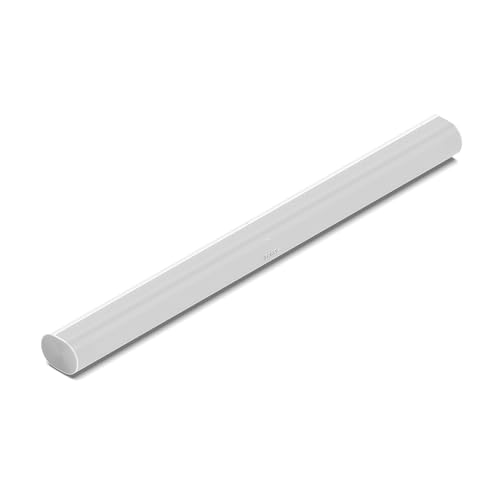
Sonos Arc Soundbar
A premium all-in-one soundbar with Dolby Atmos, Wi-Fi streaming and voice control, designed to work with Sonos subwoofers and rear speakers if you expand later. It connects to a TV with a single HDMI eARC or ARC cable. Check price on Amazon.

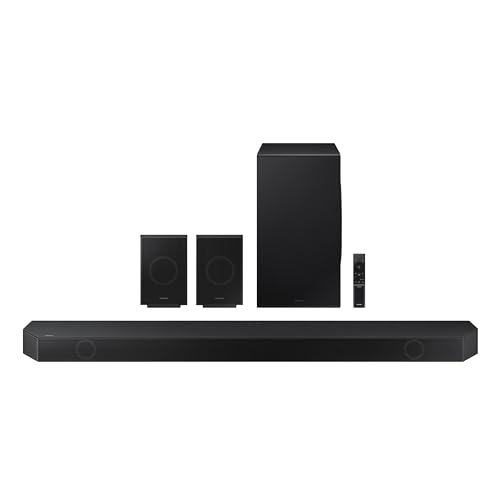
Samsung HW-Q600C 3.1.2ch Soundbar
A 3.1.2-channel soundbar with a centre channel for dialogue, up-firing drivers for Dolby Atmos, a wireless subwoofer and HDMI eARC. Samsung’s Q-Symphony lets it play together with compatible Samsung TV speakers. Check price on Amazon.

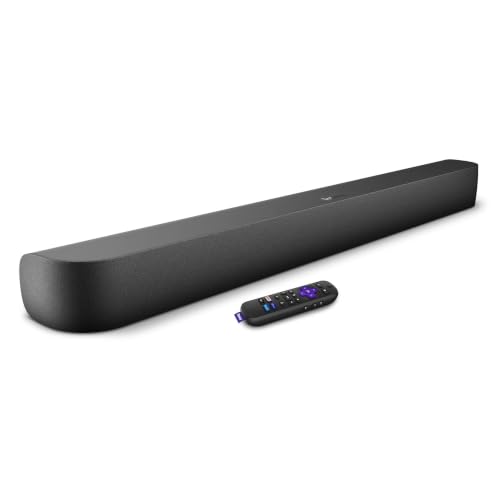
ZVOX AccuVoice AV157 Soundbar
A compact soundbar built specifically for dialogue clarity, with multiple levels of voice boost drawn from hearing-aid technology. It suits viewers who mainly struggle to hear speech over background music and effects. Check price on Amazon.
Common Mistakes
Placing the bar inside a closed or deep cabinet
The cabinet becomes part of the speaker — and a bad part. Reflections, blocked drivers and heat all degrade the result. Open air, front of the stand, always.
Leaving the bar at the back of the stand
The stand’s surface reflects sound and blurs dialogue. Front edge flush is a ten-second fix with an immediately audible reward.
Blocking Atmos drivers with the TV or a shelf
Up-firing drivers need a clear path to the ceiling. A bar tucked under an overhanging screen or shelf has its headline feature disabled by furniture.
Judging subwoofer placement from beside the subwoofer
Bass varies enormously by position in the room. The only seat that matters is yours — judge from it, or use the crawl method to find where it sounds best.
Pro Tips
- Centre on the screen, not on the furniture.
- Front edge flush with the stand — the cheapest clarity upgrade in audio.
- Atmos bars: flat ceiling, clear top, seat in the reflection zone.
- Re-run calibration after any furniture move, however small.
Going Deeper: Context That Helps
Soundbars and gaming have a specific requirement: low latency. Audio that arrives late feels as wrong in a game as late video, and some TV processing adds delay to both. Connecting a console through the TV with eARC passthrough, or into the bar itself where it has HDMI inputs, and enabling game mode on the TV keeps sound and action together. If voices in cut-scenes drift from lips, the fix is almost always a setting — the TV’s lip-sync or the bar’s audio delay adjustment — rather than a defect, and it is worth learning where that setting lives before you need it mid-game.
Firmware updates quietly fix many soundbar problems. Manufacturers patch HDMI handshake bugs, app issues and format support through updates delivered over Wi-Fi or USB, and a bar that has sat in a warehouse may ship with early software. When you set up a new bar, run its update before judging it; when an old bar develops a new quirk after a TV update, check for a bar update too, because the two devices negotiate constantly over HDMI. Keeping the maker’s app installed on your phone makes these updates painless and also unlocks EQ and level controls the remote may not offer.
A soundbar is not only for films. For music, most bars sound best in a stereo or music mode with virtual surround switched off, because surround processing smears the stereo image that music is mixed for. Bluetooth and Wi-Fi streaming make the bar the easiest speaker in the house to play music through, which is why many households end up using it daily for radio and playlists. If music matters to you, judge a bar with your own favourite tracks during the return window, at your normal volume, from your normal seat — film demos in a shop flatter almost everything.
Accessibility features deserve more attention than they get. Many bars offer dialogue modes with several levels of voice boost, some TVs can send audio to both a bar and hearing aids or headphones at once, and Bluetooth output on some models lets one listener use headphones while others use the bar. For households where one person struggles with TV sound, these features change daily life more than surround formats do. Check the manual’s accessibility section before buying if this matters to you — the information is rarely on the box but often present in the product.
Placement rules for soundbars are simple but strict. The bar belongs at ear height when seated, or as close as the TV stand allows, centred on the screen, with its front edge near the front of the stand so sound does not reflect off the stand’s surface. Never put a bar inside a closed cabinet: the doors and shelves block and colour the sound, and heat builds up. Up-firing Atmos bars additionally need a clear path to a flat ceiling — beams, ceiling fans and very high or vaulted ceilings all weaken the height effect, though the bar will still sound good as a normal surround bar.
When a soundbar system grows, it grows in a predictable order. First the bar, then — if bass feels light — a subwoofer; then, if surround effects feel front-bound, rear speakers; the rears add more immersion per step than any processing upgrade. Systems that allow these additions let you spread the cost and learn what your room actually needs. The alternative, a complete package with sub and rears in one box, costs less overall and guarantees the parts match. Neither route is wrong; the mistake is buying a sealed all-in-one bar while expecting to add rears to it later, because most cannot.
Whatever the product, the cheapest upgrade is usually time spent with the manual and the settings menu. Manufacturers bury genuinely useful options — EQ presets, dialogue modes, level trims, firmware updates — several layers deep, and most owners never find them. An hour spent exploring settings with familiar content playing will teach you more about your system than a week of reading reviews, and it costs nothing. Keep notes of what you changed so you can undo anything that makes things worse, and change one thing at a time so you know which adjustment caused which result.
Returns windows are part of the buying process for audio gear, and you should use them deliberately. Sound is personal and room-dependent, so a product that reviews well can still disappoint in your space. Buy from sellers with clear return policies, keep packaging until you are sure, and test with your own content at your own volumes in the first days — not the night before the window closes. A structured test, with the same three songs or scenes each time, reveals differences that casual listening misses and turns a vague feeling into a decision you can act on.
Hearing safety deserves a mention in any audio guide. Comfortable TV and music listening sits well below the levels that risk hearing damage, but portable speakers at parties, and headphones especially, can creep upward in noisy environments as you compete with background sound. If you have to shout to be heard over your own system, it is too loud for long sessions. Many devices offer volume limiting — worth enabling for children — and taking listening breaks during long sessions protects both your ears and your enjoyment, because tired ears judge sound poorly.
A soundbar’s biggest advantage is also its limitation: everything lives in one wide box under the TV. That makes setup simple and dialogue clear for most viewers, but the left and right channels are only as far apart as the bar is wide, so true stereo separation is narrower than two separate speakers can give. Virtual surround processing tries to widen the picture with psychoacoustic tricks, and on many films it works surprisingly well from a single seat. Understanding this trade-off helps you choose: if you mostly watch dialogue-heavy TV from one sofa, a bar is ideal; if you listen to music critically across a wide room, separate speakers still lead.
Frequently Asked Questions
Should a soundbar go above or below the TV?
Below, in almost every setup: it sits closer to seated ear height, rests naturally on the TV stand, and keeps dialogue anchored where faces are. Above the TV is a fallback for unusual furniture or very high screens, and then the bar should be angled down toward the listeners. Whichever you choose, keep it centred on the screen and close to it, so sound and picture stay married. A large vertical gap between screen and bar makes voices feel detached from the actors.
Can I put my soundbar inside a TV cabinet?
Only if the cabinet is open-fronted, the bar sits at the very front of the shelf with clearance around it, and the model is not an up-firing Atmos bar — Atmos bars must have open air above them. A closed cabinet is never acceptable: it muffles and colours the sound and traps heat. If your furniture forces the issue, a slim wall mount under the TV usually solves it more cheaply than new furniture, and restores the placement the bar was designed for.
How far should I sit from a soundbar?
Most living-room distances — roughly two to four metres — suit soundbars well. Very close seating exaggerates the bar’s narrowness and can make Atmos reflections overshoot you; very far seating in a large room dilutes impact and argues for a bigger system or separate speakers. If you have a choice, arrange seating within the comfortable middle, centred on the screen. The bar’s virtual surround and height effects are all tuned around that central zone, which is why the middle seat gets the best of them.
Where exactly should the subwoofer go?
Start along the front wall near the TV, out of the corner, and judge bass from your seat with familiar film scenes. Move it in small steps: toward a corner for more output, away for less boom, adjusting its level control as you go, because position and level interact. If the first positions disappoint, use the subwoofer crawl to find where bass sounds smoothest in the room. There is no universal best spot — your room decides, and your seat is the courtroom.
My Atmos soundbar’s height effects are weak. Is it placement?
Quite possibly. Check the list: flat, hard ceiling of ordinary height; nothing above the bar; seat a few metres in front, in the reflection path; height channel levels not turned down in the settings; and content that actually carries Atmos, played at a volume where effects register. Vaulted or very high ceilings defeat the reflection principle itself, and no placement cures that — the bar remains a good surround bar, but the height layer will be subtle. In such rooms, systems with separate height speakers are the honest upgrade path.
Does the soundbar need to be perfectly centred?
Within a few centimetres, yes — your ears are sensitive to dialogue arriving from beside the picture, and the bar’s channel balance assumes symmetry with the screen. Perfect to the millimetre is unnecessary, but ‘roughly under the TV’ is not enough if the bar is visibly offset. Measure and mark the centre once, during setup, and the question never arises again. Off-centre seating is a separate matter: sit where you sit, and let the centre mark serve the main seat.
The Science in Plain Language: Why Position Changes Sound So Much
Sound leaves a soundbar in every direction, not just towards your face, and the room immediately starts editing it. Surfaces close to the bar reflect sound so quickly that your ears merge the reflection with the original, which thickens some frequencies and cancels others, a phenomenon engineers call comb filtering and listeners just call muddiness. This is why the same bar can sound crisp on an open stand and woolly pushed back against a wall on a deep shelf: nothing about the bar changed, but the reflections arriving at your ears changed completely, and with them the clarity of every line of dialogue.
Distance, delay and the brain’s shortcuts
Your hearing locates sounds partly by which ear receives them first and loudest, and a well-positioned bar exploits that honestly: drivers spread across its width create a soundstage that matches the screen because the geometry is true. Move the bar off-centre and the geometry lies; dialogue appears to come from beside the actor’s face, and the brain, noticing the disagreement between eyes and ears, works harder all evening. That extra work is experienced as vague fatigue rather than as a recognisable fault, which is why correcting a bar that sat twenty centimetres off-centre can feel like a bigger upgrade than the tape measure suggests it should.
Height matters for the same reason. Tweeters are directional at the frequencies that carry consonants and sparkle, so a bar aimed at your knees or at a point well above your head loses the detail that makes speech effortless. You cannot always place a bar at perfect ear height, but every centimetre closer helps, and angling the bar slightly on its mount or stand, where the design allows, can recover much of what an imperfect shelf height takes away.
Positioning for Particular Furniture: Stands, Mounts and Fireplaces
Most placement compromises are really furniture compromises. A deep media unit invites the bar to sit too far back; the cure is discipline, bringing it forward to the front edge even if cables must be re-dressed, because the front few centimetres of that shelf are the best-sounding real estate in the room. If the unit has a lip or raised edge, check it does not block the bar’s lower drivers or its remote sensor, and if the bar must sit slightly higher on a plinth to clear it, that small lift often improves matters anyway.
Televisions on stands versus wall-mounted screens
With a television on a stand, the bar usually shares the surface, and the risk is the screen’s feet or central pedestal dictating a position that suits the television rather than the sound. Measure the gap between pedestal feet before assuming the bar fits between them, and remember a bar can sit in front of a central pedestal if depth allows, provided it does not cover the screen’s lower edge or its remote receiver. A few millimetres of overlap on the receiver will produce a household convinced the television remote is failing, when the bar is simply standing in its line of sight.
Wall-mounting both screen and bar gives the cleanest geometry: the bar centred under the screen, close enough to look attached to it, with its front face flush or slightly forward of the screen plane. Leave the small gap the bracket maker specifies for ventilation and cable access, angle nothing unless the mount offers a tilt you have tested from the sofa, and route cables before the final tightening, because a beautifully level bar connected to the wrong socket is still a job half finished.
The fireplace problem, treated honestly
Televisions above fireplaces are common and acoustically awkward: the screen is high, so the bar is high, and sound arrives from above the actors rather than from their faces. Mitigate rather than surrender. A tilting mount that angles the bar down towards the seating helps more than any setting, a mantel shelf that lets the bar sit forward of the chimney breast helps again, and dialogue modes earn their keep in this room more than in any other. If the fireplace is used, keep the bar and its cables clear of heat paths, and never let a convenient mantel position cook electronics slowly through a winter of fires.
The Subwoofer Crawl and Other Honest Placement Tests
The famous subwoofer crawl sounds undignified because it is: you place the subwoofer at your listening position, play something with steady bass, and crawl around the room’s edges listening for where the bass sounds smoothest and most even. That spot is where the subwoofer should live, because acoustics are reciprocal. It takes ten minutes, requires no equipment, and routinely beats every rule of thumb, because it measures your actual room with its actual furniture instead of an imaginary average room from a textbook.
Corner loading, boundaries and boom
Every wall near a subwoofer reinforces its output, and a corner, where three boundaries meet, reinforces it most. That free power is welcome in a large room and disastrous in a small one, where the same corner produces a one-note boom that follows every soundtrack like a fog. If your bass sounds like a single repeated note regardless of the music, pull the sub out of the corner in stages, testing at each stop, before reaching for settings; placement cures what equalisation can only disguise. Conversely, a sub stranded in the middle of a long wall in a big open space may simply need a boundary’s help to reach the sofa with authority.
Distance to the listening seat matters through delay as well as level. Many bars let you set subwoofer distance or rely on their calibration to do it; if yours offers a phase switch, test both positions with a scene of footsteps or a bass line you know, and keep the setting where the bass sounds tightest and most connected to the bar. A sub that is out of step smears the join between bar and subwoofer, and owners often describe the result as the bass arriving from somewhere else, which is precisely what is happening.
Rear Speakers and the Geometry of Envelopment
Rear speakers succeed when you forget they exist. Their job is atmosphere: rain that surrounds, a crowd that wraps, a room tone that places you inside the scene. Position them to the sides of or slightly behind the main seat, at or a little above ear height, angled towards the listening position but not aimed like torches at the back of one person’s head. Symmetry matters more than perfection; a matched pair at matched distances gives the mixer a fair chance, while one speaker in a corner and its partner on a bookshelf produces a lopsided bubble nobody can tune away.
Sofas against walls and other compromises
If the sofa backs onto a wall, true behind-you placement is impossible, and the honest options are side placement angled inwards, or mounting the rears high on the wall behind, angled down, accepting a more overhead character. Both can work well; what fails is placing them on the floor behind the sofa firing into its back, or on a low unit where cushions swallow them. Raise them, clear their path to your ears, and then set their level conservatively, because in a compromised geometry a quieter rear pair that blends beats a louder pair that advertises its position.
Wireless rears still need power, so let socket positions influence placement early rather than trailing extension leads across doorways as a permanent solution. If a perfect position has no power and an imperfect one does, choose the powered position and correct with levels and calibration; a safe, tidy, slightly imperfect layout that stays in place for years outperforms a theoretically perfect layout that gets moved every time the room is cleaned and never quite returns.
Verifying Placement With Scenes, Not Test Tones Alone
Finish any placement session with three checks from the main seat. A dialogue scene confirms voices are anchored to the screen and clear at normal volume. A scene with movement across the screen — a car passing, a character walking while talking — confirms the sound travels with the picture rather than jumping between speakers. A quiet scene with room tone, rain or a distant crowd confirms the system surrounds without drawing attention to any single box. If all three pass, stop moving things; placement, like seasoning, is ruined more often by restlessness than by neglect.
A placement log worth keeping
Note the final positions in plain language: bar distance from the wall, subwoofer location described by the nearest furniture, rear heights and angles. Furniture migrates during decorating, cleaning and Christmas, and a two-line note restores in minutes a layout that took an afternoon of crawling and listening to find. Photograph the setup from the listening seat as well; a picture catches the small asymmetries — a bar crept sideways, a rear speaker rotated by a duster — that the eye adapts to and the ear quietly suffers.
Revisit placement after any major change: a new sofa, a rug added or removed, a television replaced with a larger screen that shifts the visual centre. Sound is a property of the whole room, not of the bar alone, and a five-minute recheck after such changes keeps a well-positioned system honest. That habit, more than any single measurement on installation day, is what separates systems that still sound right in year five from those that slowly drift into mediocrity nobody can explain.
Positioning in Rooms That Double as Something Else
Many soundbars serve rooms with two lives: a study that becomes a guest room, a dining room that hosts film nights, a child’s playroom that is a cinema after bedtime. Positioning for a double-life room means deciding which life gets the ideal layout and which gets the workable one, and building the changeover into the furniture rather than into a weekly reinstallation. A bar on a wheeled or easily slid stand, a subwoofer whose good-enough second position you have already found and noted, and cable slack planned for both arrangements turn the transformation into two minutes instead of twenty.
Bedrooms and the near-field case
A bedroom listener is close, often reclined, and listening at low volume, and each fact bends the rules. Ear level means pillow level, which usually argues for the bar on a unit at the foot of the bed or on a low stand rather than high on a wall. Distance is short, so width and power matter little and dialogue clarity at a whisper matters enormously. The subwoofer, if one is used at all, belongs where its output can be kept genuinely subtle, and many bedroom systems are happiest with the sub turned down further than film habit suggests or switched off for late viewing, because a bedroom’s quiet reveals bass that a living room’s ambient noise politely covers.
Light discipline joins sound discipline here: a bar whose display cannot be dimmed will light a dark bedroom at every volume change. If yours cannot dim, a small piece of removable light-dimming film or a repositioning that takes the display out of the sleeper’s sightline solves what settings cannot. Positioning, in a bedroom, is as much about where light and sound fall on a person trying to sleep as about acoustics in the abstract.
Measuring Without Instruments: Ears, String and a Phone
You own better measuring tools than you think. A tape measure or a length of string establishes centre and symmetry: measure from each end of the bar to the screen’s edges, and from each rear speaker to the main seat, and make the pairs match. A phone’s camera, held at the listening position and pointed at the bar, reveals at a glance whether the bar sits level, centred and unobstructed in the sightline you actually occupy. Your ears, given a familiar scene and one change at a time, remain the finest instrument for everything that matters, because they are the instrument the whole exercise exists to please.
The one-change rule and the return test
Move one thing, listen, and either keep the change or reverse it completely before trying the next. This discipline feels slow and is in fact the fastest route, because simultaneous changes cannot be attributed, and unattributable improvements evaporate the next time furniture moves. When a change seems to help, apply the return test: put things back and listen again. A real improvement announces itself by its absence; an imagined one feels much the same either way, and the return test is how you avoid building a shrine to a difference that never existed.
Recruit a second listener for the final judgement if one is available, seated where they actually sit. Placement serves every seat as fairly as the room allows, and the person in the side seat hears imbalances the central listener cannot. Their verdict on dialogue clarity from the worst seat in the room is worth more than any measurement taken from the best one.
When Placement Cannot Be Fixed: Honest Workarounds
Some rooms refuse: a corner television in a listed building, a bar that must live where the only socket and the only shelf agree it must. Workarounds then earn their place. Dialogue enhancement and centre-level adjustments compensate partially for a bar that sits too low or off to one side. A bar with room calibration can be told, through its measurements, some of what its position denies it. Angling a bar towards the seating with a wedge or an adjustable mount recovers aim even when the shelf is wrong. None of these repeals geometry, but each narrows the gap between the room you have and the sound you wanted.
Knowing when the furniture must move instead
There is a threshold where workarounds cost more — in money, in settings complexity, in nightly irritation — than moving the furniture. If the television and seating can be re-planned within the room, even once, that single rearrangement usually outperforms years of compensating for a layout that fights the sound. Judge by the severity of the symptom: a slightly low bar is a workaround case; a bar behind a television, firing into a chimney breast, with the seating at right angles to it, is a furniture case, and honesty about which case you are in is the beginning of fixing either.
Seasonal and Occasional Rearrangements
Rooms change their minds across the year: seating turns towards a fire in winter and towards a garden in summer, a tree arrives in December and displaces a subwoofer, guests convert a corner into a bed. Treat each rearrangement as a small positioning event rather than an insult to the original setup. Your placement log tells you what correct looked like; your verification scenes tell you whether the temporary layout passes. Where a seasonal change genuinely hurts the sound — the displaced subwoofer booming in its holiday corner — a temporary level adjustment, noted and later reversed, beats a month of compromised listening or a household argument about furniture. Flexibility, documented, is a positioning skill like any other.
And when a rearrangement turns out to sound better than the arrangement it replaced, believe the evidence and update the log. Rooms teach their owners things over years — a seat that works, a subwoofer corner that flatters everything — and the well-positioned system at year five is usually the accumulated result of such small, honestly judged experiments, not the frozen triumph of installation day.
Positioning for Two Listeners Who Disagree
Households contain multitudes: one listener who wants cinema scale, one who wants dialogue at a murmur; one who sits centrally, one who has claimed the corner chair for a decade. Positioning can mediate what volume arguments cannot. A bar centred on the room’s true seating axis, rather than on the television’s decorative axis, serves both seats more fairly when the two axes differ. Rear levels set for the room rather than for one throne keep the corner chair inside the experience. And a centre channel with its own level lets the dialogue devotee be served without the whole soundtrack rising, which is the technical form of a domestic peace treaty — negotiated in placement and settings, and kept every evening without a word.
Related Guides
These guides and roundups cover the closest decisions and fixes in this category:
- best soundbars for large rooms
- best soundbars for surround sound
- best ceiling speakers for atmos
- best soundbars for home theater
- how to choose a soundbar
- what is dolby atmos on a soundbar
How close to the wall behind it should a soundbar sit?
As far forward as the furniture allows is the general rule, ideally at the front edge of the stand so sound leaves into the room rather than reflecting off the surface behind and beneath it. If the bar must sit back, a few centimetres of forward movement usually buys a clearly audible improvement in dialogue clarity, so experiment before accepting a recessed position.
My subwoofer sounds fine for films but boomy for music. Is that placement?
Often, yes. Music exposes a subwoofer’s unevenness because bass lines move through notes, and a corner position that flatters film effects can emphasise one musical note over others. Try moving the sub out of the corner in stages and re-test with the same track; if the boom follows the position rather than the content, placement was the cause and the cure.
Can I place the soundbar vertically or on its side?
No, unless the maker explicitly designs for it. A bar’s drivers, and any height or surround processing, assume the bar is horizontal with its front facing the listeners. On its side, the soundstage collapses, dialogue drivers point at the ceiling or floor, and calibration cannot rescue geometry that the processing never anticipated.