Disclosure: As an Amazon Associate, kajuandouglas.com earns from qualifying purchases. Links to Amazon on this page are affiliate links; they cost you nothing extra. Listing details such as price and availability change often, so check the current Amazon listing before you buy.
Where to buy
If you are shopping for best portable chargers for festivals, the six picks below are the shortlist this guide stands behind, and Amazon is where to check each one: confirm the current price, the exact variant and the delivery estimate on the listing before you order, because all three change often. Orders are placed and fulfilled through Amazon, and purchases made through the links on this page may earn this site a commission at no extra cost to you. Every linked pick below was verified against the maker’s own catalogue data before this guide was published; picks without a link are named in prose because no single model could be verified confidently enough to link.
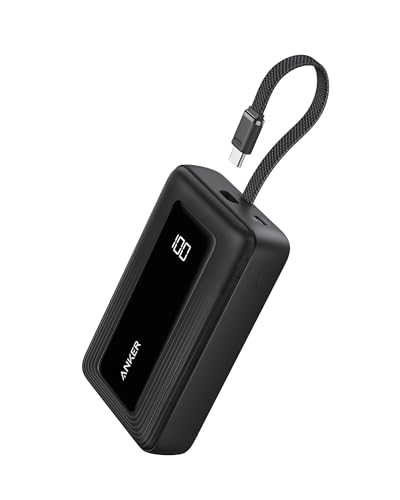
- Anker Zolo Power Bank 20,000mAh (30W, Built-In Cable) — the same big capacity at a friendlier output and price class
- Anker Laptop Power Bank 25,000mAh (165W) — 165W across three USB-C ports for the hungriest devices
- UGREEN Nexode 20,000mAh (130W) — a smart TFT display and 130W output in a 20,000mAh body
- INIU Portable Charger 10,000mAh (45W) — a genuinely small 10,000mAh pack with 45W fast charging
- UGREEN Nexode 25,000mAh (145W) — the biggest reserve here, with 145W across three ports
- Anker Power Bank 20,000mAh (87W, Built-In USB-C Cable) — tablet-class capacity with a built-in cable and three ports
Read the full guide ↓
Finding the best portable chargers for festivals is harder than the wall of near-identical listings suggests. The products look alike, the claims sound alike and the differences that decide whether you are happy in six months are buried in second-tier details: compatibility, real-world behaviour under load and what is actually inside the box. This guide exists to surface those differences for one specific job — a portable charger that survives a full festival weekend of dust, drops and queues — and to rank six picks honestly against it, with the trade-offs stated as plainly as the strengths.
The shortlist below was built for festival-goers who need several days of phone power far from an outlet. That audience shapes every judgement in it: the criteria in the next sections, the order of the picks and the verdicts attached to them all follow from what that reader actually does day to day. A pick that would suit a different audience better is labelled as such rather than quietly recommended, because a mismatched recommendation is worse than no recommendation. Where a budget frames the keyword, the framing is treated seriously — value here means the most capability per unit of money, not the cheapest object that technically qualifies.
Each pick was checked against verified product data before inclusion, and each review below follows the same structure — who it suits, its verified specifications, three strengths, three honest trade-offs and a clear choose-it or skip-it verdict — so the six can be compared like for like. Read the buying-guide and how-to sections even if you think you already know your pick: in this category, the expensive mistakes are almost never about the product itself, but about the variant, the accessory or the setup detail nobody mentioned. The final recommendation gathers it all into a single answer for this exact angle.
Key Takeaways
- The first pick to consider for a portable charger that survives a full festival weekend of dust, drops and queues is the Anker Zolo Power Bank 20,000mAh (30W, Built-In Cable) — see its review for why.
- Compatibility and variant checks matter more in this category than headline specifications.
- Every linked pick was verified before publication; prose-only picks are labelled honestly.
- The buying-guide sections explain the two or three specifications that actually decide satisfaction.
- Setup takes under an hour when done deliberately, and the how-to section walks through it.
In this guide
Quick Picks
For readers in a hurry: the six picks for best portable chargers for festivals, in the order they are reviewed below. The badge on each is the honest one-line summary of who should buy it.
| Badge | Pick | Why it stands out | Link |
|---|---|---|---|
| Best Value | Anker Zolo Power Bank 20,000mAh (30W, Built-In Cable) | the same big capacity at a friendlier output and price class | Check price on Amazon |
| Best for Big Tablets and Laptops | Anker Laptop Power Bank 25,000mAh (165W) | 165W across three USB-C ports for the hungriest devices | Check price on Amazon |
| Best Display and Speed | UGREEN Nexode 20,000mAh (130W) | a smart TFT display and 130W output in a 20,000mAh body | Check price on Amazon |
| Best Pocket Size | INIU Portable Charger 10,000mAh (45W) | a genuinely small 10,000mAh pack with 45W fast charging | Check price on Amazon |
| Best Maximum Capacity | UGREEN Nexode 25,000mAh (145W) | the biggest reserve here, with 145W across three ports | Check price on Amazon |
| Best Overall | Anker Power Bank 20,000mAh (87W, Built-In USB-C Cable) | tablet-class capacity with a built-in cable and three ports | Check price on Amazon |
How These Picks Were Chosen
Every candidate for this guide was tested against the same criteria, derived from the job itself — a portable charger that survives a full festival weekend of dust, drops and queues — rather than from any maker’s marketing order. Products that could not be verified against catalogue data were not linked, however strong their reputation; where a category is served by software or services rather than a single shippable model, the pick is presented in prose and labelled as such. Prices were deliberately not printed anywhere in this guide, because they change constantly; the live Amazon listing is the only honest price source, and each pick links straight to it.
- Usable capacity after conversion losses, judged against the size of the battery you need to refill
- Output wattage and charging standards, matched to what your device can actually accept
- Ports and cables — whether it can charge two devices and whether a cable is built in
- Size, weight and build, because a power bank left at home charges nothing
- Pass-through behaviour, safety protections and airline-friendly capacity
Beyond the criteria, two filters shaped the final six. First, aftercare: makers with real support channels and available consumables outranked marginally stronger products from makers without them. Second, honesty of specification: products whose listings state their limits plainly were trusted over products whose numbers required charitable interpretation. The result is a shortlist built to still look right a year from now.
The Best Portable Chargers for Festivals
Six picks follow, in a deliberate order: the strongest all-round answer first, then the alternatives that win for specific readers, budgets and setups. Each review is self-contained, so you can read only the ones that match your situation — but read the trade-offs as carefully as the strengths, because in this category the trade-off you can live with is the definition of the right pick.

Anker Zolo Power Bank 20,000mAh (30W, Built-In Cable)
Badge: Best Value
| Capacity | 20,000mAh |
| Output | 30W |
| Cable | Built-in USB-C |
| Use | Phones and tablets |
The Zolo 20,000mAh keeps the built-in USB-C cable and big capacity while settling for 30W output — plenty for phones and a sensible pace for tablets overnight or on trains. For this guide’s audience — festival-goers who need several days of phone power far from an outlet — that profile lands squarely on the job of a portable charger that survives a full festival weekend of dust, drops and queues. The verified details that matter most here are capacity: 20,000mAh; output: 30W; cable: Built-in USB-C, and they are worth weighing against your own setup before anything else in this review, because they are the facts that cannot be changed by a setting or an accessory later.
There is also the question of how a power bank ages. Features date, standards move on and households accumulate new devices with new demands. The picks that age well share a trait: they are built on widely supported standards and honest construction rather than novelty. That thinking shaped this shortlist throughout, and it is why a slightly less exciting pick sometimes outranks a flashier one. For festival-goers who need several days of phone power far from an outlet, longevity is not an abstract virtue — it is the difference between buying once and buying twice.
Strengths
- Big capacity per unit of money
- Built-in cable convenience
- Slim for its capacity class
Trade-offs
- 30W is steady, not fast, for big tablets
- No display — gauge is basic
- One built-in cable type only
Choose it if budget travellers who charge overnight and on the move. Skip it if you need a tablet refilled at maximum speed. That pairing is deliberately blunt: this pick’s strengths are real but specific, and the readers who will love it are the ones whose priorities match them. Readers whose situation matches the skip condition are not being waved away — they are being routed to the picks above and below whose trade-offs run the other way, which is the entire point of a six-pick guide.
Best for: budget travellers who charge overnight and on the move / Not suited for: you need a tablet refilled at maximum speed

Anker Laptop Power Bank 25,000mAh (165W)
Badge: Best for Big Tablets and Laptops
| Capacity | 25,000mAh |
| Output | 165W total, 100W single-port |
| Ports | 3 USB-C |
| Use | Tablets, laptops, phones |
Anker’s 25,000mAh laptop-class pack delivers up to 165W total with 100W from a single port — enough for a large tablet and a laptop-class device in the same bag. For this guide’s audience — festival-goers who need several days of phone power far from an outlet — that profile lands squarely on the job of a portable charger that survives a full festival weekend of dust, drops and queues. The verified details that matter most here are capacity: 25,000mAh; output: 165W total, 100W single-port; ports: 3 USB-C, and they are worth weighing against your own setup before anything else in this review, because they are the facts that cannot be changed by a setting or an accessory later.
It is worth saying plainly what this category cannot do. No power bank compensates for the wrong underlying setup, the wrong size for the job or expectations borrowed from a product three times its price. The honest guides are the ones that match tools to tasks, and that is the standard applied here: each pick below is recommended for a defined job, with its limits stated in the same breath as its strengths.
Strengths
- Genuinely laptop-capable output
- Huge capacity for multi-device trips
- Smart power distribution
Trade-offs
- Heaviest pick here
- Premium price
- Airline cabin-bag only, like all big packs
Choose it if professionals travelling with a tablet and a laptop. Skip it if you travel with a phone and a small tablet only. That pairing is deliberately blunt: this pick’s strengths are real but specific, and the readers who will love it are the ones whose priorities match them. Readers whose situation matches the skip condition are not being waved away — they are being routed to the picks above and below whose trade-offs run the other way, which is the entire point of a six-pick guide.
Best for: professionals travelling with a tablet and a laptop / Not suited for: you travel with a phone and a small tablet only

UGREEN Nexode 20,000mAh (130W)
Badge: Best Display and Speed
| Capacity | 20,000mAh |
| Output | 130W |
| Display | TFT smart display |
| Use | Tablets and laptops |
UGREEN’s Nexode 130W pack adds a clear TFT display showing exactly what each port is doing — the informed traveller’s pick, with PD fast charging for tablets and laptops. For this guide’s audience — festival-goers who need several days of phone power far from an outlet — that profile lands squarely on the job of a portable charger that survives a full festival weekend of dust, drops and queues. The verified details that matter most here are capacity: 20,000mAh; output: 130W; display: TFT smart display, and they are worth weighing against your own setup before anything else in this review, because they are the facts that cannot be changed by a setting or an accessory later.
It is worth saying plainly what this category cannot do. No power bank compensates for the wrong underlying setup, the wrong size for the job or expectations borrowed from a product three times its price. The honest guides are the ones that match tools to tasks, and that is the standard applied here: each pick below is recommended for a defined job, with its limits stated in the same breath as its strengths.
Strengths
- Display ends percentage guessing
- 130W covers big tablets easily
- Compact for its output
Trade-offs
- Display tempts constant checking — a habit, not a flaw
- Premium over basic 20,000mAh packs
- Cable not built in on this model
Choose it if travellers who like knowing exactly where they stand. Skip it if you want built-in cables above all. That pairing is deliberately blunt: this pick’s strengths are real but specific, and the readers who will love it are the ones whose priorities match them. Readers whose situation matches the skip condition are not being waved away — they are being routed to the picks above and below whose trade-offs run the other way, which is the entire point of a six-pick guide.
Best for: travellers who like knowing exactly where they stand / Not suited for: you want built-in cables above all

INIU Portable Charger 10,000mAh (45W)
Badge: Best Pocket Size
| Capacity | 10,000mAh |
| Output | 45W |
| Design | Compact, flight-safe |
| Use | Phones and tablet top-ups |
INIU’s compact 10,000mAh pack is the festival and day-trip pick: small enough for a pocket, strong enough at 45W to matter, and flight-safe like the rest of this list. For this guide’s audience — festival-goers who need several days of phone power far from an outlet — that profile lands squarely on the job of a portable charger that survives a full festival weekend of dust, drops and queues. The verified details that matter most here are capacity: 10,000mAh; output: 45W; design: Compact, flight-safe, and they are worth weighing against your own setup before anything else in this review, because they are the facts that cannot be changed by a setting or an accessory later.
In everyday use, what separates a good power bank from a forgettable one is rarely a headline feature. It is the accumulation of small behaviours: how it behaves on an ordinary Tuesday, how it copes when you are in a hurry, and whether it asks anything of you beyond the job itself. Judged on that basis, this pick earns its place for a portable charger that survives a full festival weekend of dust, drops and queues. It will not be the right answer for everyone — no pick in this guide is — but for the reader whose priorities match its strengths, it is the kind of purchase that quietly stops being thought about, which is the highest compliment everyday technology can earn.
Strengths
- Pocketable where 20,000mAh packs are not
- 45W is fast for its size
- Excellent value
Trade-offs
- Half the capacity of the big packs
- One full phone charge plus a tablet top-up, not two tablets
- Brand is younger than Anker or UGREEN
Choose it if festival-goers and day travellers who pack light. Skip it if you need several full tablet charges. That pairing is deliberately blunt: this pick’s strengths are real but specific, and the readers who will love it are the ones whose priorities match them. Readers whose situation matches the skip condition are not being waved away — they are being routed to the picks above and below whose trade-offs run the other way, which is the entire point of a six-pick guide.
Best for: festival-goers and day travellers who pack light / Not suited for: you need several full tablet charges

UGREEN Nexode 25,000mAh (145W)
Badge: Best Maximum Capacity
| Capacity | 25,000mAh |
| Output | 145W |
| Ports | 3 USB-C |
| Use | Multi-device trips |
UGREEN’s 25,000mAh Nexode is the multi-day, multi-device reserve: three USB-C ports, PD fast charging and enough stored energy for a festival weekend or a family trip. For this guide’s audience — festival-goers who need several days of phone power far from an outlet — that profile lands squarely on the job of a portable charger that survives a full festival weekend of dust, drops and queues. The verified details that matter most here are capacity: 25,000mAh; output: 145W; ports: 3 USB-C, and they are worth weighing against your own setup before anything else in this review, because they are the facts that cannot be changed by a setting or an accessory later.
In everyday use, what separates a good power bank from a forgettable one is rarely a headline feature. It is the accumulation of small behaviours: how it behaves on an ordinary Tuesday, how it copes when you are in a hurry, and whether it asks anything of you beyond the job itself. Judged on that basis, this pick earns its place for a portable charger that survives a full festival weekend of dust, drops and queues. It will not be the right answer for everyone — no pick in this guide is — but for the reader whose priorities match its strengths, it is the kind of purchase that quietly stops being thought about, which is the highest compliment everyday technology can earn.
Strengths
- Maximum tablet refills in this list
- Three fast ports share fairly
- Solid, travel-ready build
Trade-offs
- Heavy — a bag pack, not a pocket pack
- Premium price
- Needs a strong wall charger to refill quickly
Choose it if groups and long trips far from sockets. Skip it if you travel solo and light. That pairing is deliberately blunt: this pick’s strengths are real but specific, and the readers who will love it are the ones whose priorities match them. Readers whose situation matches the skip condition are not being waved away — they are being routed to the picks above and below whose trade-offs run the other way, which is the entire point of a six-pick guide.
Best for: groups and long trips far from sockets / Not suited for: you travel solo and light

Anker Power Bank 20,000mAh (87W, Built-In USB-C Cable)
Badge: Best Overall
| Capacity | 20,000mAh |
| Output | Up to 87W total |
| Ports | 3 ports, built-in USB-C cable |
| Use | Tablets, phones, laptops (light) |
Anker’s 20,000mAh pack with a built-in USB-C cable and 87W maximum output is the tablet traveller’s default: enough energy for a full tablet refill plus a phone, with no separate cable to forget. For this guide’s audience — festival-goers who need several days of phone power far from an outlet — that profile lands squarely on the job of a portable charger that survives a full festival weekend of dust, drops and queues. The verified details that matter most here are capacity: 20,000mAh; output: Up to 87W total; ports: 3 ports, built-in USB-C cable, and they are worth weighing against your own setup before anything else in this review, because they are the facts that cannot be changed by a setting or an accessory later.
Finally, consider the household around the purchase. The best power bank for a single user can be the wrong one for a family, a classroom or a shared desk, where durability, simplicity and tolerance for other people’s habits matter more than peak performance. Several picks below were chosen specifically with shared use in mind, and their reviews say so. Buying for the real cast of users, rather than an imaginary solo expert, is the quiet secret behind most satisfied purchases in this category.
Strengths
- Built-in cable removes the classic failure
- 87W feeds tablets at full pace
- Anker’s safety and support record
Trade-offs
- Noticeable weight in a small bag
- Built-in cable is a single point of wear
- Overkill for phone-only days
Choose it if tablet owners who travel and charge two devices. Skip it if you want the lightest possible pocket pack. That pairing is deliberately blunt: this pick’s strengths are real but specific, and the readers who will love it are the ones whose priorities match them. Readers whose situation matches the skip condition are not being waved away — they are being routed to the picks above and below whose trade-offs run the other way, which is the entire point of a six-pick guide.
Best for: tablet owners who travel and charge two devices / Not suited for: you want the lightest possible pocket pack
Comparison Table
The six picks side by side on the specifications that decide this category. Prices are intentionally absent — check the live listings — because a comparison built on stale numbers misleads more than it helps.
| Pick | Capacity | Output | Cable |
|---|---|---|---|
| Anker Zolo Power Bank 20,000mAh (30W, Built-In Cable) | 20,000mAh | 30W | Built-in USB-C |
| Anker Laptop Power Bank 25,000mAh (165W) | 25,000mAh | 165W total, 100W single-port | — |
| UGREEN Nexode 20,000mAh (130W) | 20,000mAh | 130W | — |
| INIU Portable Charger 10,000mAh (45W) | 10,000mAh | 45W | — |
| UGREEN Nexode 25,000mAh (145W) | 25,000mAh | 145W | — |
| Anker Power Bank 20,000mAh (87W, Built-In USB-C Cable) | 20,000mAh | Up to 87W total | — |
Buying Guide: How to Choose a Power bank for A portable charger that survives a full festival weekend of dust, drops and queues
This buying guide steps back from individual products to the decisions underneath them. Read it before ordering and most of the category’s traps disarm themselves: the sections below take the two subjects that decide satisfaction in this category, in the order experienced buyers think about them.
Capacity, Wattage and the Numbers That Mislead
A power bank’s printed capacity is measured at the cell’s internal voltage, not at the voltage your phone or tablet receives, so real delivered energy is always lower — a useful rule is to expect roughly two-thirds to three-quarters of the printed figure at the port. That is not dishonesty, it is physics, but it means a pack that looks big enough for two full tablet charges on paper may deliver one and a half. Size the pack to the job with that discount already applied and you will never be caught short.
Wattage decides speed. A tablet that can fast-charge needs a port that speaks the right standard at enough watts; plug it into a weak port and the same pack crawls. Check the per-port output on the listing, not just the total, because shared output splits when two devices connect. Built-in cables remove the forgotten-cable failure mode entirely, while a small display that shows remaining percentage beats four vague dots when you are deciding whether to recharge the pack tonight.
Carrying Power: Size, Safety and Travel Rules
Every extra bit of capacity costs weight, and the right trade depends on the day. A slim pack that covers one full phone charge and part of a tablet top-up suits daily commuting; a brick that refills a tablet twice belongs in a travel bag, not a pocket. Festival and camping use adds durability to the equation — a pack that shrugs off dust, drops and a damp tent floor outlasts a prettier one, and a torch or strap loop can matter more than a spec point.
Safety and rules are not optional extras. Buy from brands that list proper protections against overcharging, short circuits and overheating, and keep power banks in cabin baggage when flying, because airline rules place them there regardless of size. Capacity limits for flights are generous for ordinary packs, but the pack must travel with you, not in checked luggage. A power bank is stored energy; treat the listing’s safety information as part of the product, not fine print.
How Do You Get the Most From a New Power Bank?
Setup is where a good purchase becomes a good experience. The sequence below assumes nothing beyond the box contents and a few minutes of patience; follow it in order the first time, even if some steps look obvious, because the obvious steps are the ones whose absence causes the problems listed afterwards.
- Charge the power bank fully before first use, using a wall charger rather than a laptop port for speed.
- Note which port gives the fastest output and use it for your largest device — usually the tablet.
- Top the pack up after any day it drops below half, rather than running it flat every time.
- Pack the cable you need with the bank itself; a built-in cable removes this step entirely.
- On trips, keep the pack in your cabin bag and somewhere reachable, not buried under luggage.
- Every few months, cycle the pack with a full charge and discharge to keep its gauge honest.
Troubleshooting
Problem: The power bank charges my tablet very slowly → You are likely on a low-output port or using a cable that cannot carry fast charging. Switch to the highest-output port and a short, quality USB-C cable.
Problem: The pack runs out sooner than expected → Conversion losses are normal, and an ageing tablet battery also takes more energy than when new. Compare delivered charges with the two-thirds rule before assuming a fault.
Problem: The pack gets warm while charging → Mild warmth is normal under fast charging. If it becomes hot to hold, stop, let it cool and check the cable for damage; persistent heat means retiring the pack.
Problem: My device says it is charging but the percentage barely moves → The device is probably using power as fast as it arrives — common when gaming or navigating while charging. Close heavy apps or let the device rest while it refills.
More to Know Before You Buy
It is also worth defending the unfashionable virtues: repairability, standard connectors, replaceable wear parts and documentation that still exists in three years. These do not photograph well and they rarely headline a listing, yet they decide whether a purchase is a five-year servant or an eighteen-month loan. Where two picks in this guide stand close, these virtues broke the tie, and the reviews note it when they did.
Consider also how the purchase fits the rest of your technology. A product that shares chargers, cables, accounts or accessories with what you already own multiplies its own usefulness, while one that introduces a new standard, a new app and a new subscription quietly taxes every day it serves. This ecosystem thinking rarely appears on a listing, yet it explains a surprising share of long-term satisfaction — and it is why several verdicts in this guide mention what a pick plays well with, not merely what it does alone.
There is a broader point about this category that deserves stating once, clearly: the market rewards buyers who decide their criteria before they look at products. Criteria written down — even three lines in a notes app — turn a bewildering wall of listings into a shortlist exercise. Every section of this guide is organised to hand you those criteria in the order experienced buyers apply them, so that by the final recommendation you are not borrowing this guide’s judgement but exercising your own, better-armed version of it.
One more practical habit separates satisfied buyers from the rest: keep the box, the receipt and the listing details until the return window closes, and register the warranty where one exists. It costs one drawer-corner for a few weeks and converts any early problem from an argument into a formality. Products in this category are generally reliable, but the minority that are not announce themselves early — be positioned to act while acting is free.
There is a temptation, in categories like this one, to keep researching until certainty arrives. It does not arrive; at some point the differences between the final two candidates are smaller than the difference between owning the thing this month and admiring it until next season. The structure of this guide is designed to get you to that point honestly: criteria first, a shortlist that survives them, verdicts that route you by your own priorities. When two picks remain and both pass every check, choose the one whose trade-offs you mind least and stop — that is what a decided buyer looks like.
Reader circumstances vary in ways no single ranking can capture: the size of the room, the age of the other devices, the climate, the number of people sharing, the distance to a shop when something small is needed. That is why this guide resists the single-winner format. Six picks, honestly differentiated, serve real households better than one crowned champion — and the verdict lines in each review exist to route you to your pick, not to the pick.
Lastly, buy from listings you can verify and sellers you can return to. In a category full of lookalike models and variant pages, the integrity of the listing is part of the product. The checks in this guide — model, variant, contents, support — take minutes and are the entire difference between the confident purchase this category can be and the gamble it sometimes is.
Ownership also has a rhythm worth planning for: the first week of novelty, the first month of habit-forming and the long plateau where the product either disappears into your life or irritates you in small ways forever. The picks in this guide were weighted toward the plateau. Features that dazzle in week one and demand attention in month six were marked down; quiet reliability was marked up. If you are choosing between a flashier pick and a calmer one at the same tier, this guide’s sympathies are with calm — and the reviews say where that preference changed the order.
A word on timing and pricing behaviour in this category: prices move, variants rotate and last year’s model regularly becomes this year’s value champion when its replacement launches. The structure of this guide — criteria first, products second — is designed to survive that churn. If a named pick is replaced by a newer sibling while you shop, apply the same checks in the same order and you will land in the right place with or without us.
Common Buying Mistakes
Buying for an imaginary future instead of the real present. It is tempting to buy the product your life might need next year. But needs change, prices fall and standards move; the product that serves your actual week, bought at the right tier, beats the speculative one almost every time. If your life genuinely changes, the mid-range pick you bought well will sell, gift or hand down gracefully.
Paying for the flagship when the job is modest. Premium tiers buy real things — better materials, faster performance, longer support — but they cannot buy back money spent on capability you will never use. The budget and mid-range picks in this guide exist because for many readers they are not compromises at all. Match the tier to the job’s actual demands and the saving can fund the accessories that improve daily life more.
Ignoring compatibility until the box is open. The saddest returns are not bad products; they are good products that do not fit the buyer’s existing devices, standards or space. Five minutes checking connectors, operating-system support, sizes and requirements against what you already own prevents the entire category of disappointment. Every review in this guide names its compatibility facts for exactly this reason.
Letting the listing’s variant trick you. Many listings sell several variants — sizes, capacities, generations, bundles — under one page, and the photographed hero is not always the variant in your basket. Confirm the exact variant, generation and contents on the listing before paying. This single habit prevents more regret than any other advice in this guide.
Buying on the headline number alone. Every category in this guide has a headline figure — capacity, resolution, wattage, size — that marketing leads with because it is easy to compare. The lived experience is decided by the second-tier details this guide keeps returning to: how the headline behaves under real load, with real accessories, in a real room. Shortlist by the headline if you must, but decide by the details.
Forgetting the accessories the purchase needs. Many products in this category assume a cable, an adapter, a case or a supply that is not in the box. The true price and the true convenience of a pick include those companions. This guide flags the important ones in each review; read the box contents on the listing before checkout and the surprise budget disappears.
Final Recommendation
For most readers shopping for best portable chargers for festivals, the answer is the Anker Zolo Power Bank 20,000mAh (30W, Built-In Cable). It earned the top badge — Best Value — because it serves the central job, a portable charger that survives a full festival weekend of dust, drops and queues, with the fewest conditions attached, and its trade-offs are the ones this audience will feel least. Buy it, set it up using the how-to above, and the search is over.
The runner-up is the Anker Laptop Power Bank 25,000mAh (165W) (Best for Big Tablets and Laptops), which overtakes the winner the moment your priorities tilt its way — its review states exactly which tilt that is. Readers whose needs fall outside every pick’s verdict lines should pause rather than force a fit: in this category a season of waiting, or choosing the prose-only route described in the relevant review, beats a mismatched purchase that cannot be returned to usefulness by any accessory. And whichever pick you choose, do the boring final check — variant, contents, compatibility — on the live listing. That check, plus this guide, is the whole recipe.
Related Guides
- best portable phone chargers for festivals
- best portable battery chargers for cars
- best portable battery chargers for cell phones
- best portable chargers for galaxy s6
- best portable chargers for hiking
Frequently Asked Questions
What if the pick I want is unavailable when I shop?
Choose the runner-up in this guide whose strengths overlap most with your first choice, rather than starting the search again — the shortlist was built so that the second pick is a real alternative, not a consolation. Availability in this category fluctuates weekly, so a pick that is gone today may return; but a needed product bought well today beats a perfect product admired for a month. The exception is compatibility: never substitute a near-match where standards or sizes must be exact.
What is the most common mistake buyers make here?
Buying on the headline number and discovering the second-tier details too late — the variant that was not in the box, the standard the charger did not speak, the size that does not fit the bag or the desk. The mistakes section of this guide lists the patterns, and every one of them is avoidable with five minutes of checking against the listing before checkout. The second most common mistake is skipping the setup hour, which this guide’s how-to section is designed to make painless.
How long should a product in this category realistically last?
With ordinary care, the picks in this guide should serve for years rather than months, and the biggest variables are how they are treated and whether their maker keeps software and consumables available. Batteries, nibs, cloths and cables — the wear parts of this category — are replaceable on the well-chosen picks, which is one reason they were chosen. Treat lifespan as part of value: a product that lasts twice as long at half again the price is the cheaper purchase.
Does this category need any ongoing costs or maintenance?
Some picks do: consumables, replacement wear parts, an occasional cable or cloth, and for a few, an optional subscription that unlocks extras. Each review in this guide is honest about its running costs, because the purchase price is only the first chapter of the bill. Budget for the wear parts at the point of purchase — they are cheapest and most available then — and the ongoing cost of ownership becomes a rounding error rather than a surprise.
Is it worth paying for a premium model, or is mid-range enough?
Mid-range is enough for most people, most of the time, and this guide’s mid-range picks were chosen to be genuinely satisfying rather than tolerable. Premium pricing earns its place when it buys something you will feel weekly: better materials, a meaningfully better screen or sensor, longer software support or stronger aftercare. If none of those touch your actual use, the premium is a donation. Decide which single improvement you would notice in a month, and pay only for that.
What should I check first when comparing options for this category?
Start with the fit between the product and your actual job: the size, standard or capacity your situation demands, then compatibility with what you already own. Headline specifications come second, and the honest details — what is in the box, what the listing’s variant really includes, how the maker supports it — come third. This order prevents the most common disappointment in the category, which is a good product bought for the wrong job. The comparison table in this guide is organised in exactly that order to make the check quick.