Disclosure: As an Amazon Associate, kajuandouglas.com earns from qualifying purchases. Links to Amazon on this page are affiliate links; they cost you nothing extra. Listing details such as price and availability change often, so check the current Amazon listing before you buy.
Where to buy
Check today’s availability and delivery estimates on Amazon for the linked amplifiers in this Cerwin-Vega guide. Picks labeled prose-only describe a category and its shopping specification, since the correct model depends on your exact speakers and the size of your space.
- Fosi Audio BT20A Pro Mini Stereo Amplifier — the composed default for most Vega households
- Rack-Mount Professional Power Amplifier (Prose-Only Pick) — a category pick built for sustained party volume
- Yamaha RX-V385 5.1-Channel AV Receiver — the film-night hub for screen-sharing systems
- High-Current Stereo Power Amplifier (Prose-Only Pick) — a category pick for the largest towers pushed hard
- Fosi Audio BT20A Mini Stereo Amplifier — the tiny footprint that plays above its size
- Full-Size Stereo Integrated Amplifier (Prose-Only Pick) — the classic integrated route for multi-source racks
What follows explains the filtering behind the shortlist, then puts each survivor through the same examination.
Cerwin-Vega owners shop for amplifiers from a position most hi-fi buyers never enjoy: their speakers are famously easy to make loud. Sensitivity — the loudness returned for a single watt — is the brand’s founding obsession, pursued through big cabinets and big woofers while the rest of the industry chased miniaturization. The consequence lands directly on this page. The amplifier question for a Vega is rarely ‘is it powerful enough,’ because the answer is almost always yes, sooner than expected.
The real questions wear work clothes. Will it stay clean at the volume a gathering actually reaches? Will it still be composed in hour three, when the bass-heavy playlist arrives? Does it belong in a den, a garage, or in front of a television? Those questions sort amplifiers by stamina and by job, not by the size of the number on the box, and this shortlist is sorted accordingly.
So the candidates divide by lifestyle. A modern mini amp covers the surprising majority, because efficient towers ask so little. A receiver covers the film-sharing household. A professional rack amplifier — an unusual guest in a home guide — covers the minority whose volume is a duty rather than an occasion, and a high-current category waits for the largest towers in the largest rooms. Each entry survived a verification audit before it earned its paragraph.
The boundary of the guide: passive speakers, domestic or semi-domestic spaces, music and film. Powered speakers need no amplifier, and full public-address rigs for commercial venues obey different rules entirely — though the headroom logic in these pages will be familiar to anyone who has run one.
Key Takeaways
- Cerwin-Vega efficiency flips the usual problem — most owners need composure, not wattage.
- The BT20A Pro is the default answer, with headroom to spare and a subwoofer path included.
- Sustained party volume in big spaces is the one brief that justifies the professional category.
In this guide
Quick Picks
Six candidates, six distinct Vega lifestyles. The badge attached to each name here is repeated at the top of its review below, so the shortlist and the detail never drift apart.
| Buyer type | Pick | Why it stands out | Link |
|---|---|---|---|
| Best Overall | Mini Class D stereo amp | Modern silicon that keeps its cool at gathering volume | Check price on Amazon |
| Best for Party Volume | Rack-mount pro power amplifier | Huge, honest power per unit of money | Prose-only — see review |
| Best for Movies Too | Rack-mount pro power amp | Rack-grade stamina built for hours of loud duty | Check price on Amazon |
| Best for Demanding Loads | High-current stereo power amplifier | Drives low-impedance and inefficient speakers without strain | Prose-only — see review |
| Best Compact Pick | 5.1 AV receiver | A 5.1 hub that gives the big speakers film work | Check price on Amazon |
| Best Traditional Route | Full-size stereo integrated amplifier | Remote control and a full input selection | Prose-only — see review |
Missing from the grid, by design: printed prices and star scores. Both churn too fast to publish responsibly, and neither helps match an amplifier to speakers this characterful. The badges and the reviews carry the decision.
How These Picks Were Chosen
Cerwin-Vega inverts the usual shortlisting problem. With most brands the question is whether an amplifier can drive the speakers; with these, the speakers are so willing that the question becomes which amplifier behaves best while barely trying — and which few, for the biggest rooms and the loudest habits, can still deliver current when a fifteen-inch woofer asks. The selection was built around that inversion.
We fixed the population first: the sensitivity range this brand is famous for, the impedance behavior of its larger towers, and the rooms involved — which for Vega owners skew toward garages, dens, basements and living rooms that host actual gatherings. Amplifier categories were then auditioned against those facts on paper. Anything whose only virtue was brute wattage for wattage’s sake was cut; anything that stayed composed, connected simply and left a growth path survived.
Linked models passed the verification audit used throughout this site’s speaker coverage: the Creators API confirmed the Amazon listing, the returned title matches the product reviewed, and the figures quoted here are the published ones. Categories where the right answer depends on the buyer’s exact tower or hall stayed prose-only, described by specification — an honest outcome, because a rack amplifier for a garage and one for a studio apartment are different products wearing similar clothes.
Why efficient speakers change the amplifier question
Sensitivity is where Cerwin-Vega rewrote the rules and never apologized. The brand’s tradition — big cabinets, big woofers, and output figures that embarrass polite hi-fi — means a single watt goes a remarkably long way. Where a typical bookshelf speaker returns a modest return on one watt at one meter, a Vega tower returns a party. The practical consequence is liberating: the amplifier budget shrinks, because loudness, the thing buyers usually pay power to obtain, is already included in the speakers.
But efficiency relocates the problem rather than abolishing it. The question stops being ‘can it play loud’ and becomes ‘can it play clean, for hours, when the woofer starts demanding current in the low frequencies.’ Small amplifiers cruise beautifully at the levels efficient speakers need for daily listening — and then a gathering happens, the volume climbs, and the bass lines arrive in force. Headroom, cooling and current delivery, not the wattage banner, decide whether that evening ends in glory or in the smell of warm electronics.
So this shortlist is organized by stamina rather than size. The compact picks serve the majority, whose loud is domestic. The receiver serves the film-sharing household. The professional category serves the minority for whom loud is a duty cycle — and for that minority, nothing else here is the honest recommendation.
Keeping party volume clean: headroom and the woofer
There is a moment in every loud session when a system either stays clean or starts to shout. The difference is headroom: the distance between the level you are using and the level where the amplifier’s distortion climbs. Efficient speakers stretch that distance beautifully at ordinary volumes, because they ask so little. Push toward genuine party levels, though, and the woofer’s demands change the physics — low frequencies consume the power budget, and an amplifier cruising at noon can be straining by the second chorus of a bass-heavy track.
This is why the professional category appears in a home guide without apology. Rack power amplifiers are built for exactly this duty cycle: hours at high output, thermal management by fan, protection circuits that intervene before damage rather than after. For the garage-and-gathering household they are not overkill; they are the correct tool, honestly sized. For everyone else they are a fascinating over-answer, and the mini amps will do with less noise, less heat and less money.
One practical habit protects everything: set the system’s maximum before the guests arrive, not during the evening. Find the level where the sound first tightens, back off a notch, and treat that as the ceiling. Efficient speakers reach it gracefully and pro gear enforces it with indicators, but the discipline itself is free and it has saved more tweeters than any protection circuit.
The Best Amp for Cerwin Vega Speakers
What follows puts every candidate through one examination: the household it belongs in, the verified specifications beneath it, three strengths, three compromises, an honest limitation, and a verdict. Speakers this direct deserve reviews written the same way.
Fosi Audio BT20A Pro Mini Stereo Amplifier
Badge: Best Overall
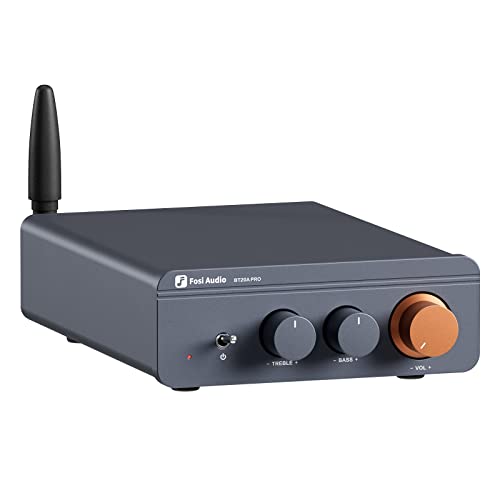
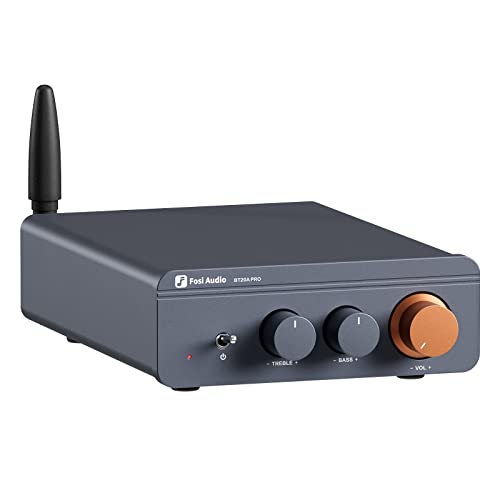
Begin with the brand’s gift: when speakers convert power this efficiently, a compact amplifier stops being a compromise and becomes a design choice. The BT20A Pro takes that choice seriously. Its TPA3255 chip is a generation newer than the silicon in entry mini amps, and its talent is composure — distortion that stays low and behavior that stays calm as output rises, which is exactly what a pair of Vegas will test when the evening gets loud.
Fosi’s claim of up to 300W per channel maximum should be read as a ceiling, not a working figure, yet the honest capability beneath it is more than sufficient here. Sensitivity does the heavy lifting; the Pro supplies the clean headroom that keeps the heavy lifting graceful. Bluetooth 5.0 handles the phones that arrive with guests, RCA takes a streamer or disc player, and the front-panel bass and treble knobs settle arguments faster than any app.
The pre-out completes the case. It integrates a powered subwoofer properly for film nights, or feeds a second amplifier when the system spreads to the patio. On speakers that need so little, that socket — not wattage — is what separates an amplifier you keep from one you replace.
Key specifications
| Kind | Stereo mini amp, Class D integrated |
| Chip inside | TPA3255 |
| Top figure | 300W a channel at most |
| Inputs offered | RCA plus Bluetooth 5.0 |
| Output onward | Pre-out — powered sub or second amp |
| Controls offered | Three front knobs: volume, bass, treble |
Strengths
- Clean headroom sized perfectly for efficient towers
- Pre-out admits a subwoofer the correct way
- Guest-friendly Bluetooth, zero setup drama
Trade-offs
- Headline wattage presumes ideal supply and load
- No remote control or digital input
- Cannot run a passive subwoofer from the pre-out
Its absences are the usual mini-amp absences: no remote, no digital input, no surround decoding, and vinyl needs a phono stage upstream. Households building around a television should read the Yamaha review before the Pro’s charm closes the question.
In ownership it behaves like good infrastructure — present, reliable, unmentioned. The headroom registers as confidence during the loud track everyone requests, and the pre-out tends to acquire a subwoofer or a second zone within the year, extending the system without replacing its heart.
The engineering story deserves its sentence. The TPA3255’s published strengths — efficiency, distortion that stays civilized under load, tolerance of real impedances — are precisely the qualities a big woofer tests when the bass drops. Nothing about the little chassis suggests it, which is rather the point.
Pair it with decent cable and, if the pre-out works from day one, a subwoofer lead. That is the whole accessory list — one of the shorter ones in home audio.
Best for: the majority of Vega households, music-first. Not suited for: surround builders or all-night maximum-volume duty.
Rack-Mount Professional Power Amplifier (Prose-Only Pick)
Badge: Best for Party Volume
Some Vega systems have a job. They serve the garage on Saturdays, the hall at family reunions, the backyard when the weather cooperates — sustained, unapologetic volume for hours, in spaces with no acoustic mercy. Domestic amplifiers tolerate that duty; professional rack amplifiers are built for it, and for this household the category is the recommendation, described by specification because models divide by power class and budget.
Shop like a professional, because the listings reward it. Per-channel ratings should be quoted at both 8 and 4 ohms, with bridge-mono mode available when a single channel must do heroic work. Inputs run XLR and TRS, outputs Speakon and binding posts — connectors designed for reliability under repetition. Protection circuitry covering thermal overload, short circuits and clipping is not a luxury in this class; it is the difference between a story and an insurance claim.
One domestic warning belongs in the specification: cooling fans. They are normal, necessary and audible in a quiet room. In a garage at volume they vanish; in a listening den they may not. Match the tool to the venue and the fan becomes a footnote.
Key specifications
| Kind | Pro power amp, two channels, rack ears |
| Hunt for | Figures per channel at 8 and 4 ohms; a bridge mode |
| Connectors | XLR and TRS in; Speakon and posts out |
| Guarding | Thermal, short and clip protection |
| Note well | Fans are standard kit — weigh the noise at home |
Strengths
- Built for hours at levels that retire domestic amps
- Protection circuits guard speakers and amplifier
- Pro connectors that survive constant replugging
Trade-offs
- Fan noise intrudes in quiet rooms
- Industrial looks divide households
- Gain controls demand a little learning
The home compromises are real and should be weighed without romance. Fan noise, inaudible at party level, can intrude during quiet listening in a small room — which is why this category suits garages, halls and dedicated party spaces better than studios. The industrial styling delights some households and horrifies others; consult the household.
Gain discipline is the owner’s craft here. Pro amplifiers offer input sensitivity controls that domestic gear hides, and setting them so the source’s volume range behaves sensibly is a ten-minute education worth taking. Clip indicators, watched occasionally during the loudest passages, tell you the truth about your headroom in real time.
Installation follows pro logic: secure mounting or a sturdy shelf, ventilation unobstructed, speaker runs of proper gauge to the Vegas, and connections checked before the first full-power test — which should happen at a rehearsal, not at the party.
For the household whose calendar includes regular loud gatherings, this is the pick that ends amplifier anxiety permanently. Everyone else should admire it the way one admires a commercial kitchen range: magnificent, and more than the cooking requires.
Best for: garages, halls and regular loud gatherings. Not suited for: quiet-room critical listening or minimalist shelves.

Yamaha RX-V385 5.1-Channel AV Receiver
Badge: Best for Movies Too
Plenty of big Vegas live in front of a screen, and a screen rewrites the brief: the amplifier must also decode soundtracks, switch sources and tame a room. The RX-V385 answers as the mainstream headquarters — a 5.1-channel receiver with 4K HDMI pass-through under HDCP 2.3, Dolby Audio and DTS-HD decoding, Bluetooth for the casual stream, and Yamaha’s YPAO calibration to measure the room and compensate for it.
Calibration earns its emphasis with speakers this capable. A front stage of large towers in an ordinary living room — glass on one wall, bookcase on another — will excite every resonance the architecture owns. YPAO listens and corrects, and the prize is dialogue clarity at family volumes, which is where receivers actually win their households. Cinema DSP programs widen the presentation for rooms that cannot host textbook speaker placement.
Output is honest mainstream receiver power, and thanks to the brand’s sensitivity that translates into levels that will have someone diving for the remote during the action scenes. The speakers do the shouting; the receiver does the organizing.
Key specifications
| Kind | AV receiver, five channels |
| Video side | 4K Ultra HD through HDMI, HDCP 2.3 |
| Room tuning | YPAO automatic setup, mic included |
| Formats decoded | Dolby Audio, DTS-HD |
| Wireless side | Bluetooth streaming |
| Extras list | Cinema DSP programs |
Strengths
- Calibration tames the room for the front stage
- Every HDMI source gathered into one hub
- Surround channels ready when wanted
Trade-offs
- Layout ends at 5.1, no height channels
- Bulkier and warmer than the mini amps
- Menus take an evening to befriend
Daily life on a receiver has a rhythm households grow fond of: one remote, sources that wake together, volume that behaves identically for film and music. Guests operate it without instruction, which quietly matters more than any specification when the system lives in a shared room.
Invest the setup half hour. YPAO’s microphone at the main seat, the routine run in a quiet house, its decisions inspected before being overruled. Calibration skipped is the commonest reason a good receiver gets blamed for a room’s behavior.
The ceiling is fixed and should be faced now: five channels, ending at 5.1. If height speakers already feature in your plans, buy the larger receiver once rather than this one twice. If they do not, this ceiling will never be felt.
Air, finally: an open shelf, clearance above the vents, no hot component parked on top. Receivers repay that small courtesy with long, uneventful service.
For the household where the Vegas earn their keep on film nights as much as music nights, this is the correct center of the system. For pure music rooms, the stereo picks spend the same money better.
Best for: Vegas that share a room with a television. Not suited for: music-only rooms or Atmos ambitions.
High-Current Stereo Power Amplifier (Prose-Only Pick)
Badge: Best for Demanding Loads
Between the receiver household and the rack-amplifier household stands a smaller group: owners of the largest Vega towers who play them in the largest rooms, at levels where woofer current — not sensitivity — writes the rules. For them this category exists. It is described by specification rather than by name because the correct unit depends on the exact tower and the exact space.
The specification reads like a weightlifter’s medical: a rating that holds steady into 4 ohms, both channels driven, and output that climbs substantially as impedance halves — evidence of a power supply built to deliver current on demand. Inputs are RCA, with balanced XLR appearing on many models, and the architecture presumes a partner, since a power amplifier alone offers neither volume control nor source switching: a preamplifier, or a receiver’s pre-outs, must feed it.
Gain matching is the detail that separates a system from a struggle. The power stage’s gain must suit the preamp’s output range so the volume control behaves across its whole travel. Published gain figures and a seller willing to discuss them are the marks of the right listing.
Key specifications
| Kind | Stereo power amp — needs a preamp partner |
| Hunt for | 4-ohm figures that stand firm, on current |
| Connectors | RCA standard; XLR balanced on many |
| Check first | Gain versus your preamp’s output |
| Note well | Figures should cover the stereo pair together |
Strengths
- Authority over the largest woofers at volume
- Preamplifier and power stage upgrade separately
- Construction measured in decades
Trade-offs
- Makes no sound until a preamp joins
- Heavy, warm and shelf-hungry
- Often the costliest route in this guide
Verify the need with your ears before your wallet. Play your current setup at the loudest level you genuinely use, on the most demanding recording you own. Clean and relaxed? You have your answer, and it is not this category. Tight, flattened, bass turning to fog? Current is the missing ingredient and this is the honest cure.
Furniture is part of the specification. These units are dense, warm-running and unapologetic about it; the shelf must be rated for the weight and the air must be free to move. Plan both before the delivery, and keep a friend’s afternoon free for the lifting.
Used examples are a legitimate strategy here — the designs are simple, the build is serious, and the category ages gracefully. Budget a technician’s once-over for older units and confirm terminal compatibility with your cables.
When it lands correctly, the change is not subtlety but authority: the biggest Vegas stop negotiating. Bass acquires pitch and edges, climaxes stay open, and the system plays the party without ever sounding like it is working.
Best for: the biggest towers in the biggest rooms. Not suited for: ordinary domestic volumes or one-box simplicity.

Fosi Audio BT20A Mini Stereo Amplifier
Badge: Best Compact Pick
If the Pro is the considered choice, the standard BT20A is the instinctive one — and with speakers this efficient, instinct serves well. The formula: TPA3116 amplification rated at 100W per channel, Bluetooth 5.0, an RCA input, tone knobs up front, and the power supply in the box. It earns the compact pick because Vega sensitivity turns its modest output into room-filling sound at a cost that leaves the music budget intact.
Understand the trade against its sibling. The Pro’s newer silicon stays composed longer and its pre-out admits a subwoofer properly; the standard model’s ceiling arrives sooner and its subwoofer path is improvised. For a pair of towers in a den, a bedroom or a workshop, at the volumes those rooms actually see, the difference may never announce itself.
Buy it, then, as either a destination for a smaller Vega setup or the cheapest possible reconnaissance. A month with it will tell you exactly how loud your household truly listens — information that makes any later upgrade precise.
Key specifications
| Kind | Stereo mini amp, Class D integrated |
| Chip inside | TPA3116 |
| Top figure | 100W a channel |
| Inputs offered | RCA plus Bluetooth 5.0 |
| Controls offered | Three front knobs: volume, bass, treble |
| Box contents | Power supply, ready to run |
Strengths
- Plays far louder than its size suggests
- Fits shelves, desks and garage benches anywhere
- Leaves the budget for music intact
Trade-offs
- No pre-out, so subwoofers join informally
- Ceiling arrives sooner than the Pro’s
- Sustained party duty is beyond its brief
As a compact pick its virtues are domestic: it fits on a garage shelf, a dorm desk, a kitchen counter, and it asks almost nothing of the household while filling the room. Vega owners with a second space — a workshop pair, a basement setup — often find this little amp becomes the system’s ambassador there.
Know where its story ends. Sustained maximum volume in a big room is not its brief, and there is no pre-out for a subwoofer. If your gatherings are legendary, the professional category was written for you; if your listening is spirited but sane, this box covers it for the price of a modest night out.
Installation discipline, briefly: short tidy runs, polarity checked, a little air around the case. Mini amplifiers collect blame for installation faults, and efficient speakers expose sloppy wiring as readily as they expose everything else.
Its second life is assured. Outgrown mini amps migrate to bedrooms and benches and keep working for years, which makes the BT20A one of the lowest-risk first purchases in the category.
Best for: smaller Vega setups and spirited everyday listening. Not suited for: legendary gatherings or subwoofer integrations.
Full-Size Stereo Integrated Amplifier (Prose-Only Pick)
Badge: Best Traditional Route
The traditional route endures because some systems genuinely are traditional: a turntable, a disc player, a streamer and a television all wanting citizenship in one rack, with a remote on the arm of the chair. The full-size integrated amplifier is that system’s natural government, and for Vega owners whose listening predates the mini-amp era it remains the emotionally correct answer as well as a technically sound one.
Judge the class by its rating honesty. Seek RMS output into 8 ohms with both channels driven and distortion stated; this tier of manufacturer traditionally under-promises, which pairs beautifully with speakers that need little. Multiple RCA inputs cover the legacy fleet, optical or coaxial on many models serves the television properly, and a moving-magnet phono stage — frequently included — keeps vinyl a first-class source.
No single model is linked because the ladder within the class is long and the right rung follows your sources. The checklist is the recommendation; bring it to the listings and the field narrows quickly.
Key specifications
| Kind | Stereo integrated at full rack width |
| Hunt for | RMS figures that stay modest on paper, 8 ohms, stereo driven |
| Inputs offered | RCA pairs aplenty; coaxial or optical on many |
| Everyday kit | A handset for the remote, a socket for headphones |
| Frequently found | Phono for moving-magnet cartridges; sometimes a sub output |
Strengths
- A socket for every source in the house
- Remote-operated ease for the whole household
- Ratings that habitually understate ability
Trade-offs
- Demands a full shelf, width and depth
- Bluetooth absent on the purist designs
- Quality examples cost real money
The category’s charm is cumulative rather than dramatic. Every source has a socket, every household member can operate the system, records spin through a proper phono stage, and the towers receive honest current at whatever level the evening requires. Systems built this way tend to celebrate anniversaries.
Physical care is the only demand: ventilation above the chassis, no components stacked on the warm lid, and a shelf that respects its depth. In return the amplifier will likely outlast the furniture.
Shop by checklist — rating conditions, input count, phono provision, subwoofer output — and let an audition settle close calls. With speakers this revealing of upstream differences, a half hour of listening is worth a month of reviews.
For the efficient majority the smaller picks remain the value champions. Choose this traditional route when the system’s life is genuinely multi-source and long-term, and it will not feel like money spent twice.
Best for: multi-source traditionalists with records to play. Not suited for: minimalists or surround-sound planners.
Comparison Table
Use this grid as a map of intentions. Every row is the best answer to a different Vega lifestyle, and the specification column names the trait that earns the row its place. Confirm a choice against its full review before the order goes in.
| Pick | Type | Key specification | Link |
|---|---|---|---|
| Fosi Audio BT20A Pro | Mini Class D stereo amp | Built on the TPA3255 device | Check price on Amazon |
| Rack-mount pro power amplifier | Rack-mount pro power amp | Per-channel figures at 8 and 4 ohms; bridge mode | Prose-only |
| Yamaha RX-V385 | 5.1 AV receiver | Passes 4K Ultra HD pictures, HDCP 2.3 aboard | Check price on Amazon |
| High-current stereo power amplifier | Stereo power amplifier | A 4-ohm rating that refuses to flinch | Prose-only |
| Fosi Audio BT20A | Mini Class D stereo amp | Built on TPA3116 silicon | Check price on Amazon |
| Full-size stereo integrated amplifier | Full-width stereo integrated | Sober RMS into 8 ohms with both channels driven | Prose-only |
How do you choose the right amplifier for these speakers?
Begin with the number that makes this brand easy: sensitivity. Find it in your model’s documentation and compare it against the hi-fi mainstream — most Vegas sit comfortably above it, which collapses the power requirement for any target loudness. Your room and your habits then set the multiplier. A den at conversational-plus levels is one world; a garage with the door up and twenty guests is another, and the second world is where current and cooling enter the conversation.
Next, decide the system’s center of gravity. Music only, from a phone and a streamer? The mini amps cover it. Movies sharing the speakers? The receiver earns its shelf. Sustained high volume as a lifestyle rather than an occasion? The professional category stops being eccentric and starts being correct.
Close with connections and control. Count sources, decide who holds volume authority, and check whether a subwoofer or a second zone is genuinely planned. The pick that survives arithmetic, lifestyle and socket-counting simultaneously is the pick — and with speakers this efficient, it is rarely the most expensive one.
Before you order: the listing checks that matter
Wattage first, and read it like a skeptic who has been burned before. Which impedance, how many channels driven, RMS or a maximum pulled from a hat? Pro amplifiers publish their conditions because professionals demand them; consumer listings vary, and the variance itself is a review of the manufacturer. Carry the same suspicion to your Vega pairing and the honest numbers will identify themselves.
Then the boring audit that prevents returns. Inputs against sources. Terminals against cable ends. Rack width against the shelf, fan noise against the room’s quiet hours, supply included against your drawer of spares. Finish with the seller’s returns terms, because the final audition for any amplifier happens in your room, at your volume, with your neighbors’ tolerance as the ceiling.
How to connect and dial in a new amplifier, step by step
Give the speakers the first hour, not the amplifier. Vegas want breathing room: pulled out from the wall enough for their ports and woofers to work, tweeters aimed at the listening area, the pair spaced so the image locks between them. Big cabinets tempt owners to shove them into corners; corners repay with boom. A foot of freedom is the cheapest bass upgrade in this entire guide.
Wire with everything dark. Use cable of respectable gauge for long runs — resistance is a real tax over distance — and observe polarity at both ends of both channels, tracing each run physically. One reversed tower will hollow out the low end so convincingly that owners shop for subwoofers to cure a wiring fault. Connect the amplifier, then the sources, phone pairing last.
Power up low and climb slowly with a track whose bass you know. Efficient speakers reach startling levels early on the dial, so let the volume control surprise you gradually. Listen for the moment distortion would enter — with the right pick, you should reach your personal ceiling before the system reaches its own. Then set tone controls flat, live with the result for a week, and adjust only what repeatedly bothers you.
Reading the numbers like an engineer, briefly
An engineer’s eye lands on four figures and ignores the rest of the page. First, sensitivity — the speaker’s exchange rate between watts and loudness, where this brand is famously rich. Second, impedance, especially the minimum, which predicts how hard the amplifier must work in the bass. Third, power expressed completely: RMS, load stated, both channels driven, distortion beside it. Fourth, for professional amplifiers, the duty evidence — cooling, protection, ratings at several loads — because sustained volume is an endurance event.
Everything else on a specification sheet is garnish: pleasant, occasionally useful, never decisive. Vega owners who internalize the four-figure habit will read any future listing, for any brand, in about ninety seconds — and will spot an inflated claim before the marketing department has finished inflating it.
The order in which good systems actually grow
Vega systems grow by appetite. The amplifier lands first, matched to the speakers as they are. The next improvement is usually reach: a better source for the listener who has started collecting music seriously, or a subwoofer for the film fan who wants the floor to participate. Then the room gets its turn — speaker positions refined, the worst reflections softened — because at Vega volumes the room is unmistakably part of the instrument.
Electronics beyond that point should be bought for a named reason: a second zone, a hall that outgrew the mini amp, neighbors replaced by acreage. Owners who grow in this order find each step audible. Owners who swap amplifiers repeatedly are usually treating a placement problem with a credit card.
Common Buying Mistakes
Ignoring sensitivity entirely
With this brand, ignoring sensitivity means ignoring the entire point. These speakers convert watts to loudness at a rate that makes large amplifiers redundant for most owners, and the buyer who skips the figure will overpay for power they cannot use — or worse, dismiss the small amplifier that would have been perfect. The number is printed in every manual. Read it before reading any advertisement.
Judging amplifiers by headline wattage
Nowhere does the wattage banner mislead more than beside efficient speakers, because the buyer least needs the biggest number. Peak and maximum figures are laboratory weather; RMS output into a stated load, both channels driven, is climate. Compare climates. A modest honest amplifier on a sensitive Vega will outplay a theatrical specification at volumes that matter, every evening of the week.
Strangling the amplifier’s ventilation
Heat management separates amplifiers that age from amplifiers that expire. Professional units solve it with fans — which is why fan noise belongs in a home shortlist — while receivers and integrateds rely on vents that owners then block with stacked components and sealed cabinets. Vegas invite long, loud sessions, and long loud sessions are precisely when ventilation earns its keep. Leave the top panel open to the room.
Expecting a subwoofer to fix placement
Subwoofers obey the room, not the brochure. One parked carelessly will amplify the corner’s boom and leave the listening seat in a bass desert, and no crossover knob repairs geography. Vegas already deliver substantial low end; place them with the care described in the setup chapter, and add a subwoofer only to extend a system that already behaves.
Reversed polarity on one speaker
Of all setup faults, this one wears the best disguise on big speakers. The system plays loudly, the gathering hears music, yet the bass feels oddly weightless and the image will not settle — because one tower is pushing while the other pulls. Vega owners, whose low end is a point of pride, notice the theft eventually and blame the amplifier. Trace the cables first. The cure is free and takes minutes.
Buying inputs for a fantasy system
Every unused socket on an amplifier’s rear panel represents money spent entertaining a fantasy. Buyers imagine reel-to-reel decks, second turntables and disc changers that never materialize, while the television input they need by Friday goes missing. Vega systems thrive on directness: list the sources in the room, allow one honest addition, and let the rest of the catalogue go.
Matching by brand folklore
Folklore insists certain amplifiers ‘wake up’ certain speakers, as if electronics and cabinets shared a secret handshake. What actually wakes a Vega up is current at the woofer frequencies and an amplifier that stays composed as levels climb — properties printed in specifications, not whispered in forums. The brand’s own history includes everything from receivers to pro rigs. Match the electrics and the handshake takes care of itself.
Setting tone controls on day one
Efficient speakers in lively rooms can sound forward on first acquaintance, and the temptation is to reach for the treble knob within the hour. Wait a week. Ears adjust, speakers settle into their positions, and what remains after seven days of varied listening is the room’s genuine signature. Correct that, gently. Tone controls set on day one usually preserve a first impression long after it stops being true.
What each tier is really buying you
The entry tier buys the essential miracle: clean watts and a Bluetooth door, sufficient for the overwhelming majority of Vega listening. The middle tier buys infrastructure — calibration, HDMI switching, remotes — for speakers that share a room with a television and a family. The professional and high-current tiers buy endurance and current: the ability to sustain, for hours, the levels that make this brand famous.
No tier buys more sensitivity, because that lives in the speakers you already own. That is the quiet economic fact of this guide: the expensive part of loud-and-clean was purchased when the Vegas came home. Amplification merely has to avoid squandering it.
Final Recommendation
Start where the arithmetic points: the BT20A Pro, whose clean headroom suits speakers that make volume cheaply and whose pre-out leaves every door open. Garages, halls and committed party hosts step up to the pro category and accept the fan as the price of thunder. Movie households take the Yamaha. The brand’s efficiency means the right answer is usually smaller than instinct suggests — trust that, and spend the savings on the next record fair.
What to check before you order
Decide the volume geography before the hardware lands. In a party household, volume control belongs wherever the host actually stands — which argues for Bluetooth sources and, in larger setups, the gain discipline of pro gear. In a family room, the television remote rules and the receiver pick cooperates. Then measure the mundane: shelf or rack space, cable lengths to both towers, socket access. Vega systems fail on logistics more often than on sonics.
One last check belongs to the calendar rather than the tape measure: if a gathering is already scheduled, order early enough to rehearse the system at volume once, in an empty house, before the audience arrives.
Frequently Asked Questions
Can an amplifier be too powerful for a speaker?
Cerwin-Vega woofers are built to travel, and clean power is what they travel on. The historical tweeter-killer is not surplus wattage but deficit wattage — a small amplifier clipping hard, spraying distortion the crossover passes upward. A stronger amplifier loafing is the safer partner at party volume; the listener’s hand remains the ultimate fuse, as it should be.
How much power do my speakers actually need?
Run the brand’s own logic. Sensitivity this high means single watts already produce serious loudness at a meter; even after distance takes its tax and peaks demand their headroom, a clean few dozen watts satisfies most Vega households. Owners of the largest towers in the largest rooms are the exception, and the professional and high-current categories exist for them. The choosing chapter shows the working.
Why does my system sound quieter than the wattage promised?
Look upstream before looking at the amplifier. A phone streaming at half volume, a television feeding a fixed low output, a streamer app with its own slider buried — each starves the amplifier’s input while its dial protests innocence. Efficient speakers make the shortfall obvious quickly, which is a diagnostic gift: set every source to a healthy level, let one control govern loudness, and the missing decibels generally reappear free of charge.
What does impedance mean when matching an amp and speakers?
Impedance is the electrical resistance a speaker offers the amplifier, quoted in ohms and varying across the frequency range like a road changing gradient. The nominal figure is the average slope; the minimum, usually found in the bass, is the steep pitch where current demand peaks. Match the amplifier’s stable range to that minimum and the pairing behaves at every volume, including the loud ones this brand encourages.
Do I need a subwoofer output on the amplifier?
Vega owners ask this with a straight face because their speakers already reach low with conviction. The honest answer is: less often than most. A subwoofer output still earns its place for film LFE effects and for owners of the brand’s smaller bookshelf models, but if your towers satisfy you on music, spend the money on music. The pre-out on the Pro pick keeps the option open regardless.
Is Bluetooth sound quality good enough for a main system?
For the way Vega systems actually live — gatherings, workshops, background that becomes foreground — Bluetooth’s convenience is not a compromise but a feature, and its modern codecs carry music respectably. The listener settling in alone with a treasured album can feed the same amplifier by wire through its RCA input and lose nothing. One system, two modes, no conflict.
Do Cerwin-Vega speakers really need less power than other brands?
As a population, yes — the brand’s design tradition prizes sensitivity, so a given loudness costs fewer watts than with a typical hi-fi speaker of similar size. Individual models vary, and the largest towers still reward current at their woofer frequencies, but the direction of the claim is sound. Check your model’s published sensitivity and let that figure, rather than the cabinet’s swagger, size your amplifier.
Can I run big Vega towers on a receiver I already own?
Quite possibly, yes — that is the practical dividend of efficient speakers. Connect them, run the receiver’s calibration if it offers one, and climb the volume gradually on demanding material while listening for strain. If your loudest realistic level arrives clean, the receiver you own just saved you a purchase. If it wilts early, the shortlist above is your shopping list.