Where to buy
On a motorcycle, the wrong speaker is not an inconvenience, it is a fairing removed twice. So begin at the Amazon listings linked below and read them like a mechanic: confirm the diameter, the impedance and exactly what arrives in the box, because Harley generations that look identical in a photograph can demand different hardware in the metal. Orders placed through those listings may earn us a commission from qualifying purchases, which keeps guides like this one on the road.
Fitment discipline matters more here than in any car guide in this series. Write down your model and year, then compare the listing against the bike itself, not against a forum post about a similar motorcycle. If a detail disagrees, believe the motorcycle. It has never once been wrong about what fits inside its own fairing.
One more check protects Harley buyers specifically: photograph the speaker currently living in your fairing before ordering anything. The connector shape and the mounting ears in that picture will confirm or veto a listing faster than any compatibility chart, because previous owners modify things and forget to mention it. Your photograph is the only witness that never exaggerates.
- KICKER KM65 6.5-Inch Marine Coaxial Speakers (Pair, 45KM654) – best overall harley pick choice; check price on Amazon.
- KICKER DSC6930 6×9-Inch 3-Way Car Speakers (Pair, 43DSC69304) – best lid speaker choice; check price on Amazon.
- Pioneer TS-A6990F 6×9-Inch 5-Way Car Speakers (Pair) – best lid speaker for detail choice; check price on Amazon.
- Smaller fairing speakers for older Harley generations (prose-only pick, no single model linked) – best for older fairings choice.
- Compact motorcycle amplifier (prose-only pick, no single model linked) – best power upgrade choice.
- Plug-and-play Harley speaker wiring and mounting kit (prose-only pick, no single model linked) – best for a clean install choice.
Key Takeaways
- Fairing speakers are the rider’s main stage: the marine-built KICKER KM65 leads for modern 6.5-inch fairings.
- Saddlebag lids take 6x9s: the KICKER DSC6930 for all-round output, the Pioneer TS-A6990F for detail.
- Weather construction is not optional on a motorcycle; sealed builds and stainless hardware decide lifespan.
- Older and smaller fairings are covered as a prose-only category because their sizes vary by generation.
- Most factory Harley systems eventually want a compact amplifier; that route is planned in the picks.
In this guide
Quick Picks
| Buyer type | Pick | Why it stands out | Link |
|---|---|---|---|
| Best Overall Harley Pick | KICKER KM65 Marine | Weather-sealed build, corrosion-proof fixings | Check price on Amazon |
| Best Lid Speaker | KICKER DSC6930 6×9 | Large oval cone gives genuine mid-bass body | Check price on Amazon |
| Best Lid Speaker for Detail | Pioneer TS-A6990F | Top-end detail that holds up in dense recordings | Check price on Amazon |
| Best for Older Fairings | Smaller fairing speakers for older Harley generations (Prose-Only Pick) | Covers model years the linked sizes cannot | Prose-only – see review |
| Best Power Upgrade | Compact motorcycle amplifier (Prose-Only Pick) | Changes motorway listening completely | Prose-only – see review |
| Best for a Clean Install | Plug-and-play Harley speaker wiring and mounting kit (Prose-Only Pick) | Leaves the original loom whole and the job undoable | Prose-only – see review |
How These Picks Were Chosen
Harley fitment humiliates generic shortlists, so this one began with the motorcycle. Candidates had to suit the openings a touring bike actually offers, present the four-ohm load its factory systems expect, and tolerate an environment that combines a car door’s damp with a boat deck’s ultraviolet and a paint shaker’s vibration. Verified listings only, with specifications checked against the maker’s own data, because this corner of the market swims with lookalike products wearing famous names.
Construction evidence outranked brochure claims throughout. Sealed or weather-resistant builds, surrounds that stay flexible, hardware that refuses corrosion, and honest continuous power ratings all scored; enormous peak wattage printed in carnival fonts scored nothing. Prose-only categories appear where the correct answer depends on your model year, your fairing’s spare space or your wiring, because naming one product there would be a lie told confidently.
Longevity evidence carried unusual weight in the final ordering. A fairing speaker is not a component riders enjoy replacing, so designs with a record of surviving seasons outranked newcomers with louder launch claims. Where evidence conflicted, the guide favoured the option whose failure mode is graceful: a driver that fades slowly over years rather than one that dies mid-tour, two hundred miles from the garage.
- Verified Amazon listing and manufacturer specifications
- Construction sealed and materials chosen for weather, sun and vibration
- Output and high-frequency clarity that survive wind and exhaust noise
- 4-ohm impedance suited to factory Harley systems and compact amplifiers
- Sizes matched to real fairing and lid locations, with fitment checks stated
- Mounting and grille practicality for fairings and saddlebag lids
The Best Aftermarket Speakers For Harley Davidson
A Harley asks its speakers to survive conditions that would end a car installation: open air at motorway speed, rain arriving horizontally, and a V-twin’s permanent vibration massage. This shortlist was built inside that reality. It leads with a marine driver for the fairing, because weather is the first specification on a motorcycle whether riders list it or not, then fills the saddlebag lids with two oval specialists that divide the work between warmth and detail.
Three further routes stay prose-only, deliberately. Older fairings need their own smaller diameter, amplifiers need matching rules rather than a blind link, and wiring kits need your exact model year. Those categories are described with the checks that identify the right specimen, which serves a Harley owner better than one confident product pointed at the wrong generation of motorcycle.

KICKER KM65 6.5-Inch Marine Coaxial Speakers (Pair, 45KM654)
Badge: Best Overall Harley Pick
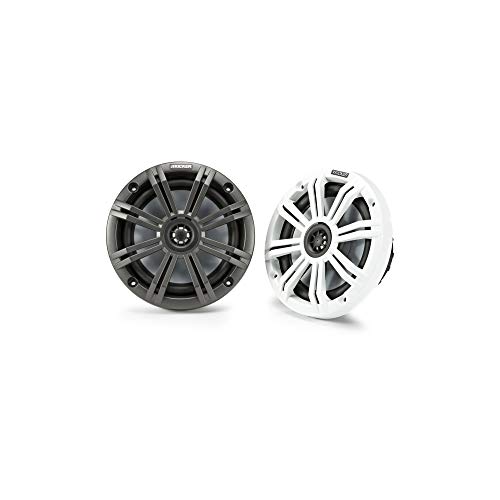
At a glance: a Round marine coaxial, 6.5-inch, a three-quarter-inch tweeter, four ohms, sixty-five watts RMS, ultraviolet-resistant cones with Santoprene surrounds, stainless rustproof hardware, sealed construction, and both charcoal and white grilles.
Ask a room of touring riders where speakers go to die and they will describe a fairing in July: heat shimmering off the inner shell, a thunderstorm at four, and condensation by dawn. The KM65 was raised for that biography. Its sealed marine build, stainless fixings and Santoprene surrounds treat weather as a job description, and the ultraviolet-resistant cone shrugs at summers that bleach lesser drivers grey.
The three-quarter-inch tweeter matters more than its size suggests, because consonants and cymbal edges are what wind steals first. Sixty-five watts RMS of honest handling means the pair stays composed if an amplifier joins the system later, while its four-ohm load keeps the factory radio comfortable today. Two grille colours in the box, charcoal and white, let the finished fairing match dark inners or the pale trim of a classic tourer. For most riders this is the purchase, the one the rest of the system gets built around.
Installation holds no surprises, which on a Harley counts as a feature. The pair follows the fairing’s expected pattern, the terminals accept proper connectors, and the grilles let the finished job look factory rather than improvised. Riders who wrench their own bikes will finish both sides inside an unhurried morning, including the coffee break that fairing screws traditionally demand.
Key specs: a marine coaxial pair at 6.5 inches; tweeter of three-quarter inch; four-ohm load; sixty-five watts RMS; cones resistant to ultraviolet light, Santoprene surrounds, stainless rustproof hardware, sealed marine construction, charcoal and white grilles included.
Strengths
- Weather-sealed build, corrosion-proof fixings
- Cones that resist ultraviolet light, surrounds compounded for open air
- Sixty-five watts RMS of capacity, composed above wind and exhaust
Trade-offs
- Weatherproof construction carries a premium over car equivalents
- Grille choice stops at charcoal or white; chrome is not offered
- Asks for decent power before it sparkles at pace
Best for: riders of modern touring Harleys wanting the fairing done properly / Not suited for: owners of older bikes with smaller fairing speakers

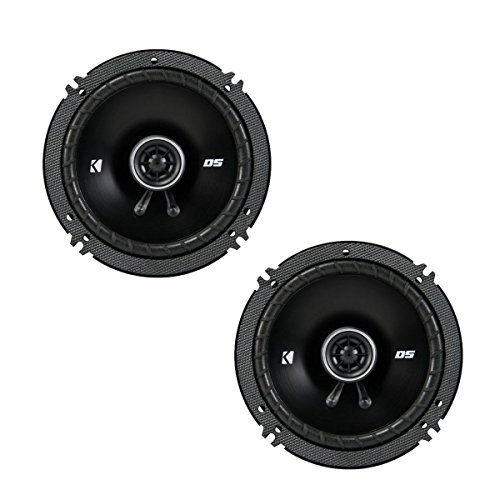
KICKER DSC6930 6×9-Inch 3-Way Car Speakers (Pair, 43DSC69304)
Badge: Best Lid Speaker
At a glance: an oval three-way coaxial pair in the 6×9 class, four-ohm impedance, ninety watts RMS as its per-pair rating class, a broad cone for low-end support, and a factory-upgrade design brief.
The big oval earns its place in the lids, where cone area is the closest thing a motorcycle has to a bass strategy. A 6×9 moves more air than the round fairing drivers can, filling in the low warmth that disappears first when the bike reaches cruising speed. From the passenger’s seat the effect is not subtle: the music gains a floor, and long motorway hours stop sounding like a radio playing in the next field.
Ninety watts RMS per pair gives the design room to work with an amplifier later, while its factory-upgrade manners keep the initial swap simple. Be honest about its upbringing, though: this is a car speaker visiting a motorcycle, happiest in lids that seal well and on bikes that live garaged or covered. Riders who tour through every weather should pair it with sensible expectations and good lid seals, and it will repay them with the fullest sound in this line-up.
Lid fit deserves one warning: measure the cut-out and the depth below it, because saddlebags taper and a magnet that clears the centre may foul the slope. Most touring lids accept the format happily, especially with the common adapter plates, but the tape measure remains cheaper than the return postage on a pair of oval speakers.
Key specs: an oval three-way coaxial pair in the 6×9 format; four-ohm impedance; a per-pair rating class of ninety watts RMS; generous cone area for low-end support from lids, decks and doors; designed as a factory-system upgrade.
Strengths
- Large oval cone gives genuine mid-bass body
- A ninety-watt RMS class appetite amplifiers find easy to feed
- Three driver elements keep singers intelligible above the low end
Trade-offs
- Needs a true 6×9 opening and honest depth behind it
- Lid panels may buzz unless a foam gasket seals the joint
- Factory power alone cannot use everything it offers
Best for: touring riders wanting all-round lid output / Not suited for: riders chasing the last detail at cruise
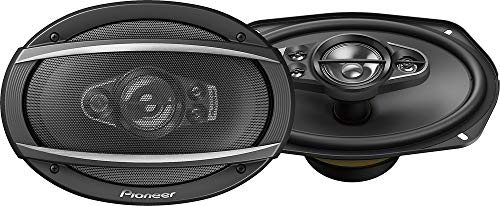
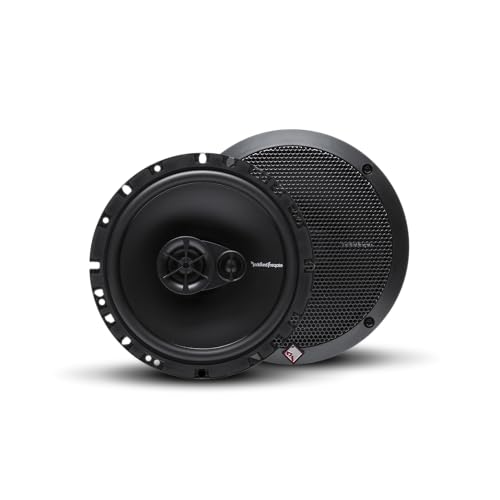
Pioneer TS-A6990F 6×9-Inch 5-Way Car Speakers (Pair)
Badge: Best Lid Speaker for Detail
At a glance: a 6×9 five-way coaxial pair, 700 watts maximum with 120 watts RMS per pair, a carbon and mica reinforced IMPP cone, a response quoted from 22 hertz to 25 kilohertz, and a multi-driver layout chasing detail.
Where the Kicker lid speaker trades in warmth, the Pioneer trades in information. Five driver elements divide the spectrum finely, and the top end arrives with a sparkle that suits riders whose playlists lean toward acoustic detail, brass and voices recorded close to the microphone. Its quoted response reaches from 22 hertz to 25 kilohertz, numbers that promise ambition even if a saddlebag lid will never deliver the extremes literally.
The carbon and mica reinforced IMPP cone is the engineering heart: stiff, light and indifferent to the damp that lids collect. A per-pair RMS figure of 120 watts means an amplifier can lean on these without apology. Choose the Pioneer when your rear seat complains the music sounds veiled, or when your own ears, travelling ahead of it, keep reaching for detail that the current lids smear into a pleasant but featureless wash.
At town speeds its detail can feel almost excessive, hi-hats arriving with showroom brightness, before the motorway smooths the balance into something natural. That is the correct order of events on a motorcycle: judge any speaker at cruising pace first, because a driver voiced for the driveway will always disappoint on the dual carriageway, whatever its badge promises.
Key specs: an oval five-way coaxial pair; 700 watts maximum and 120 watts RMS quoted per pair; a carbon and mica reinforced IMPP cone; response spanning 22 hertz to 25 kilohertz; multiple drivers devoted to detailed high frequencies.
Strengths
- Top-end detail that holds up in dense recordings
- Stiff IMPP cone for long-term stability
- Complete published specifications for honest planning
Trade-offs
- Detail exposes weak sources without mercy
- Maximum power headline invites misreading
- Standard 6×9 constraints on fit and depth apply
Best for: riders who hear detail first on long tours / Not suited for: riders who want maximum lid bass weight
Smaller fairing speakers for older Harley generations (Prose-Only Pick)
Badge: Best for Older Fairings
In short: a fairing pair in the smaller diameter earlier Harley generations carried, four-ohm presentation in most cases, and an efficiency-first brief shaped by the limited clean power of older factory radios.
Not every fairing swallows a 6.5-inch driver. Earlier touring generations carried smaller openings, and forcing modern sizes into them means cutting irreplaceable inner fairings, a sin against both the bike and its resale value. The correct route is a quality pair in the diameter your generation was born with, chosen with unusual care about efficiency.
Older factory radios offer modest clean power, so a sensitive smaller driver will outperform a thirsty one every time the volume rises. Measure the existing speaker, count its mounting ears, photograph the connector, and shop against those facts. No single model is linked here because the right answer changes with each generation; the category description is the honest product, and a specialist supplier’s fitment chart for your year is the honest way to finish the job.
Key specs: a fairing pair in the smaller diameter earlier generations used; measure your existing driver and pocket before shopping; prioritise efficiency, since older factory radios offer limited clean power.
Strengths
- Covers model years the linked sizes cannot
- Same weather and efficiency discipline, smaller scale
- Keeps older bikes in the music honestly
Trade-offs
- Requires the owner’s own measurement first
- Smaller drivers give up bass and output
- Model choice varies more by year
Best for: older and smaller-fairing Harleys / Not suited for: modern 6.5-inch fairing bikes, which the linked pick serves
Compact motorcycle amplifier (Prose-Only Pick)
Badge: Best Power Upgrade
In short: a compact amplifier built for motorcycle duty, continuous watts per channel matched to your speakers at four ohms, a footprint small enough for fairing life, and sealing that respects the weather a fairing admits.
Speakers alone restore clarity at town speeds; an amplifier defends it on the motorway. Wind noise climbs relentlessly with velocity, and the factory radio reaches its clean limit long before the rider reaches a comfortable listening level. A compact motorcycle amplifier supplies the missing headroom from inside the fairing, where space is measured in finger widths.
Shop by continuous output per channel into four ohms, physical footprint, and sealing against the weather that fairings admit. No single unit is linked because fairing generations differ in spare room and in how their radios hand over signal. The right amplifier for a batwing may not fit a frame-mounted fairing, so measure your cavity, count your speaker locations, and let those facts nominate the model.
Key specs: a compact motorcycle-rated amplifier; match continuous watts per channel into four ohms against your speakers; measure fairing or Tour-Pak space and confirm weather sealing before choosing a model.
Strengths
- Changes motorway listening completely
- Matched once, serves every speaker upgrade after
- Compact designs hide in fairings
Trade-offs
- Adds cost and a fairing-off installation
- Unnecessary for town-speed riding
- Gains must be set with discipline
Best for: owners adding highway composure to a speaker-first build / Not suited for: owners content with factory power at town speeds
Plug-and-play Harley speaker wiring and mounting kit (Prose-Only Pick)
Badge: Best for a Clean Install
In short: harness adapters and mounting hardware matched to one Harley generation, designed to join new speakers to the factory loom without cutting, and to keep the entire installation reversible.
The least glamorous pick may be the wisest purchase in the entire guide. A correct kit adapts the factory loom to your new speakers without a single cut, supplies the rings or brackets your fairing generation expects, and turns the whole job into something the next owner can reverse in an afternoon. Clean electricity and correct mounting quietly decide how any speaker sounds.
Verify the kit against your model year twice, once in the listing and once against the bike, because fairing hardware changed across generations that look identical in photographs. This category stays unlinked for that reason: the right kit is the one matched to your VIN’s story, not a universal box. Buy it before the speakers arrive, lay everything out on the bench, and the install becomes assembly rather than improvisation.
Key specs: a model-year-specific kit of harness adapters, mounting rings and hardware; verify your exact year and fairing type against the kit listing; the correct kit leaves factory wiring uncut and fully reversible.
Strengths
- Leaves the original loom whole and the job undoable
- Seats speakers squarely against vibration
- Speeds the job and the next diagnosis
Trade-offs
- Costs money that makes no sound of its own
- Compatibility must match the bike exactly
- Quality varies; buy established kit makers
Best for: owners who want reversible, harness-friendly installation / Not suited for: owners undertaking a full custom audio build
Comparison Table
Treat the columns as a map of a motorcycle, not a league table. Type shows where each pick physically lives, connection shows how it joins a loom that vibrates for a living, and the standout column names the one job each entry was recruited to perform. Prices wander too much to print; the link behind any surviving candidate shows today’s figure at the source.
A final hint on reading the power figures: on a motorcycle, headroom is comfort. A speaker cruising far below its limits sounds relaxed at exactly the speeds where a strained one turns harsh, so the ratings in that column describe ease rather than bragging rights, and ease is what a rider actually hears across a long afternoon.
| Pick | Type | Connection / fit | Power | Standout |
|---|---|---|---|---|
| KICKER KM65 Marine | Round marine coaxial, 6.5-inch | Wired through the factory harness | Unpowered driver; radio or amp supplies it | Sealed marine spec; 65W RMS; rustproof fittings |
| KICKER DSC6930 6×9 | Oval coaxial with three driver elements | Joins via the bike’s own speaker loom | Unpowered driver; radio or amp supplies it | Oval format; three-way; generous cone surface |
| Pioneer TS-A6990F | Oval coaxial with five driver elements | Joins via the bike’s own speaker loom | Unpowered driver; radio or amp supplies it | Five-way layout; quoted 22 Hz to 25 kHz span |
| Smaller fairing speakers for older Harley generations (Prose-Only Pick) | Motorcycle fairing speakers, smaller sizes | Joins via the bike’s own speaker loom | Unpowered driver; radio or amp supplies it | For fairings predating the 6.5-inch era |
| Compact motorcycle amplifier (Prose-Only Pick) | Compact motorcycle amplifier | Joins via the bike’s own speaker loom | Unpowered driver; radio or amp supplies it | For calm at cruising speed |
| Plug-and-play Harley speaker wiring and mounting kit (Prose-Only Pick) | Bike-specific wiring and mounting kit | Joins via the bike’s own speaker loom | Unpowered driver; radio or amp supplies it | For tidy work a future owner can reverse |
Fairings, Lids and Tour-Paks: Where Harley Speakers Live
A touring Harley offers up to three neighbourhoods for sound. The fairing pair works hardest, sitting closest to the rider’s ears and fighting the wind head-on. Saddlebag lids fire upward from behind, filling in body and low end that the fairing drivers cannot produce, especially for a passenger whose ears sit directly above them. Tour-Pak speakers, where fitted, wrap the passenger in a near-field cocoon that makes two-up listening almost luxurious.
Each location punishes different weaknesses. Fairing drivers endure heat trapped under a sun-baked outer shell. Lid speakers collect every drop of rain that lands on the bike and every splash from a wet road. Tour-Pak drivers live gently but play to an audience of one. Choosing speakers location by location, rather than buying four identical drivers and hoping, is the difference between a system designed for a motorcycle and a car system that happens to be outdoors.
Budget follows that geography. Riders who ride solo should fund the fairing without guilt and treat the lids as a later luxury, while committed two-up tourers should plan the rear locations from the beginning, because a passenger listening to muffle behind a rider enjoying clarity becomes a critic with voting rights on the next purchase.
Why Marine Construction Suits a Motorcycle Better Than Car Construction
A car door is a sheltered cave compared with a fairing. Its speaker hides behind a window seal, a moisture barrier and a roof, meeting weather only as humidity. A motorcycle speaker meets weather as an event: direct rain at speed, pressure washers at rallies, frost in an unheated garage and ultraviolet light every sunny mile, all while being shaken by an engine with opinions about vibration.
Marine engineering assumes that abuse as the baseline. Cones are moulded from materials water cannot soften, surrounds use compounds that flex after winters instead of cracking, terminals and screws resist the corrosion that turns car hardware orange by autumn. None of this costs sound quality; the leading pick here proves a sealed driver can sing. It simply removes the expiry date that car construction quietly prints on every motorcycle installation.
There is a cost, and honesty requires naming it: marine drivers sometimes weigh a little more and offer fewer finishes, since boats care about survival over showroom sparkle. On a touring motorcycle already carrying luggage, a flask and a passenger’s entire wardrobe, those grams vanish into the total, and the trade buys seasons of indifference to weather.
Factory Harley Audio: What the Speakers Are Plugged Into
Factory Harley systems vary more than their shared badges suggest. Base radios drive the fairing pair modestly, upgraded packages add amplification and extra locations, and each generation routes signal differently. Before ordering anything, identify your exact system: count the speakers, find whether an amplifier already lives in the fairing, and note the radio’s generation from the bike’s documentation.
That homework changes the shopping list. A bike with a factory amplifier may want speakers chosen for power handling, while a base-radio bike rewards efficiency above all. It also prevents the classic duplicate purchase, an aftermarket amplifier bought to replace a perfectly serviceable factory one discovered only when the fairing came apart. Knowledge first, parcels second, is the order that keeps this hobby affordable.
A photograph of the radio’s label and the amplifier’s location, taken during your first fairing removal, becomes the most useful page of your own service manual. Tape it inside the garage cabinet. Every future purchase, from speakers to a phone mount with opinions about wiring, gets easier when the system’s identity is documented rather than remembered approximately.
Seasons of a Harley Stereo: Care Across the Year
Spring asks for inspection. Pull the fairing, check every connector for the green fuzz of corrosion, confirm the speaker surrounds survived winter storage, and tighten what vibration loosened last season. Summer asks for shade and sense: a cover when the bike bakes in a car park, and volume discipline when heat already stresses every electronic component aboard.
Autumn is listening season, cool air and quiet roads, when the system earns its keep on long, golden rides. Winter, for most owners, is project season, the honest time for the amplifier or lid upgrade the summer convinced you about, performed slowly in a garage with the manual open. A stereo maintained on that calendar rarely fails on the road, because its weaknesses get discovered at home, in daylight, with coffee nearby.
Keep a small kit with the bike: spare fuses, a Torx driver that fits the fairing screws, electrical tape and one spare speaker connector. Touring faults are usually small and roadside-fixable, and the difference between a silent week and a five-minute repair is whether those few grams travelled with you. Experience teaches this list; borrow it instead of earning it.
The Sound of the Road: What Real Riders Actually Hear
At thirty through town, almost any speaker sounds adequate. At seventy into a headwind, the truth arrives: wind roar concentrates exactly where voices and guitar edges live, the exhaust adds a bass drone that masks low notes, and a passenger sits in a different acoustic world entirely, behind the rider, above the lids, inside a pocket of turbulent air.
Designing for that reality means valuing midrange clarity over bass theatrics and treble sparkle over sheer wattage. It also means setting expectations with a friend’s honesty. No fairing system will ever sound like a parked car with the windows up, and chasing that phantom bankrupts riders. Chase instead the moment a favourite chorus stays intelligible across a whole motorway junction, because that moment is achievable, repeatable and worth every penny spent here.
Helmet choice rewrites the equation again. A quiet premium helmet preserves midrange detail that a bargain lid drowns in its own wind roar, which is why two riders can hear the same system and file opposite reports. When judging upgrades, keep the helmet constant, or you will spend speaker money chasing an acoustic problem sitting on your own head.
What to Tell the Rider Who Asks at the Fuel Stop
They will ask, usually while pointing at your fairing with a coffee in hand. Tell them the truth in the order it mattered: measure first, buy weatherproof, keep the factory wiring whole, and judge the result at speed rather than in the car park. Mention that the marine speaker in your fairing cost less than the chrome trim on their exhaust and will be enjoyed more often.
Spare them the specification lecture unless they ask twice. Riders adopt what they can hear, so the finest ambassador for a good system is a short demonstration at the next rest stop, engine off, one song played clean. Most fuel-stop conversations end there, with a phone out and a listing being photographed, which is how this hobby has always spread.
Expect the follow-up question about cost, and answer it plainly, including the kit and the afternoon it took. Riders trust totals, not teaser prices, and a reputation for straight answers at fuel stops is worth more than any specification you could recite. The hobby runs on that trust from one petrol station to the next.
The Bar-Mount and the Bagger: A Word for the Rest of the Range
Owners of bikes without fairings sometimes read touring guides with envy, yet their options have improved beyond recognition. Handlebar and engine-guard mounted systems exist for naked cruisers, though they fight the wind with no fairing to hide behind and should be judged by entirely different expectations. This guide’s speakers assume a fairing or a lid to live in; bolting them to bars helps nobody.
The transferable lessons are the disciplines: weatherproof construction, honest power matching, reversible wiring. Apply those to any motorcycle and the result improves, whatever the mounting. And if the bar-mounted life eventually palls, the touring models whose systems fill these pages will be waiting, fairings open, ready to demonstrate what a little shelter does for a song.
Dyna and Softail riders with detachable windscreens occupy a middle ground worth a mention: a screen changes the wind picture enough that a modest fairing-style pair in pods can work respectably at legal speeds. The moment the screen comes off for summer evenings, expectations should come off with it, and no honest guide will pretend otherwise.
Buying Once in a Market That Loves Repeat Customers
Motorcycle audio sells upgrades in slices: speakers this spring, an amplifier next winter, lids the year after. Some of that staging is sensible, and some is a business model. Protect yourself by buying components that remain correct when the system grows, four-ohm speakers with honest RMS ratings and an amplifier plan sketched before the first purchase.
Keep every receipt, box and removed factory part. A documented system raises a used bagger’s appeal, because the next owner inherits evidence instead of mysteries. And when a deal looks too good, check the model suffix letter by letter; this market recycles famous names onto lesser hardware with a shamelessness that would embarrass a watch salesman in a tourist market.
Forums deserve a cautious paragraph. Owner reports are gold for reliability patterns and fitment warnings, yet every forum thread eventually recommends whatever the loudest member bought last. Read for facts, photographs of installed hardware and long-term updates; decide by your own measurements and the priorities you wrote down before the catalogue opened.
The Test Ride That Decides Everything
Choose the route before you need it: a familiar loop with a slow section, a fast section and one stretch of coarse surface that makes everything buzz. Ride it once before the upgrade with three reference tracks, noting where each song falls apart. Repeat the loop afterwards, same tracks, same helmet, and let the comparison make the argument your ears could not settle in the garage.
Bring a passenger if the system was built for two. Their verdict on the rear seat’s balance is data, not opinion, and small fader adjustments made from their reports transform two-up touring. Finish the ride at dusk, when the light is kind and the roads empty, and you will know within one chorus whether the winter’s spending was wisdom or merely shopping.
Record the results in the bike’s notebook: the volume number that worked at motorway pace, the balance setting the passenger chose, any buzz and the speed at which it appeared. Those notes turn the next adjustment from guesswork into engineering, and they give a future buyer documentary proof that the system was built by somebody who cared.
The Short Version, for Riders in a Hurry
Fairing first, with the marine Kicker. Lids second, with warmth from the DSC6930 or detail from the Pioneer, according to taste. An amplifier when cruising volume exposes the factory radio’s ceiling, sized by the matching rules and fitted with a kit that leaves the loom uncut. Older bikes measure first and buy their own diameter without apology.
That paragraph is the whole guide in miniature, and a rider who follows only it will end up with a system ninety percent right. The remaining pages exist for the other ten percent: the fitment traps, the seasonal care, and the judgement calls that separate a stereo which survives touring from one which merely survives the driveway demonstration.
If even that paragraph feels long at the parts counter, the postcard version is this: weatherproof the front, warm or detailed at the back, amplify only when the road proves the need. Tape it to the garage wall. Most Harley audio wisdom fits on that postcard, and the rest is commentary written by people who ignored it once.
One More Road Truth
Every rider in this hobby eventually learns that the motorcycle is the listening room, and it is a terrible one: loud, windy and open on all sides. Accepting that truth is liberating. You stop chasing the sound of a parked car and start building for clarity at speed, which is a goal the picks here can genuinely deliver.
So judge the finished system by the only test that counts. Ride your favourite road at your usual pace, with your usual helmet, and notice whether the music is simply there, woven into the journey instead of fighting it. When that happens, usually somewhere around the second fuel stop, the project is done, whatever the forums say.
Finally, remember that the system serves the ride, never the reverse. If a route gets chosen for its tunnels, if a sunset detour gains a soundtrack, if the last ten miles home feel shorter than the first ten out, the speakers have done the only job that justifies their space in the fairing. Everything else is specification.
How Do You Choose Speakers Across Harley’s Model Years?
Start with the bike’s birth certificate, not the speaker catalogue. Model year decides fairing opening, radio generation and wiring connectors, and each of those vetoes products regardless of their quality. Measure the existing driver, photograph its connector, and record whether an amplifier already hides in the system, because those three facts shrink the market to a manageable shelf.
Then rank your priorities in riding language. Town cruising rewards clarity at low volume. Motorway touring rewards efficiency and headroom. Two-up work rewards the rear locations. A speaker cannot maximise all three, so the honest ranking you write down in the garage is what turns a confusing catalogue into a short, confident list of candidates that suit your motorcycle’s actual life.
How to Fit Fairing Speakers on a Touring Harley
Work on a cool bike with a soft blanket over the front fender, because the outer fairing will rest there and scratches are forever. Remove the windscreen and outer fairing screws in order, keeping each fastener with its hole noted, then support the shell rather than letting it hang by its wiring. The speakers sit behind, accessible once the inner structure is exposed.
Swap one side at a time so the other remains a reference for routing and polarity. Test before reassembly, at low volume, with a familiar track. Route any new wiring along factory paths, away from steering movement and sharp brackets, and use the adapter harness rather than cutting. Refit the shell loosely, confirm every screw starts by hand before tightening any, then take the bike out the same evening. A fairing rattle found at speed is easier to forgive when the tools are still out.
- Prepare and document. Park the bike securely, disconnect the battery if your model’s procedure calls for it, and photograph the fairing fasteners and the existing speakers and connectors before removal.
- Remove the outer fairing. Work through the fasteners in a sensible order, support the fairing as it frees, and set it on a soft surface. Note any windshield and trim pieces that come away with it.
- Compare and test-fit. Remove one factory speaker and compare size, mounting pattern, depth and connector with the replacement. Confirm clearance behind the speaker before fitting either side permanently.
- Mount and connect. Fit the new speakers with their gaskets, connect using adapters where the harness allows, and route wiring so nothing chafes on fairing brackets or steering movement.
- Test before closing. Reconnect power, play familiar music, and check balance, clarity and rattles with the fairing still off. This is the last cheap moment to fix anything.
- Refit and road-test. Refit the outer fairing with even fastener pressure, then road-test at real speeds and re-check for buzzes. A quiet fairing and a clear stereo is the finished article.
Common Mistakes
Buying speakers by diameter alone. Two drivers can share a nominal size and differ in cut-out, depth and bolt pattern. On a Harley, where the fairing inner is crowded and unforgiving, skipping the tape measure turns a Saturday upgrade into a week of adapters, spacers and trim that never quite sits flush again.
Installing car speakers where weather lives. A fairing is not a sealed cabin. Rain arrives sideways, wash water arrives under pressure, and morning condensation arrives daily. Drivers without weather-resistant cones, surrounds and hardware may sound fine in April and ragged by October, which is why this guide leads with a marine design.
Chasing volume with tone controls instead of power. Bass and treble boosts cannot manufacture clean watts. Cranking them pushes the factory unit into clipping, and clipped power is what actually kills speakers, not honest volume. If the system strains at cruise, the cure is amplification, not another notch of boost.
Mixing fairing and lid speakers with no plan. Randomly paired drivers fight each other in voicing and efficiency, so one location shouts while the other whispers. Decide the system’s shape first, then choose speakers whose sensitivity and character belong in the same family portrait.
Testing only in the garage. A system that impresses at a standstill may vanish at speed, where wind and exhaust rewrite the frequency balance completely. Judge every adjustment on the road, at your real cruising pace, wearing your real helmet, or do not judge it at all.
Cutting factory wiring to save twenty minutes. Spliced, taped joins corrode in a fairing’s damp air and bewilder the next owner. Adapter harnesses exist for these bikes precisely so the loom survives intact; use them, and the whole installation stays reversible and saleable.
Final Recommendation
If your bike is a modern touring model with tired fairing speakers, fit the KM65 pair and ride a season before spending another penny. That single change answers most complaints, survives the weather honestly, and leaves every future option open. Add the DSC6930 to the lids when you want the sound to gain body, or the Pioneer when detail at the rear is the itch that needs scratching.
Older bikes should start with measurement and the smaller-size route, amplifier shoppers with the matching rules in the companion guides, and everyone with an adapter kit that keeps the factory loom whole. Done in that order, a Harley audio upgrade stops being a gamble and becomes what it should have been from the start: a fairing-off afternoon, a test ride at dusk, and music that finally keeps up with the motorcycle.
Resist the urge to declare the project finished at the first successful ride. Live with the system through rain, heat and one long day in the saddle, then make the single adjustment the road actually requested. Harley audio rewards that patience like nothing else on the bike, because the motorcycle itself keeps changing the question every time the speed changes.
Related Guides
- Best 6.5 marine speakers for Harley
- Best 6×9 speakers for Harley
- Best speakers for Harley Street Glide
- Best speakers for Harley Road Glide
Frequently Asked Questions
What size are the fairing speakers on a Harley touring bike?
Most modern touring fairings take the 6.5-inch class, which is why this guide’s headline pick lives there. Earlier generations used smaller openings, and a minority of models vary again, so the honest answer is to measure your own driver before ordering. Five minutes with a tape across the existing speaker settles what no model-year chart can guarantee.
Why does this guide recommend a marine speaker for a motorcycle?
Because a fairing admits the same enemies a boat deck does: driven rain, ultraviolet light, temperature swings and constant damp. Marine construction answers all four with sealed design, resistant cone materials and hardware that will not rust. The surprise is not that a boat speaker suits a Harley; the surprise is that anyone expected a car speaker to survive there indefinitely.
Can I fit these speakers to the factory Harley radio?
In most cases, yes. The linked pairs present four-ohm loads that factory Harley systems were built to drive, and the swap itself is a fairing-off afternoon rather than an electrical project. Expect clearer sound immediately; expect an amplifier, later, if you want that clarity to survive at full motorway volume with a passenger aboard.
Do saddlebag lid speakers need to match the fairing speakers?
They need to cooperate rather than clone. Similar efficiency keeps one location from shouting over the other, and a compatible tonal character keeps a singer’s voice consistent as it moves around the bike. Exact brand matching matters less than those two traits, though staying within a family makes both easier to achieve.
My Harley is an older model with smaller speakers. What should I do?
Measure before mourning. Earlier generations used smaller fairing openings, and correct-size replacements exist as a category precisely for those bikes, covered here as a prose-only route because the right diameter depends on your year. Prioritise efficiency, since older factory radios give away little clean power, and resist enlarging openings unless a specialist kit exists for your exact fairing.
How long do aftermarket Harley speakers last?
A weather-appropriate pair, wired cleanly and spared clipped power, should serve for many seasons; riders routinely report years of service from marine-grade fairing drivers. The killers are predictable: water in places the design never expected, distortion mistaken for volume, and vibration working loose what was never tightened properly. Avoid those three and longevity takes care of itself.
Do I need to upgrade the stereo itself as well?
Not to begin with. Speakers are the weakest link in most factory systems, and replacing them reveals how much of the muddle was never the radio’s fault. Live with the new drivers through a season; if the head unit’s features or output still limit you, that later decision will be based on evidence instead of enthusiasm.
Are louder speakers always better on a Harley?
Volume is a tool, not a virtue. The useful target is clean sound at your cruising speed with headroom in reserve, because a system straining at its limit fatigues the rider and annoys every fuel stop within earshot. Beyond that point, extra loudness buys distortion, complaints and hearing damage, none of which tour well.