Disclosure: As an Amazon Associate, kajuandouglas.com earns from qualifying purchases. Links to Amazon on this page are affiliate links; they cost you nothing extra. Listing details such as price and availability change often, so check the current Amazon listing before you buy.
Where to buy
Shopping for best 6.5 speakers for bass and clarity means comparing listings on Amazon, where each pick below links to its current product page so you can check price, availability and delivery options for your address before ordering. Orders are placed on Amazon, and qualifying purchases may earn this site a commission at no extra cost to you. Work through the picks in order: the first is the default recommendation for most readers, and the reviews explain exactly who each alternative suits better.
- Alpine S-S65 S-Series — accuracy-first tuning with unusually controlled bass for a coaxial
- JBL Club 64SQ — the JBL pick when clarity and headroom both matter
- KICKER 51KSC6504 KS-Series — the Kicker to choose when sound quality matters more than sheer volume
- Pioneer TS-A1681F A-Series Plus — squeezes the most detail out of a simple coaxial swap
- Pioneer TS-A1671F A-Series — a step up in clarity today that still makes sense amplified later
- JBL GTO629 — a proven factory upgrade that gets loud on stock power
Read the full guide ↓
Finding the best 6.5 speakers for bass and clarity is less about chasing the biggest spec sheet and more about matching a product to for bass and clarity. This guide does that matching work for you: six picks are reviewed in depth, the buying guide explains the specifications that actually decide satisfaction for for bass and clarity, a setup section walks through first use, and the questions readers ask most are answered at the end. Every linked pick was cross-checked against the maker listings available at the time of writing, and the prose-only picks are labeled honestly where no single model deserves a link.
The shortlist below is deliberately varied. It spans the sensible entry point, the balanced middle and the premium finish, because the right answer for for bass and clarity depends on your room, your existing equipment and how much complexity you want to live with. One pattern repeats across every price tier, though: the products that satisfy owners longest are rarely the ones with the longest feature lists. They are the ones whose strengths line up with the handful of things you will actually do every day, and whose trade-offs sit in areas you genuinely do not care about.
Read the reviews with your own situation in mind. Note which strengths you would use weekly and which trade-offs would annoy you daily, because that personal arithmetic outranks any ranking, including this one. The comparison table gathers the hard specifications in one place, the buying guide explains how to interpret them for for bass and clarity, and the final recommendation states plainly which pick most readers should buy and which readers should choose differently.
Key Takeaways
- Best overall for most readers: Alpine S-S65 S-Series — accuracy-first tuning with unusually controlled bass for a coaxial
- For for bass and clarity, prioritize fit and the core spec over headline extras
- Budget route: JBL Club 64SQ covers the essentials without overspending
- Premium route: Pioneer TS-A1681F A-Series Plus is the finish-line pick when the budget stretches
- Every linked pick points to Amazon so you can check the current price and availability before buying
In this guide
Quick Picks
These six picks are the shortlist for best 6.5 speakers for bass and clarity, in the order they are reviewed below. Badges match the review sections, so you can jump straight to the full review of any pick that catches your eye.
| Badge | Pick | Why it stands out | Link |
|---|---|---|---|
| Best Overall | Alpine S-S65 S-Series | Alpine S-series coaxial with a carbon-reinforced cone | Check price on Amazon |
| Best Budget | JBL Club 64SQ | Club SQ coaxial tuned for balance with real power handling | Check price on Amazon |
| Best for bass and clarity | KICKER 51KSC6504 KS-Series | Refined KS-series coaxial with a smoother tweeter | Check price on Amazon |
| Best Premium | Pioneer TS-A1681F A-Series Plus | 4-way A-series Plus coaxial for maximum coaxial detail | Check price on Amazon |
| Runner-Up | Pioneer TS-A1671F A-Series | 3-way A-series coaxial with room to grow into an amp | Check price on Amazon |
| Best Value | JBL GTO629 | Efficient 6.5 coaxial with a bigger effective cone for midbass | Check price on Amazon |
How These Picks Were Chosen
The shortlist for best 6.5 speakers for bass and clarity was built by comparing the current market against the needs of for bass and clarity, then checking each candidate product against its maker specifications and its Amazon listing. Products earned their place on verified specifications and fitness for the job, not on marketing claims. Where a specification could not be verified confidently, the pick was either dropped or written as a prose-only class recommendation with no link, rather than printing a guess.
- Verified specifications: driver, channel, input and feature claims were cross-checked against maker and listing information before inclusion
- Fitness for the angle: every pick had to make sense specifically for for bass and clarity, not merely be a good product in general
- Honest tier spread: entry, mid and premium options are all represented so the guide serves different budgets without padding
- No printed prices: prices move constantly, so picks use check-price links and this guide discusses budget only as framing
- Trade-offs included: every review names real limitations, because a guide that only praises is advertising, not advice
One methodological note: specifications and lineups change, and makers revise models without renaming them. That is why the reviews concentrate on the characteristics that define each pick rather than on transient details, and why the listing check before you order — covered in the buying guide — is part of the process rather than a formality.
The Best 6.5 Speakers For Bass And Clarity
Six picks follow, in a deliberate order: the recommendation for most readers first, then the alternatives arranged by budget and by the specific strengths that matter for for bass and clarity. Each review follows the same structure — specifications, an introduction, three strengths, three honest trade-offs, and a choose-or-skip verdict — so you can compare like with like as you read.

Alpine S-S65 S-Series
Badge: Best Overall
| Size | 6.5-inch 2-way coaxial (pair) |
| Cone | Carbon-fiber reinforced plastic cone |
| Motor | High Amplitude Multi-Roll surround |
| Tweeter | Silk dome design |
| Use | Sound-quality factory upgrade |
The Alpine S-S65 S-Series is built for sound-quality listeners who value tight, accurate bass. In a guide to best 6.5 speakers for bass and clarity, it earns its place because accuracy-first tuning with unusually controlled bass for a coaxial. Alpine S-series coaxial with a carbon-reinforced cone is the headline, but the fuller picture is a mid-tier 6.5-inch car speaker whose spec sheet concentrates on the things that matter for for bass and clarity: the details in the table above are the ones to weigh, because they decide daily satisfaction long after the first impressive demo is forgotten.
Using it in the context of for bass and clarity is where its character shows. Stiff, light cone keeps bass tight and controlled. That strength is not a spec-sheet abstraction; it is the difference between a setup you stop noticing and one you keep adjusting. The design choices behind it also explain the product shape: everything about this pick assumes it will be the main way you listen in this situation, not an accessory used twice a year.
Strengths
- Stiff, light cone keeps bass tight and controlled
- High-excursion surround supports cleaner low end
- Alpine tuning favors accuracy over boom
Trade-offs
- Rewards an amplifier more than stock power
- Less overtly bright than JBL or Pioneer rivals
- Mid-premium pricing
Beyond the headline strengths, day-to-day ownership is defined by smaller things. Setup follows the pattern described later in this guide, and once configured the Alpine S-S65 S-Series asks little of you: it is the kind of product that disappears into the routine, which is precisely what most buyers of best 6.5 speakers for bass and clarity are hoping for. Where it does ask something of you, the trade-offs list above names it honestly, so there should be no surprises after the return window closes.
Against the other picks in this roundup, its position is clear. It does not try to win every category; it wins the specific combination of alpine s-series coaxial with a carbon-reinforced cone and suitability for for bass and clarity. If your priorities match that combination, the rivals mostly ask you to pay for capability you will not use, or to give up the one feature you will use daily. If your priorities differ, the comparison table below makes the alternative obvious, and the final recommendation names the pick to choose instead.
Choose it if your situation matches its brief: sound-quality listeners who value tight, accurate bass, and you value high-excursion surround supports cleaner low end. Skip it if maximum-loudness builds, or if the trade-offs above touch the thing you care about most. Honest matching matters more than ranking order here, because every pick in this guide is competent; the differences are about fit, not quality floors.
Best for: sound-quality listeners who value tight, accurate bass / Not suited for: maximum-loudness builds
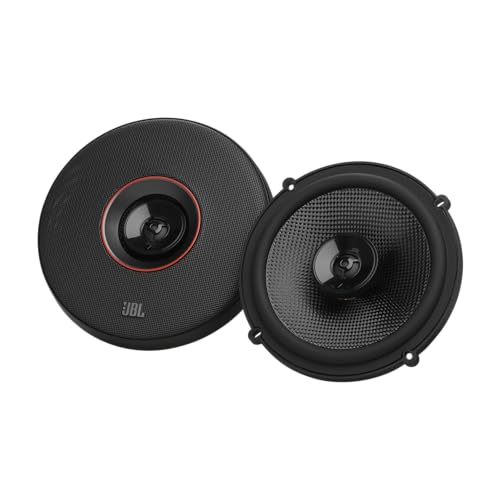
JBL Club 64SQ
Badge: Best Budget
| Size | 6.5-inch 2-way car speaker |
| Power | 75W RMS / 225W peak class |
| Sensitivity | High sensitivity design (per API listing) |
| Cone | Club SQ-series cone |
| Use | Sound-quality leaning coaxial |
The JBL Club 64SQ is built for listeners who want JBL clarity with amplifier headroom. In a guide to best 6.5 speakers for bass and clarity, it earns its place because the JBL pick when clarity and headroom both matter. Club SQ coaxial tuned for balance with real power handling is the headline, but the fuller picture is a mid-tier 6.5-inch car speaker whose spec sheet concentrates on the things that matter for for bass and clarity: the details in the table above are the ones to weigh, because they decide daily satisfaction long after the first impressive demo is forgotten.
Using it in the context of for bass and clarity is where its character shows. SQ variant tunes for balance over sheer output. That strength is not a spec-sheet abstraction; it is the difference between a setup you stop noticing and one you keep adjusting. The design choices behind it also explain the product shape: everything about this pick assumes it will be the main way you listen in this situation, not an accessory used twice a year.
Strengths
- SQ variant tunes for balance over sheer output
- Healthy RMS handling for amplified systems
- Clear, forward JBL vocal presentation
Trade-offs
- Needs an amp to justify its tier
- Less slim than the FSL shallow model
- Premium within the Club range
Beyond the headline strengths, day-to-day ownership is defined by smaller things. Setup follows the pattern described later in this guide, and once configured the JBL Club 64SQ asks little of you: it is the kind of product that disappears into the routine, which is precisely what most buyers of best 6.5 speakers for bass and clarity are hoping for. Where it does ask something of you, the trade-offs list above names it honestly, so there should be no surprises after the return window closes.
Against the other picks in this roundup, its position is clear. It does not try to win every category; it wins the specific combination of club sq coaxial tuned for balance with real power handling and suitability for for bass and clarity. If your priorities match that combination, the rivals mostly ask you to pay for capability you will not use, or to give up the one feature you will use daily. If your priorities differ, the comparison table below makes the alternative obvious, and the final recommendation names the pick to choose instead.
Choose it if your situation matches its brief: listeners who want JBL clarity with amplifier headroom, and you value healthy rms handling for amplified systems. Skip it if stock-power-only installs on a budget, or if the trade-offs above touch the thing you care about most. Honest matching matters more than ranking order here, because every pick in this guide is competent; the differences are about fit, not quality floors.
Best for: listeners who want JBL clarity with amplifier headroom / Not suited for: stock-power-only installs on a budget

KICKER 51KSC6504 KS-Series
Badge: Best for bass and clarity
| Size | 6.5-inch coaxial (pair) |
| Tweeter | 0.75-inch tweeter |
| Impedance | 4 ohm |
| Design | Thin-mount profile |
| Use | Step-up replacement and amplified systems |
The KICKER 51KSC6504 KS-Series is built for amplified systems that want refinement over raw loudness. In a guide to best 6.5 speakers for bass and clarity, it earns its place because the Kicker to choose when sound quality matters more than sheer volume. Refined KS-series coaxial with a smoother tweeter is the headline, but the fuller picture is a mid-tier 6.5-inch car speaker whose spec sheet concentrates on the things that matter for for bass and clarity: the details in the table above are the ones to weigh, because they decide daily satisfaction long after the first impressive demo is forgotten.
Using it in the context of for bass and clarity is where its character shows. KS-series tuning is smoother and more refined than CS. That strength is not a spec-sheet abstraction; it is the difference between a setup you stop noticing and one you keep adjusting. The design choices behind it also explain the product shape: everything about this pick assumes it will be the main way you listen in this situation, not an accessory used twice a year.
Strengths
- KS-series tuning is smoother and more refined than CS
- Handles amplifier power more confidently
- Thin mount keeps fitment broad
Trade-offs
- Costs more than entry Kicker lines
- Refinement is wasted on a noisy, untreated cabin
- Still needs a subwoofer for true low bass
Beyond the headline strengths, day-to-day ownership is defined by smaller things. Setup follows the pattern described later in this guide, and once configured the KICKER 51KSC6504 KS-Series asks little of you: it is the kind of product that disappears into the routine, which is precisely what most buyers of best 6.5 speakers for bass and clarity are hoping for. Where it does ask something of you, the trade-offs list above names it honestly, so there should be no surprises after the return window closes.
Against the other picks in this roundup, its position is clear. It does not try to win every category; it wins the specific combination of refined ks-series coaxial with a smoother tweeter and suitability for for bass and clarity. If your priorities match that combination, the rivals mostly ask you to pay for capability you will not use, or to give up the one feature you will use daily. If your priorities differ, the comparison table below makes the alternative obvious, and the final recommendation names the pick to choose instead.
Choose it if your situation matches its brief: amplified systems that want refinement over raw loudness, and you value handles amplifier power more confidently. Skip it if pure budget replacements, or if the trade-offs above touch the thing you care about most. Honest matching matters more than ranking order here, because every pick in this guide is competent; the differences are about fit, not quality floors.
Best for: amplified systems that want refinement over raw loudness / Not suited for: pure budget replacements

Pioneer TS-A1681F A-Series Plus
Badge: Best Premium
| Size | 6.5-inch 4-way coaxial (pair) |
| Power | 350W max class |
| Design | A-Series Plus line |
| Tuning | Balanced sound with smooth treble |
| Use | High-detail factory upgrade |
The Pioneer TS-A1681F A-Series Plus is built for detail-focused listeners staying with coaxial simplicity. In a guide to best 6.5 speakers for bass and clarity, it earns its place because squeezes the most detail out of a simple coaxial swap. 4-way A-series Plus coaxial for maximum coaxial detail is the headline, but the fuller picture is a mid-tier 6.5-inch car speaker whose spec sheet concentrates on the things that matter for for bass and clarity: the details in the table above are the ones to weigh, because they decide daily satisfaction long after the first impressive demo is forgotten.
Using it in the context of for bass and clarity is where its character shows. Multi-way design spreads the frequency workload. That strength is not a spec-sheet abstraction; it is the difference between a setup you stop noticing and one you keep adjusting. The design choices behind it also explain the product shape: everything about this pick assumes it will be the main way you listen in this situation, not an accessory used twice a year.
Strengths
- Multi-way design spreads the frequency workload
- Crisp vocal and high-frequency detail
- Handles more power than standard A-series
Trade-offs
- Extra drivers cannot fix poor door placement
- Diminishing returns over the 3-way on stock power
- Check depth before ordering
Beyond the headline strengths, day-to-day ownership is defined by smaller things. Setup follows the pattern described later in this guide, and once configured the Pioneer TS-A1681F A-Series Plus asks little of you: it is the kind of product that disappears into the routine, which is precisely what most buyers of best 6.5 speakers for bass and clarity are hoping for. Where it does ask something of you, the trade-offs list above names it honestly, so there should be no surprises after the return window closes.
Against the other picks in this roundup, its position is clear. It does not try to win every category; it wins the specific combination of 4-way a-series plus coaxial for maximum coaxial detail and suitability for for bass and clarity. If your priorities match that combination, the rivals mostly ask you to pay for capability you will not use, or to give up the one feature you will use daily. If your priorities differ, the comparison table below makes the alternative obvious, and the final recommendation names the pick to choose instead.
Choose it if your situation matches its brief: detail-focused listeners staying with coaxial simplicity, and you value crisp vocal and high-frequency detail. Skip it if purists who prefer a proper component set, or if the trade-offs above touch the thing you care about most. Honest matching matters more than ranking order here, because every pick in this guide is competent; the differences are about fit, not quality floors.
Best for: detail-focused listeners staying with coaxial simplicity / Not suited for: purists who prefer a proper component set

Pioneer TS-A1671F A-Series
Badge: Runner-Up
| Size | 6.5-inch 3-way coaxial (pair) |
| Power | 320W max class |
| Design | A-Series standard line |
| Tuning | Balanced sound with smooth treble |
| Use | Factory upgrade with headroom |
The Pioneer TS-A1671F A-Series is built for drivers planning a staged upgrade toward an amplifier. In a guide to best 6.5 speakers for bass and clarity, it earns its place because a step up in clarity today that still makes sense amplified later. 3-way A-series coaxial with room to grow into an amp is the headline, but the fuller picture is a mid-tier 6.5-inch car speaker whose spec sheet concentrates on the things that matter for for bass and clarity: the details in the table above are the ones to weigh, because they decide daily satisfaction long after the first impressive demo is forgotten.
Using it in the context of for bass and clarity is where its character shows. 3-way layout separates vocals more cleanly. That strength is not a spec-sheet abstraction; it is the difference between a setup you stop noticing and one you keep adjusting. The design choices behind it also explain the product shape: everything about this pick assumes it will be the main way you listen in this situation, not an accessory used twice a year.
Strengths
- 3-way layout separates vocals more cleanly
- More headroom than G-series for future amp additions
- Pioneer dealer and support reach is broad
Trade-offs
- 3-way coaxial still images from the door position
- Needs mounting-depth check in shallow doors
- Mid tier pricing
Beyond the headline strengths, day-to-day ownership is defined by smaller things. Setup follows the pattern described later in this guide, and once configured the Pioneer TS-A1671F A-Series asks little of you: it is the kind of product that disappears into the routine, which is precisely what most buyers of best 6.5 speakers for bass and clarity are hoping for. Where it does ask something of you, the trade-offs list above names it honestly, so there should be no surprises after the return window closes.
Against the other picks in this roundup, its position is clear. It does not try to win every category; it wins the specific combination of 3-way a-series coaxial with room to grow into an amp and suitability for for bass and clarity. If your priorities match that combination, the rivals mostly ask you to pay for capability you will not use, or to give up the one feature you will use daily. If your priorities differ, the comparison table below makes the alternative obvious, and the final recommendation names the pick to choose instead.
Choose it if your situation matches its brief: drivers planning a staged upgrade toward an amplifier, and you value more headroom than g-series for future amp additions. Skip it if one-and-done budget swaps, or if the trade-offs above touch the thing you care about most. Honest matching matters more than ranking order here, because every pick in this guide is competent; the differences are about fit, not quality floors.
Best for: drivers planning a staged upgrade toward an amplifier / Not suited for: one-and-done budget swaps

JBL GTO629
Badge: Best Value
| Size | 6.5-inch 2-way coaxial (pair) |
| Design | Plus One woofer cone area |
| Tweeter | Edge-driven tweeter |
| Fit | Shallow basket for tight doors |
| Use | Factory system upgrade |
The JBL GTO629 is built for drivers upgrading factory door speakers without adding an amp. In a guide to best 6.5 speakers for bass and clarity, it earns its place because a proven factory upgrade that gets loud on stock power. Efficient 6.5 coaxial with a bigger effective cone for midbass is the headline, but the fuller picture is a mid-tier 6.5-inch car speaker whose spec sheet concentrates on the things that matter for for bass and clarity: the details in the table above are the ones to weigh, because they decide daily satisfaction long after the first impressive demo is forgotten.
Using it in the context of for bass and clarity is where its character shows. Larger effective cone area moves more air for stronger midbass. That strength is not a spec-sheet abstraction; it is the difference between a setup you stop noticing and one you keep adjusting. The design choices behind it also explain the product shape: everything about this pick assumes it will be the main way you listen in this situation, not an accessory used twice a year.
Strengths
- Larger effective cone area moves more air for stronger midbass
- Efficient design plays loudly on factory head-unit power
- Long-standing model with broad fitment knowledge
Trade-offs
- Bright tweeter can be lively on axis in reflective cabins
- No separate crossover network like component sets
- Bass still benefits from door treatment
Beyond the headline strengths, day-to-day ownership is defined by smaller things. Setup follows the pattern described later in this guide, and once configured the JBL GTO629 asks little of you: it is the kind of product that disappears into the routine, which is precisely what most buyers of best 6.5 speakers for bass and clarity are hoping for. Where it does ask something of you, the trade-offs list above names it honestly, so there should be no surprises after the return window closes.
Against the other picks in this roundup, its position is clear. It does not try to win every category; it wins the specific combination of efficient 6.5 coaxial with a bigger effective cone for midbass and suitability for for bass and clarity. If your priorities match that combination, the rivals mostly ask you to pay for capability you will not use, or to give up the one feature you will use daily. If your priorities differ, the comparison table below makes the alternative obvious, and the final recommendation names the pick to choose instead.
Choose it if your situation matches its brief: drivers upgrading factory door speakers without adding an amp, and you value efficient design plays loudly on factory head-unit power. Skip it if component-system builders who want separate crossovers, or if the trade-offs above touch the thing you care about most. Honest matching matters more than ranking order here, because every pick in this guide is competent; the differences are about fit, not quality floors.
Best for: drivers upgrading factory door speakers without adding an amp / Not suited for: component-system builders who want separate crossovers
Comparison Table
| Pick | Key specification | Also notable | Tier |
|---|---|---|---|
| Alpine S-S65 S-Series | 6.5-inch 2-way coaxial (pair) | Carbon-fiber reinforced plastic cone | mid |
| JBL Club 64SQ | 6.5-inch 2-way car speaker | 75W RMS / 225W peak class | mid |
| KICKER 51KSC6504 KS-Series | 6.5-inch coaxial (pair) | 0.75-inch tweeter | mid |
| Pioneer TS-A1681F A-Series Plus | 6.5-inch 4-way coaxial (pair) | 350W max class | mid |
| Pioneer TS-A1671F A-Series | 6.5-inch 3-way coaxial (pair) | 320W max class | mid |
| JBL GTO629 | 6.5-inch 2-way coaxial (pair) | Plus One woofer cone area | mid |
Read the table as a map, not a verdict: it gathers the verified headline specifications so you can shortlist quickly, and the reviews above supply the character and the caveats that numbers cannot. Tier here is qualitative positioning within this category — entry, mid or premium — rather than a price claim, because prices move and the same product can sit in different tiers during sales.
Buying Guide: How to Choose a 6.5-Inch Speaker for bass and clarity
The reviews tell you what to buy; this guide tells you how to think, so you can judge any model — including next year replacements for these picks — against the needs of for bass and clarity. Three topics matter most in this category, and each gets its own section: the specifications that genuinely predict satisfaction, the matching of product to room and equipment, and the listing checks that prevent the common disappointments.
Coaxial vs Component, Sensitivity and Power: the Specs That Matter
A 6.5-inch coaxial mounts the tweeter in front of the woofer, so the whole speaker drops into the factory location with no extra drilling. A component set separates the tweeter and adds an outboard crossover, which images better but installs harder. For best 6.5 speakers for bass and clarity, coaxials dominate because most buyers want a same-day swap, and the picks here are coaxials unless a listing says otherwise. Judge them on sensitivity, RMS power handling and mounting depth before anything printed in big type on the box.
Sensitivity tells you how loud a speaker plays on a given amount of power, and it decides how well a speaker works on a factory head unit that may only deliver modest output. Higher sensitivity designs sound alive on stock power; lower sensitivity designs often need an amplifier to open up. Peak power numbers, by contrast, describe a momentary limit and are close to useless for comparisons. Compare RMS figures and sensitivity, and treat any headline wattage with suspicion.
Impedance is the quiet compatibility spec. Most car speakers are 4 ohm and suit factory and aftermarket systems alike. Some factory premium systems use lower-impedance speakers, and swapping blindly can change volume balance between doors. Check what your vehicle shipped with, especially on amplified factory systems, before assuming any 6.5-inch speaker is a universal fit.
Fitment: Depth, Bolt Patterns and Factory Grilles
A 6.5-inch nominal size hides real variation. Mounting depth, cutout diameter and basket shape differ between brands, and shallow doors with window mechanisms behind the speaker reject deep, heavy motors. Measure your factory speaker or check a fitment guide for your exact vehicle and door position before ordering. Many vehicles also need adapter rings or speaker harnesses, which are cheap parts that turn a frustrating install into a plug-in job.
Tweeter protrusion is the second fitment trap. Speakers whose tweeter sits proud of the cone can foul a factory grille that sits close to the door panel. Zero-protrusion and low-profile designs exist precisely for this problem. If your grilles are part of the door card, favor slim designs, and dry-fit one door completely before wiring all four so any surprise appears once, not four times.
Finally, consider the environment the speaker will live in. Doors get wet; it is how they are designed, with water channeled past the speaker. Marine-rated or water-resistant models earn their keep in Jeeps, convertibles and motorcycles, while ordinary door speakers in a dry sedan door live for years. Match the speaker toughness to the vehicle rather than paying for sealing you do not need, or skipping it where you do.
Getting Bass and Clarity Without Fooling Yourself
No 6.5-inch door speaker produces true sub-bass, and honest expectations make for better systems. What a good 6.5 does produce is tight midbass: kick drums, bass guitar and the weight of voices. Door treatment decides how much of that you hear. Sealing service holes with sound-deadening material and mounting the speaker firmly to a rigid baffle routinely improves bass more than stepping up a speaker tier does, because the door stops acting like a leaky, rattling box.
Clarity, meanwhile, is mostly about the tweeter and the crossover. Silk and textile domes tend to sound smooth at volume; metal and hard plastic domes can be vivid but lively in reflective cabins. If your listening is long highway drives, smoothness wins. If you listen over loud tires and wind, a forward tweeter helps detail survive. The picks here note tweeter character so you can match the speaker to your cabin and your ears, not to a spec sheet.
Set the system up honestly once installed: turn loudness and exaggerated EQ off, set gains by ear at realistic volume, and let the speakers break in for a few hours of normal listening before judging them. Many returns in this category are really setup problems, and the fix costs nothing.
How Do You Install 6.5-Inch Door Speakers?
Setup is where good purchases become good ownership. The steps below assume a typical example of the category used for for bass and clarity; your model manual governs any detail that differs, but the sequence — placement first, connections second, settings third, judgment last — holds across the category.
- Gather the vehicle-specific parts first: adapter rings if your car needs them, speaker harnesses, a panel tool and basic hand tools. Confirm polarity information for your vehicle before you start.
- Remove one door panel at a time, following your vehicle service information for clip and screw locations. Support the panel rather than letting it hang by its wiring.
- Unplug and remove the factory speaker, noting its depth and how it seals to the door. Compare the new speaker depth against the space behind the mounting surface with the window down.
- Mount the new speaker on its adapter or baffle with a foam gasket so it seals against the door. A sealed, rigid mount is worth real bass.
- Connect using the harness adapter where possible, observing polarity. Reversed polarity on one side thins the bass dramatically, so be consistent across doors.
- Test before refitting the panel: play familiar music, check for rattles and confirm the window travels fully. Then refit the panel and repeat for the other doors.
Once the basics work, resist the urge to keep adjusting for a day or two. Live with the setup through your normal routine, note the one or two things that genuinely bother you, and only then change settings — one at a time, so you know what fixed what. Most of the problems below are setup issues wearing the disguise of product faults.
Problem: Bass got thinner after the upgrade → Check polarity on both doors first; one reversed speaker cancels bass. Then look at the mounting seal — gaps behind the speaker leak the pressure that makes midbass.
Problem: A door rattles at certain notes → Find the frequency by sweeping volume on a bass-heavy track, then add foam tape or deadening to the panel, clip or baffle that buzzes at that note.
Problem: The new speaker hits the window → The mounting depth is too great for that door. Use a spacer ring to move the speaker outward if grille clearance allows, or switch to a shallow-mount model.
Problem: Sound is harsh at highway volume → Reduce treble a step, check that loudness is off, and confirm the tweeter is not aimed straight at glass at close range; smoothness settings exist for this reason.
Common Buying Mistakes
Comparing peak power numbers. Peak watts are a marketing figure. RMS handling and sensitivity predict how a speaker behaves in your car; shop on those instead.
Ignoring mounting depth. A speaker that does not fit behind the window mechanism does not fit, whatever the diameter says. Measure depth before ordering, especially in compact doors.
Skipping the mounting seal. An unsealed speaker in a leaky door loses the midbass you bought it for. Foam gaskets and firm mounting are the cheapest bass upgrade there is.
Mixing polarity between doors. One reversed connection cancels low frequencies and smears the stereo image. Use harness adapters and be consistent on both sides.
Expecting subwoofer bass from door speakers. 6.5-inch speakers do midbass, not sub-bass. If you want the lowest octave, plan a subwoofer instead of overdriving door speakers into distortion.
Buying for the wrong environment. Open vehicles, Jeeps and motorcycles need weather-ready speakers. Standard door speakers in a wet, open environment age fast.
Final Recommendation
For most readers shopping for best 6.5 speakers for bass and clarity, the pick to buy is the Alpine S-S65 S-Series: accuracy-first tuning with unusually controlled bass for a coaxial, and it balances the priorities of for bass and clarity better than anything else in this roundup. It is the recommendation to follow when you do not have a specific reason to choose otherwise, and its trade-offs are the ones least likely to matter in daily use.
The runner-up is the Pioneer TS-A1671F A-Series, which makes sense when its particular strengths match your situation more closely, or when the first pick is unavailable. Readers on the tightest budgets should look at the JBL Club 64SQ without embarrassment: it covers the core job honestly. And if none of the six fits — because your room, vehicle or equipment is genuinely unusual — the prose-only class notes and the buying guide give you the criteria to judge alternatives rather than a forced recommendation.
Related Guides
- best 2.1 computer speakers for music
- best speakers for nissan altima
- best bluetooth speakers under 300
- best car door speakers for bass
- best speakers for gaming setup
Frequently Asked Questions
How do I know a speaker fits my vehicle?
Check three numbers against your factory speaker: mounting depth, cutout diameter and overall diameter, and confirm whether your vehicle needs adapter rings. Fitment databases from retailers and speaker makers cover most vehicles. When in doubt, pull one door panel and measure the factory unit; ten minutes of measuring prevents the most common return in car audio.
Why do my new speakers have less bass than expected?
Usually the door, not the speaker. Factory speakers are sealed and tuned to their door; replacements mounted loosely or without a gasket leak pressure and lose midbass. Polarity errors between doors cancel bass too. Seal the mount, verify polarity, and consider sound deadening on the door skin before blaming the speakers.
Are component speakers worth the extra installation work?
If you value stereo imaging and your vehicle has good tweeter locations, yes: separating the tweeter raises the soundstage and the crossover quality is usually better. If you want a same-day swap with factory grilles and no drilling, a good coaxial is the rational choice, which is why this roundup concentrates on coaxials.
Can 6.5 speakers handle bass-heavy music?
They handle the midbass foundation of bass-heavy music — kick, snare weight and bass-guitar punch — with authority when mounted well. The deepest synth and sub-bass notes live below what a door speaker can reproduce, and forcing them with bass boost only adds distortion. A small subwoofer completes the system honestly.
How long do aftermarket car speakers last?
In a dry, sealed door, a quality set lasts many years. Heat, moisture and UV are the enemies, which is why environment matching matters for Jeeps, convertibles and motorcycles. Paper-cone factory speakers degrade fastest; the treated cones and rubber surrounds used in most picks here age far more gracefully.
Will these speakers work with my factory head unit?
Most picks here are designed to. High-sensitivity coaxial models are voiced to play clearly on the modest power a factory head unit provides, and several entries in this roundup exist specifically for stock systems. What factory power cannot do is drive low-sensitivity, power-hungry speakers to their potential, so match the speaker appetite to the source you actually have.