Where to buy
One measurement, two habitats. The 6.5-inch speaker lives in car doors and on bookshelves, and a ceiling of 150 dollars buys serious quality in both places, provided the buyer first decides which habitat the new pair is actually moving into.
Linked picks here are sold through Amazon, so use each listing to check price on Amazon and confirm today’s details before ordering; orders are placed on Amazon, and qualifying purchases may earn this site a commission. Because this search covers two kinds of speaker wearing one size, read the badge on every pick before it enters your basket: a car pair and a home pair are not interchangeable, however identical their cones look in photographs. The budget framing in the title is the only place money is discussed, since listing prices move too often to print honestly.
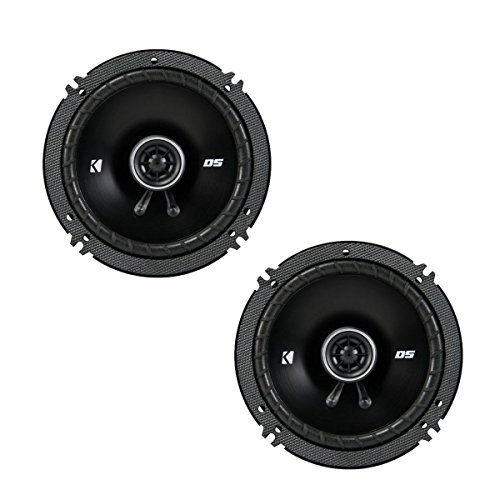
- KICKER DSC650 6.5-Inch Coaxial Car Speakers (Pair, 43DSC6504) – best overall car pair choice; check price on Amazon.
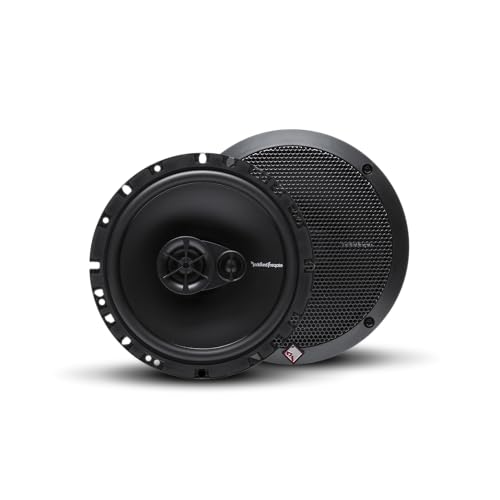
- Rockford Fosgate Prime R165X3 6.5-Inch 3-Way Car Speakers (Pair) – best car pair for clarity choice; check price on Amazon.
- ELAC Debut 2.0 B6.2 Bookshelf Speakers (Pair) – best home bookshelf pair choice; check price on Amazon.
- 6.5-inch component speaker system (prose-only pick, no single model linked) – best for soundstage in cars choice.
- Shallow-mount 6.5-inch coaxial pair (prose-only pick, no single model linked) – best for shallow doors choice.
- Marine-grade 6.5-inch coaxial pair (prose-only pick, no single model linked) – best for weather exposure choice.
Two audiences, one ruler, no confusion intended.
Disclosure: As an Amazon Associate, kajuandouglas.com earns from qualifying purchases. Links to Amazon on this page are affiliate links; they cost you nothing extra. Listing details such as price and availability change often, so check the current Amazon listing before you buy.
Start with a student in a twelve-year-old hatchback, whose door speakers buzz like trapped insects, and a neighbour in a small apartment whose inherited bookshelf speakers have gone woolly and vague. Both type the same search, both hold the same budget, and both can be completely satisfied by Friday, but not by the same box. The car wants a four-ohm coaxial pair that bolts into a door and runs happily off a factory radio. The apartment wants a passive bookshelf pair in tuned cabinets and an amplifier to feed them.
What genuinely unites the two habitats is physics at a sweet spot. A 6.5-inch cone is large enough to produce convincing mid-bass, the region where music’s body lives, yet small and light enough to stay articulate through the midrange where voices sit. Manufacturers have refined this driver for decades across millions of units, so at this budget the buyer is purchasing maturity: proven cone materials, honest specifications, and designs whose flaws were found and fixed generations ago. Cheap speakers exist below this ceiling that embarrass it, and costly ones above it that barely improve on it, which is exactly what a sweet spot means.
The structure follows the likely reader. Car pairs come first because most arrivals at this keyword are chasing a door upgrade, then the home benchmark, then the specialist categories for shallow doors, component ambitions and weather exposure. Every pick, linked or described, had to justify itself at the ceiling: not the best speaker imaginable, but the best answer this money can give to a clearly stated job. Anything that needed a caveat longer than its review was cut, however famous its badge.
A note on using a two-audience guide without wasting your own time. Car readers may skip the home material entirely once they have absorbed the power-figure section, which applies to both worlds. Home readers should read the car reviews only for the entertainment of contrast, then settle on the bookshelf benchmark and the amplifier question. The mistakes and questions sections are deliberately shared, because the costliest errors at this budget, trusting peak wattage and guessing fit, are committed with equal enthusiasm in driveways and living rooms alike.
Key Takeaways
- A 6.5-inch driver serves two habitats, so the badge naming car or home matters more than the diameter.
- Car buyers should start with the DSC650 for value or the R165X3 where muddle is the complaint.
- The ELAC B6.2 benchmarks the home half of the budget, on condition an amplifier joins the plan.
- RMS and sensitivity predict behaviour in both worlds, while peak wattage figures predict nothing.
- Measure diameter and depth before ordering, and the ceiling covers the whole job rather than the headline.
In this guide
Quick Picks
One driver size, two worlds: verified car pairs first, a home bookshelf benchmark, and the specialist categories for the doors and duties the standard pairs cannot serve.
| Buyer type | Pick | Why it stands out | Link |
|---|---|---|---|
| Best Overall Car Pair | KICKER DSC650 | Drop-in 6.5-inch fit for a huge range of doors and decks | Check price on Amazon |
| Best Car Pair for Clarity | Rockford Fosgate R165X3 | Midrange separation that survives road noise | Check price on Amazon |
| Best Home Bookshelf Pair | ELAC Debut 2.0 B6.2 | 6.5-inch aramid woofer with real mid-bass substance | Check price on Amazon |
| Best for Soundstage in Cars | 6.5-inch component speaker system (Prose-Only Pick) | Ear-level tweeters transform the soundstage | Prose-only – see review |
| Best for Shallow Doors | Shallow-mount 6.5-inch coaxial pair (Prose-Only Pick) | Installs where standard speakers cannot | Prose-only – see review |
| Best for Weather Exposure | Marine-grade 6.5-inch coaxial pair (Prose-Only Pick) | Construction that tolerates water, sun and salt air | Prose-only – see review |
How These Picks Were Chosen
Verification came first, as it does across this site: each linked pick is a model confirmed against its Amazon listing, title matched to variant, so the speaker reviewed is the speaker shipped. That bar quietly eliminated a crowd of tempting listings whose specifications could not be corroborated. What remained were three linked pairs with documented figures and long production histories, plus three categories described in prose because the correct member depends on measurements, door depth or tweeter housings, that only the reader’s own car can supply.
The car pairs were judged on factory-replacement manners above exotic talent: four-ohm impedance a stock radio expects, mounting patterns that match mainstream doors, sensitivity high enough to sing on modest power, and construction that tolerates life inside a door. The home pair was judged as home equipment is judged, on cabinet quality, driver integration and the honesty of its published response. Applying one world’s criteria to the other would have produced a worse guide for both, so the two scorecards were kept separate and the badges say which was used.
- Verified Amazon listing and manufacturer specifications for every linked pick
- Pair pricing that normally belongs under the 150-dollar ceiling
- For car picks: 4-ohm load, standard 6.5-inch mounting, head-unit-friendly sensitivity
- For the home pick: a properly engineered cabinet and crossover, with its amplifier requirement stated
- Materials suited to the environment the speaker will actually live in
- No recalled, discontinued-unsupported or fantasy-specification products
The Best 6.5 Inch Speakers Under $150
Read the badges as addresses. Each pick is labelled with the world it belongs to and the job it does there, and a pick admired out of its world is merely a photograph of a speaker.

KICKER DSC650 6.5-Inch Coaxial Car Speakers (Pair, 43DSC6504)
Badge: Best Overall Car Pair
6.5-inch (160-165 mm) 2-way coaxial car speakers, pair; 4-ohm impedance; 240W peak power per pair; polypropylene woofer cone with ribbed surround; drop-in factory-upgrade design for doors and rear decks
For the car half of this keyword, the DSC650 leads because it carries the fewest conditions. It bolts into mainstream 6.5-inch locations, presents the four-ohm load factory radios were built for, and plays with a forward, generous character that flatters everything a car system is fed, from morning news to a Friday playlist. Its 240-watt peak figure per pair should be read as headroom theatre; the working truth is its efficiency, which is what a stock head unit actually spends. As a first upgrade at this ceiling, it is the pair least likely to generate a follow-up purchase.
Owners’ reports about the DSC650 tend to converge on a second-week observation: the improvement keeps growing on them. The first drive delivers the obvious, clarity where there was mush, but the lasting pleasure is how undemanding the pair is. It does not insist on an amplifier to justify itself, does not turn harsh when a passenger cranks it, and does not make old recordings unlistenable in the name of detail. In a student’s hatchback it survives semesters of doors slammed between lectures; in a family wagon it makes the school run’s radio intelligible to the back seat. Versatility at a fixed budget is not a consolation prize. It is the entire point of the ceiling, and this pair understands the assignment.
Key specs: 6.5-inch (160-165 mm) 2-way coaxial car speakers, pair; 4-ohm impedance; 240W peak power per pair; polypropylene woofer cone with ribbed surround; drop-in factory-upgrade design for doors and rear decks.
Strengths
- Drop-in 6.5-inch fit for a huge range of doors and decks
- Clean, forward voicing that wakes up tired factory systems
- Handles a future amplifier upgrade without complaint
Trade-offs
- Bass depth is limited by door-speaker physics
- Plastic factory-style basket rather than a cast frame
- Grilles are not the focus; many installs reuse factory covers
Best for: the majority of drivers replacing factory door or deck speakers / Not suited for: shoppers needing a passive home pair; this one is for cars

Rockford Fosgate Prime R165X3 6.5-Inch 3-Way Car Speakers (Pair)
Badge: Best Car Pair for Clarity
6.5-inch 3-way full-range coaxial car speakers, pair; 45W RMS (90W peak) power handling per speaker; 4-ohm impedance; vacuum-formed polypropylene cone; grilles included; direct factory-replacement design
The R165X3 answers a different complaint: not weakness, but muddle. Its three-way layout gives the midrange its own dedicated help, so voices disentangle from accompaniment in a way two-way rivals at this price rarely manage. For the driver whose listening is spoken word, acoustic music and long phone calls through the car system, that separation is worth more than any bass statistic. The published 45 watts RMS per speaker is the honest working figure to plan around, and grilles are included, a small practical mercy in doors whose factory covers have cracked with age.
There is a moment its owners describe, usually involving a song they have known for years played on an ordinary commute. A harmony line surfaces that the old speakers had been smearing into the chorus, or a presenter’s aside lands cleanly at motorway volume, and the driver realises the muddle they had accepted as the car’s character was only its speakers’. Moments like that are why clarity picks exist in a budget guide. Choose the Rockford over the KICKER if your ear hunts detail; choose the KICKER if you prefer warmth and weight. The ceiling buys either virtue honestly, just not both in one box.
Key specs: 6.5-inch 3-way full-range coaxial car speakers, pair; 45W RMS (90W peak) power handling per speaker; 4-ohm impedance; vacuum-formed polypropylene cone; grilles included; direct factory-replacement design.
Strengths
- Midrange separation that survives road noise
- Honest RMS figure that makes amplifier matching simple
- Grilles included, ready for working doors
Trade-offs
- Clarity is unforgiving of poor recordings
- Needs an adapter ring in some mounting patterns
- Warmth seekers should look to the KICKER instead
Best for: detail-led listeners in cars with standard 6.5-inch locations / Not suited for: listeners seeking a softened, warm presentation

ELAC Debut 2.0 B6.2 Bookshelf Speakers (Pair)
Badge: Best Home Bookshelf Pair
Passive 2-way bass-reflex bookshelf pair; 6.5-inch aramid fibre woofer and 1-inch cloth dome tweeter per speaker; frequency response up to 35,000 Hz; needs a separate amplifier or receiver
The ELAC Debut 2.0 B6.2 answers the home half of the keyword without apology for being a different species. Inside each cabinet a 6.5-inch aramid fibre woofer works with a one-inch cloth dome tweeter in a proper two-way, bass-reflex design, engineered as a system rather than assembled as a driver in a box. The condition is stated on its badge and repeated here: it is passive, so an amplifier or receiver must exist in your plan and your budget. Meet that condition and this pair delivers the most refined listening in the guide, full stop.
Living with the ELAC is a calm experience, deliberately so. It does not shout for attention across a room or flatter bad recordings into excitement; it presents music with a level, unforced balance that suits long evenings and mixed libraries. Apartment listeners in particular value its manners at modest volumes, where detail survives without the loudness that brings neighbours into the conversation. Its published response, reaching up to 35,000 Hz, matters less as a number than as evidence of engineering done thoroughly. As the home benchmark at this ceiling, it sets the standard the car pairs are not asked to meet, because their world grades on a different curve.
Key specs: Passive 2-way bass-reflex bookshelf pair; 6.5-inch aramid fibre woofer and 1-inch cloth dome tweeter per speaker; frequency response up to 35,000 Hz; needs a separate amplifier or receiver.
Strengths
- 6.5-inch aramid woofer with real mid-bass substance
- Smooth cloth dome tweeter for long sessions
- Optimised cabinet shows the driver size at its best
Trade-offs
- Passive: needs a separate amplifier
- No wireless or remote conveniences
- Too deep for some shallow shelves
Best for: home listeners with an amplifier who want the driver size at its best / Not suited for: anyone without an amplifier or wanting a one-box solution
6.5-inch component speaker system (Prose-Only Pick)
Badge: Best for Soundstage in Cars
Component systems mount the woofer in the door and the tweeter separately, higher up, with a crossover networking the two. Judge by crossover quality, sensitivity, and whether your car offers a sane tweeter location.
A component set is the one car format that changes where the music seems to live. Raising the tweeter toward ear level lifts voices off the floor of the car and onto an imaginary stage at the windscreen, a transformation no coaxial, however fine, can fully imitate from down in the door. At this budget the format demands respect for its conditions: an hour or two of careful fitting, crossovers mounted securely, and ideally amplification in the future plan. Buyers who accept those terms get the largest experiential jump available under the ceiling; buyers who want a twenty-minute swap should take the coaxial hint and be happy.
A final practical note on component sets at this price: keep the packaging and documentation until the system has survived a month of use. Crossovers occasionally need their tweeter level revisited once ears adjust, tweeters get aimed twice before they are aimed right, and the paperwork records the wiring decisions future you will otherwise have to reverse-engineer. Photograph the crossover settings as fitted. Small habits like these separate a component installation that matures gracefully from one that becomes a door panel nobody dares open again.
Key specs: Component systems mount the woofer in the door and the tweeter separately, higher up, with a crossover network dividing frequencies. At this ceiling, judge sets by crossover quality, tweeter material, and whether a mounting solution exists for your car’s pillars or dash..
Strengths
- Ear-level tweeters transform the soundstage
- Woofers freed from carrying a coaxial tweeter post
- Crossovers voiced for the specific driver pair
Trade-offs
- Longer, more involved installation
- Needs a tweeter location to make sense
- Less driver per dollar than a coaxial at this ceiling
Best for: cars with factory tweeter housings / Not suited for: cars with no tweeter location and no wish to create one
Shallow-mount 6.5-inch coaxial pair (Prose-Only Pick)
Badge: Best for Shallow Doors
Shallow-mount designs use slim baskets and compact motors for doors with restricted depth behind the panel. Judge by stated mounting depth against your measured clearance, then by sensitivity and construction.
Plenty of modern doors package the window mechanism so tightly that a standard basket simply will not fit, and discovering that with the trim off and a speaker in hand is a special kind of afternoon. The shallow-mount category exists for those cars: same diameter, same job, a motor and basket dieted to clear glass and regulators. The compromise is usually a shade of bass weight, exchanged honestly for the ability to close the door and raise the window. Measure your clearance first; if a standard pair fits, buy the standard pair and keep the change.
Finally, judge the shallow pair you receive as an inspector would: seams even, surround bonded cleanly, terminals firm, and the stated depth on the box matching a ruler held against the actual unit before the trim comes off. Slim designs live closer to their mechanical limits, so build quality is not a luxury in this category but the whole product. A shallow speaker from a maker who publishes full dimensions and stands behind them will serve for years; one bought on a photograph and a prayer is a return label waiting to be printed.
Key specs: Shallow-mount designs use slim baskets and compact motors for doors with restricted depth behind the panel. The published mounting-depth figure is the first specification to check, followed by sensitivity for factory power..
Strengths
- Installs where standard speakers cannot
- No spacers or trim modifications needed
- Keeps the factory look completely stock
Trade-offs
- Less bass weight than full-depth designs
- Fewer models to choose from
- Still requires the depth measurement first
Best for: doors with restricted mounting depth / Not suited for: doors with ample depth, where standard pairs fit
Marine-grade 6.5-inch coaxial pair (Prose-Only Pick)
Badge: Best for Weather Exposure
Marine 6.5-inch coaxials use sealed construction, UV-stable cone materials, corrosion-resistant surrounds and stainless hardware. Judge by those construction details first and by sensitivity second.
If your doors leak, your car is a convertible, or the vehicle lives outside in coastal air, marine construction stops being a boat topic and becomes the correct car specification. Door cavities are wet places in any vehicle; in a soft-top or a salt-belt commuter they are effectively outdoor installations, and ordinary speakers die there on the same schedule as they do on boats. A marine pair under this ceiling costs a little refinement and buys years of indifference to weather. For the right car, that trade is not a compromise but the smartest allocation in this entire guide.
It is worth saying plainly why this category stands unlinked here. Marine 6.5 listings vary in construction far more than their photographs suggest, and the correct choice depends on your exposure: garaged convertible, daily-driven coastal car, and open Jeep are three different severities wearing one category name. The checks above, sealed build, named materials, stainless hardware, stated sensitivity, will identify the right member of the category in your market faster than any single link chosen blind from this page. Guidance that admits its limits serves better than a link that hides them.
Key specs: Marine 6.5-inch coaxials use sealed construction, UV-stable cone materials, corrosion-resistant surrounds and stainless mounting hardware, in the standard 6.5-inch, 4-ohm format. Judge the category by its sealing, its surround material and an honest RMS figure..
Strengths
- Construction that tolerates water, sun and salt air
- Stays clear at open-air volumes
- Stainless hardware will not streak panels with rust
Trade-offs
- Costs more of the ceiling than a car pair
- Overkill for a dry, garaged car
- Grille colour choices are usually limited
Best for: vehicles living outdoors or with heavy door moisture / Not suited for: garage-kept cars in mild climates, where standard pairs suffice
Comparison Table
The table’s power column needs one careful reading: car pairs list their handling, since a head unit supplies the power, while the home pair’s story is the amplifier you feed it with. Compare within worlds first, across them second.
| Pick | Type | Connection / fit | Power | Standout |
|---|---|---|---|---|
| KICKER DSC650 | 6.5-inch 2-way coaxial pair | Speaker wire / factory harness | Passive – head unit or amplifier | 4-ohm; 240W peak per pair |
| Rockford Fosgate R165X3 | 6.5-inch 3-way coaxial pair | Speaker wire / factory harness | Passive – head unit or amplifier | 45W RMS per speaker; grilles included |
| ELAC Debut 2.0 B6.2 | Passive bookshelf pair (6.5-inch woofer) | Speaker wire binding posts | Passive – separate amplifier required | 6.5-inch aramid woofer; bass reflex |
| 6.5-inch component speaker system (Prose-Only Pick) | 6.5-inch component set | Speaker wire / factory harness | Passive – head unit or amplifier | Separate tweeter and crossover |
| Shallow-mount 6.5-inch coaxial pair (Prose-Only Pick) | 6.5-inch shallow-mount coaxial pair | Speaker wire / factory harness | Passive – head unit or amplifier | Reduced mounting depth |
| Marine-grade 6.5-inch coaxial pair (Prose-Only Pick) | 6.5-inch marine coaxial pair | Speaker wire / factory harness | Passive – head unit or amplifier | Sealed, UV-resistant construction |
Why Does the Same 6.5-Inch Size Rule Both Car Doors and Bookshelves?
The 6.5-inch driver rules both worlds because it sits at a genuine engineering sweet spot. Its cone moves enough air to give music body, yet stays light and stiff enough to reproduce the midrange cleanly, and midrange is where most of music actually happens. Bigger drivers gain bass and lose that midrange grace without help; smaller ones stay articulate and sound thin. Decades of development have also made the size cheap to build superbly, which is why a strict budget buys so much quality here and so much less at exotic diameters.
The environments, though, could hardly differ more. A car door is an unsealed, oddly shaped, vibrating enclosure that floods occasionally and answers to a head unit’s modest power. A bookshelf cabinet is a tuned, sealed or ported box in a still room, fed by an amplifier chosen for it. Same driver, opposite problems: the car speaker is voiced to overcome its enclosure, the home speaker is engineered with its enclosure as a partner. Knowing which problem your purchase must solve is the whole secret of this keyword, and it is why the badges in this guide are printed in such large type.
For the shopper, the shared size remains useful knowledge rather than a trap. It explains why quality under the ceiling is so high: two enormous industries amortise the same driver research. It explains the secondhand market’s depth, the easy availability of adapters and cabinets, and the confidence with which makers publish specifications. Buy the size gladly. Just buy it in the world you actually live in, with the format that world rewards, and let the diameter be the only thing the two purchases would have had in common.
Peak, Max and RMS: Reading a 6.5-Inch Speaker’s Power Figures
Every box in this class prints a large wattage number, and almost every one is the least useful figure on the carton. Peak and max ratings describe a momentary survival limit, not a working diet, and comparing speakers by them is comparing umbrellas by the height of their packaging. The honest currency is RMS: the continuous power a speaker can handle, or an amplifier can deliver, all evening without distress. When one maker prints RMS prominently and another hides it behind a peak figure four times larger, that difference in candour is itself a product review.
Sensitivity is the partner figure, and on factory power it matters more than either wattage number. It states how loud a speaker plays from one watt at one metre, and because loudness scales logarithmically, a few decibels of extra sensitivity equal a much larger amplifier. Car buyers running stock radios should rank sensitivity alongside fit as a first-order concern. Home buyers should pair it with impedance to confirm their amplifier will stay comfortable. Two honest figures, RMS and sensitivity, predict a purchase’s behaviour better than every other number on the box combined.
At home the arithmetic flips but the honesty rule stands. The ELAC asks its amplifier for per-channel RMS output suited to a bookshelf pair in a real room, and an amplifier specified only in inflated peak terms will run out of composure on loud passages exactly as a car system does. Receivers and amplifiers from established makers publish the real figures; treat any that will not as disqualified, however long their feature list runs. In both worlds, the discipline is identical: plan around RMS, check sensitivity, and let peak numbers entertain somebody else.
The Hidden Costs Around a 150-Dollar Pair
The pair itself is not the whole purchase, and planning the extras is what separates a satisfying Saturday from a half-finished one. Car buyers may need adapter rings or brackets for their specific doors, harness adapters that keep the factory wiring uncut, foam gasket tape, and perhaps a trim tool kit if the household lacks one. None of it is expensive; all of it is annoying to discover missing at noon with a door in pieces. List the whole job before ordering the headline item, and the ceiling survives contact with reality.
Home buyers keep a different short list. The passive benchmark needs amplification, which may already exist in a receiver pressed back into service, or may be a compact amplifier bought alongside, and speaker cable of sane gauge to connect it. Stands or isolation pads, if the bookshelf pair will live on furniture, belong in the same honest accounting. The discipline is not to spend more; it is to spend knowingly, allocating the ceiling across the system instead of discovering, box by box, that the speaker was merely the first instalment.
The honest way to hold the ceiling is to decide which list is yours before ordering, price the whole job rather than the headline, and adjust the speaker choice if the total demands it. A slightly humbler pair, completely installed, delights more than a finer pair waiting on parts. Budgets fail at the margins, in adapters and amplifiers, far more often than they fail at the speaker itself, and every regular at a parts counter has watched it happen.
The 6.5-Inch Driver: A Short Appreciation of a Standard
Standards become standards by surviving, and the 6.5-inch driver has survived every fashion audio has thrown at it, from the cassette era to streaming, without its dimensions being improved upon for mainstream use. That longevity is not inertia. It is the market repeatedly re-deriving the same optimum: enough cone to matter, little enough mass to sing, a mounting footprint that fits the doors and cabinets the world actually builds. Buying into a standard this settled is a form of insurance, because everything around the product, advice, accessories, replacements, has had decades to mature.
Manufacturing scale compounds the physics. Because car doors and bookshelf cabinets both consume this driver in enormous numbers, tooling costs vanish into volume and the money lands in materials and quality control instead. That is the mechanical reason a strict ceiling buys genuine quality at this size and noticeably less at unusual ones. The buyer at 150 dollars is, in effect, spending alongside millions of other buyers whose combined demand has already negotiated the best possible price for competence. Few purchases in audio offer that kind of leverage.
The standard also protects the future. A 6.5-inch location, in a door or in a listening room’s furniture plan, will accept tomorrow’s speakers as readily as today’s, so the installation work, the adapters, the amplifier choice, outlives any single pair. Owners thinking in decades rather than seasons should find that comforting: the money spent learning and fitting this size is never stranded. Standards are sometimes accused of being boring. In a component you may own through several cars and two living rooms, boring is a compliment of the highest order.
When the Answer Is Not a 6.5 at All
Honesty requires a section for the readers this keyword cannot serve, because some arrived here one size away from their answer. If your car’s locations measure out at 6×9, 5×7 or a small 4-inch, no enthusiasm in this guide will stretch a 6.5 into them, and the correct purchase is the right size from a maker of this calibre. Measure before loyalty. Likewise, a door so shallow that even slim designs foul the glass needs its problem solved by depth, not diameter, and the shallow category above exists precisely to say so.
At home, the equivalent wrong turning is the room that is simply too large or too open for bookshelf speakers of any driver size, where floorstanding cabinets or a subwoofer partnership is the honest answer. A small pair driven brutally to fill a barn-like space will disappoint and may not survive the attempt. Recognising a border case is not a failure of the budget; it is the budget working as information, telling you the job wants a different tool. The shortlist remains excellent inside its borders, and this section exists to patrol them.
None of this diminishes the shortlist. It defines its borders, and a guide with honest borders is one whose recommendations inside them can be trusted without reservation. If your measurements place you inside, buy with the confidence the verification process was designed to give. If they place you outside, take the criteria, the power-figure discipline and the fit checks with you to the correct size; they transfer intact, and they will serve you there exactly as they serve the readers this keyword was written for.
One Size, Honestly Bought: A Closing Note on Value
There is a temptation, at any strict ceiling, to apologise for the purchase in advance, as if real quality began one price band higher. Resist it with the evidence of this guide. The linked pairs are not stripped-down apologies for expensive speakers; they are the mature products of the most competitive size in audio, built by makers whose reputations were earned at exactly this level. A well-chosen 6.5 pair under the ceiling does not sound like a compromise in a car or a living room. It sounds like music, properly reproduced, which was the assignment from the beginning.
The discipline that remains is matching: the right world, the right format, the verified model, the measured fit. Everything else in this guide is commentary on those four decisions. Get them right and the ceiling stops feeling like a constraint and starts feeling like what it actually is, a filter that removed the overpriced and the unsuitable before you ever saw them. Value is not the art of spending little. It is the art of needing to spend only once, and at this size, with these checks, once is entirely achievable.
How the Two Worlds Judge the Same Purchase Differently
Spend a month with each audience and their verdicts diverge instructively. Car owners judge the purchase in motion: whether the news survives the motorway, whether a passenger’s conversation no longer competes with a straining radio, whether the improvement announces itself in the first mile. Home listeners judge in stillness: whether a familiar record reveals a new inner line at evening volume, whether the system disappears and leaves the performance. Both verdicts are correct, and neither jury would accept the other’s evidence, which is why this guide never asks them to share a ranking.
The practical consequence is that word of mouth must be read by world. A car owner’s rave about a pair tells a home buyer almost nothing except that the maker is competent, and a home reviewer’s refinement notes tell a driver little about performance over tyre roar. When researching beyond this guide, filter testimonials by habitat first and enthusiasm second. The most useful review is always written by somebody whose room, or door, resembles yours, facing the same noise, the same power supply and the same definition of loud enough.
The Next Purchase in Each World
What follows this purchase differs by world as well, and planning it now prevents the classic error of buying the same improvement twice. The car owner’s road leads to the rear locations, then perhaps to amplification once the speakers reveal what the factory radio cannot give. The home listener’s road leads to placement, stands, and eventually a better amplifier long before a better speaker. Both roads share one feature: the 6.5 pair bought today remains in service at every stage, which is the quiet definition of a purchase made correctly the first time.
Notice what neither world needs next: a different 6.5-inch speaker. Buyers who chose by the criteria in this guide do not circle back to the category hunting the satisfaction they missed, because they did not miss it. Their next money goes to the system’s actual frontier, power, placement or the other location, and the pair at the centre simply keeps working. If you take one sentence from this guide into the marketplace, take that one: the goal is a system that stops asking for speakers.
A Buyer’s Walkthrough: Two Shopping Trips, Start to Finish
Picture the car buyer first, tape measure in hand on a Saturday morning. One door card is off, the factory speaker measured and photographed, its depth checked against the window’s travel. The chosen pair was ordered against those numbers, with harness adapters in the same box, so the fitting proceeds without a single improvisation: gasket foam, adapters, screws snug in rotation, a test play before the trim returns. By lunch the second door matches, and the first drive delivers the verdict the reviews promised. Nothing about the morning was lucky. It was measured, and measurement is a repeatable kind of luck.
Now picture the home buyer, whose Saturday looks different. The amplifier on the shelf has been checked and dusted, its per-channel RMS confirmed against the benchmark pair’s needs, cable cut to lengths that reach without tension or tangle. The ELACs go onto stands at ear height, toed in slightly, and the first record played is the familiar one kept for exactly this duty. The improvement is not subtle, and it is not chased further that day, because the plan accounted for everything the pair required before they were ordered. Two habitats, one moral: the purchase was finished at the measuring stage.
Notice what neither trip contained: a return, a second order for the part that was actually needed, a forum post written at midnight in rising panic. Those absences are the real product this guide sells, with speakers as the vehicle. Verification, badges, fit checks and honest power figures all exist to delete those experiences from your Saturday. Readers who follow the process sometimes describe it as anticlimactic, and we accept the description happily. Drama in a purchase is a cost, and at this ceiling nobody has budget to spare for it.
That is the right note on which to leave a keyword that turned out to be two keywords wearing one coat. Whether your 6.5 inches end up in a door in Detroit weather or on a stand in a quiet apartment, the route was the same: name the world, respect its criteria, verify the model, measure the fit. Do those four things and the ceiling in the title stops being a limitation and becomes the reason the answer was findable at all. The size is standard. The method is the advantage.
Which 6.5-Inch Format Should You Choose: Coaxial, Component or Bookshelf?
Start with the location, because the location decides almost everything. A car door or deck with a single speaker position and factory wiring points to a coaxial pair, the format that asks nothing and gives nearly everything. A car with tweeter housings waiting and an owner willing to fit them points to components and their raised soundstage. A shelf in a listening room points to the bookshelf pair, which is not a car format at all but a complete cabinet design. Answering ‘where will it live’ honestly answers ‘which format’ automatically in almost every case.
Then check the two numbers that veto choices: depth in a car, amplification at home. A door that fails the depth test vetoes standard coaxials regardless of their virtues and promotes the shallow category. A home with no amplifier and no plan for one vetoes the passive benchmark, however refined, until the plan exists. Vetoes sound negative, but they are the most helpful sentences in this guide, because a choice eliminated by measurement is a return that never has to be posted back.
How to Check Fit Before Any 6.5-Inch Speaker Is Ordered
Ten minutes with a tape measure and a trim tool prevents nearly every bad purchase in this category. Work through the checks for your world before any order is placed.
- Identify the exact location. Decide which position you are upgrading: front door, rear door, rear deck, or a shelf at home. Each has its own size, depth and role, and a pair bought for one may not suit another.
- Measure the existing speaker. In a car, remove one trim panel and measure the factory speaker’s diameter, mounting-hole spacing and depth. At home, measure the shelf space and the distance to the listening seat instead.
- Measure the space behind. In a door, measure from the mounting face to the window mechanism or glass at its lowest point. That figure, minus a small safety margin, is your maximum mounting depth.
- Confirm the electrical match. Check the factory speaker’s impedance, printed on its magnet or listed for your car, and confirm the replacement matches it. For the home pair, confirm your amplifier is comfortable with the speaker’s impedance.
- List the adapters you need. Note whether the car needs harness adapters or mounting rings, and order them with the speakers so the job finishes in one session.
- Order once, with the numbers in hand. Compare your written figures against the listing’s specifications, check price on Amazon, and only then buy. The listing’s dimensions section, not its headline, is the contract.
Keep the numbers you measured with the car’s or the room’s documents. Speaker sizes, depths and amplifier figures have a way of being needed again in three years, when memory has quietly revised them.
Common Mistakes
Assuming car and home 6.5-inch speakers are interchangeable. They share a nominal diameter and nothing else: not impedance context, not enclosure, not the job they were voiced to do.
Buying the home pair without an amplifier plan. The ELAC is passive, and readers who miss that sentence own beautiful, silent cabinets until the plan catches up with the purchase.
Trusting the largest wattage on the box. Maximum figures are marketing; RMS handling and sensitivity decide how a speaker behaves on real power, in both worlds.
Guessing the car’s speaker size from the model name. Trim levels and model years change speaker sizes within the same range, so measure the actual car rather than its brochure.
Ignoring the room or door around the speaker. Placement, sealing and basic deadening shape the result as much as the driver does, and they are the cheapest performance in the whole system.
Final Recommendation
If you came here from a car, the answer is the KICKER DSC650 for all-round value or the Rockford Fosgate R165X3 where clarity is the complaint, each fitted with the adapters and gaskets the job deserves. Both were verified for exactly this duty, both respect a factory radio, and either will make the stock speakers’ retirement feel overdue within one drive. Choose by the character your listening prefers and do not look back.
If you came here from a living room, the ELAC Debut 2.0 B6.2 is the benchmark, provided an amplifier is already in the room or honestly in the budget beside it. It is the most complete listening in this guide and the pair most likely to end your speaker shopping for years. Whichever world claimed you, the method was the same, and it is the method, more than any model name, that we would defend: verify, measure, match, and then simply listen.
Related Guides
- Best 6.5 speakers for bass
- Best 6.5 speakers for clarity
- Best car speakers for sound quality
- Best bookshelf speakers for vinyl
Frequently Asked Questions
Are 6.5-inch car speakers and 6.5-inch bookshelf speakers the same thing?
No. The number describes a similar driver diameter, but car speakers are built for unsealed door cavities, factory-radio power and a life of vibration and damp, while bookshelf speakers are complete cabinets engineered as systems for a separate amplifier in a room. They are not interchangeable, and fitting one in the other’s world produces a fraction of its ability. Buy for the habitat the speaker was designed in; the badges in this guide exist to make that choice unmistakable.
Will a 6.5-inch pair under 150 dollars really beat my factory speakers?
In a car, yes, clearly: factory speakers are built to a unit cost that would make these pairs blush, and fresh, efficient drivers transform clarity, volume composure and simple intelligibility on the same head unit. The improvement is usually audible within the first song. At home the comparison depends on what the new pair replaces, but against ageing budget bookshelf speakers the benchmark’s cabinet engineering and driver quality are equally decisive. In both worlds, the ceiling buys real rather than theoretical progress.
What amplifier does the ELAC B6.2 need?
Any competent stereo amplifier or AV receiver with enough per-channel RMS output for a bookshelf pair in your room will serve; the ELAC was designed for mainstream amplification rather than exotic partnering. Check the amplifier’s honest RMS figure rather than a peak claim, confirm it is happy at the pair’s impedance, and budget for cable if none exists. Owners with an older receiver in a cupboard often discover the amplifier half of this purchase was already paid for years ago.
How do I know my car takes 6.5-inch speakers?
Measure the existing speaker behind one trim panel, or check a fitment guide against your exact model, year and trim, and treat the measurement as the senior authority when the two disagree. Door speakers hide behind clips that reward patience, so work slowly and photograph the mounting before disturbing it. Confirm depth as well as diameter, because a correct diameter in an impossible depth is still the wrong speaker, as the shallow-mount section explains.
Why are component and shallow-mount options not linked?
Because the correct model depends on your car’s tweeter housings and door depth, which no single listing can know. A component set that suits one car’s sail panels strands another’s, and a shallow pair is only right where the clearance was measured first. Rather than link a confident wrong answer, the guide describes both categories with the checks that identify the right member in your market. The linked pairs, by contrast, fit mainstream locations broadly enough to be named responsibly.
Can I mix a new front pair with factory rears?
Yes, and most people do. The front pair carries the listening position, the factory rears provide fill, and the fader lets you weight the balance toward the new investment while the rears await their turn. It is the sensible staging for a budget, not a compromise to apologise for. When the rears are eventually replaced, match their character to the fronts, and the system will sound like one decision rather than two purchases that happened to share a car.
Can I power the home pair from a car amplifier or a head unit?
No, and the question deserves a plain answer: home and car audio use different power supplies and design assumptions, and a car amplifier or head unit is not a safe or sensible way to drive a bookshelf pair in a house. The ELAC wants a mains-powered stereo amplifier or receiver, a component available at every level of the market including the cupboard you may already own. Keeping the two worlds’ electronics as separate as their speakers is part of this guide’s whole argument.
Which world gives better sound for the money?
They give different sound for the money. A home pair in a tuned cabinet, correctly amplified, reaches a refinement and stereo precision that a door installation cannot match, because the room cooperates instead of competing. A car pair delivers its value in motion, against noise, at the place where its owner spends hours daily. The better world is the one where your listening actually happens. Budgets follow lives, not leaderboards, and both of these lives are well served under the ceiling.