Where to buy
A ceiling changes how you shop. With a hard limit for the pair, every dollar spent on chrome trim rings or oversized magnets is a dollar taken away from the cone, the surround and the voice coil, so this shortlist rewards plain-looking speakers that put their money where ears can actually hear it. Start by confirming the Amazon listing matches the exact model named here, because speaker families reuse similar names across sizes that look identical in a thumbnail.
Before a pair goes into your basket, walk out to the car with a tape measure and a torch. Note the diameter of the speaker you already have, peer behind the grille for depth, and count the screws. Ten minutes in the driveway prevents the classic budget-build failure: a bargain pair sitting in its box while the door card leans against the garage wall.
One habit separates satisfied buyers from serial returners at this price: they read the listing for the pair quantity. Some sellers photograph two speakers while pricing one, and the disappointment arrives in a small, light box. The picks above are pairs unless a heading says otherwise, and the listing page states the carton contents plainly, so a ten-second check there protects both your budget and your weekend plans.
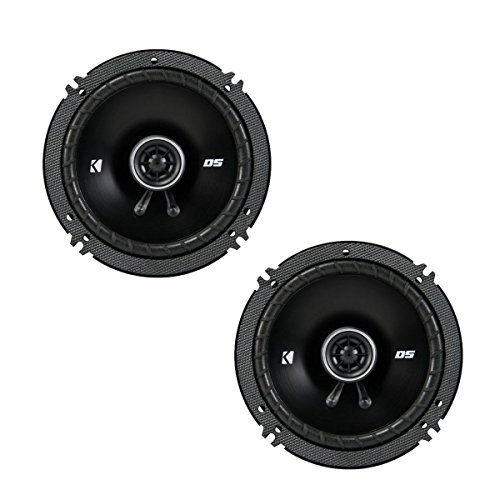
- KICKER DSC650 6.5-Inch Coaxial Car Speakers (Pair, 43DSC6504) – best overall choice; check price on Amazon.
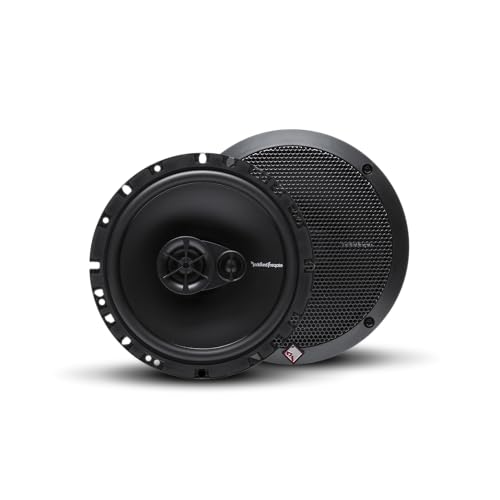
- Rockford Fosgate Prime R165X3 6.5-Inch 3-Way Car Speakers (Pair) – best for clarity choice; check price on Amazon.
- KICKER KM65 6.5-Inch Marine Coaxial Speakers (Pair, 45KM654) – best for wet and working vehicles choice; check price on Amazon.
- 6.5-inch component speaker system (prose-only pick, no single model linked) – best separate tweeters choice.
- Shallow-mount 6.5-inch coaxial pair (prose-only pick, no single model linked) – best for tight doors choice.
- High-sensitivity 6.5-inch coaxial pair for head-unit power (prose-only pick, no single model linked) – best without an amplifier choice.
Key Takeaways
- The KICKER DSC650 is the safest all-round buy under the ceiling: standard fit, 4-ohm, happy on factory power.
- The Rockford Fosgate R165X3 spends the budget on clarity, with a three-way layout and honest 45W RMS handling per speaker.
- Weather is a buying criterion, not an afterthought: the marine-built KICKER KM65 suits work trucks, convertibles and tired door seals.
- Separate component systems, shallow-mount pairs and high-sensitivity pairs are covered as prose-only picks because no single verified model fits every car at this ceiling.
- Measure mounting depth before ordering; a 6.5-inch label does not guarantee the basket clears your window mechanism.
In this guide
Quick Picks
| Buyer type | Pick | Why it stands out | Link |
|---|---|---|---|
| Best Overall | KICKER DSC650 | Fits the holes and wiring the factory provided | Check price on Amazon |
| Best for Clarity | Rockford Fosgate R165X3 | Three-way design keeps the midrange articulate when loud | Check price on Amazon |
| Best for Wet and Working Vehicles | KICKER KM65 Marine | Sealed build that begins with rain in mind | Check price on Amazon |
| Best Separate Tweeters | 6.5-inch component speaker system (Prose-Only Pick) | Soundstage lifts to ear level with pillar or dash tweeters | Prose-only – see review |
| Best for Tight Doors | Shallow-mount 6.5-inch coaxial pair (Prose-Only Pick) | Fits doors that reject standard-depth speakers | Prose-only – see review |
| Best Without an Amplifier | High-sensitivity 6.5-inch coaxial pair for head-unit power (Prose-Only Pick) | Maximum volume and clarity from factory head units | Prose-only – see review |
How These Picks Were Chosen
Each candidate had to clear three hurdles before tone was even discussed. First, the pair had to sit honestly under the ceiling as a complete purchase, not as a single speaker priced to look cheap. Second, it needed a verified listing whose specifications could be checked line by line, since unverified marketplace copies of popular models circulate widely. Third, it had to run convincingly from an ordinary factory radio, because most buyers at this level are not fitting an amplifier in the same weekend.
Construction mattered more than brochure wattage. Cones that tolerate damp door air, surrounds that stay pliable through winter, and terminals that accept a proper harness adapter all outranked peak-power claims printed in large fonts. Models that demanded deep mounting pockets or exotic impedance were set aside, however good they might sound in a demonstration booth. What survived is a short list of pairs a careful owner can fit on a Saturday and forget about for years.
Reader reports shaped the final ordering as much as bench figures did. Patterns repeated across years of ownership carry weight: a model that keeps appearing in second and third cars, a surround material that survives convertible life, a terminal design that never works loose. Newcomers with spectacular launch specifications but no ownership history were placed behind proven designs, because a ceiling this strict punishes experiments that fail early.
- Pair price that normally sits under the 150-dollar ceiling, verified on the listing rather than assumed
- 4-ohm impedance matched to factory head units and wiring
- Sensitivity high enough to play cleanly on factory power, with honest RMS handling for a future amplifier
- Standard 6.5-inch mounting pattern and a depth most doors can accept
- Cone and surround materials that tolerate heat, cold and door-cavity moisture
- A sound signature a buyer can choose deliberately: balanced, detailed, or weatherproof
The Best 6.5 Car Speakers Under $150
Order here follows the way real garages work through this purchase. The dependable all-rounder leads, because most readers simply want tired door speakers gone. Specialists follow: one for listeners who chase vocal clarity, one built for vehicles that live wet and dirty, then three prose-only routes for cars whose doors, tweeter locations or power supply refuse to follow the standard script.
Badges line up with the Quick Picks table so you can jump between the summary and the detail without losing your place. Every linked model carries its confirmed Amazon address, letting you verify availability and the small print at the source rather than trusting a screenshot copied from somewhere else.
Notice what the list refuses to do. It does not chase the largest magnet, the longest driver count or the most theatrical cone colour, because none of those survive contact with a real door, a real radio and a real winter. Every entry earned its place by solving an ordinary problem completely, which at this money is the highest praise available.

KICKER DSC650 6.5-Inch Coaxial Car Speakers (Pair, 43DSC6504)
Badge: Best Overall
The headline facts: a two-way coaxial pair in the 160 to 165 millimetre class, four-ohm impedance, 240 watts peak quoted for the pair, a polypropylene woofer wearing a ribbed surround, and a shape intended to replace factory door or rear-deck drivers without drama.
Think of the DSC650 as the pair you recommend to a neighbour who asks once and never wants to think about speakers again. It drops into the holes the factory left, accepts the wiring the factory ran, and asks nothing exotic from the radio behind the dashboard. The two-way layout keeps parts count low, which at this money usually beats a complicated design executed cheaply.
On the road its manners are easygoing. Voices sit forward enough for talk radio at dawn, guitars keep their edges without turning brittle, and bass stays tidy rather than pretending a door panel is a subwoofer cabinet. The polypropylene cone shrugs at the condensation that forms inside doors after frosty nights, while the ribbed surround keeps flexing through summers that bake cabin plastics. Owners tend to notice the improvement most during the second week, when familiar albums quietly reveal backing vocals that the old, tired drivers had smeared into the background.
Rear-seat passengers benefit too, which surprises people. Even though this pair usually sits up front, its cleaner midrange carries through the cabin, so children stop asking for repeats of story podcasts and partners stop reaching for the volume knob at every chorus. Few budget purchases improve a car for every seat at once; this one quietly does.
Winter exposes weak surrounds and lazy motors, yet this pair starts cleanly on frozen mornings when the cabin is still an icebox. Summer tells the opposite story, with heat-soaked doors after hours in a car park, and the cone material keeps its shape where cheaper plastics soften and drift. Year-round indifference to weather is an unglamorous virtue that owners feel every single day.
Key specs: two-way coaxial format in the 6.5-inch class; four-ohm load; 240W peak quoted per pair; polypropylene cone with ribbed surround; intended as a drop-in factory upgrade for doors and rear decks.
Strengths
- Fits the holes and wiring the factory provided
- Tuned kindly for feeble factory radios
- Build quality proven across years inside doors
Trade-offs
- No true sub-bass; doors are not subwoofer cabinets
- A stamped basket, not cast, as this tier dictates
- Factory grilles hide it; visual drama is absent
Best for: drivers replacing tired factory 6.5-inch speakers on a strict budget / Not suited for: buyers who need subwoofer-level bass from a door speaker

Rockford Fosgate Prime R165X3 6.5-Inch 3-Way Car Speakers (Pair)
Badge: Best for Clarity
In brief: a three-way full-range coaxial pair, four ohms, rated at forty-five watts RMS and ninety peak per speaker, built around a vacuum-formed polypropylene cone, supplied with grilles, and shaped for direct factory replacement duty.
Where the Kicker plays the reliable all-rounder, the Rockford spends its share of the budget on separation. A three-way layout hands the upper midrange its own smaller driver, so cymbals stop competing with the singer for the same cone. Play a live recording and the difference shows up as space: applause sounds like a room, not like static between tracks.
Grilles arrive in the box, handy when a rear deck or an exposed door location leaves drivers visible. The vacuum-formed polypropylene cone keeps weight down, helping the modest forty-five watts RMS per speaker translate into clean output rather than heat. Fitment follows the factory-replacement brief closely, so the swap rarely needs more than a harness adapter and patience with trim clips. Choose this pair when your complaint about the current setup is muddiness, not volume, and when podcasts, acoustic sets and vocal harmonies fill most of your driving hours.
It also copes gracefully with imperfect sources. Compressed streaming files and ageing radio broadcasts can turn harsh through an analytical speaker, yet the Rockford keeps a forgiving top end while still separating instruments. That balance suits real cars, where the music library is a jumble of pristine downloads, borrowed CDs and whatever the local station plays after midnight.
Long motorway stints reveal its other talent: low listening fatigue. Some budget speakers impress for ten minutes in a shop and then grate for two hours at cruising speed, their treble tilted like a shop display. The Rockford stays on the civilised side of that line, so arrival feels fresher and the last hour of a journey passes as pleasantly as the first.
Key specs: three-way full-range coaxial format; forty-five watts RMS with ninety peak per speaker; four-ohm load; vacuum-formed polypropylene cone; grilles included; direct factory-replacement intent.
Strengths
- Three-way design keeps the midrange articulate when loud
- Forty-five watts RMS suits radios now, amplifiers later
- Grilles included for exposed mounting locations
Trade-offs
- Detailed voicing can expose poor sources
- Real low-end depth still requires a subwoofer
- Certain doors want adapter rings for the bolt pattern
Best for: listeners who prize vocal clarity and composure at volume / Not suited for: listeners who want a warm, softened top end

KICKER KM65 6.5-Inch Marine Coaxial Speakers (Pair, 45KM654)
Badge: Best for Wet and Working Vehicles
The essentials: a 6.5-inch marine coaxial pair with a three-quarter-inch tweeter, four-ohm impedance, sixty-five watts RMS handling, ultraviolet-resistant cones with Santoprene surrounds, rustproof stainless hardware, sealed construction, and both charcoal and white grilles in the box.
Some doors live hard lives. Work trucks collect rain through tired window seals, convertibles park under open skies, and older cars mist their door cavities every autumn. The KM65 was designed for boats, where spray and ultraviolet light attack speakers daily, and that upbringing makes it oddly perfect for the roughest automotive neighbourhoods.
Sealed marine construction, stainless fixings that refuse to rust, and Santoprene surrounds give it a lifespan advantage no ordinary door speaker at this ceiling can match. The three-quarter-inch tweeter keeps speech intelligible, and the sixty-five watts RMS rating leaves honest headroom if an amplifier joins later. Two grille colours ride along in the carton, charcoal and white, so the finished install can match a dark interior or a pale boat-style trim. Pick it when the vehicle works outdoors, when the doors have leaked before, or when you simply refuse to repeat this job in three years.
Jeep-style vehicles with removable doors make an especially strong case. Those doors get hosed out, rained in and left in garages overnight, a life closer to a boat deck than a saloon cabin. A speaker designed around sealed construction and corrosion-proof fittings treats that routine as normal service rather than abuse, which is precisely the point.
Cleaning day shows another dividend. Dust, dog hair and dried mud flick off its surfaces without soaking into a paper cone, and a damp cloth restores the grille instead of staining it. Owners of working vehicles talk about this pair the way they talk about rubber floor mats: not exciting, just permanently, obviously correct for the life the vehicle actually leads.
Key specs: marine coaxial format at 6.5 inches; three-quarter-inch tweeter; four-ohm load; sixty-five watts RMS; ultraviolet-resistant cones, Santoprene surrounds, stainless hardware, sealed build, two grille colours supplied.
Strengths
- Sealed build that begins with rain in mind
- Stainless hardware that unbolts easily years later
- Two grille colours for matching cabin trim
Trade-offs
- Costs more than ordinary car speakers, outlives them
- Output is presence-led rather than bass-led
- White grilles display dirt without disguise
Best for: owners of work trucks, convertibles and older cars with tired door seals / Not suited for: buyers chasing the last word in studio-style detail
6.5-inch component speaker system (Prose-Only Pick)
Badge: Best Separate Tweeters
The category in one breath: separate woofer and tweeter drivers, an external crossover network, four-ohm presentation in most cases, and a fitting job that rewards cars offering a factory tweeter home.
A component set splits the job in two: a woofer down in the door and a separate tweeter mounted higher, near the mirror sail or the A-pillar, with a small crossover dividing the work. Raising the tweeter lifts the whole soundstage, so singers appear to perform at windscreen height instead of singing into your shins.
No single linked model appears here because tweeter housings differ wildly between cars, and a set that clips beautifully into one dashboard may need fabrication in another. Shop for a shallow woofer, a tweeter cup that suits your trim, and crossovers small enough to hide inside the door. Expect a longer fitting session than a coaxial swap, plus a few metres of extra wire. The reward is imaging that no door-mounted coaxial at this money can reproduce.
Budget honestly for the extras. Crossover boxes need mounting, tweeter pods may need careful drilling, and an afternoon can stretch into a weekend for a first attempt. None of that should scare a methodical owner, but it does mean the component route suits a planned project day rather than a spontaneous purchase squeezed between errands.
Key specs: separate woofer, tweeter and crossover components; tweeter mounting hardware decides fit; verify depth, crossover size and tweeter housing compatibility against your car.
Strengths
- Soundstage lifts to ear level with pillar or dash tweeters
- Crossovers usually better engineered than coaxial networks
- Woofer spends the whole budget on the low and mid range
Trade-offs
- Install takes longer and may need tweeter mounting work
- Same ceiling buys less raw driver than a coaxial
- Wrong tweeter placement can sound worse than a good coaxial
Best for: cars with factory tweeter locations and owners happy to install them / Not suited for: anyone wanting a ten-minute panel-off swap
Shallow-mount 6.5-inch coaxial pair (Prose-Only Pick)
Badge: Best for Tight Doors
The category in one breath: a standard-diameter coaxial pair engineered with a reduced mounting depth, a smaller motor tucked close behind the cone, and clearance as its entire reason for existing.
Compact cars, kei-influenced hatchbacks and many modern doors hide a trap: the window glass slides down directly behind the speaker. A standard-depth driver fits the hole, bolts up neatly, and then the window stops halfway with a crunch. Shallow-mount pairs exist precisely for that shallow pocket, trading magnet size for clearance.
Measure before you shop. Note the distance from the mounting face to the glass at its lowest point, then compare it against the listed depth with a small safety margin for the magnet’s venting. A slim adapter ring sometimes rescues a borderline fit, though it can push the cone into the door card. Because the correct depth is unique to your door, this pick stays prose-only: buy the measurement, not a brand name copied from somebody else’s build thread.
Listen for a trade-off before committing. Slimmer motors sometimes deliver slightly less low-end weight than their full-depth cousins, a fair exchange when the alternative is a window that refuses to close. In a small cabin the difference at listening distance is minor, and a working window matters rather more than a theoretical extra few hertz.
Key specs: reduced-depth coaxial format; verify listed mounting depth against your window clearance with margin; confirm bolt pattern and cut-out before ordering.
Strengths
- Fits doors that reject standard-depth speakers
- Keeps the install factory-clean with no spacers
- Usually light and easy on factory power
Trade-offs
- Slim motors give up some bass weight
- Choice is narrower than the standard-fit market
- Depth figures still need verifying against your door
Best for: cars whose doors fail the depth test for standard baskets / Not suited for: cars with generous door depth, where a standard pair fits
High-sensitivity 6.5-inch coaxial pair for head-unit power (Prose-Only Pick)
Badge: Best Without an Amplifier
The category in one breath: a coaxial pair designed around efficiency first, publishing a strong one-watt sensitivity figure, keeping cone mass low, and asking very little from a factory radio.
Sensitivity is the quiet specification that decides how loud a speaker plays from a weak radio. A pair rated a few decibels higher can sound dramatically stronger from the same dashboard unit, because every three decibels roughly doubles the amplifier power needed to match it. If your car will never see an external amplifier, sensitivity deserves priority over almost everything else on the box.
Hunt for honest sensitivity figures measured at one watt and one metre, a light cone, and a motor designed for efficiency rather than brute force. Avoid pairing a thirsty, low-sensitivity driver with a wheezing factory unit and then blaming the speaker for distortion that actually begins in the radio. This category stays unlinked because published sensitivity numbers vary in honesty between brands, and your shortlist should be built from verifiable figures for your exact shortlist of finalists.
Older cars with tired alternators and modest radios gain the most here. When electrical supply is limited and the dashboard unit was never generous, efficiency converts scarcity into usable volume. Pair that thinking with realistic expectations about bass, and the result is a cheerful, dependable system that asks nothing else from the car.
Key specs: efficiency-led coaxial format; compare published one-watt sensitivity figures between finalists; confirm four-ohm impedance and standard depth for your doors.
Strengths
- Maximum volume and clarity from factory head units
- No amplifier purchase required, ever
- Forgiving of older, weaker factory radios
Trade-offs
- Limited headroom if an amplifier arrives later
- Bass authority is modest by design
- Specifications vary in honesty; buy established brands
Best for: weak factory head units that need every decibel of sensitivity / Not suited for: systems already running a healthy external amplifier
Comparison Table
Columns carry more truth than rows here. Format tells you where the sound originates, connection tells you how much of the car comes apart, and the standout column names the single virtue that earned each pick its place. Deliberately missing is any price column, since figures move; follow a surviving candidate to Amazon and read today’s number there.
A word on the power column, since it tempts misreading. Figures there describe what each driver can accept or how it is supplied, not a promise about loudness in your cabin. Your radio, your door volume and your seating position will rearrange any ranking built from wattage alone, so treat the table as a map of formats rather than a league ladder.
| Pick | Type | Connection / fit | Power | Standout |
|---|---|---|---|---|
| KICKER DSC650 | 6.5-inch 2-way coaxial pair | Speaker leads into the car’s own harness | Passive pair; radio or amplifier powers it | 4-ohm; 240W peak per pair |
| Rockford Fosgate R165X3 | 6.5-inch 3-way coaxial pair | Speaker leads into the car’s own harness | Passive pair; radio or amplifier powers it | 45W RMS per speaker; grilles included |
| KICKER KM65 Marine | 6.5-inch marine coaxial pair | Harness connection by speaker wire | Passive pair; radio or amplifier powers it | Marine grade; 65W RMS; stainless hardware |
| 6.5-inch component speaker system (Prose-Only Pick) | 6.5-inch component set | Speaker leads into the car’s own harness | Passive pair; radio or amplifier powers it | Separate tweeter and crossover |
| Shallow-mount 6.5-inch coaxial pair (Prose-Only Pick) | 6.5-inch shallow-mount coaxial pair | Speaker leads into the car’s own harness | Passive pair; radio or amplifier powers it | Reduced mounting depth |
| High-sensitivity 6.5-inch coaxial pair for head-unit power (Prose-Only Pick) | 6.5-inch high-sensitivity coaxial pair | Speaker leads into the car’s own harness | Passive pair; radio or amplifier powers it | Sensitivity-first design |
What Does a 150-Dollar Ceiling Actually Buy in a 6.5-Inch Speaker?
Inside a speaker at this level, money divides into a handful of honest places. The magnet and voice coil form the motor. The cone and surround turn electricity into movement. The basket holds everything in alignment, and the tweeter handles the frequencies that make speech sound human. A sensible design spends first on the motor and cone, accepts a stamped basket, and keeps decoration minimal.
What the ceiling will not buy is equally worth knowing. Deep sub-bass needs cone area and enclosure volume a door cannot offer. Cast baskets, exotic cone materials and elaborate crossovers live further up the catalogue. Neither absence ruins a good pair. Most factory speakers fail through age, perished foam and water damage, so a fresh, well-made driver at this money restores far more than it lacks. Buyers who accept that bargain upfront tend to stay delighted; buyers expecting a concert hall from a door pocket tend to keep returning boxes.
Consider also what happens after purchase. At this level, installation supplies matter as much as the drivers: a roll of foam tape, two harness adapters and a handful of spare trim clips can consume the price difference between rival pairs. Smart shoppers reserve a small slice of the total for those unglamorous items instead of spending every cent on the speakers and improvising the fitting with twisted wires and hope.
Sensitivity, RMS and the Numbers That Matter on Factory Power
Three figures deserve your attention, and two deserve suspicion. Sensitivity tells you output per watt, which governs life with a factory radio. RMS handling describes sustained power a speaker tolerates, useful when an amplifier enters the plan. Impedance, four ohms across this shortlist, confirms the radio will see the load it expects.
Treat peak wattage as marketing weather: loud, changeable and best ignored when comparing pairs. A speaker boasting an enormous peak figure may handle less continuous power than a rival quoting modest RMS numbers. Frequency response ranges without tolerance figures are similarly slippery, since almost any driver can whisper at twenty hertz without producing useful bass. When two finalists look equal on paper, prefer the one whose maker publishes fuller measurements, and let your ears arbitrate the rest during the first drive.
One more number hides in plain sight: the size and material of the tweeter. Tiny hard domes can sound spitty at volume, while slightly larger soft domes trade a little sparkle for smoothness on long journeys. Neither choice is wrong, but matching the tweeter character to your listening habits matters more than chasing the widest printed frequency range, because your ears spend their lives in the midrange, not at the extremes.
Do the arithmetic once and the market becomes clearer. Doubling amplifier power buys roughly three decibels, a noticeable but modest step. A speaker three decibels more sensitive delivers that same step for free, at every volume, forever. That is why this guide keeps returning to sensitivity for factory-radio cars, and why a lower-powered but efficient pair so often embarrasses a thirstier rival in the same doors.
Doors, Decks and Depth: Fitting 6.5-Inch Speakers Without Surprises
A 6.5-inch badge describes a family, not a guarantee. Cut-out diameters, bolt patterns and basket depths wander between brands, and car makers compound the fun with three-screw mounts, odd-shaped pockets and speakers riveted rather than bolted. Pull one existing speaker first, photograph its connector, and measure the pocket before ordering anything.
Depth deserves its own paragraph because it ruins more installs than any other dimension. Lower the window fully, then measure from the mounting surface to the glass and to any regulator hardware. Add the speaker’s depth plus a small clearance, and only then commit. Foam gasket tape between driver and door seals the joint, stops buzzes, and costs almost nothing. A harness adapter preserves the factory plug, so the next owner inherits a car that has not been snipped and twisted behind the trim.
Rear decks bring a different set of traps. Sunlight through the back window cooks anything mounted beneath it, foam surrounds crumble early, and boot springs sometimes swing close to magnet depth. If your upgrade targets the parcel shelf instead of the doors, favour rubber surrounds and check clearance with the boot fully open and loaded, not just in the empty driveway pose.
While the trim is off, inspect the moisture barrier. That plastic or foam sheet behind the door card keeps rain that enters the window slot away from the cabin, and careless installers tear it and forget it. Reseal any tears with suitable tape, because a quiet speaker in a damp-smelling car is a poor bargain however carefully the audio side was handled.
Living With the Upgrade: The First Month With New Door Speakers
Week one brings the honeymoon: favourite songs sound scrubbed clean, and you will catch yourself taking the longer road home. Somewhere in week two, attention shifts. A door card may develop a faint rattle on coarse tarmac, cured by a strip of foam behind a clip. You may notice one side imaging slightly stronger, usually because a tweeter sits closer or a seat bolsters blocks the lower door.
By the end of the month the speakers disappear, which is the real goal. Conversation at motorway speed needs less shouting. Navigation prompts cut through clearly. Long drives feel less tiring because the brain stops working to decode muffled midrange. If an upgrade path beckons, spend next on sound deadening for the doors rather than on a second speaker swap; the same drivers, mounted against quieter panels, will sound like another step up entirely.
Keep a small notebook, or a notes app entry, during that first month. Jot down the volume setting where conversation stays comfortable, any buzz that appears on a particular road surface, and the equaliser position that suits speech. Those scraps turn a vague feeling into a checklist the next time a door card comes off, and they stop you fixing the same rattle twice in different places.
Neighbours will ask, eventually, because cars have a way of announcing improvements in driveways. Expect the conversation to turn to their own vehicles within minutes. The honest summary you will give, that a modest pair fitted carefully changed every journey, has probably sold more sensible speaker upgrades than any advertisement ever written.
Resale, Reliability and the Long Life of a Budget Pair
A modest speaker swap rarely frightens a future buyer, provided the work looks reversible. Keep the factory drivers in the new speakers’ box, labelled by position, and store the receipt with the car’s paperwork. Harness adapters mean the original plugs survive, so returning the car to stock takes an afternoon rather than an archaeological dig through cut wiring.
Reliability at this tier is mostly about environment. Polypropylene cones tolerate damp, foam surrounds perish faster than rubber or treated cloth, and paper cones dislike wet doors intensely. When you have the door open, check the drain holes at its base and clear any leaf mulch; standing water shortens every speaker’s life regardless of brand. A pair chosen with those realities in mind will likely outlast your ownership, quietly entertaining the next driver too.
Insurance and inspections rarely care about speakers, yet neatness still pays. A buyer peering through a grille at a properly mounted driver with intact wiring reads the whole car as maintained. The reverse also holds: dangling wires and self-tappers through trim whisper neglect louder than any advertisement copy can shout over it.
What Owners Usually Do Next, and What They Skip
The common sequel is a matching rear pair, bought once the front stage proves itself. Voicing stays consistent when the second purchase follows the same family, and rear passengers stop complaining that all the music lives ahead of them. Others add a compact amplifier under a seat, discovering that the speakers they already own had headroom waiting to be used.
Plenty of owners skip the subwoofer, and honestly many should. A well-fitted door pair in a small car covers daily listening without surrendering boot space to a cabinet. Skip also the temptation to replace the radio immediately; live with the new speakers for a season first. Half the faults blamed on head units were actually dying factory drivers, and the money saved can fund deadening, tyres, or fuel for the road trip the stereo was bought to accompany.
Deadening deserves a fuller mention, because owners consistently rank it the best second purchase. A few sheets applied to the outer door skin calm the panel resonance that muddies male voices, and the job needs no electronics knowledge at all. Many drivers report that deadening plus the original new pair satisfied them for years, ending the upgrade itch at a total spend their neighbours spent on a single flashy component.
A Final Word on the Ceiling Itself
Budgets get a bad reputation in audio, as if enjoyment only begins above some approved figure. The opposite is closer to the truth. A firm ceiling forces attention onto fit, sensitivity and construction, the unglamorous virtues that decide whether a system gets used daily or argued about online. Every pick here respects that discipline.
Spend the whole amount on the front pair rather than halving it across two mediocre sets. Fit them carefully, seal them properly, and give your ears a month before judging. If the result makes you volunteer for the school run just to finish an album, the ceiling has done its job, and the change left over from not overspending can stay where it belongs: in your pocket.
There is also pleasure in the constraint itself. Knowing the total cannot grow turns shopping from an anxious spiral into a short, satisfying hunt: measure, compare three honest candidates, choose, fit, drive. Friends will ask what you bought and what it cost, and the answer, a modest pair chosen carefully, tends to impress the experienced ones most of all.
How Should You Choose Between Coaxial and Component Speakers at This Budget?
Ask first where your tweeters can live. Cars with factory tweeter pods near the mirrors are component-ready, and a set that uses those housings buys a high, stable soundstage. Cars without any tweeter location usually suit a coaxial pair, whose tweeter sits in the woofer’s centre and needs no extra real estate or wiring runs.
Then weigh your appetite for fitting time. A coaxial swap can finish before lunch, trim off and back on with no new holes. Components ask for crossover mounting, tweeter aiming and extra cable, rewarding patience with imaging. Finally, consider the radio. On pure head-unit power, an efficient coaxial often plays louder and cleaner than a component set whose crossover consumes precious watts. Neither format wins universally; your doors, dash and Sunday schedule cast the deciding votes.
Hearing both formats back to back settles arguments quickly, though few shops still demonstrate budget pairs side by side. A practical substitute is to sit in a friend’s upgraded car and note where voices seem to come from. If that floating, windscreen-level image delights you, components deserve your Saturday. If you mainly want yesterday’s muffle gone, coaxials will make you just as happy for less effort.
How to Fit a Pair of 6.5-Inch Door Speakers in an Afternoon
Gather tools before touching trim: panel poppers, screwdrivers, a socket set, gasket tape, harness adapters and a drill only if rivets guard the old drivers. Disconnect nothing electrical until the window switches are unplugged carefully, and keep every clip in a tub so the refit does not end two clips short of a silent door.
Work one side completely before starting the other, leaving a reference door untouched if confusion strikes. Test each new speaker at low volume before the card goes back, checking polarity by ear: reversed wiring thins the bass dramatically. Seal the driver against the door with foam, route wires away from the window’s travel, and cycle the glass fully several times. Refit the trim, repeat the ritual opposite, then take the car somewhere quiet and listen from the driver’s seat, where the whole project was always aimed.
Photograph every stage with your phone. Trim clips hide in forgettable places, connectors resemble each other, and a picture taken before removal answers questions that memory garbles by teatime. Lay removed screws on a strip of tape in removal order, sticky side up, and the refit becomes a reverse film of the dismantling rather than a puzzle invented on the spot.
- Disconnect and expose. Switch the ignition off, remove the door trim with a plastic trim tool rather than a screwdriver, and photograph the factory speaker, its connector and every clip location before touching a screw. The photograph is your reassembly manual.
- Remove and compare. Unplug and unbolt the factory speaker, then hold the new pair against it. Compare mounting-hole pattern, basket depth and connector position now, on the bench, not with the door in pieces.
- Fit the adapter and gasket. Bolt the adapter ring to the door if your car needs one, add the foam gasket to the speaker’s mounting face, and route the harness adapter so nothing can chafe on the window mechanism through its full travel.
- Mount and test before trimming. Screw the speaker down evenly, reconnect, and play music at moderate volume with the trim still off. Listen for rattles, check the window rises and falls freely, and confirm polarity by listening for solid, centred bass.
- Deaden and seal. Press a square of sound-deadening mat onto the door skin behind the speaker and check the moisture barrier is reseated. This step is the difference between a tidy install and a transformation.
- Refit and repeat. Clip the trim back in the reverse order of removal, then repeat on the other side. Set the head unit’s tone controls flat for the first week so you learn the speakers’ real voice before adjusting anything.
Common Mistakes
Shopping by the biggest wattage printed on the carton. Peak figures describe a split-second survival test, not music. Chasing them leads buyers to the least honest product on the shelf, while the pair with modest, truthful numbers sits ignored beside it.
Ordering before measuring the pocket behind the trim. Diameter is only one dimension. Depth decides whether the window still travels and whether the door card sits flush, so skipping the tape measure manufactures returns, spacers and rattles out of a perfectly good speaker.
Assuming every factory system wants a four-ohm load. A minority of amplified factory setups shipped with lower-impedance drivers and expect that load. Dropping an unmatched pair into such a car can leave it quieter than before, or work the little amplifier harder than its designer intended.
Demanding subwoofer behaviour from a door. Twisting the bass control upward does not create low frequencies; it creates distortion, because the driver runs out of travel and the radio runs out of clean power. Seal the door, deaden the panel, and let a future subwoofer handle the basement if you truly miss it.
Changing all four speakers in one blind leap. Fronts first is not timidity, it is diagnosis. One pair proves the direction, preserves the budget if priorities change, and gives the second stage a reference to match instead of a second guess to regret.
Tightening mounting screws like wheel nuts. Excess torque warps a stamped basket, cants the voice coil and can add a faint rub that gets blamed on the driver. Work around the flange in a cross pattern, snug and even, then recheck gently once the gasket settles.
Final Recommendation
Start with the DSC650 if your car is standard, your radio is factory, and your patience for research has reached its natural end. It is the pair least likely to surprise you and most likely to still be pleasing you in five years. Move to the Rockford when clarity is the itch, especially for speech-heavy listening, and to the marine Kicker when the vehicle’s life involves rain, mud, open tops or leaking seals.
Treat the prose-only routes as genuine picks rather than leftovers. Tight doors, waiting tweeter housings and feeble radios each deserve their specialist answer, and forcing a linked model into those situations would serve nobody. Measure the car, respect the ceiling, fit with care, and this modest corner of the audio world will reward you every single journey.
One last practical filter: buy from a listing that names the exact model and shows the real carton contents, including whether grilles and screws are supplied. Grey listings with borrowed photographs cause most returns in this category. A minute spent reading the box contents list saves a week of messages, repacking and waiting for a replacement pair while your door sits in pieces.
Related Guides
- Best 6.5 speakers for bass
- Best car speakers for bass
- Best 6.5 speakers for clarity
- Best car speakers for under $200
Frequently Asked Questions
Will these speakers work with my factory head unit?
Yes, comfortably. Each linked pair presents a four-ohm load and was chosen with stock radios in mind, so volume and clarity both improve without extra hardware. An amplifier remains an optional later step for composure at high levels, not a ticket required for entry.
Is one pair enough, or should I replace front and rear together?
One front pair transforms the driving seat, because that is where the main speakers point and where you spend your hours. Rear drivers mostly add fill for passengers. On a strict ceiling, fund the fronts properly now and let the rears wait for a second, calmer purchase.
What does 6.5-inch actually measure?
The figure names the nominal driver class, roughly the cone and basket size, yet cut-out diameter, hole spacing and depth still vary between models. That is why this guide keeps nagging about measurement: pull your existing speaker, size up its pocket, and only then trust the badge on a box.
Do I need an amplifier to hear a difference?
Not at all. Against worn factory drivers, fresh speakers announce themselves immediately on radio power alone, with clearer words and tidier low end. Amplification later adds control and headroom, and these pairs hold enough RMS capacity to accept one, but the upgrade stands on its own from day one.
Why are some picks prose-only with no Amazon link?
Because depth limits, tweeter placement and sensitivity-first designs all hinge on your particular car. Linking one model for those jobs would mislead half the audience. Instead, those picks spell out exactly which measurements and figures to hunt for, so the model you choose fits your doors rather than somebody else’s.
How long does fitting a pair take?
A careful first-timer should allow roughly an hour per door, including trim removal, testing and sealing. Experienced hands halve that. Harness adapters remove any need to cut the car’s wiring, and that small preparation pays for itself in both speed and future resale kindness.
Should I buy one pair now and a second pair later?
That staged approach suits this ceiling perfectly. Fit the front pair from the top of the list, live with it, and let its character teach you what the rear stage needs. Staying within the same family later keeps the car’s voicing coherent from seat to seat.
What if my car takes a different size at the rear?
Then treat the rear as its own small project. Measure that location, buy its correct size, and apply the same tests of impedance, sensitivity and weather tolerance. Mixed sizes between front and rear are completely normal in production cars and no barrier to a balanced result.