Disclosure: As an Amazon Associate, kajuandouglas.com earns from qualifying purchases. Links to Amazon on this page are affiliate links; they cost you nothing extra. Listing details such as price and availability change often, so check the current Amazon listing before you buy.
Where to buy
This is our complete guide to the best 1×12 speakers for clean tones: six verified picks, the reasoning behind them, and the setup and buying knowledge to choose well. Every linked pick below is sold through Amazon, where you can check the current price, availability and delivery estimate for your area before ordering. Prices and stock move often in this category, so treat the listing — not any roundup — as the final word on cost. Orders are placed on Amazon, and this site may earn a commission on qualifying purchases at no extra cost to you. For clean tones from a 1×12 cabinet, these are the six picks worth your money:
- Celestion G12M-65 Creamback Guitar Speaker — vintage warmth that stays composed at 65 watts
- Eminence Cannabis Rex 12-Inch Guitar Speaker — hemp cone smooths harsh top end beautifully
- Celestion G12M Greenback Guitar Speaker — the definitive vintage British clean-to-crunch voice
- Celestion G12H-75 Creamback Guitar Speaker — firm, controlled bass with a clear, open top
- Eminence Texas Heat 12-Inch Guitar Speaker — huge 150W headroom for any 1×12 application
- Eminence Swamp Thang 12-Inch Guitar Speaker — massive, tight low end for a single speaker
Two habits save money and returns in this category: confirm the exact model variant on the listing — manufacturers revise these products under the same name — and keep the return window in mind until you have lived with the pick for a few days. If a pick below is marked prose-only, it means no single model could be verified with confidence; the review describes the class to buy instead, which is the honest recommendation for that slot.
Read the full guide ↓
The speaker is the final and most characterful component in a guitar rig — it is literally where the sound comes from, and swapping it changes an amp’s voice more than most pedal purchases. The search for the best 1×12 speakers for clean tones turns on voicing: how a speaker handles the top end, where its midrange sits, and how it behaves as it approaches its limits. Wattage and impedance matching are the safety rails; tone is the destination.
Every linked pick below was verified against its manufacturer listing and ranked for clean tones from a 1×12 cabinet. Impedance is stated wherever the listing specifies it, because matching the speaker to your amplifier’s output is not optional. Where a niche driver class had no single model we could verify with confidence, the pick appears as a clearly marked prose-only recommendation.
Use the Quick Picks for the ranking, read the reviews for the tonal trade-offs that decide between these drivers, and do not skip the buying guide: power handling, break-in and the difference between guitar and bass drivers are exactly the places where expensive mistakes happen.
Key Takeaways
- Top pick: the Celestion G12M-65 Creamback Guitar Speaker — ranked first for clean tones from a 1×12 cabinet.
- Match impedance exactly and keep power headroom sensible — those two rules prevent nearly all speaker failures.
- Judge a new driver after break-in, not in the first hour.
- Every linked pick was verified against its current Amazon listing and manufacturer specifications; prose-only picks are labeled honestly where no single model could be verified.
In this guide
Quick Picks
Six picks, ranked for clean tones from a 1×12 cabinet. The table is the fast answer; the full reviews below explain what each pick does well, where it compromises, and who should skip it.
Badges are consistent through the whole guide: the pick labeled Best Overall in this table carries the same badge in its full review, and the ordering here is the ordering everywhere. Prose-only picks appear in the table without a link by design — they are class recommendations for slots where a single verifiable model does not exist, and their reviews explain exactly what to look for when you shop that class.
| Badge | Pick | Why it stands out | Link |
|---|---|---|---|
| Best Overall | Celestion G12M-65 Creamback Guitar Speaker | vintage warmth that stays composed at 65 watts | Check price on Amazon |
| Runner-Up | Eminence Cannabis Rex 12-Inch Guitar Speaker | hemp cone smooths harsh top end beautifully | Check price on Amazon |
| Best for Clean Tones | Celestion G12M Greenback Guitar Speaker | the definitive vintage British clean-to-crunch voice | Check price on Amazon |
| Best Premium | Celestion G12H-75 Creamback Guitar Speaker | firm, controlled bass with a clear, open top | Check price on Amazon |
| Best Value | Eminence Texas Heat 12-Inch Guitar Speaker | huge 150W headroom for any 1×12 application | Check price on Amazon |
| Best Alternative | Eminence Swamp Thang 12-Inch Guitar Speaker | massive, tight low end for a single speaker | Check price on Amazon |
How These Picks Were Chosen
We compared spec sheets, owner documentation and the current Amazon listings for every candidate, and we only linked products whose identity we could verify with confidence. Where a category has a well-known class of product but no single verifiable model, the pick is marked prose-only rather than dressed up with a guessed link.
The criteria below decided the ranking. They are weighted for clean tones from a 1×12 cabinet, not for a generic spec-sheet contest, because the right guitar speaker for this job is the one that fits how guitarists who play clean actually use it.
- Verified identity: Every linked driver was matched to its manufacturer listing, with impedance and power figures taken from the listing itself.
- Clean-tone character: Headroom, top-end behavior and midrange voicing were judged on clean playing first, since that is the keyword’s focus where stated.
- Power match: Each driver’s handling was assessed against the amplifier classes it will realistically partner in the stated configuration.
- Breakup behavior: How gracefully a driver compresses and breaks up at volume was weighed for players who push cleans to the edge.
- Cabinet fit: Standard mounting dimensions and depth were considered for the cabinet sizes in the keyword.
- Value in class: Ranking reflects tonal performance per qualitative tier among drivers with decades-long reputations.
One methodological note deserves emphasis: rankings here are weighted for clean tones from a 1×12 cabinet specifically. A product that tops a generic roundup may sit mid-table here because its strengths point elsewhere, and a quieter product may rank first because everything it does well is exactly what this keyword asks for. If your use case differs from the one in the title, the per-pick verdicts — Best for / Not suited for — will steer you to your own correct answer inside the same list.
A note on price: this guide deliberately prints no fixed product prices. Prices in this category change with sales, model-year turnover and stock levels, so a number printed here would mislead within weeks. Use the budget framing of the keyword itself as your ceiling, and check the live Amazon listing for the current figure before you buy.
The Best 1×12 Speakers for Clean Tones
Here is each pick in full: what it is, the verified specifications that matter, three genuine strengths, three honest trade-offs, and a clear verdict on who it suits. The order matches the Where to Buy list and the Quick Picks table, and the first pick is our headline recommendation for clean tones from a 1×12 cabinet.

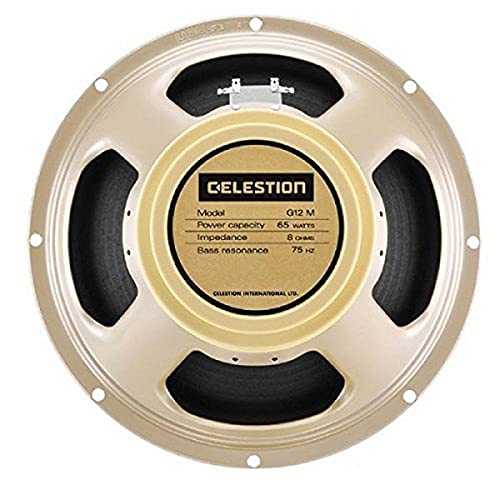
Celestion G12M-65 Creamback Guitar Speaker
Badge: Best Overall
| Size | 12-inch guitar speaker |
| Power | 65W, 8 ohm (per listing) |
| Design | M-magnet Creamback voice |
| Character | Greenback-style warmth with more headroom |
| Brand | Celestion |
The Creamback 65 answers the Greenback’s one limit — power. It keeps the woody, warm clean voice and adds the headroom a 1×12 needs under a 40-60 watt amp.
For clean tones from a 1×12 cabinet, this driver earns its ranking on character: its voicing does the specific tonal job this keyword asks for, its power and impedance figures suit the rigs it will join, and its limitations are the known, documented kind that players choose with open eyes.
A word on expectations: the Celestion G12M-65 Creamback Guitar Speaker is a premium-tier product, and it behaves like one — strong where its design concentrates, ordinary where it does not. Its 12-inch guitar speaker and 65W, 8 ohm (per listing) are the honest summary of where the money went. Buyers who read that summary and nod are the buyers this pick satisfies; buyers who need the tier above should take the hint its trade-offs are offering and step up the list instead.
The long view matters for a purchase like this, so consider the Celestion G12M-65 Creamback Guitar Speaker beyond its first month: its compromises — warmth means less sparkle than a V30 among them — are static, knowable and plannable, while its strengths are the ones exercised daily. Products fail their owners when the daily experience disappoints; they merely annoy them when a known limitation needs a workaround. This pick sits firmly in the second category for the audience it is ranked for.
Strengths
- Vintage warmth that stays composed at 65 watts
- Cleans are full and woody with a smooth top
- Ideal 1×12 partner for mid-power amps
Trade-offs
- Premium price
- Warmth means less sparkle than a V30
- Heavier magnet than a Greenback
Choose it if you value what it does best: vintage warmth that stays composed at 65 watts. Skip it if its main compromise matters to you: premium price.
Best for: warm cleans and vintage drive from higher-power 1×12 rigs / Not suited for: sparkle-first or modern tight-low styles

Eminence Cannabis Rex 12-Inch Guitar Speaker
Badge: Runner-Up
| Size | 12-inch guitar speaker |
| Power | 50W at 8 ohms (per listing) |
| Cone | Hemp cone |
| Character | Smooth, smoky top end |
| Line | Patriot series |
The Cannabis Rex is the smooth operator: its hemp cone rounds off fizz and harshness, leaving warm, smoky cleans that flatter bright amps and single-coils.
Judged for clean tones from a 1×12 cabinet, the appeal is how this speaker handles the in-between moments — cleans on the edge of breakup, dynamics under the fingers — where lesser drivers either stay sterile or fall apart.
In practice, the Eminence Cannabis Rex 12-Inch Guitar Speaker succeeds or fails on integration: 12-inch guitar speaker is only useful if it connects cleanly to what you already own, and 50W at 8 ohms (per listing) only matters if it suits the way you actually listen, watch or work. Judged on those terms — the terms of ordinary Tuesdays rather than demo days — it earns the ranking it holds here, with the caveats in its trade-offs list kept in plain sight.
Ownership, reported honestly, includes some friction — most visibly this: 50W ceiling for 1×12 use. It is the kind of compromise owners plan around in the first week and then largely stop noticing, rather than the kind that grows teeth over time. Setup and budget decisions made with that point in mind are what separate satisfied long-term owners of the Eminence Cannabis Rex 12-Inch Guitar Speaker from the return statistics, and it is why the point appears in this review instead of being left for buyers to discover.
Strengths
- Hemp cone smooths harsh top end beautifully
- Warm, round cleans ideal for jazz and blues
- Efficient and musical at moderate volumes
Trade-offs
- Smoothness costs some sparkle and bite
- 50W ceiling for 1×12 use
- Hemp voice is a distinct flavor, not neutral
Choose it if you value what it does best: hemp cone smooths harsh top end beautifully. Skip it if its main compromise matters to you: smoothness costs some sparkle and bite.
Best for: jazz, blues and smooth clean tones from bright amps / Not suited for: players chasing maximum chime and cut

Celestion G12M Greenback Guitar Speaker
Badge: Best for Clean Tones
| Size | 12-inch guitar speaker |
| Design | Ceramic magnet, classic British voice |
| Character | Warm, woody midrange breakup |
| Use | 1×12 and multi-speaker cabinets |
| Brand | Celestion |
The Greenback is the sound of classic British rock: warm cleans, woody mids and a breakup that sings. In a 1×12 it delivers vintage character at volumes a small room can survive.
For clean tones from a 1×12 cabinet, this driver earns its ranking on character: its voicing does the specific tonal job this keyword asks for, its power and impedance figures suit the rigs it will join, and its limitations are the known, documented kind that players choose with open eyes.
What the specification table cannot show is temperament, and the Celestion G12M Greenback Guitar Speaker has a consistent one: it is built around 12-inch guitar speaker, and it leans on ceramic magnet, classic British voice to do its best work. That temperament suits some buyers exactly and others not at all, which is precisely why the verdict line below is written the way it is. Match the temperament to your own habits and this pick will feel chosen rather than merely bought.
Ownership, reported honestly, includes some friction — most visibly this: not the choice for tight modern metal lows. It is the kind of compromise owners plan around in the first week and then largely stop noticing, rather than the kind that grows teeth over time. Setup and budget decisions made with that point in mind are what separate satisfied long-term owners of the Celestion G12M Greenback Guitar Speaker from the return statistics, and it is why the point appears in this review instead of being left for buyers to discover.
Strengths
- The definitive vintage British clean-to-crunch voice
- Sweet, musical breakup at sensible volumes
- Cleans stay warm and woody, never sterile
Trade-offs
- Modest power handling — respect it in high-watt amps
- Not the choice for tight modern metal lows
- Premium over generic OEM speakers
Choose it if you value what it does best: the definitive vintage British clean-to-crunch voice. Skip it if its main compromise matters to you: modest power handling — respect it in high-watt amps.
Best for: vintage-voiced cleans and classic rock breakup / Not suited for: high-gain modern metal or very high wattage amps

Celestion G12H-75 Creamback Guitar Speaker
Badge: Best Premium
| Size | 12-inch guitar speaker |
| Power | 75W, 8 ohm (per listing) |
| Design | H-type heavy magnet |
| Character | Firm lows, clear top end |
| Brand | Celestion |
The H-75 Creamback is the articulate Creamback: tighter lows, clearer highs and 75 watts of composure. For clean tones that must stay defined in a band mix, it excels.
Judged for clean tones from a 1×12 cabinet, the appeal is how this speaker handles the in-between moments — cleans on the edge of breakup, dynamics under the fingers — where lesser drivers either stay sterile or fall apart.
Living with the Celestion G12H-75 Creamback Guitar Speaker day to day, the detail that ends up mattering most is rarely the headline specification. Its format — 12-inch guitar speaker — decides how it fits your space and your existing gear, while its 75W, 8 ohm (per listing) shapes how it behaves once the first-week novelty wears off. Owners who match those two facts to their real habits are the ones still satisfied a year later, which is why this review weights them more heavily than the marketing line on the box.
Ownership, reported honestly, includes some friction — most visibly this: premium pricing. It is the kind of compromise owners plan around in the first week and then largely stop noticing, rather than the kind that grows teeth over time. Setup and budget decisions made with that point in mind are what separate satisfied long-term owners of the Celestion G12H-75 Creamback Guitar Speaker from the return statistics, and it is why the point appears in this review instead of being left for buyers to discover.
Strengths
- Firm, controlled bass with a clear, open top
- 75W headroom suits strong 1×12 rigs
- Cleans stay articulate at stage volume
Trade-offs
- Firmer feel is less forgiving than the M-65
- Premium pricing
- Can sound bold in small bright rooms
Choose it if you value what it does best: firm, controlled bass with a clear, open top. Skip it if its main compromise matters to you: firmer feel is less forgiving than the M-65.
Best for: clear, firm clean tones and articulate drive / Not suited for: players wanting maximum vintage sag and softness

Eminence Texas Heat 12-Inch Guitar Speaker
Badge: Best Value
| Size | 12-inch guitar speaker |
| Power | 150W at 16 ohms (per listing) |
| Character | Fat, buttery American voice |
| Line | Patriot series |
| Use | 1×12 and 2×12 cabinets |
The Texas Heat brings American warmth with serious headroom: fat cleans, smooth drive and 150 watts of don’t-worry. A 1×12 with this speaker can take almost any amp you own.
What keeps this driver on the list for clean tones from a 1×12 cabinet is its track record: it is a known quantity with a defined voice, verified here against its current listing, rather than a promising unknown.
What the specification table cannot show is temperament, and the Eminence Texas Heat 12-Inch Guitar Speaker has a consistent one: it is built around 12-inch guitar speaker, and it leans on 150W at 16 ohms (per listing) to do its best work. That temperament suits some buyers exactly and others not at all, which is precisely why the verdict line below is written the way it is. Match the temperament to your own habits and this pick will feel chosen rather than merely bought.
The long view matters for a purchase like this, so consider the Eminence Texas Heat 12-Inch Guitar Speaker beyond its first month: its compromises — warm voice can feel dark in dull amps among them — are static, knowable and plannable, while its strengths are the ones exercised daily. Products fail their owners when the daily experience disappoints; they merely annoy them when a known limitation needs a workaround. This pick sits firmly in the second category for the audience it is ranked for.
Strengths
- Huge 150W headroom for any 1×12 application
- Fat, warm cleans with a smooth top
- Handles pedals and high-gain without flinching
Trade-offs
- This listing is 16 ohm — match your amp’s output
- Warm voice can feel dark in dull amps
- Heavier than vintage-style speakers
Choose it if you value what it does best: huge 150W headroom for any 1×12 application. Skip it if its main compromise matters to you: this listing is 16 ohm — match your amp’s output.
Best for: warm American cleans and high-headroom 1×12 rigs / Not suited for: amps needing 8-ohm loads (this listing) or bright chime seekers

Eminence Swamp Thang 12-Inch Guitar Speaker
Badge: Best Alternative
| Size | 12-inch guitar speaker |
| Character | Big, clean American low end |
| Line | Patriot series |
| Use | Lead and rhythm guitar |
| Power | High-headroom design (line) |
The Swamp Thang is the big-clean specialist: huge lows, high headroom and a modern composure that makes it a favorite pedal-platform speaker for 1×12 rigs.
What keeps this driver on the list for clean tones from a 1×12 cabinet is its track record: it is a known quantity with a defined voice, verified here against its current listing, rather than a promising unknown.
What the specification table cannot show is temperament, and the Eminence Swamp Thang 12-Inch Guitar Speaker has a consistent one: it is built around 12-inch guitar speaker, and it leans on big, clean American low end to do its best work. That temperament suits some buyers exactly and others not at all, which is precisely why the verdict line below is written the way it is. Match the temperament to your own habits and this pick will feel chosen rather than merely bought.
The long view matters for a purchase like this, so consider the Eminence Swamp Thang 12-Inch Guitar Speaker beyond its first month: its compromises — less vintage midrange color among them — are static, knowable and plannable, while its strengths are the ones exercised daily. Products fail their owners when the daily experience disappoints; they merely annoy them when a known limitation needs a workaround. This pick sits firmly in the second category for the audience it is ranked for.
Strengths
- Massive, tight low end for a single speaker
- Stays clean and composed at high volume
- Great for pedal platforms and modelers
Trade-offs
- Low-end weight can overwhelm small cabs
- Less vintage midrange color
- Weighty magnet
Choose it if you value what it does best: massive, tight low end for a single speaker. Skip it if its main compromise matters to you: low-end weight can overwhelm small cabs.
Best for: clean pedal platforms and modern high-headroom tones / Not suited for: vintage midrange purists
Comparison Table
The six picks side by side on the specifications that matter most for clean tones from a 1×12 cabinet. Full reasoning for each row is in the reviews above.
| Pick | Format | Highlight | Tier |
|---|---|---|---|
| Celestion G12M-65 Creamback Guitar Speaker | 12-inch guitar speaker | 65W, 8 ohm (per listing) | Premium |
| Eminence Cannabis Rex 12-Inch Guitar Speaker | 12-inch guitar speaker | 50W at 8 ohms (per listing) | Mid |
| Celestion G12M Greenback Guitar Speaker | 12-inch guitar speaker | Ceramic magnet, classic British voice | Mid |
| Celestion G12H-75 Creamback Guitar Speaker | 12-inch guitar speaker | 75W, 8 ohm (per listing) | Premium |
| Eminence Texas Heat 12-Inch Guitar Speaker | 12-inch guitar speaker | 150W at 16 ohms (per listing) | Mid |
| Eminence Swamp Thang 12-Inch Guitar Speaker | 12-inch guitar speaker | Big, clean American low end | Mid |
Read the table as a map, not a ranking: the ranking lives in the order of the reviews, while the table exists so you can eliminate picks quickly on the two or three facts that decide your purchase — format, the one specification that matters most for clean tones from a 1×12 cabinet, and tier. Anything the table cannot express — voicing, build, the feel of the controls — is covered in the reviews, and in this category those unquantifiable points decide long-term satisfaction more often than the numbers do.
Buying Guide: How to Choose a Guitar Speaker for Clean Tones in a 1×12
Match the electrical facts before the tonal ones. The speaker’s impedance must match your amplifier’s output tap — 8 or 16 ohms are the common options, and many classic drivers are sold in both, so confirm the exact variant on the listing. Power handling should meet or exceed the amplifier’s output with sensible headroom: a wide margin is safe, while a low-wattage vintage-style driver under a high-power amp is a blown speaker waiting for a loud rehearsal.
Then choose the voice. British-style drivers concentrate energy in the midrange with a distinctive breakup; American-style drivers tend toward bigger lows and smoother or more extended highs; hemp-cone designs deliberately soften the top end. For clean tones from a 1×12 cabinet, think about what your current setup lacks — if the amp is bright, a smooth driver balances it; if the amp is dark, a present driver opens it up. The speaker is an equalizer you cannot turn off, so choose the curve you want permanently.
Finally, respect the application. A 1×12 cabinet asks one driver to do everything, which favors headroom and efficiency; a multi-speaker cabinet shares the load and lets lower-wattage drivers sing safely. And confirm the driver is actually a guitar speaker: bass guitar drivers are built for low-frequency excursion and clean power, guitar drivers for midrange character — they are not interchangeable, however similar the frames look.
Power Handling, Sensitivity and Break-In: The Driver Specs Explained
Power handling is the thermal and mechanical limit of the voice coil and cone — exceed it with a cranked amplifier and the driver fails, sometimes taking the output transformer with it. Sensitivity matters almost as much: an efficient driver makes a small amp gig-loud, while an inefficient one keeps a big amp neighbor-friendly. Neither figure appears in tone descriptions, yet together they decide whether a rig works in the rooms you play.
Break-in is real and worth patience. A new driver’s suspension is stiff; over the first tens of hours of playing, the cone loosens, the low end fills and the top end smooths. Judge a new speaker after a week of playing, not in the first hour — many returns in this category are simply unbroken drivers. If you buy used, ask about the driver’s history; a speaker that has lived within its limits ages gracefully for decades.
What to Check on the Listing Before You Order a Guitar Speaker
Verify three things literally: the impedance variant (the same model is often listed in 8 and 16 ohm versions), the power rating, and the mounting dimensions including depth — some cabinets, especially combos, have clearance limits behind the baffle. Check whether mounting hardware and gaskets are included, and confirm the driver is new or honestly graded if used.
Cross-check the model code against the manufacturer’s page; driver lines contain near-identical names with different magnets and voices. Read the returns policy with care, because a speaker is one of the few products you cannot fully judge until it is installed and broken in. And if you are replacing one driver in a multi-speaker cabinet, match its impedance and approximate sensitivity to its partners, or the louder driver will dominate the cabinet’s voice.
How Do You Swap a Guitar Speaker Safely?
A speaker swap is the best-value tone change in guitar gear, and it is a half-hour job done carefully:
- Power the amplifier off and unplug it; on tube amps, allow time for components to discharge and never work inside the chassis — the speaker swap needs no chassis access on most combos and cabinets.
- Remove the cabinet back or grille as the design requires, and photograph the existing wiring before touching it.
- Note the wire polarity: guitar speakers are usually wired with the positive terminal marked; in multi-speaker cabs, all drivers must move together, so consistency is what matters.
- Unscrew the old driver evenly, supporting it so it cannot drop onto the cone of anything below it, and keep the mounting screws.
- Seat the new driver on its gasket, tighten the screws in a cross pattern gradually — overtightening can warp the frame and cause voice-coil rub.
- Reconnect the wires firmly (crimped connectors or solder), confirm the total impedance of the cabinet still matches the amplifier’s output, and refit the back panel.
- Test at low volume first with clean tones, listening for buzzes or rub, then play it in over the following days before judging the tone.
Troubleshooting
Problem: A buzzing or scraping sound after the swap → The frame may be overtightened unevenly, or debris sits in the gap. Loosen and re-tighten in a cross pattern, and inspect the cone’s surround for contact with the baffle.
Problem: The cabinet sounds quieter than before → Check the impedance match — a 16-ohm driver on an 8-ohm tap plays quieter and stresses nothing, but the reverse mismatch can damage an amplifier. Verify before playing loud.
Problem: The new speaker sounds harsh and thin → It is probably not broken in. Play it at moderate volume for a week; stiffness in a new suspension exaggerates exactly those qualities.
Problem: One driver in a 2×12 dominates → Its sensitivity is higher than its partner’s. Matched pairs matter in multi-speaker cabinets; a mismatch of a few decibels is clearly audible.
Keep this sequence nearby the first time you set up, and revisit it after a week: ears adjust, rooms reveal themselves and small placement or configuration changes made once everything is familiar are worth more than a day of first-evening tweaking. Most ‘disappointing’ purchases in this category are one patient setup session away from being the product their owner hoped for.
Common Buying Mistakes
These are the errors that most often turn a good guitar speaker purchase into a return or a regret, gathered from the patterns that repeat across this category:
Mismatching impedance. The expensive mistake. A speaker load far below the amplifier’s expected impedance can damage a tube amp’s output stage. Match the tap, and re-measure multi-speaker cabinets after any change.
Undersizing power handling. A charming low-wattage driver under a high-power amp is a failure scheduled. Keep sensible headroom between the amp’s output and the driver’s rating, especially in a 1×12.
Putting a guitar driver in a bass cabinet. Guitar speakers are not built for bass excursion; they distort, fart out and die. Bass cabinets need bass drivers, however similar the products look in a listing photo.
Judging before break-in. A stiff new driver sounds brighter and thinner than it will in a month. Condemning it in hour one wastes a return and possibly a great speaker.
Overtightening the mounting screws. Warped frames cause voice-coil rub that sounds like damage because it becomes damage. Cross-pattern, gradual, snug — never forced.
Ignoring sensitivity in mixed cabinets. In a 2×12 or 4×12, the most efficient driver dominates. Mixing drivers is a fine art that starts with matching sensitivity within a decibel or two.
Notice the pattern across all six: none of these mistakes is about buying a bad product. They are about mismatches — of size, power, format, room or expectation — between a good product and the job it was bought for. Every review in this guide is written to expose exactly those mismatches before your money does, which is why the trade-offs sections are as long as the strengths.
Final Recommendation
Our headline recommendation is the Celestion G12M-65 Creamback Guitar Speaker: it covers clean tones from a 1×12 cabinet most completely and leaves the fewest regrets a season from now. Choose the Eminence Cannabis Rex 12-Inch Guitar Speaker instead if its standout strength fits your setup better, and treat the prose-only picks as honest class recommendations for readers whose needs fall between the linked models.
Whichever route you take, verify the current listing before ordering: model years, bundle contents and regional variants change, and the two minutes spent checking are the cheapest insurance in this whole purchase. If your situation sits outside every pick here — an unusual room, vehicle or workload — the buying guide above will help you judge any alternative against the same criteria we used.
A final word on the prose-only picks in this list: they are not filler. In slots where no single model could be verified with confidence, a clearly described class — judged by the criteria in this guide — serves you better than a confident link to the wrong product. If you shop one of those classes, apply the buying-guide checks to whatever current model you find, and the result will be a sound purchase even without a name from us.
There is also the question of timing, and it deserves a straight answer: in this category, waiting rarely improves a decision. Model revisions arrive on their own schedule, prices move in both directions, and the difference between the right pick bought today and the marginally newer pick bought in six months is almost always smaller than the difference between the right pick and the wrong one. The exception is a known, dated replacement for a specific model you have already chosen — and even then, the current verified version remains a sound purchase. Decide on fit, verify the listing, and let the calendar go.
One more consideration that separates satisfied buyers from frustrated ones: buy the complete solution, not the headline product. For clean tones from a 1×12 cabinet, that means thinking through the cables, the placement, the accessories and the second purchase the first one implies, before the first one is ordered. The reviews in this guide flag those implications pick by pick — a required receiver here, a mounting adapter there, a calibration step everywhere. A budget that includes the whole system produces a system that works as a whole, and that, in the end, is the only ranking criterion that matters.
It is worth pausing on how the picks in this guide divide, because the division is the real buying advice. The top of the list concentrates on the complete experience for clean tones from a 1×12 cabinet — the products whose verified specifications, design decisions and daily manners all point the same way. The middle of the list trades one dimension for another: a little refinement for a lower tier, a little convenience for a little performance. The end of the list serves narrower briefs brilliantly and general ones adequately. None of that is visible in a single score, which is why this guide is long: the differences that decide whether you are happy in month six live in exactly these trade-offs, and compressing them into one number would hide the only information that matters.
Consider, too, the total cost of the decision rather than the price of the box. In this category the surrounding costs — cables, stands, mounts, adapters, the occasional second purchase to fix a mismatch — routinely decide whether a ‘cheap’ pick was cheap. The reviews flag the picks whose ownership costs stay low because everything needed is in the box or already in your home, and the ones whose headline tier understates the finished system. Budget for the finished setup, not the product page, and the rankings here will serve you exactly as intended.
Longevity deserves a sentence of its own. The products in this category are revised quietly and often — a connector changes, a variant appears, a line is renamed — which is why every linked pick here was verified against its current listing at the time of writing, and why the guide insists you re-confirm the variant before ordering. A buying decision built on verified identity ages well; one built on a familiar name and an old review does not. That discipline, more than any single recommendation, is what this page most wants to hand you.
Related Guides
Keep researching with these related guides from the same category:
- best portable speakers for golf cart
- best desktop speakers for gaming
- best 6×8 speakers for mids and highs
- best klipsch speakers for music
- best active speakers for vinyl
Frequently Asked Questions
What impedance speaker does my amp need?
The one that matches your amplifier’s output tap — 8 ohms to the 8-ohm output, 16 to 16. Most classic drivers are manufactured in both versions, so confirm the exact variant on the listing before ordering; the same model name hides both. A higher-impedance speaker on a lower tap is the safer direction of error, but correct matching is the goal, and in multi-speaker cabinets the combined load is what the amp sees.
How much power handling do I need in a 1×12?
At least your amplifier’s full output, with sensible headroom — a working rule is a driver rated around 1.5 times the amp’s wattage for carefree use, since a cranked amp can exceed its clean rating. Vintage-style low-wattage drivers sound glorious and are genuinely at risk under modern high-power amps in a single-speaker cabinet. The reviews state each pick’s rating as listed so you can do this arithmetic before, not after, the purchase.
Will a new speaker really change my amp’s sound?
Yes — it is the single largest tonal change available short of a different amplifier. The speaker decides the top-end character, the midrange emphasis and how the sound breaks up at volume. Players routinely describe a speaker swap as ‘a new amp’. That is also why the reviews here focus on voicing first: matching a driver’s character to your amp’s tendencies matters more than any specification on the box.
Do guitar speakers need breaking in?
Yes, and patience pays. A new driver’s suspension is stiff, which makes it sound brighter, thinner and quieter than it will after tens of hours of playing. Judge a new speaker after a week of real use, not in the first session — and if a used driver is available with honest history, it arrives pre-broken-in, which many players quietly prefer.
Can I use a guitar speaker for bass guitar?
No — and this guide flags the distinction wherever it matters. Bass guitar demands long-excursion drivers built for low frequencies and high clean power; a guitar driver in a bass cabinet will distort, complain and eventually fail. The reverse is merely dull: a bass driver in a guitar rig sounds clean and characterless. Buy the driver built for the instrument, in the size and rating the cabinet needs.
Is Celestion G12M-65 Creamback Guitar Speaker the right speaker for clean tones from a 1×12 cabinet?
For most readers chasing clean tones from a 1×12 cabinet, yes: the Celestion G12M-65 Creamback Guitar Speaker leads because its voicing does that specific job with the right headroom for the configuration. Its trade-offs are honest — no driver does everything — and if your amplifier’s impedance or wattage clashes with it, the Eminence Cannabis Rex 12-Inch Guitar Speaker is the alternative we would load instead, for the reasons its review explains.