The best 7.1 audiophile headsets live at the meeting point of two different ideas. The 7.1 side is about space: surround sound that places voices, footsteps, and effects around the listener, whether through DTS Headphone:X, 360-degree spatial audio, or a dedicated 7.1 mode. The audiophile side is about fidelity: high-resolution drivers, wide frequency ranges, and planar magnetic designs that reproduce sound with detail an ordinary gaming headset cannot match.
No headset on this list has eight separate drivers, and the article is honest about that. Every 7.1 headset here creates its surround virtually, from two drivers plus processing, and the listings state which form that processing takes. What separates these six from ordinary 7.1 gaming headsets is the quality of the drivers behind the processing: Hi-Res certified speakers, planar magnetic designs, and pro-grade tuning that hold up when the surround is switched off and the music starts.
Each listing comes from the site’s own product lookup and was checked in full before it earned a link: the brand and the complete model name had to match exactly, and any listing marked as renewed or used was set aside, which removed one otherwise strong candidate from this list. The six picks below mix SteelSeries, Audeze, Logitech, and HyperX, and each listing states its surround form and its driver credentials plainly.
In this guide
Quick picks: best 7 1 audiophile headsets
| # | Product | Where to buy |
|---|---|---|
| 1 | SteelSeries Arctis Pro | Check on Amazon |
| 2 | SteelSeries Arctis Pro + GameDAC | Check on Amazon |
| 3 | Audeze Mobius Premium 3D Gaming Headset | Check on Amazon |
| 4 | Logitech G Pro X Wired Gaming Headset | Check on Amazon |
| 5 | SteelSeries Arctis Nova Pro | Check on Amazon |
| 6 | HyperX Cloud II | Check on Amazon |
How the picks were chosen
Surround sound plus high-fidelity drivers came first. A headset earned a place here only when its listing stated a surround form, DTS Headphone:X, 360-degree spatial audio, or a 7.1 mode, and high-fidelity credentials, Hi-Res certification, planar magnetic drivers, or pro-grade tuning. Headsets with surround sound but ordinary drivers, and headphones with fine drivers but no microphone, were not considered, because this article is about headsets that do both.
The picks were checked for the whole headset, not the surround label alone. Driver type, frequency range, microphone design, comfort, and connection all decide how a headset behaves in a long session, so each listing was read in full and weighed as a whole. The list mixes wired headsets with a dedicated DAC and amp, wireless-capable designs, and one planar magnetic headset, and each listing states its form plainly.
Every listing was verified in full before linking. The brand and the complete model name in the listing had to match the headset described, including the model code that separates one configuration from another. Listings marked as renewed or used were dropped, and any listing whose title described a different model was set aside even when it looked close at first glance.
Quick comparison
| Product | Standout feature | Best for |
|---|---|---|
| SteelSeries Arctis Pro | Hi-Res drivers with DTS Headphone:X v2.0 | Hi-Res fidelity with DTS surround, the reference pick |
| SteelSeries Arctis Pro + GameDAC | Certified Hi-Res audio with a dedicated DAC | complete Hi-Res system with a dedicated DAC |
| Audeze Mobius Premium 3D Gaming Headset | Planar drivers with 7.1 modes and head tracking | planar fidelity with head-tracked 7.1 surround |
| Logitech G Pro X Wired Gaming Headset | DTS 7.1 with Blue VO!CE microphone | DTS 7.1 surround with a pro-grade microphone |
| SteelSeries Arctis Nova Pro | Hi-Res audio with 360 spatial and GameDAC Gen 2 | newest SteelSeries surround with GameDAC Gen 2 |
| HyperX Cloud II | Affordable 7.1 surround in a durable frame | affordable 7.1 surround sound, the entry point |

SteelSeries Arctis Pro
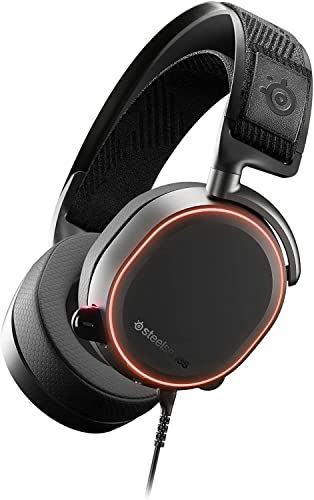
The SteelSeries Arctis Pro is the reference pick of this list, and its listing states the case plainly: a high-fidelity gaming headset with Hi-Res speaker drivers and DTS Headphone:X v2.0 surround for PC, in black. The drivers use high-density neodymium magnets and reproduce a frequency range from 10 to 40,000 hertz, which is far wider than the human hearing range and the mark of a driver built for detail rather than volume.
The DTS Headphone:X v2.0 surround is the detail that makes this headset a 7.1 pick. It places sounds in a virtual space around the listener, so direction can be heard as well as volume, and it does so from the same Hi-Res drivers that handle music. The polished steel and aluminium alloy construction gives the headset a solid, premium feel that matches its sound.
For a buyer who wants the clearest example of a 7.1 audiophile headset, the Arctis Pro is the pick. Its Hi-Res drivers and DTS surround cover both halves of this article’s promise, and its build quality backs up the sound. It is wired, and it needs a PC for the full DTS effect, but for a listener who wants surround and fidelity in one headset, it is the natural first choice.
Key specifications: High-fidelity gaming headset; Hi-Res speaker drivers; DTS Headphone: X v2.0 surround; 10 to 40,000 hertz frequency range; high-density neodymium magnets; polished steel and aluminium alloy; PC; black.
This headset fits a buyer who wants Hi-Res fidelity and DTS surround in one wired headset for PC.
Strengths
- Hi-Res drivers cover 10 to 40,000 hertz for exceptional detail.
- DTS Headphone:X v2.0 surround places sounds around the listener.
- Steel and aluminium construction feels premium and lasts.
Trade-offs
- It is wired, so the cable is always there.
- The full DTS effect needs a PC.
- It is a premium design, so it sits above the budget picks.
The Arctis Pro suits a listener who games and listens to music on the same headset. It fits anyone who wants surround sound without giving up detail.
Best for: Hi-Res fidelity with DTS surround, the reference pick / Not suited for: a buyer who wants wireless or console-only use
Check price on Amazon: SteelSeries Arctis Pro

SteelSeries Arctis Pro + GameDAC
The SteelSeries Arctis Pro with GameDAC is the complete system version of the pick above. Its listing describes a wired gaming headset in black with certified Hi-Res audio and a dedicated DAC and amp, for PS5, PS4, and PC. The GameDAC is the difference: a separate digital-to-analogue converter and amplifier that takes the audio processing out of the PC and into a dedicated box, with a display and controls of its own.
The certified Hi-Res audio system is the detail that defines this bundle. The listing describes gaming’s first certified Hi-Res audio system, pairing premium speaker drivers with next-generation DTS surround sound, and the dedicated DAC and amp give those drivers cleaner power than a motherboard output can. The result is sound that stays detailed at volume, with surround that stays stable when the action gets busy.
For a buyer who wants the Arctis Pro sound with the best possible source, the GameDAC bundle is the pick. It costs more than the headset alone, and it adds a box to the desk, but for a listener who can hear the difference a dedicated DAC makes, it is the most complete 7.1 audiophile setup on this list. It suits a desk-based listener who plays on PC or PlayStation.
Key specifications: Wired gaming headset; certified Hi-Res audio; dedicated DAC and amp; DTS surround sound; PS5, PS4, PC; black.
This headset fits a buyer who wants the Arctis Pro sound with a dedicated DAC and amp for the cleanest source.
Strengths
- A dedicated DAC and amp give the drivers cleaner power.
- Certified Hi-Res audio is the strongest fidelity claim here.
- DTS surround sound pairs with premium drivers for immersion.
Trade-offs
- It costs more than the headset alone.
- The GameDAC adds a box to the desk.
- It is a desk-based setup, not a portable one.
The Arctis Pro with GameDAC suits a desk-based listener who plays on PC or PlayStation. It fits anyone who can hear what a dedicated DAC adds.
Best for: complete Hi-Res system with a dedicated DAC / Not suited for: a buyer who wants a simple headset with no extra box
Check price on Amazon: SteelSeries Arctis Pro + GameDAC
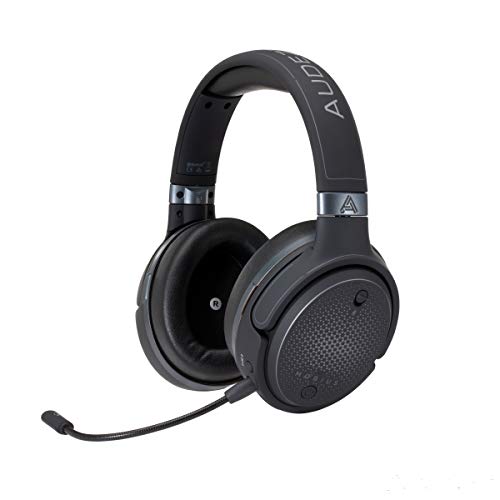
Audeze Mobius Premium 3D Gaming Headset
The Audeze Mobius is the most unusual headset on this list, and its listing describes a premium 3D gaming headset with surround sound, head tracking, and Bluetooth, in an over-ear design for PCs, PS4, and other devices, with V5 firmware. Its planar magnetic drivers are the audiophile credential: a flat diaphragm driven across its whole surface, which gives faster, cleaner sound than a conventional cone driver.
The 7.1 support is the detail that earns this headset its place. The listing states full 3D emulation with wired USB support for popular surround sound modes, including 7.1 and 5.1, and the head tracking updates a thousand times per second, so the sound field stays fixed in space when the head moves. That combination of planar drivers, true 7.1 modes, and head tracking is unique on this list.
For a buyer who wants the most advanced surround technology here, the Mobius is the pick. It is the only headset on this list with planar magnetic drivers and head-tracked 3D audio, and its 7.1 mode support is stated explicitly. It is a premium, complex headset that rewards a listener willing to learn its settings, but for immersion and fidelity together it has no equal here.
Key specifications: Premium 3D gaming headset; planar magnetic drivers; surround sound; head tracking 1000 times per second; full 3D emulation with wired USB support for 7.1 and 5.1 modes; Bluetooth; over-ear; V5 firmware.
This headset fits a buyer who wants planar magnetic fidelity with head-tracked 7.1 surround sound.
Strengths
- Planar magnetic drivers give faster, cleaner sound than cone drivers.
- Explicit 7.1 and 5.1 surround modes over wired USB.
- Head tracking keeps the sound field fixed as the head moves.
Trade-offs
- It is a complex headset with settings to learn.
- It is a premium design, so it sits above the budget picks.
- The 3D features need the wired USB connection for full effect.
The Mobius suits an immersion-focused listener who values advanced audio. It fits anyone who wants the most technically advanced headset here.
Best for: planar fidelity with head-tracked 7.1 surround / Not suited for: a buyer who wants a simple headset with no settings to learn
Check price on Amazon: Audeze Mobius Premium 3D Gaming Headset
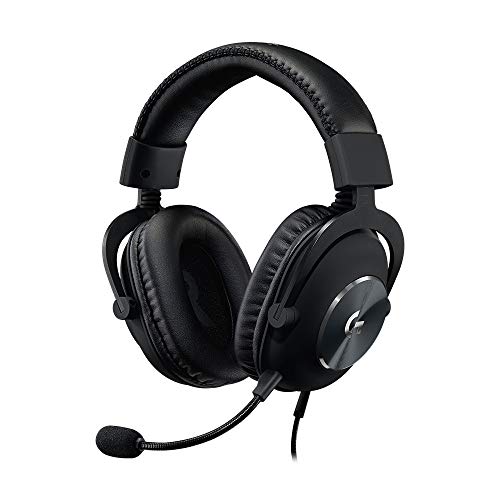
Logitech G Pro X Wired Gaming Headset
The Logitech G Pro X is the professional pick on this list. Its listing describes a wired gaming headset in black with a detachable boom microphone, Blue VO!CE technology, DTS 7.1 surround, 50mm drivers, USB and 3.5mm connectivity, spare memory foam pads, a USB DAC, and a carry bag, for PC, Xbox, PS5, and PS4. The DTS 7.1 is stated plainly, and the pro-grade microphone is the other half of its appeal.
The Blue VO!CE microphone is the detail that defines this headset for team play. It applies real-time voice processing, with a noise reducer, compressor, and limiter, so the voice sounds professional rather than merely audible, and the detachable boom design means the microphone can be removed when the headset is used for music alone. The spare memory foam pads in the box extend the headset’s life when the first set wears out.
For a buyer who wants DTS 7.1 surround with a professional microphone, the G Pro X is the pick. Its 50mm drivers and DTS processing cover the surround half of this article, and its microphone covers the communication half that the other picks treat as secondary. It is wired, and it needs its USB DAC for the full effect, but for a player who talks as much as they listen, it is the strongest choice here.
Key specifications: Wired gaming headset; detachable boom mic; Blue VO!CE; DTS 7.1; 50mm drivers; USB and 3.5mm; spare memory foam pads; USB DAC and bag; PC, Xbox, PS5, PS4; black.
This headset fits a buyer who wants DTS 7.1 surround with a professional microphone for team play.
Strengths
- DTS 7.1 surround is stated plainly in the listing.
- Blue VO!CE processing makes the voice sound professional.
- Spare memory foam pads and a carry bag extend its life.
Trade-offs
- It is wired and needs its USB DAC for the full effect.
- The pro microphone adds complexity for a music-only listener.
- It is a gaming-first design, so its audiophile credentials are thinner than the SteelSeries picks.
The G Pro X suits a team player who talks as much as they listen. It fits anyone who wants surround sound and a broadcast-quality voice.
Best for: DTS 7.1 surround with a pro-grade microphone / Not suited for: a buyer who wants the purest audiophile sound above all
Check price on Amazon: Logitech G Pro X Wired Gaming Headset
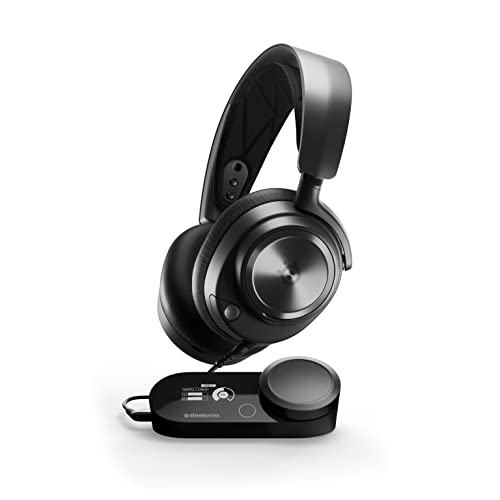
SteelSeries Arctis Nova Pro
The SteelSeries Arctis Nova Pro is the newest SteelSeries design on this list, and its listing describes a multi-system gaming headset in black with premium Hi-Fi drivers, Hi-Res audio, 360-degree spatial audio, a GameDAC Gen 2, a stealth retractable microphone, and support for PC, PS5, PS4, and Switch. The GameDAC Gen 2 is the second generation of the dedicated DAC that made the Arctis Pro bundle special, now paired with the Nova acoustic system.
The 360-degree spatial audio is the detail that makes this headset a surround pick. The listing describes immersive surround sound that transports the listener into the game world, with the Sonar software offering a pro-grade parametric equaliser for full control of the sound. The premium Hi-Fi drivers and Hi-Res audio give the surround something worth processing: detailed, high-fidelity sound that holds up when the spatial effects are switched off.
For a buyer who wants the newest SteelSeries surround system with a dedicated DAC, the Arctis Nova Pro is the pick. It pairs the GameDAC Gen 2 with the Nova acoustic system and a retractable microphone that disappears when not needed, and its multi-system support covers PC and consoles alike. It is the most versatile SteelSeries pick here, and the best choice for a listener who plays across platforms.
Key specifications: Multi-system gaming headset; premium Hi-Fi drivers; Hi-Res audio; 360-degree spatial audio; GameDAC Gen 2; stealth retractable mic; Sonar software with pro-grade parametric EQ; PC, PS5, PS4, Switch; black.
This headset fits a buyer who wants the newest SteelSeries surround system with a dedicated DAC, across PC and consoles.
Strengths
- GameDAC Gen 2 pairs a dedicated DAC with the Nova acoustic system.
- 360-degree spatial audio gives immersive surround sound.
- The stealth retractable mic disappears when not needed.
Trade-offs
- The surround is spatial audio, not a literal 7.1 channel label.
- It is a premium design, so it sits above the budget picks.
- The Sonar software adds settings to learn.
The Arctis Nova Pro suits a multi-platform player who wants Hi-Res sound and spatial audio. It fits anyone who plays on more than one system.
Best for: newest SteelSeries surround with GameDAC Gen 2 / Not suited for: a buyer who wants a simple headset with a literal 7.1 label
Check price on Amazon: SteelSeries Arctis Nova Pro

HyperX Cloud II
The HyperX Cloud II closes this list as the affordable entry point, and its listing describes a gaming headset with 7.1 surround sound, memory foam ear pads, a durable aluminium frame, and multi-platform support covering PC, PS4, PS4 Pro, Xbox One, and Xbox One S, in red. The 7.1 surround is stated plainly, and the memory foam and aluminium frame give it the comfort and durability that made the design popular.
The 7.1 surround sound is the detail that earns this headset its place. It is the most affordable way onto this list to hear game audio placed around the listener, and the listing’s frequency response of 15 to 25kHz covers the range a game needs. The durable aluminium frame outlasts plastic designs, and the memory foam ear pads keep the headset comfortable through long sessions.
For a buyer who wants 7.1 surround sound at the lowest tier of this list, the Cloud II is the pick. It is the least audiophile of the six on pure driver credentials, and the article is honest about that, but its surround sound is real, its build is proven, and its comfort is genuine. It is the entry point to this category, and the right choice for a buyer who wants to hear what 7.1 surround adds before spending more.
Key specifications: 7.1 surround sound; memory foam ear pads; durable aluminium frame; multi-platform; works with PC, PS4, PS4 Pro, Xbox One, Xbox One S; red (KHX-HSCP-RD); 15-25kHz frequency response.
This headset fits a buyer who wants affordable 7.1 surround sound with a durable frame and real comfort.
Strengths
- 7.1 surround sound is stated plainly at the lowest tier here.
- The durable aluminium frame outlasts plastic designs.
- Memory foam ear pads suit long sessions.
Trade-offs
- Its driver credentials are thinner than the audiophile picks above.
- It is wired and needs its USB sound card for surround.
- It is an older design, so it lacks the newest features.
The Cloud II suits a first-time surround listener or a budget buyer. It fits anyone who wants to hear what 7.1 adds before spending more.
Best for: affordable 7.1 surround sound, the entry point / Not suited for: a buyer who wants the purest Hi-Res audiophile sound
Check price on Amazon: HyperX Cloud II
Best 7.1 audiophile headsets: what matters most: what matters most
The surround form decides what the headset actually does. DTS Headphone:X, 360-degree spatial audio, and explicit 7.1 modes are all virtual surround, created from two drivers plus processing, and the listings state which form each headset uses. A buyer should check the form in the listing, because a headset bought for 7.1 that only offers stereo will disappoint, and a headset bought for music may not need surround at all.
Driver quality decides whether the surround is worth hearing. A Hi-Res certified driver, a planar magnetic driver, or a pro-grade tuned driver reproduces detail that an ordinary driver smears, and the listings on this list state their driver credentials plainly. The 10 to 40,000 hertz range on the Arctis Pro and the planar magnetic design on the Mobius are the marks of drivers built for fidelity, not just volume.
The microphone decides how the headset serves team play. A detachable boom microphone with voice processing, a retractable microphone that disappears, and a cardioid design that rejects room noise are all different answers to the same problem, and the listings state them plainly. A buyer who plays alone can ignore the microphone, while a buyer who plays in a squad should weigh it as heavily as the drivers.
Comfort decides whether the headset stays on. Memory foam ear pads, lightweight construction, and a durable frame all matter in a long session, and the listings state them plainly. A headset that hurts after an hour will not be used, no matter how good its surround sounds, so comfort deserves as much attention as the drivers.
Connection and source decide whether the headset reaches its potential. The GameDAC bundles need a desk and a USB connection, the Mobius needs wired USB for its full 7.1 modes, and the Cloud II needs its USB sound card for surround. A buyer should check what each headset needs to deliver its best sound, and whether the desk and the system provide it.
Buying guide: choosing 7.1 audiophile headsets
Start with the surround form, because it decides what the headset does. A headset with DTS Headphone:X suits a PC gamer, a headset with 360-degree spatial audio suits a multi-platform player, and a headset with explicit 7.1 modes suits a listener who wants the label to match the listing. Check the form in the listing before comparing drivers.
Match the headset to the listening actually done. Surround sound matters most in games where direction matters, Hi-Res drivers matter most in music, and a pro microphone matters most in team play. There is no need to pay for a dedicated DAC if the listening is casual, and there is no saving in buying a headset without the microphone a squad game needs.
Read the full listing, not just the headline. The model code, the exact surround form, the driver type, and the microphone design are what separate one configuration from another, and two headsets with the same model name can differ in all of them. Confirm the listing states the configuration wanted, and set aside any listing marked as renewed or used unless that is explicitly what is being bought.
Check the source equipment before ordering. A GameDAC bundle needs desk space and a USB port, a planar magnetic headset benefits from a good amplifier, and a headset that needs its USB sound card for surround will not give surround from a controller jack alone. If the desk cannot feed the headset properly, a simpler pick is the better choice.
Think about the total setup, including the platform and the room. A multi-system headset suits a player with a PC and a console, a wired headset suits a desk listener, and a headset with a sensitive microphone needs a quiet room or a cardioid design. These are small points at the shop and daily realities afterwards, so they are worth a moment of thought before the order is placed.
Using and caring for your 7.1 audiophile headsets
Give the headset a place to live. A hook, a stand, or a drawer keeps the cable from tangling and the ear cushions from being crushed, and a headset that is stored properly lasts years longer than one left on the floor. The GameDAC boxes on the SteelSeries picks should sit where their displays and controls are easy to reach.
Keep the ear cushions clean. Memory foam and leatherette pick up sweat and skin oils during long sessions, and a gentle wipe with a dry or slightly damp cloth after use keeps them fresh. Harsh cleaners and soaking should be avoided, because they break down the cushion material.
Learn the software. The Sonar software on the Nova Pro, the DTS settings on the Arctis Pro, and the 3D settings on the Mobius all reward a few minutes of setup, and a headset used with default settings will not sound as good as one tuned to the listener. A short session with the software before the first long game is time well spent.
Set the audio levels before playing. The system audio settings control chat volume, game volume, and microphone level, and a few minutes there makes the difference between a headset that sounds right and one that is too quiet or too loud. The on-ear and in-line controls on these headsets then handle small adjustments during play.
Common mistakes to avoid
Buying on the surround label alone is the most common mistake. Two headsets can share a 7.1 label and differ wildly in driver quality, and the listing is the only place those differences are stated. The Cloud II and the Arctis Pro both offer surround sound, but their drivers are in different classes. Read the full listing every time.
Ignoring the source is the second mistake. A headset with a dedicated DAC needs a desk and a USB port, a planar magnetic headset benefits from good amplification, and a headset that needs its USB sound card for surround will not give surround from a controller jack alone. Check what the headset needs before deciding.
Forgetting the microphone is the third mistake. A headset bought for music may have a fine microphone, but a headset bought for squad play needs a good one, and the listings state their microphone designs plainly. Match the microphone to the play, not just the drivers to the ears.
Skipping the full listing check is the fourth mistake. The model code, the exact surround form, and the driver credentials are what make a configuration, and a listing that does not state them plainly is not a bargain, it is a question mark. Set aside listings marked as renewed or used unless that is the deliberate choice.
Budget and value
A 7.1 audiophile headset is a long purchase, and the budget should reflect that. The headsets on this list range from the affordable Cloud II to the premium Mobius and GameDAC bundles, and the right tier is the one that covers the listening of the next few years, not just the games of this month. Spending more buys driver quality, a dedicated DAC, or planar magnetic sound, and each of those is worth paying for if it matches a real need.
The value picks on this list are value picks because their sound is honest, not because it is weak. A Cloud II or a G Pro X covers surround sound and team play well, and for many buyers either is the sensible way to get into this category without stretching the budget to Hi-Res or planar magnetic tiers.
The premium picks are worth their tier only when the listener can hear the difference. A planar magnetic driver or a dedicated DAC rewards a listener with good ears and good source material, and a listener who plays casually through a noisy room will not hear what they paid for. Match the headset to the ears and the room, not to the specification sheet.
Final recommendation
If one headset has to be named, it is the SteelSeries Arctis Pro. Its Hi-Res drivers covering 10 to 40,000 hertz, its DTS Headphone:X v2.0 surround, and its steel and aluminium build make it the clearest example of a 7.1 audiophile headset: surround sound and fidelity in one wired package. For a buyer who wants one headset for games and music alike, it is the safest recommendation here.
Buyers with different priorities should look elsewhere without hesitation. The Arctis Pro with GameDAC is the better choice for the cleanest source, the Mobius is the better choice for planar magnetic sound with head tracking, the G Pro X is the better choice for team play with a pro microphone, the Nova Pro is the better choice for multi-platform play with a dedicated DAC, and the Cloud II is the better choice for affordable 7.1 surround.
Whichever headset is chosen, the rule that matters is the same: check the surround form, check the drivers, and read the full listing. A 7.1 audiophile headset earns its keep every time it is worn, and the right one is the one whose surround and whose sound both match the listening it will actually do.
Frequently asked questions
What makes a headset a 7.1 audiophile headset?
Two things: a surround form, such as DTS Headphone:X, 360-degree spatial audio, or an explicit 7.1 mode, and high-fidelity drivers, such as Hi-Res certified speakers or planar magnetic designs. The headsets on this list state both in their listings. Ordinary 7.1 gaming headsets have the surround but not the driver quality, and ordinary audiophile headphones have the drivers but no microphone.
Do 7.1 headsets have eight separate drivers?
No. Every 7.1 headset on this list creates its surround virtually, from two drivers plus processing. The processing differs: DTS Headphone:X, 360-degree spatial audio, or explicit 7.1 modes, and the listings state which form each headset uses. The result is directional sound from two drivers, not eight.
Is planar magnetic better than an ordinary driver?
Planar magnetic drivers, like those in the Audeze Mobius on this list, drive a flat diaphragm across its whole surface, which gives faster, cleaner sound with less distortion than a conventional cone driver. The difference is audible in detailed music and in games with subtle sounds, though the Mobius also costs more and needs its settings learned.
Do I need a DAC for a 7.1 audiophile headset?
Not always, but the GameDAC bundles on this list exist because a dedicated DAC and amp give the drivers cleaner power than a motherboard output. The Arctis Pro with GameDAC and the Arctis Nova Pro both include one. A listener with a good motherboard output may not need it, while a listener who can hear the difference will value it.
Can I use these headsets for music as well as games?
Yes, and that is the point of the audiophile half of this article. The Hi-Res drivers on the SteelSeries picks and the planar magnetic drivers on the Mobius reproduce music with detail an ordinary gaming headset cannot match. The surround processing can be switched off for music, leaving the drivers to speak for themselves.
Best 7.1 audiophile headsets for music
Music is where the audiophile half of this article proves itself. A headset bought for games alone can hide weak drivers behind surround effects, but music exposes them: a muddy bass, a harsh treble, or a narrow soundstage all show up within a song or two. The Hi-Res drivers on the SteelSeries picks and the planar magnetic drivers on the Mobius are built to survive that test.
The Arctis Pro is the natural music pick here. Its 10 to 40,000 hertz range covers far more than the ear can hear, which is the point: a driver that reaches that high without strain reproduces the audible range cleanly. The Mobius suits a listener who wants planar magnetic detail, and the Nova Pro suits a listener who wants Hi-Res sound across platforms.
The practical details matter for music too. Surround processing should be switched off for stereo music, because it colours the sound, and the source matters: a dedicated DAC or a good amplifier lets the drivers show what they can do, while a weak source holds them back. Whichever pick is chosen, the drivers deserve a clean source.
Best 7.1 audiophile headsets for competitive gaming
Competitive gaming puts the surround half of this article first. Direction matters: hearing a footstep behind and to the left, rather than merely hearing a footstep, is the difference between reacting and dying. The DTS Headphone:X on the Arctis Pro, the 360-degree spatial audio on the Nova Pro, and the 7.1 modes on the Mobius all serve that purpose, and the listings state them plainly.
The G Pro X is the natural competitive pick here. Its DTS 7.1 surround gives direction, and its Blue VO!CE microphone gives the squad a clear voice, which matters as much as hearing the enemy. The Arctis Pro suits a competitive player who wants Hi-Res detail as well, and the Nova Pro suits one who plays across platforms.
The practical details matter for competitive play as well. A wired connection avoids the latency and dropouts of wireless, a flip-to-mute or retractable microphone keeps comms clean between rounds, and a light headset stays comfortable through a long tournament session. All six picks on this list cover those basics, so the choice comes down to surround form, microphone, and budget.
More guides from KajuanDouglas
audiophile headsets for gaming headsets for audiophiles 7.1 headsets for PC