kajuandouglas.com is reader-supported. When you buy through links on our site, we may earn an affiliate commission.
Where to Buy
The best digital cameras for landscape pictures are judged at the two ends of the day, in weather their owners deliberately walked into. Landscape photography asks a specific bundle of virtues and forgives the absence of almost everything else: dynamic range wide enough to hold a bright sky and a shadowed valley in one exposure, resolution that keeps a distant ridge honest when the print grows large, a sensor that stays clean at the low sensitivities and long exposures the tripod life demands, weather sealing that treats drizzle as a rumour, and controls that can be worked with gloves on, in the dark, by feel. Burst rates, video heroics, and autofocus built for athletes are welcome but irrelevant; the mountain is not going anywhere, and the light is doing all the moving.
That is why this list looks different from a generalist ranking. Every pick was assessed on the tripod, at dawn, through the workflow landscape photographers actually live: compose slowly, expose deliberately, bracket when the sky demands it, focus once with great care, and wait. The cameras differ in how they serve that ritual — full-frame bodies with enormous tonal headroom, a high-resolution APS-C system whose lenses keep the whole kit climbable, a Micro Four Thirds body whose computational tricks and tiny lenses rewrite what a mountain kit weighs — and the badges name each body’s landscape philosophy rather than pretending one ranking fits the moor and the desert alike.
There is also a temperament to shop for, and it is worth naming before the reviews: landscape photography rewards the photographer who returns. The same valley in forty weathers outranks forty valleys in one, and the right camera is the one whose weight, manners, and files keep inviting that return — the body that lives by the door with the boots, charged, because tomorrow’s dawn is already in the forecast. Every pick below was weighed on that invitation as carefully as on any measurement.
Budget with the whole expedition in mind. The landscape camera is one line in a kit whose other lines — a tripod that does not tremble, lenses that resolve to the corners, filters, boots — decide as many photographs as the sensor does. A mid-priced body on a serious tripod will out-photograph a flagship on a wobbly one every dawn of the year, and the picks below are ordered with that economy respected: each is a foundation worth building a decade of mornings on.
Key Takeaways
- The Sony Alpha 7 IV is the all-round landscape foundation — full-frame range and resolution inside the deepest lens ecosystem a hill photographer can buy into.
- The Canon EOS R6 Mark II serves the Canon loyalist with gorgeous colour and stabilisation for the handheld edges of the day.
- The Fujifilm X-T5 is the high-resolution climber’s choice — enormous detail from an APS-C kit that stays light enough for real mountains.
- The Nikon Z50 II is the value route into serious landscape work, with Nikon’s colour and a growing shelf of affordable glass.
- The Panasonic LUMIX S5II brings full-frame range plus the LUT and video discipline for photographers whose landscapes also move.
- The OM SYSTEM OM-5 Mark II is the ultralight revelation — computational long-exposure tricks and tiny lenses for the longest approaches.
Two philosophies run through the table. The full-frame four argue that landscape is a tonal art and the sensor’s headroom is its canvas — they are right wherever the light is theatrical and the printing is large. The two smaller systems argue that landscape is first an act of arrival — the finest camera is the one that reached the ridge — and they are right on every climb where grams decide whether the tripod comes at all. Most landscape photographers eventually own one of each; the reviews below help you choose which philosophy your own geography demands first.
In this guide
Quick Picks
| Badge | Pick | Why it stands out |
|---|---|---|
| All-Round Foundation | Sony Alpha 7 IV | Full-frame range, serious resolution, and every landscape lens worth owning. |
| Canon Colour for the Hills | Canon EOS R6 Mark II | Beloved rendering and stabilisation for dawn’s handheld margins. |
| High-Resolution Climber | Fujifilm X-T5 | APS-C detail that rivals bigger sensors, in a kit a mountaineer forgives. |
| Value Route to Serious Work | Nikon Z50 II | Nikon landscape colour and honest files at an entry the hills approve of. |
| Landscape That Also Moves | Panasonic LUMIX S5II | Full-frame stills with a filmmaker’s colour pipeline for hybrid expeditions. |
| Ultralight Revelation | OM SYSTEM OM-5 Mark II | Computational exposure magic and tiny lenses for the longest walks. |
One more filter on the table, for honesty: none of these bodies will make a landscape photograph by itself, and the guide’s enthusiasm should be read as an argument about ceilings, not about shortcuts. Each pick simply refuses to be the reason a good morning failed.
Read the table against your own map. The coastal photographer shooting from car parks and cliff paths can carry the full-frame foundations and should; the alpine photographer on a three-day traverse lives under a different arithmetic, and the smaller systems exist precisely for them. Landscape is the most geographically personal of all photographic genres — buy for your terrain, not for a forum’s.
How We Chose These Picks
Testing meant using each body the way its buyer will: on a tripod at civil dawn, in wind, with gloves, through the long exposures and careful brackets of real landscape mornings. We shot the same valleys at the same hours across bodies, exposed for the highlights as landscape discipline demands, and pulled the shadows up in the editor to see which sensors held their valleys together and which dissolved into noise and banding. Files were printed large — the landscape photograph’s true destination — because a sensor’s resolution is a rumour until paper confirms it.
Long-exposure character received its own dawn: waterfalls at one second and at thirty, harbours at dusk, and the night sky over the moor, watching for hot pixels, thermal patterning, and the honesty of each body’s built-in tools — interval timers, bulb ramping, composite modes — because landscape’s signature photographs are timed in heartbeats, not fractions.
Field manners were scored as rigorously as files. Can the exposure compensation be found by a gloved thumb? Does the screen tilt serve a low tripod in mud? Does the battery survive a frosty morning of live view and long exposures, and does the sealing keep the sea fret out during a squall on the cliff? Landscape cameras fail their owners outdoors, in the cold, at the decisive ten minutes — so that is where we tested them.
Finally we weighed the lens shelves, because a landscape body is a promise its lenses must keep: wide zooms that resolve to the corners, affordable primes for the weight-conscious, and the filter threads and hood designs that field life prefers. The six survivors are the bodies whose whole systems — sensor, shell, and glass — respect the dawn.
What Makes a Landscape Camera Different From a General One?
Its priorities are nearly the inverse of the mainstream’s. The general camera races: frames per second, subject tracking, video frame rates. The landscape camera endures: it must produce one perfect file rather than sixty hopeful ones, and everything about it is bent to that file’s quality. Dynamic range leads, because the landscape’s eternal subject is a bright sky married to a dark land, and the sensor that holds both in a single exposure frees the photographer from bracketing’s choreography. Resolution follows, not for cropping laziness but because landscape prints grow large and distant detail — the texture of a scree slope, the grain of a far wood — is the genre’s substance.
The supporting virtues are unglamorous and decisive. Low-sensitivity cleanliness, because landscape lives at base ISO where any sensor noise is pure vandalism. Long-exposure manners, because water and cloud are shot in seconds and minutes, and hot pixels and thermal noise are the tax a careless sensor levies. A screen and viewfinder that remain truthful in the dim blue hour. And sealing — real, gasketed, manufacturer-committed sealing — because the genre’s finest light so often arrives attached to its worst weather.
Notice what drops away: the landscape camera can be slow, can focus at a stroll, can treat video as a sideline, and lose nothing that matters. That inversion is why generalist “best camera” lists mislead hill photographers, and why this guide exists separately. You are not buying a camera that does everything. You are buying the one thing done completely.
Why Do Dynamic Range and Resolution Rule the Hills?
Because the landscape photograph is a negotiation between the sky’s brightness and the land’s darkness, conducted in a single frame. Every stop of dynamic range is a stop of that negotiation the sensor settles internally — cloud texture retained above, valley detail preserved below — rather than leaving the photographer to bracket three frames and marry them later, with the wind moving the grass between exposures and the tide rearranging the foreground. Bracketing remains a noble tool, but range is freedom: the freedom to shoot the moving scene, the breaking wave, the one shaft of light that will not wait for a sequence.
Resolution rules for a different reason: the landscape print. This is the genre that still lives on walls, at sizes where a modest file’s distant hillside turns to watercolour. Resolution buys the right to print large, to crop a composition refined at leisure, and to hold fine texture — frost on grass, foam on black rock, the far fence line — at the distances landscape composition depends on. The picks balance the two virtues differently: the full-frame bodies pair generous range with strong resolution, the X-T5 leans into resolution with startling success, and the OM-5 answers with computational techniques that manufacture effective detail and exposure latitude from a smaller canvas.
Together they explain the guide’s heresy against spec-sheet thinking: for landscape, the two numbers that matter most are the two least advertised, and a camera’s worth is measured at the print, at dawn, in the wind — nowhere else.

Sony Alpha 7 IV — All-Round Foundation
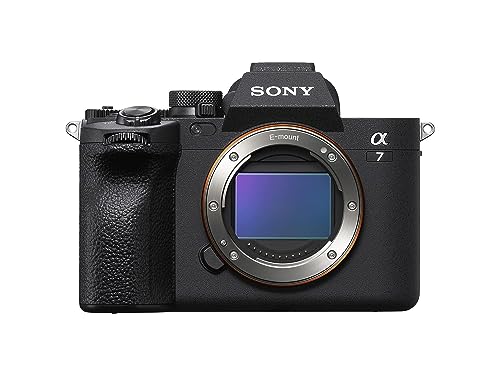
The A7 IV is the landscape body a photographer can buy once and defend for a decade, because it refuses to be the weak link in any part of the craft. Its full-frame sensor pairs the dynamic range the sky-valley negotiation demands with resolution that prints large without apology, and its files tolerate the landscape editor’s characteristic moves — shadows lifted hard, skies graduated, colours persuaded — with a grace that keeps the genre’s heavy processing invisible. On the tripod at dawn it behaves like an instrument designed by people who have stood where you are standing: customisable controls, a screen that serves low angles, and sealing that shrugs at the squall line crossing the valley.
The ecosystem argument is, for landscape, decisive. E-mount’s wide-zoom shelf is the deepest in the business — the affordable f/4 glass that most hill photographers actually carry, the fast wides for astro-landscapes, the tilt options and adapted classics — and a landscape kit is built over years, lens by lens, in a way that punishes a shallow mount mercilessly. Buy the A7 IV and every future lens decision is easy; that ease compounds like interest across a photographic life.
Its costs are weight and price relative to the smaller systems, and a menu depth that rewards an evening of customisation before the first expedition. Neither diminishes its standing as the default recommendation: if your landscape work is printed, exhibited, or simply loved at large sizes, and your approaches are measured in hours rather than days, this is the foundation.
- Sensor: full-frame range and resolution balanced for big prints
- Files: tolerate heavy shadow lifting and sky work gracefully
- Ecosystem: the deepest landscape lens shelf in mirrorless
- Body: sealed, customisable, honest in bad weather
- Growth: a decade’s kit builds on this mount without regret
Strengths
- The most complete landscape file quality on this page
- Every landscape lens worth owning exists for it
- Field manners tested by a generation of working photographers
Trade-offs
- Full-frame kit weight tells on multi-day climbs
- Menus reward setup homework before the first trip
- Not the cheapest door into serious landscape work
Best for: dedicated landscape photographers printing large and building a long-term system. Not suited for: ultralight multi-day trekkers counting every gram.

Canon EOS R6 Mark II — Canon Colour for the Hills
Landscape photographers are colourists before they are technicians, and Canon’s rendering — the way its greens hold their nerve, its dawn skies graduate without banding, its files accept a warming hand like they were expecting it — has kept generations of hill photographers loyal through every format war. The R6 Mark II carries that colour into a modern full-frame body whose landscape virtues run deeper than its hybrid marketing suggests: strong dynamic range for the sky-valley negotiation, clean base-ISO files, and in-body stabilisation that serves the genre’s handheld margins — the blue-hour frames after the tripod is packed, the viewpoint found on the walk down.
Its resolution sits a step below the highest here, and for most landscape printing that step is theoretical; where it earns its keep daily is in the field experience. Canon’s ergonomics — the dial layout a gloved hand learns in one morning, the menus that stay out of the way — and RF’s landscape glass, from the sensible wide zooms to the L-series pieces a kit grows into, make the whole system feel like it was fitted rather than assembled. Photographers migrating from Canon’s DSLR landscape era will find their instincts honoured at every control.
Choose it when colour is your first language and your expeditions are day-length; the full-frame files will print beautifully, the colour will need the least persuasion of any here, and the body will serve the family’s and the business’s other photography without a murmur — a versatility the dedicated landscape bodies do not all match.
- Colour: Canon’s landscape rendering, gentle skies and honest greens
- Range: full-frame headroom for single-frame dawn exposures
- Stabilisation: serves the handheld margins of the tripod day
- Ergonomics: gloved-hand controls learned in a morning
- Lenses: RF wide zooms from sensible to L-series
Strengths
- Files need the least colour persuasion of any pick here
- A body that serves the whole photographic life, hills included
- Field handling that respects cold hands and low light
Trade-offs
- Resolution a step below the class leaders for the largest prints
- Full-frame weight on the longest approaches
- RF’s specialist landscape glass is pricier than E-mount’s equivalents
Best for: Canon loyalists and colour-first landscape photographers on day expeditions. Not suited for: gallery-scale printing obsessives or gram-counting trekkers.

Fujifilm X-T5 — High-Resolution Climber
The X-T5 makes the boldest argument in this guide: that a smaller sensor, given enough resolution and a lens shelf built for it, can serve landscape as faithfully as the full-frame establishment — while the whole kit, body and three lenses, weighs what a full-frame body and one zoom weigh. Its high-resolution APS-C sensor resolves distant texture with a tenacity that surprises photographers raised on format hierarchy, and Fujifilm’s compact primes and zooms, designed for the format rather than adapted to it, hold their corners in a way that flatters the sensor’s ambition.
The field experience is the landscape traditionalist’s delight: dedicated dials for shutter and exposure compensation that a glove can read, a tilting screen for the low tripod in the heather, and film simulations whose landscape manners — Velvia’s saturated drama for those who still love it, the softer stocks for honest mornings — give JPEG shooters a finished file at the moment of capture. Battery life across a frosty dawn of live view is the known tax of the smaller body, paid gladly with a second battery in a warm pocket.
Its dynamic range, while genuinely good, asks slightly more bracketing discipline than the full-frame picks when the sky is at its most theatrical — a fair trade for the kilograms it returns on the climb. For the photographer whose landscapes are earned at altitude, the X-T5 is not the compromise choice. It is the considered one.
- Sensor: high-resolution APS-C that resolves like a larger format
- Kit weight: a full landscape system at half the full-frame burden
- Controls: physical dials a gloved hand can read in the dark
- Colour: simulations from Velvia drama to honest documentary
- Lenses: format-native glass with corners that hold
Strengths
- Detail per gram unmatched by anything else here
- The most pleasurable traditional controls in the guide
- A complete mountain kit that fits a modest pack
Trade-offs
- Slightly less single-frame range than the full-frame picks
- Battery stamina on cold dawns needs a warm spare
- APS-C depth of field needs care for foreground-to-horizon sharpness
Best for: climbing, hiking, and travelling landscape photographers who print seriously. Not suited for: photographers who bracket nothing and demand maximum range in one frame.

Nikon Z50 II — Value Route to Serious Work
Every landscape tradition needs its affordable door, and the Z50 II is Nikon’s — a body whose files are far more serious than its price suggests. Nikon’s landscape colour has a devoted following for good reason: its blues and greens carry the northern light beautifully, its raw files lift shadows with less complaint than the price implies, and the Z-mount’s affordable wide glass gives the beginner a real landscape kit — body, wide zoom, tripod — for what a full-frame body alone can cost. Money saved on the body is money spent on the boots, the trips, and the dawns, which is where landscape photographs actually come from.
The body itself respects the field: weather sealing that suits hill weather, a tilting screen for low compositions, controls sensibly shared with Nikon’s larger bodies so the upgrade path — when the photographer’s ambitions outgrow APS-C — keeps every habit and every lens via the system’s common mount. Its autofocus and video are modern and capable, serving the family and travel duties that share most photographers’ bags.
The honest ceilings are format ceilings: less single-frame range than the full-frame picks in the most theatrical light, and resolution that prints handsomely to moderate sizes rather than gallery walls. For the photographer beginning a landscape life — or the experienced one buying a second, lighter system for the hills — those ceilings sit far above the work most mornings actually demand.
- Colour: Nikon’s northern-light rendering at an entry price
- Files: raw shadows lift with uncommon grace for the class
- Kit logic: leaves budget for tripod, glass, and travel
- Body: sealed for hill weather, controls shared with pro Nikons
- Path: Z-mount lenses carry upward when ambitions grow
Strengths
- Serious landscape files at the friendliest total cost here
- A system whose lenses and habits survive upgrading
- Light enough that the tripod always makes the pack
Trade-offs
- Range and resolution ceilings appear in the most extreme light
- APS-C wide options are good, not yet exhaustive
- Not the body for the largest exhibition prints
Best for: beginners to serious landscape work and Nikon shooters wanting a light hill kit. Not suited for: gallery-scale printers or single-frame range maximalists.

Panasonic LUMIX S5II — Landscape That Also Moves
A growing school of landscape photographers works in both stills and motion — the dawn that yields a print also yields the film that sells the workshop, the book, the channel — and the S5II is the body that school standardises on. Its full-frame sensor delivers the range and clean long exposures the stills demand, while its video pipeline, LUT discipline, and cooling serve the moving half without compromise or thermal anxiety during a long timelapse-adjacent morning. One body, one lens shelf, two portfolios: the arithmetic is compelling for the working landscape photographer.
For stills alone it remains formidable. The L-mount alliance provides landscape glass from Panasonic, Sigma, and Leica across every price of virtue, the in-body stabilisation is the strongest here for the handheld margins of the day, and the Real Time LUT system lets a photographer define a personal landscape rendering — their own dawn, codified — and see it live in the field rather than hoping the editor remembers it. High-resolution composite modes extend its printing reach beyond the sensor’s native count for the stillest scenes.
The trade is heft and a video-first control philosophy that stills purists take a week to forgive. For the hybrid expedition photographer, that week is a small toll for the only body in this guide that treats both halves of the modern landscape practice as first-class work.
- Sensor: full-frame range with clean long-exposure manners
- Hybrid: a filmmaker’s pipeline sharing the landscape body
- Stabilisation: the strongest here for handheld margins
- Colour: Real Time LUT — a personal dawn, visible live
- Mount: L-mount alliance glass at every price of virtue
Strengths
- Serves the print portfolio and the film channel from one kit
- Cooling and stamina for the longest mornings
- Stabilisation that rescues the unplanned viewpoint
Trade-offs
- The heaviest full-frame option here with video-first ergonomics
- Autofocus pedigree a step behind Sony for moving subjects
- More camera than the stills-only purist needs
Best for: hybrid landscape photographers building stills and film practices together. Not suited for: stills-only minimalists or the lightest-pack climbers.

OM SYSTEM OM-5 Mark II — Ultralight Revelation
The OM-5 Mark II is the camera that changes what a landscape kit weighs, and with it, which landscapes get photographed at all. Its Micro Four Thirds lenses are fractions of full-frame equivalents — a complete three-lens hill kit can weigh less than one full-frame zoom — and the body answers the format’s supposed limits with computation that feels like cheating until you use it: Live ND simulates neutral-density filtration for silky water without carrying glass, Live Composite builds long exposures visibly, frame by frame, so the photographer watches the waterfall’s portrait assemble itself, and high-resolution tripod modes multiply detail for the stillest scenes.
The sealing deserves its own sentence: OM’s weatherproofing has a cult following among photographers who work in genuine filth — sea spray, waterfall mist, moorland rain — because the system’s small lenses seal as thoroughly as the bodies. For the landscape photographer whose best locations are also the wettest, that confidence is a creative feature: the camera that comes out in the squall gets the photograph the sheltered camera dreams about.
Its ceilings are the format’s: single-frame dynamic range and high-sensitivity cleanliness trail the bigger sensors, so the most theatrical dawns ask for its bracketing and composite talents rather than one heroic exposure. In exchange, it reaches ridges the others watch from the car park. For the long-approach photographer, that exchange is not a compromise. It is the whole point.
- Weight: a full landscape kit lighter than rivals’ single zooms
- Computation: Live ND and Live Composite for long-exposure craft
- Sealing: system-wide weatherproofing trusted in real filth
- Resolution modes: tripod high-res for still scenes and big prints
- Lenses: tiny, sharp, and priced for mortals
Strengths
- Reaches landscapes the heavier systems never see
- Long-exposure creativity without a filter wallet
- Weather confidence that keeps the camera out in the squall
Trade-offs
- Single-frame range trails the full-frame picks
- High-sensitivity work is the format’s known ceiling
- Small controls ask for practice with winter gloves
Best for: trekkers, travellers, and wet-weather landscape photographers counting grams. Not suited for: single-exposure range purists or the largest-print specialists.
Comparison Table
| Pick | Format | Landscape signature | Kit weight class |
|---|---|---|---|
| Sony Alpha 7 IV | Full frame | Range plus ecosystem depth | Standard |
| Canon EOS R6 Mark II | Full frame | Colour that needs least persuasion | Standard |
| Fujifilm X-T5 | APS-C | Resolution per gram | Light |
| Nikon Z50 II | APS-C | Serious files, friendly cost | Light |
| Panasonic LUMIX S5II | Full frame | Stills and film in one body | Heaviest here |
| OM SYSTEM OM-5 Mark II | Micro Four Thirds | Computation and ultralight reach | Featherweight |
Which Mistakes Cost Landscape Photographers the Dawn?
The classic is arriving with the wrong support: a flagship body balanced on a travel tripod that trembles in the dawn breeze, so every frame carries a whisper of movement no sharpening can confess away. The second is exposing for the land and sacrificing the sky — the beginner’s instinct, since the land is the subject — when landscape discipline runs the other way: protect the highlights, for a blown sky is unrecoverable, and let the sensor’s range, or a bracket, carry the shadows. The third is the filter error: a cheap polariser or variable ND whose colour cast and corner smearing tax every frame to save the price of one good filter.
Fieldcraft mistakes follow. Leaving before the light finishes — the ten minutes after the obvious photograph are when the valley performs. Trusting the rear screen’s brightness in the dark and underexposing a morning’s work by a stop. Forgetting that the tripod’s feet matter — mud, scree, and ice each demand their own footing ritual. And the archive sin: cards formatted before the files exist in two places, so that one dawn in a decade, the finest of a photographer’s life, is lost to a housekeeping shortcut.
Finally, the compositional mistake that no camera fixes: standing where the car park put you. Every body in this guide is light enough, in its kit, to walk the extra half mile to the unphotographed angle — the picks were chosen partly so that the equipment never becomes the excuse for the postcard viewpoint.
How Do Tripod and Filter Discipline Change the Photograph?
The tripod is landscape photography’s true image stabiliser, time machine, and composition teacher in one. It slows the photographer into seeing — the frame assembled deliberately, the edges audited, the foreground given its due — and it unlocks the exposures the genre is made of: the second-long waterfall, the minute-long cloud river, the blue-hour frame at base sensitivity. Buying discipline is simple and oft-ignored: the tripod must be tall enough to work without its centre column raised, stiff enough for the longest lens in wind, and light enough that it is actually carried — a tripod at home stabilises nothing. Every camera in this guide rewards a serious tripod more than it rewards its own successor model.
Filters, in the digital era, have narrowed to the honest few. The polariser remains irreplaceable — no software removes reflections from water and wet rock or deepens a sky from the side the sun prefers — and it is the one filter every landscape kit should carry in its lens’s size. Neutral density serves the long-exposure crafts, though the OM-5’s Live ND and every body’s interval tricks have eaten its simpler duties. Graduated filters have largely yielded to dynamic range and bracketing, and the photographer investing today should buy range first, a polariser second, and ND third — in that order, whatever the filter wallet’s marketing says.
Final Recommendation
Choose by your terrain and your printing. The Sony A7 IV is the default foundation for the serious landscape life — the range, the files, and the lens shelf a decade of dawns can build on. Canon loyalists should take the R6 Mark II for colour that arrives nearly finished. Climbers and travellers split by ambition: the X-T5 for resolution that prints, the OM-5 Mark II for reach that astounds, the Z50 II for the wisest first step into the whole discipline. The S5II serves the photographer whose landscapes must also move. Every pick here has stood on a tripod in bad weather at an unreasonable hour and done its work; the differences are of philosophy, not of worthiness.
A last word on raw files, since landscape is the genre that lives by them: shoot raw for anything you climbed for. The lifted valley, the graduated sky, the colour persuaded toward memory — that whole craft spends information only a raw file keeps, and these bodies were ranked substantially on how their files bear the spending. Even the simulation-led Fujifilm workflow deserves raw alongside, because the dawn that merits a second interpretation is never the one you predicted.
Whichever body you choose, spend the next money on the tripod, the wide lens, and the alarm clock — because the finest landscape camera ever made is still only the third most important thing standing on the ridge with you at dawn, behind the light that showed up and the photographer who did.
How Should You Plan a Landscape Shoot Around the Light?
Backwards, from the photograph you hope exists. Study the location’s orientation — which valley catches first light, which façade of the ridge holds the evening — with maps and sun-path tools before boots are involved, and arrive with two compositions planned: the heroic one the conditions promised, and the intimate one — the frost pattern, the reflection in the still pool — that rescues the morning when the sky refuses theatre. Landscape photographers who plan in pairs rarely come home empty, because the land always offers one of its two registers.
Scout in the off hours without shame. The midday recce — hated light, honest geography — is when paths are found, foregrounds auditioned, and the dawn position chosen to the metre, and the lightweight picks in this guide make ideal scouting instruments precisely because they ask so little of the legs. Photographers who scout photograph less and publish more, a trade the whole genre quietly runs on.
On the hill, work the light’s whole visit rather than its famous minute. The blue hour before sunrise gives the still water and the lit windows of the valley farm; the first strike gives the drama; the twenty minutes after give the softer, printable light the galleries prefer. Photographers who pack up at the strike miss two-thirds of the morning they climbed for. Build the habit of the full visit into your body’s settings — the custom modes set for bracketed dawn work, the interval timer ready for the cloud timelapse — so the camera’s preparation matches your own.
What Does Printing Ask of a Landscape File?
Honesty at the edges and restraint in the middle. Landscape prints punish the corners — where wide lenses soften and cheap filters smear — at sizes screens forgive, which is why this guide weighted corner-holding glass and clean files so heavily. They also punish enthusiasm: the saturation that glows on a backlit monitor chalks on paper, the sharpening that crisps a screen halos on a wall. The working discipline is to soft-proof for the paper, print a small test of the sky’s gradient — banding shows there first — and keep a master file whose processing can be revisited as papers and tastes evolve.
Choose papers as part of the landscape practice rather than after it. Matte and baryta surfaces flatter the genre’s tonal breadth and forgive its grain; the deep blacks a glossy sheet offers suit the night and coastal work. A landscape photograph is not finished when the shutter closes or when the edit exports — it is finished when it hangs, in the light of a room, at the size the ridge deserved. Buy the camera whose files survive that whole journey, and every pick above was chosen by exactly that standard.
How Do the Seasons Rewrite the Same Landscape?
The mature landscape practice is a long relationship with a few places, and the seasons are its chapters. Spring brings the fresh greens that test a sensor’s colour separation — a dozen shades of new leaf that lesser rendering merges into one — and the high water that makes waterfalls honest. Summer offers the long northern evenings and the theatrical storm light, but taxes the photographer with haze at distance, which is where dynamic range and a polariser earn their keep against the washed horizon. Every body here was shot across these registers; the ones whose colour held spring’s greens apart and whose files survived summer’s contrast earned their places.
Autumn is the genre’s festival and its cliché, demanding a camera whose colour can be trusted to stop at truth — the Canon and Fujifilm renderings are treasured here for knowing where the hillside ends and the postcard begins. Winter is the connoisseur’s season: low raking light, frost that turns every grass stem into foreground, and air so clear that resolution finally gets the distances it was bought for. Winter also audits equipment without mercy — battery stamina in the cold, dials under real gloves, screens in the blue dark — and the field scores in our testing leaned heavily on frosty mornings for exactly that reason.
Plan the kit against your own calendar. The photographer whose landscape year peaks in autumn colour tours needs colour fidelity above all; the winter specialist needs cold manners and range for snow’s brightness against dark woods; the coastal worker needs sealing in every month. There is no season-neutral camera, only cameras honest about the seasons they serve best.
Which Composition Habits Do These Cameras Reward?
They reward the slow ones, because every pick here was built for a tripod and a considered frame. The first habit is foreground devotion: landscape photographs are made or lost in the nearest two metres, where the frosted boulder, the pool’s edge, or the path’s first stones give the eye its way into the distance. High-resolution sensors and tilting screens — the X-T5 and OM-5 shine here — serve the low, foreground-led composition directly, letting the photographer work at ground level without lying in the heather quite as often as their teachers did.
The second habit is edge discipline: walking the frame’s borders before the exposure, evicting the stray branch and the half mountain, because resolution is merciless about what the corners contain. The third is patience as a technique — staying through the light’s changes, working the scene at several focal lengths, and letting the landscape, rather than the itinerary, decide when the photograph is finished. Cameras with strong live view, honest histograms, and exposure tools that stay out of the way support all three habits; cameras that hurry the photographer fight them. That, more than any specification, is what our field testing kept measuring.
How Should a Landscape Kit Be Built Over Five Years?
Year one belongs to the body, one wide zoom, and the tripod — bought in that order but budgeted as one purchase, because the tripod is not an accessory. Year two adds the lens your own archive asks for: most photographers discover it is a short telephoto, for the extracted landscapes — the lit ridge, the layered valley — that wide angles cannot reach, and the discovery should come from your contact sheets, not from a forum’s consensus. The fast wide prime arrives when night work names itself, and not before; astro lenses bought speculatively are the landscape kit’s most common expensive ornament.
Years three to five are for refinement rather than accumulation: the second body in the same mount for the two-lens morning and the insurance of redundancy, the filter set completed, the pack and boots upgraded with the seriousness usually reserved for optics — because by year three every landscape photographer learns that access is a specification too. The mounts in this guide were chosen to survive that whole arc: every pick’s lens shelf can carry a five-year plan without a dead end, which is a quieter and more valuable promise than any single feature on any box.
How Do Coast and Desert Test a Landscape Camera Differently?
The coast attacks with salt and motion. Spray finds every seam the sealing missed, sand abrades every dial it can reach, and the subject itself — the sea — refuses stillness, so the coastal photographer’s exposures live in the fractions and seconds where shutter choice is the composition. Bodies that serve the coast best pair their sealing with controls that stay positive under wet gloves and with screens that remain readable in the fierce, flat light off water. The evening’s discipline is non-negotiable: fresh-water wipe-downs, a dry bag for the walk back, and cards copied before sleep, because salt air works on contacts while the photographer dreams of the dawn.
The desert attacks with heat, dust, and contrast beyond any other terrain’s manners. Its midday is unusable and its edges of day are the finest light on earth, which compresses the working windows and raises the value of a camera that is ready instantly and exposes honestly in brutal range — the full-frame picks earn their passage here. Dust discipline replaces the coast’s salt ritual: lenses changed with the body shielded and facing down, the sensor checked each evening, and no blower heroics in the field that merely redistribute the grit. Photographers who work both terrains learn to treat the camera as expedition equipment first and electronics second, and the picks in this guide were all chosen to survive that demotion gracefully.
How Should the Archive of a Landscape Life Be Kept?
With the same deliberateness as the exposures, because landscape files are the photographer’s estate. The field rule is two copies before the tent, the car, or the bothy — card and laptop, or card and portable drive — with the originals untouched until the home archive confirms them. At home, the master raw files live in a dated, place-named structure a stranger could navigate, because the archive’s future readers are strangers: the future you, the editor, the family historian. Processing belongs in copies and sidecars; the master stays the negative, inviolate, exactly as the dawn delivered it.
Print the best of each season while the season is remembered. The landscape archive that exists only as files is one hard-drive failure and one lapsed subscription from folklore, while a shelf of prints is a technology-proof inheritance. Photographers who print quarterly also edit better — the wall is a stricter critic than the screen — and discover, year over year, which of their cameras’ files they actually love at size. That discovery, more than any review, should steer the next purchase. It certainly steered this guide.
When Should a Landscape Photographer Add a Second Body?
When the mornings start costing more than the body would. The triggers are recognisable: the lens change in wind that cost the light and dusted the sensor, the dawn when one camera’s battery or card failure ended the expedition, the two compositions — wide and extracted — that the same ten minutes demanded and one body could not serve. A second body in the same mount, carrying the complementary lens, converts all three losses into routine, and it insures the whole practice: landscape photography’s expeditions are too expensive in time and travel to rest on a single point of failure.
Buy the second body as a partner, not a twin: the lighter sibling for the climb and the telephoto, the elder body retired to the tripod’s wide work, or the same model where muscle memory is worth more than variety. Photographers in the smaller systems discover their second body costs less than a full-frame lens, which is one more way the format philosophies in this guide express themselves. Whenever it arrives, the pair should share batteries, cards, and menus — a two-body kit with two of everything else is a logistics hobby, not a landscape practice.
Frequently Asked Questions
Is full frame essential for landscape photography?
No — it is advantageous for single-frame dynamic range and the largest prints, which is why four of our six picks use it. But the X-T5’s resolution and the OM-5’s computation demonstrate how far the smaller formats have closed the gap, and for the photographer whose landscapes are reached on foot, the smaller kit’s arrival advantage can outweigh the sensor’s paper advantage. Buy the format your terrain and your printing jointly describe.
How many megapixels does a landscape camera need?
Enough for your largest honest print, plus a margin for the crop you will inevitably prefer. For wall prints at the sizes homes and galleries commonly hang, the resolution across this guide — from the OM-5’s composite modes to the X-T5’s high native count — is sufficient in skilled hands. Chasing the highest number at the expense of range, lenses, or the tripod is the classic misallocation; the print forgives a modest file from a great morning and forgives nothing from a compromised one.
Do I still need filters with dynamic range this good?
One, certainly: the polariser, whose work with reflections and wet surfaces no sensor range can imitate. Neutral density remains valuable for deliberate long exposures in bright conditions, though computational features and low sensitivities have narrowed its duties. Graduated filters are the era that range ended — the modern kit carries a polariser, perhaps one strong ND, and spends the difference on the tripod.
Which lens should a landscape kit start with?
A quality wide zoom covering the classic landscape span, bought in the body’s native mount, because it will frame nine of your first ten mornings and teach you which focal lengths your own eye prefers. Add the fast wide prime when astro-landscapes call, and the short telephoto when you discover — as most do in year two — that your favourite landscapes are extractions, not expanses. The lens you add third teaches more about your photography than the camera you bought first.
How important is weather sealing, really?
Ask the photographers whose finest frames were made in the squall’s edge: it is the feature that decides whether the camera is in your hand or in the bag when the light breaks. All six picks seal credibly, with the OM system and the full-frame bodies offering the deepest confidence — but sealing is a system property, so pair the body with sealed lenses and treat the combination as permission, not invulnerability. Rinse the salt, dry the kit, and let the sealing buy you mornings, not recklessness.
Can these cameras shoot the Milky Way too?
The full-frame picks and the X-T5 can, happily — astro-landscape is landscape at its most demanding, needing fast wide glass, high-sensitivity cleanliness, and a tripod ritual identical to dawn’s. The smaller formats ask for faster lenses and more stacking discipline but produce publishable night skies in practiced hands. If the night is your primary country rather than a holiday, weight your choice toward the full-frame bodies and budget for the fast wide prime before any other lens.
Related Guides
Landscape photographers equipping the rest of the expedition should read our best digital cameras for infra red photography for the noon shift, when the visible light rests and the invisible one performs. The night half of the craft lives in the best cameras for low light photography, and those chasing a period rendering for their hills should see the best digital cameras for film look.


