kajuandouglas.com is reader-supported. When you buy through links on our site, we may earn an affiliate commission.
Where to Buy
The best compact digital cameras for large photos are bought by people who print — or intend to. “Large photos” in this guide means large prints: the framed landscape above the sofa, the exhibition piece, the wedding photograph at poster size, the travel shot that deserves a wall rather than a feed. Printing large is the most demanding destination a photograph can have. A wall print is viewed close, lived with for years, and examined by guests with the leisure to find every softness, every noise pattern, every careless crop. The camera that serves it must deliver resolution with quality behind it — sharp lenses, clean files, honest colour — in a body small enough to be carried to the scenes worth printing.
That last clause is why this guide exists among compacts at all. The traditional large-print answer is a large camera, and large cameras miss scenes: the mountain light on the morning you travelled light, the street moment on the walk you took unencumbered. The six picks below are the compact class’s serious printing instruments — high-resolution sensors in small bodies, lenses that feed those sensors properly, and files that hold together when the print, not the screen, is the judge. One is a high-resolution interchangeable-lens body in a classic rangefinder-style shell. One is its fixed-lens sibling. One squeezes remarkable resolution into a true pocket zoom. And three more serve the printing photographer at different balances of size, system, and price of entry.
Honesty about physics frames everything that follows. Print size is not a megapixel contest: viewing distance, lens quality, light, and technique all share the verdict, and this guide explains that arithmetic in its own section rather than hiding it. But resolution is the entry ticket — the detail must exist in the file before light and craft can present it — and every pick here holds a genuine ticket, verified by the only test that matters: the large print itself, viewed at arm’s length.
A word for the photographer’s workflow, too. Large printing is a chain — capture, edit, proof, print — and the camera is its first link, not its whole story. These reviews judge the first link rigorously and the guide’s later sections walk the rest of the chain, because a magnificent file printed carelessly is a rumour of a photograph, and the readers of this guide are buying the photograph.
Key Takeaways
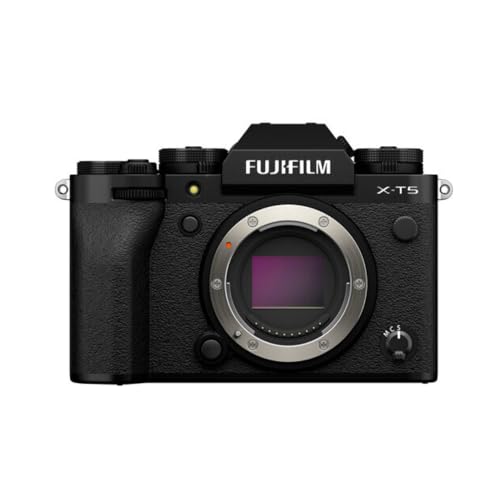
- The Fujifilm X-T5 is the compact-class printing flagship: a high-resolution sensor, superb lenses, and film simulations that print beautifully.
- The Fujifilm X100VI puts similar resolution behind one excellent fixed lens — the large-print camera you actually carry daily.
- The Sony RX100 VII is the pocket exception: remarkable resolution and a sharp zoom in a coat-pocket body.
- The Canon EOS R50 is the accessible entry to large printing, with Canon colour and a growing lens system.
- The Nikon Z50 II pairs a sharp sensor with Nikon’s lens lineage for the detail-minded printer.
- The OM SYSTEM OM-5 Mark II uses computational tricks and superb small lenses to print beyond its sensor’s size.
The pattern across the six: resolution opens the door, but lenses, light, and discipline walk through it — each review names which of those its pick supplies and which it demands from you.
In this guide
Quick Picks
| Badge | Pick | Why it stands out |
|---|---|---|
| Best for Large Prints Overall | Fujifilm X-T5 | High-resolution sensor, deep lens bench, and print-loving colour science. |
| Best Carry-Everywhere Printer | Fujifilm X100VI | Flagship resolution behind one superb fixed lens, in a daily-carry body. |
| Best Pocket Printing Camera | Sony RX100 VII | Real resolution and a sharp zoom from a true pocket camera. |
| Best Accessible Entry | Canon EOS R50 | Friendly body, Canon colour, and room to grow into serious printing. |
| Best for Detail Purists | Nikon Z50 II | A sharp, clean sensor with access to Nikon’s exacting lenses. |
| Best Small-System Printer | OM SYSTEM OM-5 Mark II | Computational resolution modes and jewel-like lenses in the smallest system. |
Read the badges as workflow promises. The Fujifilm pair promise colour and resolution together; the Sony promises that the printing camera can live in a pocket; the Canon and Nikon promise systems to grow into; the OM promises that small can be clever. All six promises were tested at the printer, not the pixel-peeper’s monitor, because the print is where this guide’s readers live.
How We Chose These Picks
Every candidate was printed. Not reviewed on a monitor and extrapolated — printed, at genuinely large sizes, from real scenes: landscapes with fine foliage, architecture with brick and signage, portraits with hair and fabric, low-light scenes where noise goes to be discovered. Prints were judged at the distances walls impose — the admiring step back and the guest’s close lean — and cameras whose files dissolved at the lean were excluded however impressive their screens looked.
Lenses were treated as half the camera, because at large sizes they are more than half. Each system’s available glass was considered: a high-resolution sensor behind a mediocre lens prints mediocrity at scale, so picks were required to have at least one genuinely sharp lens route — the fixed-lens pair by design, the system cameras through their mounts’ best small optics. Kit zooms were printed too, and the reviews report honestly where the kit lens is the ceiling and where the sensor is waiting for better glass.
Cropping headroom was tested as a printing feature in its own right. Large-print photographers crop — to the composition the scene deserved, to the aspect the wall demands — and a file that survives a confident crop and still prints large doubles a camera’s practical resolution. Stabilisation and low-light cleanliness were scored for the same reason: the printable file is the sharp, clean one, and the sharpest sensor in a shaking hand prints its shake at poster size.
Finally, carry was weighed as a printing virtue. The large print begins as a carried camera at a fleeting scene; the picks here are the compact class’s resolution leaders precisely because a printing camera that stays home prints nothing at all.
What Do the Best Compact Digital Cameras for Large Photos Need Beyond Megapixels?
They need lenses that resolve what the sensor records. Resolution is a chain with the lens as its first link: light passes through glass before it ever meets a pixel, and soft glass writes a soft file no sensor can sharpen honestly. This is why the fixed-lens picks — whose optics are designed for exactly one sensor and one focal length — punch so hard in this category, and why the system picks are recommended with their sharp lens routes named rather than assumed.
They need clean files at the sensitivities real scenes impose. Large prints magnify noise as faithfully as detail, and the dawn landscape, the evening interior, and the shaded forest are where printing photographers actually work. A sensor’s behaviour as sensitivity rises — whether its noise stays fine and filmic or breaks into blotches — decides how much of the day is printable, and the reviews grade that behaviour as a printing specification, not a laboratory one.
They need colour that survives enlargement with its dignity. Skin at poster size, skies with gradients, the subtle tones of stone and foliage — banding, blotching, and heavy-handed processing all announce themselves at scale. And they need the photographer’s technique as a partner: the tripod’s patience, the aperture chosen for the lens’s sharp heart, the exposure that protects the file’s extremes. The guide’s craft sections teach that partnership, because at large sizes the camera and the photographer print together or fail together.

Fujifilm X-T5 — Best for Large Prints Overall
The X-T5 is the compact class’s most complete printing instrument. Its high-resolution sensor — the flagship resolution of its format — records the fine detail large prints are made of: foliage that stays individual, stone that keeps its grain, fabric that holds its weave at the guest’s close lean. Around that sensor sits a photographer’s body in the classic mould: dials for the exposure triangle, a tilting screen, weather resistance for the dawns and drizzles where printable light lives, and in-body stabilisation that keeps hand-held files sharp enough to enlarge.
The lens bench completes the argument. Fujifilm’s prime lenses are, as a family, exactly what a high-resolution sensor begs for — sharp to the corners, characterful without being soft — and the system’s zooms include genuinely printing-grade options. A photographer can build from one superb prime outward, and every lens added raises the prints rather than merely widening the bag. The film simulations, meanwhile, are a printing asset disguised as a toy: colour palettes designed with a century of film behind them, which print with a coherence that saves hours of editing and gives a wall series a unified voice.
Its demands are honest ones. High resolution is unforgiving — sloppy focus and camera shake print at exactly the size you chose — and the files are large, the discipline real. The body, while compact beside traditional cameras, is a system camera with a system’s appetite for lenses and budget. For the photographer whose destination is the wall, it is the strongest first link this guide can recommend.
- Sensor: flagship resolution for its format
- Lenses: a prime family built for resolution
- Colour: film simulations that print coherently
- Body: dials, weather resistance, in-body stabilisation
- Files: RAW depth for serious print preparation
Strengths
- Detail that survives the close lean at large sizes
- Lens system that grows the prints, not just the kit
- Colour science that shortens the road to the wall
Trade-offs
- Resolution punishes sloppy technique visibly
- System appetite — lenses are an ongoing investment
- Large files demand storage and processing room
Best for: serious printers building a compact system. Not suited for: casual shooters or the technique-averse.

Fujifilm X100VI — Best Carry-Everywhere Printer
The X100VI makes the large-print argument from the opposite direction: not a system to build, but a single, perfected pairing of high-resolution sensor and fixed lens that lives on your shoulder every day. The lens was designed for this sensor and no other, and it shows in the prints — corner-to-corner integrity at sizes that embarrass system cameras wearing their kit zooms. Scenes that become wall pieces are rarely scheduled; they happen on walks, trips, and ordinary Tuesdays, and this is the printing camera that is present for them.
Its printing virtues compound quietly. The leaf shutter and built-in neutral-density filter open creative doors in bright light; the hybrid viewfinder serves both the rangefinder romantic and the precision composer; the film simulations give prints their finished colour at the moment of capture. In-body stabilisation steadies the hand-held dawn shot. And the resolution provides the crop headroom that fixed-lens photography lives by — compose with your feet, refine with the crop, and still print large from what remains.
The boundaries are the fixed lens’s own: one focal length, chosen for you, forever — wide-normal, classic, and wrong for the distant detail. Photographers who print telephoto subjects need a system camera and should take this guide’s other Fujifilm or the Nikon. And its desirability keeps it scarce in shops, a frustration this guide records without pretending it changes the verdict. For the one-camera printer, it is the most seductive instrument here.
- Sensor: flagship-class resolution, as the X-T5
- Lens: fixed, designed solely for this sensor
- Tools: leaf shutter, built-in ND, hybrid viewfinder
- Colour: film simulations as print palettes
- Carry: a daily shoulder camera, not a kit
Strengths
- Prints that shame kit-zoom systems at size
- Present for the unscheduled scenes that become art
- Crop headroom rescues fixed-lens compositions
Trade-offs
- One focal length for every subject, forever
- Popularity makes it genuinely hard to buy
- No system to grow — the ceiling is built in, high but fixed
Best for: one-camera printers and daily carriers. Not suited for: telephoto subjects or system builders.

Sony RX100 VII — Best Pocket Printing Camera
The RX100 VII should not, by the usual physics of small cameras, be in a large-print guide at all — and yet its prints keep passing the close-lean test that eliminates bigger rivals. Its one-inch sensor carries a resolution that, paired with a genuinely sharp zoom lens, produces files that enlarge with composure: landscapes with real texture, architecture with its lines intact, portraits that hold their detail at sizes guests refuse to believe came from a coat pocket. It is the printing camera for the photographer who refuses to carry a printing camera.
The zoom is its printing superpower. Large-print composition is often a matter of excluding — the lamppost, the stranger, the dull foreground — and the Sony’s range lets the photographer frame the print at capture rather than cropping toward it, spending the whole file on the final image. Its autofocus, the fastest company in this guide, serves the printable moment: sharpness at large size begins with focus placed exactly, and the Sony places it relentlessly, on faces, eyes, and moving subjects alike.
Know the honest ceilings. The smaller sensor’s low-light files grain sooner than the Fujifilm pair’s — dusk prints are its frontier, daylight its kingdom. Battery life across a printing photographer’s long day asks for spares. And its highest-resolution talents reward good light and steady hands more than forgiving ones. Within those borders, it performs the guide’s favourite magic trick: the wall print that makes visitors ask what camera made it, and the pocket it came from.
- Sensor: high resolution for the one-inch class
- Lens: sharp zoom for framing the print at capture
- Focus: relentless face and eye tracking
- Size: true pocket carry, everywhere
- Ceiling: low-light grain arrives earlier than larger sensors
Strengths
- Wall-worthy prints from a coat pocket
- Zoom spends the whole file on the composition
- Focus accuracy that protects enlargement
Trade-offs
- Dusk and interiors grain sooner
- Spare batteries for long days
- Small controls reward setup, not improvisation
Best for: travellers and minimalists who print seriously. Not suited for: low-light print specialists.

Canon EOS R50 — Best Accessible Entry
The R50 is where large printing stops being an elite pursuit. It is a friendly, compact interchangeable-lens body — the kind a newcomer operates confidently in an afternoon — whose sensor nonetheless records the clean, detailed files that respectable wall prints are made from, in Canon’s famously kind colour. Skin tones at poster size are where cheap files confess; the Canon’s rendering of people is the most forgiving in this guide, which makes it the family printer’s quiet champion: the grandchildren, at size, on the wall, looking like themselves on a good day.
Its system is the investment logic. Canon’s RF lens mount spans from the kit zoom the camera arrives with to genuinely superb glass, and the R50 grows along that road without a body change: add a sharp prime and the prints step up a class overnight. The autofocus — subject-detecting, eye-finding, inherited from cameras far above its station — protects the sharpness that enlargement audits. For the photographer beginning a printing life, no pick here offers a longer runway at a gentler start.
The kit lens is the honest ceiling on day one: competent, and the first upgrade a serious printer will make. The body has no in-body stabilisation, leaning on lens stabilisation and shutter discipline, and its weather manners are domestic rather than expeditionary. None of that dims its role. It is the door into large printing that the widest range of photographers will actually walk through, and the prints on the other side of it are real.
- Sensor: detailed, clean files for its class
- Colour: Canon’s skin-tone kindness at poster size
- System: RF mount from kit zoom to superb glass
- Focus: modern subject and eye detection
- Growth: the lens upgrade path is the print upgrade path
Strengths
- Large printing made genuinely accessible
- People print beautifully in its colour
- A system that grows for years
Trade-offs
- Kit lens is the starting ceiling, not the sensor
- No in-body stabilisation
- Domestic weather manners
Best for: beginners and family printers entering the craft. Not suited for: expedition conditions or instant perfection.

Nikon Z50 II — Best for Detail Purists
The Z50 II speaks to the printer who reads a landscape the way proofreaders read — closely, and with love for the exact. Its sensor renders detail with a clean, unexaggerated honesty, and behind Nikon’s Z mount sits a lens lineage with a reputation for optical exactness that large prints cash in full: edges that stay edges, fine textures that survive the journey from file to wall without turning to watercolour. For architecture, landscape, and the documented world, it is the purist’s compact system.
The body’s modernisation serves the print quietly. Autofocus with subject detection places focus where enlargement will audit it; the electronic viewfinder is a precision instrument for composing the frame the wall will receive; and the handling — a proper grip, considered controls — suits the deliberate, tripod-friendly pace of printing photography. Nikon’s colour is the neutral party in this guide: accurate, restrained, and ready for the editor’s hand rather than pre-decided by the camera’s personality.
Its character asks for its owner to match it. There is no in-body stabilisation, so the sharpness discipline — stabilised lenses, support, shutter care — is the photographer’s to keep. The lens range for its format is growing rather than complete, and the system’s best printing glass is an investment made stepwise. Purists will recognise all of this as the normal price of exactness, and pay it gladly for prints that reward the closest lean in the room.
- Sensor: clean, honest detail rendering
- Lenses: Z-mount optical lineage for exact prints
- Viewfinder: precision composing for the wall frame
- Focus: subject detection that protects sharpness
- Colour: neutral and editor-ready
Strengths
- Fine detail survives enlargement intact
- Handling suits deliberate print photography
- Neutral files reward skilled editing
Trade-offs
- No in-body stabilisation — discipline required
- Format lens range still growing
- Best glass is a stepwise investment
Best for: landscape, architecture, and detail purists. Not suited for: casual hand-held shooting in poor light.

OM SYSTEM OM-5 Mark II — Best Small-System Printer
The OM-5 Mark II is the clever answer to the resolution question. Its Micro Four Thirds sensor is the smallest in this guide, and by the megapixel arithmetic alone it should sit at the back — until its computational modes take the stand. Its high-resolution composite mode combines multiple captures into a single file of far greater resolution, shot hand-held or tripod-mounted, and for the still subjects printing photographers love — landscapes, architecture, still life — the resulting prints stand comparison with cameras of twice the sensor’s acreage. Intelligence, applied to physics, at poster size.
The system’s other virtues are a printer’s practical joys. The lenses are small, superb, and comparatively affordable — the format’s decades of refinement have produced primes that resolve beautifully and weigh almost nothing, so the whole printing kit travels in a small bag. In-body stabilisation is the family’s famous strength, steadying hand-held work to speeds that keep files crisp. Weather sealing suits the dawn-and-drizzle patrol. And the computational toolkit extends further — live composite exposures for night scenes, focus stacking for macro depth — each one a route to a print other compacts cannot attempt.
The boundaries are physics reasserting themselves politely. Moving subjects defeat the composite modes, which need a still scene across their captures; low-light files from the smaller sensor grain earlier than the APS-C picks’; and the deepest background blur is not this format’s native language. For the still-world printer who travels light, though, it is the guide’s most ingenious instrument — proof that the large print rewards the clever as well as the large.
- Resolution: composite high-res modes multiply detail
- Lenses: small, superb, comparatively affordable primes
- Stabilisation: class-famous in-body steadiness
- Tools: live composite and focus stacking for prints
- Build: weather-sealed, genuinely compact system
Strengths
- Prints beyond its sensor size on still subjects
- The lightest serious printing system here
- Computational modes open otherwise impossible prints
Trade-offs
- Composite modes need still scenes
- Low-light grain arrives earlier
- Shallow depth of field is not its language
Best for: landscape and still-life printers who travel light. Not suited for: moving subjects at size or low-light work.
How Large Can You Honestly Print From a Compact File?
Larger than the megapixel panic suggests, smaller than the marketing promises — and the honest answer is an arithmetic of distance. A print viewed from across a room can be enormous from a modest file, because the eye’s resolving power falls with distance; the same file at arm’s length is audited mercilessly. The working rule the guide’s test prints support: the picks here print beautifully at the sizes homes actually hang — the large frame over the sofa, the poster’s expanse — from their full files in good light, and the high-resolution Fujifilm pair and the OM’s composite mode extend that comfort further, into exhibition territory for still subjects.
Three multipliers decide your personal ceiling more than the sensor’s headline. Light first: a file made in good light at low sensitivity enlarges a full class beyond the same camera’s dusk file. Lens second: the sharp prime’s print outruns the kit zoom’s from the same body, visibly, at size. Technique third: the supported, carefully focused, correctly exposed frame prints larger than the grabbed one, every time. A photographer who masters the three multipliers with the Canon or Nikon will out-print a careless owner of the flagship Fujifilm — a truth the guide states because its readers deserve the real hierarchy.
Cropping is the tax to budget honestly. Every crop spends resolution, so compose at capture as if the print were already framed: fill the frame with the subject, exclude at the edges with your feet and your zoom, and let the crop be a refinement rather than a rescue. The X100VI’s and X-T5’s resolution exists partly to forgive the crops fixed-lens and fast-moving work require — spend that forgiveness knowingly, not habitually.
Which Print Craft Turns a Good File Into a Wall Photograph?
Proof small before you print large. A modest test print reveals the file’s true sharpness, its colour behaviour on paper, and its shadow and highlight manners at a fraction of the large print’s cost — and the corrections it teaches, applied to the big version, are the difference between a poster and a photograph. Soft-proof in the editor against the paper’s profile where your printer or lab provides one; paper is not a screen, and its whites, blacks, and saturation all speak a slightly different language that the proof translates.
Sharpen for the print, not the screen. Output sharpening is a distinct final step, calibrated to the print’s size and the paper’s surface — matte papers drink detail and want a firmer hand, glossy surfaces keep it and want restraint. Upscaling, when the file must stretch, belongs in modern dedicated tools rather than the editor’s default stretch, and it should be the last resort of a well-made file, not the plan. The picks here minimise the need: their files arrive at the printer with detail to spare, which is the entire reason they were chosen.
Choose the paper as part of the photograph. Matte and fine-art papers flatter landscapes and portraits with their softness and depth; glossy and metallic surfaces serve architecture, water, and the high-gloss modern interior. A series printed on one paper, in one size language, hung with consistent framing, reads as a body of work — and helping readers reach that coherence is the quiet ambition behind this guide’s colour notes on every pick.
How Should You Shoot Differently When the Wall Is the Destination?
Slow down by one deliberate notch. The print-bound frame deserves the supported stance or the tripod, the focus placed rather than trusted, the exposure checked at the edges where large prints confess their blown skies and blocked shadows. Use the aperture at your lens’s sharp heart — usually a stop or two down from wide open — rather than its extremes, and keep sensitivity at the floor the light allows, because the noise you ignore on a screen will introduce itself at poster size.
Shoot the frame wider than the crop by a breath, not a mile. A small margin protects against the aspect ratio the wall demands and the horizon’s degree of tilt, without spending the resolution a large print audits. Then review at full magnification on the spot — the compact screens here all allow it — because focus that misses by a whisper is invisible at capture size and undeniable at print size, and the scene in front of you is the only re-shoot that will ever be free.
Finally, keep the printing file sacred through the workflow: RAW where the pick offers it, edits on copies, exports at full resolution for the printer. The chain from sensor to wall has a dozen links, and the camera’s excellence — the subject of this entire guide — only pays out if the later links honour it. Print photographers are archivists by temperament; the file discipline is simply that temperament applied.
How Do You Choose Between the Fixed-Lens Pair and a System Body?
The choice is really about where your printing life will find its variety. The fixed-lens X100VI bets that your subjects live at one classic distance — the street, the journey, the room, the landscape’s near ground — and it perfects that bet: one lens, optimised absolutely, in a body that disappears into a day. Photographers whose walls fill from that territory will never feel the ceiling. The moment your printing subjects diversify — the distant ridge, the compressed portrait, the macro study — the bet expires, and no crop headroom, however generous, fully replaces the lens the scene required.
System bodies sell the opposite promise: the sensor’s resolution is a platform, and lenses are how it specialises. The X-T5 keeps Fujifilm’s colour and adds the mount; the Canon and Nikon trade a little of that colour personality for their own ecosystems’ breadth and their friendlier or more exacting handling; the OM trades sensor acreage for computational cleverness and the smallest glass of all. In every case the honest accounting is the same — price the system with the two lenses your printing actually needs, not the body alone, because the body-only figure is the one number in this guide guaranteed to grow.
A practical tiebreaker from the test prints: borrow or rent the focal length question first. Shoot your typical printing subjects for a weekend at the X100VI’s fixed view — a phone’s equivalent framing will do for the experiment — and count the frames that begged for a different lens. If the count is near zero, the fixed-lens camera’s perfection and simplicity will serve you for a decade. If the count climbs, buy the system and enjoy the climbing as the hobby working as intended.
What Does a Printing Workflow Cost Beyond the Camera?
Less than the camera, more than the beginner budgets — and it deserves a paragraph in a guide that prides itself on honest arithmetic. The recurring costs are test prints, the paper or lab charges for the real ones, framing, and the storage that high-resolution files accumulate. None of these is optional garnish: the test print is how the craft is learned, the frame is how the photograph is finished, and the archive is how the next decade’s prints become possible. A printing photographer should expect the output side to claim a steady, modest share of the hobby’s budget every year the walls keep filling.
The good news is that the compact class keeps its side of the bargain small. These bodies and their lenses undercut traditional printing systems in cost and in size, their files process on ordinary computers, and their running costs — batteries, cards — are household-scale. The photographers this guide serves are not running a studio; they are filling a home with their own work, and the economics of that ambition, camera and output together, are kinder now than at any previous moment in the medium’s history. That kindness is worth one more wall.
How Do Portraits and People Print From These Compacts?
People are the hardest test a large print sets, because the viewer knows the subject’s face better than any landscape’s. Skin at poster size forgives nothing: noise shows as texture that was never on the face, heavy sharpening writes a rind around every feature, and colour errors read as illness. The picks divide by their rendering philosophies. Canon’s colour science has built its reputation on exactly this examination, and the R50’s portraits print with a kindness that flatters without lying. The Fujifilm pair answer with their film simulations — palettes designed around skin for a century of portrait film — which give the large portrait a finished, editorial complexion straight from the file.
Depth is the portraitist’s second instrument, and here format physics speak plainly. The larger sensors of the Fujifilm, Canon, and Nikon picks separate a subject from a background at wider apertures than the Sony’s one-inch or the OM’s smaller format manage natively — though the OM’s fast primes and the Sony’s longer zoom settings both find their own routes to separation, and a step backward with a longer focal length remains the free technique every system owns. What matters for the print is that the separation be optical: software blur at poster size announces itself at the hairline, and guests lean in exactly there.
Focus discipline is the third leg, and it is absolute: at print sizes, the eye must be the sharpest thing in the room, because the viewer’s own eyes go there first and forgive nothing they find wanting. The eye-detection systems across these picks — Sony’s relentlessness, Canon’s and Nikon’s modern subject intelligence, Fujifilm’s improving craft — were scored in this guide as printing features for that reason. A portrait session for the wall deserves the same rigour as a landscape: place the focus, verify at magnification, and only then trust the frame to the printer.
Which Subjects Should You Avoid Printing Large From a Compact?
Honesty about the frontier protects the walls from disappointment. Fast action at distance — the bird in flight, the far end of the stadium — spends resolution on cropping that compact files cannot spare, and the prints soften into suggestion. Deep low light pushed to its sensitivity ceiling prints its noise as a visible grain field; some photographers embrace that as atmosphere, and they are welcome to it, but it should be a choice, not a surprise discovered at the framer’s. Heavily backlit scenes with the extremes clipped at capture have nothing left for the printer to recover, at any size.
The subtler frontier is the mediocre middle: the scene shot at the kit zoom’s weakest reach, in flat light, with focus approximately placed, will print large as a large mediocrity, and no megapixel count rescues it because nothing was ever wrong with the file except the photograph. This guide’s recurring hierarchy — light, lens, technique, then resolution — is the map of that frontier. Stay on the right side of it and the compact class prints with a confidence that surprises everyone except the photographers who have been doing it for years.
When a beloved file falls short of the intended size, print it smaller and frame it better rather than stretching it into dishonesty. A modest print, beautifully made and honestly sized, honours the scene; an overreached one apologises for it. The wall is a long-term relationship, and it rewards the photographer who respects what each file can truly give.
How Do You Hang a Series So the Prints Work Together?
A wall of prints is a composition in its own right, and the compact photographer’s series deserves the same deliberation as the frames themselves. Begin with the anchor: the largest, strongest image placed where the room’s sightlines land, at the eye level of a standing viewer, lit by the room’s best light rather than its leftover wall. Build outward in a rhythm of scale and subject — the wide landscape answered by the intimate detail, the colour piece rested by a quieter neighbour — and keep frames, mats, and spacing in one consistent language, because the eye reads inconsistency as carelessness before it reads any individual photograph.
Colour coherence is planned back at the camera, which is why this guide noted each pick’s palette so carefully. A series shot across a season on the Fujifilm simulations, or within Canon’s family warmth, or Nikon’s neutral discipline, arrives at the wall already harmonised; a series assembled from five cameras’ five personalities asks the printer to spend hours reconciling what consistency would have given free. This is a genuine argument for committing to one of these systems as your printing instrument rather than borrowing across them — the wall rewards loyalty in a currency the spec sheet cannot denominate.
Live with the arrangement before it becomes permanent: tape the paper outlines, or pin the test prints, and let a week of mornings judge what the hanging afternoon could not. Prints reveal their relationships slowly — the one that shouts, the pair that rhyme, the quiet frame that turns out to be the room’s favourite. The final hanging, when it comes, should feel inevitable, and the photographs — made on cameras small enough to be everywhere — will look as if the room had been waiting for them.
What Should Your First Three Large Prints Be?
Choose them as teachers, because that is what they will be. First, the landscape you know best — the view you can revisit — printed at your intended working size: it teaches the chain end to end, from your light and lens through the proof to the paper, with the mercy of a re-shoot if the lesson demands one. Second, a portrait of someone patient, printed for their wall as much as yours: skin, eyes, and the gift’s deadline will teach colour and focus discipline faster than any landscape, and the recipient’s delight is the craft’s best fuel. Third, the difficult one you cannot stop thinking about — the night street, the storm coast, the interior’s mixed light — because its proof will show you your system’s true frontier and set your next season’s learning.
Print all three before buying anything else. The urge to solve printing with purchases is the hobby’s most expensive reflex, and three honest prints will tell you whether your frontier is the lens, the light, the paper, or the photographer — knowledge no review, including this one, can hand you. The six cameras here were chosen so that the answer is rarely the camera. Begin the wall, and let the wall do the teaching.
Comparison Table
| Pick | Resolution route | Lens story | Low-light prints | Best print subjects |
|---|---|---|---|---|
| Fujifilm X-T5 | High-resolution sensor | Deep prime bench | Strong | All subjects, exhibition ambition |
| Fujifilm X100VI | High-resolution sensor | One perfected fixed lens | Strong | Street, travel, daily scenes |
| Sony RX100 VII | High for one-inch class | Sharp zoom, pocket body | Moderate | Daylight travel and landscape |
| Canon EOS R50 | Modern APS-C detail | RF system, grows stepwise | Good | Family and people at size |
| Nikon Z50 II | Clean APS-C detail | Z-mount exactness | Good | Landscape and architecture |
| OM SYSTEM OM-5 Mark II | Composite high-res modes | Small superb primes | Moderate | Still scenes, travelled light |
Which Mistakes Shrink a Print?
The first is judging the file on a phone. A photograph that glows at six inches can dissolve at sixty, and the only honest preview of a large print is a large proof or a full-magnification inspection of the regions that matter — the eyes, the foliage, the stone. The second is the rescue crop: composing loosely because resolution exists, then spending half the file to find the picture, and printing the remainder at a size it can no longer support. Resolution is a budget; the capture should spend it on the subject, not on the photographer’s indecision.
Third is printing the screen edit unchanged — the saturation and contrast that delight on a backlit display turn coarse on paper, and the shadows that glowed go to mud. The proof exists to catch exactly this translation. Fourth is neglecting the lens in the budget: the system buyer who spends everything on the body and prints through the kit zoom has capped the entire enterprise at its first link. And fifth is the rushed exposure — the blown sky over the once-a-decade landscape — which no resolution, however heroic, can print its way out of.
How Do You Build a Print-First Compact Kit?
Start with the body whose colour and handling you love, because you will live with both for years, and one genuinely sharp lens — the fixed-lens pair make this decision for you, which is their hidden economy. Add support before glass: a travel tripod and a remote or timer habit raise every print the kit will ever make. Add the second lens only when a subject you print keeps asking for it — the wider landscape, the tighter portrait — and let the wall, not the catalogue, write the shopping list.
Complete the kit at the output end. A relationship with a good lab, or a printer whose papers you have proofed and learned, is equipment in every practical sense; budget for test prints as a recurring cost of the craft, the way film photographers budgeted for contact sheets. The photographers whose walls fill with work are not the ones with the most resolution — they are the ones whose chain from scene to frame has no neglected link, and this guide’s six picks are simply the strongest first links the compact class offers.
Final Recommendation
For the printer building seriously, the X-T5 is the compact class’s most complete answer — resolution, lenses, colour, and craft in one system. For the printer who carries one camera everywhere, the X100VI turns daily life into wall candidates with a single perfected lens. The RX100 VII remains the miracle of the pocket, the R50 the welcoming door, the Z50 II the purist’s instrument, and the OM-5 Mark II the clever traveller’s multiplier. Choose by the scenes you actually print and the weight you will actually carry, then honour the choice with the proofing and discipline this guide describes — because a large photograph is never made by a camera alone, but no large photograph was ever made without one this good.
One last encouragement for the photographer hesitating at the threshold of their first large print: make it this month, at whatever size your best current file honestly supports, and hang it where you will see it every day. The first print teaches more than the next ten reviews, and its imperfections — and there will be some, as there are in every first print ever made — are not failures but tuition receipts. The cameras in this guide were chosen so that your second, fifth, and fiftieth prints keep rising from the same instrument. Begin with the wall you have, the light you love, and the file you cannot stop returning to; the rest of the craft assembles itself around that first frame.
Keep the receipts of the craft, too — the test prints, the marked proofs, the notes on what the paper did to the sky — in a folder beside the archive. A printer’s second year is built on the first year’s evidence, and the folder is how a hobby becomes a practice.
Frequently Asked Questions
How many megapixels do I really need for a large print?
Fewer than marketing suggests, provided the file is well made. Viewing distance governs everything: at the distances large home prints are actually viewed, the modern sensors in this guide — all comfortably into the twenties of megapixels and beyond, with the Fujifilm pair higher still — produce excellent results, and good light, a sharp lens, and careful technique each contribute as much as raw count. Buy for the whole chain this guide describes, not for the largest number on the box.
Can a compact really match a big camera for printing?
At the sizes and subjects this guide covers, the best compacts come remarkably close — the Fujifilm pair’s prints stand beside larger systems’ work on most walls, and the OM’s composite mode closes gaps that sensor size opens. Full-frame systems retain edges in extreme low light, ultimate resolution, and depth-of-field control. The compact’s counter-argument is presence: it is at the scene the big camera was left home from, and a printed photograph beats a hypothetical one every time.
Is the kit lens enough for large prints?
It is enough to begin, and the first ceiling a serious printer will meet. Kit zooms on the Canon and Nikon produce respectable prints in good light at moderate sizes; the step to a sharp prime is the single largest print-quality upgrade available to a system owner, larger than any body change. The fixed-lens Fujifilm and the Sony’s zoom were chosen precisely because their optics arrive printing-grade out of the box.
What subjects print best from compacts?
Daylight landscapes, architecture, street scenes, travel, and still life — the still, well-lit world where these sensors and lenses are at their strongest. Portraits print beautifully from the larger-sensor picks with their kinder rendering. The frontier is dim, moving, and distant: concerts, wildlife at range, and night sports ask for systems beyond this guide’s compact brief, and honesty about that frontier is part of choosing well.
Should I shoot RAW for large prints?
Yes, whenever the scene matters. RAW preserves the file’s full evidence — shadow and highlight detail, colour depth — that print preparation spends, and large prints audit exactly those reserves. The Fujifilm simulations offer a honourable exception for shooters who print their in-camera colour directly, but even there, the RAW file is the insurance policy. Storage is cheap; the unrepeatable dawn is not.
How should I store and back up files I intend to print?
Treat the printable file as the negative it is: two copies in two places from the day of capture, the RAW preserved untouched, and edits saved as versions rather than overwrites. Name by date and place so the archive stays searchable when the wall project arrives years later. Printing photographers lose more great photographs to housekeeping than to any technical failure — the card reused, the folder purged — and the discipline costs nothing but the habit. The cameras here all transfer painlessly; make the transfer part of the shoot day, not a someday task.
Related Guides
Printers who shoot the shoreline should pair this guide with the best compact digital cameras for beach; the same Fujifilm and Sony bodies are assessed as companions in the best compact cameras for street fashion; and landscape specialists will find the scenic treatment in the best compact cameras for landscapes.


