kajuandouglas.com is reader-supported. When you buy through links on our site, we may earn an affiliate commission.
Where to Buy
The best compact cameras for close up photos are decided by a number most buyers never look at: the minimum focusing distance, and what the lens is actually doing when it gets there. A camera that focuses three centimetres from a flower is playing a different sport from one that gives up at thirty, no matter how impressive the second camera’s sensor is. Close-up photography is a world of working distances measured in finger-widths, of depth of field so thin that a bee’s eye can be sharp while its wing dissolves, and of light that behaves strangely when the lens itself is close enough to shade the subject. This guide ranks six compacts by how honestly and how beautifully they work in that small world.
The subjects are everywhere once you start seeing them: dew on a spider’s web, the gears of a watch you are selling, a child’s hands shelling peas, the label on a bottle of wine, frost feathers on a window. Some of these picks are true macro instruments that focus closer than your fingertip; others are general compacts whose close focus is a pleasant sideline, and the guide distinguishes the two without mercy. Lighting gets its own attention throughout, because at close range the photographer’s real craft is not focusing — modern autofocus handles that — but feeding light into a space the camera body itself is busy shadowing.
Close-up work also changes the photographer’s relationship with time. These are not decisive moments seized at speed; they are small arrangements negotiated with light, breeze, and subject. A compact suits the negotiation because it asks so little of the scene — no tripod forest, no lens changes, no bag of apparatus between you and the windowsill. The six cameras below were chosen partly for that lightness of footprint: each can be working a subject within seconds of the idea arriving.
A word on honesty in this category. Manufacturers quote close-focus distances at the wide end of a zoom, where magnification is weakest, and the resulting “macro” can be little more than an ordinary snapshot taken nearby. True close-up power is magnification — how large the subject lands on the sensor — and this guide judges picks by the size of the world they can fill a frame with, not by the brochure distance alone.
Key Takeaways
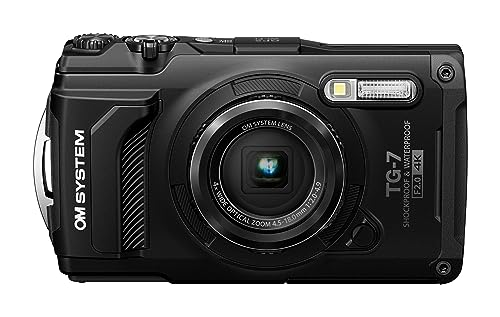
- The OM SYSTEM Tough TG-7 is the close-up specialist outright: its microscope mode focuses about a centimetre from the subject and stacks focus in-camera.
- The Canon PowerShot G7 X Mark III pairs close wide-angle focus with the fastest lens here, which matters when close subjects sit in dim rooms.
- The Sony RX100 VII focuses close at the wide end and brings serious autofocus tracking to small moving subjects like insects.
- The Sony ZV-1F is built for showing objects to an audience — product showcase focus and instant background softening for sellers and demonstrators.
- The Fujifilm X100VI is no macro camera, but its high-resolution sensor lets patient shooters crop into close detail with quality to spare.
- The Ricoh GR IIIx (prose-only here) offers a true macro mode in a pocket body for street shooters who find their close-ups while walking.
Notice the divide running through the list: two cameras were designed with close work near the centre of their purpose, and four discovered it along the way. If close-ups are your main photography, buy from the first group. If they are a delightful sideline to travel, family, or street work, the second group serves you without asking you to carry a specialist.
In this guide
Quick Picks
| Badge | Pick | Why it stands out |
|---|---|---|
| Best True Macro | OM SYSTEM Tough TG-7 | Microscope mode focuses almost at the front element and stacks depth of field automatically. |
| Best in Low Light | Canon PowerShot G7 X Mark III | Close focus plus a fast lens for indoor details, food, and crafts in ordinary room light. |
| Best for Moving Subjects | Sony RX100 VII | Tracking autofocus that stays with bees, butterflies, and restless small subjects. |
| Best for Showing Products | Sony ZV-1F | Product showcase focus jumps to whatever you hold up; background melts on request. |
| Best Crop-In Detail | Fujifilm X100VI | A high-resolution APS-C sensor that turns a modest close-up into a detailed crop. |
| Best Pocket Macro | Ricoh GR IIIx | A genuine macro mode in a coat-pocket body for close-ups found on the street. |
The badges are assignments, not rankings. Hand the TG-7 a dewdrop and the ZV-1F a product to demonstrate and each looks like the best camera in the world; swap their jobs and both look ordinary. Close-up photography punishes generalists less than most genres, but it rewards the right specialist extravagantly.
How We Chose These Picks
Testing close-up cameras means building a small world and interrogating it. Our subjects were chosen to expose specific weaknesses: a watch movement for fine detail and reflections, a white flower for petal texture that exposes lazy sharpening, a living spider for autofocus honesty, coins and stamps for flat-field evenness, and a dark wooden table of small objects for the low-light work most owners actually do at home. Each camera worked each subject at its closest focus, at its most flattering distance, and in the ordinary automatic mode a hurried owner would use.
Magnification was judged by what filled the frame, not by quoted distances. A ruler in the scene settled every argument: how many millimetres of the world does this camera actually capture across the frame at closest focus? That single measurement predicted real-world close-up satisfaction better than any other, and it is why the TG-7’s microscope mode — which captures a field only millimetres wide — sits in a class of its own here.
Light behaviour received equal scrutiny. At a few centimetres, a camera shades its subject, built-in flashes fire from almost on top of the subject, and autofocus lamps dazzle rather than help. We shot with window light, with a small LED panel, with ring-style lighting where a pick supports it, and in plain ceiling light, and noted which cameras helped and which merely coped. Focus stacking — where offered — was tested on subjects with real depth: a pine cone, a shell, a circuit board.
One further test deserves naming, because owners discover it within a week: how the camera behaves on a table. Close-up photography is full of improvised supports — books, mugs, folded cloth — and a camera that sits stably, whose screen tilts to a useful angle, and whose self-timer or remote release fires without a menu expedition earns a permanent place on the workbench. The flat-bottomed bodies here behaved like well-designed tools in that setting; the round ones needed a beanbag and a little patience, and the guide’s scores quietly reflect that domestic reality.
Handling at close range completed the picture. A close-up camera is used braced, crouched, and often one-handed at odd angles, so screen articulation, touch focus, and the ability to trigger the shutter remotely or by timer all counted. The picks below are the six that combined genuine close-focus ability with files worth keeping.
What Does Minimum Focusing Distance Really Tell You?
Less than you hope, and more than nothing. The quoted distance is measured from the sensor, not the front of the lens, so a camera quoting ten centimetres may leave only five between glass and subject — the working distance, which is the space your light and your subject’s comfort actually live in. Working distance is why a butterfly tolerates one camera and flees another, and why a watchmaker’s shot succeeds or fails on reflections. When you read the detailed reviews below, the working distance and the magnification together tell the true story; either number alone misleads.
Magnification deserves a plain explanation. A true macro lens reproduces a subject at life size on the sensor: a ten-millimetre insect becomes ten millimetres of image, filling much of the frame. Most compacts reach a quarter or a third of that at best, which still transforms a flower or a coin into a frame-filling subject. The TG-7’s microscope mode goes dramatically further, into territory normally reserved for dedicated macro rigs, which is precisely its party trick and its limitation — the world it shows is measured in millimetres.
One more subtlety separates quoted figures from real behaviour: many zoom compacts focus closest only at their widest setting, and stepping the zoom even slightly forward pushes the minimum distance out dramatically. Owners discover this as a mysterious refusal to focus on the very subject the brochure promised. The practical technique is to compose close-ups at the wide end and crop, or to choose a pick — the TG-7 in its microscope mode, the Ricoh in macro — whose close focus is a designed mode rather than a specification-sheet corner case.
Depth of field is the third leg. At close range it collapses to almost nothing, and no aperture fully rescues it, because stopping down at macro distances trades sharpness for diffraction. The modern answers are focus stacking — the camera shooting a bracket of focus points and merging them — and acceptance: choosing the plane of focus as a creative act, letting the rest of the subject melt. Both approaches appear in the picks, and the guide notes which camera supports which philosophy.

OM SYSTEM Tough TG-7 — Best True Macro
The TG-7 does something no other compact in this guide attempts: it treats the very small as its home territory. Its microscope mode focuses roughly a centimetre from the front element and magnifies the world to a degree that turns a grain of sand into a landscape and a watch’s balance wheel into architecture. Dewdrops become lenses, frost becomes a forest, the weave of a banknote becomes a textile study. For the naturalist, the hobbyist entomologist, the gardener who wants to see what is actually eating the roses, this camera opens a door the others cannot.
Crucially, it answers close-up photography’s oldest problem — depth of field measured in fractions of a millimetre — with in-camera focus stacking. Set it on a subject with real depth, a pine cone or a circuit board, and it fires a series of frames at stepped focus distances and merges them into one image sharp from front to back. The merge happens in the camera, in seconds, producing a photograph that would otherwise demand a rail, a computer, and an evening. A focus-bracketing mode serves shooters who prefer to stack manually with more control.
Light, the other macro problem, is addressed with accessories the camera was designed around: a ring light and a light-guide attachment that channels the built-in flash around the lens for even, shadowless illumination at microscope distances. Even without them, the camera’s small flash sits close to the lens axis, which at these distances is a virtue rather than a flaw. And because the body is sealed and armoured, the macro hunt can go where macro subjects live — under wet leaves, at pond edges, in the rain — without a thought for the camera’s safety.
The limits are the sensor’s size and the lens’s behaviour outside its close-up party tricks. As a general camera it is ordinary; as a microscope with a camera attached, it is unmatched at anything like its size and price class. Buy it for the small world and it will not disappoint you; the rest of its abilities are a bonus.
- Focus: microscope mode focuses about a centimetre from the subject
- Stacking: in-camera focus stacking plus focus bracketing for manual merges
- Lighting: supports ring light and flash light-guide accessories
- Body: sealed and armoured for pond edges, gardens, and wet work
- Character: extreme magnification; general photography is secondary
Strengths
- Magnification far beyond any other pick here
- Automatic focus stacking solves macro depth of field in-camera
- Lighting accessories designed for its closest distances
Trade-offs
- Small sensor limits quality in dim conditions away from macro
- Working distance is tiny — shy subjects will not tolerate it
- Zoom and general handling are utilitarian beside the others
Best for: macro explorers, naturalists, gardeners, and anyone fascinated by the very small. Not suited for: buyers wanting one camera that also excels at everything else.

Canon PowerShot G7 X Mark III — Best in Low Light
Most real-world close-ups are not taken in studios. They are taken at kitchen tables, in workshops, at restaurant tables and market stalls, in the ordinary dim light of indoor life — and that is where the G7 X Mark III’s fast lens turns close focus into a genuine advantage. It focuses down to a few centimetres at the wide end of its zoom, close enough to fill a frame with a plated dish, a piece of jewellery, a handwritten letter, or a child’s craft project, and its wide aperture keeps shutter speeds healthy and backgrounds soft when the room is lit by nothing more glamorous than a ceiling bulb.
The Canon’s colour is the other half of its close-up charm. Food looks appetising rather than forensic, skin tones in a close portrait stay kind, and wood, brass, and fabric — the materials of the indoor close-up world — render with a warmth that needs almost no editing. The flip-up screen helps more than expected at table height: you can hold the camera low over a dish or a workbench, compose from above your hands, and shoot without contorting.
Autofocus at close range is willing rather than brilliant; it will hunt occasionally in dim light, and the wise user taps the screen to place focus exactly on the eye of the figurine or the centre of the flower. Magnification is moderate — this is a close-up camera, not a macro instrument — and the TG-7 will always see deeper into the small world. But for the close-ups most people actually take, indoors and of human-scale subjects, the Canon’s combination of proximity, aperture, and colour is the most useful in this guide.
- Focus: a few centimetres at the wide end of the zoom
- Lens: fast maximum aperture for indoor and evening close-ups
- Screen: tilts up for table-height and overhead compositions
- Colour: warm, flattering rendering for food, crafts, and faces
- Character: a storyteller’s compact that happens to focus close
Strengths
- Fast lens keeps close-ups alive in ordinary room light
- Colour that flatters food and materials without editing
- Flip screen suits tabletop subjects and demonstrations
Trade-offs
- Magnification is modest — details, not true macro
- Autofocus can hesitate at close range in dim light
- No focus stacking for deep small subjects
Best for: food, craft, jewellery, and indoor detail photography in natural light. Not suited for: insects, extreme magnification, or technical macro work.

Sony RX100 VII — Best for Moving Subjects
Close-up subjects move. Bees work a flower with intent, butterflies test every landing, a kitten investigates the lens, and the photograph that matters is the one taken in the half-second of stillness inside the motion. The RX100 VII is the pick for that half-second: it focuses close at its wide end, and its autofocus — with subject tracking and eye detection that extends to animals — holds onto small moving subjects with a tenacity no other camera in this guide matches. Its rapid burst shooting turns a bee’s visit into a sequence from which one frame will be perfect.
The zoom deserves a close-up-specific mention, because it offers the opposite strategy to the TG-7: stand back and zoom in. At its longer focal lengths the working distance grows to something a shy subject tolerates — a butterfly keeps feeding, a lizard keeps basking — while the long lens compresses the background into a clean wash that flatters the subject. Magnification at telephoto is not extreme, but combined with the one-inch sensor’s clean files and the option to crop, it produces close-ups of creatures the microscope approach would simply frighten away.
The pop-up viewfinder helps outdoors, where close-up subjects live in bright gardens and screens wash out; bracing the camera against your face also steadies it, and steadiness at close range is worth more than any specification, because magnification amplifies shake exactly as it amplifies detail. Indoors, the tilting screen serves table work well. The Sony is not a macro camera and does not pretend to be — no stacking, no microscope mode — but as a hunter of living close-up subjects it is the most capable tool here.
- Focus: close at wide end, with class-leading subject tracking
- Strategy: long zoom for respectful working distance from shy subjects
- Viewfinder: pop-up electronic finder for bright gardens and stability
- Speed: rapid bursts to catch the still half-second in motion
- Character: a hunter’s compact for living, moving close subjects
Strengths
- Autofocus tracking that stays with insects and small animals
- Telephoto working distance keeps shy subjects relaxed
- Burst depth turns fleeting visits into selectable sequences
Trade-offs
- No stacking or microscope mode for static deep subjects
- Close focus only at the wide end, where magnification is gentlest
- Menus and small controls demand patience at awkward angles
Best for: garden wildlife, pets, and any close subject that will not sit still. Not suited for: static technical macro or focus-stacked product work.

Sony ZV-1F — Best for Showing Products
A huge share of the close-up photographs taken in the world are not art at all: they are demonstrations. A seller holds a watch to the lens, a crafter shows the stitch, a reviewer displays the port on the back of a gadget — and the camera’s job is to snap focus from the presenter’s face to the object and back, instantly, without hunting or drama. The ZV-1F was designed for exactly this transaction. Its product showcase mode, once enabled, shifts focus smoothly and decisively to whatever is held into the foreground, then returns to the face when the object leaves. Anyone who has watched a lesser camera hunt back and forth during a sales video will understand what a gift that certainty is.
Its close-up stills game is simpler but honest. The fixed wide lens focuses close enough to fill a frame with a held object — a phone, a plant cutting, a baked good — and a dedicated background-defocus control opens the aperture’s effect for you, melting a cluttered desk into softness so the object reads clearly. The ultra-wide view means the working distance feels intimate: your hands and the subject are both in the scene, which is precisely the grammar of demonstration.
Where it cannot follow the specialists is magnification and light. There is no stacking, no macro mode worth the name, and in dim rooms the small-aperture-at-telephoto problem does not exist only because there is no telephoto — the lens is fixed and wide. Sellers who light their desk properly, as sellers should, will find it the fastest route from object to listing photograph or demo clip in this guide. Naturalists should look elsewhere.
- Focus: product showcase mode snaps focus to held objects and back
- Lens: fixed ultra-wide, focuses close for held and desktop subjects
- Background: one-touch defocus control for clean product framing
- Screen: fully articulating for demonstrating to camera
- Character: a demonstrator’s tool for sellers, crafters, and reviewers
Strengths
- Showcase focus behaviour no other pick replicates
- Instant background softening keeps products readable
- Video and stills close-ups share one simple workflow
Trade-offs
- No true macro magnification for tiny subjects
- Fixed wide lens cannot isolate distant details
- Needs decent desk light for its best results
Best for: online sellers, craft demonstrators, and reviewers showing objects to an audience. Not suited for: nature macro or technical close-up work.

Fujifilm X100VI — Best Crop-In Detail
Let us be honest first: the X100VI is not a close-up camera by design. Its fixed lens focuses to a modest closeness and then stops, and no mode on its dial says macro. Its presence in this guide rests on a different strategy that experienced photographers use constantly — shoot the scene at a comfortable distance, then crop into the detail afterwards. With a high-resolution APS-C sensor behind a genuinely sharp lens, the centre of an X100VI frame contains a close-up waiting to be extracted: the texture of bark, the lettering on a gravestone, the pattern of a butterfly’s wing at respectful distance.
The strategy has real virtues. Working distance is generous, so light is never blocked and subjects are never crowded. The in-body stabilisation keeps the full frame sharp at the slow shutter speeds close work often demands, and sharpness is what cropping spends. The digital teleconverter options frame tighter views in-camera for JPEG shooters, while RAW files keep the whole sensor’s evidence for the crop you choose at home. Film simulations, meanwhile, give close subjects — rust, petals, old painted wood — a finished colour character straight from the camera.
Its limits are equally real. Cropping spends resolution and depth of field behaves like the wider shot it is, so the creamy subject isolation of a true macro at full magnification eludes it. Tiny subjects — a single ant, a watch jewel — stay tiny. Think of the Fujifilm as the close-up camera for photographers whose close-ups are details inside larger scenes, discovered rather than staged, and on those terms it is superb.
- Focus: modest close focus; strategy is crop-in from a sharp full frame
- Sensor: high-resolution APS-C with an exceptionally sharp fixed lens
- Stabilisation: in-body, protecting the sharpness cropping depends on
- Framing: digital teleconverter options for tighter in-camera views
- Character: a detail-hunter’s camera for texture inside larger scenes
Strengths
- Crops hold remarkable detail thanks to sensor and lens quality
- Comfortable working distance never shades or crowds subjects
- Colour simulations flatter texture, rust, petals, and old materials
Trade-offs
- No true macro magnification, however you approach it
- Background separation at close range is gentler than specialists’
- Cropping is a post-production habit some shooters dislike
Best for: texture, signage, craft details, and close detail inside travel scenes. Not suited for: insects, jewellery at full magnification, or stacked technical work.
Ricoh GR IIIx — Best Pocket Macro
The Ricoh earns its row by being the camera already in your coat when the close-up appears. Its macro mode focuses to a genuinely close distance — a handful of centimetres from the subject — which in a body this small and this quick is a small miracle of intent. Street photographers use it for the details that make a city legible: a menu’s handwriting, moss in a temple wall, the worn brass of a door handle, a single perfect pastry in a bakery window. The lens is sharp in the way Ricoh’s GR lenses are famous for being sharp, and the files reward the closeness.
What separates the Ricoh from the other generalists here is that its macro mode is a designed feature with real magnification, not a side effect of a wide lens focusing near. Subjects fill the frame honestly. Snap focus and the camera’s famous one-handed, from-the-hip operation extend to close work: you can brace, tap, and shoot in the time a lesser camera spends extending its lens. For found close-ups — the kind you cannot schedule — speed of readiness is a photographic quality in itself.
The compromises are the GR family’s known ones: no viewfinder, a fixed battery appetite that asks for spares on long days, and autofocus that prefers decisiveness to tracking. There is no stacking and no lighting ecosystem. It is a poet’s macro camera rather than an engineer’s — and for the close-ups that ambush you on a walk, poetry wins.
- Focus: dedicated macro mode focusing within a few centimetres
- Lens: fixed, famously sharp, honest magnification at close range
- Operation: one-handed snap shooting, ready almost instantly
- Body: coat-pocket small, the camera that is simply there
- Character: found close-ups and street detail, shot on instinct
Strengths
- Real macro ability in the smallest serious body here
- Instant readiness catches close-ups that cannot be staged
- Lens sharpness makes small subjects genuinely detailed
Trade-offs
- No viewfinder — bright sun close-ups are screen work
- Battery life asks for spares on long shooting days
- No stacking, no tracking autofocus for moving subjects
Best for: street detail, found textures, and walk-around close-up discovery. Not suited for: studio product work or living subjects that move.
How Do You Light a Subject That Is Centimetres From the Lens?
Close-up lighting begins with an embarrassment: at minimum focus, the camera and your hands shade the subject, the built-in flash fires from so close it can blow out the centre and leave the edges dark, and the obvious solution — move the light closer — is physically occupied by the lens. The working solutions are few and learnable. Window light from the side is the classic: soft, directional, and free, it models texture beautifully and never startles a living subject. Turn the subject, not the camera, to find the angle where the surface detail rakes into relief.
Artificial light wants diffusion and distance. A small LED panel held or mounted off to one side, softened with a sheet of tracing paper or a purpose-made diffuser, gives controllable, continuous light you can judge with your eyes before shooting — a decisive advantage over flash at close range, where every exposure is partly guesswork. The TG-7’s light-guide and ring accessories solve the geometry elegantly by wrapping light around the lens itself, which is why technical macro shooters prize them; the trade-off is flatness, since on-axis light erases the shadows that give texture its depth. Mix a whisper of side light into ring light and you get both legibility and modelling.
Reflectors are the third tool and the cheapest: a sheet of white card opposite the light bounces fill into the shadows and can rescue a backlit flower or a dark coin without any electronics at all. Gold or silver card warms or cools the fill. At close distances these small cards work at tabletop scale — a business card can be a reflector for a macro subject — and learning to prop one in place is the highest-value skill in this entire genre.
Finally, mind the colour of your light. Mixed sources — a warm lamp and a cool window — paint close subjects in confusing casts that are hard to repair. Choose one source, or gel the other to match, and set white balance deliberately rather than trusting the camera’s guess at distances where its reference patches are all subject and no scene.
How Does Working Distance Change the Photograph Itself?
Two cameras can produce the same magnification and utterly different pictures, because working distance shapes perspective. Shoot a flower from five centimetres and the background stretches away, the nearest petals loom, and the image feels immersive, almost underwater. Shoot the same flower from half a metre with a longer lens and the layers compress, the background simplifies into colour, and the image feels calm and graphic. Neither is better; they are different sentences about the same subject, and the picks in this guide lean different ways — the TG-7 and Ricoh toward immersion, the RX100 VII toward compression, the Canon somewhere companionable in between.
Working distance also decides what light can do. A subject a metre away can be lit with a panel, a window, or a reflector arranged at leisure; a subject under a lens at one centimetre accepts only light that arrives through the narrow ring around the glass, which is why the TG-7’s light-guide exists and why its microscope photographs have that distinctive even, specimen-like clarity. Photographers who love raking side-light and dramatic texture should keep some distance in their technique even when their camera offers more closeness.
There is an ethics of distance, too, with living subjects. A lens centimetres from a nesting insect or a resting butterfly is a presence in its world; the photograph is a transaction, and the subject’s calm is part of the price. The close-up photographers whose work endures tend to be the ones who leave subjects undisturbed — shooting at dawn when creatures are torpid, using longer working distances for wary species, and accepting the frame the subject permits rather than the frame the photographer imagined. This guide’s respect for the RX100 VII’s stand-off strategy is rooted as much in that courtesy as in sharpness.
Comparison Table
| Pick | Closest focus character | Stacking | Lighting help | Close-up role |
|---|---|---|---|---|
| OM SYSTEM Tough TG-7 | Microscope mode, about a centimetre | Yes, in-camera | Ring light and light guide options | True macro and nature detail |
| Canon PowerShot G7 X Mark III | A few centimetres at wide angle | No | Fast lens for available light | Food, crafts, indoor detail |
| Sony RX100 VII | Close at wide; telephoto distance strategy | No | Viewfinder for bright gardens | Moving insects and animals |
| Sony ZV-1F | Close for held objects | No | Defocus control for clean backgrounds | Product demonstration |
| Fujifilm X100VI | Modest; crop-in strategy | No | Stabilisation for slow speeds | Texture and detail in scenes |
| Ricoh GR IIIx | Dedicated macro mode, a few centimetres | No | Available light, snap operation | Street detail, found close-ups |
How Do You Take Sharper Close-Ups With Any of These Cameras?
Stabilise something — if not the camera, then yourself. At close range, a millimetre of sway moves the focus plane off an insect’s eye entirely. Brace elbows on the table or your knees, rest the camera hand against a solid edge, or use a beanbag under the lens. Where the subject allows it, a mini tripod transforms results, especially for the stacking and crop-in strategies that spend sharpness. Exhale, then shoot, the way marksmen learn; it sounds theatrical and it works measurably.
Focus manually when the subject holds still. Autofocus at macro distances hunts through a deep range and often settles on the nearest petal edge rather than the intended heart of the subject. Touch-focus on the screen, then magnify the preview to check, or use focus peaking where offered. For the TG-7’s deepest work, let the stacking mode do what no single plane can. For everything else, choose the focus plane as the photograph’s sentence subject: the eye, the droplet, the hallmark stamp — one clear hero, everything else supporting.
Stop down less than instinct suggests. At close distances, depth of field is already tissue-thin and diffraction softens everything beyond a moderate aperture, so the middle apertures are usually the sharpest compromise. Raise ISO instead and accept a whisper of grain; a sharp, slightly grainy macro beats a soft, clean one every time. And shoot more frames than feels dignified — close-up photography has always been a numbers game played against sway, breeze, and subjects with their own agendas.
What About Close-Ups of Faces, Hands, and Pets?
Not every close-up is a beetle. Some of the most-loved close photographs are a grandmother’s hands kneading dough, a newborn’s fingers around a thumb, a dog’s nose investigating the camera. These subjects ask different things of a camera: gentle colour rather than forensic sharpness, autofocus that finds an eye and stays kind, and a lens that does not distort a face by looming too wide too close. For such work the G7 X Mark III is the warmest instrument in this guide, its moderate wide angle and forgiving rendering built for exactly the distance of an embrace.
Faces have a geometry rule worth learning: the closer and wider you shoot, the larger the nearest features grow, so a nose at ten centimetres from a wide lens becomes a landscape of its own. For flattering close portraits, step back and use a longer focal length — the RX100 VII zoomed partway, or the X100VI’s natural perspective — and let closeness come from framing rather than proximity. Hands are more forgiving and often more expressive: they carry rings, scars, work, and age, and they tolerate the dramatic near distances that faces refuse.
Pets split the difference. A sleeping cat is a still life that rewards the TG-7’s patience or the Ricoh’s quiet snap; an awake puppy is a sports event wearing fur, and only the Sony’s tracking autofocus keeps its eyes in the sharp plane as it lunges toward the interesting smell of your lens. In all these human-scale close-ups, the shutter’s discretion matters: silent or near-silent shooting keeps the moment unposed, which is why the leaf-shuttered Fujifilm and the quietly mannered compacts earn affection beyond their specifications.
Which Mistakes Spoil Close-Up Photographs?
The commonest is camera shadow: the photographer leans in, thrilled, and eclipses their own subject, then blames the exposure. Work with light from behind your shoulder or from the side, and check the subject’s brightness before composing. Second comes the breeze — outdoors, a flower on a stem is a sail, and the still moment must be waited for or the stem gently steadied with a spare hand or a stick. Photographers who rush outdoor macro come home with a library of almosts.
There is also the matter of the flash fired in hope. A built-in flash at macro distance, unmodified, produces a hard white core and black surroundings — the specimen-in-a-cave look that beginners mistake for a style. Either diffuse it with a scrap of tissue or a purpose-made diffuser, guide it like the TG-7’s accessories do, or turn it off and work with the light that exists. The one unforgivable option is firing it bare and wondering why every close-up looks like a police photograph of a flower.
Third, the cluttered background: at close range a bright twig or a pale stone behind the subject shouts louder than the subject itself. Move your viewpoint a few centimetres — at macro distances, tiny movements completely rebuild the background — until the subject sits against calm darkness or soft colour. And fourth, touching the subject with the lens’s shadow or the photographer’s breath: frost melts, webs tremble, insects leave. The TG-7’s extreme closeness is a power to be used with a sniper’s patience, not a tourist’s enthusiasm.
What Do Close-Up Files Need When You Edit Them?
Close-up files reward a light hand and punish a heavy one, because magnification enlarges editing artefacts exactly as it enlarges subjects. Sharpening is the first temptation and the first trap: a macro frame sharpened like a landscape turns petal edges into wire and insect hairs into static. Sharpen locally — the eye, the hallmark, the droplet’s rim — and leave the soft remainder soft, because that gradient from sharp to melting is the genre’s beauty, not its defect.
Colour needs similar restraint. Small subjects often carry saturated hues — beetle shells, flower hearts, enamel — that slide into garishness with a global saturation lift. Work the single colour channel instead, and watch white balance closely: at close range the camera’s automatic guess is easily fooled by a frame that is ninety percent petal. Photographing a grey card at your working distance, or setting a custom balance from the scene’s own neutral, repays the minute it costs every time you shoot under mixed indoor light.
Dust is the editor’s third lesson. At macro magnification, sensor dust and subject dust both announce themselves — the watch movement’s every speck is in the portrait now. Clean the sensor before important close work, brush subjects with a blower rather than a cloth, and accept a few minutes with a healing tool as part of the craft. The TG-7’s stacked files and the Fujifilm’s big crops alike benefit from this tidiness, and it separates considered close-up work from snapshots at every level of equipment.
How Should a Beginner Build a Close-Up Habit?
Start with the subjects that cannot run away and forgive everything: coins, stamps, shells, seed heads, the mechanical innards of anything broken and already sacrificed. Give yourself a month of these before judging your hit rate on living subjects; the still-life month builds the hands, and the hands are most of the craft. Still subjects let you learn the genre’s real curriculum — focus plane discipline, light placement, background control — at a pace where each failure teaches one clean lesson. A windowsill studio, with a sheet of dark card for a background and a white card for a reflector, has produced better macro education than any course.
Keep a ruthless notebook habit for the first season. Note the distance, the light direction, and what you intended to be sharp beside each keeper. Close-up photography’s disappointments are almost all repetitions of three errors — sway, shadow, and the wrong plane — and a notebook converts them from mysteries into a checklist you eventually stop needing. The TG-7’s data logging and the simple EXIF in every file here will reconstruct most of the technical half automatically; your job is to record the intention.
Then graduate to the garden at dawn. Cool insects, dew, and low raking light conspire to give beginners results that feel like sorcery, and the walk to the garden becomes a ritual worth having for its own sake. Shoot the same three subjects weekly across a season and watch your own seeing change: that series, more than any purchase, is the education. Every camera in this guide can carry a beginner through it; choose by the small world you most want to inhabit, and begin.
Final Recommendation
A closing thought on budget and patience: close-up photography is the genre least improved by spending and most improved by returning. The same garden, windowsill, or workbench photographed across a season teaches more than any upgrade, and the modest end of this list — the TG-7 above all — has carried professionals’ personal projects precisely because it removes excuses. Whatever you buy, give it a year of small subjects before judging either it or yourself.
Decide which small world is yours. If it is the living miniature world of gardens, ponds, and frost, the TG-7 stands alone — nothing else here focuses where it focuses or stacks what it stacks. If your close-ups are the indoor, human-scale details of food, craft, and objects in ordinary light, the G7 X Mark III’s fast lens and kind colour will please you most, while the RX100 VII is the hunter’s choice for subjects that move and the ZV-1F the demonstrator’s choice for subjects you sell. Choose the X100VI when close detail is one pleasure among many in a photographer’s day, and the little Ricoh when you want macro to live in your coat pocket, ready for whatever the street shows you.
Related guides
- Best Compact Digital Cameras for Large Photos: Resolution, Lenses, and Files That Print at Wall Size
Frequently Asked Questions
What is the difference between close-up and macro photography?
Strictly, macro means the subject is recorded at life size or larger on the sensor; close-up is everything nearer than ordinary photography but short of that mark. The vocabulary matters mainly when reading specifications: a camera advertising macro should be asked for its magnification, and a camera advertising only close focus should be asked how large a subject fills its frame — the two questions sort honest tools from brochure poetry faster than any review score. In practice the words blur, and what matters is magnification: how much of the frame your subject fills. Of this guide’s picks, only the TG-7’s microscope mode reaches true macro and beyond; the others deliver satisfying close-ups of larger small subjects.
Can I add close-up lenses or filters to these cameras?
Some compacts accept threaded adapters or magnetic close-up filters, and the TG-7’s accessory system is the most developed here. Screw-on close-up lenses trade edge sharpness for magnification and can be a cheap experiment. Check your specific model’s filter thread or adapter options before buying, and be wary of unbranded glass, which often softens the very detail you bought it to capture.
Why are my close-ups always soft in the middle of the subject?
Because depth of field at close range may be only a millimetre deep, so a subject with any roundness — a berry, a beetle, a ring — cannot be sharp throughout in one frame. Either embrace the single sharp plane as a creative choice, move back and crop, or use a stacking tool like the TG-7’s. Softness across the whole frame, by contrast, usually means sway or shutter speed, not focus.
Do I need a tripod for close-up photography?
For static subjects, a mini tripod or firm support improves results more than any camera upgrade, because it removes sway and frees you to arrange light and reflectors with both hands instead of donating one to the camera. For living subjects outdoors, support is less practical and shutter speed plus bracing matter more. Many close-up shooters carry a small beanbag, which stabilises a camera on walls, tables, and ground alike.
Which of these is best for photographing jewellery to sell?
For listing photographs, the TG-7’s stacking keeps a whole ring or brooch sharp, and its lighting accessories control sparkle and reflections. Add a small grey card to your kit for honest colour on metals and stones, shoot on a plain matte background that will not fight the piece, and clean every item with a blower before the session — at listing magnification, dust reads as damage and costs you buyer trust. For demonstration video and live selling, the ZV-1F’s showcase focus is unmatched. Many sellers use both approaches: stacked stills for the listing, the Sony for the presentation.
How close is too close for insects?
When your shadow or the lens disturbs them — behaviour changes before image quality does. Early morning, when insects are cool and slow, tolerates the closest approaches. Otherwise, the RX100 VII’s stand-back-and-zoom strategy respects the subject and still delivers the frame; a frightened subject photographs badly no matter the magnification.
Is a phone with a macro mode enough for close-ups?
For casual snaps of flowers and labels, often yes. Where a dedicated compact pulls away is control and repeatability: deliberate focus placement, stacking on the TG-7, tracking on the RX100 VII, lighting accessories, and files that survive printing. If close-ups are a hobby rather than an occasional tap, the difference shows within a week of shooting.
What close-up subjects suit each season?
Spring offers blossom, emerging insects, and rain-beaded new leaves; summer brings butterflies, garden detail, and long evening light for tabletop still life; autumn is the season of fungi, seed heads, and frost returning to edges; winter gives you ice crystals, window frost, and the indoor world of crafts, collections, and food. A close-up habit is one of the few photographic practices with no off-season, which is part of its hold on the people who take it up.
Related Guides
Gardeners and naturalists who find their subjects outdoors should also read our guide to the best compact cameras for backpacking, where weather sealing and trail carry take priority, and anyone whose close-ups are really landscape details in disguise will enjoy the best compact cameras for landscapes. If your small subjects are products destined for video, the best compact cameras for movies covers the moving-image side in depth.


