kajuandouglas.com is reader-supported. When you buy through links on our site, we may earn an affiliate commission.
Where to Buy
Filming is not videography with better catering. The best canon cameras for filming are judged by a different court than the ones that judge event coverage or vlogging: scripted scenes, deliberate light, performances that must match across takes, and footage destined for a colour grade rather than a same-day upload. A filming camera is a negative in digital form — it should capture the widest, flattest, most flexible material possible, behave predictably on a rig, and stay out of the way of the story being told in front of it.
Canon’s range serves the filmmaker at every scale of ambition. Dedicated cinema bodies carry the tools of the professional set; hybrid mirrorless bodies borrow most of that intelligence at a fraction of the ceremony; and the humble compacts earn honest work as second angles and rehearsal cameras. The ranking below weighs each body as a storytelling instrument: dynamic range for the grade, log profiles that hold skin under mixed light, recording endurance for the long take, and ergonomics for the small rigs independent filmmakers actually build.
Purchase through authorised dealers, and take rental houses seriously as part of the buying process — a weekend with a candidate body on a real short film teaches more than a month of reviews. Several picks below exist in this guide as prose-only mentions because they sit outside our verified link pool; they are included because a filming guide that hid Canon’s cinema line would be answering a question nobody asked.
Key Takeaways
- Filming rewards flexibility over convenience: log colour, dynamic range and rig-friendly bodies beat quick-share polish.
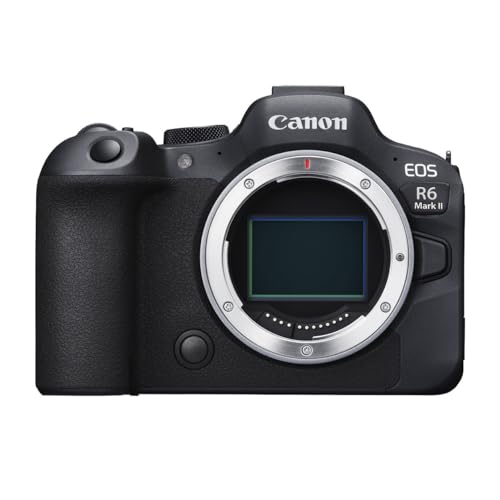
- The Canon EOS R6 Mark II is the linked hybrid most short filmmakers should build around — stabilised, low-light strong, gradeable.
- Canon’s cinema line, represented here prose-only by the EOS C70 and EOS R5 C, exists for shoots where the camera must never be the risk.
- The EOS R50 and R10 bring Canon colour and dependable autofocus to micro-budget sets that shoot fast and light.
- The PowerShot G7 X Mark III earns its row as a rehearsal and second-angle camera, not a primary filming body.
- Budget the rig, the light and the sound alongside the body; a film is made by the package, not the sensor.
A note on vocabulary, because it decides budgets: this guide uses filming to mean narrative and scripted work — shorts, features, music films with a story, branded pieces shot like cinema. If your work is capturing events as they happen, other guides in this series will serve you better. Filmmaking’s camera requirements flow from control: everything in front of the lens is arranged, so everything inside the camera must be arrangeable too.
In this guide
Quick Picks
| Badge | Pick | Why it stands out |
|---|---|---|
| Best Hybrid for Short Filmmakers | Canon EOS R6 Mark II | Log colour, in-body stabilisation and low-light strength for graded narrative work. |
| Best Dedicated Cinema Body (Prose-Only) | Canon EOS C70 | A cinema camera in a stills-sized body: internal ND, timecode manners, set discipline. |
| Best High-End Hybrid (Prose-Only) | Canon EOS R5 C | Two cameras in one shell — flagship stills and a true cinema menu for film days. |
| Best Micro-Budget Narrative Starter | Canon EOS R50 | Canon colour and trusted autofocus for first shorts shot fast and light. |
| Best Fast-and-Light Second Body | Canon EOS R10 | Speed and subject tracking for coverage angles on small sets. |
| Best Rehearsal and Scout Camera | Canon PowerShot G7 X Mark III | Blocks scenes, tests light and grabs second angles from a jacket pocket. |
The badges divide the table by production role rather than prestige. A short film might honestly employ three of these bodies at once — the hybrid leading, the compact scouting, the cinema body rented for the weekend the money scenes are shot. Read your own production’s shape in the table and the right row identifies itself.
How We Chose These Picks
Judging filming cameras required filming. Each candidate shot scripted material: a two-hander dialogue scene in a lamplit room, an exterior walk-and-talk at dusk, a kitchen scene under deliberately mixed light, and a night exterior lit by practicals alone. Footage went through an actual grade — not a filter, a grade — because a filming camera’s truth is only visible after its log files have been pushed, pulled and matched against each other.
Set behaviour scored as heavily as image quality. Reviewers noted how each body sat on a small rig, how its menus behaved at midnight on take nine, whether it overheated during a long dialogue pass, and how its files behaved in the edit: rolling shutter on pans, highlight roll-off on windows, skin under tungsten and LED mixed without apology. A body that produces beautiful clips and miserable shoot days was marked down, because films are made on shoot days.
Autofocus philosophy received special attention, since narrative work divides into two churches: the pull-focus tradition, where a human hand rides the lens, and the modern autofocus school, where Canon’s tracking has become good enough to trust with a walking close-up. Bodies were scored for serving both — clean manual focus aids for the traditionalists, calm subject tracking for the converts — because small crews increasingly shoot both ways on the same day.
What Does a Filming Camera Owe a Story?
First, it owes the grade its flexibility. Narrative footage is rarely finished in camera; it is finished weeks later, when the colourist shapes the lamplit scene and the dusk exterior into one emotional weather. Log profiles — flat, wide-gamut recordings that look grey and lifeless on the monitor — exist to preserve that future freedom. Every serious pick in this table offers Canon Log in some form, and the detailed reviews treat its quality as a headline feature, because for filming, it is one.
Second, it owes the set its predictability. A filming body must deliver the same exposure behaviour, the same colour, the same file quality on take one and take eleven, in the morning’s cool and the afternoon’s heat. Recording limits, thermal manners and battery discipline therefore matter more here than in any other guide in this series: a camera that stops during the performance of the day has not malfunctioned, it has vandalised the production. Endurance notes appear in every review below for exactly this reason.
Third, it owes the crew its ergonomics. On a small rig — cage, handle, monitor, microphone, follow focus — a body’s button placement, screen articulation and menu logic decide whether the operator can work by touch in the dark between setups. Filming is a team sport played at speed under emotional pressure, and the camera is the one team member who must never need comforting. The picks below earned their places partly in the hand, not only in the file.
Finally, it owes the audience its invisibility. Rolling shutter that turns a pan into jelly, autofocus that breathes nervously during a confession scene, highlights that clip to chalk on a window — these are the moments a viewer stops believing. None is fatal alone; together they are the difference between footage that feels filmed and footage that feels captured. The ranking weighs that distinction in every row.
Which of the Best Canon Cameras for Filming Fits Your Production?

Canon EOS R6 Mark II — Best Hybrid for Short Filmmakers
The R6 Mark II is the body this guide would build a short-film package around, and the reasoning begins in the grade. Its Canon Log footage holds together beautifully under a colourist’s hands: skin stays skin under mixed practical light, highlights roll off like an apology rather than a cliff edge, and the full-frame sensor’s low-light calm lets a night exterior be lit by the street itself. For the micro-budget filmmaker, whose lighting package is two lamps and optimism, that sensitivity is not a luxury — it is the schedule, the location list, and half the budget.
Stabilisation writes the second argument. In-body stabilisation smooths the handheld walk-and-talk, the slow push-in, the documentary-style coverage a small crew shoots when the gimbal battery dies or the scene needs looseness. It will not replace a tripod for locked-off dialogue, and no honest review should claim otherwise, but it converts whole categories of shots from impossible to available — and independent film is the art of the available shot.
The autofocus serves both churches with unusual grace. Traditionalists get focus peaking and magnification for the pulled take; the modern school gets subject tracking that can hold an actor’s eye through a crossing close-up without the nervous hunting that betrays lesser systems. On a two-person crew — operator and director, sometimes the same person — that tracking is effectively a third crew member, a focus puller who never sleeps and never asks for lunch.
Endurance and honesty close the case. The body records long takes with the thermal manners its class promises, provided the filmmaker respects sensible settings; its stills ability covers unit photography and posters; its lens mount opens Canon’s whole RF catalogue, from affordable primes that flatter faces to cinema-adapted glass. It is not a cinema camera and does not pretend to be — no internal ND, no timecode luxuries — but as the heart of a small rig telling real stories, nothing we can link to beats it.
- Sensor: full-frame, excellent in low light
- Colour: Canon Log for serious grading
- Stabilisation: in-body, gimbal-light friendly
- Focus: eye tracking plus manual aids
- Role: the short-film package’s heart
Strengths
- Grades beautifully from lamplit scenes
- Stabilisation unlocks handheld coverage
- Autofocus that works as a crew member
Trade-offs
- No internal ND filters for bright exteriors
- Long hero takes still need thermal respect
- Cinema luxuries live in the prose-only rows
Best for: short filmmakers and narrative crews building a small rig. Not suited for: productions needing cinema-body set discipline out of the box.
Canon EOS C70 — Best Dedicated Cinema Body (Prose-Only)
The C70 is what happens when Canon stops asking a camera to be two things. It is a cinema body in a shape barely larger than a mirrorless stills camera: internal neutral-density filters that swallow bright exteriors without a matte box ceremony, a sensor tuned for dynamic range over megapixels, professional audio inputs, timecode manners, and a menu system organised by the logic of a set rather than a camera shop. On a production, it behaves like crew — quiet, prepared, unsurprised.
Dynamic range is its headline and its justification. The C70’s sensor was designed to hold a window and a face in the same frame, to let the filmmaker expose for the story rather than the brightest object in it. Paired with Canon’s cinema colour science, its footage intercuts gracefully with larger cinema cameras, which is why it appears on professional sets as the nimble sibling — the gimbal body, the car-rig body, the second unit’s quiet workhorse.
Its compromises are the mirror image of the hybrids’. There is no viewfinder worth the name for stills, because stills are not its language; the screen-and-monitor workflow assumes a crew’s habits; and its price, while modest for cinema, buys a tool that does exactly one job. A filmmaker who also needs a family camera, a travel camera, a stills practice, should look at the hybrid rows and rent this one for the weekends that matter.
Prose-only in this guide, outside the verified pool, the C70 stands as the professional reference the hybrids are measured against. When a production’s risk concentrates in the camera — a one-day location, an actor who cannot return, light that will never repeat — this is the class of body that removes the camera from the list of worries. Many filmmakers will rent it for years before owning it, and that is a respectable relationship with a tool this specialised.
- Sensor: cinema-tuned Super 35, dynamic-range first
- Filters: internal ND built in
- Audio: professional inputs on the body
- Menus: organised for set workflow
- Role: the dedicated cinema instrument
Strengths
- Holds windows and faces together
- Internal ND transforms exterior days
- Intercuts with larger cinema cameras
Trade-offs
- Stills are an afterthought by design
- Assumes monitor-and-crew habits
- Specialist price for a single job
Best for: narrative productions, gimbal and car rigs, professional second units. Not suited for: hybrid shooters who need stills and family duty too.
Canon EOS R5 C — Best High-End Hybrid (Prose-Only)
The R5 C is Canon’s answer to the filmmaker who refuses the hybrid compromise: a full flagship stills camera and a genuine cinema camera sharing one body, switched by a menu that changes the machine’s personality entirely. In cinema mode it offers the recording formats, monitoring tools and fan-cooled endurance of the cinema line; in stills mode it is simply one of the finest photographic instruments Canon has made. For the director who also shoots the poster, it is a seductive singularity.
The cooling deserves emphasis, because it answers filming’s oldest hybrid anxiety. Where stills-bodied cameras ration their hero modes thermally, the R5 C’s active cooling treats long, high-quality recording as a normal working condition. Combined with its very high-resolution sensor — which gives the editor cropping and stabilisation room, and gives the production future-proof masters — it suits filmmakers whose shorts are shot like features: deliberate, lit, and intended for large screens.
Costs follow the ambition. The body is a serious purchase; its high-end recording modes are hungry for fast, expensive media and storage; battery life in cinema mode demands a rigged power solution rather than a pocket of spares; and the whole package asks the filmmaker to be fluent in two deep menu systems. This is not a first camera for anyone, in either of its personalities.
Prose-only here, it marks the ceiling of the hybrid road. The filmmaker whose shorts keep outgrowing the R6 Mark II’s manners — longer takes, bigger screens, professional delivery — will find the R5 C waiting at exactly the point where renting the C70 every weekend stops making sense. Until that point, it is best admired as the map’s far town: real, reachable, and no place to start.
- Sensor: very high resolution full-frame
- Cooling: active, for long cinema recording
- Modes: full cinema and stills personalities
- Power: rigged solutions expected
- Role: the hybrid ceiling
Strengths
- Two professional cameras in one body
- Endurance that answers thermal anxiety
- Masters that suit large screens
Trade-offs
- Media and storage costs are heavy
- Two deep menu systems to master
- No beginner should start here
Best for: advanced filmmakers who also shoot professional stills. Not suited for: first-time buyers or casual hybrid shooters.

Canon EOS R50 — Best Micro-Budget Narrative Starter
Every festival programme contains a short that was shot on almost nothing and embarrasses films made for a hundred times its budget. The R50 is the body this guide nominates for that tradition. Its virtues for the micro-budget set are specific: Canon’s colour, which flatters actors under cheap light; autofocus reliable enough to let a solo filmmaker direct from behind the camera and trust the close-up; a small body that rigs onto anything, hides anywhere, and never intimidates a non-professional cast member asked to perform beside it.
Its filming manners are a beginner’s dialect of the professional language. The 4K is clean and honestly sampled; the guided menus teach exposure while the shoot proceeds; the files grade gently — not with the C70’s latitude, but enough for the warm, naturalistic look most first shorts actually want. A director learning to light will learn faster with this body’s forgiving files than with a diva camera that punishes every mixed source.
Limitations, in the open: no log profile of the serious kind its bigger siblings carry, no in-body stabilisation, and recording manners suited to scenes rather than marathons. A micro-budget production shoots in takes, breaks for resets, and lights small rooms — a workflow the R50 fits like it was designed for it, because at this level, it effectively was. The filmmaker who needs hour-long takes and heavy grades has already left this price class in spirit.
Choose it to begin, and begin properly: one bright prime lens, a borrowed tripod, a microphone that costs less than the celebration dinner after the premiere. The R50’s real specification is that it removes every excuse between a script and a finished short. Festivals are full of its spiritual ancestors; there is no reason your film should not be among their descendants.
- Sensor: APS-C, forgiving colour
- Focus: face and eye tracking for actors
- Stabilisation: lens-based, tripod-friendly sets
- Colour: ready looks over deep log work
- Role: the first short’s enabler
Strengths
- Removes excuses at a starter price
- Colour that flatters non-professional casts
- Rigs onto anything, hides anywhere
Trade-offs
- No serious log for heavy grading
- Scenes, not marathons, suit its recording
- No in-body stabilisation
Best for: first shorts, student films and solo narrative creators. Not suited for: colourists’ showcases or long-take productions.

Canon EOS R10 — Best Fast-and-Light Second Body
On a real set, the second camera is not a spare — it is the coverage that saves the edit. The R10 earns its row as the small Canon that shoots the other angle: the reaction shot during the lead’s best take, the insert of hands on the letter, the profile while the main body holds the wide. Its speed, its subject tracking and its matching Canon colour make it the natural partner to any bigger body in this table, and its price leaves the production’s money where productions need it — in light, locations and food.
Its filming character suits fast work. Scenes shot in available light with a moving camera — the chase through the market, the argument that circles a kitchen table — play to its responsive autofocus and nimble handling. The crop sensor’s extra reach helps small sets fake long-lens compression, and its stills are strong enough for behind-the-scenes and poster material without a third body on set.
As a primary filming body it asks for the same respect as its sibling: stabilisation lives in the lens, log options are the lighter kind, and long continuous recording should be rehearsed rather than assumed. Productions that shoot in takes — which is to say, nearly all narrative productions — will find those borders mostly theoretical. Productions built on improvisation and marathon coverage should promote the R6 Mark II to lead and let the R10 do what it does best at its side.
There is also a growth story here that producers understand instinctively. The R10 bought as a second body becomes the B-camera on the next short, the scout camera on the feature, the hand-down to the next filmmaker in the collective. Tools that circulate through a community of makers repay their price in a currency beyond specifications, and the R10 circulates beautifully.
- Sensor: APS-C with useful extra reach
- Focus: fast subject tracking for coverage
- Stabilisation: lens-based arrangements
- Colour: matches the bigger Canons
- Role: the coverage and second-angle body
Strengths
- Colour that cuts with the lead body
- Speed for moving, available-light scenes
- Price that protects the lighting budget
Trade-offs
- Log and endurance are the lighter kind
- No in-body stabilisation
- Second-body role suits it best
Best for: two-camera shorts, coverage angles and fast small sets. Not suited for: single-body marathon productions.

Canon PowerShot G7 X Mark III — Best Rehearsal and Scout Camera
Directors have always carried a sketching tool — once a viewfinder on a cord, now a pocket camera. The G7 X Mark III is this table’s sketchbook, and it earns its place in a filming guide honestly: it blocks scenes in pre-production, tests how a location’s light behaves at the planned hour, records rehearsals so actors can watch their own timing, and rides along on the shoot as the camera that can be somewhere the rig cannot — inside the car, on the mantelpiece, in the actor’s own hand for the point-of-view insert.
Its image is better than its role requires. The bright lens and pleasing colour produce footage that can genuinely cut into a film for a beat or two, and its microphone input — a rarity among compacts — means rehearsal audio is clear enough to judge performances by. Location scouts shot on it become reference films the whole crew can study. Many a lighting plan has been rescued by a pocket camera’s honest report of what a room does at six in the evening.
Nobody should mistake it for a primary filming body, and this guide will not pretend otherwise: the sensor is small, the lens fixed, the recording manners domestic, the colour flexibility a fraction of the log-capable rows’. Its presence here is a argument about filmmaking itself — that the craft is mostly preparation, and the tool that improves preparation improves the film more surely than a marginal sensor upgrade improves the shoot.
Buy it as the production’s notebook and it will be on every set you ever run. Directors who scout with it arrive knowing their locations; actors who rehearse into it arrive knowing their lenses; editors who receive its inserts bless its name in the cutting room. Not bad for the smallest, cheapest row in a filming table.
- Sensor: 1-inch compact, bright fixed lens
- Audio: microphone input for rehearsals
- Screen: tilts for quick self-framing
- Role: scouting, blocking, inserts
- Portability: jacket pocket, always present
Strengths
- Preparation improves every shoot day
- Inserts and point-of-view angles anywhere
- Clear rehearsal audio via its mic input
Trade-offs
- Not a primary filming body
- Fixed lens, small sensor limits
- Colour flexibility is modest
Best for: directors, scouts and small crews who prepare seriously. Not suited for: anyone seeking their main narrative camera.
Hybrids, Cinema Bodies and Sketchbooks: The Comparison
| Pick | Production role | Colour workflow | Deciding virtue |
|---|---|---|---|
| Canon EOS R6 Mark II | Lead hybrid | Canon Log, gradeable | Low light plus stabilisation |
| Canon EOS C70 | Lead cinema | Cinema colour science | Dynamic range and internal ND |
| Canon EOS R5 C | Lead hybrid, high-end | Full cinema mode | Endurance and resolution |
| Canon EOS R50 | Micro-budget lead | Ready Canon looks | Forgiveness at a starter price |
| Canon EOS R10 | Second body | Matching Canon colour | Speed for coverage |
| Canon PowerShot G7 X Mark III | Scout and inserts | Ready looks | Preparation in a pocket |
The colour workflow column is the table’s confession: filming splits into two religions, the grade and the ready look. Neither is a sin. A short destined for festivals and a colourist’s suite needs the log rows; a community film that must screen next month may be wiser in ready colour, honestly shot. Decide which religion your production practises before you choose the body, because converting mid-shoot is the one heresy the edit cannot forgive.
Roles, meanwhile, can stack. The healthiest small productions in this guide’s experience run a lead body, a coverage body and a scout — which is why the table reads like a crew list. A filmmaker who buys one row now and rents another for the big weekend is not compromising; they are producing, which is the art of putting the money where the audience can see it.
What Mistakes Do First-Time Filmmakers Make When Choosing a Camera?
Buying resolution and starving light is the classic first-production error. Audiences perceive lighting, production design and sound as quality; they perceive resolution as a number in the credits. A filmmaker who spends the whole budget on a high-end body and lights the film with ceiling bulbs has purchased an extremely detailed record of a badly lit room. Every verdict in this guide assumes a lighting package exists, however humble, and several picks were chosen because their sensitivity forgives small ones.
Ignoring sound until the shoot runs a close second. A film’s audio is half its emotional information, and camera bodies — all of them, at every price — record location sound as an afterthought. Budget the recorder, the microphones and the person thinking about them, or accept that your dialogue scenes will sound like evidence. The bodies above were scored partly on their audio inputs and monitoring, because the guide assumes you will use them properly.
Choosing a body whose workflow you cannot finish is the third error, and it is a post-production failure disguised as a purchase. The highest recording modes demand fast media, deep storage and a computer that can chew them; a filmmaker whose laptop wheezes at the R5 C’s finest files owns a camera that films beyond their ability to finish. Match the body to the edit suite you actually have, and let the grade you can complete beat the grade you can only imagine.
Finally, beginners buy for the feature they dream of instead of the short they are shooting. The short is not a rehearsal for your career; it is your career, arriving in its first instalment. A body that gets this film finished — screened, submitted, shown — teaches more and credits more than a flagship that keeps the production waiting for one more accessory. Finish is the specification that compounds.
How Should a Small Filming Rig Be Built Around the Body?
Build outward from the shot, not the catalogue. The core rig for narrative work is modest: a cage for mounting, a handle for the handheld passages, a monitor for focus and framing at odd angles, and a power plan that treats batteries as a system rather than a hope. Each addition should answer a shot in the script — the low angle that needs the monitor, the walk that needs the handle — because rig weight is paid in the operator’s shoulders across a twelve-hour day.
Follow focus is the rig decision that divides schools. A manual follow-focus unit serves the pulled-focus tradition and demands a dedicated hand; autofocus bodies like the R6 Mark II increasingly let a solo operator skip it entirely. Neither choice is more cinematic — the audience cannot see your focus mechanism, only its results — so choose by crew size and honesty: a two-person crew with a skilled puller may out-focus any algorithm on a turning head, while a solo filmmaker leaning on Canon’s tracking will simply get more takes in focus.
Power and media are the rig’s unglamorous foundation, and productions die there more often than anywhere else. Dummy batteries or USB power for the long setups, cards formatted and labelled the night before, a download ritual at lunch and at wrap — these habits belong to the rig as surely as its rails. The bodies in this table differ in how hungrily they consume both; the filmmaker’s job is to know their own body’s appetite before the set teaches it.
How Do You Light and Grade a Scene Shot in Canon Log?
Log footage arrives looking like a rumour of the scene — flat, desaturated, timid — and beginners routinely panic and expose it like ordinary video. Resist. Log wants exposure protected at the highlights: keep the windows and practicals from clipping into chalk, let the shadows sit lower than your instincts prefer, and trust the grade to lift the scene into its emotional shape. A waveform or false-colour display, available through the monitoring tools these bodies support, turns that trust into a reading rather than a hope.
On set, light for ratios rather than brightness. A face lit kindly from one side, a background allowed to fall a stop or two darker, a practical lamp glowing in frame for motivation — this is the grammar log was built to record, and it costs lamps and flags rather than money. The R6 Mark II’s sensitivity lets the ratios stretch further into real locations; the C70’s dynamic range holds them together when the window joins the composition.
In the grade, build the look in stages: correct first, create second. Balance the shots to a neutral honesty, match the angles of each scene to each other, and only then reach for the film’s signature — the warmth, the contrast curve, the colour separation you imagined at the script stage. Beginners who grade in that order discover their footage was better than they feared. Beginners who slap a look onto unbalanced shots spend the edit fighting their own first decision.
How Should Directors Work With Actors in Front of These Cameras?
Small cameras are a gift to performance, and the filmmaker should spend that gift deliberately. A compact rig does not intimidate a non-professional actor the way a full cinema package can; the R50 and R10 rows exist partly for this mercy. Keep the machinery quiet, the monitor turned away from the performer, and the technical conversation out of the actor’s earshot, and the takes will repay the discretion in naturalism that no sensor can manufacture.
Continuity is the director’s camera craft. Performances are assembled from fragments shot hours apart, so someone must own the details — which hand held the letter, where the glass stood, how the light was falling — and on a small crew that someone is often the director with a phone full of reference frames. The scout-camera habit from the G7 X row generalises: photograph every setup before you strike it, and the edit will thank you when the reverse angle is shot next Tuesday.
Give actors the playback sparingly and the trust generously. Watching themselves mid-scene helps some performers and unravels others; learn which kind you have cast by the rehearsal footage, which is another reason the rehearsal camera earns its row. The camera, in the end, is the least important witness on a set. The director’s attention is the one the performance is actually for.
What Does a Sensible Filming Budget Look Like Beyond the Body?
Think in thirds, as a starting discipline: a third for the camera package, a third for light, sound and support, a third for everything the audience never sees — locations, food, insurance, festivals, the hard drives that hold the negative. The thirds will bend with every production, but a budget that begins camera-shaped and ends film-shaped is the mark of a producer rather than a shopper. The picks in this guide were priced in spirit against that whole shape, not against each other alone.
Rent the exceptional, own the habitual. The C70 for the weekend of the money scenes, the long lens for the one exterior, the extra lights for the night shoot — rental converts impossible quality into a line item, while ownership should be reserved for the tools every production uses. A filmmaker who owns the R6 Mark II package and rents cinema muscle twice a year commands more screen quality than one who owns a cinema body and cannot afford to light for it.
Feed people and back up files before you upgrade anything. It is the oldest producing wisdom there is, and it survives because productions are remembered — by crews, by locations, by the community that will staff your next film — for exactly those two things. The camera will be replaced in three years regardless. The reputation is the asset that compounds.
How Do You Shoot a Dialogue Scene So It Cuts Together?
Coverage is the unglamorous craft that separates films from footage. Shoot the wide that establishes the room, the two singles that carry the performances, and the inserts that give the editor somewhere to hide a cut — and shoot them in an order that protects the actors: the take where the emotion peaks should not be the one spent on the widest, least intimate framing. The bodies in this table serve coverage differently: the R10 exists in this guide almost purely as a coverage instrument, holding the reaction while the lead body holds the line.
Consistency is coverage’s price. Light, lens height and screen direction must survive the angle changes, or the assembled scene will feel drunk. Mark the camera positions, log the lens and the stop for every setup, and resist improving the lighting between angles — the editor needs matching fragments, not a series of individually beautiful disagreements. This is where a production’s notes, its scout photographs and its discipline pay their rent.
Sound coverage deserves the same planning as picture. Room tone — a minute of the location’s silence, recorded at every setup — is the editor’s invisible glue, and wild lines recorded on the spot rescue performances that traffic ruined. None of this costs a camera upgrade; all of it distinguishes a directed scene from a witnessed one. The filmmaker who masters coverage can cut a conversation like a conversation in a film twice their budget, because the grammar, not the sensor, was doing the work.
How Should a Filmmaker Choose Lenses for Narrative Work?
Narrative lens choice begins with faces. The focal lengths that flatter a close-up without flattening it, that let the camera sit at conversational distance rather than across the room, form the spine of most short-film kits — typically a small set of bright primes, owned or rented, that share a colour character and a filter size. Zooms serve productions that move fast; primes serve productions that light deliberately, and most small films are honestly a mixture, zoom for the day work and primes for the scenes that matter.
Character is a legitimate lens criterion in filming, whatever stills photographers say. Older glass, adapted glass, lenses with a gentle flare and soft corners — these are not defects in narrative work but vocabulary, chosen the way a production designer chooses a palette. Canon’s RF mount adapts the vast EF heritage gracefully, which quietly makes every body in this table the heir to decades of cinema-adapted stills glass. Rent the character before you buy it; some vocabularies suit one film and haunt the next.
Whatever the set, shoot the test. Faces at the working distances, the location’s actual light, the grade you intend — an afternoon of lens tests in pre-production settles arguments that would otherwise consume the shoot’s first morning. The scout-camera habit and the lens test are the same virtue at different scales: decisions made cheaply, in advance, so the expensive days can be spent on performance.
What Should a Filmmaker Do When the Shoot Day Goes Wrong?
It will, and the camera package should be chosen partly for that day. Weather closes the exterior; the actor’s voice goes; the location’s power fails. The productions that survive are the ones whose tools flex: a body like the R6 Mark II that can move indoors and live by practical light, a second body that becomes the lead when the lead is needed elsewhere, a scout camera that can steal the insert while the rig is rebuilt. Redundancy in filming is not pessimism — it is the schedule’s insurance, priced in advance.
Triage the story, not the shot list. When the day collapses, ask what the film cannot live without — usually one performance, one location’s essence, one transition — and spend the remaining hours there. Coverage can be simplified, scenes can be merged, the montage can absorb a multitude of losses, but the film’s heart cannot be reshot in spirit. Directors are remembered by their crews for how they behave in the collapse: calmly, decisively, and with the story ranked above their pride.
Write the disaster down before you sleep. What failed, what saved the day, what the package lacked — that page becomes the next production’s first purchase order and its first schedule note. Filmmaking careers are built less on the shoots that went well than on the lessons extracted, in writing, from the ones that did not. The camera you buy after reading your own disaster pages will be the right one in a way no review can arrange.
How Do You Prepare a Camera Package the Night Before a Shoot?
The night-before ritual is a production’s cheapest insurance policy, and it is mostly a list. Cards formatted in the body that will use them — never in a computer, never in a different camera. Batteries charged and seated in the order they will be spent. Sensor checked against a plain wall for the dust spot that would otherwise star in every sky shot. Lenses cleaned, caps counted, the rig assembled once, fully, and broken down in the order the morning will rebuild it. Filmmakers who perform this ritual sleep; filmmakers who skip it dream about adapters.
Settings deserve their own pass, because the set is the worst classroom. Frame rate, log profile, white balance philosophy, audio levels and monitoring tools should be decided at the kitchen table, written on the call sheet, and verified in the body before it enters the bag. The R6 Mark II and its siblings all reward this preparation with custom modes and saved configurations — use them, and the shoot’s first hour stops being a menu seminar. The camera should arrive on set already agreeing with the director.
Finally, pack the failure kit: the spare card that lives in a different bag from the main cards, the second battery that is never borrowed for stills, the cloth, the tape, the cable you needed last time and swore to remember. Every production’s disaster page adds one item to this kit, and veterans guard theirs like a recipe. Preparation will never make a film good. Its absence has made many good films impossible, which is why this guide gives it a section in a camera article at all.
How Should a Finished Short Leave the Camera and Reach an Audience?
Post-production begins with custody. The cards come off the body at wrap and are copied twice before anyone sleeps — the negative of a digital film exists only where discipline puts it, and every body in this table, from the C70 down to the scout compact, deserves the same paranoia. Name the folders by scene, keep the camera originals untouched, and let every grade, mix and master descend from that protected source. Festivals have never rejected a film for its backup habits, but productions have certainly died of their absence.
Sound finishing belongs in the same conversation, because audiences experience a film’s mix as its production value more directly than any image statistic. Dialogue edited clean, effects placed with restraint, music that enters like weather rather than announcement — a modest camera’s footage finished this way screens as a film, while flagship footage with a neglected mix screens as a very expensive home video. Plan the mix while you plan the shoot, and the camera rows above will all look a class better than their prices.
The edit then asks the question the shoot was answering all along: what is this scene for? Assembly first, judgement later — build the film long, watch it whole, and cut for the story’s pulse rather than the shoot’s pride. Footage shot with coverage discipline, matched colour and honest sound rewards this process; footage shot as a series of unrelated beautiful moments punishes it. By the time a filmmaker has finished one short this way, their next camera decision — upgrade, rent, specialise — is no longer a guess. It is a conclusion the finished film argues for, scene by scene.
Final Recommendation
Build the package around the story you are actually shooting. Most short filmmakers should lead with the EOS R6 Mark II, rig it modestly, and spend the difference on light and sound. Productions whose risk cannot tolerate a hybrid’s manners should rent or own the C70’s cinema discipline; the R5 C waits for the hybrid shooter whose ambitions have become professional in both stills and film. Micro-budget directors can begin tonight with the R50, cover with the R10, and scout with the G7 X Mark III — a three-body company that has everything a first short needs except the script, which was always your job.
Frequently Asked Questions
What is Canon Log, and does a beginner filmmaker need it?
Canon Log is a recording profile that captures a flat, wide-range image designed to be coloured later, trading instant beauty for grading freedom. A beginner shooting a first short for next month’s screening may honestly prefer ready colour and a finished film. A filmmaker aiming at festivals, a colourist, or a consistent look across mixed lighting should treat log as essential — and will find it in the R6 Mark II and the cinema rows of this guide.
Can a hybrid mirrorless body really shoot a feature?
Features have been shot on humbler tools than every mirrorless pick here, so the honest answer is that the body is rarely the limiting factor. Crew, light, sound, schedule and script decide features. What a hybrid asks in return is respect for its manners — recording endurance, thermal behaviour, rigged power — which this guide notes per pick. Plan around those manners and the R6 Mark II will shoot your feature without being the story of its production.
Is autofocus acceptable for serious filming, or must focus be pulled manually?
Both are professional tools now, and the choice is aesthetic and practical rather than moral. Manual pulling suits choreographed scenes and dedicated focus pullers; Canon’s subject tracking suits small crews, improvisation and moving close-ups, and it fails differently — occasionally, visibly — rather than constantly. Many productions mix them by scene. What is not acceptable is unexamined focus, in either church.
How important is in-body stabilisation for filming?
It depends on how your film moves. Locked-off dialogue gains nothing from it; handheld coverage, walk-and-talks and gimbal-light travel work gain a great deal, which is why the R6 Mark II’s system features so prominently in its review. Stabilisation is not a substitute for support — it is a widening of the shots available to a small crew, and narrative filmmakers should value it exactly that way.
Should a filmmaker buy the C70 or rent it?
Rent it until the rental invoices argue otherwise. The C70’s specialisation means it earns only on film days, and most filmmakers have fewer film days than they imagine at purchase time. When the calendar fills — monthly productions, client work with cinema delivery — ownership begins to win. Until then, rental puts a cinema body on your biggest weekends while your owned hybrid carries the everyday work.
What frame rate should a narrative film be shot at?
The cinema tradition of twenty-four frames per second remains the grammar audiences read as filmed rather than broadcast, and every pick here shoots it. Higher rates serve slow motion — the remembered moment, the fall, the glance stretched — and should be spent like a special effect: deliberately, sparingly, at the story’s peaks. Let the script’s emotional tempo choose the rate, and let twenty-four be the home you return to.
Related Guides
Continue with best canon cameras for live streaming for the other side of the video craft, best canon cameras for amateur video if the journey is just beginning, and best mirrorless cameras for short films for the wider hybrid field.


