kajuandouglas.com is reader-supported. When you buy through links on our site, we may earn an affiliate commission.
Where to Buy
A camera body without a lens is a promise, not a purchase, and this guide refuses to sell promises. The best cameras with lenses under 800 dollars are judged here as complete outfits — body, the lens it will actually be used with, and the companions a working kit requires — because the $800 figure in your search only means anything when it describes the whole basket. Eight hundred dollars, treated throughout as the budget frame your search named rather than as any product’s price, is a serious frame: high enough to buy into real interchangeable-lens systems with their kit zooms, provided the buyer counts honestly and resists the bare-body bargains that quietly invoice the lens afterwards.
Kit lenses have a reputation problem they only partly deserve. The zoom bundled with a body is nobody’s dream glass, but it covers the focal range where family life, travel, and a first year of learning actually happen, and it does so at a bundled position no separately bought lens can match. This guide treats the kit lens as the frame’s foundation — the lens you learn on, earn with, and eventually supplement from evidence — while naming, for each platform, the first lens worth adding when the kit zoom’s limits have been met often enough to have names.
Positions relative to the frame are labelled wherever a pick appears. Most rows assemble inside $800 as working kits with their kit lenses; the strongest growth platform is flagged as a step-up where its honest whole-kit position crosses the line, so no reader mistakes a body-only figure for an outfit. Read the tables with that discipline and the guide’s arithmetic will survive contact with any checkout.
Key Takeaways
- Count the outfit, never the body: lens, card, and spare battery are part of the $800 question.
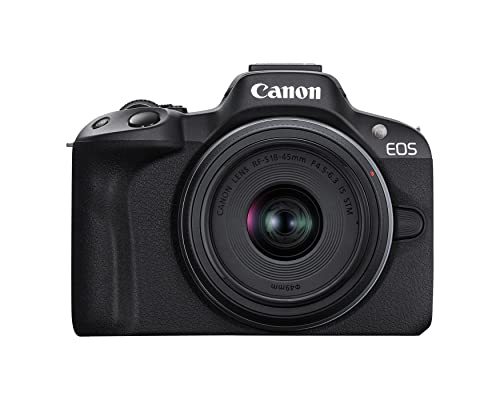
- Canon EOS R50 with its kit zoom is the balanced default for families and growing creators.
- Nikon Z30’s kit leaves the most frame headroom for the microphone and light video work rewards.
- Canon EOS R10 is the enthusiast’s kit: more control and burst for action-leaning photographers.
- Nikon Z50 II is the labelled step-up, buying handling and refinement for buyers already committed.
- Sony ZV-E10 II’s kit serves product and presentation filming with the deepest lens shelf ahead.
In this guide
Quick Picks
| Badge | Pick | Why it stands out |
|---|---|---|
| Best Balanced Kit | Canon EOS R50 | Kit zoom, kind colour, and guided handling for a complete first system. |
| Best Kit for Video Headroom | Nikon Z30 | A compact kit whose restraint funds sound and light inside the frame. |
| Best Enthusiast Kit | Canon EOS R10 | Kit range plus the controls and speed a keen photographer grows into. |
| Best Kit for Product Filming | Sony ZV-E10 II | Presentation focus and a lens catalogue that never runs out. |
| Step-Up: Best Handling Kit | Nikon Z50 II | Step-up refinement and low-light poise for committed photographers. |
| Best Compact-System Alternative | OM SYSTEM OM-5 Mark II | A smaller kit system whose lenses keep travel bags light. |
How We Chose These Picks
Whole-kit costing came first, applied without sentiment. Each candidate was assembled in the mind as it would actually be bought — body with its kit lens, a card sized for a full day, a spare battery for the interchangeable bodies, a strap and simple case — and only outfits whose honest total respects the frame, or which are explicitly labelled step-up, were allowed to compete. Bare bodies with glamorous specifications and no lens money left were excluded at this stage, however loudly they advertised themselves.
The kit lens itself was judged as a teacher. A good starter zoom covers wide rooms and modest reach, focuses close enough for tabletop curiosity, and behaves predictably so a beginner’s mistakes are instructive rather than mysterious. Platforms whose bundled zoom is widely respected as a learning instrument outranked platforms whose bundle exists mainly to make a body technically usable, because the first year’s photographs are made through that glass, not through the catalogue’s future.
Growth arithmetic finished the judging. Every platform was asked what its second lens costs in spirit: whether a bright prime, a wider view, or a longer reach exists at a saving distance a normal household can cross, and whether the mount’s future is widening or narrowing. A kit is a down payment on a system, and this guide ranks systems by the honesty of the staircase they offer after the first purchase.
Why Does the Lens Belong Inside the Budget Frame?
Because the lens, more than the body, writes the photograph’s character. It decides how much of the room fits in frame, how gracefully an evening portrait separates its subject from a cluttered background, how close a detail can be approached, and how much light reaches the sensor when the day dims. Bodies differ in speed and handling; lenses differ in what is possible at all. A budget that treats the lens as an afterthought has misunderstood which half of the camera it is buying.
Kit bundles exploit that truth kindly. A manufacturer pricing a body-and-zoom outfit can place the lens at a position no separate purchase matches, because the bundle’s purpose is recruitment into a system. The buyer who understands this stops apologising for the kit zoom and starts exploiting it: learn its range completely, discover by evidence which focal lengths your life actually uses, and let that evidence — recorded in a year of real frames — choose the second lens with an accuracy no review can offer.
The frame also disciplines the upgrade conversation that follows. A photographer who bought the whole outfit inside $800 owns a working system while saving for growth; a photographer who spent $800 on a body owns an aspiration and a borrowing habit. The first photographer’s second year begins with a lens chosen by diagnosis. The second’s begins with a lens chosen by desperation, and the difference shows in the archive for a decade.
None of this argues against ever buying a body alone — photographers with lenses already in the house do it rationally every day. It argues that a search naming a frame and a lens together deserves an answer that honours both halves, and that any guide quoting body-only positions inside such a search is answering a question its reader did not ask.
How Do You Divide $800 Between Body, Kit Lens, and Companions?
Fund the companions first, on paper, before any body is chosen: storage for a full day at the settings you will actually use, a spare battery for any interchangeable body, a strap that will be worn and a case that will be used, and — for anyone filming spoken work — the first real microphone. Write those lines down and subtract them from the frame; the remainder, not the headline figure, is the true body-and-lens budget, and choosing within it is how a kit arrives complete instead of almost.
Between body and lens, let the bundled arithmetic lead. In kit territory the split is largely decided by the manufacturer’s bundle, so the buyer’s real choice is which bundle — which means which system, which handling, which lens shelf ahead. Spend deliberation there rather than on separating inseparables: hold the bodies if a shop allows it, read the second-lens staircase of each mount, and choose the platform whose future purchases you can picture funding.
Hold a small reserve back deliberately, because the first month of ownership always discovers one missing item. It might be the card reader for an older computer, the step ring for a borrowed filter, the second battery the manual understated, the wider strap a heavy day demands. A reserve converts each discovery into an errand; its absence converts the same discovery into a grievance against the whole purchase, which is an unfair trial for a camera to face in its first month.
Revisit the division with a season’s evidence in hand. The focal lengths your archive actually used, the light that actually defeated the kit zoom, the accessory borrowed three times — together they compose the only trustworthy brief for the next purchase, and a household that budgets by that brief will find its $800 beginning remembered as the moment the kit started fitting its owner rather than its catalogue.
Which of the Best Cameras With Lenses Under 800 Dollars Fits Your Plans?

Canon EOS R50 — Best Balanced Kit
Balance is the argument, and the kit is where it proves itself. The R50 arrives with a zoom that covers the family year — wide enough for the kitchen party, long enough for the school stage’s front rows — behind colour that flatters faces before any editing and autofocus that minds eyes while the photographer minds the moment. As a complete outfit inside the frame, with its companions funded, it is the purchase this guide would hand to the widest range of readers with the fewest conditions attached.
Learning happens gently here, which compounds. Guided menus explain the camera’s intentions while it works, so the beginner’s first year produces both photographs and understanding, each reinforcing the other. Video holds up its side of the bargain completely: a flip screen for solo pieces, vertical formats for the clips that advertise longer work, webcam behaviour for calls and streams, and files so obliging that a weekly filming rhythm survives a day job’s timetable.
The RF staircase ahead is drawn at household intervals. A fast prime for evening portraits is the classic second lens and this mount offers it at a saving distance; a wider zoom serves small rooms and travel; reach for the school play and the garden’s birds waits beyond. Each step attaches to the same body and the same habits, so money spent on growth is never spent on replacement — the economic soul of buying a kit rather than a gadget.
Kit realism, stated once and plainly: the bundled zoom is a teacher, not a low-light hero, and evenings will eventually argue for that prime; a spare battery belongs in the first basket; walking video leans on lens stabilisation and technique. None of this is hidden cost so much as curriculum, and the frame — counted whole, as this guide insists — accommodates the first two items without strain.
Across a first season the outfit’s behaviour is what owners praise in the end. Settings stay where they were left, focus stays honest through repeated takes, and the whole system — body, zoom, batteries, card — fits a small bag that actually leaves the house. Cameras that leave the house make photographers; this kit’s deepest virtue is that it keeps leaving.
- Outfit: APS-C body with versatile kit zoom
- Colour: flattering skin tones in home light
- Handling: guided menus for learning owners
- Staircase: affordable prime as the classic second lens
- Companions: spare battery in the first basket
Strengths
- Complete, balanced system inside the frame
- Teaching handling builds skill with photographs
- Growth steps priced at household intervals
Trade-offs
- Kit zoom is not an evening specialist
- Spare battery is effectively compulsory
- Walking stabilisation needs technique
Best for: families and new creators wanting one complete growing kit. Not suited for: buyers who need reach or ruggedness first.

Nikon Z30 — Best Kit for Video Headroom
Restraint is this kit’s strategy, and the frame rewards it in an unusual currency: money left over. The Z30’s compact body and modest kit zoom assemble at a position that leaves genuine headroom inside $800, and headroom, for a video-led buyer, converts directly into the microphone and the soft light by which spoken work is actually judged. A channel launched on this outfit can sound professional in its first month, which no rival kit at the frame’s ceiling can promise while recording through built-in microphones in a bare room.
The body’s design serves the desk formats that dominate real channels. A tally lamp confirms a session is alive at a glance, the flip screen frames the solo presenter, webcam fluency covers live work, and long recordings proceed with a patience flashier bodies rarely match. Tutors, podcasters, reviewers at a table, and anyone whose format is a person talking well to a lens will find the kit’s priorities arranged exactly as their working week is.
Stills hold a respectable second place rather than an embarrassing one. Family photographs, product shots for the channel, travel frames on a light bag day — the kit zoom and Nikon’s natural colour cover them with composure, and the Z mount’s compact primes wait as the natural first upgrade when a cramped desk demands a wider view or an evening demands a brighter one. The platform grows in the directions its owners actually grow.
Judge its boundaries without flinching. The DX lens shelf is narrower than Sony’s or Canon’s, stabilisation lives in the lens rather than the body, and a photographer whose ambitions turn toward wildlife or fast sport will meet the system’s ceiling sooner than its rivals’. The video-led buyer those limits exclude was never this kit’s constituency; for the constituency it serves, the headroom arithmetic makes it the frame’s cleverest purchase.
There is a psychological dividend worth naming. A buyer who assembles a complete, working, well-sounding kit with money unspent experiences the frame as abundance rather than as a wall, and tends to spend the remainder slowly, by evidence, across the first season. Kits bought at a frame’s ceiling invite buyer’s remorse by comparison shopping; this one invites filming, which is the only known cure.
- Outfit: compact body with modest kit zoom
- Headroom: frame remainder funds microphone and light
- Design: tally lamp, flip screen, webcam fluency
- Stills: composed family and product work
- Staircase: compact primes for desks and evenings
Strengths
- Complete video kit with budget to spare
- Long sessions handled calmly
- Sound upgrades arrive in month one
Trade-offs
- Narrower lens catalogue than rivals
- Stabilisation is lens-dependent
- Not aimed at sport or wildlife growth
Best for: video-led creators who value sound and light headroom. Not suited for: stills-led photographers planning long lenses.

Canon EOS R10 — Best Enthusiast Kit
Some buyers arrive at the frame already knowing they will outgrow a beginner’s body, and this kit is priced for their honesty. The R10 pairs its kit zoom with a more enthusiast-leaning body — deeper controls, faster continuous shooting, a more serious viewfinder experience — for photographers whose subjects move: children in sport, dogs in fields, street scenes that will not pose twice. Inside the frame as a working outfit, it is the row where the keen amateur’s money concentrates.
Speed is the substance beneath the specification. Autofocus that acquires and holds a moving subject, burst capacity that lets a moment be chosen rather than merely caught, and handling that puts exposure decisions under fingers instead of inside menus — together these change what a photographer attempts. Matches, performances, and wildlife at the garden’s edge stop being lottery tickets and become assignments, and a first year spent attempting them teaches faster than any course.
The kit zoom’s role here deserves precise description. It is the lens the body will wear for general life — travel, family, the walk — and it performs that duty with the same honest competence as its R50 sibling’s. The platform’s promise lives one step ahead, in an RF shelf where longer and faster glass waits for the subjects this buyer has already named. Buy the kit for the year you are in; trust the shelf for the years you are planning.
Video serves credibly as the second craft: clean files, flip-screen flexibility for solo pieces, and focus behaviour that respects a moving presenter. A hybrid creator whose stills lead and whose filming follows will find no awkwardness in the arrangement, though the dedicated video rows in this guide — Nikon’s headroom kit and Sony’s presentation platform — court the film-first buyer more directly.
Cost the enthusiasm honestly. The body asks more of the frame than the R50’s does, which tightens the companions budget and postpones the second lens; buyers should fund the spare battery and storage anyway and let the lens staircase wait for evidence, as this guide advises everywhere. What the premium buys is time — a body whose ceiling sits a full stage further away — and for the photographer who correctly diagnosed their own appetite, time is the best bargain in the catalogue.
- Outfit: APS-C enthusiast body with kit zoom
- Speed: fast bursts and tenacious subject focus
- Controls: direct, enthusiast-leaning layout
- Video: credible hybrid second craft
- Staircase: RF telephoto and fast glass ahead
Strengths
- Action and movement handled seriously
- A body ceiling a stage further away
- Controls reward a learning enthusiast
Trade-offs
- Tighter companions budget inside the frame
- Second lens waits longer
- More body than a casual user will explore
Best for: keen photographers with moving subjects and growing ambitions. Not suited for: video-first creators or minimalists.

Sony ZV-E10 II — Best Kit for Product Filming
Presentation is a genre with its own physics — a face that must stay believed, a product that must snap into clarity the moment it is raised, sound that must be monitored rather than hoped for — and this kit was engineered inside that physics. Bought with its kit zoom inside the frame’s discipline, the ZV-E10 II gives reviewers, demonstrators, teachers, and sellers the most complete filming platform in this guide, mounted on the deepest lens shelf any of these rows can offer.
Focus behaviour carries the argument. The camera holds its presenter, glides to a presented object without hunting or drama, and returns — a small choreography that viewers experience as professionalism without ever naming it. Add the audio pathway, with input, monitoring, and a cable-free digital shoe, and the kit addresses the two senses a filming audience actually uses, in one purchase, at a level its frame rivals approach only separately.
The kit zoom suits the presenter’s geography: a desk, a workbench, a kitchen counter, framed wide enough to include hands and materials, close enough for the product’s detail. Growth from there runs in every direction the E mount famously provides — a wider lens for small rooms, a brighter prime for evening pieces, speciality glass rented for a single project — without the body ever becoming the reason a format is impossible.
Concede the platform’s known costs in the same paragraph as its premium. There is no in-body stabilisation, so the kit belongs on desks, tripods, and gimbals rather than on walking tours; menus reward an evening’s study; and the lens catalogue’s depth is also an invitation to spend, which the frame’s discipline must politely decline until footage files a request. Owners who film seated, present objects, and plan a second year will find none of those costs charged to them in practice.
Whole-kit arithmetic is this row’s one tight squeeze. Counted with its companions, the outfit stands at the frame’s serious end, and buyers should verify the complete basket — body, kit lens, card, battery provision, and the microphone the format will demand by month two — before committing. Verified and funded, it is the kit in this guide least likely to be replaced for any reason short of the channel’s triumph, which is the correct ambition for a frame to fund.
- Outfit: APS-C creator body with kit zoom
- Focus: presenter priority with product showcase shifts
- Audio: input, monitoring, digital shoe
- Catalogue: the deepest lens shelf in this guide
- Position: frame’s serious end; verify the whole basket
Strengths
- Presentation filming leads the frame
- Audio matures without changing bodies
- Growth in every direction from one kit
Trade-offs
- No in-body stabilisation for walking work
- Basket total needs careful verification
- Catalogue invites future spending
Best for: reviewers, demonstrators, and product-led channels. Not suited for: walking-tour formats or firm minimal budgets.

Nikon Z50 II — Step-Up: Best Handling Kit
Step-up label first, in the guide’s usual plain language: assembled as the working kit its handling deserves — kit zoom, spare battery, storage in depth — this platform sits beyond the $800 frame, and the row exists for buyers whose evidence says the refinement is worth funding. What the step-up buys is not a headline feature but a standard of behaviour: surer handling, a brighter and more informative view of the scene, low-light poise, and autofocus confidence that together make a committed photographer’s daily work feel a class calmer.
Consider who feels that difference. A photographer already shooting weekly, already bumping into a starter body’s ceilings — focus in dim halls, controls that require menu detours, a viewfinder that guesses at exposure — is not buying luxury in this step-up; they are removing named frictions. The Z50 II answers that diagnosis directly, and its kit zoom keeps the outfit coherent while the owner’s prime-lens plans mature at the pace real budgets prefer.
Video participates fully rather than as a courtesy. Presenters get the flip screen and the recording manners Nikon’s creator line has refined, families get colour that survives mixed light gracefully, and the hybrid shooter — stills by weekend, filming by weekday — finds one outfit that refuses to make either craft feel like the compromise. That evenness, across a whole kit, is rarer than any single specification in this guide.
Apply the guide’s standing test for any step-up: evidence over appetite. The buyer whose archive shows a thousand frames a month and a list of frustrations with model numbers attached should stretch without guilt. The buyer whose interest is genuine but unproven should take the Z30 kit’s headroom or the R50’s balance, bank the difference, and let a season of shooting file the step-up request in their own handwriting. Both decisions are successes of the same discipline.
Longevity is the closing argument, as it often is at this altitude. Bodies bought for handling tend to be kept, because handling is experienced on every single frame rather than on specification occasions, and a kept body amortises its premium across years of unresented use. If the step-up is bought, buy it as that kind of purchase — the long companion — and its position beyond the frame becomes a footnote rather than a warning.
- Outfit: refined APS-C body with kit zoom
- Handling: surer controls and a clearer view
- Light: poised behaviour as venues dim
- Video: full hybrid participation
- Position: step-up beyond the frame, labelled as such
Strengths
- Daily handling a class calmer
- Stills and video evenly served
- A body owners keep for years
Trade-offs
- Working kit crosses the frame
- Narrower lens shelf than Sony’s
- Premium wasted on unproven interest
Best for: committed photographers with named frictions to remove. Not suited for: first kits or frame-firm budgets.

OM SYSTEM OM-5 Mark II — Best Compact-System Alternative
Every frame hides one buyer the mainstream rows serve badly: the traveller for whom the bag itself is the budget. The OM-5 Mark II answers that buyer with a smaller system — a compact, weather-sealed body and kit zoom whose Micro Four Thirds lenses stay strikingly small as the system grows, so a three-lens travel outfit occupies the space a rival platform reserves for one. Inside the frame as a working kit, it is the guide’s argument that portability is a specification, not a compromise.
Weather sealing changes behaviour in ways owners notice within a month. Rain stops being a reason to leave the camera at the hotel; dust, spray, and mountain weather become conditions to dress for rather than verdicts to obey. A camera that goes out in weather doubles its owner’s opportunities at a stroke, and the photographs of a trip’s dramatic days — the storm coast, the wet market — are routinely the ones the album is built around.
Stabilisation is the system’s quiet superpower. In-body assistance steadies the kit zoom for handheld evening streets and longer exposures of water and light trails, forgiving the technique of a tired traveller at the end of a long day. Combined with the small lenses’ modest apertures, it keeps the system’s low-light story respectable by technique rather than by glass size — a different bargain from its rivals’, and an honest one.
State the trade that defines the format. The smaller sensor concedes some low-light purity and some background separation to the APS-C rows, and photographers whose hearts are set on creamy portrait blur should let those rows court them instead. What the format returns — size, sealing, stabilisation, and a lens shelf of travel-friendly glass at friendly positions — is a coherent philosophy rather than a deficiency, and travellers recognise it as theirs immediately.
Growth inside this system is a pleasure specific to it: each additional lens is small enough that the kit’s total weight barely confesses the addition, so the second and third lenses actually travel instead of being left home for their size. A frame spent here buys not just an outfit but a habit — the habit of carrying a real camera everywhere — and habits, as every section of this guide keeps concluding, are what photographs are made of.
- Outfit: compact weather-sealed body with kit zoom
- System: Micro Four Thirds lenses stay small as kits grow
- Stabilisation: in-body help for evenings and long exposures
- Weather: sealing that invites wet-day photography
- Trade: sensor size exchanged for portability
Strengths
- Travel kits that stay genuinely light
- Weather sealing doubles shooting days
- Stabilisation forgives tired technique
Trade-offs
- Less background blur than APS-C rivals
- Low-light purity a step behind larger sensors
- A different shelf from the mainstream mounts
Best for: travellers and walkers who carry a system all day. Not suited for: portrait-blur specialists or studio-led work.


