kajuandouglas.com is reader-supported. When you buy through links on our site, we may earn an affiliate commission.
Where to Buy
Three hundred and twenty-five is an oddly specific ceiling, and that specificity is exactly what makes the best cameras under 325 dollars worth a guide of their own. It is not the round, comfortable budget of the under-300 shelf, nor the more generous territory a step above it. It is the number a real person arrives at after adding a memory card, a case, and tax to a cheaper camera — or the number left in an envelope after everything else in a holiday budget has been spoken for. This guide treats that number with respect: every pick is judged on the complete value it delivers inside or honestly near that frame, not on how impressive it looks in an advertisement.
The landscape at this level needs describing honestly before names appear. New mirrorless cameras do not live here; anyone promising one at this ceiling is selling a grey import, a broken return, or a misunderstanding. What genuinely lives here is a varied and likeable company: fixed-lens vlogging compacts at the frame’s upper edge, action cameras with real capability, instant cameras whose cost hides in the film, and — handled carefully — the used market’s recent compacts, which are where the photographic value at this budget quietly concentrates. Two picks below are prose-only used-market routes, labelled as such, because pretending they come with a tidy new listing would be a disservice.
Street prices also move, and this guide will not insult you by printing figures that rot. Where a pick commonly sits above the $325 line at full retail — the Sony vlogging compact is the honest example — it is flagged clearly, because it regularly enters the frame through the normal rhythm of sales and refurbished channels, and it is the camera most buyers at this ceiling are actually trying to reach. Everything else here was chosen to live at or beneath the line in ordinary conditions.
Key Takeaways
- At a $325 ceiling, value concentrates in compacts, action cameras, instant cameras, and carefully bought used models — not in new mirrorless bodies.
- The Sony ZV-1F is the reach pick: labelled honestly as a model that often sits above the frame and enters it through sales and refurbished stock.
- AKASO’s Brave 7 LE delivers genuine action-camera capability with money left over for mounts and cards.
- Instant cameras from Fujifilm and Polaroid trade running costs in film for immediate, shareable fun.
- Used Canon PowerShot ELPH models and Kodak’s PIXPRO bridge line are covered prose-only, with a buying checklist instead of a link.
- Total cost decides everything at this level: film, mounts, cards, and a spare battery belong in the same arithmetic as the camera.
Notice what this list refuses to do: it does not stretch a definition to sneak a famous name under the wire. A smaller honest guide serves a $325 buyer better than a larger dishonest one, and the picks below were kept only where a real purchase at or near the frame can be defended.
In this guide
Quick Picks
| Badge | Pick | Why it stands out |
|---|---|---|
| Best Reach Pick — Often Above Frame | Sony ZV-1F | A proper vlogging compact with a wide fixed lens; watch sales and refurbished stock to land it in frame. |
| Best Action Value | AKASO Brave 7 LE | Weather-sealed action filming with a front screen, at a level that leaves budget for accessories. |
| Best Instant Fun | Fujifilm Instax Mini 12 | Point, shoot, and hand someone a photograph — the simplest joy in this guide. |
| Best Pocket Instant | Polaroid Go Generation 2 | The smallest instant camera in the round-up, built for pockets and parties. |
| Best Used Compact Route — Prose-Only | Canon PowerShot ELPH Series (Used) | Yesterday’s pocket cameras are today’s sharpest value, bought with the checklist below. |
| Best Big-Zoom Route — Prose-Only | Kodak PIXPRO Bridge Cameras | Enormous zoom reach for birds, moons, and school sports, with expectations set honestly. |
Two rows are routes rather than listings — the used shelf and the bridge shelf — because at this ceiling those are real ways people buy cameras, and a guide that only lists what it can link would hide half the market from you. Their sections below explain how to walk those routes safely.
How We Chose These Picks
The frame was applied the way a buyer experiences it: as a total, not a headline. A camera that consumes the entire $325 and then demands a card, a case, and proprietary extras before it can be used was judged against rivals that leave room for the kit that makes them usable. Running costs were counted with unusual severity for a camera guide, because at this level the second purchase — film packs, mounts, a battery that lasts a holiday — is where budgets quietly break.
Each candidate was then sorted by the job it can truthfully do. Vlogging and family video ask for a wide lens, honest autofocus, and a microphone path. Action use asks for sealing, stabilisation, and mounts that exist in the real world. Instant photography asks for film availability and a camera simple enough to hand to a stranger. Used compacts ask for a buyer willing to inspect — and were included only with the inspection routine spelled out, because an unexamined used camera is a lottery ticket wearing a lens.
Availability in ordinary channels was the third filter. Picks had to be findable new through normal retail, or — for the two prose-only routes — common enough on the used and budget shelves that a reader can act on the advice this month, not in theory. Exotic imports and perpetually out-of-stock curiosities were cut, however charming.
Finally, disappointment risk was weighed like a product feature. At $325, a buyer rarely has a second $325. Picks that forgive beginners — that produce a pleasing result on the first afternoon, with defaults that help rather than hinder — ranked ahead of technically interesting cameras that punish the inexperienced. This is a guide for people spending real money carefully, and it behaves accordingly.
What Can a $325 Ceiling Honestly Buy in a Camera?
It buys one honest specialism, well executed. That sentence is the whole map of this market. The cameras below each do a particular thing properly — film a vlog, survive a mountain bike, print a party — and the compromises live in everything outside that specialism. Trouble begins when a buyer expects the ceiling to buy generality: a camera equally ready for portraits, wildlife, vlogs, and night streets. That camera exists at roughly three times this budget, and guides that pretend otherwise at $325 are selling disappointment by instalments.
The fixed lens is the era’s defining compromise, and it deserves a defence. At this level a fixed wide lens is not a limitation imposed by cheapness; it is a design decision that buys brightness, simplicity, and size. The ZV-1F’s wide view suits the arm’s-length filming it was built for, and learning to move your feet — the oldest zoom in photography — covers much of what a modest zoom would. Buyers who genuinely need reach are served by the bridge route below, which trades almost everything else for a telescope with a shutter button.
Sensor size follows the same honest pattern. The sensors here are small, and in good light their results are genuinely pleasing — bright, sharp, and more than sufficient for screens and modest prints. In poor light they ask for help: a steady hand, a willingness to stand closer to the lamp, acceptance that night streets will look like night. Buyers whose photography lives after dark should read this guide as a map of what to save beyond, because no arrangement of $325 defeats physics, and pretending otherwise helps no one.
What the ceiling buys in abundance is immediacy. Every pick here can be producing photographs within an hour of purchase, with no lens decisions, no system commitments, and no accessories beyond the obvious. For gifts, for teenagers, for a family’s first real camera, that immediacy is not a consolation prize. It is the feature the money was actually for.
Which of the Best Cameras Under 325 Fits Your Kind of Shooting?

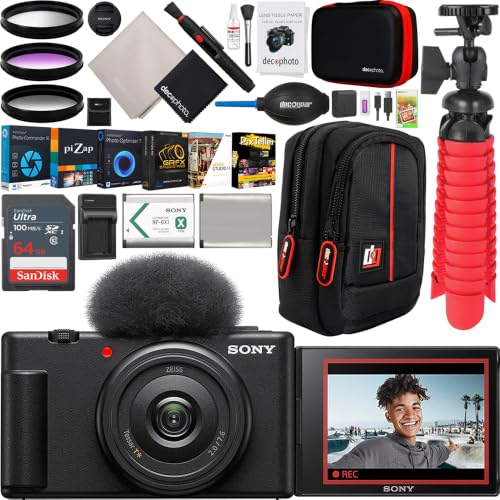
Sony ZV-1F — Best Reach Pick (Often Above the Frame)
Label first, because this guide promised honesty: the ZV-1F commonly sells above the $325 line, and it appears here because it is the camera this budget is most often stretched toward — and because sales, refurbished stock, and open-box channels bring it into the frame often enough that a patient buyer can genuinely land it there. If your ceiling is absolute and immovable, read the rows below it first. If your ceiling has a small, deliberate flex for the right tool, this is the tool.
Sony built the ZV-1F around a single insight: most beginner vlogging fails on framing and focus, not on resolution. The fixed lens is wide enough to hold a face and a room at arm’s length, the autofocus hunts faces and products with a persistence that feels like a crew member’s attention, and a dedicated background-blur mode gives talking-head footage the separation beginners usually need a bigger camera to achieve. A teenager starting a channel, a shopkeeper filming product clips, a teacher recording lessons — all are filming competently within an afternoon.
Audio is treated as a first-class citizen, which separates it from most of this shelf. The built-in microphone array is unusually considered for a compact, a windscreen is part of the design rather than an afterthought, and an external microphone can be added when the channel outgrows the room. Vloggers learn eventually that audiences forgive soft video and never forgive bad sound; this camera teaches the lesson by getting sound right from the start.
The compromises are the fixed lens’s other side: no zoom to reach across a room, stills that serve social sharing better than large prints, and low-light video that asks for a lamp’s cooperation. Within its brief — one person, one room or one street, talking to a lens — those compromises rarely speak. Outside that brief, the rows below are waiting.
- Lens: fixed and wide, designed for arm’s-length filming
- Focus: face and product tracking for solo creators
- Audio: considered built-in microphones plus external option
- Frame note: often above $325 new; enters via sales and refurbished stock
- Role: the vlogging compact this budget reaches for
Strengths
- Beginners film well on the first afternoon
- Sound treated with unusual seriousness
- Refurbished route makes the frame honestly reachable
Trade-offs
- Full retail usually breaks the ceiling
- No zoom for across-the-room moments
- Stills are a supporting feature
Best for: new vloggers and solo creators whose ceiling can flex for the right tool. Not suited for: buyers with an absolute $325 limit or a need for zoom reach.

AKASO Brave 7 LE — Best Action Value
Action cameras are where a modest budget historically went to be disappointed, which is what makes the Brave 7 LE’s competence so satisfying. It records proper action footage, shrugs off weather that would retire a phone, shows the shooter a front-facing screen for framing helmet and handlebar shots, and does all of it while leaving a meaningful share of the $325 frame unspent — money that action filming genuinely needs, because mounts, cards, and a case are not accessories in this genre. They are the camera’s other half.
Weather sealing is the headline that matters on real outings. Rain on a trail ride, spray on a kayak, dust on a worksite — the camera treats them as weather rather than as threats, and that indifference changes what a beginner is willing to film. Paired with electronic stabilisation that smooths the judder out of rough ground, the footage that comes home is watchable in a way that unstabilised budget action footage simply is not, and watchability is the difference between a clip shared and a clip deleted.
The two-screen arrangement earns its keep in the specific geometry of action filming. A camera bolted to a chest strap or a bike cannot be checked from behind; the front screen lets the rider confirm framing at a trailhead glance. Solo travellers filming themselves at landmarks discover the same mercy. It is a small feature that solves the genre’s most common beginner failure — an hour of heroic footage of the sky.
Expectations should stay calibrated: this is a value action camera, and its low-light footage and colour polish sit a class below the flagship action rows sold at several times its level. In daylight, on a mountain, in the rain — the conditions it was bought for — the gap narrows to something most viewers will never notice, and the money saved buys the mounts that make the footage interesting.
- Sealing: weather-resistant body for trail and water spray
- Screens: front display for self-framing on mounts
- Stabilisation: electronic smoothing for rough ground
- Budget shape: leaves room for mounts, cards, and a case
- Role: first serious action camera
Strengths
- Real capability without flagship money
- Front screen ends the footage-of-the-sky problem
- Total kit fits the frame, not just the camera
Trade-offs
- Low light is its weakest hour
- Colour polish trails the premium action brands
- Battery appetite rewards carrying a spare
Best for: riders, paddlers, skiers, and travellers buying a first action camera. Not suited for: night filming or colour-critical production work.

Fujifilm Instax Mini 12 — Best Instant Fun
Every other camera in this guide produces files. The Instax Mini 12 produces objects — small, warm, slightly imperfect photographs that exist in exactly one copy and get handed to exactly one person. At a $325 ceiling, a generous bundle of camera and film still leaves change, and what it buys is a social instrument: the camera that comes out at birthdays, weddings, and dorm-room evenings, and changes the temperature of each by giving people a photograph to hold before the moment has even cooled.
Operation is a study in mercy. Twist the lens to wake it, point, press. Exposure and flash are handled by the camera with a competence that frees the photographer to be a guest at their own party, and a small selfie mirror plus a close-up mode handle the two framings instant photography is actually used for. There is no menu to learn, no setting to ruin a shot with, and no screen competing with the experience — design decisions that read as simplicity and function as kindness.
Film is the honest cost, and this guide counts it openly. Instax Mini film is the most widely available instant film in the world, sold in multi-packs everywhere from pharmacies to airport shops, and a household that shoots it regularly should budget for film the way it budgets for coffee — a small, recurring, entirely predictable pleasure. The camera’s own price is low enough that even enthusiastic film habits keep the whole hobby comfortably inside the spirit of this guide’s ceiling for a long while.
Image quality should be described in its own terms rather than apologised for. The prints are small, soft at the edges, and coloured with a warmth that flatters faces and forgives venues. They are not competing with the files from the Sony row; they are competing with the phone photo that gets buried in a camera roll and never seen again. The print on the fridge wins that contest every single time.
- Output: credit-card-sized prints in about the time a kettle boils
- Operation: automatic exposure, twist-to-wake simplicity
- Film: Instax Mini, the most available instant film anywhere
- Modes: close-up and selfie mirror for real party use
- Role: the social camera of the guide
Strengths
- A photograph someone can hold, immediately
- Nothing to learn and nothing to break
- Film available practically everywhere
Trade-offs
- Film is a permanent running cost
- Prints are small and deliberately soft
- No digital copy exists unless you photograph the print
Best for: parties, weddings, teenagers, and anyone gifting a first camera. Not suited for: buyers who want files to edit, print large, or share online.

Polaroid Go Generation 2 — Best Pocket Instant
Polaroid’s smallest camera is an argument that the best camera is the one actually in your pocket when the moment happens. The Go slips into a jacket or a small bag where the Instax — hardly bulky itself — would be left at home, and its tiny square prints have become a recognisable aesthetic of their own: miniature photographs that end up taped to laptops, tucked into phone cases, and pinned above desks. Portability is not a specification here; it is the entire product.
The second generation tidied the original’s rough edges in ways owners feel daily. Charging moved to the modern cable everyone already carries, exposure behaviour grew more reliable in the mixed light of real rooms, and the selfie mirror and simple double-exposure playfulness survived the tidy-up intact. It remains a two-button philosophy in a world of menus: the camera makes the technical decisions so the person can make the social ones.
Its film needs the same honest accounting given to its Fujifilm rival. Polaroid Go film is a proprietary, smaller format, generally the pricier per-shot habit of the two instant systems, and less universally stocked — a household choosing the Go should order film ahead rather than expect to find it in every shop. Inside a $325 starting frame the camera itself is easily afforded; the discipline is remembering that instant photography is a subscription paid in film, whichever badge the camera wears.
Choose between the two instant rows by temperament. The Instax is the economical, everywhere-film party standard. The Go is the design object, the pocket camera, the one whose prints are small because its life is mobile. Both are legitimate joys; the mistake would be expecting either to behave like the digital rows, when their whole charm is that they refuse to.
- Size: the smallest instant camera in this round-up
- Prints: miniature square format with a cult following
- Charging: modern cable shared with your other devices
- Film: proprietary Go format — order ahead
- Role: everyday-carry instant photography
Strengths
- Actually present when moments happen
- Prints with a distinctive miniature charm
- Simple enough to lend without a briefing
Trade-offs
- Costliest film habit in this guide
- Tiny prints reward closeness, not landscapes
- Film stockists are fewer than Instax’s
Best for: everyday carry, travel journals, and miniature-print devotees. Not suited for: high-volume party shooting on a film budget.
Canon PowerShot ELPH Series (Used) — Best Used Compact Route (Prose-Only)
This pick is prose-only because its listing is the used market itself, and no single link could honestly represent it. The ELPH line — Canon’s slim pocket compacts, sold under IXUS badges in some regions — filled a decade’s worth of handbags and holiday pockets, which means the used shelves now hold them in enormous numbers at prices that make a $325 buyer feel wealthy. A clean example with a charger and a healthy battery delivers something nothing else in this guide can: a real optical zoom in a true pocket camera, with Canon’s friendly colour doing its quiet work.
Buying used is a skill, and this section is the tuition. Inspect the lens for scratches and internal dust by shining a light through it. Extend the zoom fully and listen for grinding. Take twenty test photographs — including several with flash — and review them at full magnification for spots that repeat in the same place, which betray sensor dust or damage. Check the battery door, the card slot, and every button. Buy from sellers who accept returns, and treat any example described as untested as what it is: a gamble priced like a certainty.
Battery reality deserves its own sentence. A decade-old compact’s original battery may hold a fraction of its youth, so the honest used purchase includes a fresh third-party battery in the arithmetic — still leaving the total far beneath this guide’s ceiling, with money remaining for a card and a case. Buyers who do that arithmetic get a pocket camera with genuine zoom, pleasing colour, and a total spend that would make the new-camera shelf blush.
Who should walk this route? The traveller who wants a pocketable zoom and refuses phone photography, the parent buying a first real camera that a child can actually be allowed to risk, the nostalgic shooter who misses when cameras were this simple. Who should not: anyone who needs a warranty, a return window measured in months, or video beyond casual clips. The route rewards the careful, and this guide recommends it only with its checklist attached.
- Format: slim pocket compact with genuine optical zoom
- Route: used marketplaces and camera-shop used shelves
- Checklist: lens, zoom motor, test shots, flash, buttons
- Budget note: include a fresh battery in the true total
- Role: photographic value champion of the frame
Strengths
- Real zoom in a real pocket, for used money
- Canon colour that flatters family photography
- Huge supply keeps examples easy to find
Trade-offs
- No warranty and no single verified listing
- Condition varies — inspection is the price of value
- Video is a period piece beside modern rows
Best for: careful buyers wanting maximum photography per dollar. Not suited for: gift buyers who need a sealed box and a warranty card.
Kodak PIXPRO Bridge Cameras — Best Big-Zoom Route (Prose-Only)
The second prose-only route answers the one request the rest of this guide cannot: reach. Kodak’s PIXPRO bridge line — sold in several zoom configurations through big-box and online budget shelves, which is why it is covered as a family rather than linked as one listing — puts astonishing telephoto reach into a camera shaped like a small DSLR. For the parent filming a child from the far side of a sports field, the birdwatcher documenting garden visitors, or the moon photograph that every beginner attempts exactly once, that reach is the entire purchase, and at this ceiling nothing else provides it.
Expectations must be set with both hands. A bridge camera’s sensor is small, and its enormous zoom is achieved by optics and electronics working at the edge of their comfort. In bright daylight across a field, the results are genuinely rewarding — recognisable birds, readable jersey numbers, a moon with craters. In dim gyms and evening light, the same camera struggles visibly, and no setting rescues it. Buyers whose subjects live outdoors in daylight are buying well; buyers whose subjects live in school halls should redirect to the Sony row and stand closer.
The handling has a charm the spec sheet undersells. A bridge body gives a beginner the posture of photography — an eye-level finder, a grip, a zoom ring to turn — and that posture teaches framing habits that transfer when the photographer eventually upgrades. Several families use a PIXPRO as the household’s shared camera for exactly this reason: it feels like a real instrument, forgives like a compact, and costs like neither.
Shopping guidance for the family: prioritise the configuration with the finder and the zoom range matched to your subjects rather than the largest number on the box, confirm the battery type suits your household (some run on AA cells, which some families love and others hate), and buy through a channel with a return window so the camera can prove itself at your actual field, zoo, or shoreline within the first week.
- Zoom: very long reach for fields, birds, and the moon
- Handling: DSLR-style grip and eye-level finder
- Sensor: small — daylight is its native country
- Route: budget shelves in several configurations
- Role: reach for buyers the compacts cannot serve
Strengths
- Telephoto subjects no other row can touch
- Teaches real camera posture to beginners
- Daylight results reward the patience
Trade-offs
- Dim interiors defeat it honestly
- Largest camera in this guide by far
- Configurations vary — buy the finder, not the biggest number
Best for: sports parents, garden birders, and moon chasers on a budget. Not suited for: indoor events, night streets, or pocket-sized expectations.
The Frame at a Glance: The Comparison
| Pick | Job it owns | Frame position | Running cost to respect |
|---|---|---|---|
| Sony ZV-1F | Solo vlogging | Often above; sales and refurbished bring it in | A microphone, eventually |
| AKASO Brave 7 LE | Action and weather | Comfortably inside | Mounts, cards, spare battery |
| Fujifilm Instax Mini 12 | Instant parties | Well inside | Mini film, steadily |
| Polaroid Go Generation 2 | Pocket instant | Well inside | Go film, ordered ahead |
| Canon PowerShot ELPH (Used) | Pocket zoom photography | Far inside | A fresh battery, once |
| Kodak PIXPRO Bridge | Long-reach daylight | Inside, by configuration | Batteries and a return window |
The running-cost column is the table’s confession: at this level the camera is rarely the whole purchase. Read across a row before committing to it, because the honest total — camera plus the thing it eats, mounts, or needs — is the number that must fit inside $325, or inside a conscious decision to exceed it.
The frame-position column performs the guide’s founding promise in miniature. One pick is flagged as a reach, two are routes rather than listings, and three sit comfortably inside. A buyer who reads only this table already knows more truth about this market than most full reviews disclose.
What Mistakes Do Buyers Make at This Ceiling?
Chasing a new mirrorless camera that does not exist here is the founding error. The listings that claim one are grey imports without local warranty, mislabelled toys, or bodies sold without the lens that makes them cameras. Every hour spent hunting that mirage is an hour not spent choosing among the genuine options above, and the mirage’s usual ending — a disappointing parcel — costs the return postage as tuition.
Forgetting the second purchase runs a close second. The instant shooter without film, the action camera without mounts, the used compact with a dying battery: each is a camera that cannot yet do its job, purchased by someone who budgeted for a box rather than a capability. The fix is arithmetic, performed before checkout — write the camera and its first month of necessities on one line, and let that line face the $325 test.
Buying reach for indoor life is the third classic. Bridge zooms are seductive in the shop and miserable in the school hall, because their small sensors meet their slowest apertures exactly where the light is worst. Match the camera to the light your subjects actually live in, even when the less glamorous row wins the argument.
Finally, skipping the return window’s use. Cameras at this level should be tested in the buyer’s real conditions within days — the actual trail, the actual living room, the actual sideline — while returning is still painless. A camera that disappoints in week one and is kept from politeness disappoints for years. The rows above were chosen to survive that test, and buyers honour the guide best by administering it.
How Do You Stretch $325 Without Breaking It?
Refurbished channels are the honest stretch. Manufacturer-refurbished and retailer-certified stock — the route that brings the Sony row into frame — typically carries a warranty, a inspected-and-cleaned guarantee, and a discount born of a returned box rather than a defective camera. The discipline is to buy refurbishment from the maker or a major retailer’s programme, never from an anonymous listing using the word loosely.
Timing is the second stretch. Camera retail breathes in seasons: new models push last year’s compacts down, holiday events compress margins, and open-box shelves fill in January with December’s changed minds. A buyer whose need is not urgent can let that breathing do the stretching — particularly for the reach pick, whose in-frame appearances are a rhythm rather than an accident.
The third stretch is subtraction. A smaller card bought now and a larger one later, a case borrowed from the household’s existing stock, film bought in multi-packs rather than singles — small subtractions keep the camera itself inside the frame without starving it. What should never be subtracted is the spare battery for the action row or the first film for the instant rows; a camera that stops at the good part teaches its owner to resent it.
One more stretch hides in the household itself: the shared purchase. Two siblings splitting a camera, a family funding the action row as a joint holiday asset, a couple choosing the instant camera as their anniversary tradition — shared ownership suits this tier unusually well, because these cameras are simple enough to hand over without a manual and inexpensive enough that sharing them carries no anxiety. A camera that belongs to a household gets used on more occasions than one that belongs to a person, and use, at this level, is the entire return on the money.
And keep the receipt’s lesson: stretching is a tactic for reaching a genuinely better tool, not a licence to drift. A ceiling that flexes by a little, deliberately, for the ZV-1F is wisdom. A ceiling that dissolves entirely at the first shiny counter is how $325 errands become $600 regrets — a different guide’s territory, and a more expensive one.
How Should You Test a Camera in Its First Week?
Film and shoot the subjects the camera was bought for, not test charts. The vlogging compact should record the actual room, at the actual hour, with the actual voice it must capture. The action camera should ride the actual trail. The instant cameras should attend an actual gathering, because their value is social and cannot be assessed alone at a kitchen table. A camera that serves its real brief in week one will serve it in year two; a camera that merely impresses in the shop may do neither.
Check the boring systems while the window is open. Battery life across a real outing, card behaviour, the charging cable’s compatibility with what the household owns, the app’s manners if one is involved. Boredom discovered in week one is a return; boredom discovered in month three is a drawer. The used route compresses this duty into the inspection itself, which is why its checklist earlier in this guide is written as actions rather than advice.
Finally, review the output at the size it will actually live. Phone-screen photographers should judge on a phone; the family printer should judge a print. Cameras at this ceiling are engineered for screens and small prints, and judging them at pixel-peeping magnification manufactures disappointment that their real audience will never share. Test honestly, in the conditions of use, and the keep-or-return decision usually makes itself.
Why Buy Any of These When a Phone Already Takes Photographs?
The question deserves a straight answer, because for pure convenience the phone wins and this guide knows it. The case for a dedicated camera at $325 rests on the jobs phones do badly or joylessly. A phone bolted to a mountain bike is a phone at risk; the AKASO exists so the expensive glass rectangle can stay in a pocket. A phone handed around a wedding produces a camera roll, not a print; the instant rows exist to put a photograph in a grandmother’s hand before dessert. A phone’s zoom is a crop wearing confidence; the used ELPH and the bridge row reach with actual glass.
There is also the matter of presence. A teenager given a real camera — even a modest one — photographs differently with it: deliberately, as an activity rather than a reflex. Families report the same effect on holidays, where a dedicated camera becomes the trip’s designated storyteller and the phone stays face-down at dinner. None of that appears on a specification sheet, and all of it is a legitimate reason to spend this ceiling well rather than not at all.
The honest boundary is equally clear. If the goal is the best possible everyday image quality with zero extra carrying, the phone already in your pocket is the correct camera and this budget is better spent elsewhere. The rows above earn their money by being specialised, rugged, printable, or reachable — by doing the specific things phones decline to do. Buy one for its specialism and it will feel like a bargain for years; buy one as a general phone replacement and it will feel like a chore by March.
What Should Families and First-Time Buyers Prioritise Differently?
Forgiveness outranks features when the photographer is learning. A first camera that produces a pleasing result on automatic settings teaches its owner to shoot more, and shooting more is the only curriculum that has ever made a photographer. That is why the instant rows and the ZV-1F rank so highly for gifts and teenagers despite their narrow specialisms: their defaults are kind, their failures are gentle, and their successes arrive early enough to build a habit on.
Sharing changes the arithmetic in ways solo buyers miss. A household camera gets borrowed, dropped, lent to cousins, and left in cars — which argues for the rows whose replacement would sting least and whose operation needs no family tutorial. The used ELPH route, bought carefully, is nearly borrow-proof in cost terms; the instant cameras are borrow-proof in complexity terms. The bridge camera, by contrast, usually becomes one person’s instrument, and families should buy it for that person rather than for the household in the abstract.
Gifts carry one more duty: arrive complete. A camera given without its card, its first film, or its battery charged is a promise rather than a present, and the recipient’s first afternoon decides their opinion of the hobby. The totals in this guide were built with that duty in mind — every recommended configuration includes the necessities in its arithmetic, so a gift bought from these pages works at the moment the wrapping comes off.
How Do You Keep a Small Camera Alive for Years?
Small cameras die of small neglects: the gritty pocket that sands a lens coating, the beach bag whose sunscreen finds the screen, the drawer where a battery slowly gives up across a winter. A cheap case — bought inside the same budget discipline this guide preaches — prevents most of it, and a wrist strap prevents the rest, because the leading cause of compact-camera death remains the drop onto something unforgiving at the exact moment of a good photograph.
Batteries reward a rhythm. Rechargeable cells in the digital rows prefer to be cycled rather than stored empty for seasons; a camera pulled out quarterly for one deliberate afternoon stays healthier than one abandoned for two years and expected to perform at a wedding. The used-route buyers inherit this duty doubled, since their batteries begin the relationship already aged — another reason the fresh battery in that section is tuition rather than upsell.
Finally, keep the firmware and the phone app, where they exist, occasionally updated, and keep one printed photograph or one exported file from every outing somewhere safe. Cameras at this level are not heirlooms, but the photographs are meant to be. The modest rituals above are all that stand between a $325 camera and a five-year service life — a return on care that few purchases at any price can match.
Which Accessories Are Worth Buying First at This Level?
Restraint is the accessory strategy at $325, because the accessory shelf is engineered to dissolve budgets exactly like this one. The order of purchase should follow failure, not fantasy: first the thing whose absence stops the camera working — the card, the film, the spare battery for the action row — then the thing whose absence risks the camera itself, which is a case and a strap. Everything beyond those two tiers should have to argue for its existence against a month of actual shooting.
Tripods illustrate the principle. A small, sturdy table tripod transforms the vlogging row’s home performance and the bridge row’s moon photographs, and costs little; the tall, spindly floor tripods sold beside budget cameras mostly transform money into regret. Buyers who wait a month discover which height they actually need — desk, sideline, or none — and the discovery is cheaper than the guess.
Lighting, for the creators, outranks almost everything else on the list. A single modest panel or a well-chosen lamp improves the ZV-1F’s footage more than any other purchasable thing, because its fixed lens and small sensor are hungry for light and grateful when fed. It is the rare accessory that upgrades the photograph rather than the photographer’s self-image, and at this ceiling it should jump the queue ahead of bags, straps in colours, and every gadget with a suction cup.
The discipline underneath all of this: accessories should be bought from evidence — a month’s shooting producing a specific, named frustration — rather than from anticipation. A $325 camera surrounded by $200 of unneeded accessories is a $525 purchase that underperforms the $500 camera its owner declined to save for. Keep the entourage lean, and the frame stays honest.
How Does This Frame Differ From the Under-300 and Under-250 Shelves?
Readers who have browsed this site’s tighter guides deserve the map of what the extra headroom changes, because the answer is uneven in an instructive way. Against the under-250 shelf, the step to $325 is transformative for the action and vlogging rows: it admits a front-screen action camera with real stabilisation rather than a novelty, and it brings the refurbished vlogging compact within a patient’s reach. Against the under-300 shelf, the difference is smaller and mostly about totals — at $325, the camera and its first necessities fit together, where at $300 the same camera often forced a choice between the card and the case.
That total-cost headroom is, in practice, this frame’s defining gift. Camera pricing is set in round numbers by marketing departments, but ownership costs are set by reality in odd ones — and $325 is the first level in this site’s budget series where reality’s arithmetic closes without a sacrifice somewhere. Buyers who arrived here from the tighter guides should spend the difference on completeness rather than on a nominally higher model, because a fully equipped camera from the shelf below outperforms a starved camera from this one.
What Does a Sensible First Month With a New Camera Look Like?
Week one belongs to the return window and the real-conditions test described earlier: shoot the actual subjects, in the actual light, and decide with evidence. Week two belongs to the defaults — learn which settings the camera resets, which it remembers, and set the remembered ones to your household’s habits so the camera wakes up already agreeing with you. These are small acts of domestication, and they separate owners who bond with a camera from owners who merely possess one.
By week three, the accessory questions can finally be answered honestly, from a fortnight of named frustrations rather than from a shop’s suggestions. By week four, the camera should have produced one keeper worth printing, posting, or pinning — because a camera that has not produced a keeper in a month is telling its owner something, and the telling should be listened to while exchanges are still possible. That rhythm — test, domesticate, equip from evidence, judge by keepers — turns a careful $325 purchase into a confident one, and it works for every row in this guide.
Final Recommendation
Reach for the Sony ZV-1F — through refurbished or sale channels — if filming yourself is the purpose and the ceiling can flex honestly. Take the AKASO Brave 7 LE for weather and motion, the Instax Mini 12 for parties and gifts, and the Polaroid Go when the camera must live in a pocket. Walk the used ELPH route for the finest pocket photography this money can buy, and choose the PIXPRO bridge when reach across daylight fields is the whole point.
Whichever row wins, do the total arithmetic before checkout and test the camera at its real job within the return window. A $325 camera chosen that way is not a compromise purchase. It is a precise one — the kind of purchase that still feels clever three summers later, when the camera is scuffed, familiar, and still producing the photographs it was honestly bought to produce.
Related guides
Frequently Asked Questions
Can I buy a new mirrorless camera for under $325?
Not a genuine one through normal channels, and this guide will not pretend otherwise. Listings suggesting otherwise are usually grey imports, body-only offers without a lens, or toys in mirrorless clothing. The honest routes at this ceiling are the compacts, action, and instant rows above — or saving toward the entry mirrorless tier covered in this site’s under-600 guide.
Why is the Sony ZV-1F included if it often costs more than $325?
Because it is the model buyers at this ceiling most often aim for, and because manufacturer-refurbished, open-box, and seasonal-sale channels bring it inside the frame regularly. It is labelled as a reach pick wherever it appears in this guide. If your ceiling cannot flex at all, the AKASO and instant rows sit comfortably inside it today.
Which pick is best as a gift?
The Instax Mini 12, by a distance. It needs no accessories to delight, its film is sold everywhere, and it produces a photograph at the party rather than a file afterwards. Add a multi-pack of film to the gift and the total still respects this guide’s ceiling with room to spare.
Is buying a used compact risky?
It is a managed risk, and the management is the checklist in the ELPH section: lens inspection, zoom test, twenty test frames, flash check, returns-accepting seller, and a fresh battery in the budget. Followed properly, the used route is the best photographic value in this guide. Skipped, it is a lottery — the checklist is not optional decoration.
Which camera here handles low light best?
The ZV-1F, helped by its wide, bright fixed lens and modern processing — with the caveat that “best at this ceiling” still means modest. All six picks are daylight-and-lamplight cameras. Buyers whose subjects live in dim venues should treat this guide as a starting point and the next tier up as the destination.
What else should I budget for beyond the camera?
A memory card for the digital rows, film for the instant rows, mounts and a spare battery for the action row, and a fresh battery for any used purchase. Counted together, those necessities are the difference between a camera that works on day one and a box that waits for a second shopping trip — and they belong in the same line of arithmetic as the camera itself.
Related Guides
Keep exploring with best cameras under 300 dollars for the tighter frame just below this one, best cameras under 600 dollars where true entry mirrorless begins, and best cameras under 50 dollars for an honest account of the very bottom of the market.


