kajuandouglas.com is reader-supported. When you buy through links on our site, we may earn an affiliate commission.
Where to Buy
Instagram rewards a particular kind of photograph: one that reads instantly at thumb size, flatters a face without erasing it, and moves from camera to caption before the moment cools. The best cameras to use for instagram are therefore judged here on a feed-maker’s clock, not a gallery’s. How quickly can you frame a vertical portrait in a crowded café, trust the skin tones under mixed bulbs, transfer the file without a laptop ceremony, and post while the story still belongs to today? Cameras that answer those questions fluently outrank cameras with grander specifications and slower manners.
Our separate social-media guide takes the wider platform view — strategy, scheduling, community. This page narrows to Instagram’s own visual grammar: the square heritage, the tall portrait crop, the Story that vanishes tomorrow, the Reel that must hold attention in its opening second. Each pick below speaks that grammar with a different accent, from instant film’s physical charm to a mirrorless platform built for a serious grid.
Colour is the second clock. A feed develops a recognisable temperature over months — warm and golden, clean and bright, moody and desaturated — and the camera either supplies that temperature natively or taxes every post with correction. The selections ahead were favoured for colour you can build an identity on straight from the camera, because a sustainable posting rhythm has no room for an editing queue.
Key Takeaways
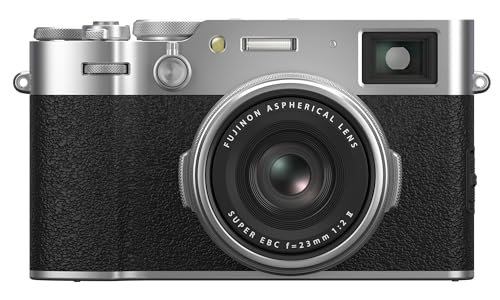
Fujifilm X100VI gives a grid instant character with film simulations and a discreet street presence.
Canon EOS R50 flatters faces in ordinary rooms and grows with a creator’s ambitions.
Sony ZV-E10 II serves Reels and product posts with focus that shifts gracefully to held objects.
Sony ZV-1F keeps casual posting effortless for creators who value speed over system-building.
Fujifilm Instax Mini 12 turns gatherings into physical prints guests can hold and photograph again.
Polaroid Go Generation 2 offers pocketable instant charm with a looser, more playful image.
Tiny instant camera whose small prints suit flat-lays and journals.
How We Chose These Picks
Testing followed a posting week rather than a studio session. Each camera had to produce a portrait in poor café light, a bright outdoor square, a vertical Reel opening, a flat-lay, and a same-evening Story — then deliver those files to a phone without friction. Cameras that demanded a laptop, a card reader, and a colour lecture before anything could be shared lost marks they could never recover in raw quality.
Identity consistency carried unusual weight. A single spectacular frame matters less to a feed than thirty frames that unmistakably belong together, so we favoured cameras whose colour, lens character, and handling push an owner toward a repeatable look. Fixed-lens models score surprisingly well under that lens, because consistency is built into their limitations.
Faces were judged with mercy and honesty together. Instagram portraiture fails in two directions — skin smoothed into wax, or every pore prosecuted under harsh light — and the picks below steer between them. Flattering, in this guide, means a person recognises themselves on a good day, not a stranger assembled by software.
What Does Instagram Actually Ask of a Camera Today?
Three formats share one account, and a wise purchase serves all three without contortion. The grid wants considered, high-quality frames that survive cropping to square or tall portrait. Stories want immediacy — vertical, informal, posted before the event ends. Reels want stable, well-exposed vertical video with a face the focus system refuses to abandon while hands gesture and products rise into frame.
Cropping discipline follows from that mixture. Shooting slightly wider than the final frame, keeping the subject clear of the edges the platform will trim, and checking the tall crop before leaving the scene are habits worth more than extra resolution. Still, resolution helps the habit: a detailed file tolerates the square crop, the tall crop, and the Story resize from a single exposure, which is why the mirrorless and premium picks earn their keep.
Transfer speed is the unglamorous specification that decides whether a camera becomes a posting tool or a weekend project. Wireless delivery to the phone, reliable and quick, keeps the camera in the daily loop; a clumsy transfer quietly returns the creator to their phone camera within a month. Every digital pick here was chosen partly for a transfer routine an owner will actually perform at a café table.
Sound enters through Reels. A creator speaking to camera in a kitchen, a studio, or a windy viewpoint needs a microphone path that grows from built-in convenience to a proper external solution. Two picks offer especially mature audio routes, and the guide flags them clearly, because a beautiful grid with unlistenable Reels is half an account.
How Do You Build a Recognisable Look Without Heavy Editing?
Choose a colour temperature and defend it. Decide whether your feed runs warm, neutral, or cool; set the camera’s white balance behaviour and picture style to live there; then photograph the same subjects — your desk, your street, your people — until the setting stops being a setting and becomes your signature. The Fujifilm simulations and Canon’s portrait colour both reward this commitment with distinct, repeatable palettes.
Light does more for identity than any filter applied afterwards. A creator who learns one window, one café corner, and one golden-hour route owns a lighting studio distributed across their week. Posting rhythm improves as a side effect, because known light removes the daily negotiation about where a photograph might work. Cameras with bright lenses and forgiving high-sensitivity behaviour widen the map of usable light, but the map itself is drawn by habit.
Composition consistency is the third ingredient. A recurring distance, a favourite focal character, a habit of negative space for text overlays — these small fidelities make a grid cohere even across varied subjects. Fixed-lens cameras enforce the discipline automatically, while the interchangeable picks reward owners who settle on one primary lens for the feed and treat others as guests.
Resist the seasonal filter chase. Audiences follow a creator for a world rendered in a particular way, and every abrupt aesthetic pivot spends recognition that took months to accumulate. Evolve the look the way the X100VI’s owners evolve theirs: slowly, through subject and light, while the underlying colour character stays recognisably yours.
Which of the Best Cameras to Use for Instagram Matches Your Posting Life?
Scroll a feed shot on this camera and the frames announce themselves before the caption loads: gentle contrast, colours that recall film stock rather than a showroom, and a lens perspective that feels like standing beside the photographer. For a creator whose account is built on streets, travel, cafés, and the texture of ordinary days, the X100VI supplies an identity so complete that many owners post its files with barely a crop and no apology.
The fixed lens, often misread as a limitation, functions here as an art director. Every photograph shares a viewpoint, so the grid coheres almost automatically, and the photographer learns to move, wait, and frame with intention instead of zooming from a fixed spot. Followers experience that intention as a voice. Accounts grow on voices far more reliably than on versatility.
Stabilisation inside the body extends the camera’s day into blue-hour streets and lamplit interiors, where its colour becomes most distinctive. The leaf-quiet discretion helps in cafés and galleries, and the dials encourage a slower, deliberate rhythm that suits considered grid posts better than spray-and-pray volume. Its video serves Stories and short clips competently, though a Reel-first creator should look at the Sony picks.
Demand outpacing supply is the practical shadow, and the single focal length will genuinely frustrate anyone whose feed depends on distant details or tight product shots. Buy it as a commitment to a way of seeing, and it may be the last camera your grid ever needs; buy it as a gadget, and its discipline will feel like a cage.
Sensor: APS-C with in-body stabilisation
Lens: fixed prime with classic reportage view
Colour: film simulations with strong identity
Handling: tactile dials, quiet and discreet
Best output: considered grid photography
Strengths
A recognisable feed identity straight from camera
Grid coherence enforced by the fixed lens
Beautiful handheld work in low evening light
Trade-offs
No zoom for distant or tight subjects
Video is capable rather than class-leading
Popularity can complicate buying one
Best for: photographers building a characterful, stills-led grid. Not suited for: Reel-first creators or product accounts needing varied focal lengths.
A creator filming a morning routine in a small flat, photographing a friend’s bakery at noon, and recording a talking-head update after dinner needs one camera that refuses to specialise badly. The R50 is that generalist with a kind streak: guided menus that teach as they go, autofocus that minds faces while the creator minds the script, and Canon colour that renders skin the way followers expect to see it — warm, clear, and recognisably human under household bulbs.
Vertical video sits naturally in its workflow, the flip screen supports solo framing at arm’s length or on a small tripod, and the files arrive with so little correction needed that a same-day posting rhythm stays realistic for someone with a job, a course load, or a family. Growth is built in rather than promised: the RF mount offers an affordable path to a wider lens for small rooms and a faster prime for evening portraits.
Creators who batch content will appreciate how repeatably the camera behaves across a long session. Settings hold, focus stays honest through repeated takes, and the body remains comfortable when the afternoon’s grid shots become the evening’s Reel takes. That steadiness turns a content day from a wrestling match into a schedule.
Expect the usual entry-platform courtesies: carry a spare battery for content days, and remember stabilisation leans on the lens and your elbows for walking shots. Neither dents the central verdict — for a growing Instagram presence that mixes faces, places, and spoken pieces, this is the most balanced starting point in the guide.
Sensor: APS-C, Canon RF mount
Colour: flattering skin tones in home light
Screen: vari-angle for solo and vertical work
Focus: dependable face and eye detection
Growth: affordable lens staircase ahead
Strengths
Faces look right with minimal correction
One body covers grid, Stories, and Reels
Platform grows alongside the account
Trade-offs
Spare battery wise for batch days
Walking stabilisation needs technique
Kit lens is a starting point, not a finale
Best for: growing creators mixing portraits, lifestyle, and spoken video. Not suited for: instant-print lovers or fixed-lens purists.
Hold a lipstick, a lens, a handmade soap, or a sneaker toward the camera mid-sentence and watch lesser focus systems hesitate, hunt, or cling to your face while the product blurs. This Sony was engineered for that exact gesture. Its focus glides to the presented object and returns to the eye when the object lowers, which makes it the natural camera of reviews, tutorials, shop updates, and every small business whose owner is also its presenter.
Reels benefit from the same completeness. Background separation can be dialled for instant production value, the screen faces the solo creator, and the audio pathway — microphone input, headphone monitoring, and a digital shoe for tidy wireless solutions — is the most grown-up in this guide. A creator whose voice sells the product will hear the difference in the first recording.
The E-mount catalogue turns the body into a long-term platform. Begin with the kit lens, add the wide your room demands, add the fast prime your evening posts demand, and borrow speciality glass for campaign shoots, all without relearning a camera. For an account with commercial ambitions, that depth is a business asset disguised as a specification.
Concede the missing in-body stabilisation and a menu system that rewards one careful evening of setup. Creators who configure it once, save their settings, and mount it for desk and product work will find it the most professionally complete Instagram tool here — the pick most likely to still be central when the account becomes an income.
Sensor: APS-C, Sony E-mount
Focus: face tracking with product showcase shifts
Audio: input, monitoring, and digital shoe
Screen: fully articulating for solo filming
Catalogue: deep lens selection for growth
Strengths
Product presentation focus leads the guide
Audio options mature with the account
Lens depth supports commercial growth
Trade-offs
No in-body stabilisation for walking clips
Menus need an initial learning evening
Compact grip suits smaller hands best
Best for: reviewers, tutors, and small brands presenting products on camera. Not suited for: creators wanting the simplest possible casual camera.
Plenty of accounts do not need a platform; they need a companion. The ZV-1F is the camera for the creator whose posting life is a stream of small, genuine moments — a thought on a walk, a café discovery, a quick update from a market stall — and whose worst enemy is a camera complicated enough to stay home. Its wide fixed lens frames a face and its surroundings at arm’s length, its focus care is automatic, and its footage arrives bright and finished-looking.
That wide view is composed for the way Instagram is actually watched. The presenter sits naturally in an environment rather than floating against a blur, backgrounds stay legible for location tags and context, and vertical clips feel spacious instead of cropped. For travel diaries, campus life, and neighbourhood accounts, the framing is not a compromise but a voice.
A microphone socket quietly rescues the camera from dead-end status. Begin with the built-in microphones, tuned for a clear voice at vlogging distance, then add a first external microphone when the account’s audience starts asking for better sound in busy places. The upgrade audiences notice most is available without replacing the camera that taught you to post daily.
Know its ceiling and it will never disappoint: no lens changes, no monitoring, low light handled willingly rather than brilliantly. As the engine of a frequent, personal, low-friction feed, it has a charm the bigger systems cannot imitate — it is the camera most likely to be in your pocket on the day something worth posting happens.
Lens: fixed wide for arm’s-length framing
Handling: minimal decisions, automatic care
Files: bright, finished look with little editing
Audio: microphone input for a first upgrade
Role: daily companion for frequent posting
Strengths
Posting friction close to zero
Wide framing suits travel and lifestyle Stories
Sound can improve without a new camera
Trade-offs
No growth path within the body
Evenings are willing, not brilliant
No headphone monitoring for audio checks
Best for: frequent, personal posters who value speed and simplicity. Not suited for: commercial product work or lens-based growth plans.
Every feed needs relief from the screen, and the Instax Mini 12 provides it in the most social way imaginable: a photograph that develops in a guest’s hand. At parties, weddings, markets, and hostel evenings, its cheerful prints become gifts, ice-breakers, and — photographed again on a table or held against a sunset — some of the most warmly received posts a lifestyle account ever publishes. The camera’s value is the ritual as much as the image.
Operation could hardly be kinder. Twist to wake it, frame through the simple finder with its selfie mirror, and let automatic exposure handle the mixture of daylight and party bulbs. Close-up mode covers the food, the flowers, and the ring-on-the-hand shots that gatherings generate, and the credit-card-sized prints slip into phone cases and journals, extending the account’s world into physical keepsakes.
Judge its quality by instant standards: soft, bright, forgiving, and emotionally immediate. It will not resolve a landscape like the mirrorless picks, nor should it try. Its film cost per frame encourages a photographer’s oldest discipline — choosing the moment — and followers respond to that chosen quality with an affection digital perfection rarely earns.
Carry spare film and accept that bright midday sun and very dark rooms both test its automation. Within those honest bounds, it is the gathering camera of this guide: the one that turns followers’ favourite thing — people enjoying each other — into something they can hold.
Format: instant prints, credit-card sized
Exposure: automatic for mixed party light
Features: selfie mirror and close-up mode
Handling: twist-on simplicity for any guest
Role: social ritual and physical keepsakes
Strengths
Prints become gifts, not just files
Anyone at the gathering can operate it
Chosen-moment discipline improves the feed
Trade-offs
Film is an ongoing per-frame cost
Detail is soft by digital standards
Extreme light tests its automation
Best for: gatherings, weddings, travel friendships, and warm lifestyle feeds. Not suited for: detailed product or landscape accounts.
The Polaroid Go shrinks the instant ritual until it fits a jacket pocket, and that shrinkage changes where instant photography can live: daily walks, commutes, school runs, and the small unplanned scenes that never justify carrying a larger camera. Its tiny square prints suit flat-lays, journal pages, and fridge doors, and photographed for the grid they carry a nostalgic charge followers recognise instantly.
Selfie support and a simple double-exposure trick give creative posters more to play with than the size suggests. A face layered over a skyline, a portrait ghosted across a café window — these small experiments perform well precisely because the format forgives their softness and rewards their idea. The camera invites play in a way serious systems, for all their quality, sometimes forget to.
Expect Polaroid character in full: gentle contrast, colours that drift toward dreaminess, and results that vary with temperature and light. Devotees call that soul; product photographers should call it unsuitable and choose the Sony or Canon. The per-frame film cost is real, and the small prints reward close viewing rather than wall display.
Carry it as a second camera alongside a digital pick and the combination is delightful — the digital body guarantees the record, the Polaroid guarantees the keepsake. As a sole camera it serves a deliberately lo-fi, diary-style account beautifully, provided the owner embraces variation as the aesthetic rather than fighting it frame by frame.
Format: tiny square instant prints
Carry: genuinely pocketable body
Play: selfie mirror and double exposure
Character: soft, dreamy, variable colour
Role: diary, journal, and flat-lay charm
Strengths
Instant photography that travels daily
Small prints suit journals and flat-lays
Creative tricks invite experimentation
Trade-offs
Film cost accumulates quickly
Results vary with light and temperature
Prints are small for display purposes
Best for: diary-style accounts, journalers, and playful second-camera use. Not suited for: precise product, beauty, or landscape work.
Feed Tools Compared: Speed, Character, and Craft
Pick
Posting speed
Signature look
Best format
Fujifilm X100VI
Considered
Film-like, cohesive
Grid stills
Canon EOS R50
Fast after setup
Warm, kind faces
Mixed grid and Reels
Sony ZV-E10 II
Fast, professional
Clean, product-ready
Reels and reviews
Sony ZV-1F
Fastest digital here
Bright, wide, casual
Stories and daily clips
Fujifilm Instax Mini 12
Instant, physical
Cheerful, soft prints
Gatherings and gifts
Polaroid Go Generation 2
Instant, pocketable
Dreamy, variable
Diary and journal posts
Speed in the table means time from moment to posted result, and it cuts two ways. The ZV-1F wins the digital race because it asks almost nothing of its owner; the instant cameras win a different race entirely, producing a physical object before any digital file could finish transferring. Choose the race your account actually runs each week.
Character, meanwhile, compounds. A month of X100VI frames builds more recognition than a month of technically superior but anonymous images, which is why the table lists signature look beside speed rather than beneath it. An account is a promise repeated; the camera that helps you keep the promise in the same visual language is doing strategic work.
How Should You Shoot Vertical Without Ruining the Photograph?
Compose for the tall frame from the start rather than cropping a horizontal afterthought. Hold the camera vertically for portraits and Reels, place eyes in the upper third, leave breathing room above a head for the interface elements the platform overlays, and keep important details away from the bottom edge where captions and buttons gather. Creators who internalise that geography stop losing foreheads and product labels to the interface.
When a scene must serve both orientations — a grid post today, a Story tomorrow — shoot the considered horizontal frame slightly wide, then a deliberate vertical twin. The twin takes ten seconds at the scene and saves the desperate crop at the desk. Several picks make the habit painless with screens that rotate or tilt into the vertical workflow gracefully.
Light vertical portraits from the side of a window rather than from a ceiling fixture, and step the subject away from the wall to let backgrounds soften and separate. Those two moves, available in any café or flat, improve more Instagram portraits than any lens upgrade, and they cost nothing but the decision to make them every time.
What Mistakes Do Instagram Creators Make With a New Camera?
Buying resolution and neglecting the transfer is the classic opening error. A magnificent file that reaches the phone three days late, via a laptop nobody enjoys opening, might as well not exist for a daily feed. Test the wireless routine in the first week, build it into the posting ritual, and let any camera that resists the ritual go back while returns are still kind.
Over-editing a camera’s native character away runs second. New owners often buy a Fujifilm for its colour, then grade every frame toward a generic preset, or buy Canon’s kind skin tones and smooth them into plastic with enthusiastic retouching. Spend the first month posting close to the camera’s own rendering; learn what your audience responds to before negotiating with the look that attracted you.
The third mistake is format neglect — a stills camera bought for a Reel-led account, or a video specialist bought for a grid of still lifes. The table above exists to prevent exactly that mismatch, and the honest self-knowledge it requires is simply this: count last month’s posts by format, and buy for the majority you actually published, not the minority you admire on other accounts.
How Do You Keep a Posting Rhythm Without Burning Out?
Batch the capture, not the life. One walk with the X100VI, one desk session with the Sony, one gathering with the Instax can supply a week of posts when each outing is shot with the feed in mind — a portrait, a detail, a wide scene, a short clip. The camera that behaves identically across those outings keeps the batch coherent, which is another quiet argument for settling on one primary body.
Keep an evergreen reserve. A handful of timeless posts — a favourite street, a workspace detail, a product flat-lay — held against the week when illness, travel, or simple tiredness intervenes protects both the rhythm and the creator. Audiences forgive a quiet week far more readily than creators forgive themselves, and the reserve exists to purchase that self-forgiveness cheaply.
Review monthly by contact sheet rather than by memory. Lay thirty posts side by side and ask what a stranger would say your account is about, what its colours are, and which three frames do not belong. That review, done with the camera’s settings in mind, turns vague dissatisfaction into one precise adjustment — a white-balance habit, a distance habit, a light habit — instead of a new purchase.
How Should Small Brands and Shops Choose Differently?
A shop’s feed is a catalogue with a heartbeat, and its camera brief adds two demands a personal account can skip: colour fidelity for products, and repeatability under the shop’s own lighting across seasons. The ZV-E10 II answers both most completely, with its product focus, lens options for tight details, and monitored audio for the owner’s spoken introductions that followers learn to trust.
Budget honesty matters here in a specific way. Money spent beyond the camera — on a consistent backdrop, a soft light, and a small tripod — returns more visible quality for a shop than a costlier body shot under bare bulbs. Sequence the purchases in that order and the feed will look commercial sooner, which for a business is not vanity but revenue.
Finally, plan for the second pair of hands. Staff will eventually shoot the delivery-day Story or the new-arrival flat-lay, so the camera’s automatic behaviour and saved settings are a training tool. Bodies that produce the house look without expert intervention keep the feed coherent no matter who pressed the shutter, and coherence, for a brand, is the whole game.
Final Recommendation
Choose the Fujifilm X100VI when your grid is a photographer’s diary and character matters more than flexibility. Choose the Canon EOS R50 for the balanced creator life — faces, places, and spoken pieces from one kind, growing platform — and the Sony ZV-E10 II when products, tutorials, and Reels carry commercial weight. The Sony ZV-1F keeps a personal feed moving with almost no friction at all.
Let the instant cameras do what only they can. The Instax Mini 12 turns gatherings into gifts and gratitude posts; the Polaroid Go slips a lo-fi diary into a pocket. Many happy accounts will own one digital pick and one instant pick and want for nothing. Whichever pairing you build, post close to the camera’s own colour for the first month, master the transfer ritual in the first week, and let rhythm — not resolution — be the metric by which the purchase is judged.
Frequently Asked Questions
Do I need a dedicated camera if my phone already posts well?
Not for every account. A camera earns its place when you need reliable low-light faces, real background separation, product focus behaviour, better Reel audio, or a look distinct from the phone aesthetic your whole niche shares. If none of those needs has bitten yet, post with the phone and let the friction, when it arrives, write the shopping list.
Which format should a new account prioritise, grid or Reels?
Prioritise the format you can sustain weekly, because consistency teaches the platform and the audience what you are. Reels currently travel further to new viewers, while grid posts deepen a profile visit into a follow; most growing accounts feed discovery with Reels and conversion with the grid, using one camera fluent in both.
How important is vertical video quality for a stills-led account?
Important enough to check before buying. Even stills-led accounts announce exhibitions, launches, and trips through Stories and short clips, and a camera whose vertical video is an afterthought will irritate its owner weekly. Every digital pick here handles vertical deliberately rather than reluctantly.
Can instant cameras really contribute to a serious feed?
Yes, as texture and ritual rather than as documentation. A developed print photographed in context — held at the viewpoint, taped into a journal, gifted in frame — signals presence and generosity in a way a perfect digital file cannot. Serious accounts use instant frames sparingly and deliberately, which is exactly why they work.
What is the first accessory an Instagram creator should buy?
A small, steady tripod or grip for solo framing, then a microphone if spoken Reels matter, then light. The order follows the audience’s perception: a stable, well-framed shot first, a clear voice second, and flattering illumination throughout. Expensive lenses wait until a repeated frustration names them specifically.
How do I stop my feed looking like everyone else’s?
Commit to one camera’s colour, one primary lens character, and a short list of recurring subjects and places, then let time do the branding. Sameness in other feeds usually comes from shared presets applied to shared phone files; a distinct capture pipeline, repeated patiently, separates your grid without any gimmick.
How Does Light at Different Hours Change an Instagram Feed?
Morning light forgives almost everything. It arrives low, soft, and directional, flattering faces near windows and giving streets a long-shadow depth that no filter convincingly fakes. Creators who can post from a morning walk own the cheapest production upgrade in photography, and cameras with quiet, discreet handling — the Fujifilm above all — let that walk pass through cafés and markets without turning the photographer into a spectacle.
Midday is the honest hour. Colours saturate, shadows harden, and skin under a high sun needs shade, a step into open cover, or the mercy of a bright lens used carefully. Accounts that master midday — markets at noon, beaches, festivals — separate themselves from the golden-hour crowd, because their feeds prove the world was interesting all day. The compacts and mirrorless picks handle the contrast best when their owners expose for the highlights and let shadows fall where they will.
Evening divides the cameras in this guide most clearly. City lights, restaurant bulbs, and blue-hour streets reward larger sensors, stabilisation, and lenses that gather light greedily; the instant cameras, by contrast, lean on their flashes and produce a direct, party-hard look that followers often love precisely for its refusal to be subtle. Neither approach is superior. A feed simply has to choose its evening personality and dress for it consistently.
Night teaches the final lesson: a small tripod or a steady surface transforms more evening posts than any camera upgrade. Thirty still seconds of a skyline, a braced portrait under string lights, a Reel filmed from a table rather than a swaying hand — these are technique purchases, available tonight, and the creators who make them stop blaming their sensors for the physics of darkness.
What Should a Creator Practise in the First Month With a New Camera?
Devote the first week to faces alone. Photograph the same willing person near the same window at three times of day, post the best frame from each session, and study what followers respond to. Faces are the currency of the platform, and a creator who knows exactly how their camera renders the people in their life owns a skill no preset can download.
Give the second week to places. Return to one location until its angles are exhausted — the wide establishing frame, the human detail, the texture close-up, the vertical Story twin. Place series teach composition faster than scattered tourism, and they give a young feed the coherent mini-essays that profile visitors convert into follows. Fixed-lens owners will find this week transformative; zoom owners should discipline themselves to one focal length per visit.
Use the third week for motion. Film the walk, the pour, the making, the arrival — the small verbs of your niche — and learn where your camera’s focus, stabilisation, and sound succeed or complain. Post the clips without waiting for mastery. Reels improve through published iterations, and the audience that watches a creator visibly improve becomes unusually loyal, because improvement is a story and stories retain people.
Spend the fourth week reviewing rather than shooting. Print nothing, buy nothing, and lay the month’s posts side by side to name the account’s emerging colour, distance, and subject habits in plain words. Write those words down. They become the brief for every future purchase, collaboration, and aesthetic temptation, and they are the difference between a feed that drifts and a feed that develops.
How Do Collaborations and Tagged Posts Change the Camera Brief?
Collaboration posts must satisfy two feeds at once, which quietly raises the technical bar: files need enough quality to survive a partner’s crop, colour habits, and repost compression without falling apart. The mirrorless picks offer that headroom most comfortably, while the instant cameras contribute the shared physical moment — a print both parties keep — that often matters more to the relationship than the post itself.
Shooting another creator also tests your camera’s handover quality. Can a partner pick it up and produce an on-brand frame of you within a minute? Guided menus, reliable face focus, and a saved house setting turn that handover from a negotiation into a favour easily returned. Accounts that collaborate monthly should weigh handover behaviour almost as heavily as image quality.
Brand work adds a sterner requirement: repeatability on demand. A café paying for content expects Tuesday’s flat-lay to match last month’s light and colour, regardless of weather or who is behind the camera. Locked settings, a noted window position, and a reference frame kept on the phone turn that expectation from stress into routine, and the platforms with proper saved configurations earn professional trust fastest.
None of this requires surrendering a personal look to a partner’s. The healthiest collaborations keep each account’s colour signature intact and let the subject, not the processing, be the shared element. Followers read that confidence correctly — two distinct voices choosing to appear together — and both feeds emerge stronger than a blended compromise would have left them.
Why Do Some Feeds Grow on Modest Cameras While Finer Kits Stall?
Posting frequency explains more of the gap than any sensor comparison. A modest camera that leaves the house daily generates the raw material of growth — encounters, light, small stories — while a finer system awaiting perfect occasions produces a beautiful archive nobody sees. The platform rewards presence, and presence is a carrying habit before it is a talent.
Clarity of subject explains the rest. Modest-camera accounts that thrive usually know their three recurring subjects cold and photograph them with accumulating intimacy; stalled accounts often own excellent equipment pointed at everything and therefore, in the follower’s mind, at nothing in particular. A camera cannot supply a subject, but a constraining camera — one lens, one ritual, one pocket — can help its owner discover one.
There is also a confidence effect worth naming honestly. Creators unintimidated by their tools post earlier, experiment publicly, and reply to their audience as people rather than as judges of image quality. Followers gather around that ease. The simplest picks in this guide manufacture ease deliberately, and for many accounts that ease, not resolution, is the growth feature they were actually shopping for.
None of this argues against quality. It argues for sequence: rhythm first, identity second, refinement third, each purchased only when the previous stage is visibly working. The creators who follow that sequence rarely waste money, because every upgrade answers a named limitation in a feed that already exists — and an existing feed is the only reliable guide to what its camera should become.
How Should You Handle Captions, Covers, and Reposts as Part of the Workflow?
A Reel cover chosen from a deliberate frame beats a random mid-gesture still every time, so film one clean, held pose at the start of each clip with the cover in mind. That three-second habit, built into the camera routine, professionalises a profile grid more cheaply than any equipment decision in this article, and it costs nothing once it becomes automatic.
Captions reward the same forethought as photographs. Note the place, the person’s name spelling, and the one detail followers will ask about while you are still at the scene, because memory edits those facts within hours. Creators who keep a running note beside the camera app publish faster and correct themselves less, and speed with accuracy is the operational signature of accounts that last.
Reposts and shares deserve original-file discipline. Send partners the full file through a proper transfer rather than a compressed chat copy, keep your own masters untouched by repeated saving, and credit the camera’s owner the way you would want your frames credited. These courtesies sound administrative; in practice they preserve both image quality and the relationships that fill a feed with collaborators.
End each posting day by clearing the camera’s card only after the backup confirms itself. That single verification habit, repeated without exception, prevents the one catastrophe no follower growth can compensate for — the vanished day — and it turns the camera from a fragile container into a trustworthy stage of a calm, professional workflow.
When Does a Second Camera Earn Its Place in an Instagram Kit?
A second body earns its keep when it does a job the first refuses to do, not when it merely does the same job slightly better. The classic productive pairings in this guide are a mirrorless platform plus an instant camera — record plus ritual — or a characterful fixed-lens body plus a pocket video companion, stillness plus motion. Each pairing widens the feed’s emotional range without splitting its identity.
Resist pairing two platforms that demand separate lenses, chargers, and habits for marginal gains. Complexity taxes posting rhythm, and rhythm, as this guide keeps insisting, is the metric that decides whether any of the equipment matters. A second camera that halves your posting frequency has made the account worse at any image quality.
Borrow or rent the candidate second camera for one full posting week before buying. Live with its transfer routine, its evening behaviour, and its place in your bag on an ordinary Tuesday. The week will either reveal a genuine gap being filled or expose a novelty already fading, and either answer is worth far more than the rental cost.
When the pairing proves itself, assign each camera a named role and defend the assignment. Role clarity prevents the daily dithering that quietly kills spontaneous posts: this body for the grid, that one for the gathering, no debate at the door. Accounts run on such small, settled decisions far more than on inspiration, and the settled kit is the one still posting, recognisably itself, a year from now.
How Can a Creator Protect Privacy and Consent While Posting Daily?
Daily posting eventually photographs people who did not volunteer to become content: café neighbours, fellow travellers, children at the edge of a family scene. A responsible creator develops reflexes for those encounters — framing wide scenes so strangers stay anonymous, asking before a recognisable portrait, and deleting without argument when someone objects. Cameras with quiet, discreet handling make the respectful choice easier, but the choice itself is character, not equipment.
Location habits deserve the same care. Posting a home exterior, a child’s school route, or a small business’s quiet hours in real time can expose more than the creator intends. Delaying sensitive posts, stripping location detail where safety suggests it, and keeping the camera’s own location tagging under conscious control are professional habits, not paranoia, for anyone whose audience is growing.
Consent also improves the work. People who agree to be photographed relax, participate, and often become recurring characters followers love; people ambushed by a lens rarely do any of those things. The accounts with the warmest human texture are almost always the accounts that ask, and asking costs one sentence at the scene and returns a feed full of willing faces.
Build the habit into the camera routine itself: ask, photograph, show the result, share the file, and thank the person before moving on. Several picks make that loop fast enough to feel like hospitality rather than procedure. A feed built on hospitality ages well, because its subjects remember the photographer kindly — and a kindly remembered photographer gets invited back for the moments money cannot schedule.
Keep one final proportion in mind when the choice feels overwhelming: followers remember how your feed made them feel across a season, not which body produced any single frame. Choose the camera that keeps you posting kindly, consistently, and in a colour you recognise as your own, and the technical questions that dominate shopping lists will settle into their proper, minor place. The grid is a diary the world is invited to read; the best camera is simply the one that keeps the diary honest, current, and unmistakably yours, week after ordinary week.
What Does a Sustainable Kit Look Like After a Year of Posting?
After a year, the sustainable kit looks smaller than its owner expected. One primary body whose settings are memorised, one lens character that defines the grid, a microphone if the voice matters, a small light for the worst rooms, and perhaps an instant camera for the human moments — that is the working inventory behind many mature accounts, and almost everything else has been sold, returned, or relegated to a drawer of good intentions.
The year’s real acquisitions are invisible: a window whose light is known by heart, a transfer ritual that runs without thought, a backup habit that has never yet been needed and is kept anyway, and a written description of the feed’s look that settles arguments with future temptation. Cameras start that education; habits finish it. Choose the pick that teaches the habits your account needs, and the second year becomes a matter of subjects, not shopping.
Treat that inventory as a promise to your future self rather than a restriction. Every settled choice — the body by the door, the film in the drawer, the settings that never wander — removes one small negotiation from the posting day, and a day without negotiations is a day the feed gets fed. Start with the pick whose negotiations you will mind least, post the first month close to its native colour, and let the account, not the catalogue, direct whatever comes next.
Then begin, preferably today, with the light you already have. A first post made this evening in a known window teaches more about the right camera than another week of comparison tables, because it reveals whether your bottleneck is colour, speed, sound, or simply starting. Let the feed itself cast the deciding vote, and buy — or happily keep — the camera that its evidence names.
That evidence, gathered honestly over a month of real posts, is worth trusting over any review — including this one. Reviews can rank cameras; only your own feed can rank them for your light, your subjects, and your rhythm, which are the terms on which an Instagram camera ultimately succeeds or quietly gathers dust.