kajuandouglas.com is reader-supported. When you buy through links on our site, we may earn an affiliate commission.
Where to Buy an RC Airplane Camera, and Why a Wing Is Not a Quadcopter
The best cameras for rc airplane flying answer a brief written by fixed-wing physics, and it differs from the drone world’s in ways that decide purchases. An airplane cannot hover to forgive a heavy camera, cannot stop to let you adjust anything, and flies far enough away that the footage must be trusted to a machine you can no longer see clearly. Weight matters here as balance as much as mass — a camera in the wrong place moves the centre of gravity and rewrites the model’s manners — while vibration arrives from a single propeller’s pulse rather than four, and the flight lasts not four minutes but twenty. This guide ranks six action cameras for the wings, fuselages and cockpits of RC airplanes, from foam trainers to scale warbirds.
Two kinds of flying hide in this search, and the guide serves both openly. The first is the film flight: the camera as passenger and cinematographer, recording the flight for the audience on the ground — the wing’s view of the valley, the scale cockpit’s illusion, the chase plane’s ballet. The second is the working flight: cameras carried to inspect, to survey a field, to practise the FPV discipline on a forgiving airframe. Both want the same virtues in different proportions — lightness, steadiness, endurance, and footage that survives the model’s vibration signature — and the picks below are assigned to their skies accordingly.
An honesty about FPV belongs early: the camera a pilot flies by is usually a tiny dedicated FPV camera feeding a transmitter, a different device from the recording cameras in this guide. Many pilots fly both — the little eye for the goggles, the action camera for the film. Nothing here replaces the FPV camera’s job; everything here does the recording job that the FPV camera does badly. Read the picks as the film department of your airframe, and the confusion between the two departments — the source of most disappointed purchases in this hobby — dissolves.
Regulations, as with all model flying, frame the hobby: know your local rules for where and how high models may fly, what registration your aircraft’s all-up weight requires, and keep the camera decision inside those lines. A camera changes a model’s weight and sometimes its category. The scale in the workshop is a legal instrument as well as an aerodynamic one, and the prepared pilot uses it before the field, not after a question is asked beside it.
Key Takeaways
- On a fixed-wing model, camera placement is a balance decision before it is a filming one.
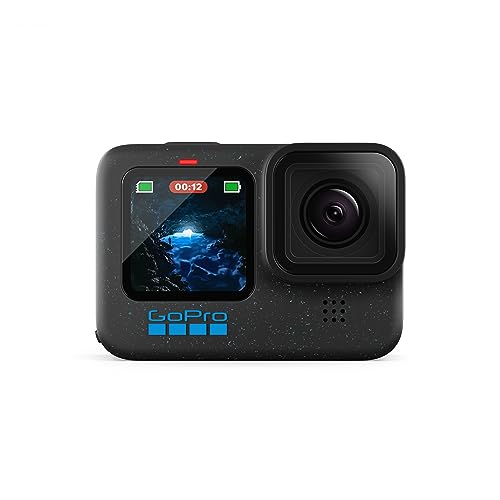
- The GoPro HERO12 Black is the proven all-round recording camera for RC aircraft.
- The DJI Osmo Action 5 Pro’s endurance matches the fixed-wing flight’s longer legs.
- The Insta360 X4 on a wing or tail turns one flight into a whole film’s angles.
- The AKASO Brave 7 LE is the trainer’s camera — priced for the landings learning requires.
- Recording cameras and FPV flight cameras are different departments; most pilots fly both.
In this guide
Quick Picks
| Camera | Badge | Why RC pilots carry it |
|---|---|---|
| GoPro HERO12 Black | Best all-round aircraft camera | Proven footage, endless mounts and the gyro workflow the hobby standardised on. |
| DJI Osmo Action 5 Pro | Best for long flights | Battery endurance that matches a fixed-wing model’s legs, with consistent colour. |
| Insta360 X4 | Best for cinematic flight films | A 360 eye on the tail or wing — the whole sky, reframed after landing. |
| Insta360 Ace Pro 2 | Best for evening flights | Golden-hour and dusk clarity for the day’s most beautiful and calmest air. |
| GoPro HERO13 Black | Best flagship footage | The newest reference quality for the scale ship and the chase plane. |
| AKASO Brave 7 LE | Best trainer camera | Honest footage priced for the arrival distribution of a learning pilot. |
How Did We Choose These Cameras for Fixed-Wing Duty?
Balance and weight were scored together, as the airframe experiences them. A camera’s grams are only half its cost; the other half is where those grams must sit. Models with generous noses and payload bays forgive a flagship; sleek scale ships and small foamies forgive almost nothing placed ahead of the wing. The six below span the useful range — from the full flagships a big trainer or a scale bomber carries proudly, to the budget body whose lightness and price suit the models that teach.
Vibration was judged on the fixed-wing signature: the single propeller’s rhythmic pulse, the motor’s harmonics through foam or balsa, the particular buzz of a folding prop at cruise. Footage was weighed for the jello that signature writes into rolling shutters, and for how each camera’s stabilisation and the hobby’s gyro-based post tools clean it. A camera that films beautifully on a quad can still disappoint on a wing; the picks here are the ones the fixed-wing fleet has adopted, which is evidence of the right kind.
Endurance was scored against fixed-wing time. Twenty-minute flights, a morning of them back to back, a camera that cannot be reached between landing and the next launch without dismantling the model — the Action 5 Pro’s stamina and the flagships’ battery options were weighed as operational features, not conveniences. A camera that dies on the third flight of a club morning is a passenger that stopped paying rent.
Finally, the arrival ledger: RC airplanes land on grass, gravel and occasionally geography, and their cameras share the itinerary. Case protection, lens position, replaceability — the same crash economics as every airborne genre, with the fixed-wing twist that the camera often rides in the nose, which is the model’s own crumple zone. Mounting position is therefore a protection decision, and this guide treats it as one throughout.
Where on an Airplane Should a Camera Live?
The wing’s top centre is the classic seat: close to the centre of gravity, stable in its view, filming the fuselage’s spine ahead and the world beyond — the shot that says airplane. It is the position least likely to upset the model’s manners and the most likely to survive its landings, sheltered by the wing’s own structure. For a first camera on a first model, this is the answer nine times in ten, and the tenth is the cockpit.
The cockpit seat serves the scale illusion: the camera where the pilot’s head would be, the instrument panel’s edge in frame, the world moving as it moves for the imagined aviator. Scale pilots prize this footage above all other angles, and it asks the most of the camera — small enough for the canopy’s world, steady against the nose’s vibration, balanced so the model’s trim survives its passenger. When it works, the film stops being about a model and becomes, for three minutes, about flying.
The tail and the wingtip are the cinema positions. A camera looking forward from the tail films the whole aircraft in its element — the control surfaces working, the wing flexing, the world sliding beneath — while a wingtip camera trades in vertigo and horizon rolls. Both positions move weight away from the centre, which the balance must answer for, and both expose the camera to the landing’s geography. They are second-camera positions, earned after the centre seat has taught the pilot what the model tolerates.
Under the fuselage lives the working camera: the survey view, the inspection pass, the bomb-aimer’s perspective of the field below. It is the most exposed seat of all at landing, which is why the budget pick in this guide so often flies it — and why retractable or sacrificial mounting is a design conversation worth having before the first flight, not after the first arrival.
How Do You Balance, Mount and Set a Camera for a Model?
Balance first, with the model fully assembled and the camera in its seat: the centre of gravity marked by the designer is a contract, and the camera’s weight must be answered — by placement near the mark, by the battery’s repositioning, in the last resort by ballast whose total the all-up weight must then confess to. Fly a new camera position’s first flight as a test flight, gently, in calm air, with the model’s manners as the only question. A camera that changes the stall or the glide has not been mounted; it has been survived, once.
Mounting on foam and balsa is its own craft: hook-and-loop with a safety leash for the trainer, a printed cradle for the regular position, a bolted plate for the scale ship. Whatever the method, assume the arrival will test it and give the camera a second retention — the leash that keeps a departed camera dangling rather than lost in the crop field has saved more footage than any stabilisation system in this guide. Bright tape on the camera’s body is the other cheap insurance: models and their passengers are found by colour.
Settings are the ground crew’s last gift: exposure set for the sky’s brightness rather than the field’s, because the film’s subject is the air; frame rate chosen for the slow-motion the edit wants of the landing flare; stabilisation on, with the gyro data kept for the post tools that will finish the job. Then close the canopy and fly the aeroplane — the camera’s whole purpose is to be forgotten until the model’s wheels are back on the grass and the film can be collected like mail.
And keep a flight log for the camera as the model’s logbook keeps the airframe’s: which position, which settings, what the footage taught. The fixed-wing hobby runs on accumulated small knowledge, and the camera positions that sing on your model are a discovery worth writing down before the next airframe asks the same questions.

GoPro HERO12 Black — Best all-round aircraft camera
The HERO12 Black is the fixed-wing fleet’s incumbent for the compound reason that it has already survived the hobby’s entire syllabus: the foam trainer’s arrivals, the scale ship’s vibration, the chase plane’s long mornings. Its footage is the known quantity — stabilisation that handles the propeller’s pulse, gyro data the post tools are built around, colour that assembles a morning’s flights into one film — and its mount grammar is the one printed cradles and cockpit tubs across the hobby are already shaped for.
On a wing it behaves like a citizen: the weight sits where trainers and sport models expect a passenger, the battery options stretch across a club morning, and the second-hand market keeps a fleet of them priced for the positions whose risk the flagship successor should not be asked to take. Pilots standardise on it the way they standardise on a propeller size — because the knowledge around it is total.
The generational refinements it lacks are refinements, not capabilities: its successor’s lens options and thermal polish do not change what a wing’s film looks like from the audience’s seat. What the HERO12 offers instead is the deepest pool of fixed-wing-specific wisdom — which settings for which airframe, which mount for which foam — accumulated in forums and club huts over years.
For the pilot equipping a model today, from trainer to warbird, the HERO12 is the answer that needs no caveat: proven in the exact air your model flies in, priced by the used market like the workhorse it is.
- Footage: proven stabilisation and gyro workflow
- Mounts: cradles exist for every common model
- Value: deep second-hand fleet pricing
- Endurance: battery options for club mornings
Strengths
- The fixed-wing hobby’s known quantity.
- Films beautifully from wing, cockpit or tail.
- Knowledge and mounts everywhere it flies.
Trade-offs
- A generation behind in refinements.
- Flagship-class weight for small foamies.
- Needs post gyro work for the smoothest films.
Best for: trainers, sport models and scale ships alike. Not suited for: the very lightest micro models.

DJI Osmo Action 5 Pro — Best for long flights
Fixed-wing flying is measured in longer units than the drone world’s — the twenty-minute thermal hunt, the scale flight that includes a whole display routine, the morning’s six sorties — and the Action 5 Pro’s endurance is built to that clock. Its battery outlasts the flight batteries around it, so the camera is never the reason a model comes down, and its colour consistency across a long morning lets the day’s flights cut together as one film rather than a strip of auditions.
Its stabilisation takes the propeller’s pulse in stride, and DJI’s aircraft-bred design sense shows in the details a pilot notices: quick checks on its screens between sorties, a body that shrugs the field’s weather, files that behave in the edit. On a big trainer, a tow plane or a camera ship built for survey work, it is the professional passenger — set at breakfast, faithful at lunch.
The compromises are the challenger brand’s: cradles and mounts for specific models may need printing rather than buying, and its gyro post-workflow is younger than GoPro’s. For the pilot whose models are large enough that the camera is a minor passenger, neither weighs much against a day of unattended fidelity.
Assign it to the airframes that fly far and long — the survey ship, the glider tug, the scale transport doing its stately circuits — where the film’s enemy is not vibration or weight but the clock. The Action 5 Pro beats the clock, which on a fixed-wing field is the rarest victory available.
- Battery: outlasts the flight packs
- Colour: consistent across a long day
- Build: weather-ready, field-tough
- Role: survey ships and long sorties
Strengths
- Never the reason a flight ends.
- A morning’s footage grades as one.
- Set-and-forget professionalism.
Trade-offs
- Model-specific mounts may need printing.
- Post workflow younger than GoPro’s.
- Premium price for a passenger’s seat.
Best for: long flights and camera ships. Not suited for: micro models or tight budgets.

Insta360 X4 — Best for cinematic flight films
Mounted on the tail or the wing of a model with the stature to carry it, the X4 does something no flat camera can: it records the whole sky and the whole aeroplane at once, so the film can look forward over the nose, back along the fuselage, down at the field unrolling, or across at the formation partner — all from one flight, chosen at the editing desk. For the scale display film and the travelogue of a model’s morning, that is not a feature; it is a fleet of cameras in one passenger.
The fixed-wing cautions are specific. Its lenses are its vulnerability, and a model’s arrivals are rougher than a drone’s, so guarded lenses and a sheltered seat — the tail’s top, the wing centre’s cradle — are close to mandatory. Its weight demands an airframe with payload margin and a balance check that takes the position seriously. And the reframing stage adds an evening to every film, which the footage’s impossible angles repay only when the film, not the log, is the purpose.
Within those disciplines, its flight films have a signature nothing else in this guide copies: the aeroplane seen whole in its element, the horizon wheeling in a turn with the wing steady in frame, the landing flare watched from the tail as the field rises to meet it. Audiences who have seen a thousand drone films sit up for that grammar, because it is the grammar of the airshow camera ships.
Fly it on the model that can carry it proudly — the big trainer, the scale bomber, the dedicated camera ship — and let the smaller airframes leave it to their elders. The X4 is the cinema department, and cinema has always needed a certain size of stage.
- Capture: 360, reframed after landing
- Seats: tail or wing centre, guarded
- Footage: the whole aircraft in frame
- Class: payload-margin airframes
Strengths
- A fleet of angles from one passenger.
- The airshow grammar, on a model.
- Formation and chase films from one flight.
Trade-offs
- Lenses need guarding against arrivals.
- Too heavy for small models.
- Reframing time on every film.
Best for: scale display films and camera ships. Not suited for: trainers or rough-field regulars.

Insta360 Ace Pro 2 — Best for evening flights
The fixed-wing day’s best air is its last: the wind drops, the light goes amber, the models fly their stateliest circuits in a sky that seems lit for them. The Ace Pro 2 is the camera for that hour. Its low-light clarity keeps the film clean and coloured as the sun leaves — the navigation lights’ first twinkle, the field’s long shadows, the model’s silhouette banking against the afterglow — where lesser cameras surrender the session to noise exactly when it becomes beautiful.
Its compact body suits the sleeker airframes whose cockpits and cradles refuse the bigger flagships, and its flip screen makes the between-flight checks — is it recording, is the lens clean, what did that pass look like — a ten-second ritual at the flight line. Stabilisation handles the propeller’s manners with the same composure it shows everywhere else in this series of guides.
The cautions are its price in a seat exposed to arrivals, and an accessory world still growing toward the incumbent’s completeness. Evening flying is also, not coincidentally, the gentlest flying — the Ace Pro’s natural habitat is the calm hour when arrivals are greased and the light forgives — which suits its premium nature more than the noon crash curriculum would.
For the pilot whose favourite flights are the day’s last, and whose films are judged by their light rather than their aerobatics, the Ace Pro 2 owns the golden shift on a wing as surely as it does everywhere else in this guide’s world.
- Low light: class-leading dusk clarity
- Body: compact for sleeker airframes
- Screen: flip for flight-line checks
- Role: golden-hour specialist
Strengths
- The day’s best light, kept filmable.
- Fits where flagships crowd.
- Footage that flatters scale models.
Trade-offs
- Premium price in an exposed seat.
- Mount ecosystem still maturing.
- Overkill for noon trainer duty.
Best for: evening and scale flying. Not suited for: the crash-curriculum trainer.

GoPro HERO13 Black — Best flagship footage
The HERO13 Black is the current summit of the carried-camera art, and on the right airframe its footage shows it: the sharpest eye in this guide, lens options that change the film’s character — the wide epic, the narrower documentary — without changing the passenger, and stabilisation that has digested every vibration signature the hobby has offered it. On the scale ship whose film will be projected, judged or sold, those margins are the purchase.
Its natural seats are the models built like its ambitions: the large scale warbird with a cockpit tub waiting, the chase plane whose whole purpose is another aircraft’s portrait, the camera ship on which the film is the flight plan. There, its weight is a rounding error in the all-up total and its price is proportionate to the airframe carrying it — the flagship logic that governs full-size aviation applies unchanged at model scale.
What it should not do is ride the trainer. The crash curriculum would make its price a tuition fee, and its refinements are wasted on flights whose purpose is the pilot’s education rather than the audience’s delight. Fleets in this guide exist in pairs for a reason — the HERO12 or the AKASO for the syllabus, the HERO13 for the graduation film.
For the pilot whose model deserves the best eye the pool offers — and whose flying has earned the right to carry it — the HERO13 is the flagship in fact as in name: the camera the film is built around, on the airframe built to carry it.
- Footage: the pool’s sharpest and most flexible
- Lenses: interchangeable looks, one passenger
- Stabilisation: every signature digested
- Role: scale ships and chase planes
Strengths
- Footage worth projecting and judging.
- Lens character without a second camera.
- The flagship the fleet aspires to.
Trade-offs
- Price has no business on a trainer.
- Weight needs a real payload margin.
- Best results reward post-production skill.
Best for: scale flagships and chase work. Not suited for: learning fleets or micro models.

AKASO Brave 7 LE — Best trainer camera
The trainer is where pilots are made, and its landings are the tuition — which makes the Brave 7 LE, priced for exactly that syllabus, the most honest camera in this guide. Its footage is clear and stabilised enough to debrief a flight properly — the approach, the flare, the arrival’s exact moment of betrayal — and its cost lets the model carry it through the whole curriculum without the pilot’s hands shaking for two machines at once.
Its case-armoured build suits the nose and belly seats where trainers take their medicine, and its lightness forgives the small foam airframes that make up the learning fleet. On the club’s shared trainer it is the perfect citizen: cheap enough to be communal, tough enough to be borrowed, honest enough that the debrief film teaches what the instructor said it would.
The compromises are filed where they belong: detail and dusk performance below the flagships, stabilisation that prefers the cruise to the crash, a thinner world of model-specific mounts. A pilot graduates from it the day the footage, not the flying, becomes the limit — and that day is the definition of finishing the syllabus.
Buy it for the trainer, the risky belly seat, the borrowed model, the first FPV-recording experiments. The Brave 7 LE’s whole philosophy is that courage should be affordable — and on a flight line, courage is the curriculum.
- Value: priced for the learning syllabus
- Build: case-armoured for hard arrivals
- Weight: kind to small foam trainers
- Role: trainers and risk seats
Strengths
- Debrief footage without financial fear.
- Survives — or is replaceable after — arrivals.
- The club trainer’s perfect passenger.
Trade-offs
- Detail a class below the flagships.
- Dusk footage is serviceable only.
- Mounts may need improvisation.
Best for: trainers and first camera flights. Not suited for: the scale ship’s showcase film.
How Do You Film Another Aircraft — Formation, Chase and the Airshow Shot?
Air-to-air filming is the fixed-wing hobby’s summit, and its camera brief is written by geometry: two aircraft, closing speeds that shrink distances in heartbeats, and a subject that will not hold a pose. The chase ship’s camera must forgive — wide enough to keep the subject through the join’s imperfections, stabilised against two aircrafts’ worth of relative motion, and honest in the light that changes as the formation turns through the sun. The flagships earn their seats here, and the X4’s whole-sky memory is the closest thing the hobby has to insurance: the pass happened somewhere in the sphere, and the edit will find it.
The brief begins on the ground, as every good formation does: who leads, who chases, what the join looks like, what the break looks like, and the altitude and area where the filming happens — agreed in the open, with an escape understood by both pilots before a wheel leaves the grass. Cameras are set and forgotten at that briefing; a pilot adjusting a camera in formation is a pilot flying one aircraft with another’s safety in his spare attention, which is to say, unsafely. The set-and-trust discipline elsewhere in this guide reaches its highest form here.
Scale changes the seduction and the risk together: two warbirds in formation film like a memorial flight and demand a display team’s discipline about closing speeds and blind spots. The hobby’s rule is eternal — the film is never worth the models, and the models are never worth the people — and the camera’s presence must add nothing to the flight’s risk appetite. If the shot requires bravery, the shot is wrong; reposition the camera ship and let geometry do the thrilling.
What the audience sees, when it works, is the hobby’s most prestigious footage: aircraft in their element, in company, filmed by a third participant in the same element. It is worth the discipline. Brief it, balance it, set it, forget it — and let the film be the receipt for flying that needed no receipt to justify itself.
How Does a Camera Serve the Scale Builder’s Obsession?
Scale modelling is an argument with reality conducted over years, and the camera is its star witness. The cockpit-seat film — panel in frame, the world at the model’s scale speed — is the builder’s proof that the illusion holds in motion, and it is judged by the harshest audience in the hobby: other builders, pausing the film. The camera for that seat must be small enough to live in the illusion’s architecture, balanced to replace the pilot figure’s weight, and honest in colour, because a scale finish photographed falsely is a rumour, not a record.
The build itself is the camera’s second subject. The same bodies that fly the finished model film its construction — the bench diary that the community consumes like serial fiction — and the household that owns one good action camera owns both departments. Builders who document their builds find the archive becomes the model’s provenance: the film that proves the rib was built, the detail researched, the finish earned. At sale or at the museum shelf, that provenance is value.
Static display is the third subject: the model on its stand at the show, filmed at its own height by a camera moving like a visitor’s eye. The gimbal-smooth bodies in this guide’s wider family excel here, but even the fixed action cameras, walked slowly at model altitude, produce the visitor’s-eye film that show reports are made of. The builder who films the display completes the model’s story: built, flown, admired — each stage with its footage, each footage with its camera from this list.
It is worth pausing on how completely the camera has joined this hobby’s core. A generation ago the scale model’s proof was a photograph on the flight line. Now it is a film from inside the illusion, and the standard of the whole craft has risen to meet the witness. Choose the witness as carefully as the builder chose the rivets.
How Do You Review a Flight Film Like an Instructor?
The debrief is where a camera earns its keep in a learning fleet, and it has a method. Watch the film once for pleasure — the flight deserves that — then again with the logbook open: the takeoff’s swing, the approach’s stability, the landing’s exact biography. The camera’s altitude honesty is merciless and kind at once: it shows the overshoot the pilot’s pride edited out, and the greased arrival the pilot’s nerves forgot to enjoy. Students who review film progress through the syllabus’s plateaus faster, because the argument about what happened ends — the footage was there.
Instructors use the cockpit and wing seats differently in the debrief: the wing’s view grades the flight’s geometry — the circuit’s shape, the turn coordination, the height discipline — while the cockpit’s view grades the illusion and the instrument story. A training fleet with one camera should seat it for geometry first; the romance can wait for the solo certificate. That priority is why this guide keeps steering the trainer fleet to the proven, centred, affordable bodies.
The review habit scales into the whole hobby. The scale pilot studies the warbird’s film for the gear door’s timing and the flare’s scale speed; the glider pilot studies the variometer’s story against the sky’s visible evidence; the chase team studies the rendezvous they thought they flew against the one the camera met. In every case the film is the honest third party in a hobby built on feel — and feel, reviewed, becomes knowledge that transfers to the next airframe.
Keep the gold and delete the rest, as this series of guides keeps advising, but keep the instructive failures a season longer than pride prefers. The arrival that bent the gear in March is the lesson that saves the airframe in October, and it teaches best in the first person. The camera is the memory the hobby deserves; curate it like one.
What About Winter, Water and the Edges of the Flying Year?
The fixed-wing calendar has a winter, and it changes the camera brief as it changes the flying: batteries — the model’s and the camera’s — lose their generosity in the cold, so the endurance picks earn a second look and the flight-line ritual gains a warming pocket for the spares. Footage of a snow-covered field from a trainer’s wing is among the hobby’s most beautiful by-products, and it is available only to the pilots whose equipment discipline survives January. The sealed action bodies in this guide all tolerate the season; the pilot’s fingers are the limiting component, as ever.
Floatplanes and seaplanes write the wettest brief in model flying: the camera lives in spray at every takeoff and landing, rides a hull that slaps the water at speed, and must be waterproof not as a feature but as a condition of employment. Every pick here swims, which is no accident of the pool — but the mounting and the lens discipline change: a sacrificial clear protector, a hydrophobic wipe before the flight, and a seat high on the fuselage where the spray’s worst manners spend themselves below.
Night flying, where the local rules and the model’s lighting allow it, is the year’s other edge: the camera’s job turns to impressionism — the lit model’s circuits against the dark, the field’s lamps wheeling below — and the low-light specialist in this guide takes the shift the others cannot. Keep the ambitions modest and the model’s own visibility absolute; the film is a bonus on a discipline whose first rule is that the pilot, not the camera, must always see the aeroplane.
Across all the edges, the pattern holds: the environment writes the brief, the honest camera answers it, and the prepared pilot — batteries warm, lens protected, balance checked — collects footage the casual season never sees. The edges of the year are where the hobby’s best films hide, precisely because so few cameras are carried there properly.
How Do Different Models — Trainers, Gliders, Warbirds — Change the Choice?
The trainer is a flying classroom with a forgiving wing and an unforgiving landing record, and its camera brief is written by both facts: light enough to preserve the docility the student is paying for, cheap enough to share the syllabus’s arrivals, honest enough to debrief the lesson. The Brave and the HERO12 divide that fleet by budget, and the instructor who reviews the flight’s film with the student is using the camera as what it secretly is — the second teacher, the one with perfect recall.
The glider is the opposite examination: no propeller pulse to fight, flights measured in tens of minutes, and a premium on silence, lightness and grace. A glider’s film is the hobby’s poetry — the wing flexing in a thermal, the world wheeling silently below — and its camera must not tax the performance that makes the poetry possible. The endurance picks serve it, mounted at the centre where the balance forgives, and its pilots speak of cameras the way sailors speak of cargo: every gram is a knot of climb.
The scale warbird is a theatre production with a Merlin soundtrack: the film’s purpose is illusion, the cockpit seat is sacred, and the camera budget is proportionate to the years in the airframe. Flagships belong here without apology, balanced like the pilot figure they replace, their footage judged at airshows and on screens the trainer never dreams of. The warbird’s camera is cast, not carried.
The aerobat and the 3D ship write the fourth brief: violence, agility and a camera that must survive being the ballast in a blender. Toughness and centre placement rule; the film is a stunt reel whose grammar is proximity to disaster, and the crash ledger is a weekly account. Across all four briefs the pattern of this guide holds — the airframe writes the brief, the camera answers it, and the pilot who reads the brief honestly never buys the wrong eye.
What Does the Chase Plane Teach About Filming Aircraft?
The chase plane — one model filming another — is the fixed-wing hobby’s masterclass, and its lessons generalise to every seat in this guide. Formation flying doubles every demand: the camera ship’s pilot flies two aeroplanes mentally, the subject refuses to hold still for focus or framing, and the footage’s value is decided by anticipation — being where the subject is about to be beautiful. The cameras that serve it are the ones whose stabilisation forgives the chase’s corrections and whose fields of view forgive its geometry: the flagships, with the X4 as the cheat code that records the whole sky and lets the rendezvous be found in the edit.
Its first lesson is that smoothness is a piloting virtue before it is a camera setting. A chase flown gently — rates planned, joins rehearsed on the ground, an escape route agreed before the props spin — produces film no stabilisation can rescue from a roughly flown rendezvous. The camera records the flying; it cannot improve it. Chase pilots brief like full-size display teams because the physics are the same physics, at one-tenth scale and full consequence for the footage.
Its second lesson is editorial: the chase film is cut from abundance. Two aircraft, several cameras, a morning of passes — the keeper rate is low and the keepers are priceless, which is why the working method is generous recording on every seat and ruthless selection afterwards. The endurance and capacity disciplines elsewhere in this guide exist for exactly this arithmetic.
And its third lesson is the hobby’s oldest: the film is the excuse, the flying is the point. A morning spent chasing a clubmate’s warbird with a camera ship is a morning of the finest flying most pilots ever do, and the footage — however it grades — is the souvenir of a skill practised at its highest. Choose the chase camera well, brief it like professionals, and let the film be the receipt for a morning that needed none.
How Do the Six Compare Side by Side?
| Camera | Aircraft role | Best seat | Signature strength |
|---|---|---|---|
| GoPro HERO12 Black | All-round passenger | Wing centre, cockpit | Proven everywhere |
| DJI Osmo Action 5 Pro | Long-flight passenger | Camera ship, tug | Endurance |
| Insta360 X4 | Cinema passenger | Tail, wing centre | Whole-sky capture |
| Insta360 Ace Pro 2 | Evening passenger | Cockpit, cradle | Dusk clarity |
| GoPro HERO13 Black | Flagship passenger | Scale cockpit, chase | Finest footage |
| AKASO Brave 7 LE | Trainer passenger | Nose, belly | Crash economics |
What Mistakes Do RC Pilots Make With Cameras?
Bolting the camera on and skipping the balance check is the unforgivable one — an aerodynamic failure disguised as a filming decision. A model’s centre of gravity is not a suggestion, and a camera that moves it without compensation rewrites the stall, the glide and the landing in ways the pilot discovers at altitude. Weigh, place, balance, test gently: the four verbs of every camera installation in this hobby, in that order, every time.
The second mistake is confusing the recording camera with the FPV camera and expecting one device to be both. The pilot’s eye needs latency measured in milliseconds and a picture built for flying; the film needs resolution, stabilisation and storage. Pilots who demand both from one box get neither — fly the little camera, record on the action camera, and let each department do the job it was born for.
The third mistake is forgetting the leash and the bright tape: the camera that departs over the crop field is findable exactly in proportion to the thirty seconds spent making it visible and tethered. Models come home on wings; cameras come home on preparation. Spend the thirty seconds.
What Does a Season of Camera Flying Do to a Pilot?
It makes them smoother, first of all — because the camera is an unforgiving passenger whose footage grades every control input, and pilots who review their films fly for the film without deciding to: gentler joins, steadier approaches, circuits shaped like the geometry the lens loves. The improvement is visible in the model itself, which lasts longer in the hands of a pilot whose landings are reviewed. The camera, bought for the audience, turns out to be the instructor the club could not schedule.
It makes them planners, second: the flight briefed for its shots, the sun’s position read like a timetable, the model’s route chosen for the light’s sake. Those habits migrate — into the scale flying, into the instructing, into the way the pilot reads a new field on arrival. A camera on the model is a reason to think before the throttle, and thinking before the throttle is the whole difference between the hobby’s veterans and its cautionary tales.
And it makes them archivists of their own flying life: the trainer’s first film beside the warbird’s, the seasons stacked in order, the clubmates who have moved away still banking over the home field in footage that does not age as fast as memory. Pilots consistently underrate this at purchase and overrate everything else. The archive is the point; the camera was only ever the pen.
Choose the pen from the six above according to your airframe’s honest brief — proven, enduring, spherical, golden, flagship or brave — and then fly it weekly, review it honestly, and let the seasons accumulate. The films will take care of the remembering. You take care of the flying.
A Note on Sharing the Field With Full-Size Aviation and Other Flyers?
Model flying happens inside a shared sky and a shared etiquette, and the camera does not change either — it only records how well the pilot honoured them. Fly where the rules and the club allow, at the heights the local arrangements set, with the model’s registration and the pilot’s responsibilities in order before the camera’s ambitions are consulted. A film shot outside the rules is a liability with a soundtrack, however beautiful the light was.
Other flyers are the camera’s second constituency: the clubmate whose model shares your circuit deserves the predictability this guide has preached — announced camera flights, a known circuit, no surprises at the merge. In return, the field becomes a film crew of volunteers, holding models for the bench shots, flying the formation’s other half, reviewing the evening’s footage with the proprietorial interest of people who are in it. That social contract is the hobby’s real infrastructure, and every camera in this guide works better inside it than outside it.
The Flight-Line Checklist, Spoken Once?
Balance checked with the camera aboard. Leash on, tape bright, lens wiped. Card in, settings set for the sky, recording confirmed before the canopy closes. Weight confessed to the category the model now flies in. Four sentences at the flight line, spoken the same way every time, and the camera becomes what it should be for the next twenty minutes: forgotten. Every discipline in this guide — the balance, the protection, the set-and-trust settings — exists to earn that forgetting, because a pilot thinking about a camera is a pilot not thinking about an aeroplane. Say the four sentences, then fly.
Final Recommendation
Equip by airframe and ambition. The all-round fleet standard is the HERO12 Black — proven on every seat a model offers. Long flights and camera ships take the Action 5 Pro; cinematic ambitions on a stately airframe take the X4; the golden hour takes the Ace Pro 2; the scale flagship and the chase plane take the HERO13; and the trainer — where every pilot’s story starts — takes the Brave 7 LE and its affordable courage.
Whatever rides your model, balance it like an aerodynamicist, leash it like a pessimist, and set it on the ground like you will not touch it until the wheels stop — because you will not. The fixed-wing sky rewards the prepared with long, calm, beautiful flights, and punishes the casual with short educational ones. Let your camera be a passenger the aeroplane is proud of, and the films will take care of themselves.
Frequently Asked Questions
Can I fly FPV with these cameras?
Not as the pilot’s live eye — FPV flying uses a dedicated low-latency camera and transmitter for the goggles. These action cameras are the recording department, often flown alongside the FPV camera to capture the flight in film quality. Many pilots run both on the same airframe.
How much weight can my model carry?
Only your airframe knows: check its payload reputation, weigh the complete model with the camera fitted, and keep the centre of gravity on the designer’s mark. As a discipline, if the camera changes how the model stalls or glides in a gentle test flight, the pairing is wrong regardless of what the scale said.
Where is the safest seat for a camera?
The wing’s top centre, near the centre of gravity: kindest to the balance, steadiest in its view, and most sheltered in an arrival. Cockpit, tail and belly seats each buy their pictures with more exposure or more balance work, which is why they come later in a pilot’s camera career.
How do I stop propeller jello in the footage?
Balance the propeller, mount the camera firmly with sound isolation where the airframe allows, and finish with the gyro-based stabilisation tools the hobby standardised on. Jello is a system symptom — prop, mount, airframe, then camera — and the picks here handle their layer of it well.
Do I need permission or registration to fly with a camera?
Model flying rules vary by country and by the aircraft’s all-up weight, and a camera can move a model across a weight line. Check your local model-flying rules and your club’s, weigh the complete aircraft, and fly within the category you are actually in.
What should my first camera flight be?
Short, calm and boring by design: the trainer, the wing-centre seat, a gentle circuit, with the model’s manners as the only question. Review the footage and the balance together. Every cinematic ambition in this guide is built on that unglamorous first flight done properly.
Can a camera upset a model’s trim?
Yes — any weight added away from the centre of gravity moves the balance, and even a centred camera adds inertia the model’s responses will register. Re-check the balance with the camera fitted, adjust the battery or ballast to restore the mark, and make the first flight a gentle test of manners before any filming ambition is indulged.
What about filming at a club field with other pilots?
Follow the field’s own culture: brief the camera flights, keep the model’s circuit predictable, and share the footage — club films are the hobby’s best recruitment. A camera ship flown considerately is welcome almost everywhere; one flown as a surprise is a story the field tells without you.
Related Guides
More from the flight line: the best cameras for quadcopter flying, action cameras for racing car videos, and the best action cameras for adventure filming.


