kajuandouglas.com is reader-supported. When you buy through links on our site, we may earn an affiliate commission.
Where to Buy a Camera for Picture Quality, and What Quality Actually Means
Picture quality is the most abused phrase in camera marketing, because it smuggles five different virtues into one warm glow. The best cameras for picture quality must be interrogated separately on each: resolution that survives cropping and printing, dynamic range that holds a bright sky and a shadowed face in one frame, colour that renders skin and foliage truthfully, texture that stays honest when the light fails, and lenses sharp enough that the sensor is ever the limiting factor at all.
This guide separates those virtues and grades the six picks against each, because readers’ quality is not interchangeable. The landscape printer starves without resolution and range. The wedding photographer starves without clean high-ISO texture. The portraitist starves without colour that treats skin as sacred. A single ranking would lie to all three; the reviews therefore name which quality each camera actually owns.
One heresy must be stated before the names, because it governs everything after: at the sizes most photographs are viewed, nearly every modern camera in this series is excellent, and the differences below matter at the margins that professionals and printers inhabit — the big print, the hard crop, the rescued exposure, the dim hall. If your pictures live on phones, buy for handling and joy instead, and let this guide’s honesty save you money.
Lens truth runs underneath the sensor talk like a bass line. A flagship sensor behind a mediocre zoom produces mediocre pictures with magnificent specifications, so every review here weighs the glass its system offers at prices mortals pay. Picture quality is a system property, and the system includes the photographer’s budget.
Finally, a note on measurement: this guide trusts prints and full-magnification files over laboratory charts, because charts cannot tell you how a camera renders a grandmother’s face in window light — and that rendering, in the end, is what picture quality means to the people who will look at your photographs.
A word on how to use the rankings that follow. Treat each pick as the answer to a differently-worded question — quality in the dark, quality in colour, quality per pound, quality in a pocket — and match the question to your own archive before matching the camera to your budget. The guide has done the grading; the choosing, properly, remains an act of self-knowledge.
Key Takeaways
- Picture quality is five virtues, not one: resolution, range, colour, texture and glass.
- The Sony Alpha 7 IV owns the best balance of resolution and range in this six.
- The Fujifilm X-T5 proves colour is a quality measurable in feelings and in prints.
- The Canon EOS R6 Mark II keeps texture honest when light abandons the scene.
- Lenses limit more pictures than sensors do; budget for glass before bodies.
- At phone sizes everything here is excellent — buy quality for prints and crops.
In this guide
Quick Picks
| Camera | Badge | Why it made the list |
|---|---|---|
| Sony Alpha 7 IV | Best overall picture quality | High resolution, wide dynamic range and neutral, gradeable colour in the deepest lens ecosystem here. |
| Canon EOS R6 Mark II | Best low-light picture quality | Texture that survives darkness, colour that forgives mixed light, and files editors describe as clean. |
| Fujifilm X-T5 | Best colour quality | High-resolution APS-C files wrapped in film-rooted colour that finishes photographs inside the camera. |
| Panasonic LUMIX S5II | Best value for quality | Full-frame range and texture at a price that leaves the lens budget alive — quality’s smartest route. |
| Sony RX100 VII | Best pocket picture quality | One-inch sensor quality with a real zoom — the finest files that fit in a coat pocket. |
| Fujifilm X100VI | Best fixed-lens quality | A superb prime lens married permanently to a high-resolution sensor — quality without a single decision. |
How Did We Grade Quality Without a Laboratory’s Permission?
We graded from the print backwards. Each candidate’s files were imagined at the sizes its buyers actually produce — the exhibition print, the album spread, the heavily cropped web image — and quality was defined as what survives that journey: detail that remains detail, gradients that remain smooth, colours that remain themselves.
Dynamic range was judged on the scenes that break cameras rather than on charts: backlit portraits, white dresses beside dark suits, interiors with windows, landscapes with a bright sky over a shadowed valley. A body earned its range grade by what a single frame could hold when bracketing was impossible because the moment would not repeat.
Colour was treated as a technical discipline with an emotional verdict. Skin tones across the range of human complexions, foliage greens that so easily turn to plastic, and the muddy middle tones of earth and timber were the test materials, because those are where camera colour either honours the world or replaces it with a brochure.
Low-light texture closed the judging: not whether a file is noisy — at high sensitivities everything is — but whether the noise destroys the subject’s texture or merely veils it. Feather, fur, fabric and skin either survive the gloom as themselves or dissolve into watercolour, and the picks below divide exactly on that line.
Which Cameras Produce Files That Survive Scrutiny?

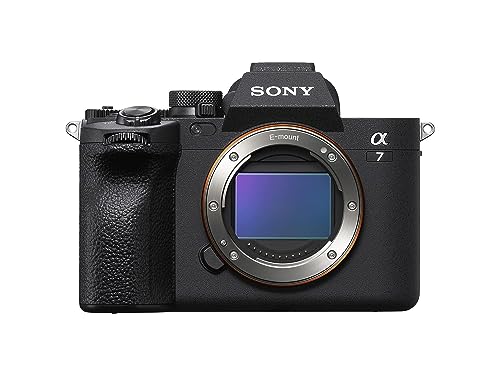
Sony Alpha 7 IV — Best overall picture quality
The Alpha 7 IV takes this guide’s crown because it refuses to win one virtue by surrendering another. Its resolution is high enough for the exhibition crop and the big print, its dynamic range holds the wedding’s white dress and dark barn in a single honest frame, and its colour is the professional’s kind of beautiful — accurate first, flattering by adjustment rather than by default, and consistent across a thousand-file set.
Resolution deserves its paragraph because photographers misuse it as a synonym for quality. Here it functions as freedom: freedom to crop the distant detail, to recompose the hurried frame, to print the landscape at the size the wall demands. Files that permit those operations without dissolving are what resolution is actually for, and this body’s files permit them with room to spare.
Now test it on the portraitist’s hardest light, the second examination in this review. A face half in window glare, half in room shadow is where dynamic range stops being a chart and becomes a complexion. The Sony holds the highlight’s detail and the shadow’s modelling simultaneously, and its skin rendering — neither plastic nor jaundiced — survives the rescue with dignity. Portraitists who print large have built businesses on exactly this behaviour.
The lens bench is the quality argument’s foundation. Sony’s own primes and zooms include some of the finest glass ever made for a mirrorless mount, and the third-party market adds character and value beneath them, so the sensor’s ceiling is reachable at several budgets. A quality camera whose quality glass is unaffordable is a promise unkept; this system keeps it.
Low-light texture is very good rather than class-leading — the Canon below holds gloom together with a shade more grace — and the files’ size taxes storage and editing machines honestly. Quality at this level is an ecosystem commitment, cards and drives included, and the review will not hide the invoice’s tail.
Buy it if picture quality, unqualified, is the brief. Across the five virtues this guide grades, it posts the highest total, and totals are what a one-camera household or practice actually lives on.
Independent quality auditors — the rental houses whose fleets must satisfy professionals weekly — stock it in depth for a reason that flatters this review’s verdict: when image quality is the stated requirement and the system is unspecified, this is the body the counter reaches for. Fleets vote with capital.
Across a decade, its quality investment case rests on the archive: files with this much resolution and range remain re-printable, re-croppable and re-gradable as tastes and formats change. Quality, bought properly, is the only camera spending that appreciates, because the photographs outlive every other line in the budget.
A final test readers can run in any shop: photograph the same dim corner with each finalist, at the sensitivity your life actually uses, and print the results at your largest honest size. This body’s total across such afternoons — not any single triumph — is why it leads a guide that grades five virtues instead of worshipping one.
Wedding businesses standardise on it for a quality reason clients never see: two shooters’ files, across a twelve-hour day and four venues, grade into one album without a colour war. Consistency across a team is a purchasable quality, and this body is currently its most common vehicle.
One more constituency grades it highest: the second shooters and assistants who must match a lead photographer’s files. A body whose quality pipeline is the industry’s reference spares everyone the matching labour, and in professional ecosystems that interoperability is itself a quality — of the working day, and of the delivered set.
- Type: full-frame mirrorless
- Strength in brief: no virtue surrendered
- Workflow fit: prints, crops, professional sets
- Lens note: finest glass bench in this guide
Strengths
- Resolution that funds cropping freedom
- Range that holds dress and barn together
- Colour accurate enough to grade anywhere
Trade-offs
- Files tax cards, drives and patience
- Gloom texture a shade behind the Canon
- Best glass is priced like the best glass
Best for: Printers, portraitists and professionals wanting one quality body.
Not suited for: Phone-only photographers who need none of this headroom.

Canon EOS R6 Mark II — Best low-light picture quality
If quality is measured where photographs go to die — the reception in a barn, the gig in a cellar, the winter street at blue hour — the R6 Mark II is this guide’s quality champion of the dark. Its high-ISO files preserve the thing that matters, texture: the weave of a jacket, the grain of a face, the feathers of the owl at the reserve’s dusk session, where rivals at the same sensitivity are already smearing detail into suggestion.
Canon’s colour science writes the second half of its quality case. Skin in mixed tungsten and window light, the photographic equivalent of a knife fight, emerges from this body looking like skin — a rendering editors and wedding photographers rely on precisely because it survives the venues where colour goes to be murdered. Quality that only exists in good light is a fair-weather virtue; this body’s exists at midnight.
Put it at the back of a dark church, the second examination in this review. The ceremony cannot be lit, cannot be repeated and cannot be flashed into submission. The Canon’s files at sensitivities that would embarrass a decade-old flagship hold the hymn books’ print, the lace’s pattern and the couple’s expressions in one coherent, printable record. That is picture quality with a job to do.
Resolution is its declared trade: fewer pixels than the Sony, chosen deliberately in exchange for the low-light grace. For prints at sane sizes and crops at sane ambitions, the exchange is invisible; for the exhibition cropper, it is the reason the Sony leads this guide overall. Quality is a budget of compromises, and Canon spent this body’s budget on the dark.
Autofocus and handling serve quality more than purists admit: a sharp file of the right moment outranks a perfect file of the wrong one, and this body’s focus certainty in gloom is a quality feature in the only sense viewers will ever perceive. The sharpest photograph is the one that exists in focus.
Buy it if your quality problems happen after sunset. It is the connoisseur’s answer to the oldest photographic enemy, and its files have a cleanliness in darkness that owners describe with genuine affection.
Its files have a second quality audience: the picture editors who receive them. Editors develop preferences among bodies the way sommeliers do among vineyards, and this one’s clean, forgiving files in bad venues have made it a desk favourite — an institutional quality grade no chart publishes.
Its low-light grace also ages well as a creative territory: the available-darkness aesthetic — ceremonies, gigs, night streets — is where contemporary photography increasingly lives, and a body fluent in that territory stays contemporary longer than a daylight specialist.
Do the same test at midnight in a real venue and the Canon’s case writes itself. Quality guides are full of daylight winners; the photographs that haunt their owners are disproportionately taken after dark, and this body was graded by that electorate.
Music photographers form its quality jury of last resort: cellar venues, coloured gels, smoke and sweat are the worst colour-and-light examination in photography, and its files pass it nightly in the hands of the pit photographers who could choose anything their fees allow.
Its dynamic range in the dark deserves a distinction newcomers miss: it is not merely that its files are clean at high sensitivity, but that their shadows remain gradable, so a dark venue’s mood can be shaped rather than merely survived. Mood is a quality deliverable, and this body delivers it after midnight.
- Type: full-frame mirrorless
- Strength in brief: texture that survives midnight
- Workflow fit: weddings, gigs, dusk wildlife
- Lens note: RF glass plus adapted classics
Strengths
- High-ISO texture stays honest
- Skin survives mixed-light venues
- Focus certainty is a quality feature
Trade-offs
- Resolution trails the Sony’s headroom
- Heavy crops expose the trade
- RF native glass can be costly
Best for: Wedding, event and low-light photographers.
Not suited for: Exhibition croppers needing maximum pixels.

Fujifilm X-T5 — Best colour quality
The X-T5 makes the case that colour is not a garnish on quality but one of its load-bearing walls. Its film simulations — renderings built from decades of emulsion science — produce files whose colour viewers describe as beautiful before they can say why: skin that breathes, greens that stay leaf rather than plastic, skies with the patience of real atmosphere. In blind print comparisons, its JPEGs embarrass technically superior files with regularity that should embarrass the spec-sheet industry.
Resolution, meanwhile, is no APS-C apology: its sensor resolves at a level that prints large, crops respectably and silences the format snobs in the only court that matters, the wall. Paired with Fujifilm’s best primes — among the most characterful and sharpest lenses at their prices anywhere — the system’s total quality embarrasses full-frame kits assembled carelessly.
Now hang its work in a landscape exhibition, the second examination in this review. A moorland series printed large: the heather’s purple stays heather rather than magenta, the lichen’s grey-greens separate like a botanist’s plate, and visitors ask about the film stock. The files came from a digital APS-C body whose colour pipeline is a century of accumulated taste, and taste, at exhibition level, is a technical specification.
Its dynamic range and low-light behaviour are strong rather than supreme — the full-frame picks hold a stop more of the impossible scene — and its autofocus will not lead a sports desk. Quality, again, is a budget of compromises, and Fujifilm spent this one on colour and resolution in a body photographers love to carry. Carried cameras produce more quality than superior cameras at home.
The straight-from-camera file deserves a final quality argument of its own: every photograph not rescued in post is a photograph whose quality was decided by the camera, and this body’s decisions are the best in the guide. For photographers who publish JPEGs — journalists on gentle deadlines, families, travellers — that is not convenience. It is the entire quality pipeline, perfected.
Buy it if colour is your quality, and if your prints hang where people linger. It is the aesthete’s instrument, and its files argue its case on every wall they reach.
Printers add their testimony: lab technicians who see every system’s files at exhibition sizes speak of its colour with a respect usually reserved for film. When the people who print everyone’s work praise one pipeline, the praise is data, whatever the charts say.
Its simulations have a archival virtue of their own: a consistent, film-rooted colour signature dates a body of work the way a film stock dates a classic album — as character rather than as obsolescence. Photographers building a recognisable oeuvre are buying exactly that signature.
Or run the colour test: one face, one garden, one autumn wood, printed blind and judged by the people who will live with your photographs. The X-T5’s results in that domestic laboratory explain its following better than any resolution figure in this guide.
Its high-resolution mode of working — deliberate, tripod-friendly, print-bound — also suits the copy and archive photographers who reproduce artwork and documents for galleries. Colour fidelity plus resolution is exactly that trade’s specification, written in a photographer’s camera rather than a scanner’s.
Teachers of photography use its files to make a point about the limits of measurement: shown two prints, students choose its colour while citing its sharpness — feeling a virtue and naming another. Quality education begins at exactly that confusion, and this camera is its favourite teaching aid.
- Type: APS-C mirrorless, retro dials
- Strength in brief: colour as a load-bearing virtue
- Workflow fit: exhibitions, travel, JPEG publishing
- Lens note: characterful primes, honestly priced
Strengths
- Colour that wins blind print comparisons
- Resolution that silences format snobbery
- JPEGs finished inside the camera
Trade-offs
- Range and gloom a step behind full-frame
- Tracking autofocus not its crown
- Small sensor caps extreme cropping
Best for: Landscape, travel and colour-led photographers.
Not suited for: Low-light specialists or heavy croppers.

Panasonic LUMIX S5II — Best value for quality
Quality per pound is a legitimate quality metric, and the S5II is its champion in this guide. Its full-frame files carry the dynamic range and low-light texture that define the format’s reputation, while its price leaves room in the same budget for the lens that will actually deliver that quality to the sensor. A body-and-glass combination beats a body-and-regret combination at every magnification.
The L-Mount alliance multiplies the value argument into a strategy: three manufacturers’ lenses, competing, mean the quality-seeking photographer can assemble a bench of excellent primes patiently, second-hand and on offer, rather than at a single brand’s launch prices. Picture quality assembled over two years of smart buying is still picture quality, and it arrives with money left for the printer.
Test it on the landscape photographer’s dawn, the second examination in this review. A valley in shadow beneath a lit ridge is the dynamic-range examination every full-frame body sits, and the S5II’s files hold both ends with the composure its format promises — printable shadow detail, unburnt highlights, and colour that grades without tearing. Nothing in its results announces its price, which is the highest compliment value can earn.
Its video quality is a genuine second dividend rather than a distraction: the same sensor virtues that grade stills grade footage, and hybrid shooters find one colour discipline serving both. This guide’s hybrid sibling article crowns it for working shooters; here it suffices that its stills quality stands in full-frame company without an asterisk.
Resolution is the format’s standard rather than its frontier, and the sports desk will look elsewhere for bursts. For the quality-seeking stills photographer whose enemies are light and budget rather than speed, those are the right trades, visibly chosen.
Buy it if quality is the brief and the budget is a household’s rather than a studio’s. It is the thinking photographer’s full-frame — quality assembled intelligently instead of purchased desperately.
Its quality has a quiet second front: consistency across bodies. Studios running two or three of them for a production find files that interleave without a colour argument, because the pipeline is disciplined. Matching is a quality virtue that only multi-body owners can grade, and they grade it highly.
For the quality buyer assembling slowly, its alliance pricing means the system’s best glass can be acquired across seasons and sales, so the quality ceiling rises year by year without a body change. A rising ceiling is the value proposition no launch discount can match.
The value test is equally empirical: price the body with the one excellent prime your subjects demand, in each system, and compare totals at the wall. This system’s totals keep winning that comparison for photographers whose budgets are real, which is most photographers.
Hybrid quality doubles its value in the ledger: the same files that satisfy a print client feed a film that satisfies a screen client, so the quality investment is amortised across two industries. Few purchases in a small practice work that hard.
Its stills also inherit video’s discipline of consistency across a long take — translated to photography, a long event — so a whole day’s files sit in one grade. Event clients experience that as professionalism, and they are right: temporal consistency is a quality the single-frame charts never measure.
- Type: full-frame mirrorless, L-Mount
- Strength in brief: full-frame virtues, budget intact
- Workflow fit: landscape, portrait, hybrid quality
- Lens note: alliance pricing rewards patience
Strengths
- Range and texture of the full-frame club
- Lens alliance keeps quality affordable
- Video quality as a genuine dividend
Trade-offs
- Resolution is standard, not frontier
- Not a sports or burst body
- Smaller mentor community than rivals
Best for: Quality seekers with real budgets and printers.
Not suited for: Action photographers or pixel maximalists.

Sony RX100 VII — Best pocket picture quality
Pocket quality is its own discipline with its own champion, and the RX100 VII has held the title across a generation of rivals. Its one-inch sensor and serious zoom produce files that print at family sizes indistinguishably from larger cameras’ — and the quality that matters, as this guide keeps insisting, is the quality at the size the photograph will actually live.
The zoom is a quality feature in disguise. Framing correctly in-camera — filling the sensor with the subject rather than cropping a wide frame later — is the cheapest resolution upgrade in photography, and this little body’s range from wide to telephoto lets its owner compose at full quality where a fixed-lens compact would force a quality-taxing crop.
Take it to the museum and the mountain, the twin examinations of its review. In the gallery’s dimness its files hold paintings’ texture at print sizes a catalogue respects; on the ridge its zoom isolates the peak a phone renders as a smudge, and its viewfinder composes in glare that defeats every screen. Quality, in the pocket category, means never being the person whose camera failed the place.
Its limits are physics, stated without drama: the sensor’s size caps its darkness and its dynamic range below the interchangeable-lens picks, and no processing repeals that. Owners who shoot it in its daylight-and-travel kingdom find those caps distant; owners who demand midnight performance should buy the Canon above and carry the weight honestly.
Autofocus and burst quality serve the pocket brief — grandchildren, wildlife at the zoo, the street’s quick theatre — with a sophistication that embarrasses larger cameras of a few years ago. Quality includes the sharpness of the moment caught, and this body catches moments its size should not be able to.
Buy it if quality must travel in a pocket. It is the answer to the traveller’s, the grandparent’s and the minimalist’s version of this keyword, and its files have been proving the answer on family walls for years.
Travel editors, who judge quality at the page sizes magazines actually print, have run its files as covers and spreads for years — the pocket camera’s quality credential written in the only ink that matters, publication. Physics caps its ceiling; editors keep confirming its floor is remarkably high.
Its quality also survives the family’s technology churn: phones are replaced and their computational looks date quickly, while this camera’s honest files age like photographs rather than like software. Archives prefer honesty across decades, and its owners’ oldest files already prove the point.
And the attendance test, quality’s silent partner: count last year’s photographs by the camera that took them. If the pocketable device wins by an order of magnitude, its quality — at family sizes, in real light — is the quality your archive actually experiences, whatever the laboratory says.
Its macro-adjacent close work surprises owners into a quality footnote: at its closest focusing, garden and product details resolve with a crispness that serves sellers and naturalists alike. Pocket cameras are not supposed to have footnotes like this; it keeps accumulating them.
For the quality-conscious minimalist, it performs one more service: it ends the auction. Owners stop browsing bodies because the pocket question has been answered at a level their walls respect, and the money and attention released flow into travel — which improves photographs more than any sensor.
- Type: one-inch sensor zoom compact
- Strength in brief: full quality at family sizes
- Workflow fit: travel, family, daily carrying
- Lens note: zoom as a resolution strategy
Strengths
- Prints beautifully at real-world sizes
- Zoom preserves quality by framing fully
- Viewfinder keeps quality in glare
Trade-offs
- Darkness and range capped by physics
- No lens upgrade path
- Premium price for miniaturisation
Best for: Travellers and minimalists who print and share.
Not suited for: Low-light or exhibition-crop specialists.

Fujifilm X100VI — Best fixed-lens quality
The X100VI is the quality purist’s thought experiment made metal: what happens when one excellent lens is designed for one sensor, aligned at the factory, and never separated? The answer is a consistency interchangeable systems chase with calibration — corner-to-corner integrity, a rendering with a single unmistakable signature, and files whose quality is identical on the first frame and the ten-thousandth because nothing can be mounted wrong, knocked loose or left at home.
Its lens is the argument’s core: a fast prime whose sharpness across the frame serves the sensor’s high resolution honestly, with a leaf shutter that adds its own quality trick — flash synchronisation at speeds that let a photographer balance sunlight and subject with a delicacy focal-plane bodies cannot match. Quality lives in such details, below the resolution line of every chart.
Now examine its portrait of a grandparent in window light, the second examination in this review and the photograph this camera was born to make. The lens’s rendering of skin, the simulation’s colour, the silence of its operation and the intimacy of its size combine into an image whose quality viewers feel before they measure. Some quality is resolution; this is the other kind, and families value it above the first.
Its fixed focal length caps its versatility absolutely — no stages, no wildlife, no architecture that will not fit its view — and its market scarcity has already been confessed elsewhere in this series. Within its frame, though, it may produce the highest proportion of keepers of any camera here, because every variable except the photograph has been engineered away.
The high-resolution sensor behind that lens also forgives the occasional step-back composition with a respectable crop, quietly extending the fixed lens’s reach into a modest second focal length. Purists pretend not to use it; their archives say otherwise.
Buy it if your quality lives at one beloved distance from the world. It is the connoisseur’s fixed point — the camera that proves quality is as much about removing variables as about adding specifications.
Its lens has been measured against interchangeable primes costing more than the whole camera and has not been embarrassed, which is the fixed-lens argument in laboratory form. The marriage of lens and sensor, aligned once and forever, buys a consistency money usually cannot purchase at any price.
And its constraint protects quality from its owner’s worst habits: no wrong lens mounted, no kit zoom temptation, no settings archaeology — the same excellent pipeline, every frame, for years. Consistency is the quality virtue that compounds, and no camera here compounds it faster.
The purist’s test is a month: one camera, one lens, one hundred deliberate frames, printed. Photographers who run it understand this body’s quality argument in their hands rather than in their heads, and a striking number of them never go back to choosing lenses at all.
Galleries have begun showing work made on it without irony, which settles the quality argument in the only court above the laboratory — the wall, curated by strangers. A fixed-lens compact on a gallery wall is a verdict about where quality actually resides.
Its final quality argument is temporal: because it cannot be upgraded piecemeal, its owners’ quality baseline stays fixed for years, and their archives gain the coherence of a single instrument’s long testimony. Historians of a family’s life will thank the constraint they once cursed.
- Type: fixed-lens premium compact
- Strength in brief: one lens, perfectly married
- Workflow fit: portraits, street, family documentary
- Lens note: fast prime, leaf shutter, forever
Strengths
- Lens-sensor marriage with total consistency
- Rendering viewers feel before measuring
- Flash sync speeds focal planes cannot reach
Trade-offs
- One focal length, absolutely final
- Availability and pricing can frustrate
- No answer for distant subjects
Best for: Portraitists, documentarians and one-distance purists.
Not suited for: Versatility seekers at any quality level.
How Do the Six Picture-Quality Picks Compare at Full Magnification?
Quality is a budget spent differently by each of these six. The grid names each one’s spending; the sections below teach the five virtues so you can audit any future camera yourself.
| Camera | Badge | Standout trait | Watch out for |
|---|---|---|---|
| Sony Alpha 7 IV | Best overall picture quality | The highest total across five virtues | Budget storage as part of quality |
| Canon EOS R6 Mark II | Best low-light picture quality | Quality after dark | Expose carefully; the files reward it |
| Fujifilm X-T5 | Best colour quality | The aesthete’s quality | Learn the simulations like film stocks |
| Panasonic LUMIX S5II | Best value for quality | Quality, assembled intelligently | Spend the savings on the prime |
| Sony RX100 VII | Best pocket picture quality | Pocket quality, honestly bounded | Fill the frame; never plan to crop |
| Fujifilm X100VI | Best fixed-lens quality | Quality by removing variables | Buy at sane money or not at all |
What Is Resolution Actually For, Beyond the Brochure?
For freedom after the shutter: the freedom to crop a composition that the moment would not allow, to print at the size a wall demands, to rescue the frame where the subject stood further than pride planned. Resolution unused is a tax on storage; resolution used is the difference between the photograph you took and the photograph you meant.
Judge it at your real output. A photographer whose largest print is an album page needs a fraction of the resolution the exhibition printer needs, and paying for the surplus in body price, file size and editing time is quality money spent on an audience that does not exist. The picks above span that range deliberately.
Beware the resolution that lenses cannot feed. A sensor out-resolving its glass produces large files of small detail, which is why this guide audits systems rather than sensors — and why the cheapest quality upgrade available to most photographers is a better lens on the body they already own.
How Does Dynamic Range Change a Photograph You Can Feel?
Range is the difference between a photograph of a place and a photograph of its lighting diagram. The backlit portrait whose face and sky both survive, the interior whose window shows the garden instead of a white wound, the landscape whose shadowed valley has geography rather than soot — these are range, felt by every viewer and named by almost none.
It is bought three ways: by sensor, by technique and by timing. The full-frame picks buy it by sensor. Bracketing buys it by technique where the subject holds still. Dawn, dusk and overcast buy it by timing for free, which is why quality-obsessed photographers keep unglamorous hours.
In post, range is the rescue budget: the underexposed frame lifted, the highlight coaxed back. Photographers who shoot weddings and funerals — unrepeatable, unlightable — buy range the way sailors buy lifejackets, and the picks’ range grades in this guide were written by that standard.
Why Do Photographers Call Colour a Quality and Not a Taste?
Because colour can be wrong. Skin that renders jaundiced or waxy, foliage that turns to plastic green, a bride’s dress that records blue — these are errors a viewer feels as falseness before they can name it, and cameras divide measurably on how rarely they commit them. The Fujifilm picks’ following is built on committing them least, in the renderings audiences love most.
Colour is also consistency: a thousand-file wedding set whose whites agree, a product range whose reds match across a catalogue, a year’s project whose autumns speak one language. Bodies and profiles that hold colour steady across light and time are quality instruments in a sense no single spectacular frame can demonstrate.
The practical test is people. Photograph the humans you love, across the range of complexions your life actually contains, in your actual light, and print the results. The camera whose files make everyone look like themselves on a good day has passed the only colour examination that matters.
What Happens to a Photograph in Bad Light, Step by Step?
First the shutter slows and movement blurs; then the aperture opens and depth thins; then sensitivity climbs and the file’s texture begins its long negotiation with noise. Quality in bad light is the art of that negotiation — how much genuine detail the sensor and processing preserve while the noise is managed, and whether what remains still reads as the subject’s surface or as an impression of it.
The picks divide honestly here: the Canon’s texture-preservation leads, the full-frame Sonys and Panasonic follow closely, and the smaller sensors pay physics their due. None of them repeal the negotiation; they bargain better or worse, and the reviews grade the bargaining, not the brochure’s sensitivity ceiling.
Technique remains the cheapest low-light quality: a steady brace, a burst from which the sharpest frame is chosen, exposure set for the subject rather than the room. Quality photographers in dark venues are recognisable by their stillness before they are recognisable by their cameras.
How Much of Picture Quality Is the Lens, Honestly?
At the centre of the frame, modern lenses are so good that the honest answer surprises people: the lens decides the corners, the contrast, the flare behaviour and the character — which is to say, everything except the middle. A quality photograph is usually lost at its edges and in its light, and both are the lens’s jurisdiction.
This is why the guide weighs ecosystems so heavily. The body is a five-year decision; the lens bench is the quality ceiling for all five years, and a system whose affordable glass is excellent — Fujifilm’s primes, the L-Mount alliance’s competition, Sony’s third-party riches — delivers more real quality per pound than a superior sensor behind kit glass.
Test before you marry: hire the lens your system dreams about and shoot your real subjects for a weekend. If the quality leap is visible at your print sizes, the lens was your ceiling. If it is not, your ceiling is technique, and technique is free — the best news in this entire guide.
Which Quality Virtue Should Your Subjects Choose for You?
Read your own archive’s failures. If your prints dissolve when enlarged, resolution is your virtue. If your skies burn and your shadows soot, range. If your people look ill in mixed light, colour. If your evenings smear, low-light texture. If your corners bend and flare, glass. The correct quality camera is the one that treats your archive’s actual disease, and every pick above is a specialist wearing a generalist’s coat.
Professionals formalise this as the deliverable test: the largest print, the hardest venue, the strictest client in your real year sets the specification, and everything beyond it is vanity with a price tag. Buy to the deliverable and the budget survives to fund the lens, the printer and the trip — quality’s supporting cast.
And revisit the diagnosis annually, because subjects migrate. The portraitist who takes up landscape, the wedding shooter who discovers wildlife at dawn — each migration reorders the five virtues, and a system chosen with a deep lens bench absorbs the migration without a divorce.
How Do You Test a Camera’s Quality Before You Buy It?
With your own subjects, in your own light, at your own print sizes — which means hiring or borrowing, never trusting a showroom’s fluorescent noon. Photograph a face in window light, a backlit tree, a dim room with a moving child, and the most contrast your life contains, then print the files at the largest size you actually use.
Compare at the wall, not at the monitor’s magnification. Pixel-level inspection will teach you which camera wins an argument no viewer will ever have; the wall teaches you which files you want to live with. Quality, in the end, is a domestic verdict.
Finally, test the workflow’s quality: how the files grade, how the colour matches across a set, how the storage and editing feel at a hundred frames. A camera whose quality survives contact with your evenings is worth two whose quality exists only in the laboratory of a free afternoon.
How Do Phones Achieve Their Quality, and Where Does It End?
By computation: stacking frames, inventing detail, and applying taste automatically. For bright scenes viewed on phones, the results are genuinely superb, and this guide will not pretend otherwise. The dedicated camera’s quality begins where computation’s assumptions end — in darkness, at distance, in motion, at print sizes, and wherever the photographer, rather than an algorithm, must decide what the photograph is of.
The honest comparison is therefore situational, and the quality buyer should run it on their own subjects. Photograph your hardest recurring scene with both, print both at your honest size, and let the wall arbitrate. Many readers will discover the phone suffices for most of their life and that one category of scene — the recital, the landscape wall, the night celebration — is what the camera budget is truly for.
That discovery is this guide’s quiet purpose: not to sell quality in the abstract, but to locate the specific photographs whose quality you personally cannot currently achieve, and to match them to the virtue and the body that treats them.
Which Quality Mistakes Do Buyers Make With the Best Intentions?
Chasing the largest number is the perennial first: resolution bought for prints never made, sensitivity bought for darkness never entered, while the lens — the quality component used in every single frame — starves on kit glass. Audit your archive’s real failures before funding any virtue, and let the diagnosis, not the launch calendar, write the shopping list.
Judging on screens at absurd magnification follows. Files are accused of softness at magnifications no print will ever reach, and cameras are rejected for crimes invisible at every honest size. Print the test, hang it, live with it a week — the wall acquits most defendants and convicts a few favourites, which is exactly what a test is for.
The third mistake is ignoring the chain: a quality body feeding a bargain monitor, uncalibrated and judged in a bright room, its files graded by guesswork. Quality is a pipeline from lens to wall, and its weakest stage sets the standard. Spend a little on the chain’s dull links before spending a lot on its glamorous one.
Final Recommendation
If one body must carry the quality banner for a general practice, the Sony Alpha 7 IV carries it here: the highest total across resolution, range and gradeable colour, on the deepest lens bench. The Canon EOS R6 Mark II owns the dark, the Fujifilm X-T5 owns colour and the hearts of printers, the Panasonic LUMIX S5II owns the value route to full-frame quality, the Sony RX100 VII owns the pocket, and the Fujifilm X100VI owns the purist’s fixed point.
Choose by your archive’s disease, fund the lens before the body, and test at your own wall. Picture quality, properly understood, is not a specification any manufacturer can sell you — it is a match between five virtues and your photographs, and this guide’s six are the best current matches for the five most common photographic lives.
Related guides
Frequently Asked Questions
Which camera here has the best picture quality overall?
The Sony Alpha 7 IV, on the total across the five virtues this guide grades — resolution, dynamic range, colour, low-light texture and the glass available to feed it. Specialists beat it virtue by virtue, as the Canon does after dark and the Fujifilm X-T5 does in colour, which is why the guide refuses to let ‘overall’ be the only question.
Does a bigger sensor always mean better pictures?
It means specific advantages — low-light texture, dynamic range, shallower blur with equivalent lenses — at specific costs in size, weight and price. At moderate print sizes in decent light, the APS-C and one-inch picks here produce results most viewers cannot separate from full-frame, which is why this guide grades virtues instead of worshipping formats.
How much resolution do I actually need?
Enough for your largest honest print and your real cropping habits, with a margin for the frame you will someday be glad you could rescue. Album and social photographers need a fraction of what the exhibition printer needs, and every pick in this guide clears the family bar with room to spare.
Why do my photos look worse than the samples I saw before buying?
Usually light and lens, in that order. Samples are made in beautiful light through the system’s best glass; your first frames were made in a kitchen through the kit zoom. Close those two gaps — hunt better light, fund one excellent lens — before blaming the body, because the body is rarely the defendant the evidence convicts.
Is JPEG quality enough, or must I shoot RAW?
For the Fujifilm picks especially, JPEGs are a legitimate quality pipeline — their in-camera colour is a finished product, not a draft. RAW earns its storage when light is treacherous, exposures need rescue or a set must be graded into unity. Quality photographers choose per assignment rather than by ideology.
What is the cheapest real upgrade to picture quality?
A better lens for the body you own, or better light for the subjects you shoot — in most archives, one of those two dwarfs any body upgrade. The guide’s lens section explains the audit: hire the dream lens for a weekend and let your own prints deliver the verdict.
Which pick is best for printing large landscapes?
The Sony Alpha 7 IV for maximum resolution and range, with the Fujifilm X-T5 the colour-led alternative whose prints win a different kind of admiration. Both demand their systems’ best wide glass to cash the sensor’s cheque, as the lens section insists.
Can a compact really match a big camera’s quality?
At family print sizes in fair light, the RX100 VII comes close enough that the wall cannot tell the difference; in darkness, at exhibition sizes or under heavy cropping, physics restores the hierarchy. Quality is always quality at a size, in a light, for a viewer — and this guide grades it that way throughout.
Related Guides
Quality is a chain from lens to wall, and these guides strengthen its other links: our guide to choosing one excellent lens for any system a calibration and printing workflow for honest colour the low-light technique handbook for available-darkness photography


