kajuandouglas.com is reader-supported. When you buy through links on our site, we may earn an affiliate commission.
Where to Buy a Camera for Nightscapes, and Why This Genre Is Photography Slowed to a Standstill
The best cameras for nightscapes serve the most deliberate genre in all of night photography. A nightscape is a composed landscape after dark — the city skyline across the harbour, the light trails of a mountain road, the harbour at blue hour deepening into black, the illuminated bridge doubled in still water — built on a tripod, over exposures that run from seconds to minutes, by a photographer who scouted the viewpoint in daylight and returned to watch the light change. Nothing here is snatched. Everything is arranged, waited for and gathered slowly, and the cameras below were chosen for that patience: dynamic range to hold a bright skyline against a dark foreground, long-exposure manners that stay clean over minutes, and controls a photographer can operate without hurrying.
Distinguish the territory carefully, because this guide’s neighbours buy differently. The night sky list in our library serves the stars themselves — the Milky Way, trails, the moon — where the sky is the subject. The beginner’s night guide serves the handheld social evening. The nightscape lives between them: the sky is a supporting actor, the land and the city are the subject, and the exposure is long because the scene is still and the light is designed — by architects, by harbours, by the last of the day — to be gathered slowly. Several cameras appear across these guides; here they are judged purely as tripod landscape instruments for the hours after sunset.
What the genre rewards is unfashionable: dynamic range over sensitivity, patience over speed, a histogram over a burst mode. A nightscape file must hold the sodium glare of a streetlight and the unlit stone of a quay in one frame, keep its colours true through a two-minute exposure, and emerge clean enough to print at the sizes these considered compositions deserve. The six picks span full frame and crop, dial-led traditionalists and computational innovators, because the genre’s photographers divide the same way.
One promise frames the list: every camera here will produce a nightscape worth framing within your first month of trying — and most photographers who keep the genre’s appointments find the framing candidate arrives on the first clear evening, because the blue hour is generous to the prepared in a way few photographic subjects are., provided the other half of the system — a real tripod, a viewpoint chosen with care, an evening given rather than stolen — is in place. The genre’s failures are almost never the camera’s, and its triumphs are disproportionately the photographer’s. Buy accordingly: the body you will carry to the viewpoint at dusk, in February, twice.
Key Takeaways
- Nightscapes are tripod landscapes after dark: dynamic range and clean long exposures rule.
- The Sony Alpha 7 IV and Panasonic LUMIX S5II lead on range and long-exposure composure.
- The OM SYSTEM OM-5 Mark II’s Live Composite paints light trails without overexposing the scene.
- The Fujifilm X-T5 brings 40MP detail and dials for the considered, gloved, midnight workflow.
- The Canon EOS R10 and Nikon Z50 II prove crop sensors own this genre at half the kit weight.
- The viewpoint and the hour matter more than the body — scout in daylight, shoot at blue hour.
In this guide
Quick Picks
| Camera | Badge | Why it builds a nightscape well |
|---|---|---|
| Sony Alpha 7 IV | Best all-round nightscape camera | 33MP full-frame range, clean long exposures and lenses for every skyline distance. |
| Panasonic LUMIX S5II | Best dynamic range per patience | Composed long-exposure behaviour and live-view aids for scenes darker than your eyes read. |
| Fujifilm X-T5 | Best detail for city nights | 40MP files, film colour for sodium and neon, and dials for the midnight workflow. |
| OM SYSTEM OM-5 Mark II | Best for light trails and travel | Live Composite builds trails and traffic without blowing the skyline’s highlights. |
| Canon EOS R10 | Best keen-starter nightscape body | Responsive handling, clean crop files and Canon colour for the blue hour. |
| Nikon Z50 II | Best value nightscape kit | A crop body whose savings fund the tripod and the wide lens the genre actually runs on. |
How Did We Choose the Best Cameras for Nightscapes?
We also listened — literally — for the genre’s quiet requirements. A nightscape session happens in hushed places at hushed hours, beside residents, wildlife and other photographers, so shutter silence, dimmable screens and the absence of beeping enthusiasm were scored as courtesies with technical consequences: the photographer asked to move on makes no photograph at all, however wide their dynamic range.
Dynamic range was the first measurement, judged on the genre’s signature scene: a lit skyline against an unlit foreground, where the file must hold highlight detail in the signs and windows while keeping the quay’s stone out of the noise. Cameras whose files bend gracefully in editing — shadows lifting without falling apart, highlights recovering their colour — rose; cameras that clipped early or blotchily fell, whatever their other talents.
Long-exposure hygiene came second. Over thirty seconds, two minutes, ten, a sensor’s behaviour changes: heat builds, noise patterns emerge, batteries drain into the cold. We favoured bodies with clean long-exposure files, honest bulb and time modes, interval tools for the stacked variants of the craft, and — the OM’s special case — computational modes that sidestep the whole problem by building the exposure progressively.
The tripod workflow was scored as a handling discipline. A nightscape photographer works slowly, in the dark, often with gloves, through a loop of compose, expose, review at magnification, adjust. Screens that tilt for a low tripod, controls findable by touch, live histograms and highlight warnings that can be trusted, remotes and apps that trigger without touching the camera — these decide whether the loop is meditation or fumbling, and they were weighted accordingly.
Finally, the system’s wide lenses were audited for the genre’s needs: not astro-corner perfection, but low distortion for architecture, flare resistance against the streetlights that infest every urban frame, and focal lengths that suit skylines and harbours. A nightscape camera is its wide lens’s partner, and the picks’ partnerships are all sound.
What Is a Nightscape, Exactly — and When Is Its Hour?
The genre’s definition is a landscape whose light is the night itself — and it is worth noticing how young the genre is, because the city it photographs is young too. The nightscape as a popular craft arrived with bright, clean sensors and brighter, cleaner cities, and its classics are being made now, by the readers of guides like this one, at viewpoints their grandparents knew only in darkness. There is a democratising thrill in that timing which the equipment talk should not bury.: not a daylight scene underexposed, but a composition built from the illumination that exists after dark — windows, lamps, signs, headlights, the moon’s contribution, and the sky’s long afterglow. Its classic hour is the blue hour, the twenty-to-forty minutes after sunset when the sky holds a deep, saturated blue exactly balanced against the city’s warming lights. In that window, a single exposure can hold both worlds without trickery, and the majority of the world’s beloved nightscapes were made inside it.
After the blue hour, the genre changes key rather than ending. The sky goes black, contrast hardens, and the nightscape becomes an exercise in placement: bright elements arranged against true darkness, reflections doing compositional work, light trails drawing the lines the scene’s geometry suggests. The cameras here serve both movements — the blue hour’s balance and the deep night’s drama — but the photographer should know which movement they are attending, because the exposure strategy, and often the viewpoint, differ.
Composition in nightscapes is daylight landscape composition with the lights turned into actors — and, it should be admitted, with the failures turned merciful. The daytime landscape’s clutter — the parked cars, the signage, the honest mess of a working harbour — falls into darkness and forgives the photographer, leaving the composed bones of the place and its lights. Many photographers find their night work stronger than their day work for exactly this reason, and the genre’s popularity among the deliberate is partly a conspiracy of darkness against distraction. Foreground still anchors — a quay, a railing, a wet pavement doubling every lamp — and the horizon still obeys its ancient rules. What changes is that brightness now outranks detail in guiding the eye: the viewer’s gaze goes to the lit tower, the trail of a boat, the one red sign, and the photographer’s job is to arrange those magnets deliberately rather than discovering them in the edit.
Weather, finally, is the genre’s casting director — and its most underappreciated scriptwriter, since the same viewpoint in rain, mist, frost and clear cold is four different photographs wearing one composition, a variety the patient photographer collects the way others collect viewpoints. Rain gives the wet-pavement doubling that doubles every light in the frame; mist softens skylines into layers; clear cold air sharpens everything and freezes the photographer. The cameras in this guide are all sealed or sealable enough for the genre’s ordinary weather, and the nightscape photographer learns to read a forecast the way a sailor does — as the evening’s true brief.
How Do You Expose a Scene That Contains Both Lamplight and Darkness?
Expose for the lights, and let the darkness be dark — the same law as all night photography, applied with a tripod’s luxury of time and a histogram’s honest counsel. The beginner’s instinct is to brighten until the foreground reads clearly — an instinct imported from daylight, where the eye’s range flatters every scene — which produces the genre’s signature failure: a grey, noisy forgery of dusk in which the skyline’s lights have blown to white blobs. The nightscape’s truth is contrast, and contrast cannot be added later to a file that surrendered it at the scene. Let the unlit stone fall toward black, keep the windows and signs inside the file’s range by a margin your future editing self will thank you for, and the photograph will look like the night felt to the person who stood there.
Bracketing is the professional’s insurance and the beginner’s teacher — and studying a bracketed set at home, frame by frame, is the fastest education in exposure the genre offers, because the same unmoving scene shows you exactly what each stop of light buys and what it costs, with no other variable to blame. Because the scene is still and the camera is on a tripod, taking three or five frames at different exposures costs nothing but card space, and guarantees one frame whose highlights are safe — or a set that can be blended when the range exceeds any single exposure. Every pick here automates the bracket; the craft is remembering to use it on the scenes that need it, which are precisely the genre’s best scenes.
White balance deserves a decision rather than a default, and the decision is worth rehearsing at home on a single frame rendered five ways, because the genre’s colour arguments — how orange is the sodium truth, how blue is the hour — are taste questions that a cold photographer at midnight should be executing, not debating. Tungsten and sodium light will paint an automatic rendering in directions the photographer may or may not want — the warm glow is often the scene’s soul, and correcting it away produces a clinical forgery. Shoot RAW if you want the decision deferred to the desk; choose a considered preset or a film simulation if you want it made at the scene, in the cold, by the person who was there. Both are legitimate; drifting between them by accident is not.
Focus, in the stillness, is a pleasure rather than a race — one of the few photographic operations the genre lets you perform perfectly, at leisure, with verification, and the satisfaction of that perfection is a real part of why its practitioners describe their evenings as restorative: magnify the live view on a lit edge — a window, a sign, the far shore’s lamps — focus once, switch to manual, and leave it alone for the session. The nightscape photographer’s focus discipline is the astro photographer’s, relaxed by the presence of actual lit subjects to aim at.

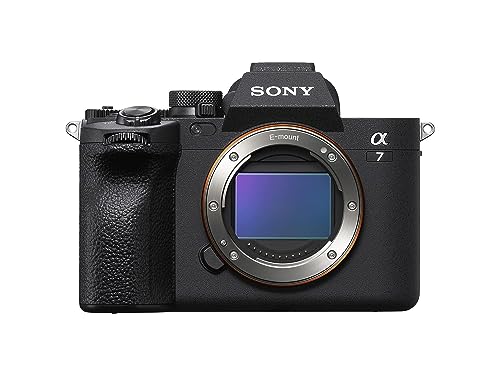
Sony Alpha 7 IV — Best all-round nightscape camera
The Sony Alpha 7 IV takes the top badge on the genre’s own terms: range, resolution and composure in one body. Its 33MP full-frame files hold the skyline-and-quay contrast that defines the craft, with shadows that lift cleanly when the foreground deserves rescuing and highlights that keep their colour at the edge of clipping. Long exposures stay disciplined — the noise that accumulates is fine and even, the kind editing removes without smearing the architecture’s detail — and the resolution rewards the genre’s considered compositions with prints that hold up at the sizes a framed skyline demands.
The lens shelf serves every nightscape distance: fast wides for the harbour’s sweep, standard zooms for the skyline across the river, telephotos for the compressed city layers that telephoto nightscape specialists adore. Sony’s live view and focus aids make the tripod loop pleasant, its interval and bracket automation covers the technique’s variants, and the whole system has the deep second-hand market that lets a nightscape kit grow by stages.
Its compromises are the familiar Sony ones — menus best configured at the kitchen table, a body whose action talents sit idle on the tripod — and the full-frame kit’s weight on the walk to the viewpoint. Neither touches the genre’s core. For the photographer who wants one camera whose nightscapes will not meet a ceiling for years, the A7 IV is the safest harbour in this guide.
Its blue-hour behaviour is where owners fall for it: the balance window is short, the light changes by the minute, and the Sony’s metering, highlight warnings and responsive handling let the photographer ride the balance through its peak rather than arriving at the settings after it has passed. Nightscapes are made in those ten minutes more than in any other, and this camera is fluent in them.
- Sensor: 33MP full-frame, wide dynamic range
- Long exposures: clean, even noise over minutes
- Tools: bracketing, interval, focus magnification
- Lenses: every nightscape distance covered
Strengths
- Files that hold lamplight and darkness in one frame.
- Resolution for the prints nightscapes exist to become.
- A system with no ceiling the genre will find soon.
Trade-offs
- Menus reward home configuration over field changes.
- Full-frame kit weight on the walk to the viewpoint.
- Action abilities are wasted on a tripod.
Best for: committed nightscape photographers wanting one complete body. Not suited for: ultralight travellers or menu minimalists.

Panasonic LUMIX S5II — Best dynamic range per patience
The Panasonic LUMIX S5II is the nightscape camera for the photographer who thinks in exposures the way chess players think in moves — several ahead, calmly. Its files offer the genre’s coveted combination of highlight manners and shadow depth, and its long-exposure behaviour is the most composed here: frame after frame of consistent, clean gathering, with a live view that can brighten a composition your eyes read as a black rectangle into something you can actually arrange. For scenes at the edge of visibility — the unlit valley under a lit ridge, the harbour after the blue hour dies — that boosted view is not a convenience; it is the difference between composing and guessing.
L-mount gives it the lens argument of choice: wides from three makers, including options whose flare behaviour against streetlights has been praised by exactly the photographers who infest their frames with streetlights. The body’s ergonomics suit the tripod loop — a screen that tilts for the low setup, controls that stay legible to gloved fingers, and recording stamina that treats an evening of long exposures as a light workload.
Against the Sony it concedes resolution and a measure of autofocus fame, the latter irrelevant on a tripod and the former relevant only to the largest prints and hardest crops. Its high-ISO cleanliness is excellent, though the genre rarely asks the question. What the S5II offers instead is a particular serenity of operation — the sense that the camera is as patient as the craft — and nightscape photographers, who are connoisseurs of serenity, will recognise the value instantly.
Its video is a genuine second craft for this genre rather than a bonus: the nightscape that moves — traffic flowing, clouds sailing over the skyline, the harbour’s working lights — is increasingly how these scenes are shared, and the Panasonic films the dark with the same composure it photographs it. One body for the still and the moving nightscape is an economy the genre’s storytellers increasingly choose.
- Sensor: 24MP full-frame, excellent range
- Live view: boosted brightness for dark composition
- Lenses: L-mount wides from several makers
- Sessions: composed long-exposure behaviour
Strengths
- Composes scenes your eyes can barely see.
- Long exposures of unusual consistency and calm.
- Films the moving nightscape as well as it stills it.
Trade-offs
- Resolution trails the Sony and Fujifilm for huge prints.
- Menus serve two crafts and reward study.
- Less second-hand lens depth than Sony’s shelf.
Best for: patient composers and nightscape filmmakers. Not suited for: resolution maximalists or the impatient.

Fujifilm X-T5 — Best detail for city nights
City nightscapes are detail’s genre — a thousand windows, the bridge’s rivets, signage in three scripts — and the Fujifilm X-T5’s forty megapixels are a love letter to exactly that. Its files resolve the urban night at a level that rewards the genre’s slow, tripod-bound care, while the crop sensor keeps the whole kit — body, wide lens, tripod it can honestly use — at a weight the full-frame pairs cannot match. For the photographer whose nightscapes are metropolitan, that combination of resolution and portability is the sweet spot of the entire list.
Fujifilm’s colour is the second argument, and in this genre it may be the first. Sodium orange, neon magenta, the blue hour’s saturated cobalt — the film simulations render the city’s palette as finished interpretations, several of which have become the house style of entire nightscape communities. A photographer can shoot the skyline in one simulation’s drama or another’s restraint and come home with the photograph decided, which suits a genre whose editing temptation is always to push the city further than it went.
The dials complete the midnight case: shutter, ISO and compensation under gloved fingers, no screen expeditions, and a tilting display for the low tripod over the quay. Long exposures are clean, bracketing is thorough, and the body’s sealing tolerates the genre’s weather. Its honest limits are the APS-C ceiling in the very deepest shadow recovery and a fast-wide shelf narrower than Sony’s — neither of which has prevented its owners from producing a disproportionate share of the decade’s admired city night work.
There is a ritual pleasure to this camera that the genre, being ritualistic, amplifies: the dials clicked to the exposure, the aperture ring’s detents, the scene arranged like a table being set. Nightscapes are the least spontaneous photographs in the medium, and the X-T5 is the least spontaneous-feeling camera here. The match is not a coincidence, and photographers who feel it rarely go back.
- Sensor: 40MP APS-C, exceptional city detail
- Controls: physical dials for the gloved workflow
- Colour: film simulations for sodium and neon
- Build: sealed, tilting screen, tripod-friendly
Strengths
- Urban detail at a travelling weight.
- Colour interpretations decided at the scene.
- Handling built for slow, cold, deliberate work.
Trade-offs
- Deepest shadow recovery trails full frame.
- Wide-lens shelf narrower than Sony’s.
- Large files across bracketed sequences.
Best for: city nightscape specialists and detail devotees. Not suited for: those needing the ultimate shadow recovery.

OM SYSTEM OM-5 Mark II — Best for light trails and travel
The OM SYSTEM OM-5 Mark II owns the nightscape’s most joyful subgenre — the light trail — through a piece of computational theatre no rival here can perform. Live Composite mode exposes progressively: the camera takes a base exposure, then adds only new light, frame by frame, while you watch the photograph build on the screen. Traffic trails lengthen, a boat’s passage draws itself across the harbour, fireworks accumulate — and the skyline’s highlights never blow, because the base scene stopped exposing long ago. A technique that elsewhere demands neutral-density calculations and luck becomes, on this camera, a spectator sport with a shutter button.
The travel arithmetic compounds the case. Micro Four Thirds halves the kit: body, wide lens and an honest tripod fit where the full-frame pairs need a dedicated bag, so the nightscape photographer who travels — the city-break skyline collector, the hiking photographer whose viewpoint is a summit — carries the whole genre in a daypack. Weather sealing suits the exposed places nightscapes are made from: bridges, headlands, rooftops of the spirit if not the letter.
The sensor’s ceiling is the honest tax: single-frame dynamic range and the deepest shadows trail the full-frame picks, and the genre’s most demanding blue-hour blends will find that ceiling. Stacking and the composite modes are the workflow answers, and many owners treat them as the craft rather than as compensation. For trails, travel and invention, the OM is not the budget option in this list; it is the imagination option.
Its stabilisation, irrelevant on the tripod, redeems the walk to the viewpoint: the blue-hour handheld frames grabbed on the way, the scouting shots at dusk, the viewpoint tested before the tripod is committed. A nightscape evening is ninety percent approach and ten percent exposure, and this camera serves the ninety with the same enthusiasm as the ten.
- Sensor: Micro Four Thirds, composite-friendly
- Mode: Live Composite for trails and accumulations
- Kit: the lightest complete nightscape system
- Build: strong weather sealing
Strengths
- Light trails built live, highlights protected.
- A genre-complete kit in a daypack.
- Sealing for bridges, coasts and weather.
Trade-offs
- Single-frame range trails the full-frame picks.
- Composite workflows are a craft to learn.
- Smallest files for the largest prints.
Best for: trail artists, travellers and computational experimenters. Not suited for: single-frame purists chasing ultimate range.

Canon EOS R10 — Best keen-starter nightscape body
The Canon EOS R10 is where the keen beginner’s nightscape journey most sensibly starts, because it pairs the genre’s real requirements — clean files, honest colour, a proper tripod workflow — with handling that responds at the speed the blue hour demands. That hour does not wait for menu divers: the balance between sky and city shifts by the minute, and the R10’s joystick focus, quick controls and decisive behaviour let a photographer ride the change rather than chase it. Canon’s colour, particularly in the blue hour’s cobalt and the city’s amber, gives a starter’s first nightscapes a finished quality that encourages the second outing.
As a crop body it carries the genre’s usual crop virtues — smaller lenses, a lighter tripod load, a price that funds the wide lens and the tripod itself — and its files bracket, stack and print with a competence that will surprise photographers raised on format snobbery. The RF system’s wide options include attainable glass with the low distortion architecture demands.
Its limits are the starter tier’s: dynamic range a step behind the full-frame pair, a buffer and build aimed at enthusiasts rather than at decades, and low-light autofocus talents the tripod will never call upon. For the photographer whose nightscapes are a growing craft rather than a settled profession, those limits sit exactly where they should — in the future, priced into a body that costs a fraction of the flagships it will be compared against at the viewpoint.
There is a community dividend as well: Canon’s nightscape and cityscape shooters are legion, their location knowledge is shared generously, and the beginner who starts here joins the largest conversation in the genre. Viewpoints, tide tables for harbour shots, the bridge that closes at ten — this intelligence travels through owner communities, and it is worth real photographs.
- Sensor: APS-C mirrorless, clean bracketed files
- Handling: joystick and quick controls for blue hour
- Colour: Canon’s blue-hour rendering
- System: RF wides at starter prices
Strengths
- Responsive enough for the blue hour’s fast balance.
- Colour that finishes first nightscapes kindly.
- Price funds the tripod and lens the genre needs.
Trade-offs
- Range a step behind the full-frame pair.
- Enthusiast build rather than a decade-proof one.
- Crop ceiling on the largest prints.
Best for: keen starters building a nightscape practice. Not suited for: professionals needing ultimate range and build.

Nikon Z50 II — Best value nightscape kit
The Nikon Z50 II preaches this guide’s recurring sermon with its whole price tag: in a tripod genre, the body is the least of the system, and the money belongs to the tripod, the wide lens and the travel to viewpoints. As the least expensive body here, it funds all three while still delivering the nightscape essentials entire — clean crop files that bracket and blend beautifully, a bright live view for composition in the dark, interval tools, and Nikon’s famously natural colour for the blue hour’s delicate balance.
Nikon’s wide Z lenses include the attainable glass the kit needs, with the low distortion and flare manners architecture and skylines demand. The body’s handling is secure and simple, its screen serves the tripod loop, and the whole package — body, lens, tripod it can honestly use — travels at a weight and a total cost that make the genre accessible to photographers the flagship pairs exclude. Accessibility, in a genre whose only real entry fee is evenings, is a serious virtue.
The ceiling is the crop ceiling, stated once more without apology: the deepest shadow recovery and the largest prints belong to the bigger sensors, and the Z50 II’s owner will learn blending and bracketing early — skills the full-frame owners eventually learn anyway, from the other direction. As the foundation of a nightscape practice that spends on evenings rather than equipment, it is the most rational purchase in this guide.
Its lunar and telephoto sidelines deserve a footnote: the crop reach that flatters the moon gives the nightscape photographer a second genre in the same bag, for the nights when the skyline palls and the moonrise over the harbour becomes the composition. Versatility is a value feature too, and this little body is quietly full of it.
- Sensor: APS-C, clean files for blending
- Tools: bracketing, interval, bright live view
- Lenses: attainable low-distortion Z wides
- Value: funds tripod, lens and travel
Strengths
- The genre’s essentials at the list’s friendliest total.
- Colour and files that blend like a professional’s.
- Light kit for viewpoints reached on foot.
Trade-offs
- Deepest shadows and largest prints trail full frame.
- Blending becomes a standard skill, not an option.
- Enthusiast build and buffer.
Best for: value-wise beginners spending on evenings. Not suited for: gallery printers at the largest sizes.
How Do Light Trails Actually Work, From First Frame to Finished Photograph?
A light trail is a drawing made by a moving light during a long exposure, and its grammar has three rules — rules simple enough to memorise on the walk to the bridge and deep enough to spend a winter exploring, which is the precise shape of every durable photographic pleasure. The trail’s brightness is set by the moving light itself and the aperture; its length is set by the exposure’s duration; and the scene it crosses must be exposed so that it reads as a place rather than a void — which is why trails are photographed at the blue hour and in lit streets, not in pitch darkness. The beginner’s first trail session, on a bridge over evening traffic, teaches all three rules in a single hour of variations.
Composition treats the trail as a line the photographer does not control but can invite — a collaboration with the city’s traffic department, which choreographs nightly and never attends the exhibition: the road’s curve, the bridge’s arc, the harbour’s channel. Choose the viewpoint where the existing geometry draws well — an S-curve of road, a junction’s weave, a roundabout’s calligraphy — and set the exposure long enough for a vehicle to traverse the whole design. Red trails flow one way, white the other, and the classic frame holds both, which is a matter of standing where the traffic’s directions separate visibly.
The OM’s Live Composite changes the session’s psychology, because the drawing appears as it is made and the photographer stops the exposure when the design is complete — a darkroom developing tray, transplanted to a bridge at midnight. The other cameras achieve the same end by the older liturgy of test exposures and arithmetic, or by stacking a sequence at the desk. All roads reach the trail; they differ in how much of the journey happens in the cold.
How Do the Six Nightscape Cameras Compare at the Viewpoint?
| Camera | Format | Range and files | Signature tool | Viewpoint it suits |
|---|---|---|---|---|
| Sony Alpha 7 IV | Full frame | Excellent, 33MP | Bracketing depth | Every skyline, seriously |
| Panasonic LUMIX S5II | Full frame | Excellent, composed | Live-view boost | Darkest composed scenes |
| Fujifilm X-T5 | APS-C | Strong, 40MP | Film colour, dials | Detailed city nights |
| OM SYSTEM OM-5 Mark II | Micro Four Thirds | Good, composite-assisted | Live Composite | Trails and travel |
| Canon EOS R10 | APS-C | Strong | Blue-hour responsiveness | Keen starters’ cities |
| Nikon Z50 II | APS-C | Strong | Value whole-kit | First practices, light travel |
The table’s lesson is the genre’s: format predicts file ceiling, but the signature-tool column predicts the photographs. Choose the tool that matches the nightscape in your head — the trail, the blend, the blue-hour balance — and the format will take care of itself.
How Do People and Movement Behave Inside a Nightscape?
People become weather in a long exposure — a sentence worth sitting with, because it explains both the genre’s melancholy and its mercy: the nightscape is the one portrait of a city from which everyone has been gently excused: they blur, they ghost, they vanish entirely if they keep moving, and they materialise only where they stand still. The nightscape photographer learns to use this as a compositional tool rather than fighting it — the promenade’s crowd rendered as a flowing anonymity beneath the sharp architecture is one of the genre’s signature truths, a picture of how a city actually feels at night rather than how any individual in it looked. Where a person is wanted sharp — the fisherman on the quay, the photographer’s companion on the bridge — the craft is to ask them to be a statue for the exposure’s duration, and to keep that duration honest.
Vehicles obey the same physics with brighter manners, and the genre’s photographers develop a connoisseur’s relationship with traffic — its densities, its lulls, the particular poetry of a single late bus crossing an otherwise sleeping composition: they write themselves as trails, as we explored earlier, or vanish, depending on their speed and the exposure’s length. Water averages itself into mist and mirror. Flags smear into their own average shape. The genre, understood properly, is a portrait of a place with time as one of its dimensions, and the cameras here were chosen partly for how gracefully their files render that averaging — smooth, artefact-free, and true to the scene’s still skeleton.
This is also why the nightscape photographer reviews at full magnification with a specific question: not “is it sharp?” but “what moved, and do I like what its movement did?” A session’s education is contained in that question’s answers, and the cameras’ clean long-exposure files make the answers legible rather than lost in noise.
How Do You Scout and Shoot a Classic Harbour Nightscape?
Scout at noon, shoot at dusk — and if the location is new to you, scout it once more at the actual hour without the camera, because a viewpoint’s night character (its lighting, its other inhabitants, its safety) cannot be inferred from its noon personality, and the photographer who has simply stood there in the dark arrives on the shooting night with a calm the first-timer cannot imitate. The daylight visit is for geography: where the quay’s edge runs, which foreground elements — bollards, chains, a moored boat — can anchor the frame, where the skyline’s towers sit against the water, and crucially, where you are permitted to stand with a tripod for an hour. Note the compass direction, because the blue hour’s afterglow gathers opposite the sunset, and the classic harbour shot usually faces it.
Arrive an hour before sunset and compose while you can still see — with the photographer’s full attention, because this hour of setting up is also the hour of watching the place become itself for the night, and the observations made now (which windows light first, where the boats move, when the lamps buzz on) are the session’s real field notes, because the tripod loop after dark is adjustment, not discovery. Set the frame, focus on the far shore’s lights as they come on, and shoot through the balance: a sequence from golden hour into blue, a frame every few minutes, because the peak — the moment sky and city match — lasts less than ten minutes and announces itself only in retrospect. The bracket discipline covers the exposure; the sequence covers the timing.
Stay for the second movement, and notice, while you stay, how the genre changes its social character after the blue hour: the viewpoint empties, the city’s noise drops a register, and the nightscape photographer is left in a privileged solitude with the scene — the hour when the work stops feeling like tourism and starts feeling like nightwatch, which is the feeling the finished photographs somehow retain. After the blue dies, the harbour becomes the deep-night genre: reflections lengthen, a boat’s passage draws a trail, the skyline’s windows become the composition. The photographer who packs up at blue hour’s end has attended half the performance. Dress for the whole of it, and let the camera’s long exposures do what they were bought for.
What Should a Nightscape Kit Bag Contain Around the Camera?
The tripod, obviously — chosen by the rules in our questions below, and practised with at home until its legs deploy by touch — and then the small liturgy of the genre: a remote release or a phone running the camera’s app, so exposures start without a hand’s tremor; a head torch with a red mode, because white light ends your night vision and your neighbours’ patience simultaneously; spare batteries carried warm against the body, since cold batteries lie about their charge; and a lens cloth, because a viewpoint over water at midnight is a dew-making machine and the front element will fog at the exact moment the blue hour peaks.
Add the photographer’s own equipment with the same seriousness — and add, if the viewpoint is remote, the safety liturgy too: a companion or a told friend, a charged phone, a known way back in the dark, because the genre’s locations at its hours deserve the respect any night work outdoors deserves: the layers for standing still in the coldest hour, which is a different cold from walking’s; a flask; and something to sit on while the long exposures gather, because the genre’s working posture is waiting and the wait should be comfortable enough to repeat. The nightscape photographer’s bag looks less like a photographer’s and more like a night watchman’s, and that is the correct aesthetic.
What Mistakes Do Nightscape Photographers Make Most Often?
Arriving at dusk to scout is the founding error — the viewpoint chosen in panic, the foreground discovered by falling over it, the blue hour spent composing instead of photographing. The genre’s entire method is the separation of scouting from shooting, by hours or by days, and every pick in this guide performs identically well for the photographer who respects the separation and identically poorly for the one who does not.
Trusting a wobbly tripod runs second — a mistake usually purchased months earlier, in a shop, by a photographer who compared tripods by their folded size and price rather than by the one test that matters, which is a two-minute exposure in a breeze examined at full magnification, and it is an equipment mistake with a photographer’s name on it: the long exposure amplifies every tremor — wind, footfall, the bridge’s traffic — into softness that no sensor can repair. A tripod honest for the kit’s weight, hung with a bag for ballast, shielded from the wind by the photographer’s own body, is the genre’s true image stabilisation. Buy it before the second lens.
Over-processing the city is the modern failure, and the easiest to commit innocently, because every editing tool’s default gestures point toward more — more saturation, more clarity, more drama — while the genre’s whole dignity points the other way, toward the restraint of a scene that was already dramatic enough at midnight: saturation pushed until the skyline glows like a game render, shadows lifted until midnight reads as noon. The nightscape’s dignity is its darkness, and the cameras here — the Fujifilm’s simulations, the others’ honest colour — start from renderings that respect it. Edit toward the memory of standing there, not toward the thumbnail’s applause.
Finally, shooting only the famous view, from the famous spot, at the famous hour, in the company of the famous tripod forest that assembles there nightly. The genre’s classics were classics because someone walked fifty metres further, or stayed an hour later, or came back in the rain. Portability — the crop kits’ whole argument — is what makes that walking possible, and it is why this guide refuses to equate the genre with its heaviest equipment.
Which Camera Should You Take to the Viewpoint?
The Sony Alpha 7 IV for the complete, ceiling-free practice; the Panasonic for the darkest composed work and the moving nightscape; the Fujifilm for the city’s detail and colour; the OM for trails and for travel; the Canon R10 for the keen starter; and the Nikon Z50 II for the wisest budget in the genre. Every one of them, on a steady tripod at the blue hour, will produce the photograph that explains the genre to anyone who doubts it.
Then return to the same viewpoint in a different season, and again in the rain. Keep the camera you chose for at least that full cycle of returns before judging it, because the genre’s verdicts are written by calendars, not by weekends — and because the photographer who has watched one harbour through a year of nights owns something no equipment can confer: a place, understood in the dark, that is theirs. The nightscape is a relationship with a place conducted over years, and the camera is merely its longest-serving witness.
Frequently Asked Questions
What tripod do I actually need for nightscapes?
One that holds your heaviest camera-and-lens combination without creeping, extends to a comfortable working height without raising its centre column to full stretch, and packs to a size you will genuinely carry to viewpoints. Weight ratings should exceed your kit’s with room to spare, and a hook for hanging your bag as ballast is worth more than a headline feature. In this genre the tripod is not an accessory; it is the second camera, and it should be budgeted like one.
Is full frame necessary for nightscapes?
No — and this genre is where the case against necessity is strongest. Tripod work at low sensitivities in considered light plays to every sensor’s strengths, and the crop picks here produce nightscapes that print beautifully at domestic sizes. Full frame buys shadow recovery for the most extreme blends and headroom for the largest prints. Most nightscape photographers should buy the viewpoint access, the tripod and the wide lens first, in whichever format their budget survives.
How do I keep city lights from blowing out?
Expose for them, bracket around that exposure, and accept darkness elsewhere in the frame as the genre’s truth rather than its failure. Highlight warnings in the live view — available across these cameras — show exactly which signs and windows are clipping, and a small reduction in exposure usually saves them while the shadows, protected by the sensor’s range, remain recoverable. The blended bracket set is the insurance policy for the scenes whose range defeats any single frame.
What is Live Composite, and is it cheating?
It is the OM system’s mode that builds a long exposure progressively, adding only new light to a base frame while you watch — so trails and accumulations grow without the scene’s static highlights overexposing. Cheating is a question for competitions with rules; for the working photographer it is a tool, like bracketing or stacking, that trades a single heroic exposure for a controlled construction. The photograph’s honesty lies in the scene, not in the shutter’s arithmetic.
How do I photograph reflections in water at night?
Stillness is the whole secret, in the water and in the camera. A harbour at slack tide, a canal, a rain puddle on the quay — each doubles the scene’s lights when its surface calms, and the long exposure itself smooths small ripples into a mirror over time. Compose with the reflection as a full citizen of the frame, often half of it, focus on the reflected subject’s distance rather than the water’s surface, and shoot the sequence through the blue hour, because the reflection’s balance against the sky changes with the same clock as everything else in this genre.
When is the blue hour, and how long does it last?
It is the period after sunset — and before sunrise — when the sun is below the horizon but its light still colours the sky a deep blue, and its balance against artificial light is the genre’s golden window. Its length varies with latitude and season, from under twenty minutes in the tropics to an hour or more at high latitudes in summer. Arrive early, compose in daylight, and shoot through it in sequence; the peak is brief, retrospective and unrepeatable on the night.
Related Guides
Nightscapes are the composed centre of our library’s night shelf, with specialisms on every side — the sky above, the social night behind, and the daylight landscape in front, all of them sharing viewpoints with this one and none of them sharing its peculiar, tripod-bound peace. Look upward with our guide to cameras for the night sky, build the handheld foundation in the best cameras for night photography beginners, and take the portable road with our guide to cameras for landscape photography for the daylight half of the same viewpoints.


