kajuandouglas.com is reader-supported. When you buy through links on our site, we may earn an affiliate commission.
Where to Buy a Camera for Hunting Photography, and Why the Best Hunting Light Is the Worst Camera Light
The best cameras for hunting photography are bought for the worst light of the day, because that is when the hunting happens. Game moves at dawn and dusk, hides in cover that confuses autofocus, and treats the middle distance — too far for comfort, too close for excuses — as its permanent address. A camera that shines in a showroom at noon has answered none of the questions a November treestand asks.
Where to buy: every linked name in this guide leads to that camera’s Amazon listing, and the sensible hunting order pairs the body with the unglamorous kit that decides whether photographs happen at all — a rain cover, a lens cloth that lives in the blind rather than the truck, spare batteries kept warm in an inside pocket, and cards enough that deleting in the field is never a temptation.
The six picks below divide the hunting world the way hunters do. Two full-frame bodies serve the stand-and-blind photographer who lives at dawn. A fast Canon serves the wingshooter. A light Nikon and a sealed Olympus serve the hunters who walk. A dial-led Fujifilm serves the camp storyteller, and a Panasonic serves the friend who now films every season. None of them will find the animal for you; all of them will be ready when the animal finds you.
One honest caution before the list: know the rules of your ground. Some leases, clubs, and public-land units restrict electronics, bait-site cameras, or photography during certain seasons, and a camera used to scout can fall under different regulations than a camera used to remember. This guide is about photographing hunts legally and considerately — check your local rules the way you check your tag.
That is also why this guide refuses to rank the six in a single ladder. A sea-duck hunter and a whitetail sitter are not shopping for the same camera with different budgets; they are shopping for different instruments that happen to share a name. Read the picks by the hunting you recognise as your own, and the right answer usually announces itself before the comparison table.
Key Takeaways
The short version, for hunters reading this in a truck cab:
- Hunting photography is low-light photography: dawn and dusk decide which cameras belong here.
- The Sony Alpha 7 IV is the blind default — silent, patient, and clean in failing light.
- Fast, flushing game belongs to the Canon EOS R6 Mark II and its pre-shooting buffer.
- Reach on a budget comes from crop sensors: the Nikon Z50 II and OM-5 Mark II multiply modest lenses.
- Weather sealing is a hunting feature, not a luxury — the OM-5 Mark II is the foul-weather pick.
- Check local rules on cameras and scouting before the season, not during it.
In this guide
Quick Picks
Six cameras divided by hunting style, from the silent treestand to the sea-duck boat.
| Camera | Badge | Why it earns its place here |
|---|---|---|
| Sony Alpha 7 IV | Best Low-Light Blind Camera | Full-frame files that stay clean through the grey half-hour when game actually moves. |
| Canon EOS R6 Mark II | Best for Fast, Nervous Game | Subject detection and burst speed built for animals that never stand still twice. |
| Nikon Z50 II | Best Reach per Dollar of Pack Weight | A crop sensor that turns a modest telephoto into serious distance on wary game. |
| Fujifilm X-T5 | Best for the Photographer-Hunter | Dials, film colours, and resolution for hunters who were photographers first. |
| OM SYSTEM OM-5 Mark II | Best for Wet, Cold, Far Places | Serious weather sealing and a light kit for hunts where the weather is the story. |
| Panasonic LUMIX S5II | Best for Hunting Film and Stills | The hybrid pick for hunters who come home with a short film, not just frames. |
How Did We Choose the Best Cameras for Hunting Photography?
Low light came first, because it eliminates the most cameras. We weighed how files hold together in the first and last twenty minutes of the day — shadow detail in dark timber, highlights on frost and water, and colour that stays believable when the light goes the colour of weak tea. Bodies that needed bright conditions to look good were cut regardless of their other talents.
Second, focus on animals that behave like animals: heads that drop and rise, birds exploding from cover, dogs quartering through grass. Subject detection for animals and birds, buffer depth for bursts, and a silent shutter option all counted heavily, because a hunting photograph usually gets one chance and the chance is rarely posed.
Third, field reality — sealing against the weather hunting happens in, weight a hunter will actually carry beside the rest of the kit, and controls that work with gloves and cold fingers. What we discounted: studio flash ecosystems, fashion colour, and megapixel counts beyond what a wall print or a club newsletter can use.
Finally, we listened for the camera in use — literally. Shutter volume, focus beeps, screen brightness at dawn, the clatter of a strap lug against a stand: hunting photography is an acoustic discipline, and bodies that could not be made quiet and dark were marked down no matter how beautiful their files were. The six survivors are all cameras a deer could forgive.
Why Do Hunting Photographs Happen at the Edges of the Day?
Crepuscular is the biologist’s word, and every hunter learns it in their bones: the animals worth photographing are creatures of the edges. Whitetails feed into fields at dusk and drift back to bedding at dawn; ducks move on the first grey light; predators hunt the same seams. The photographer’s day is therefore two short, intense windows separated by hours of waiting, scouting, and camp life — and a camera for this work is judged almost entirely inside those windows.
That rhythm shapes buying advice more than any specification. A body that is merely good at noon and excellent at dawn beats a body that is spectacular at noon and ordinary at dawn, every single time. It also means the support kit matters: a monopod or a steady rest in the blind, a lens you can hold for twenty motionless minutes, and batteries that do not fade when the temperature drops to the level where the action finally starts.
What Lens Does Hunting Photography Actually Need?
Reach is the honest answer, but reach with context. Most memorable hunting photographs are not the frame-filling head shot; they are the animal inside its world — the buck small against a huge frosted field, the retriever a dark shape in an enormous marsh. A telephoto in the classic 100–400mm class (or its crop-sensor equivalent) covers the animal work, while the camera’s kit zoom or a modest wide lens handles camp, landscape, and the people. Photographers who buy only the longest lens they can afford end up with a one-note season.
Aperture is the quieter half of the decision. At dawn, a faster lens buys shutter speed that no stabilisation can fully replace, because the subject moves even when the camera does not. If the budget forces a choice between a longer, slower lens and a shorter, faster one, hunters who photograph in real first light usually end up happier with the speed — and closer, which is a fieldcraft problem rather than a shopping problem.
How Much Should a Hunting Photographer Spend on the Lens Versus the Body?
The old photographer’s rule — glass before body — holds doubly in the field, because the lens is what reaches, gathers dawn light, and survives being the part of the kit that meets branches, boat gunwales, and blind frames. A mid-range body behind an excellent telephoto will out-photograph a flagship body behind a bargain zoom on almost every hunting morning of the year, and the lens will still be earning its keep two bodies later.
The exception is the low-light ceiling: once the lens is honestly fast, the body’s sensor decides what the last ten minutes look like, which is why this list pairs its recommendations rather than ranking parts. Budget the combination as one instrument, weight the lens, and never let a shop sell you a body whose dawn files you have not examined at full size.
Why Does the Hunting Photograph Matter More Than the Trophy Shot?
Because hunts are mostly not trophies. They are weather, dogs, fathers, sons, daughters, old friends, new country, and the long education of paying attention — and a camera chosen well photographs all of that, while a camera chosen only for the hero shot sits idle for ninety percent of the season. The photographers whose albums get opened at gatherings are the ones whose cameras were ready for the ordinary sacred: the thermos steam at first light, the pup’s first retrieve, the empty-handed walk out under a enormous sky.
That is the deeper test applied to every pick here: not whether it can photograph an animal — they all can — but whether it will be present, working, and welcome for the whole texture of a hunting life. Choose the camera that fits your season’s real days, and the trophy photographs will take care of themselves on the rare days they occur.
Which Cameras Earn a Place in the Blind? The Six Picks in Detail
Ordered by hunting style rather than price: sit, flush, walk, tell, endure, film.

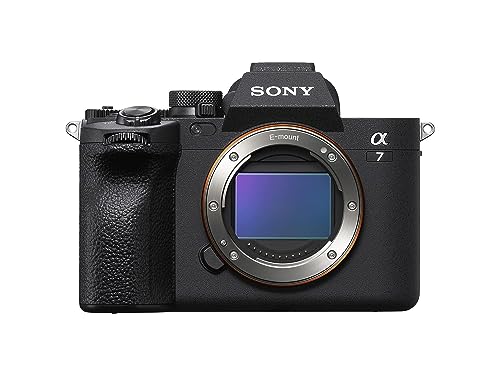
Sony Alpha 7 IV — Best Low-Light Blind Camera
Deer do not keep photographer’s hours. They feed at first light, drift through cover in the last minutes of legal shooting light, and treat midday like a rumour — which is why a hunting photographer’s camera is really a low-light instrument with a telephoto attached. The Alpha 7 IV earns the top slot here because its full-frame sensor keeps shadow detail honest in exactly those minutes: the dark side of a buck standing against darker timber stays a shape you can read, not a silhouette dissolving into noise.
Sit still, listen first, and work from sound and movement rather than the viewfinder; that is the patience this camera rewards. Set up downwind, pre-focus on the gap in the treeline where the trail crosses, and let the animal come to the frame instead of chasing it with the lens. The Sony’s animal eye detection quietly holds focus on a head that keeps dropping to feed and rising to check the wind, and its silent electronic shutter means the photograph never announces itself — a courtesy to the animal and to every other hunter sharing the woodlot.
In the working rhythm of a season, the a7 IV doubles as the camp camera: the successful harvest portrait at the tailgate, the dog asleep under the table, the topo map photographed off a phone screen for the walk out. Its video is strong enough for the short recovery and scouting clips that hunting partners actually share, and the files cut together without fuss.
Its honest limits are a hunter’s limits too. It is not weather-sealed to expedition standards, so a November sleet day wants a rain cover and a dry bag in the pack. The body is also the largest commitment on this list once a long lens joins it — nobody still-hunts a ridge all day with a full-frame telephoto rig and calls the weight nothing. Buy it as the serious seat-and-wait camera, not the mountain camera.
A detail stand hunters come to love is the customisable quiet: every beep, chime, and focus confirmation can be silenced, the rear screen can be darkened to a whisper, and the whole setup can be saved so the camera wakes in the blind exactly as it slept. In a form of photography where the photographer’s stillness is the main piece of equipment, a camera that can be made truly discreet is worth more than a specification sheet suggests.
Paired with a mid-length telephoto zoom it also moonlights as the finest camp camera here — the grip, the files, and the low-light calm flatter firelight portraits and the blue hour over the marsh equally. Hunters building one serious kit for stand season and everything after will keep circling back to this body, and the circling is justified.
One more field note: the a7 IV’s memory recall settings let a hunter store a dawn setup, a daylight setup, and a video setup on the dial, so the camera changes personality with a thumb movement instead of a menu expedition. Seasons are short; a camera that respects that earns its keep.
- Type: full-frame mirrorless system
- Signature: clean files in failing light
- Focus: animal eye detection that tracks feeding game
- Shutter: fully silent electronic option
- Field role: the blind and stand camera
Strengths
- Dawn and dusk files stay printable.
- Animal eye focus holds restless heads.
- Silent shutter never spooks the subject.
Trade-offs
- Rain wants a cover, not confidence.
- Long-lens rig grows heavy fast.
- Menus take a season to master.
Best for: stand and blind hunters, whitetail woods, harvest portraits after the shot.
Not suited for: ultralight mountain hunts or downpour-proof demands.

Canon EOS R6 Mark II — Best for Fast, Nervous Game
Some hunting photography is not about waiting; it is about the four seconds when a covey flushes, a tom fans out from behind a decoy, or a pronghorn decides the truck on the horizon is worth one long look before vanishing. The R6 Mark II is the camera for those seconds. Its animal detection finds birds and mammals inside messy frames — grass, brush, decoy spreads — and its burst rate lets you work a whole flush rather than betting everything on a single reflex.
Behind this camera you shoot like a wingshooter: mount, swing, and follow through. Photographers coming from shotguns take to this camera instantly because it rewards the same discipline — keep the lens moving with the bird after the burst, pre-set a back-button focus so the camera is always awake, and chimp nothing until the action is over. The pre-shooting buffer, which captures frames from before you fully press the shutter, forgives the half-second of human delay that flushing birds specialise in punishing.
Around the hunt itself, the Canon’s colour renders autumn the way hunters remember it — russet, gold, the particular green of a marsh at sunrise — and its stabilisation steadies the handheld telephoto work that happens from truck windows, fence lines, and kneeling positions no tripod will ever reach.
Trade-offs are real but ordinary: the resolution trails the Sony for huge wall prints of a once-in-a-lifetime ram, and the body asks for respect in heavy weather rather than offering sealed indifference. Battery discipline matters on cold mornings, when bursts and low temperatures conspire. None of that dents its argument for anyone whose quarry moves fast and gives warning never.
Waterfowlers in particular should note the sealing and the grip: this is a body shaped for gloved, wet hands at the edge of a marsh, with controls that stay findable when your fingers have stopped reporting for duty. The electronic viewfinder keeps a bright, honest preview in light so low that an optical finder would be guesswork, and the buffer clears fast enough that a second flight of birds is a second opportunity rather than a locked camera.
It also earns praise as the family-hunt camera — the one handed to a teenager on their first duck morning — because its automatic modes are genuinely competent rather than a trap. Set it loose in program mode and it returns usable photographs; take the controls back and it becomes the fastest serious tool in the blind. That range, from borrowed to mastered, is rare.
Note, finally, the resale of attention: because this body is so capable automatically, its owner can spend the flush watching the dog work rather than the camera — and half the pleasure of photographing a hunt is still being present for it. Tools that return your attention to the day are the ones worth their price.
- Type: full-frame mirrorless system
- Signature: burst speed with animal detection
- Buffer: pre-shooting catches the flush
- Stabilisation: handheld telephoto steadiness
- Field role: the action hunter’s camera
Strengths
- Finds birds inside messy cover.
- Pre-shooting forgives slow reflexes.
- Autumn colour straight from camera.
Trade-offs
- Prints trail the highest-resolution rivals.
- Cold mornings eat batteries faster.
- Weather sealing is good, not absolute.
Best for: waterfowl, upland birds, turkey seasons, and any quarry that flushes.
Not suited for: poster-size trophy prints as the main goal.

Nikon Z50 II — Best Reach per Dollar of Pack Weight
Distance is the hunting photographer’s permanent problem: the animal is always fifty yards past comfortable, and getting closer is usually the one thing you cannot do. The Z50 II attacks the problem with arithmetic. Its smaller APS-C sensor crops the view of any lens, so a mid-range telephoto frames like a much longer, much more expensive one — the classic budget route to reach, bought without the hernia of a full-frame super-telephoto.
The working habit it teaches is scouting with the camera. Because the rig stays light, it goes on the preseason walks, rides in the truck for the evening glassing loop, and sits ready during archery season when the photographer is also the hunter and one hand is never free. Nikon’s subject detection, inherited from its flagship line, keeps a bedded deer’s ear-flick in focus through grass that defeats lesser systems, and the viewfinder stays bright enough for the last legal minutes.
Its files suit the way hunting photographs are actually consumed: the club newsletter, the framed eight-by-ten over the workbench, the phone wallpaper that carries a season through winter. Cropping into a distant subject at dawn will find the sensor’s limits sooner than the full-frame picks — physics keeps its fee — but at sane print sizes the results surprise photographers who last shot crop bodies a decade ago.
Choose it knowingly: the lens cupboard is younger than Canon’s or Sony’s, and low-light ceilings arrive earlier on the darkest mornings. For the hunter who photographs three seasons a year and carries everything on their own back, those are fair trades for reach that fits in a daypack.
Archery hunters will recognise the appeal instantly: a camera light enough to hang from the stand’s accessory hook all sit, silent enough for a deer at fifteen yards, and quick enough to document the shot’s aftermath without becoming the hunt’s main event. The electronic viewfinder shows the exposure you will get, which at dawn is the difference between a photograph and a rumour of one.
Its video deserves a mention for the recovery film and the scouting report alike — stabilised, detailed, and honest in colour. A hunter who documents a season for a small audience could run the whole project on this body and a single telephoto zoom, and the audience would never once ask what it was shot on.
For the truck-window naturalist — and every hunting county has one, photographing the evening fields from the slow loop home — the Z50 II on a beanbag is close to a perfect instrument: light, long, and ready in the time a hawk takes to leave a fence post.
- Type: APS-C mirrorless system
- Signature: crop reach from modest lenses
- Detection: flagship-bred subject tracking
- Carry: daypack weight, truck-cab ready
- Field role: the mobile scout’s camera
Strengths
- Telephoto reach without telephoto weight.
- Subject detection punches above class.
- Goes everywhere a heavy rig cannot.
Trade-offs
- Dawn cropping finds limits sooner.
- Lens range still maturing.
- Small body, big gloves, some fumbling.
Best for: archery-season photographers, scouting loops, and backpack hunts.
Not suited for: extreme dawn cropping or flagship lens dreams.

Fujifilm X-T5 — Best for the Photographer-Hunter
A certain kind of hunting camp contains one person who photographs the hunt the way others keep a journal — deliberately, beautifully, and with strong opinions about light. The X-T5 is their camera. Its dials for shutter, ISO, and exposure sit on the top plate where cold fingers can find them without menus, and its film simulations render a frosty morning’s palette with a restraint that makes other cameras’ colour look like it is trying too hard.
Deliberate, low, patient framing becomes second nature here. A high-resolution sensor and a tilting screen encourage the low, patient compositions: the decoy spread at water level, the dog’s point rendered against a whole valley, the still life of boots, thermos, and an old side-by-side on the tailgate. Subject detection covers birds and animals competently, but this camera’s soul is the composed photograph rather than the sprayed burst, and hunters who shoot it tend to come home with fewer, better frames.
It also travels like camp equipment should — compact enough for the duffel, handsome enough that nobody mistakes it for a security device, and happy on a strap during the social parts of a hunt that produce the photographs people keep longest: faces, fires, the retriever’s grey muzzle.
Its concessions: autofocus, while much improved, does not quite match the Canon and Sony for chaotic flushing action, and the crop sensor gives back a little of the dawn. Photographers who know their quarry is mostly stillness and story will not miss what they traded away.
Consider it, too, for the hunts that are really about heritage: the grandfather’s last season, the kid’s first, the dog in what everyone quietly knows is her final autumn. The X-T5’s photographs have a gravity that suits those days — files with the resolution to print large for the wall where the mounts hang, and colour that already looks like memory while the day is still happening.
Practicalities hold up under the sentiment. The battery lasts a full cold day of deliberate shooting, the dual card slots protect the irreplaceable frames, and the body shrugs off the light weather that accompanies most sentimental occasions. It is the camera most likely on this list to be handed down, which for this kind of hunting is not a small thing.
The X-T5 also answers an unexpected brief: the hunting lodge’s house camera. Left on the mantel with a standard lens, it photographs the whole social season — meals, maps, arguments about wind — with a grace that makes the lodge album a document rather than a folder of phone snaps.
- Type: APS-C mirrorless, dial-led
- Signature: film-simulation colour
- Resolution: high, for composed frames
- Handling: top-plate dials, glove-friendly
- Field role: the camp storyteller’s camera
Strengths
- Colour that flatters hard country.
- Dials work without menu diving.
- Resolution rewards deliberate framing.
Trade-offs
- Flush action trails the fastest rivals.
- Crop sensor, dawn ceiling again.
- Video is a supporting act here.
Best for: camp storytelling, composed hunting portraits, and print-minded hunters.
Not suited for: pure burst-rate wingshooting work.

OM SYSTEM OM-5 Mark II — Best for Wet, Cold, Far Places
Ask what kills hunting photographs and the honest answer is rarely the animal; it is the weather that kept the camera in the truck. The OM-5 Mark II is built for the hunts where conditions are the point — sea ducks in spindrift, late-season elk in horizontal snow, a flooded timber morning when everything you own is damp by legal light. Its sealing is the real article, its lenses are small enough that a full kit rides in a blind bag, and its stabilisation is the best argument on this list for handheld work from boats and blinds.
Travelling light through bad country is the way of hunting this camera was made for. The smaller Micro Four Thirds sensor doubles lens reach the way Nikon’s crop does, so the telephoto in the bag is genuinely portable, and computational tricks like handheld high-resolution modes serve the camp and landscape frames between sits. Photographers who hunt from kayaks, layout blinds, and saddle camps — places where gear is audited by the ounce and the inch — understand this camera immediately.
Around the edges of the hunt it shines quietly: macro modes for the feather and track studies that fill a journal, a screen that works at blind-window angles, and a body that rinses the marsh off under a tap at the lodge without a prayer said over it.
The sensor’s size is the standing trade — the darkest dawns and the deepest crops belong to bigger glass — and the menu system rewards an evening of setup before the season rather than improvisation during it. Set it up once, properly, and it disappears into the hunt, which is the highest praise field equipment can earn.
Boat hunters get a specific gift here: image stabilisation strong enough to shoot from a drifting layout boat without turning every frame into a watercolour of good intentions. Combined with the sealing, it makes the OM-5 the camera that goes on the hunts the others watch from the lodge — and photographs from those hunts are the ones nobody else has.
The system’s lens prices tell a kind story as well. Because the format is compact, the telephoto zooms that serve this camera cost and weigh a fraction of their full-frame equivalents, so the whole hunting kit — body, long lens, wide lens — can cost less than a single flagship telephoto elsewhere. For hunters funding the hobby from the same wallet as tags and shells, that arithmetic is the review.
Guides and outfitters, take note: this is the client camera. Sealed, light, and forgiving, it survives being lent to a guest whose own camera stayed home, and its photographs of a client’s first animal will be printed, framed, and pointed at for decades.
- Type: Micro Four Thirds mirrorless
- Signature: expedition-grade sealing
- Stabilisation: boat-and-blind handheld work
- Reach: small lenses, doubled framing
- Field role: the bad-weather hunter’s camera
Strengths
- Weather sealing you can trust.
- Whole kit fits a blind bag.
- Stabilisation steadies boats and blinds.
Trade-offs
- Smallest sensor, earliest dawn limit.
- Menus reward homework first.
- Prints cap below full-frame picks.
Best for: sea ducks, mountain camps, kayak hunts, and foul-weather seasons.
Not suited for: maximum-resolution trophy walls.

Panasonic LUMIX S5II — Best for Hunting Film and Stills
Every hunting party now contains a filmmaker, whether they applied for the job or not — the one whose phone footage of the retrieve gets watched at every gathering for a year. The S5II is the camera that promotes that person properly. It is a full-frame stills camera of real quality wrapped around the most serious video toolkit on this list: phase-detect autofocus that tracks a working dog through cover, stabilisation that smooths a walking stalk, and recording stamina for the long, uneventful sits that hunting film is honestly made of.
Film the hunt as it is, not as a highlight reel: that is the lesson this camera teaches. Leave it rolling on a small tripod at the blind’s corner and it gathers the material memory is made of — the calling, the waiting, the dog’s breathing, the light changing — while its stills remain one button away when the moment finally stands up in the decoys. Hunters cutting a season film for family, a club, or a small channel will find no ceiling here they are likely to hit.
Its stills deserve their sentence: the same full-frame virtues as the Sony — honest dawn files, gentle highlight roll-off on frost and water — with colour that editors describe as easy, meaning it grades without fighting and matches other cameras in a mixed kit.
Size is the toll: with a video-capable zoom it is a deliberate carry, and the L-mount lens range, though growing, asks telephoto shoppers to choose carefully. For the hunter whose deliverable is a film with stills rather than stills with clips, no other pick on this page makes the same sense.
Stills shooters should not let the video billing undersell the camera as a blind companion: the phase-detect autofocus is a genuine stills upgrade over older Panasonic bodies, tracking a deer’s head through brush with a confidence the brand’s fans waited years for. The hunting film may be the headline, but the photographs in the same folder hold their own at the camp slideshow.
One workflow habit completes the package: the S5II’s ability to keep recording while the photographer lives the hunt — on a mini tripod, in a corner of the blind, forgotten — produces the honest footage that staged hunting television never captures. Review that footage in February and you will learn more about your own hunting than any photograph teaches.
And when the season ends, the S5II becomes the editing suite’s favourite source — its files cut against phone footage and action cameras without colour arguments, which means the season film actually gets finished. A finished modest film beats an abandoned epic every February.
- Type: full-frame hybrid mirrorless
- Signature: video-first toolkit, real stills
- Autofocus: phase-detect dog tracking
- Recording: built for long blind sits
- Field role: the season-film camera
Strengths
- Films a whole sit without drama.
- Tracks working dogs through cover.
- Stills keep full-frame honesty.
Trade-offs
- Rig size is a deliberate carry.
- Telephoto lens shopping needs care.
- Overkill for stills-only hunters.
Best for: season films, club channels, and hybrid hunter-creators.
Not suited for: minimalist stills-only backpack hunts.
How Do the Six Compare at a Glance?
Six hunting styles, six instruments — the table below compresses the blind, the marsh, and the mountain into one honest glance.
| Camera | Character | Watch out for |
|---|---|---|
| Sony Alpha 7 IV | Full-frame low-light specialist | Weight once a telephoto joins |
| Canon EOS R6 Mark II | Fast-action full-frame body | Resolution ceiling for huge prints |
| Nikon Z50 II | Crop-sensor reach multiplier | Earlier low-light ceiling |
| Fujifilm X-T5 | Dial-driven APS-C storyteller | Action autofocus a step behind |
| OM SYSTEM OM-5 Mark II | Sealed Micro Four Thirds traveller | Sensor size caps dawn crops |
| Panasonic LUMIX S5II | Full-frame film-and-stills hybrid | Size and lens-range homework |
How Do You Photograph a Hunt Without Spoiling It?
The first rule is that the photograph is the guest, not the host. In a shared blind, the camera works silently, moves slowly, and never rises at the moment someone else’s shot is coming together. Silent shutters, screens dimmed to their lowest civilised brightness, and a lens hood that does not clang against the blind frame are etiquette before they are technique. Hunters who photograph well in company get invited back; the camera that costs a friend a bird costs its owner a season of invitations.
Fieldcraft transfers directly. The same wind discipline, the same patience with a deer’s head-down, head-up rhythm, the same willingness to let an animal pass unphotographed because the angle is wrong — photography rewards all of it. The best hunting photographs usually come from hunters who would have been in position anyway, camera or no camera, which is why this guide keeps insisting the kit serves the hunt and not the reverse.
How Should You Set the Camera Before Legal Light?
Decide everything in the truck. Set the exposure mode you trust, the focus mode for animals, a floor for shutter speed that freezes a walking deer, and an ISO ceiling you have tested and accepted. In the blind, in the dark, with cold fingers, is no place to discover a menu. Many experienced hunting photographers shoot the same small cluster of settings all season, changing only aperture as the light builds, because a familiar camera is a fast camera.
Then practice the unglamorous drill: raise, frame, and settle without the sweep that flares birds and catches a deer’s eye. Photograph the decoys at first light to confirm the setup. Check the histogram on a frosty branch rather than trusting a screen brightened for daylight. When the first animal steps out, the only decision left should be the moment — and that is a hunting decision, which you already know how to make.
What Are the Most Common Mistakes in Hunting Photography?
The classic error is buying for the animal and forgetting the light: a long, slow lens on a body that hates high ISO produces technically distant, practically unusable dawn photographs. The second error is noise — a mechanical shutter’s clack, a focus beep left enabled, a phone-bright screen — announcing the photographer at the exact moment the woods were about to forget them. Silence is a setting; set it before the season.
The third mistake is hunting with the camera instead of photographing the hunt: chasing every movement, educating every animal in the county, and coming home with forty blurred rumps and no story. The fix is the oldest hunting advice there is — pick your spot, let the game come, and accept the photographs the day offers. A season photographed patiently beats a season photographed frantically, in the album and in the freezer alike.
How Do You Carry a Camera on a Hunt Without It Becoming the Hunt?
The carry question decides more seasons than the sensor question. A camera that rides in a padded case inside a pack is a camera that photographs lunch and camp; a camera that rides accessible — on a chest harness under the outer layer, in the blind’s corner on its monopod, on a sling that keeps it at the hip and silent — is a camera that photographs game. Choose the carry before the season, rehearse it with gloves, and audit it for noise the way you would audit a new stand location for a creak.
Protection follows the same logic of access. A simple rain cover that lives on the lens, a cloth in a sealed bag, and a dry sack for the boat ride home beat an elaborate waterproof housing that takes four minutes to open. The hunts that produce photographs are the wet, cold, awkward ones; the kit that survives them is the kit that never has to be unpacked to be used.
What Should a Hunting Photographer Do With the Off-Season?
Shoot it. The camera that sleeps from January to September wakes up a stranger in October, and the first deer of the season should not be the occasion for relearning a menu. Off-season assignments that genuinely transfer: the dog’s training sessions for tracking practice, turkeys in spring for the hardest autofocus in the calendar, songbirds at the feeder for patience, and the family’s summer for the camp camera skills that November will want.
The off-season is also when the archive gets built — the season’s photographs sorted, printed, and argued over, which is how a hunting photographer learns what their camera actually does well. Print the best frame large. The wall is a stricter editor than the screen, and the lessons it teaches in March are the photographs you take in November.
How Do You Photograph Dogs, the Real Athletes of the Hunt?
Every hunting party agrees, usually by the second season, that the dog was the athlete and the rest were logistics. Photographing a retriever or a pointer well is its own discipline: get low, because a dog photographed from standing height looks like a pet and a dog photographed from its own height looks like a colleague; focus on the near eye; and let the burst run through the shake, the sprint, and the delivery, because the frame everyone frames is almost never the one the photographer expected.
The cameras here divide by dog work the way they divide by everything else: the Canon for the flush and the retrieve at full gallop, the Panasonic for the film of a young dog’s first season, the Fujifilm for the grey-muzzled veteran’s portrait by the fire. A hunting album without the dogs in their prime is an archive with the heart missing, and it is the easiest heart to photograph — they work in daylight, at close range, with joy.
What Ethics Should Govern a Hunting Photograph?
The photograph outlives the hunt and speaks for it to people who were not there, which makes the hunting photographer an ambassador whether they applied or not. The working rules are simple and old: photograph the animal with the respect you would want shown to your own harvest, keep the scene honest, be thoughtful about blood and about locations — a geotagged photograph of a fragile spot can send a hundred strangers to a place that can hold ten — and never let the camera extend a chase, pressure an animal, or turn a clean hunt into a performance.
Within the party, consent matters too: ask before the harvest portrait is shared beyond the group, and honour the hunter who does not want their face or their animal on the internet. A camera carried with that kind of care makes the whole party hunt better; everyone relaxes, the days stay natural, and the photographs — this is the paradox — get better as the camera gets less important.
How Do You Keep a Camera Alive Through a Whole Season?
Season-long care is unglamorous and decisive. Blow the blind dust off with a rocket blower rather than a shirt tail, because grit plus fabric equals a scratched front element by Thanksgiving. Keep a silica packet in the case for the ride home from wet hunts, let a cold camera warm up inside a sealed bag so condensation forms on the bag instead of the sensor, and charge batteries on a rhythm rather than in a panic the night before the coldest morning of the year.
Cards deserve the same discipline: format them in the camera, retire the one that has ever hiccupped, and download each day’s take the night it is shot, because a season’s photographs living on a single card in a blind bag is a loss waiting for its moment. None of this is technique, exactly — it is the housekeeping that lets technique matter, and every veteran hunting photographer has the same short list because every one of them learned it the expensive way.
What Mistakes Do Hunting Photographers Make When Buying?
Buying reach before light is the expensive classic: the longest lens in the shop mounted on a body whose files fall apart at dawn produces a season of almosts. Buy the combination for the first twenty minutes of the day and the rest of the day takes care of itself.
The second buying mistake is ignoring the carry. A rig that stays in the truck because the walk in is long has a perfect specification and an empty memory card. Match the kit to the hunting you actually do — the blind sitter can carry what the mountain hunter cannot — and be honest about which hunter you are in November rather than the one you were in the shop in September.
A third buying mistake deserves naming because shops encourage it: paying for burst rate you will never use while skimping on the viewfinder you will use every second. A hunter lives behind the finder for hours of a sit; its brightness at dawn, its clarity with glasses, and its freedom from lag shape the season more than a specification buried in a burst mode. In the shop, raise every candidate to your eye in the dimmest corner available and buy the view you can imagine living in until the light comes up.
Final Recommendation
If one camera must be named for the most hunters, it is the Sony Alpha 7 IV: silent, patient, and at its best exactly when the hunting is. Wingshooters and bird hunters should step sideways to the Canon EOS R6 Mark II, whose speed turns four frantic seconds into a sequence worth framing. Hunters who walk — and hunters in genuinely bad weather — belong with the Nikon Z50 II and the OM SYSTEM OM-5 Mark II respectively, trading ultimate dawn reach for kits that actually come along.
The Fujifilm X-T5 and Panasonic LUMIX S5II close the list as the specialists of story: one for the photographer who keeps the camp’s journal in composed frames, one for the filmmaker every party now has. Choose by the hunt you love, set the camera before legal light, and let the animals write the rest.
Whichever of the six rides in your blind bag, give it one full practice day before the opener: a morning at the range, the dog park, or the marsh boardwalk, shooting the settings you will actually use, until the camera is boring. Boring equipment is the goal. The season is short, the light is shorter, and the camera should be the least interesting thing that happens to you out there.
And one last encouragement for the hunter still shooting only a phone: the jump to any camera on this page is not really about sharpness. It is about being ready — silently, in the dark, at distance — for the twenty minutes a day when the woods are awake. Those minutes are the season. Photograph them like they matter, because everyone who has hunted knows they do.
Frequently Asked Questions
Do I need a full-frame camera for hunting photography?
Not necessarily. Full-frame bodies hold dawn files together best, which matters in blinds and timber, but crop-sensor cameras multiply lens reach and travel far lighter. Many excellent hunting photographs are made on APS-C and Micro Four Thirds bodies used inside their strengths — closer, earlier, and carried everywhere.
How long a lens do hunting photographers really use?
A telephoto in the 100–400mm class is the working standard, on any sensor size, because it frames animals at ethical distances while keeping camp and landscape shots possible on the same walk. Longer glass exists for specialists; most hunters find fieldcraft buys more distance than another hundred millimetres does.
Will a camera’s shutter noise spook game?
A mechanical shutter can, at close range in still air — which is why every pick here offers a silent electronic mode. Pair it with disabled focus beeps and a dimmed screen, and the camera becomes the quietest thing in the blind, quieter than most hunters.
Can I use the same camera for scouting and for the hunt?
Check your local regulations first: some jurisdictions treat cameras used for scouting differently from cameras carried during a hunt, and trail cameras are regulated separately again. Where it is legal, these bodies serve both, but the paperwork question belongs to your wildlife agency, not to a buying guide.
What settings should a beginner start with?
Animal subject detection on, a shutter speed fast enough for a walking animal, aperture near the lens’s sweet middle, and auto ISO with a ceiling you have tested at home. Shoot the dog in the yard at dusk until the files please you; the deer will not wait while you learn.
Is video worth prioritising for a hunting camera?
Only if someone will actually edit it. A season film is a treasure when finished and a hard drive of good intentions when not. The Panasonic exists on this list for hunters who finish films; everyone else should buy for stills and treat competent video as a bonus.
Related Guides
Keep reading with our companion guides to fieldcraft-friendly gear and low-light technique: best cameras for wildlife on a working budget how to set up a silent shutter for the blind telephoto fieldcraft: getting closer without shopping


