kajuandouglas.com is reader-supported. When you buy through links on our site, we may earn an affiliate commission.
Where to Buy
Beauty photography is the genre where the camera is judged by the most demanding subject in the world: a human face, at close range, in unforgiving detail. The best cameras for beauty photography render skin as skin — texture intact, tones true, transitions between highlight and shadow smooth enough to look like light rather than processing — and they focus on an eye with a reliability that borders on telepathy, because a beauty frame with the lashes soft is a frame deleted. The best cameras for beauty photography also respect the retoucher: their files hold together under the careful, layered editing that beauty work involves, without the colour breaking into bands or the skin turning to plastic. Buy through the Amazon listings linked in this guide, confirm the model name on the listing matches the pick, and remember that in this genre the lens and the light will always outrank the body — the cameras here were chosen as the strongest partners for both.
Beauty splits into two working worlds. Studio beauty is controlled: tethered shooting, deliberate light, a model, a makeup artist, and images destined for close inspection. Content beauty is faster: creators filming and photographing products, routines and themselves, where the camera must flatter at arm’s length and focus without an assistant. This list serves both worlds and says which pick belongs to which, because a camera that is perfect on a tripod in a studio can be entirely wrong in a bathroom mirror at 7 a.m.
A word on honesty, since this genre attracts magical thinking: no camera ever made, or will make, skin flawless, and the ones that promise to smooth it in-camera are borrowing against the professional’s distrust. The cameras below were chosen for the opposite virtue — they tell the truth beautifully, with colour science and resolution that let the photographer, the makeup artist and the retoucher each do their own job properly.
Key Takeaways
- The Sony Alpha 7 IV is the studio all-rounder: eye autofocus that rarely misses, files that retouch gracefully, and tethering that keeps a client shoot moving.
- Canon’s EOS R6 Mark II renders skin tones with the warmth beauty clients consistently choose in blind tests of their own portraits.
- Fujifilm’s X-T5 resolves eyelash-level detail and offers film simulations that beauty creators love straight from the camera.
- The Canon PowerShot G7 X Mark III remains the content creator’s beauty compact — flattering at arm’s length and simple enough for daily routines.
- Sony’s RX100 VII is the pocket option for beauty travel kits, with a zoom range that covers product shots and portraits alike.
- The Canon EOS R50 is the budget doorway into interchangeable-lens beauty work, with guided menus that teach as you shoot.
In this guide
Quick Picks
| Badge | Pick | Why it stands out |
|---|---|---|
| Best Studio All-Rounder | Sony Alpha 7 IV | Telepathic eye focus and files built for retouching. |
| Best Skin Tones | Canon EOS R6 Mark II | Colour that flatters skin straight out of the camera. |
| Best Detail and SOOC Colour | Fujifilm X-T5 | High resolution plus film simulations creators adore. |
| Best for Content Creators | Canon PowerShot G7 X Mark III | The arm’s-length beauty compact for routines and reviews. |
| Best Pocket Beauty Camera | Sony RX100 VII | A real zoom and real autofocus in a handbag-sized body. |
| Best Budget Start | Canon EOS R50 | Interchangeable lenses and friendly guidance for beginners. |
How We Chose These Picks
Four qualities decided this list, and megapixels were only one of them. Colour came first: beauty photography lives or dies on skin tones, and the cameras here render the reds and oranges of human skin with the accuracy and generosity the genre demands, without the waxy smoothing that cheaper processing applies uninvited. We favoured files that arrive honest and let the photographer choose the finish, over files that arrive pre-flattered and cannot be un-flattered.
Autofocus came second, and specifically eye autofocus at portrait distances. Beauty framing is tight, depth of field is thin, models move, and the difference between a professional tool and a frustration is whether the camera holds the near eye through a whole set without the photographer chimping after every frame. Third was file integrity for retouching: dynamic range to hold a highlight on a cheekbone, clean shadows, and raw files that tolerate the frequency-separation and dodge-and-burn work beauty retouching is built on. Fourth was workflow — tethering for the studio, flip screens and simplicity for the creator — because a beauty camera is used in a process, not in a vacuum.
We deliberately included the two compacts. A large share of beauty imagery today is made by creators at arm’s length, and pretending that work needs a full studio rig would be snobbery rather than advice. The compacts here earn their places on results, with their limits stated plainly.
What Makes Beauty Photography Different From Portrait Photography?
Distance and scrutiny. A portrait can be a whole person in a place, judged as a mood; a beauty shot is a face filling the frame, judged as a surface. Every pore, lash and lip line is the subject, which is why beauty work developed its own disciplines: makeup applied for the camera’s scrutiny rather than the mirror’s kindness, light sculpted to describe skin rather than merely illuminate it, and retouching that aims for perfected reality — skin that still looks like skin when you zoom in, which is a far harder trick than smoothing it away.
The camera’s role in that triangle is fidelity. It must not editorialize: no aggressive noise reduction smearing the lashes at high ISO, no colour science that turns foundation orange, no sharpening halos around the catchlights. The picks below are, in different price bands, the cameras whose rendering beauty professionals trust — the ones whose files arrive at the retoucher’s screen as a faithful witness rather than an opinionated one.

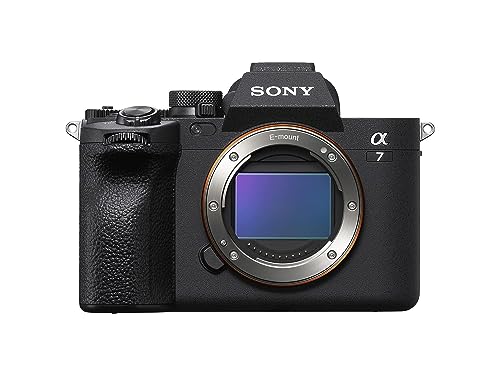
Sony Alpha 7 IV — Best Studio All-Rounder
The Alpha 7 IV is the camera beauty studios reach for when the brief is simply “it has to work, all day, on a paying client”. Its eye autofocus is the headline: it finds the eye, holds it through head turns and hair tosses, and does so at the wide apertures where beauty depth of field is measured in eyelashes. A photographer can direct the model, watch the makeup, and think about the light — the three things they are actually paid for — while the camera handles the focusing with a reliability that stops being remarkable only because it never stops working.
The files suit the retoucher’s craft. The full-frame sensor’s dynamic range holds the specular highlight on a cheek and the shadow under a jaw in the same frame, the raw files push and pull without banding in the smooth gradients beauty backgrounds are made of, and tethered shooting to a studio computer is a mature, dependable workflow — the client and makeup artist watch the set appear on the big screen, which changes the politics of a shoot entirely, for the better.
It is not the cheapest route into beauty work and its colour, while accurate, has a clinical streak some photographers warm up in their profiles. As a professional tool that will not be the reason a frame failed, it is this list’s anchor.
- Sensor: full-frame, high resolution with strong dynamic range
- Autofocus: real-time eye tracking for people, exceptionally reliable
- Workflow: tethered shooting support for studio work
- Colour: accurate, neutral starting point for grading
- Role: studio beauty and commercial portrait work
Strengths
- Eye focus frees the photographer to direct instead of chase focus.
- Files withstand professional retouching without breaking down.
- Tethering keeps clients and makeup artists in the loop.
Trade-offs
- Neutral colour needs warming for photographers who prefer it baked in.
- Full-frame lenses for beauty focal lengths are a real investment.
- More camera than a casual creator will ever use.
Best for: working beauty and portrait photographers shooting clients. Not suited for: arm’s-length content creation where size and simplicity rule.

Canon EOS R6 Mark II — Best Skin Tones
Ask beauty clients to choose their favourite portrait from an unlabelled set and a pattern emerges that studios have known for decades: they pick the Canon file. Canon’s colour science renders skin with a warmth and a kindness in the red channel that flatters without falsifying, and the R6 Mark II carries that tradition into a body with thoroughly modern autofocus and speed. For photographers whose clients are the final judges — weddings’ beauty prep, portrait clients, commercial work where the brand wants glow rather than grit — that preference is a business argument, not a spec.
The camera around the colour is formidable: eye autofocus that competes with the Sony’s, a full-frame sensor whose resolution suits beauty framing and cropping, and low-light grace for the getting-ready suite and the evening event. Its files also retouch well; Canon’s look is a starting point many retouchers describe as halfway to finished.
Choose it when the picture’s destination is a client’s delight rather than a pixel-peeper’s forum. The R6 Mark II’s beauty work succeeds at the moment the subject sees themselves and smiles — which, in this genre, is the entire assignment.
- Sensor: full-frame, resolution well matched to beauty framing
- Colour: renowned skin-tone rendering, flattering straight away
- Autofocus: fast eye tracking across the frame
- Low light: strong for preparation and event beauty work
- Role: client-facing beauty and portrait photography
Strengths
- Skin tones clients consistently prefer in their own portraits.
- Modern speed and focus behind the classic colour.
- Files need less colour work before retouching begins.
Trade-offs
- Resolution trails the highest-resolution picks for extreme crops.
- Its warmth is a taste; clinical product work may prefer neutrality.
- RF portrait lenses carry premium prices.
Best for: portrait and beauty photographers whose clients judge the results. Not suited for: macro-level product detail where maximum resolution rules.

Fujifilm X-T5 — Best Detail and SOOC Colour
The X-T5 serves two beauty tribes at once. For the detail-obsessed — the makeup artist building a portfolio, the photographer shooting a cosmetic campaign where a single lash out of place is a reshoot — its high-resolution sensor resolves the genre’s micro-subjects with room to crop and recompose in post. For the creator who publishes straight from the camera, its film simulations are the most beloved colour shortcuts in photography, rendering skin in palettes that took the film era decades to refine.
The traditional dial layout slows the photographer down in the productive way: aperture, shutter and exposure compensation under dedicated fingers encourage the deliberate settings beauty work rewards. In-body stabilisation steadies handheld close work, and the APS-C system’s portrait lenses are smaller and kinder to budgets than full-frame equivalents while reaching genuinely professional quality.
Its autofocus, while good, is the honest step behind the Sony and Canon flagships in this list for frantic eye-tracking, and its smaller sensor asks more of the light. In the considered pace of beauty — studio strobes, ring lights, a model holding a pose — those limits rarely bind, and the files’ character wins photographers over for years.
- Sensor: high-resolution APS-C for maximum detail
- Colour: film simulations prized for skin and mood
- Controls: traditional dials for deliberate shooting
- Stabilisation: in-body, for handheld close work
- Role: detail beauty, MUA portfolios, creator stills
Strengths
- Resolves lashes, texture and product detail superbly.
- Straight-from-camera colour creators publish daily.
- Compact system with excellent, affordable portrait lenses.
Trade-offs
- Eye tracking a step behind the flagship rivals.
- Smaller sensor needs more light or higher ISO.
- Dials suit deliberate work better than fast events.
Best for: detail-led beauty, makeup portfolios and creators who love film colour. Not suited for: fast-moving event beauty in dim venues.

Canon PowerShot G7 X Mark III — Best for Content Creators
There is a reason this little Canon became the beauty creator’s signature camera: it understands the assignment of arm’s-length beauty better than cameras five times its price. Its lens is fast and wide enough for a bathroom or desk setup, its colour flatters skin in the mixed lighting of real rooms, its screen flips up for framing yourself, and its autofocus was tuned by a company that watched a generation of creators adopt its predecessor and listened to what they asked for. Routines, first impressions, get-ready-with-me stills and video — this is the tool that genre grew up on.
The honest frame for its talents is content, not campaign work. The one-inch sensor cannot match the big bodies for studio retouching depth or for printing large, and its autofocus, while good, will occasionally hunt in dim rooms where the flagships would not. Within its world — daily content, product close-ups on a desk, travel beauty kits — those limits are theoretical and its convenience is weekly reality.
If your beauty work is published to a feed rather than a billboard, this is the pick that respects your actual workflow. It lives in the makeup bag, not the equipment case, and that address is precisely its qualification.
- Sensor: 1-inch, balanced for content quality and size
- Lens: fast, wide zoom suited to arm’s-length framing
- Screen: tilts up for self-framing
- Colour: flattering skin rendering in household light
- Role: creator routines, reviews and social beauty content
Strengths
- The workflow creators actually use, in one pocketable tool.
- Flattering colour without editing in everyday light.
- Video and stills both serve the content routine.
Trade-offs
- Not a studio retouching camera; files have less depth.
- Autofocus can hunt in dim rooms.
- Fixed lens limits specialist beauty focal lengths.
Best for: beauty creators filming and photographing their own routines. Not suited for: commercial studio beauty with clients and retouchers.

Sony RX100 VII — Best Pocket Beauty Camera
The RX100 VII is what happens when a manufacturer refuses to accept that pocket cameras must be simple. Inside its genuinely small body sits a zoom range that runs from wide desk shots to proper portrait framing, autofocus inherited from Sony’s professional line — including eye tracking that embarrasses larger cameras — and burst and video abilities that belong to another class entirely. For the beauty professional who travels — the makeup artist documenting work on location, the creator at a launch event — it is a complete kit that fits the bag the products are already in.
Its beauty credentials are specific: the portrait end of its zoom gives the flattering compression a phone’s wide lens never will, the eye focus keeps self-portraits honest, and a microphone input acknowledges that modern beauty work talks. Product photography benefits from its close-focusing competence and the ability to bounce between a flat-lay and a face without changing anything but the zoom.
The price is the conversation: it costs what interchangeable-lens cameras cost, in a fixed-lens body. The defence is that it replaces a bag, not a camera — and for the travelling beauty professional, that trade is routinely worth it.
- Sensor: 1-inch with fast readout
- Lens: versatile zoom from wide to portrait lengths
- Autofocus: professional-grade eye tracking
- Audio: microphone input for talking content
- Role: travel beauty kits, events, location documentation
Strengths
- Real portrait framing and focus from a pocket body.
- Covers product, face and event without lens changes.
- Video quality matches its stills for hybrid creators.
Trade-offs
- Premium price for a fixed-lens compact.
- Small body means small controls and battery.
- Studio retouching depth trails the full-frame picks.
Best for: travelling makeup artists and creators who need one small, serious camera. Not suited for: buyers who would rather have interchangeable lenses at this price.

Canon EOS R50 — Best Budget Start
Every beauty photographer starts somewhere, and the R50 is currently the kindest somewhere. It brings the two things a beginner cannot fake — interchangeable lenses and Canon’s skin-friendly colour — inside a body whose guided menus explain themselves as you go. Paired with an affordable portrait prime, it produces the shallow-depth, glowing-skin look that beginners associate with “a real camera”, because it is one, and it teaches the exposure and focus skills that the photographer will keep for every upgrade afterwards.
The growth path is its argument. The same body that shoots a first portfolio with a kit zoom accepts the portrait lenses, the lights and the tethering habits of a working beauty practice as the photographer’s ambitions and income grow; nothing about the R50 has to be unlearned or sold to progress. Its eye autofocus is genuinely capable, its screen flips for the creator work that funds many beginners, and its size encourages the daily practice that actually creates skill.
Its limits are the tuition kind: resolution and low-light depth trail the flagships, and the body is less sealed and less swift. A beginner will reach those limits in a year or two — which is another way of saying the camera will have done its job, and its owner will know exactly which flagship quality they are paying for next, and why.
- Sensor: APS-C with Canon colour science
- Lenses: interchangeable, with affordable portrait primes available
- Menus: guided interface that teaches while shooting
- Screen: vari-angle for self-framing and content
- Role: first serious beauty camera
Strengths
- The cheapest honest route into real beauty photography here.
- Portrait-prime results thrill beginners immediately.
- Skills and lenses carry forward to future bodies.
Trade-offs
- Files have less retouching depth than the flagships.
- Build and speed are enthusiast grade.
- Low-light performance is good, not great.
Best for: beginners and creators stepping up from a phone. Not suited for: established professionals who need flagship files today.
How Do the Picks Compare for Beauty Work?
| Pick | Sensor | Eye focus | Colour character | Best world |
|---|---|---|---|---|
| Sony Alpha 7 IV | Full-frame | Exceptional | Accurate, neutral | Studio |
| Canon EOS R6 Mark II | Full-frame | Excellent | Warm, flattering | Client portraits |
| Fujifilm X-T5 | APS-C high-res | Good | Film simulations | Detail and creators |
| Canon PowerShot G7 X Mark III | 1-inch | Good | Flattering | Content creation |
| Sony RX100 VII | 1-inch | Excellent | Clean, modern | Travel kits |
| Canon EOS R50 | APS-C | Good | Warm, friendly | Beginners |
Read the colour column as a personality test rather than a ranking. Beauty photography has room for the clinician, the romantic and the film nostalgist; the unforgivable sin in this genre is not a colour preference but a file that falls apart when the retoucher leans on it, and none of these six commits it.
Which Lens Makes Beauty Photography?
If the camera is the witness, the lens is the accent it speaks in. Beauty’s classic focal lengths cluster around the short telephoto — the 85mm class on full-frame and its equivalents on smaller sensors — because that compression flatters facial geometry: noses stay in proportion, ears stay where they belong, and the working distance lets a makeup artist step in without the photographer moving house. Wider lenses have their place in environmental beauty and in the creator’s arm’s-length world, where the G7 X and RX100 zooms live, but the face-filling studio frame belongs to the portrait telephoto and everyone in the genre knows it.
Aperture is a tool with a cost. Wide open, a fast portrait lens melts a background into the genre’s signature glow and isolates the near eye in a plane of focus measured in millimetres — beautiful, and brutally dependent on the eye autofocus praised throughout this guide. Stopped down a little, the same lens renders the full face with the texture product clients pay for. The professional habit is to choose per brief rather than per habit: editorial glow or cosmetic truth, decided before the model sits down.
Buy the lens before the body upgrade, always. It is the single most reliable purchasing rule in this genre, and the photographers who follow it build kits that age gracefully, because glass holds its value and its usefulness across every body it will ever be mounted on, while bodies are replaced on a rhythm set by the manufacturers rather than by the work. A portrait prime on the R50 will out-photograph a kit zoom on a flagship for beauty purposes, and it will still be the right lens when the flagship eventually arrives.
How Should You Light a Beauty Shot?
Beauty light is sculptural: its job is to describe the planes of a face and the finish of skin and makeup. The classic starting point is a large, soft source close to the subject — softness being a function of size relative to distance — placed to model the cheekbones and leave a graceful shadow side, with a reflector or a gentle fill keeping that shadow luminous rather than muddy. Clamshell lighting, a key above and a fill below, is the genre’s workhorse for a reason: it wraps the face, fills the eye sockets kindly, and puts twin catchlights in the eyes that read as life.
Ring lights own the creator end of the genre, and their flat, shadowless wrap is genuinely flattering for talking-to-camera beauty — even skin, bright eyes, no surprises — while being the wrong tool for sculpted editorial work, where shadow is information. Neither is superior; they answer different briefs, and the photographer who can say why they chose one has understood beauty lighting better than the one with the larger modifier collection.
Whatever the setup, expose for the skin and let the background fall where it falls. A beauty frame is judged on a face, and the camera’s meter, left to itself, will happily sacrifice that face to a bright backdrop. Spot-meter or compensate, check the histogram’s highlights on the cheek, and shoot a test frame with the makeup finished — foundation changes how skin photographs, and the time to discover that is before the set, not during it.
What Mistakes Ruin Beauty Photographs?
Over-smoothing is the genre’s original sin, committed in-camera by beauty modes and in post by heavy-handed retouching, and detectable by anyone: skin without texture is a mannequin, and the audience’s eye knows it instantly even when their vocabulary does not. The professional standard is texture preserved and blemishes addressed individually — a slower craft that every camera in this guide supports by delivering honest files in the first place. It is worth saying plainly that this standard is also the commercial one now: audiences raised on filtered imagery have developed a connoisseur’s eye for the real, and the beauty work that cuts through is increasingly the work whose skin could only belong to a person.
The second mistake is focusing on the wrong geography: with depth of field this thin, the near eye is the contract, and a frame focused on the nose or the far eye reads as a mistake no retouching can redeem. This is why eye autofocus dominates this guide’s judgements — it is not a convenience feature in beauty work, it is the difference between a set and a salvage operation. Third is colour carelessness: mixed lighting — window daylight against a warm bathroom bulb — paints a face in two temperatures, and no white balance can honour both. Choose one light, kill the other, and let the camera’s colour science do its single, coherent job.
Fourth, and quietest: photographing the makeup instead of the person, so that the set documents a product application while the human being inside it waits, unphotographed, for a direction that never comes. The frames that survive are the ones with a living expression in them, and directing for that — conversation, music, a moment of genuine amusement — is a camera skill no specification measures.
How Do You Direct a Beauty Sitter Who Is Not a Model?
Most beauty subjects are not professionals: they are clients, creators’ friends, brides, and people who believe they are unphotogenic, a belief usually traceable to bad photographs rather than bad faces. The photographer’s direction is therefore half the camera work. Give the sitter something true to do with their hands and their gaze, talk through the silences — a held pose with no conversation curdles into self-consciousness in about twenty seconds — and show them a good frame early. One flattering image on the back of the camera rewrites the sitter’s whole relationship with the session.
Angles are kindness with geometry behind it. A camera slightly above eye level, a chin guided a fraction down and forward, shoulders turned a few degrees from square: these small directions, delivered warmly, do more for a non-model’s portrait than any lens in this guide. Shoot more than feels necessary during the first minutes, because the best frames of an amateur sitter cluster late, when the performance of being photographed has worn off and the person has arrived.
The compacts earn a footnote here: a small camera intimidates nobody. Some photographers keep a G7 X or RX100 for exactly the sitters whom a flagship rig makes formal, and the portraits justify the tactic often enough to respect it.
What Should a Beauty Retouching Workflow Protect?
Texture, identity and time. Texture, because the genre’s standard is skin that survives magnification; the established techniques — separating tone from texture, dodging and burning by hand — exist to perfect a face without ironing it, and they demand raw files with the depth the larger picks here provide. Identity, because the ethical line of modern beauty work runs through recognisability: the sitter should meet themselves in the photograph, improved by light and care rather than replaced by an averaged stranger. Clients increasingly ask for exactly that, and cameras that deliver honest colour make the promise keepable.
Time, because beauty retouching is labour and the camera can donate or steal it. A file that arrives with accurate colour, an eye in focus and highlights intact is a file the retoucher finishes; a file that arrives orange, soft and clipped is a file they rescue, at hourly rates, with worse results. When studios say a camera is “good for beauty”, this accounting — minutes saved per frame across a whole set — is a large part of what they mean.
How Does Makeup Change What the Camera Sees?
Makeup for the mirror and makeup for the camera are cousins, not twins, and the beauty camera is the translator between them. Products that look dewy in person can photograph as shine under a strobe; a foundation matched perfectly to the neck in daylight can turn ashen under flash if its pigments reflect light oddly — the infamous flashback that has haunted event photographs for years. This is why beauty shoots test: a frame with the finished makeup, under the actual light, reviewed at magnification, before the set begins in earnest. The cameras with accurate colour and honest screens — and tethered review on the studio picks — make that test truthful rather than approximate.
Texture reads differently through a lens as well. A high-resolution sensor like the X-T5’s will render powder sitting on skin with documentary clarity, which is information the makeup artist uses: buff more, powder less, switch the finish. Skilled MUAs ask for the test frame the way chefs ask to taste; the camera that delivers it quickly and truthfully becomes part of the makeup kit in all but name.
For creators filming their own application, the same logic applies at arm’s length — the G7 X’s flattering-but-honest rendering is popular precisely because it shows the product’s real finish while forgiving the bathroom’s lighting. The audience trusts a creator whose camera does not lie, and that trust is the currency of the whole genre.
What About Beauty Video and Hybrid Work?
Modern beauty work rarely sits still. The same session yields the still for the feed, the clip for the reel and the routine for the long video, and a camera that forces a choice between them taxes the whole production. The hybrid picks here — the Alpha 7 IV and R6 Mark II among the big bodies, the RX100 VII and G7 X Mark III among the compacts — were chosen partly for how gracefully they cross over: reliable video autofocus on eyes, screens that serve a self-shooting creator, and colour that matches between their stills and their footage so a set edits together without a colourist’s intervention.
The working habit that matters most is consistency of light. Video light is continuous, stills light is often flash, and a hybrid set must choose its master: many beauty studios now light continuously for both, accepting flash’s demotion, because the footage is no longer the stills’ poor relation. The cameras’ low-light files have made that trade practical — another way the bodies in this guide quietly reshaped the genre’s workflow.
If your beauty work is purely stills, none of this need sway you; the X-T5’s charms are undiminished. But if a client has ever asked “and can we get a little video too?” — and in this decade, they ask — the hybrid depth of the top picks is insurance bought in advance.
How Do You Photograph the Products Themselves?
Beauty photography’s second subject is the product: the jar, the palette, the brush, photographed for campaigns, reviews and flat-lays. Product work inverts the face’s priorities — here texture is gloss and glass, edges must be crisp, and the camera’s resolution and close-focusing earn their keep. The X-T5’s detail and the RX100 VII’s competent close work both serve; the studio bodies with a macro-capable lens serve best of all, tethered, with the client approving reflections in real time.
The craft is reflection management. A glossy jar shows the whole room, including the photographer, and beauty product photography is largely the art of placing white and black cards so the product’s surfaces describe themselves in gradients rather than in clutter. Light tenting, polarising where appropriate, and patience with a tripod are the techniques; the camera’s contribution is a file clean enough that the retoucher polishes rather than rebuilds.
Creators should note the compacts’ quiet strength here: a flat-lay is a top-down, well-lit, static subject — precisely the shot where sensor size matters least and a flip screen matters most. Many a product review empire has been photographed on the camera that also films the reviewer’s face.
What Settings Do Beauty Photographers Start From?
Every professional has a home position, and beauty’s looks like this: the lowest native ISO the light allows, an aperture chosen for the brief — open for glow, stopped down for cosmetic truth — a shutter fast enough to forbid motion in a held pose, and raw capture always, because the genre’s retouching is non-negotiable. White balance is set for the light, not left to chance: under studio strobes it is fixed and tested against the makeup, under continuous light it is measured, because skin is the worst subject in photography for an auto system to guess at.
Focus settings mirror the genre’s contract: eye-detection autofocus, continuous mode for a living sitter, the focus area allowed to roam the frame rather than pinned to its centre. Exposure is judged on the skin — a face correctly exposed in a dark room will fool a matrix meter into overexposure, so compensation or spot metering on the cheek is the working habit. None of these settings is exotic; their discipline is. The beauty photographer’s settings sheet changes less across a career than their lighting does, because the camera’s job is to be the constant against which the light performs.
How Do You Build a Beauty Portfolio That Gets Work?
With faces, plural, and with restraint. A beauty portfolio persuades by range within discipline: different skin tones rendered equally beautifully — the truest test of a photographer’s colour craft, and the one art directors look for first — different ages treated with the same respect, and makeup from bare-faced to avant-garde each photographed as if it were the only kind. Twelve frames that prove that range outweigh forty that repeat one model and one look, however polished.
Test shoots are the engine: collaborate with makeup artists and models who also need the images, credit everyone, and let each test push one variable — a new light, a bolder makeup, the X-T5’s simulations against the Canon’s warmth. The camera you own today is sufficient for all of it; portfolios are built from direction, light and taste, and the gear in this guide matters chiefly because it removes excuses. Print the best frames, too. Beauty is a tactile genre, and a printed portfolio on a client’s table says things about seriousness that a phone screen, however bright, does not.
How Do You Render Every Skin Tone Beautifully?
The genre’s defining skill is not flattering one complexion but honouring all of them, and it is more craft than equipment. Deep skin needs light that describes it rather than exposure that lifts it toward a meter’s middle grey: expose for the face itself, protect the specular highlights that give deep skin its luminosity, and beware colour profiles that cool its warmth away. Light skin needs the opposite vigilance — highlights protected from clipping into featurelessness, and reds kept from flushing under warm light. The cameras here were chosen partly because their metering, dynamic range and colour give the photographer the raw material for both; the judgement, as always, is the photographer’s own.
Practise across the range deliberately, because a portfolio — and a conscience — built on one complexion is unfinished. Test shoots with models of every tone teach the exposure and lighting adjustments no tutorial can, and they teach the retouching restraint that modern beauty clients, to their credit, increasingly demand: skin that remains itself, in every shade, at full magnification.
How Do You Set Up a Beauty Corner at Home?
The creator’s studio is usually a reclaimed corner, and its design is a solved problem: a window or a large soft light at forty-five degrees, a background that is plain before it is pretty, the camera on a tripod at eye level so the setup never has to be rebuilt, and the products within arm’s reach. Consistency is the aesthetic — an audience recognises a creator’s corner the way they recognise a face — and the flip-screen compacts in this guide exist to make that corner a one-person operation.
Sound and clutter are the corner’s hidden variables. A room that photographs beautifully and echoes like a stairwell fails the video half of modern beauty work, so soften the space with the textiles that are probably already there, and clear the frame’s edges of the domestic evidence that breaks the spell. The best home setups are boring in their reliability: same light, same angle, same camera settings, so that the only variable in each day’s content is the product and the person.
What Does Tethering Change on a Studio Beauty Shoot?
Almost everything except the photography. The moment the set appears on a large screen, the shoot gains three collaborators: the makeup artist, who can see exactly what the camera sees and fix the strand of hair or the edge of liner that the mirror missed; the client, whose confidence in the session visibly rises when the work is shared rather than hoarded; and the photographer, freed from squinting at a small screen to judge focus at the magnification beauty demands. Missed focus, closed eyes and makeup flaws are caught in the moment, when they cost nothing, instead of in the edit, when they cost the frame.
The studio picks here tether maturely, and the habit is worth building even for small shoots: a cable, a laptop, a big honest screen. Photographers who adopt it rarely return, because tethering converts beauty photography from a private act with delayed verdicts into a team craft with instant ones — and in a genre defined by millimetres, instant verdicts are a quality all of their own.
How Does Natural Light Change the Beauty Brief?
Window light is the oldest beauty light there is, and still the one beginners should serve their apprenticeship under, because it teaches softness without a single purchase: a large window is a large source, and a face turned through its light learns every modelling lesson the studio later formalises. Its demands on the camera are dynamic range — the bright cheek against the shadowed room — and colour discipline, since daylight shifts its temperature by the hour and the white balance must be a decision rather than a hope. The full-frame picks’ latitude earns its keep here most visibly.
Outdoor beauty in open shade is the natural-light studio at full scale: even, flattering, and kind to every complexion, with backgrounds that fall away under a portrait lens. The photographer’s enemies are wind, which rearranges hair and makeup between frames, and inconsistency, which makes a set hard to grade as a family. Shoot the set in one light, in one session, and let the cameras’ burst and eye focus handle the breeze.
Which Accessories Actually Matter for Beauty Work?
A short list, honestly kept. A reflector — silver, white, or a five-in-one that argues about it — is the second light most beauty photographers actually own, filling shadows with the key light’s own character for the price of a pizza. A grey card or colour checker makes white balance and colour a measurement instead of a mood, and pays for itself the first time a mixed-light room tries to turn a foundation green. A sturdy tripod with a head that locks without sagging serves tethered studio work and flat-lays alike, and a tether cable with a strain-relief habit will save a session at least once a year.
Beyond those, the genre’s accessories are consumables and kindnesses: blotting papers, a fan for hair movement, spare batteries, a steamer for wardrobe. The photographers whose kits impress are rarely the ones with the most equipment; they are the ones whose small kit is always ready, always clean, and never the reason a beauty frame failed.
Final Recommendation
Professionals should start with the Sony Alpha 7 IV for its focus and files, unless their clients’ love of Canon colour makes the EOS R6 Mark II the business-sound choice — in beauty, the client’s preference is a specification. Detail-led photographers and creators who publish straight from the camera should take the Fujifilm X-T5 and its simulations. Content creators should buy the camera their workflow actually describes: the G7 X Mark III for the desk and the bathroom mirror, the RX100 VII when the work travels. Beginners should begin with the EOS R50 and a portrait prime, and spend the savings on light. In every case, remember the genre’s hierarchy: light first, lens second, camera third — and these six are the cameras that honour that order by never wasting the first two. Buy the one whose world matches yours, learn its colour until you can predict it in your sleep, and then forget about cameras for a year and make the work; beauty photography’s masterpieces have never waited for a better body, only for a photographer who understood a face and the light that loves it.
Frequently Asked Questions
Do I need full-frame for beauty photography?
Need is too strong a word. Full-frame bodies offer the most retouching depth, the thinnest depth of field and the best low-light files, which is why studios standardise on them. But the X-T5’s APS-C files and even the compacts’ one-inch files produce beauty work that publishes professionally every day; the genre’s results are limited by light and direction long before they are limited by sensor size.
What is the best focal length for beauty shots?
The short-telephoto class — around 85mm on full-frame, with equivalents on smaller sensors — is the genre’s standard because it flatters facial proportions and gives a comfortable working distance. Creators working at arm’s length use wider views by necessity, which is why the compacts’ lenses are designed around that framing instead.
Should I use the camera’s skin-smoothing or beauty mode?
For professional work, no: in-camera smoothing is irreversible, applies itself unevenly, and destroys the texture that retouching needs to work with. Shoot clean, honest files and make any softening a deliberate, adjustable decision in post. For casual snapshots the modes are harmless fun, provided you know they are on.
How important is eye autofocus really?
In this genre, decisive. Beauty framing is tight and depth of field is thin, so the near eye must be critically sharp in frame after frame. The flagship picks here hold an eye through movement so reliably that the photographer can direct, watch the makeup and think — the difference shows up as a higher keeper rate across every set.
Can a compact camera really do beauty photography?
It can do the creator branch of it excellently, as the G7 X Mark III’s career proves: routines, reviews and social content are its native habitat. What compacts cannot do is replace the studio system — interchangeable portrait lenses, tethering, deep retouching files. Match the camera to the branch of beauty you actually practise.
How do I stop my beauty photos looking over-edited?
Work on the honest file at low strength and zoom out often. Retouch at high magnification for the detail work, but judge at the size the audience will see, where restraint reads as quality and heavy smoothing reads as plastic. Keep a version history, compare against the original every few steps, and stop one step before you think you should — the genre’s professionals describe that final step backwards as the one that saves the photograph.
What should I buy first: a better camera or better lighting?
Lighting, and it is not even close. A modest camera under a large, soft, well-placed light will out-photograph a flagship under a ceiling bulb every time, because beauty is a genre made of light describing skin. Buy the light, learn it on the camera you have, and upgrade the body when its files — not its status — become the limit.
Related Guides
Beauty photography sits between portraiture and content creation, and both neighbours have their own equipment stories. Our guide to the best cameras for portrait photography widens the frame to full-length and environmental work, our roundup of the best cameras for vlogging covers the moving-image side of creator beauty, and our explainer on the best lenses for headshots goes deeper on the portrait glass this guide keeps recommending.


