Disclosure: As an Amazon Associate, kajuandouglas.com earns from qualifying purchases. Links on this page are affiliate links; they cost you nothing extra. Prices and availability change often, so check the current Amazon listing before you buy.
What Is the Average Cost for a Custom Mechanical Keyboard
Ask what is the average cost for a custom mechanical keyboard and the honest first answer is that the average is a mirage, because a custom keyboard is not one product but a recipe, and recipes cost what their ingredients cost. One builder’s custom is a sensible kit, a mainstream switch, and the keycaps it came with; another’s is a machined case from a limited run, switches tuned by hand over a weekend, and a keycap set waited on for a year. Averaging those two builds produces a number that describes neither and helps nobody shop.
This article therefore answers the question the useful way: by tiers and by parts, in qualitative terms, because the program behind this guide does not print static product prices — they change too often to stay honest — and because a tier you understand will still be true when a listing’s figure has moved. You will learn where the money actually goes inside a build, which parts deserve the largest share, which can be bought modestly without regret, how the total changes between a first build and a dream build, and how to set a budget that produces a keyboard you love rather than a spreadsheet you resent.
One promise before the tiers: a custom keyboard does not need to reach the top tier to be genuinely good, and the distance between a well-planned modest build and a lavish one is far smaller in daily typing than in photographs. Most of what owners love — the right switch, a solid case, caps that suit their hands — is available in the middle of the market. The upper tiers buy rarity, materials, and finishing, which are real pleasures, but they are garnish on a meal whose substance is served much earlier.
In this guide
The Anatomy of a Build’s Cost, Part by Part
The case is usually the largest single line in a custom build, because it is the largest single object: a machined aluminium case involves metal, machine time, and finishing, while a plastic case trades that substance for lightness and thrift. Between those poles sit acrylic, wood, and composite designs, each pricing its material and its manufacturing honestly. The case also sets the build’s ceiling in a subtle way, since a lavish case invites lavish companions, while a modest case gives every other part permission to be sensible.
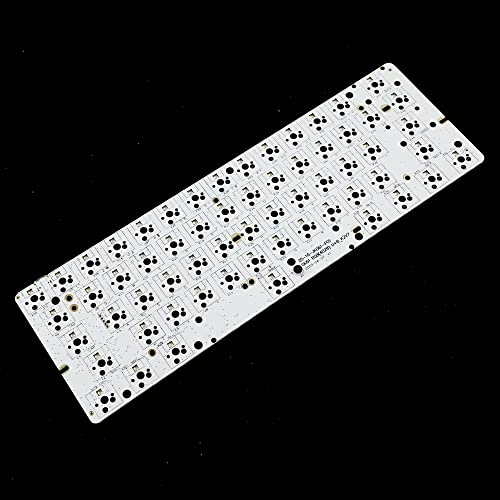
The PCB and plate together form the build’s infrastructure, typically a moderate and predictable share. Hot-swap sockets, per-key lighting, and premium firmware support nudge the figure upward; a soldered board in a standard footprint sits at the modest end. Stabilisers are the smallest line and the worst place to economise falsely, because cheap, rattly stabilisers tax every spacebar press for the life of the build, while good ones disappear — the defining trait of money well spent at small scale.
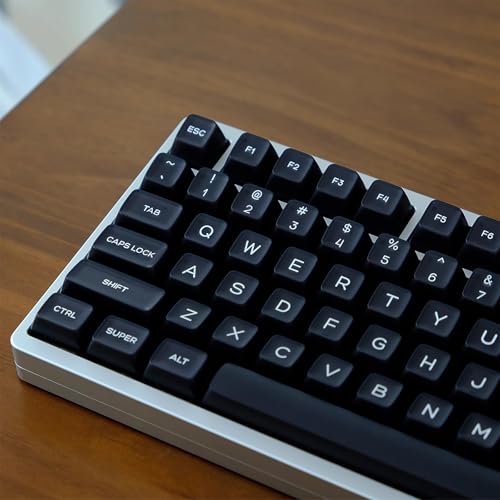
Switches scale with the board’s key count and with ambition: a mainstream switch bought in the quantity a compact board needs is a modest line, while exotic, limited, or hand-tuned switches multiply it. Keycaps rival the case as a headline cost when the set is a premium doubleshot production or a themed set with deep compatibility kits, and sit far lower for a competent mainstream set. The cable, desk mat, and small tools close the ledger — individually minor, collectively the difference between a build and a finished setup.
The Tiers, Described the Way Owners Actually Use Them
The entry tier is the land of kits and sensible bundles, where case, PCB, and plate arrive together at a bundle’s discount and the builder adds mainstream switches and a competent keycap set. Its keyboards are honest tools: hot-swappable, pleasant to type on, and entirely capable of converting a newcomer to the hobby for life. Owners at this tier spend their care on assembly and tuning rather than on rarity, and the best entry builds embarrass expensive boards whose owners never tuned a stabiliser.
The middle tier is where most satisfying customs live. Here the case becomes aluminium or an equivalent material with real presence, switches are chosen by taste rather than by bundle, keycaps are a named set in a chosen profile, and small luxuries — a coiled cable, a desk mat, a switch opener and lubricant — enter the budget as planned citizens. A middle-tier build is the answer this article gives most questioners who ask about averages: not the mathematical average of all customs, but the tier where the average enthusiast’s favourite keyboard actually resides.
The enthusiast tier buys scarcity and finish: limited-run cases in small batches, switches from boutique makers or tuned by hand, keycap sets from group buys whose production runs are events, and artisans and accessories that turn the board into a collected object. Its keyboards can be magnificent, and their owners will tell you precisely why each part cost what it did. What this tier does not buy is a categorically better typing experience than a well-executed middle build — it buys distinction, and distinction is a legitimate purchase as long as it is bought knowingly.
Above even that sits the collector tier, where rarity itself is the product: prototypes, tiny runs, collaborations, and boards whose value is set by community desire as much as by materials. This article mentions it for completeness and advises beginners to admire it from a distance, the way one admires racing yachts — as evidence of how far a hobby’s passion can travel, not as a destination a first or second build should steer toward.
Group Buys, Kits, and the Two Economies of Custom Keyboards
Custom keyboards are sold in two economies that price the same objects differently. The in-stock economy sells kits, switches, and caps that exist in a warehouse today, at figures shaped by ordinary retail logic, with returns and warranties behaving as shoppers expect. The group-buy economy sells reservations on products that will be manufactured after enough buyers commit, which funds small, strange, wonderful designs that retail could never risk — at the price of long waits, shifting timelines, and purchases that are closer to patronage than to shopping.
A budget behaves differently in each economy. In-stock spending is controllable and immediate, ideal for a first build whose owner needs the feedback of a finished board before spending more. Group-buy spending is episodic and emotional, ideal for the established owner who knows exactly which gap in the collection a forthcoming design fills. Mixing the economies carelessly — a case arriving this month, its keycaps arriving next year — is how builds stall in drawers, so plan a first custom entirely in-stock and let group buys become a second build’s seasoning.
Second-hand markets form a third, informal economy where the standardisation of parts makes used cases, PCBs, and keycap sets unusually safe and liquid. A careful buyer can assemble a middle-tier build at an entry-tier outlay by accepting other owners’ changes of taste, provided every key is tested, every kit is complete, and every seller’s description is verified with the same discipline this program applies to new listings.
Where to Spend and Where to Save, Part by Part
Spend on the parts your senses audit daily. Switches mediate every keystroke, so their quality and their match to your fingers deserve the budget’s first loyalty after the case’s basic competence is secured. Keycaps are touched and seen constantly, and a set with durable legends and the right profile repays its premium across years. Stabilisers, as established, are a tiny line with an enormous voice, and belong firmly in the spend column despite their size.
Save on the parts whose premium versions buy decoration rather than function. A cable needs to be sound and the right length; beyond that, its beauty is a pleasure purchase, welcome when budgeted as one. Tools can be basic and shared. Novelty caps and artisans should be bought one at a time against a finished board’s actual gaps, not in a bundle of enthusiasm during the first build’s shopping weekend, when every object in the hobby looks essential.
The plate and internal foams sit between the columns: their materials genuinely change feel and sound, yet the differences reward experienced hands more than new ones. A first builder should accept the kit’s plate and the case’s included foam, learn the resulting board thoroughly, and promote these parts to the spend column in a second build, when their ears can specify what they want changed. Sequencing upgrades across builds is how a collection grows wisely instead of merely growing.
The Hidden Costs Nobody Puts in the Headline Figure
Shipping deserves its own paragraph because parts-buying fragments it: a case from one seller, switches from another, caps from a third, each parcel carrying its own postage, and international group buys adding duties that arrive like plot twists. A budget that ignores delivery will be ambushed by it, so consolidate orders where possible and treat shipping as a real line in the plan rather than as weather. The same applies, in some regions, to taxes calculated at checkout or at the border.
Time is the second hidden cost, and for many builders it is the real price of a custom. Assembly takes an afternoon; tuning stabilisers, lubricating switches, and dialling in a keymap can take a weekend; waiting for group buys takes seasons. None of that time is wasted — for most owners it is the hobby itself, the craft that makes the finished board theirs — but a buyer who wants a keyboard rather than a project should price turnkey and pre-built options honestly against the custom route’s hours.
The third hidden cost is the second build, which the first build reliably causes. A finished custom teaches its owner exactly what they would change, and the hobby’s parts ecosystem makes acting on that knowledge dangerously easy. Budget with the assumption that taste will evolve, keep first-build parts standard and reusable so they migrate into later projects, and the second build becomes an upgrade path rather than a confession of waste. build your first custom keyboard guide plans that path explicitly.
Step by Step: Set a Budget for Your Custom Build in Five Moves
Step 1: Choose the tier before choosing any part
Decide whether this build is an entry experiment, a middle-tier keeper, or an enthusiast statement, and write the tier down where your shopping self can see it. Every later decision becomes easier, because parts nominate themselves by tier and the lavish outlier — the case or cap set from the tier above — must argue for its promotion explicitly instead of slipping into the basket on beauty alone.
Step 2: Price the whole recipe, not the hero part
List every line before buying any line: case, PCB, plate, stabilisers, switches in the count your layout needs, keycaps with the compatibility kit your wide keys demand, cable, and the small tools. A recipe priced whole cannot ambush you at line nine, and it exposes the true proportions — often revealing that the hero part was never the budget’s problem and the accumulation of small ones was. custom mechanical keyboard building guide supplies the complete parts checklist.
Step 3: Allocate by contact, not by catalogue order
Give the largest shares to case competence, switches, and keycaps, in an order set by your own priorities, and hold stabilisers and other small essentials harmless from cuts. When the total must shrink, shrink the decorative lines first and the size of the ambition second — a smaller layout in quality parts satisfies longer than a grand layout in compromised ones.
Step 4: Decide your economy: in-stock, group buy, or second-hand
Match the economy to your patience and experience as the tiers section described, and do not split a first build across economies with incompatible timelines. Note delivery and possible duties as real lines beside each part sourced from far away, so the budget you approve is the budget the build will actually consume, not the one the product pages advertised.
Step 5: Reserve a finishing allowance and a future allowance
Hold back a modest slice for the finishing touches the build will request in its first month — a mat, a wrist rest, a different spacebar — and a separate, honest acknowledgement that a second build exists in your future. Reserving both converts the hobby’s two most predictable surprises into planned events, which is the entire difference between a budget and a hope.
Common Mistakes to Avoid
Asking for one average and budgeting to it
The average of all customs is a statistic without a shopper: it blends student kits and collector pieces into a figure that fits no one’s intentions. Budget to a tier and a recipe instead, where every line corresponds to a part you have chosen for a reason. The question that opens this article deserves its tier answer precisely because the single-number answer fails everyone equally.
Spending the whole budget on the case
A magnificent case around mediocre switches and caps produces a keyboard that photographs like a flagship and types like a compromise, and its owner feels the imbalance ten thousand times a day. The case should be competent and characterful, then stop, leaving the contact parts their rightful share. Balance is the luxury that photographs cannot show and fingers cannot miss.
Forgetting switch count and compatibility kits
Switches are bought by the board’s key count plus spares, and keycaps are bought by the layout’s actual wide keys, not by the headline size of the set. Undercounting either produces the hobby’s most deflating parcel: a build that cannot be finished on the day everything else arrived. Count from your layout drawing, add a small margin of spare switches, and verify the cap kit against your spacebar before paying.
Treating group-buy timelines as delivery dates
A group buy’s estimated season is an aspiration issued before manufacturing, and slippage is the economy’s native weather. Budgets and tempers both survive better when group-buy money is treated as committed patronage with a pleasant surprise at the end, rather than as a purchase with an appointment. First builds belong in the in-stock economy for exactly this reason.
How the Average Moves With Layout Size
Size quietly steers every part of the budget. A compact build needs fewer switches and a smaller case, and its keycap set can be a base kit without the extensions larger boards demand — which is why the custom hobby’s entry point so often wears a small layout, and why a modest budget stretches furthest at the compact end. A full-size custom, by contrast, multiplies switches, enlarges the case, and requires the keycap set’s fullest kit, so the same tier of ambition costs visibly more at the large end through arithmetic alone.
That arithmetic has a second act in the parts market, because compact standards are the hobby’s most standardised territory: footprints are shared, kits are plentiful, and second-hand parts circulate briskly. A builder who chooses a mainstream compact layout is choosing the deepest, most competitive shelf in every parts category, while a builder who chooses an exotic layout pays a rarity tax on nearly every line. Neither choice is wrong, but only one of them should be made unknowingly.
Let size therefore be a budget decision as conscious as any part choice. If the dream is a large board, fund it as a large board from the start rather than discovering its multiplier at the switch line; if the budget is fixed and firm, let a compact layout be the mechanism that keeps every part inside it at a satisfying tier.
The Cost of Sound and Feel, the Two Invisible Lines
Two of the most satisfying upgrades in a custom build never appear as headline parts: the time and small materials spent tuning stabilisers, lubricating switches, and layering foam until the board’s voice settles. Their monetary cost is minor — consumables and perhaps a switch opener — yet they separate builds that merely contain good parts from builds that realise them, and any honest account of what a custom costs should mention that its best-returning line is measured in evenings rather than in currency.
Feel has a similar invisible economy. A switch chosen after sampling costs the same as a switch chosen from a description, yet the sampled choice is worth more every day, so the small price of a switch tester belongs in the budget as insurance rather than as an accessory. Likewise, a keycap set bought after checking its kit against your layout costs the same as one bought on hope, while returning the wrong set costs postage, weeks, and enthusiasm. The budget’s intelligence is a line item too, even if it never appears on a receipt.
Owners who understand these invisible lines stop asking why two builds with similar parts lists feel a tier apart. The difference lives in the tuning hours and the verified choices, which is encouraging news for the budget-conscious: the gap between a good custom and a great one is partly purchasable with attention, the one currency every reader of a guide this long has already demonstrated they possess.
Worked Examples: Three Imaginary Builds and What Drives Their Totals
Picture a student building a first custom for a dorm desk. The recipe is an entry kit, mainstream tactile switches, the kit’s recommended caps, and a borrowed screwdriver, with tuning done patiently over one weekend. The total sits at the modest end of the custom world, yet the finished board is hot-swappable, personal, and better mannered than the membrane board it replaced — and every part in it can migrate into a later build. The student’s real expenditure was a weekend of attention, and the board’s quality is mostly that attention made visible.
Picture next a professional furnishing a home office for a decade. The recipe moves to the middle tier: an aluminium case with a calm finish, switches sampled and chosen for long writing days, a named keycap set in a sculpted profile, a good cable, a mat, and a wrist rest. The total is a multiple of the student’s, and the justification is written in hours — this board will mediate thousands of working days, so its cost per day shrinks below the price of the coffee beside it. Middle-tier spending is rarely indulgence when the board is a professional tool.
Picture finally a collector completing a themed build around a limited case. The recipe’s case line alone exceeds the professional’s whole keyboard, the switches are tuned by hand across several evenings, and the keycap set was waited on through a group buy’s full season. The total belongs to the enthusiast tier and the owner knows it, because the purchase was never really about typing efficiency; it was about owning a particular object that a community imagined together. All three builds are customs, all three owners are satisfied, and the average of their totals describes none of them — which is the thesis of this article wearing three concrete faces.
How Prices Move: Sales, Seasons, and the Discipline of Waiting
Even without printing figures, a cost guide should teach timing, because the custom market’s prices breathe. In-stock parts follow retail rhythms — seasonal sales, new-model arrivals that discount their predecessors, and stock clearances when a maker revises a kit. A patient builder who is not attached to one colourway can assemble the same tier of build for meaningfully less by letting the calendar do part of the work, provided the parts’ compatibility is rechecked at each opportunistic purchase.
Group-buy pricing moves oppositely: the figure is fixed by commitment and the variable is time, with late joiners paying aftermarket premiums to the patient. That aftermarket is the market’s memory made visible — designs the community undervalued become expensive, designs it overvalued become bargains — and a budget-minded owner treats it as a library of other people’s lessons, buying yesterday’s beloved over today’s speculation when the goal is a keyboard rather than a portfolio.
Waiting has one more dividend that never appears in a total: it tests desire. A part still wanted after a month of waiting is a part that belongs in the build; a part forgotten by Friday was a photograph’s spell, not a preference. Builders who impose a waiting rule on every non-essential line report smaller totals and higher satisfaction simultaneously, a combination so rare in consumer life that it deserves to be named as this article’s favourite budgeting technology.
Renting the Experience First: Testers, Meetups, and Borrowed Boards
The cheapest cost research in the hobby is other people’s keyboards. A switch tester converts the largest uncertainty in the budget — which switch deserves the switch line — into a small, known purchase. Meetups and keyboard cafés, where they exist, let a prospective builder type on tiers above their budget for the price of a coffee, calibrating whether the enthusiast tier’s finish is a personal necessity or merely an attractive photograph. Calibration is savings, because money not spent chasing someone else’s tier is money available for your own build’s contact parts.
Borrowing a friend’s custom for a week is the deepest form of this research, since a board reveals itself across real work in a way no meetup’s ten minutes can match. Borrowers learn their layer tolerance, their switch weight, and their true feelings about a board’s voice at the hours they actually keep. Every one of those lessons removes a wrong line from a future budget, and wrong lines are where custom money actually goes to die — not in the price of good parts, but in the price of good parts bought for someone else’s hands.
Even manufacturers’ return policies belong in this research economy. Buying a first kit from a seller whose returns are sane converts the largest remaining unknowns into a reversible experiment, and the small premium such sellers sometimes charge is better understood as tuition insurance than as markup. A budget that includes a little room for being wrong is a budget that survives contact with reality, which is the only kind of budget worth writing down.
The Resale Ledger: What a Custom Is Worth After You Build It
A custom keyboard is one of the few consumer electronics purchases whose parts retain a lively second life, and that residual value belongs in any honest cost account. Standard-footprint cases, mainstream switch sets in good order, and complete keycap kits all find second owners readily within the community, so the net cost of a build you later sell or part out is meaningfully lower than its purchase total. Owners who keep boxes, extras, and receipts are quietly maintaining that value the way careful drivers maintain a car’s service history.
Residual value also disciplines buying in a healthy direction: standard sizes, complete kits, and documented parts hold their worth, while exotic one-offs and incomplete sets discount steeply. A first builder who stays mainstream is therefore not merely playing safe on compatibility; they are buying the build whose every line can be recovered, traded, or migrated when taste evolves. The dream build assembled later inherits those parts at no new cost, which is how patient owners arrive at enthusiast-tier keyboards whose true cumulative spend is far below the tier’s sticker story.
None of this requires treating a keyboard as an investment, and this article advises against that romance explicitly. Parts are bought to be typed on, and their value is realised in paragraphs and matches, not in resale spreadsheets. The resale ledger is simply the reassurance that money spent on good, standard parts is not money burned — it is money parked in objects that remain useful to someone, which is more than most technology purchases can promise.
Budget Conversations for Different Readers
A gamer building a first custom should let the budget follow the games: switches and a layout that free the mouse hand matter more than case material, and a modest case around the right switches will outperform a lavish case around the wrong ones in every match that matters. The savings belong in a second set of switches to audition, because gaming taste in switches is empirical and a spare set is a laboratory, not an indulgence.
A writer or programmer should invert that order slightly, weighting switches and keycaps — the endurance parts — above all, since their board’s working day is measured in hours of continuous contact. For this reader the middle tier’s premium is most defensible exactly where the fingers live, and most wasteful in decoration the eyes visit briefly between paragraphs. Their budget’s motto is comfort per hour, and by that measure a well-chosen switch is the cheapest luxury in the build.
A gift buyer faces the strangest budgeting problem, because the recipient’s hands cannot be consulted without ruining the surprise. The safe gift build is a mainstream kit with tactile switches and a handsome, standard keycap set, bought in stock from a seller with kind returns, at the confident end of the entry tier or the calm start of the middle. Its budget should include the probability of one exchange, which is not pessimism but stage management for a happy ending.
When the Answer Should Be: Do Not Build a Custom Yet
An honest cost guide must include the reader for whom the right average is zero, spent later. If the intended user has never typed on any mechanical board, a pre-built from a reputable maker is the cheaper education, because it prices the whole concept in one reversible purchase and its lessons transfer completely when the custom urge matures. Building a custom to discover whether you like mechanical keyboards is buying the ingredients to learn whether you enjoy the cuisine.
Likewise, a reader whose desk, room, or work is about to change — a move, a new job, a first child — should let the custom wait until the new life declares its requirements. Keyboards are fitted to lives, and a build specced for a vanished routine becomes a beautiful answer to a question nobody asks anymore. The tiers will keep; the parts market is not going anywhere; and a budget preserved for the right build outperforms a budget spent bravely on the wrong one, every single time.
The Arithmetic of Cost per Day, the Only Average That Matters
Divide any build’s total by the days it will serve and the tiers rearrange themselves in a way that surprises new shoppers. A middle-tier board typed on daily for years costs less per day than the coffee beside it, less than the chair beneath its owner, less than almost any object in the room — while a cheap board replaced annually, or abandoned in a drawer after a disappointing month, is expensive at any sticker. Durability and satisfaction are divisors, and they are the two variables a buyer controls most directly through tier choice and part matching.
That arithmetic is also the strongest argument against both extremes of the market for a working keyboard. The entry build abandoned for its compromises and the collector piece preserved from use both fail the division, one through a short life and the other through a sheltered one. The builds that win the calculation are used hard and kept long, which is why this article keeps steering readers toward the tier they will actually live with rather than the tier they can technically afford or technically survive.
Run the division honestly for your own candidate build before buying: total, expected years, working days per year, and the resulting daily figure set beside the other tools of your trade. Most readers find the exercise calming, because a keyboard’s cost, properly amortised over the paragraphs it will produce, is one of the smallest line items in a working life — provided it is spent once, on the right board, instead of repeatedly on almost-right ones.
Closing the Ledger
The question that opened this article survives in search boxes because it promises a shortcut, and the article’s answer refuses the shortcut in order to give something better: a method. Know your tier, price your recipe, spend where your fingers audit, respect the hidden lines of delivery and time, and let cost per day — not the mythical average — judge the result. A build planned that way has no cost surprises left in it, only the pleasant ones that arrive when a part exceeds the modest expectations its line in the budget assigned it.
Whatever tier you choose, choose it completely: an entry build assembled with full care will out-type a middle build assembled carelessly, and a middle build loved daily will out-serve a collector piece kept in its box. Money sets the ceiling of a custom keyboard, but attention sets its altitude, and attention, fortunately, is the one input whose average cost is entirely within the builder’s control.
A Note on Currency, Regions, and Why This Guide Speaks in Tiers
Readers shop in different currencies, under different taxes, at different distances from the warehouses and workshops that supply this hobby, and a figure printed in one reader’s money becomes misinformation in another’s by the time shipping and duties have had their say. Tiers travel where numbers cannot: an entry kit is recognisably an entry kit on every continent, and the middle tier’s relationship to it — a clear step in materials and choice, not a leap into another species of object — survives every border the parcel crosses. That portability is the practical reason this article answers in the language it does.
Regional markets also differ in which economy dominates. Some readers live beside vast in-stock marketplaces where every part is a day away; others rely on international group buys and regional group orders to access the hobby at all, and their budgets must weight patience and consolidation far more heavily. The method survives both geographies unchanged — tier, recipe, contact-first allocation, hidden lines respected — which is the test of a budgeting framework rather than a price list.
The Budget as a Design Document
Treat the finished budget the way builders treat a layout drawing: as the design document the shopping must obey and the record the finished build will be judged against. Keep it with the build’s other papers, note beside each line what actually arrived and what it actually cost in money and weeks, and let the annotated document teach the next build. Owners who keep such records discover their personal averages within two builds — the figures that describe their taste, their region, and their tier — and those personal averages, unlike the internet’s, are worth the paper they are written on.
That is the final answer this article can honestly give to its title’s question. The average cost of a custom mechanical keyboard is the average of the builds you actually make, and it becomes knowable only by making one well. Begin with the tier that fits your life, and let your own ledger, kept carefully, take over the answering from there.
One More Hidden Line: Learning, and Its Cheerful Invoice
Every first build includes a small tuition paid in minor mistakes — a switch bought in the wrong weight, a keycap kit missing one cap, a tool improvised badly and then bought properly. Wise budgets name this tuition in advance and keep it small by the methods this article has repeated: sampling before committing, diagram-checking before ordering, and keeping every first-build choice inside the mainstream where mistakes are cheapest and most reversible. Tuition framed as a line item feels like education; tuition discovered feels like failure, though the money is identical.
The return on that tuition compounds across every later purchase, because a builder who has made the standard mistakes once rarely pays for them twice. By the third build, the same owner’s budget runs with an accuracy no guide can confer, built from their own receipts. This article’s ambition is simply to make the first build’s tuition as small and as instructive as possible, so the reader reaches that accuracy with their enthusiasm — and their parts shelf — intact.
If Someone Insists on a Single Sentence Answer
For the reader who has scrolled this far under protest, demanding the number the title promised, here is the closest honest sentence available. Most satisfying custom keyboards are built in the middle tier, where a quality case, chosen switches, and a named keycap set meet without rarity premiums, and a reader who budgets for that tier — pricing the whole recipe, respecting delivery, and reserving a finishing allowance — will land within the broad band where the hobby’s favourite boards are actually made, in whatever currency their own shops speak.
Every word of qualification in that sentence is load-bearing. Remove the tier and the sentence lies about student builds and collector pieces alike; remove the recipe and it lies about shipping; remove the currency caution and it lies across borders. The sentence is offered as a compass heading rather than a destination, and a reader who follows it with the method in this article will arrive at a figure that is finally, defensibly, their own average — measured on the only sample that was ever going to matter.
Envoi: Spend Like a Builder, Not Like a Spectator
Spectators price keyboards by their photographs, and photographs always argue for the top tier. Builders price them by their recipes, their rooms, and their hands, and those three witnesses usually argue for the middle — with the entry tier honoured as the correct school and the enthusiast tier respected as a graduation some will choose and many will happily never need. Wherever your own witnesses point, follow them completely, keep the ledger honestly, and type on the result for years. That is the whole economics of the custom keyboard, and it fits in a wallet far smaller than the hobby’s reputation suggests.
And when friends ask what your keyboard cost, answer them the way this article has answered you — with the tier, the recipe, and the years it will serve — because that answer teaches them to shop like builders too, and a hobby whose newcomers arrive with methods instead of myths is a hobby whose next generation of keyboards will be better chosen, better built, and better loved than the last.
Keep your receipts, annotate your budget, and let the second build — when it comes, as it will — begin from evidence rather than from appetite.
That discipline, practised across a single build, will teach you more about what custom keyboards cost than any average published anywhere — because it replaces a stranger’s statistic with your own knowledge, priced in your own currency, fitted to your own hands, and ready to be spent wisely for the rest of your typing life.
Begin the ledger today with a single line — the tier you intend, written in ink — and let every purchase that follows either honour that line or argue, in writing, for its own promotion to a better one.
Builds governed that way rarely disappoint their owners, because disappointment in this hobby is almost never caused by spending too little or too much in total — it is caused by spending without a governing idea, and the governing idea is the one purchase this entire article has been trying to give you for free.
Take the idea, price the recipe, and build the keyboard your own average has been waiting for.
Then type on it daily, maintain it kindly, and let its long, useful service turn a once-anxious question about averages into a story you tell with a shrug and a smile.
That shrug, earned honestly, is the true and satisfying end of the whole patient search.
Final Recommendation
So, what does a custom mechanical keyboard cost on average? It costs a tier: an entry build assembled sensibly from kits and mainstream parts, a middle build where most beloved customs live, or an enthusiast piece whose price is a story about rarity. Choose the tier that matches your intentions, price the whole recipe before buying any part, spend on what your fingers audit, and the resulting figure — whatever it is — will be the right average for the only build that matters, which is yours.
Frequently Asked Questions
Is a custom keyboard more expensive than a pre-built one?
Usually at the point of purchase, yes, because separate parts carry separate margins and because custom buyers choose higher tiers of case and keycap than most pre-built boards include. The comparison softens over time: a custom’s parts can be repaired, resold, and migrated between builds, while a pre-built board’s value is a single unit’s lifespan. Buyers who enjoy the process also receive the hobby itself inside the custom’s price, which pre-built money does not buy.
What is the cheapest sensible way into a custom build?
A complete kit in the entry tier, mainstream switches, and the keycaps the kit ecosystem recommends — bought in stock, assembled carefully, and tuned patiently. That route keeps every part standard and reusable, so nothing spent is wasted when a second build begins. The false economy to avoid is the unbranded parts bin assembled without compatibility checking, whose savings evaporate into returns and replacements.
Which single part most deserves a bigger share of the budget?
For most builders, switches, because they are the build’s feel and voice in one purchase and they are touched by every keystroke the board will ever make. Keycaps run a close second for the same reason, and the case leads only when its material and finish are the build’s stated purpose. The wrong answer is the cable, the tools, or any decorative line promoted above the parts your hands audit daily.
Do group buys save money compared with in-stock parts?
Sometimes the same design would cost more as a retail product, because the group buy removes warehousing risk from the maker, but the saving is paid in waiting time and in the absence of ordinary returns. Treat group buys as access to designs that would not otherwise exist, at figures that are fair for small-batch manufacturing, rather than as a discount channel. Beginners should build in stock first and join group buys once their taste can survive a long wait without changing.
How much should I set aside beyond the parts themselves?
Plan for delivery on fragmented orders, any duties your region applies to imported parts, the small tools and consumables of assembly, and a finishing allowance for the mat, rest, or cap your completed board requests in its first month. Owners who fold those lines into the original budget describe their builds as costing what they expected; owners who omit them describe the same builds as mysteriously expensive, and the mystery is always arithmetic.
Can I upgrade a modest build later instead of buying the dream build now?
Yes, and it is the strategy this article recommends to most readers. Standard footprints mean a modest build’s switches, caps, and even its PCB can migrate or be upgraded one line at a time, spreading the dream build’s cost across seasons while you type on a good keyboard throughout. The only parts that resist upgrading are the ones bought in non-standard sizes, which is one more reason a first build should stay close to the mainstream. guide to mechanical keyboard cases helps when the case’s turn for an upgrade arrives.
Why do two builds that look similar end up in very different cost tiers?
Photographs hide the choices that separate a modest build from a premium one. Case construction is the biggest quiet driver: a simple plastic or basic metal case made in large numbers sits in a different tier from a heavy, finely finished case produced in a small batch, even when both hold the same layout. Keycaps follow the same pattern, with original designs, licensed artwork, and short production runs carrying a tier of their own compared with widely stocked sets. Switches bought in small quantities for one board, stabilisers chosen for refinement rather than adequacy, and extras such as a coiled cable, carrying case, and spare parts all nudge the total upward without changing the silhouette. Small-batch production itself is a cost driver, because design, tooling, and quality control are shared among far fewer buyers. Judging a build by its layout alone is therefore misleading; the tier lives in materials, batch size, and finishing.
How can I plan a budget when parts are released at different times?
Plan by sequence rather than by a single shopping day. List every part the build needs, mark which items are stocked continuously and which appear only in limited runs, and let the scarce items set your timetable while the everyday parts wait. Set aside a separate allowance for the unglamorous spending that surrounds a build: delivery charges on several separate orders, basic tools if you do not own them, switch film or lubricant if your plan calls for them, and a few spare switches for the inevitable bent pin. Buying in the wrong order is the common budget leak, because an early impulse purchase, such as a keycap set bought before the layout is final, can force a second purchase later. A simple written plan with a tier for each part, a note of when it is likely to be available, and a small contingency for surprises keeps the project enjoyable instead of letting costs arrive as a series of ambushes.