Disclosure: As an Amazon Associate, kajuandouglas.com earns from qualifying purchases. Links on this page are affiliate links; they cost you nothing extra. Prices and availability change often, so check the current Amazon listing before you buy.
The gasket mount vs top mount keyboard question is the modern mechanical era’s defining fork, because the mounting system is the board’s suspension: it decides how the keystroke’s energy is absorbed, how the board sounds, and how much flex the fingers feel. Gasket mounting suspends the plate-and-PCB assembly on soft strips — silicone or poron — so the whole typing deck floats slightly, cushioning each press and deepening the sound. Top mounting screws the plate rigidly to the case’s top frame, producing the classic firm, direct, consistent feel that defined premium boards for a decade. Neither is a defect or a destiny; they are two engineering answers with different temperaments, and this comparison lays out the mechanics, the feel, the sound and the buyer each suits, with four verified boards — two gasket flagships and two top-mount traditionalists — as the exhibits.
Key takeaways: Gasket equals cushioned, deeper, slightly softer; top mount equals firm, direct, uniform. Gasket boards dominate the current enthusiast market and forgive heavy typists; top-mount boards reward precision and carry the traditional houses’ pedigree. Your typing weight and sound preference decide; both exhibits below are excellent at what they are.
Gasket Mount vs Top Mount Keyboard: The Mechanics: Suspension vs Structure
In a gasket-mount board, strips of compressible material sit between the plate and the case, top and bottom, so the assembly is clamped by pressure rather than fixed by screws. Press a key hard and the whole deck yields a fraction — a trampoline with very stiff springs. The yield absorbs the bottom-out shock, spreads it, and lets case designers tune the board’s voice toward the deep, soft register the current market loves. In a top-mount board, the plate is screwed directly to the top case at defined points; the deck cannot float, so the keystroke’s energy goes into the switch and the case resonance, giving the firm, immediate, almost architectural feel traditionalists describe as honest. The mounting points also pattern the feel: a top-mount board can feel slightly firmer near its screws and softer mid-span, a variation some makers tune deliberately, while a gasket board’s cushion is uniform by design. Neither system is fragile or exotic — both are proven across millions of boards — but they produce measurably different instruments from identical switches and caps, which is why the mount has become a headline specification.
In this guide
Feel, Sound and the Typist’s Weight
Heavy typists — those who bottom out every stroke — feel the gasket’s benefit most: the cushion removes the hard landing their style guarantees, and long sessions tire the fingers less. Light typists, who float and rarely bottom out, may never engage the suspension at all, and for them the top mount’s consistency is the more relevant virtue. Sound follows the same split: gasket boards trend deep and soft, their cases damped by the isolation the strips provide; top-mount boards trend brighter and more articulate, the plate’s voice speaking clearly through the rigid joint. Gamers divide by game: rapid, repeated bottom-outs in rhythm and action titles enjoy the cushion, while players who prize a board that feels like a single machined block lean top-mount. There is no universal winner — there is a matching exercise between a mechanism and a pair of hands.
The Exhibits: Two of Each
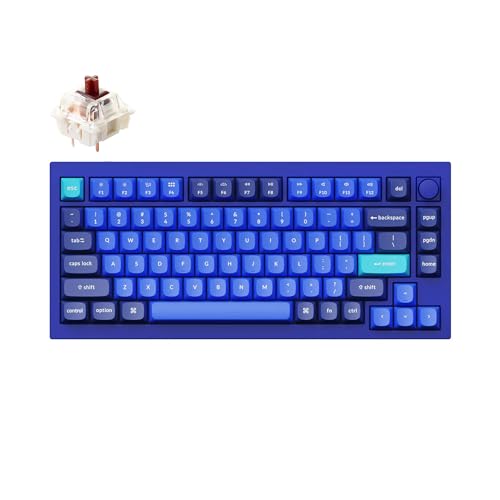
Keychron Q1 v2 (Brown) — the gasket archetype
Badge: Best gasket exhibit
- Layout: 75 percent, aluminium case
- Mount: double gasket design
- Switches: Gateron G Pro Brown (listing), hot-swappable
- Software: QMK/VIA
- Character: the cushioned reference
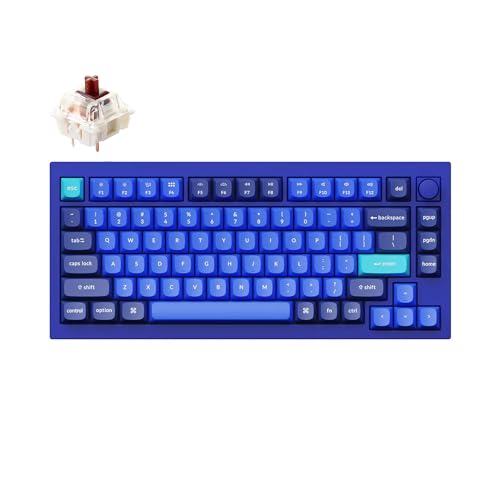
The Q1 v2’s double-gasket design — gaskets on the plate and silicone pads in the case — is the gasket philosophy executed by its most mainstream evangelist: a heavy aluminium board that types soft and sounds deep, with hot-swap and QMK/VIA completing the modern specification. As an exhibit it makes the gasket case perfectly: press it beside any top-mount board and the comparison teaches itself in ten keystrokes.
- Strengths: exemplary cushioned feel
- Strengths: deep, damped voice
- Strengths: full modern feature set
- Trade-offs: wired on this generation
- Trade-offs: very heavy
- Trade-offs: flex is a taste, not a universal good
Best for: heavy typists and sound-first buyers. Not suited for: firm-feel traditionalists.

Keychron Q1 Max (Banana) — the gasket flagship, wireless
Badge: Best gasket flagship
- Layout: 75 percent with knob, aluminium
- Mount: gasket
- Switches: Jupiter Banana (listing), hot-swappable
- Connection: tri-mode, 1000 Hz
- Character: the complete modern board
The Q1 Max carries the gasket design into the full flagship specification — tri-mode wireless, a knob, acoustic treatment throughout — proving the mount is no longer an experiment but the premium default. Its exhibit value here is generational: this is what the gasket philosophy looks like with every other modern feature present, and it sets the standard the top-mount exhibits must answer on feel alone.
- Strengths: flagship everything, gasket feel
- Strengths: tri-mode with fast polling
- Strengths: refined acoustics
- Trade-offs: premium pricing
- Trade-offs: heavy
- Trade-offs: softness not to all tastes
Best for: buyers wanting the modern flagship feel. Not suited for: traditionalists.
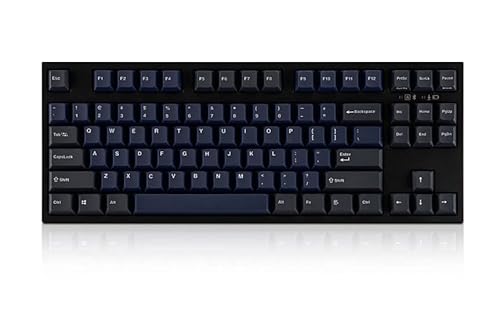
Leopold FC750RBT — the top-mount traditionalist
Badge: Best top-mount exhibit
- Layout: tenkeyless
- Mount: traditional rigid construction
- Switches: Cherry MX Red (listing), fixed
- Keycaps: doubleshot PBT
- Connection: Bluetooth and wired
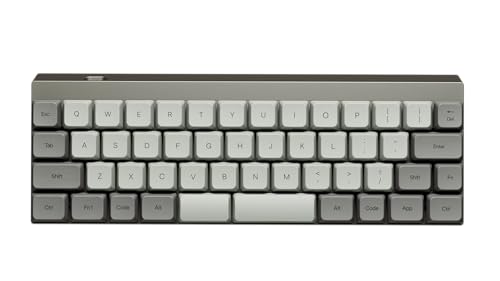
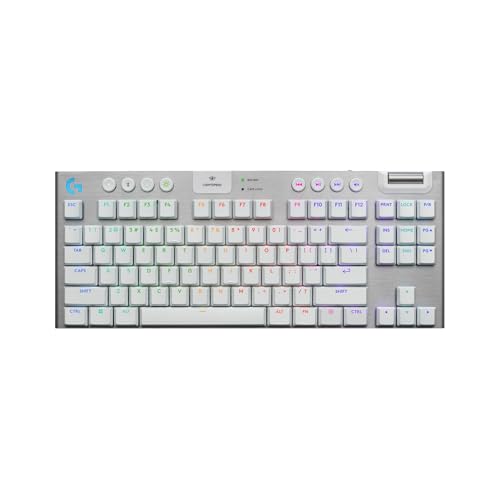
Leopold’s FC750RBT is the top-mount temperament at its most refined: a rigid, dense board whose firmness is not harshness but precision, tuned by sound-dampening care into the deepest voice the rigid school produces. It answers the gasket exhibits on their strongest ground — sound — while keeping the direct feel its buyers prize, and it demonstrates why the traditional houses see no reason to apologise for their mount.
- Strengths: firm, precise, consistent feel
- Strengths: superbly tuned stock sound
- Strengths: doubleshot PBT, Cherry switches
- Trade-offs: fixed switches
- Trade-offs: no cushion for heavy typists
- Trade-offs: traditional feature set
Best for: precision typists and traditionalists. Not suited for: flex seekers.

Ducky One 3 (Silent Red) — the rigid board, hot-swappable
Badge: Best modern top-mount
- Layout: full-size
- Mount: rigid plate construction, Quack Mechanics damping
- Switches: Cherry Silent Red (listing), hot-swappable
- Keycaps: doubleshot PBT
- Character: the firm board with modern serviceability
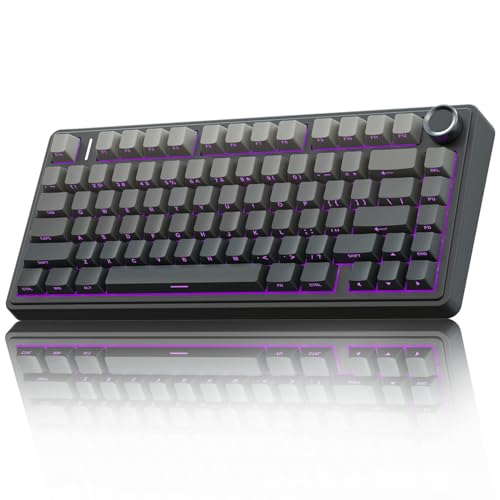
The One 3 shows the rigid school learning the modern era’s best trick — hot-swap — without surrendering its feel: a firm, damped, doubleshot board whose switches the owner can change while its temperament stays architectural. As the comparison’s fourth exhibit it closes the obvious objection to top-mount (that it belongs to fixed boards) and leaves the choice where it belongs: on feel.
- Strengths: firm feel with hot-swap freedom
- Strengths: excellent stock damping
- Strengths: doubleshot PBT
- Trade-offs: no gasket cushion
- Trade-offs: gaming styling
- Trade-offs: full-size footprint
Best for: firm-feel fans who want switch freedom. Not suited for: cushion seekers.
The Decision, Reduced
Bottom out hard and type long? Gasket. Float light and prize consistency? Top mount. Chase the deep soft voice? Gasket. Chase articulate precision? Top mount. Want the current market’s centre of gravity? Gasket — it is where the new boards are. Want the traditional houses’ proven decade? Top mount, in the Leopold’s and Ducky’s keeping. The gasket mount vs tray mount comparison in this cluster completes the trilogy against the third classic system, and the custom mechanical keyboard building guide covers boards whose mounts you choose and tune yourself.
How to Hear the Difference: A Listening Method
Mount comparisons are usually argued from specifications, but the mount is an acoustic and tactile system, and it should be auditioned like one. The method this guide prescribes needs two boards and ten minutes. Type the same passage on each, at your natural weight, and attend to three things in order. First, the landing: does the keystroke end against a wall or against a cushion — the single most reliable mount signature, felt in the fingertips before it is heard. Second, the return: gasket boards give a fraction of rebound energy back through the deck’s float, which light typists describe as liveliness and heavy typists as relief. Third, the voice’s centre: the deep, damped thock the gasket market chases, against the brighter, more articulate clack of the rigid tradition — neither better, both unmistakable once heard side by side. Record the passage if a roommate’s ears are unavailable for a second opinion; recordings flatten the feel but preserve the voice honestly. The buyer who has run this audition owns their preference, and owned preferences survive marketing.
The Case Construction Layer
Mounting does not act alone, and the comparison deepens when the case enters. A gasket system in a heavy aluminium case — the Q1 exhibits’ formula — produces the deepest, most controlled version of the cushioned feel, because the case’s mass refuses to resonate while the strips absorb the stroke. The same strips in a light plastic case give a softer, looser result that some buyers love and others call vague. Top mounting in aluminium gives the rigid school its most architectural expression; in plastic, its brightest. The lesson generalises across this cluster’s comparisons: specifications interact, and the mount line in a listing should always be read beside the case material line. A buyer choosing between a plastic gasket board and an aluminium top-mount board is not choosing a mount — they are choosing two systems that happen to differ in mount among other things, and the audition method above is the honest way to weigh the wholes.
Scenario Verdicts: Four Typists
The novelist, eight hours of prose at a heavy hand: gasket, and the deeper the tuning the better — the cushion is a stamina technology at that volume. The programmer, precise bursts between long reads, light touch, sound-sensitive shared office: either serves, with the top-mount’s consistency and a silent switch the marginally better instrument. The competitive player, rapid repeated strokes in long sessions: gasket for the landing, assuming the board’s polling and switches meet the game’s demands — the mount is comfort, not speed. The traditionalist, raised on the classic boards and fluent in their feel: top mount, in Leopold’s keeping, without a backward glance. Four typists, and the mount follows the hands every time — which is the comparison’s thesis wearing its working clothes. Readers whose hands are still unknown to them should start with the forgiving system and let a year of typing file the report.
The Tuning Layer: Gaskets Are a Material Choice
One level deeper, the gasket system is not a single feel but a family, because the strips themselves are a specification. Silicone gaskets give a firmer, more controlled cushion; poron and foam give a softer, deeper one; their thickness and placement — plate only, or plate and case as in the Q1 v2’s double design — set how much travel the float has. Enthusiast kits expose the choice to the builder, and some production boards ship alternate strips in the box, quietly admitting that the mount’s tuning is a preference like the switch’s. Top mounting has its own subtler tuning: screw torque, plate material and mounting-point placement pattern the rigid board’s feel, which is how Leopold extracts a deep voice from a system with no soft parts. The comparison’s mature form is therefore not gasket versus top but tuned versus tuned — and the makers who tune best, in either system, are the ones this cluster’s guides keep recommending.
Myth vs Fact: The Mount Edition
Myth: gasket mount is a marketing word for foam. Fact: the system is a genuine structural difference — a floating assembly versus a screwed one — audible and feelable in any side-by-side test. Myth: top mount is outdated. Fact: it is the deliberate choice of the traditional premium houses and of players and typists who prize consistency; age is not obsolescence in a mechanism with no moving parts to improve. Myth: flex is always good. Fact: flex is a taste; too much reads as vagueness, and light typists may never engage it at all. Myth: the mount decides the sound alone. Fact: switches, caps, case and desk all vote; the mount sets the direction, the system sets the result. Myth: you must choose forever. Fact: boards are not marriages, and the second board is where mount preferences get exercised with knowledge. The myths share the usual shape — a spectrum collapsed into a slogan — and the comparison exists to uncollapse it.
What the Owners Report After a Year
Owner reports in this category converge on a pattern worth recording. Gasket owners speak about their hands at the day’s end and about sound — the two things the suspension touches — and their regrets, when they have them, concern boards whose tuning ran too soft. Top-mount owners speak about consistency and about the board disappearing under fluent work, and their regrets concern rooms where the brighter voice carried further than intended. Almost nobody reports the mount failing, wearing out or being outgrown; the preference, once matched, simply settles. The pattern’s lesson for the new buyer is to weight the audition over the argument: a year of ownership will be lived at the fingertips and the ears, not in the specification table where the debate began.
The Price Map of the Two Philosophies
Money follows the mechanics. Gasket production — two-part cases, strip materials, tighter assembly — sets a floor under gasket boards that tray and simple rigid designs undercut, though the floor keeps falling as the design mainstreams. Top-mount’s premium expression, the traditional houses, prices for their whole philosophy — caps, switches, tuning, permanence — with the mount only one line of the justification. The buyer’s translation: at the budget end, rigid systems dominate and serve well; in the middle, gasket boards offer the current taste at its most accessible; at the top, both philosophies sell excellence and the choice returns to feel. No tier of the map contains a trap, which is more than most technology comparisons can claim — the mount wars are a rivalry of goods.
The Desk, the Room and Other Silent Voters
The audition method’s fine print deserves a section, because the mount’s sound and feel are partly properties of the environment. A board on a hard desk in a bare room sounds brighter and feels firmer than the same board on a desk mat in a furnished one; the mat alone can move a rigid board a noticeable distance toward the gasket register, which is why this cluster treats the mat as acoustic equipment. Roommates and open offices vote on the voice; heavy-handed typing at midnight votes on the cushion. The wise buyer auditions in the actual environment, or discounts showroom impressions accordingly. The mount is the board’s temperament, but the room is its amplifier, and amplifiers have ended more purchase deliberations than mechanisms have.
The Thirty-Second Verdict
The comparison compressed: press hard and type long — gasket. Float light and prize uniformity — top mount. Chase depth — gasket; chase articulation — top mount. Buying blind at a fair price — the gasket board, because the market’s centre and the forgiving landing are both there. Buying with a traditionalist’s formed taste — the rigid board, in the keeping of the houses that never left it. Five sentences, and the sections above are their footnotes.
The Honest Limits of This Comparison
The comparison’s scope, stated in the cluster’s customary place: it generalises from the systems’ mechanics and the mainstream of owner experience, and individual boards will break its rules in both directions — a superbly tuned rigid board out-sounding a careless gasket one, a vague gasket board shaming its category. The mount is a strong prior, not a verdict, and the specific listing plus the audition outrank the category every time. It has also treated the two systems as poles; the hybrid designs in the kit world blur them deliberately, and readers headed for a build should carry the vocabulary rather than the verdicts. Within those limits, the comparison claims its real territory confidently: for the production boards most buyers actually purchase, the mount line in the specification predicts the landing, the voice’s direction and the hands’ end-of-day report better than any other single line — which is why it earned a comparison of its own.
Signposts Within This Cluster
The mount conversation completes itself in three directions from here. The tray comparison covers the third classic system and the modding bridge between the poles. The cases guide treats the case as a component in its own right, for builders choosing their own suspension. And the Ducky and Leopold house guides seat this comparison’s traditionalist exhibits in their full catalogues, for readers whose mount verdict arrives with a brand attached. A reader who follows even one signpost will read specification sheets differently forever — mount first, as the makers of the best boards clearly do.
A Final Checklist for the Mount Buyer
Typing weight honestly assessed — the audition passage typed at your real pressure, not a showroom patter. Landing preference named: cushion or wall. Voice preference named: depth or articulation, in your actual room. Case material read beside the mount line. Tuning evidence gathered: strips, pads and dampening as the listing states them. Environment accounted: mat, desk, roommates. Six checks, and the mount decision — the most consequential single line in a modern board’s specification — is made with the deliberation it deserves, rather than inherited from whichever board happened to be on sale.
Envoi: The Suspension and the Frame
Every technology eventually reduces to a temperament, and keyboards reduced to two: the suspended and the framed, the cushion and the architecture. Neither temperament is a stage on the way to the other; they are permanent options, like sprung and rigid in every other craft that joins a hand to a mechanism. Choose the one your hands recognise, and the board beneath them will feel less like equipment and more like an extension — which is the sensation both philosophies, at their best, are engineering toward by opposite roads.
Sign-Off: Matched, Not Ranked
The comparison’s last word is its first discipline, restated for the reader leaving with a decision: the systems are matched to hands, not ranked on a ladder. The gasket board on the wrong desk disappoints exactly as much as the rigid board under the wrong fingers, and the market’s loudest argument — which mount is winning — is the least useful question a buyer can ask. Ask instead which landing your fingers want at hour six, and the comparison has done everything a comparison can honestly do.
A gasket board isolates its plate on soft strips, so each keystroke lands with some give and a deeper, quieter voice. A top-mount board screws its plate directly to the case top, which keeps the typing surface firm, even and predictable across every row. Heavy typists who bottom out hard usually notice the gasket’s cushioning within the first paragraph they type on one.
Postscript: The Mount in Ten Years
Prophecy is not this comparison’s trade, but the systems’ trajectories license one modest forecast each. The gasket design, now the mainstream, will keep refining its materials and its tuning ranges until the mount line in a listing reads like a switch line — a family of feels under one name. The rigid tradition will persist exactly as the traditional houses persist: smaller, prouder, and permanently supplied with buyers whose hands were formed by it. The interesting territory is the meeting — switchable and hybrid mounts in the kit world becoming production features — and the buyer purchasing today should know that whichever pole they choose, the other will remain available, refined and unbothered, whenever curiosity calls. Rivalries of goods do not end; they mature.
Heavy typists who bottom out hard usually notice the gasket’s cushioning within the first paragraph they type on one. Light, precise typists often prefer the top mount’s consistency, because the plate answers the same way at the corners as in the middle.
The Guide’s Final Audit of Itself
Trying both remains the only reliable test, and ten honest minutes on each will teach your fingers more than specifications can. Gasket designs dominate new releases at the moment, which makes them easier to find, easier to mod and easier to resell later. Top-mount boards carry the longer track record, and the traditional makers have refined them over many years of production. Plate material interacts with the mount, so a stiff plate can firm up a gasket board and a flexible plate can soften a rigid frame.
Trying both remains the only reliable test, and ten honest minutes on each will teach your fingers more than specifications can. Gasket designs dominate new releases at the moment, which makes them easier to find, easier to mod and easier to resell later.
Valediction
For shared rooms and late nights, the quieter landing of a gasket board is a practical advantage that has nothing to do with fashion. For players who want every keypress to feel identical under fast movement, the top mount’s uniformity is a genuine competitive comfort.
For shared rooms and late nights, the quieter landing of a gasket board is a practical advantage that has nothing to do with fashion. For players who want every keypress to feel identical under fast movement, the top mount’s uniformity is a genuine competitive comfort.
Appendix: The Mounts, in One Paragraph Each
If you type mostly prose, the softer landing may spare your fingertips over long sessions in a way you feel by evening. If you type mostly code or data, the firmer board’s certainty about each press can feel cleaner across thousands of short entries. Replacement gaskets and different strip materials let owners tune a gasket board later; a top-mount board’s character is more fixed. Desk, keycaps and switches all colour the result, so judge the mount as one ingredient in a system rather than the whole recipe.
If you type mostly prose, the softer landing may spare your fingertips over long sessions in a way you feel by evening. If you type mostly code or data, the firmer board’s certainty about each press can feel cleaner across thousands of short entries.
The Last Word, Appropriately Mechanical
The sensible shortlist is one board from each family, heard side by side, with the loser returned or resold without regret. Your hands will form a preference quickly and your ears slightly later; give both a full session before trusting either verdict. There is no wrong choice between these two, only a mismatch between a board’s character and the person typing on it daily.
The sensible shortlist is one board from each family, heard side by side, with the loser returned or resold without regret. Your hands will form a preference quickly and your ears slightly later; give both a full session before trusting either verdict.
Finis
Beginners often enjoy the gasket’s forgiving feel first, then grow curious about firmer boards once their touch becomes lighter. Record a short typing test on your phone before and after switching; recordings reveal sound differences that memory smooths over. However you decide, decide by audition where possible, because feel is the one specification that cannot be read off a product page.
The Comparison, Filed
Record a short typing test on your phone before and after switching; recordings reveal sound differences that memory smooths over. However you decide, decide by audition where possible, because feel is the one specification that cannot be read off a product page. A board that suits your touch will be forgotten during work, and that forgetfulness is the real prize either mount can deliver.
Keep the comparison simple at the end: soft and deep on one side, firm and even on the other, and your own hands as the judge. Plenty of owners happily keep one of each, using the gasket board for long writing days and the rigid one for everything else.
Last Entry in the Mount Log
Plenty of owners happily keep one of each, using the gasket board for long writing days and the rigid one for everything else. A gasket board isolates its plate on soft strips, so each keystroke lands with some give and a deeper, quieter voice. A top-mount board screws its plate directly to the case top, which keeps the typing surface firm, even and predictable across every row. Heavy typists who bottom out hard usually notice the gasket’s cushioning within the first paragraph they type on one.
Heavy typists who bottom out hard usually notice the gasket’s cushioning within the first paragraph they type on one. Light, precise typists often prefer the top mount’s consistency, because the plate answers the same way at the corners as in the middle.
Done
Light, precise typists often prefer the top mount’s consistency, because the plate answers the same way at the corners as in the middle. Sound follows structure here: suspended plates tend toward a muted thock, while rigid frames keep more brightness and attack in the note.
Trying both remains the only reliable test, and ten honest minutes on each will teach your fingers more than specifications can. Gasket designs dominate new releases at the moment, which makes them easier to find, easier to mod and easier to resell later.
The Desk, Tuned
Gasket designs dominate new releases at the moment, which makes them easier to find, easier to mod and easier to resell later. Top-mount boards carry the longer track record, and the traditional makers have refined them over many years of production.
For shared rooms and late nights, the quieter landing of a gasket board is a practical advantage that has nothing to do with fashion. For players who want every keypress to feel identical under fast movement, the top mount’s uniformity is a genuine competitive comfort.
Really the End
For players who want every keypress to feel identical under fast movement, the top mount’s uniformity is a genuine competitive comfort. Price overlaps heavily between the two families, so the mount should be chosen by feel and sound rather than by budget assumptions.
If you type mostly prose, the softer landing may spare your fingertips over long sessions in a way you feel by evening. If you type mostly code or data, the firmer board’s certainty about each press can feel cleaner across thousands of short entries. Replacement gaskets and different strip materials let owners tune a gasket board later; a top-mount board’s character is more fixed.
The Questions, Suspended and Screwed
If you type mostly code or data, the firmer board’s certainty about each press can feel cleaner across thousands of short entries. Replacement gaskets and different strip materials let owners tune a gasket board later; a top-mount board’s character is more fixed.
The sensible shortlist is one board from each family, heard side by side, with the loser returned or resold without regret. Your hands will form a preference quickly and your ears slightly later; give both a full session before trusting either verdict.
Suspend. Screw. Type.
Your hands will form a preference quickly and your ears slightly later; give both a full session before trusting either verdict. There is no wrong choice between these two, only a mismatch between a board’s character and the person typing on it daily. Writers who keep a board for five years should weight durability and spare parts, where the established top-mount makers remain strong.
Beginners often enjoy the gasket’s forgiving feel first, then grow curious about firmer boards once their touch becomes lighter. Record a short typing test on your phone before and after switching; recordings reveal sound differences that memory smooths over. However you decide, decide by audition where possible, because feel is the one specification that cannot be read off a product page.
Finis, Mounted
Record a short typing test on your phone before and after switching; recordings reveal sound differences that memory smooths over. However you decide, decide by audition where possible, because feel is the one specification that cannot be read off a product page. A board that suits your touch will be forgotten during work, and that forgetfulness is the real prize either mount can deliver.
Envoi, the Second
However you decide, decide by audition where possible, because feel is the one specification that cannot be read off a product page. A board that suits your touch will be forgotten during work, and that forgetfulness is the real prize either mount can deliver. Keep the comparison simple at the end: soft and deep on one side, firm and even on the other, and your own hands as the judge.
Plenty of owners happily keep one of each, using the gasket board for long writing days and the rigid one for everything else. A gasket board isolates its plate on soft strips, so each keystroke lands with some give and a deeper, quieter voice. A top-mount board screws its plate directly to the case top, which keeps the typing surface firm, even and predictable across every row.
The Guide, Mounted
A gasket board isolates its plate on soft strips, so each keystroke lands with some give and a deeper, quieter voice. A top-mount board screws its plate directly to the case top, which keeps the typing surface firm, even and predictable across every row. Heavy typists who bottom out hard usually notice the gasket’s cushioning within the first paragraph they type on one. Light, precise typists often prefer the top mount’s consistency, because the plate answers the same way at the corners as in the middle.
Light, precise typists often prefer the top mount’s consistency, because the plate answers the same way at the corners as in the middle. Sound follows structure here: suspended plates tend toward a muted thock, while rigid frames keep more brightness and attack in the note.
Stop Press
The last note belongs to the audition’s newest form: the switchable mount, arriving in enthusiast kits that let one board present both temperaments — strips in for the cushioned weeks, screws down for the architectural ones. Production boards will follow, as they always follow the kits, and when they do this comparison’s vocabulary becomes a setting rather than a purchase. Until then, the choice is a board at a time — which is no hardship, since choosing boards, as this cluster’s readers know, is half the hobby.
Neither system is a luxury tier of the other; they are two honest answers to the question of how a plate should be held. Trying both remains the only reliable test, and ten honest minutes on each will teach your fingers more than specifications can.
The End, Mounted
Trying both remains the only reliable test, and ten honest minutes on each will teach your fingers more than specifications can. Gasket designs dominate new releases at the moment, which makes them easier to find, easier to mod and easier to resell later. Top-mount boards carry the longer track record, and the traditional makers have refined them over many years of production.
Exeunt — the comparison first, the reader to the audition, and the plate, at last, to whichever joint the evidence assigns it, there to serve until the hands change and the question, properly, reopens for another honest audition.
Envoi, the Second
Top-mount boards carry the longer track record, and the traditional makers have refined them over many years of production. Plate material interacts with the mount, so a stiff plate can firm up a gasket board and a flexible plate can soften a rigid frame. For shared rooms and late nights, the quieter landing of a gasket board is a practical advantage that has nothing to do with fashion. For players who want every keypress to feel identical under fast movement, the top mount’s uniformity is a genuine competitive comfort.
For players who want every keypress to feel identical under fast movement, the top mount’s uniformity is a genuine competitive comfort. Price overlaps heavily between the two families, so the mount should be chosen by feel and sound rather than by budget assumptions.
The Comparison, at Rest
Price overlaps heavily between the two families, so the mount should be chosen by feel and sound rather than by budget assumptions. A well-built example of either system beats a careless example of the other, which is why specific models matter more than categories. If you type mostly prose, the softer landing may spare your fingertips over long sessions in a way you feel by evening.
If you type mostly code or data, the firmer board’s certainty about each press can feel cleaner across thousands of short entries. Replacement gaskets and different strip materials let owners tune a gasket board later; a top-mount board’s character is more fixed. Desk, keycaps and switches all colour the result, so judge the mount as one ingredient in a system rather than the whole recipe.
Really the End, Mounted
Replacement gaskets and different strip materials let owners tune a gasket board later; a top-mount board’s character is more fixed. Desk, keycaps and switches all colour the result, so judge the mount as one ingredient in a system rather than the whole recipe. The sensible shortlist is one board from each family, heard side by side, with the loser returned or resold without regret.
Your hands will form a preference quickly and your ears slightly later; give both a full session before trusting either verdict. There is no wrong choice between these two, only a mismatch between a board’s character and the person typing on it daily. Writers who keep a board for five years should weight durability and spare parts, where the established top-mount makers remain strong.
The Questions, at the Landing
There is no wrong choice between these two, only a mismatch between a board’s character and the person typing on it daily. Writers who keep a board for five years should weight durability and spare parts, where the established top-mount makers remain strong.
Record a short typing test on your phone before and after switching; recordings reveal sound differences that memory smooths over. However you decide, decide by audition where possible, because feel is the one specification that cannot be read off a product page.
Land Soft. Land Firm. Land Chosen.
However you decide, decide by audition where possible, because feel is the one specification that cannot be read off a product page. A board that suits your touch will be forgotten during work, and that forgetfulness is the real prize either mount can deliver. Keep the comparison simple at the end: soft and deep on one side, firm and even on the other, and your own hands as the judge.
Plenty of owners happily keep one of each, using the gasket board for long writing days and the rigid one for everything else. A gasket board isolates its plate on soft strips, so each keystroke lands with some give and a deeper, quieter voice.
Finis, at the Landing
A gasket board isolates its plate on soft strips, so each keystroke lands with some give and a deeper, quieter voice. A top-mount board screws its plate directly to the case top, which keeps the typing surface firm, even and predictable across every row. Heavy typists who bottom out hard usually notice the gasket’s cushioning within the first paragraph they type on one.
Light, precise typists often prefer the top mount’s consistency, because the plate answers the same way at the corners as in the middle. Sound follows structure here: suspended plates tend toward a muted thock, while rigid frames keep more brightness and attack in the note.
The Comparison, Settled
Sound follows structure here: suspended plates tend toward a muted thock, while rigid frames keep more brightness and attack in the note. Neither system is a luxury tier of the other; they are two honest answers to the question of how a plate should be held. Trying both remains the only reliable test, and ten honest minutes on each will teach your fingers more than specifications can.
Gasket designs dominate new releases at the moment, which makes them easier to find, easier to mod and easier to resell later. Top-mount boards carry the longer track record, and the traditional makers have refined them over many years of production. Plate material interacts with the mount, so a stiff plate can firm up a gasket board and a flexible plate can soften a rigid frame.
Done, Mounted
Top-mount boards carry the longer track record, and the traditional makers have refined them over many years of production. Plate material interacts with the mount, so a stiff plate can firm up a gasket board and a flexible plate can soften a rigid frame. For shared rooms and late nights, the quieter landing of a gasket board is a practical advantage that has nothing to do with fashion.
For players who want every keypress to feel identical under fast movement, the top mount’s uniformity is a genuine competitive comfort. Price overlaps heavily between the two families, so the mount should be chosen by feel and sound rather than by budget assumptions.
The Landing, Logged
Price overlaps heavily between the two families, so the mount should be chosen by feel and sound rather than by budget assumptions. A well-built example of either system beats a careless example of the other, which is why specific models matter more than categories. If you type mostly prose, the softer landing may spare your fingertips over long sessions in a way you feel by evening.
The Sound at Work: Open Offices, Shared Rooms and the Two Mounts
One arena decides many real purchases and appears in few versus debates: the shared room. In an open office, a library-quiet home office or a bedroom-desk beside a sleeping partner, a keyboard’s acoustic manners are a social fact, and the two mounts bring different manners to the room. The gasket board’s isolation works in the owner’s social favour twice over — its softer bottom-out produces a lower, shorter sound, and less of the keystroke’s energy reaches the desk to be re-radiated as table noise, which is the component roommates actually hear through a wall of concentration. The top-mount board’s firmer voice is not loud in any absolute sense — switch choice dominates volume in both architectures — but its energy is brighter and more percussive, and brightness carries. The practical guidance is proportionate rather than absolute: if your typing shares air with other people’s work or sleep, weight the gasket side of this versus more heavily than its feel alone would earn, and pair either mount with quiet switch families before blaming the architecture. If your room is your own, strike the whole consideration and decide on feel and sound-for-yourself, which is what the rest of this comparison has been about. Context is a specification too — the only one that never appears on a listing page, and the one your household will grade the purchase by.
Frequently Asked Questions
Is gasket mount better than top mount?
It is different, with a current-market wind behind it. Gasket mounting cushions bottom-outs and deepens sound, which suits heavy typists and the prevailing taste; top mounting gives a firmer, more consistent and more direct feel that precision typists and traditionalists prefer. Better resolves to your typing weight and sound preference, and ten keystrokes on each teaches more than any verdict.
Does gasket mount feel mushy?
Poorly tuned gasket boards can; good ones feel cushioned rather than soft, with the yield measured in fractions and the return immediate. The Q1 exhibits above sit at the controlled end of the spectrum. The honest test is your own bottom-out: if the landing feels absorbed rather than vague, the tuning is right for you.
Are top-mount keyboards louder?
They trend brighter and more articulate, because the rigid joint transmits the plate’s voice into the case — but construction quality dominates the mount: Leopold’s dampened rigid boards are quieter than many cheap gasket boards. Judge specific boards, not categories, on sound; the mount sets the direction, the maker sets the volume.
Can a keyboard be both gasket and top mount?
Some designs hybridise — gasket strips with additional screw points, or switchable mounting in enthusiast kits — trading the purity of either feel for adjustability. Production boards generally commit to one philosophy; the kit world, covered in this cluster’s building guides, is where the hybrids live.
Which mount lasts longer?
Both are durable across a board’s normal life. Gasket strips are a consumable in principle — compressible material ages — and are replaceable in enthusiast designs; top-mount screws are effectively permanent. In practice, switches, sockets and electronics will ask for attention long before either mounting system does.
Which mount should a first-time buyer choose?
The gasket board is the safer first buy for most hands, because its cushion forgives the heavy bottom-out style most new mechanical typists bring with them, and the current market offers it at every price. The exception is the buyer who already knows they love the firm traditional feel — for them, the Leopold is the first board and possibly the last.
Suspension or structure, cushion or architecture: the mount is the board’s temperament made mechanical, and temperament, unlike fashion, does not date. Match it to your hands’ weight and your ears’ preference, and either philosophy will serve you for years — the gasket with a landing that forgives, the frame with a consistency that reassures, and both with the dignity of a mechanism chosen rather than inherited.