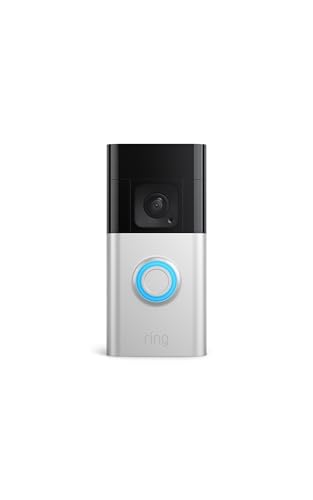
The doorbell camera vs security camera question is really about jobs: a doorbell camera is a communication device that happens to record — it greets, announces and lets you speak to whoever stands at your door — while a security camera is a watchful recorder positioned to observe an area. They overlap in the middle, which is why so many households wonder whether one can substitute for the other.
This comparison separates the two by design intent, field of view, power, alerts and placement, then gives direct advice for the common situations: flats, houses with driveways, package-theft worries, and homes that need both. The short version is that they are complements more than rivals, and most houses end up happiest with a doorbell camera at the door and security cameras only where genuine blind spots remain.
Disclosure: As an Amazon Associate, kajuandouglas.com earns from qualifying purchases. Links to Amazon on this page are affiliate links; they cost you nothing extra. Listing details such as price and availability change often, so check the current Amazon listing before you buy.
Quick Verdict
Choose a doorbell camera for the front door itself: visitor alerts, two-way talk, package visibility and a chime. Choose security cameras for areas a doorbell cannot see — driveways, side gates, gardens, garages — and for continuous or wide-area recording. If you can only start with one, start with the doorbell camera; it covers the highest-traffic, highest-value spot in most homes and adds the doorbell function itself.
In this guide
Gear for This Guide
Both verified examples are doorbell cameras; security cameras differ mainly in placement and purpose, as the table shows:

Ring Battery Doorbell Plus (2nd Gen), Head-to-toe HD+ video — Ring’s Battery Doorbell Plus shows the doorbell design: head-to-toe view for faces and packages, a button visitors press, and two-way talk. Check price on Amazon.

eufy Security Video Doorbell E340 Kit with Chime, 2K FHD, Built-In 8GB — eufy’s E340 doorbell kit shows how far the category reaches, with dual-view package coverage and local storage — still a door specialist, not an area camera. Check price on Amazon.
Doorbell Camera vs Security Camera at a Glance
Same technology family, different jobs:
| Criterion | Doorbell camera | Security camera |
|---|---|---|
| Primary job | Greet and record visitors at the door | Observe and record an area |
| View | Tall, close-range: faces and packages | Wide, longer-range: yards, drives, rooms |
| Interaction | Button press, chime, two-way talk | Usually none; some have talk and sirens |
| Placement | Fixed: beside the front door | Flexible: eaves, walls, shelves, anywhere with power/Wi-Fi |
| Alerts | Doorbell presses plus person/package detection | Motion/person/vehicle detection by zone |
| Power | Battery, plug-in or hardwired (electrician) | Battery, plug-in, solar or wired systems |
| Visitor behaviour | People expect it and press the button | Purely observational; often discreet or deterrent-visible |
Field of View and What Each Actually Sees
A doorbell camera’s tall, narrow view is engineered for a conversation distance: a face at arm’s length and the parcel at their feet. Pointed at a driveway, that same view misses most of the scene. A security camera’s wide view covers a drive, garden or room in one frame but spreads its resolution across the whole area, so faces at distance are smaller and less identifiable than visitors at a doorbell. Neither is better — they are lenses matched to different distances. Households disappointed by a doorbell camera ‘not seeing the car’ bought the right device for the wrong job.
Alerts, Interaction and Daily Experience
The doorbell camera earns its place through interaction: a press summons your phone wherever you are, you see and speak to the visitor, couriers get instructions, and packages trigger their own alerts on many models. Security cameras are quieter servants — they record events and notify about people or vehicles in defined zones, but nobody presses them and visitors do not expect to talk to them. In daily life, most households check doorbell footage for deliveries and visitors, and security footage only when something has happened. That difference in engagement is why the doorbell usually delivers more perceived value per camera.
Power, Installation and Coverage Strategy
Both categories offer battery models that install in minutes, which tempts people to scatter cameras everywhere. Resist: every camera is a battery to charge, a feed to check and a privacy decision. A deliberate layout works better — doorbell camera at the front door, then security cameras only for genuine gaps: the side gate, the driveway if vehicles or theft are concerns, the back garden door. Hardwired anything — doorbell circuits or wired camera systems — belongs to professionals for the electrical work; battery and plug-in devices cover most homes without touching wiring.
Who Each Option Suits
Flats and houses whose only entry is the front door usually need just the doorbell camera. Houses with driveways, side access or valuable outbuildings benefit from adding one or two security cameras in the same app ecosystem, sharing alerts and any subscription. If package theft is the worry, the doorbell camera with package detection is the precise tool. If the worry is vehicles, sheds or rear entry, security cameras positioned for those areas are the answer — with the doorbell still handling the front door better than any general camera can.
Coverage Planning for a Whole Property
Plan coverage by entrances and assets, not by counting cameras. List the ways into the property — front door, back door, side gate, garage, accessible windows — and the assets worth watching: vehicles, outbuildings, deliveries. The doorbell camera owns the front door completely. Each remaining entrance earns a camera only if it is genuinely usable by an intruder or genuinely used by the household; a side gate that opens twice a year for the mower may need a sensor light more than a camera.
Overlap is waste: two cameras watching the same path double the alerts, the batteries and the storage while adding little evidence. Instead, chain the views — doorbell at the door, one camera covering the drive and gate, one at the rear — so a visitor’s or intruder’s route is captured in sequence. Walk the property at night with your phone torch off and ask, at each step, which camera sees you now; the gaps in that walk are the real coverage map.
Keep the system in one ecosystem so the sequence is watchable in one app, alerts follow one logic, and any subscription covers the set. Coverage planning is where the doorbell-versus-security question dissolves: they are chapters of one system, and the planning, not the purchasing, is the skilled part.
Recording Models: Event, Continuous and Hybrid
Doorbell cameras record events — a press, a person, a package — because their lives are conversational and, on battery, rationed. Security cameras span the spectrum: battery models record events the same way, while powered cameras can record continuously to local storage or a recorder, capturing the context before and after triggers at the cost of storage and review time. Continuous footage is genuinely valuable after an incident — the minutes before matter — and genuinely burdensome the rest of the year, which is why hybrid setups are common: continuous recording on one powered camera covering the highest-risk area, event recording everywhere else.
Retention follows the same logic. Event clips are small and can be kept for weeks; continuous archives cycle in days unless storage is serious. Decide retention by asking how quickly you would realistically discover an incident — a holiday home needs longer memory than an occupied house — and set the system to match, rather than accepting defaults designed for a different life.
Privacy scales with recording ambition: continuous cameras pointed at boundaries record neighbours’ comings and goings in a way event-based doorbell footage does not. The courteous system records its own property, keeps what it needs, and can explain itself to the street — a standard worth designing to from the first camera, not retrofitting after a complaint.
Budget Sequencing: What to Buy First, Second, Never
First: the doorbell camera, properly positioned and tuned — it delivers daily value from the first delivery onward. Second: the single worst blind spot, usually the rear or side entrance, with a battery security camera in the same ecosystem. Third, only if the property and local conditions argue for it: driveway or outbuilding coverage, or a powered camera for continuous recording of the highest-risk view. Each step should be lived with for a month before the next is bought; systems grown this way fit the property, while systems bought in one basket usually include a camera nobody needed.
Never: cameras for interior rooms as a casual add-on, cameras duplicating a neighbour’s coverage of shared spaces without a conversation, and cameras bought to solve a problem that is actually lighting, locks or a parcel box. The best security purchase is sometimes a better lock or a brighter path light, and an honest comparison should say so — the doorbell camera wins its place by being useful every day, not by being part of the largest possible system.
What the Data Says About Where Incidents Happen
Deliveries, visitors and most opportunistic doorstep crime concentrate at the front door, which is why the doorbell camera earns the first purchase: it watches the highest-traffic point with the best identification geometry. Burglary entry points skew toward the least visible doors — rear and side entrances — which is why the second purchase is so often a camera for the back of the house rather than a second angle on the front. Vehicle incidents belong to the driveway’s camera. The sequence is not marketing; it follows the geography of how properties are actually approached, by the welcome and the unwelcome alike.
Design your system to that geography and resist symmetrical buying — two of everything feels thorough and mostly duplicates the strong points while leaving the weak ones open. One camera per genuine zone, each positioned for its distance, outperforms a cluster of prestige purchases at the front door. The comparison in this article thus resolves into a planning method: zones first, devices second, brands third.
Looking More Closely at the Details That Decide It
Most discussions of separating the doorbell camera’s communication job from the security camera’s watching job stay at the level of headlines, yet the outcome is usually decided by smaller details that only appear once you live with the decision. Three of those details deserve attention before anything else: a doorbell camera as a communication device that also records, two-way talk quality and speaker placement at a busy front door, and one app and ecosystem keeping several camera types manageable. None of them looks dramatic on a specification sheet. Together they decide whether visitors get a conversation or a silent stare, whether the garden gets watched or merely glimpsed, and whether your cameras feel like one system or a drawer of gadgets.
Start with a doorbell camera as a communication device that also records. Judge it as a doorstep intercom first and a witness second, because that ordering changes which specifications matter. Test the conversation at your own door, with street noise at its busiest, and note whether a visitor can hear you without leaning in. A short note about a garbled doorstep exchange beats a confident belief that the microphone specification sounded impressive.
Points to keep in mind
- Judge a doorbell camera as a communication device that also records in your own setting before trusting a general verdict.
- Treat two-way talk quality and speaker placement at a busy front door as a first-order factor, not a footnote.
- Write down, in one plain sentence, whether you are accepting a talkative door, a watched perimeter, or one device stretched across both jobs.
Then consider two-way talk quality and speaker placement at a busy front door. Households usually discover a weak doorstep speaker late, often only after the return window has closed or the installation is finished. Test the talk at its edges instead: the courier in a hurry, the visitor with a quiet voice, and the conversation attempted over passing traffic. A doorbell that only converses well in average quiet will fail exactly the busy-door moments, and those moments are what generate the complaints.
Finally, weigh one app and ecosystem keeping several camera types manageable alongside the first two rather than in isolation. A single app can mean a single subscription logic to accept, and several specialised apps can mean alerts scattered across three home screens. A mature decision about doorbell versus security comparison names that trade-off out loud. Naming it lets you choose the compromise your household needs, instead of discovering in six months that you bought the scattered alerts you did not want.
How This Plays Out in Real Situations
Abstract advice becomes useful when it meets a real household, so consider a family troubled by parcel theft from the front step. For a family losing parcels, the priority is rarely the sharpest watcher; it is whether the doorstep basics, a quick conversation and a clear step view, survive contact with an ordinary delivery day. Keep the roles plain at first: let the doorbell handle the step and the talking, test it with real couriers, and only then consider a watcher for the wider frontage. Families in this position often find a modest doorbell doing its own job well outperforms an ambitious security setup that watches everything except the conversation that prevents theft.
Contrast that with a home worker who answers deliveries from a back-office desk. Distance from the door rewrites the priorities, because the conversation now happens through a screen all day and its quality matters more than any watching. A compromise about speaker clarity that barely mattered in the first scenario becomes the whole decision here, while the continuous recording everyone praised in reviews fades into irrelevance. This is why copying a friend’s conclusion about doorbell versus security comparison so often disappoints: the friend optimised for a life that is not quite yours, with rooms, routines and patience that differ from your own.
Points to keep in mind
- Decide between a doorbell and a security camera by naming the exact spot each must watch.
- Ask owners which camera caught what, then map those jobs onto your own entrances.
- Let the entrance you use every day, not the one dramatic incident, decide whether the next camera is a talker or a watcher.
A third pattern appears with a property with a garage conversion used as an office. At a property like that, most people want the first camera choice to be right, because nobody has time to keep swapping roles between door and garage. Ten minutes spent mapping which entrance needs conversation and which needs quiet watching prevents the month of muddled alerts that follows an untested guess. If that is your property, put a clear role for each entrance above every clever extra.
There is also the quieter case of a flat where the front door is the only realistic entry point. The doorbell records, the alerts arrive, yet something feels faintly unsatisfying because one device is being asked to do two jobs at once. A conversation that starts too slowly, a view too narrow to watch the landing, a recording that stops before the visitor leaves: each is small, and together they decide whether one camera can honestly cover a flat’s only door. Naming the exact weakness points at its remedy, whether that is a wider doorbell view, a second watcher, or accepting the compromise knowingly.
A Practical Method You Can Repeat
When opinions conflict, a repeatable method settles the question of separating the doorbell camera’s communication job from the security camera’s watching job better than another hour of reading. The method has four moves. First, state each entrance’s job in one sentence: conversation here, watching there, and which matters more. Second, gather evidence in that exact setting. Third, change or compare one variable at a time. Fourth, judge each camera against the roles you wrote before shopping, so one dramatic crime clip cannot quietly move the goalposts.
In practice that means actions such as these: review coverage after a season, when routines and planting have changed; buy for the entrance conversation first if deliveries dominate your worries; and plan wider coverage around access points rather than spreading cameras thinly. Each is deliberately unglamorous. Their strength is sequence: roles first, positions second, models third, so the comparison stops being a contest between boxes. Worked in that order they leave a role map you can re-check if an alert pattern surprises you. Jumbled together in one weekend, they produce the familiar result where both roles were half-tested and neither was understood.
Points to keep in mind
- map the jobs you need done before mapping camera positions
- keep recording and retention choices consistent across devices
- test how alerts from several cameras feel before adding more
Equally important is what to record. Useful notes for doorbell versus security comparison include the date and time, the place, what else was happening at the time, and a simple verdict in your own words. Across a week those notes expose what one test cannot: conversations failing when the road is loud, the side gate never appearing in any frame, the watcher recording hours nobody will ever review. Comparisons built on those patterns stay sound, and if a camera fails early, dated notes are exactly what a warranty claim needs.
Expect the honest comparison to take a little longer than picking one box for everything. The patience is repaid when each entrance gets the right kind of camera first time, instead of joining the cycle of swapping and re-buying that makes this comparison feel exhausting. Most people do not need more information about doorbell versus security comparison; they need their own information, gathered calmly in their own setting, and this method is simply a way of collecting it without drama.
Living With the Decision Over Time
The first week with any choice about separating the doorbell camera’s communication job from the security camera’s watching job is a poor predictor of the first year. In week one every camera is watched keenly, the apps are freshly organised, and nobody has yet ignored an alert out of habit. Judge the split at six months instead: the planting has changed the sightlines, the novelty has gone, and each camera still has to do its own job without your enthusiasm.
Long-term satisfaction usually rests on unexciting qualities connected to a security camera as an observer positioned for an area, not a conversation and continuous, scheduled and event recording models and their trade-offs. Qualities like a doorbell that always starts the conversation quickly, a watcher whose footage is actually reviewable, and recording you can afford to keep decide whether the system quietly serves you or slowly becomes a chore. When you compare the two kinds, weight those lasting qualities above launch features, because a reviewer tests cameras for days while you will live with the split for years. Ask anyone who has run both kinds through a full year what still bothers them, and it is rarely the headline feature that persuaded them.
Points to keep in mind
- Review both feeds monthly at first, checking whether blind spots appear as routines settle in.
- Owners running both long-term usually keep the doorbell for conversations and cameras for coverage.
- Rebalance doorbell and camera roles after adding a side gate, garage, or garden office.
Maintenance deserves a plan rather than good intentions. Tie the camera chores to routines you already keep: review the watcher’s coverage when you trim the hedge, test the doorbell conversation when you change the porch bulb, and clear old footage when you clear your phone photos. That steady rhythm keeps coverage honest: you spot a swallowed sightline while it is a trim, not after an incident exposes it. In the context of doorbell versus security comparison, that plan mainly means keeping an eye on one app and ecosystem keeping several camera types manageable before it turns into a bigger problem.
Finally, leave the split between talking and watching open to revision when your life changes. Moving home, changing work, a new household member or a new device can all reorder the priorities around doorbell versus security comparison. A lone doorbell that suited a flat is not a failure because a house with a garage and a side path now needs watchers too. Going back to your entrance notes turns that expansion into a quick, informed upgrade instead of another month of conflicting advice.
Mistakes to Avoid and Signs You Chose Well
Role mix-ups cause most doorbell-versus-camera disappointments, so the familiar assignment traps deserve naming first. One is this: expecting one doorbell camera to watch a whole property. Another, just as common, is the opposite excess — recording continuously without a plan for reviewing or retaining footage. And a third, quieter error is placing a security camera at a door and missing the conversation features. Look at the three and they share a root: each is an attention lapse about roles rather than a lack of intelligence. Every one begins when a single vivid factor, usually a neighbour’s break-in story or a dramatic demo, is allowed to stand in for the whole picture of what your entrances actually need.
Avoiding them does not require expertise, only a pause. Before you commit to a split, challenge it directly: what would have to be true about my entrances for this arrangement to disappoint me, and have I checked it? Which ordinary entrance moment, the courier needing instructions, the side gate at midnight, the garage door at dawn, have I not yet stood outside and tested? What am I assuming about alert design: a visitor pressing a bell versus movement in a zone that I have not verified? Ten minutes of hostile questioning, aimed at your own favourite option, is the cheapest insurance available in the whole process of separating the doorbell camera’s communication job from the security camera’s watching job.
Points to keep in mind
- Test your preferred device split hard before you buy.
- Judge success by quiet, ordinary evidence over several weeks.
- Try small corrections before concluding that replacement is necessary.
How will you know the decision was right? Watch for ordinary evidence: whether the system still feels manageable for the least technical household member; gaps in coverage at gates, garages and side paths; and whether each entrance has a camera suited to the job done there. None of these announces itself with fanfare. You notice them as absences: the delivery conversation that never fails, the blind spot nobody mentions, the footage that is simply there when an incident needs checking. That quiet competence across both roles is what the comparison actually buys, and it is a more trustworthy verdict than any badge on either box.
When the comparison evidence disappoints, respond in proportion before buying another camera. Many disappointments with doorbell versus security comparison yield to a small correction — a setting, a position, a habit, an accessory — rather than a complete replacement. Work through the small corrections first, one role or one setting at a time with a test at the real entrance after each. Keep a full rethink for structural mismatches, such as a watcher expected to hold conversations or a doorbell expected to guard a yard. Holding that line calmly will save you more over the years than any single comparison tip in this guide.
One More Round of Checks Before You Settle
Before you assign the last entrance, walk the whole property once more as experienced households do, checking which doors need conversation and which corners only need watching. It concerns deterrence through visibility balanced against a discreet installation and field of view and mounting height serving different purposes in each role, two aspects that reveal themselves slowly. Test both deliberately rather than waiting to be surprised: stage your hardest ordinary moment, a delivery conversation in traffic noise while someone crosses the watcher’s zone, and observe without intervening. The aim is not fault-hunting but learning where each camera’s comfortable limits lie, while swapping roles is still cheap.
Tell the rest of the household what those checks revealed about each entrance. A setup for doorbell versus security comparison is a household system, not a personal gadget, and other people’s routines will find edges yours never touches. Hearing their complaints in the first fortnight, while roles can still change, stops the slow drift into ignored alerts that later gets blamed on the cameras themselves. Settle together which entrance gets which kind of camera and who reviews which footage, note it where a guest or a new household member can find it, and treat that note as part of the installation.
Points to keep in mind
- Stretch each device role once, before a real incident tests it.
- Sketch which device watches the door, drive, and garden so gaps embarrass you early.
- Stop adding cameras once every entrance has the right kind and the alerts stay calm for a full week.
Then stop optimising. Every camera system reaches a point where one more device or setting trades real life for a gain nobody in the house will ever notice. If your entrance log, the record of clean conversations and covered gates you have been keeping, says the system works, then let it work. Put the settings down and save your attention for something in the house that genuinely misbehaves. A later round of camera checks can wait until your routine, your home or your devices change, and your notes will make that round shorter than this one was. With doorbell versus security comparison, that stopping point usually arrives once whether the system still feels manageable for the least technical household member stops changing from week to week.
Worked Examples That Make the Trade-Offs Concrete
One divided-entrance story teaches more than categories, so follow it closely. Imagine a property with a garage conversion used as an office. Faced with that extra entrance, most people reach for a second doorbell instead of asking whether the garage needs conversation at all. Yet the binding constraint in that picture is usually alert design: a visitor pressing a bell versus movement in a zone, and no amount of spending elsewhere relaxes it. That example only resolves well when the alert design is settled first, because a talkative camera on a door nobody knocks at is decoration, however enjoyable its features looked.
What to watch for
- Name the coverage bottleneck before assigning devices.
- Translate every example into your own entrances, your own deliveries and your own quiet corners before trusting its conclusion.
- If you keep adding watchers for the same missed conversation, the doorbell is the problem, not the coverage.
Now change one variable: imagine a household deciding what to buy first with a limited starting budget. The cameras and the comparison advice stay exactly the same, yet the correct first purchase flips, because how the household uses its entrances has changed. This is the single most transferable lesson in the whole subject of separating the doorbell camera’s communication job from the security camera’s watching job: context is not a detail around the decision, it is the decision. Read every doorbell-versus-security verdict against your own entrances, and distrust any advice that insists those details do not matter.
A third example works as a warning. Picture a household that skipped the early checks, committed quickly, and spent the following month applying fixes for mixing ecosystems until checking an alert means opening three apps and then for mounting for deterrence so high that faces become unidentifiable. Each remedy bought a quieter week, because each calmed the symptom it aimed at while the wrong role underneath stayed exactly as it was. The cost was not only money; it was confidence. By the time the household finally mapped its entrances and assigned each a proper role, nobody trusted their own camera judgement any more. These examples exist so your household skips that sequence entirely: assign the roles at the real entrances, with the real household, before buying anything else.
Use these examples as templates rather than stories. Swap their details for your own entrances, your own delivery pattern and your own quiet side path, then run the same reasoning again. If a different split wins once your entrances and deliveries go in, the comparison has just shown you what your household truly values. If the same split wins under several versions of your household, you have found a robust arrangement, one worth keeping through the next move or renovation. Applied to doorbell versus security comparison, the detail that most often changes the conclusion is coverage planning that starts with entrances and vulnerable areas.
A Decision Flow When You Feel Stuck
Indecision about doorbell versus security comparison usually means two good criteria are pulling in opposite directions, not that you lack information. When that happens, stop researching and start ranking. Write your role criteria down, the four to six that genuinely matter, from doorstep conversation to overnight watching, and force them into a strict order. Ranking feels forced for the first minute, then it suddenly bites, because rival arrangements rarely fail across the board: each falls down on one criterion, and the ranking tells you whether that criterion sits at the top of your list or near the bottom.
What to watch for
- Order your entrance priorities before assigning any more devices.
- Cross out any arrangement that fails a genuine entrance deal-breaker, then test what survives at your own doors, in writing.
- If budget forces one device, the doorbell usually wins for flats and terraced entrances.
Next, apply a simple elimination pass connected to deterrence through visibility balanced against a discreet installation. Strike off any option that fails a true role deal-breaker, and be strict about the word: a deal-breaker means a flaw that will still irritate you on a plain weekday next winter, not a line that merely looks weak in a comparison chart. This pass is often brutal and always useful. What remains is a handful of arrangements you can genuinely test at your entrances, and confidence built on those tests is the kind that lasts.
Then test the survivors against alert volume once several devices are active together and gaps in coverage at gates, garages and side paths in your own setting, on the same day if you can, so conditions stay comparable. Jot a score beside each test straight away, while the garbled conversation and the missed gate are still fresh in your mind. Most people are startled by how different that written score looks from the verdict they were carrying in their heads, because memory keeps the one dramatic incident while notes keep the typical day, and your household lives through typical days.
If the two kinds still tie, break the tie on daily-life grounds and feel no guilt about it: which arrangement is kinder to review, simpler for a partner to manage, and easier to extend if a new entrance appears? A dead heat between the two kinds is common, and at that point the honest truth is that either will serve your entrances perfectly well. Picking an arrangement today and living with it beats spending another week hunting for a difference your daily alerts will never reveal. For doorbell versus security comparison, the easiest option to live with is usually the one that handles deterrence through visibility balanced against a discreet installation with the least fuss.
Seasonal, Household and Long-Term Angles Worth Planning For
Conditions change across the year, and a decision about separating the doorbell camera’s communication job from the security camera’s watching job that is tested in only one season carries hidden risk. Summer growth opens blind spots at gates, winter darkness lengthens the hours a watcher must perform, and holiday visitors test the doorbell conversation in ways your household never does. Testing all four seasons beforehand is impossible, so ask the winter question out loud instead: in the darkest and busiest week of your year, will this doorbell still converse clearly and this watcher still see its patch?
What to watch for
- Dark winter evenings favour doorbell lighting, while long summer days expose garden camera blind spots.
- Check that visitors instinctively use the doorbell rather than waving hopefully at a distant camera.
- Maintain both systems together quarterly, sharing one firmware, battery, and lens-cleaning routine at home.
Households also change from inside. A camera system configured by one confident user gets inherited by partners, children, grandparents and guests, each with different patience for apps and alerts. The systems that last are the ones a newcomer can make sense of cold: one app with plainly named cameras, alerts that explain themselves, and a short note saying which camera watches what. When you evaluate doorbell versus security comparison, spend one minute imagining the least technical person in your life facing it alone. That minute is a surprisingly accurate quality test.
Count the total effort the two roles will ask of you across their whole working life, not just the effort of buying day. Count the ongoing attention honestly: the footage reviews, the conversation tests, the battery swaps across several devices, the storage tidying, and ask whether that rhythm genuinely fits the time your household has. A system that wants weekly attention from a household that can only offer monthly attention will slowly fall out of use, however capable its cameras are. Matching the upkeep rhythm to the household matters just as much as matching each camera to its entrance. With doorbell versus security comparison, the recurring effort worth counting most honestly is the effort tied to alert design: a visitor pressing a bell versus movement in a zone.
Finally, think about the exit before you need it. When a camera eventually comes down, can its footage be exported, its mount removed cleanly, and its role covered by the other kind without a gap? Keep a note of which camera does which job and where its footage lives, so a future swap stays a calm job rather than a mystery. That is not pessimism; it is what turns one purchase into accumulated household knowledge, so the next decision about doorbell versus security comparison starts from experience instead of from a search box.
Questions Worth Asking Before You Spend Anything
Answering a few questions about entrances, conversations and blind spots prevents most costly device-assignment mistakes later. First: what exactly is the entrance problem I am solving, stated without naming any product or camera type? If your problem statement names a brand or a recording mode, rewrite it until it describes your property instead: a door that needs conversation, a gate that needs watching, a garage nobody observes. Solutions chosen for a life-shaped problem age far better than solutions chosen for a catalogue-shaped one, especially with doorbell versus security comparison.
What to watch for
- Describe each entrance need plainly, without naming any device type.
- Write down the entrances and blind spots you already know, and mark the untested ones honestly.
- Ask who else is affected, especially anyone whose alerts or privacy change, before the decision is final.
Second: what evidence do I already have? You know more about your own property’s entrances than you credit yourself with. You know which gate sticks, which hours deliveries cluster, which routines never change and which household members will resist anything complicated. Getting that entrance knowledge onto paper before you shop stops a confident sales pitch from overwriting it. Mark the gaps in that evidence honestly as gaps: a gap you can see can be tested at the gate, while an assumption you never noticed quietly becomes the foundation of a bad camera split. For doorbell versus security comparison, that existing evidence usually includes what you already know about one app and ecosystem keeping several camera types manageable in your own setting.
Third: when, not if, one of these cameras needs attention in a year, what will you actually do about it? Footage piles up, batteries fade, planting swallows sightlines, networks change, children grow. A choice with a calm answer to that question, involving steps like review coverage after a season, when routines and planting have changed, is worth more than a choice with a slightly better specification and no answer at all. A split you can extend, reposition and re-review without starting again is a resilient split, even though resilience never appears in a feature list.
Fourth, and last: who else should have a say? Decisions about separating the doorbell camera’s communication job from the security camera’s watching job often affect people who were not in the room when the research happened, and their late objections can sink an otherwise sound setup. Ask the household early, while both roles are still on the table: here is the split I am considering, what would annoy you about it? The final split may be the very one you first favoured, but it will be an arrangement the household has accepted, and accepted systems get maintained while resented ones get quietly abandoned.
Related Guides
- best security cameras for front door
- best home security cameras for under 200
- best security cameras for home outdoor
- best security cameras for home without subscription
- how to choose a doorbell camera
- wired vs wireless doorbell camera
- do doorbell cameras need Wi-Fi
Frequently Asked Questions
Can a security camera replace a doorbell camera?
It can watch the door, but it cannot be a doorbell: no button for visitors to press, no chime, and usually no package-height view or doorstep framing. Visitors will knock while the camera silently records. If the doorbell function matters — and for most homes it is the main value — a doorbell camera is the right device for the door.
Can a doorbell camera replace security cameras?
Only for the doorway itself. Its tall, close-range view cannot cover a driveway, garden or side gate usefully, and its position is fixed by the door. Homes with areas beyond the front step need security cameras for those zones. Think of the doorbell as the specialist for one critical spot, not a whole-property solution.
Which is better for deterring package theft?
The doorbell camera, because it watches the exact spot where parcels land, detects packages on many models, and lets you speak to anyone approaching. Visibility helps too — a camera visitors can see changes behaviour. For repeated theft, pair it with delivery instructions to a side location or a parcel box, since no camera physically stops a determined thief.
Should both types be the same brand?
Ideally yes. One app, one alert system and one subscription or storage structure make a multi-camera home far easier to live with, and family members learn one interface. Mixing brands is workable but means multiple apps and fragmented history. Decide the ecosystem when you buy the first camera, because it quietly decides the rest.
Do I need continuous recording?
Most homes do not. Event-based recording — triggered by motion, people or doorbell presses — captures what matters and keeps batteries and storage sane. Continuous recording suits specific high-risk situations and requires powered cameras and substantial storage. For typical homes, well-tuned event recording on a doorbell plus a camera or two is the balanced setup.
Where do people most regret not having a camera?
The side gate and the back door — routes a front-door camera cannot see and visitors never use, but intruders prefer. After the doorbell, those are the highest-value additions. Driveways follow where vehicle crime is a local concern. Inside cameras are a separate privacy decision and rarely the priority people expect.
How long should I observe both roles before splitting my budget?
For most households, a focused week of ordinary use tells you more than a month of occasional reading about separating the doorbell camera’s communication job from the security camera’s watching job. Test both roles through a busy delivery day, a quiet night and one genuine conversation at the door, keep the short notes described above, and then decide. Stretching the trial beyond that point seldom changes the verdict; it mostly postpones a decision your own entrance evidence has already settled.
What should I reconsider first if one camera cannot cover both jobs?
Return to the simplest explanation before replacing anything. Recheck the basics connected with coverage planning that starts with entrances and vulnerable areas, repeat your most reliable test in your most familiar setting, and change one variable only. If a calm retest at your own entrances still disappoints, the mismatch is probably built into the role split itself, and your notes will pinpoint whether it is the conversation, the coverage or the recording that failed you.
Is a pricier system worth it for covering several entrances well?
Only when the higher tier improves something your own routine actually stresses, such as power and storage arrangements scaling differently across several cameras. If your own notes show the frustration actually comes from garbled conversations or an unwatched gate, extra recording features will change nothing you feel day to day. Judge any pricier tier against the evidence from your own entrances, not against the best-case demonstration in the manufacturer’s video.