Learning how to choose a doorbell camera starts with two decisions that narrow the field fast: how it will be powered, and whether you accept a subscription for video history. Everything else — resolution, field of view, night vision, smart alerts — refines a choice those two decisions frame. Buyers who start with specifications often end up with a camera their wiring cannot support or a monthly bill they never wanted.
This guide works through power options (battery, plug-in and hardwired), video quality that actually matters at a front door, storage and subscriptions, smart detection, chime compatibility and installation difficulty. A note on safety runs through it: battery and plug-in models are straightforward DIY, while anything involving your home’s mains doorbell transformer wiring belongs to a licensed electrician.
Disclosure: As an Amazon Associate, kajuandouglas.com earns from qualifying purchases. Links to Amazon on this page are affiliate links; they cost you nothing extra. Listing details such as price and availability change often, so check the current Amazon listing before you buy.
Quick Answer
Choose battery power for the simplest install and renters, plug-in power where an outdoor socket is handy, and hardwired only with professional help for the wiring. Prioritise a tall, head-to-toe field of view so you see packages on the ground, reliable person and package detection, and storage terms you accept — local storage or a subscription you have priced over several years. Match the camera to your Wi-Fi strength at the door before anything else.
In this guide
What You Need to Know First
Four facts about your home decide most of the choice:
- Your doorbell situation: no existing doorbell, a battery-friendly spot, an outdoor socket, or existing wiring you will not touch yourself.
- Wi-Fi strength at the front door: test with your phone standing outside the closed door; weak signal changes which models suit.
- Your storage preference: subscription cloud history, local storage, or live-view only.
- Who else needs access: family members, and whether you use a smart speaker or display for doorbell announcements.
Gear for This Guide
Two verified models that frame the main choice — battery convenience versus subscription-free local storage:

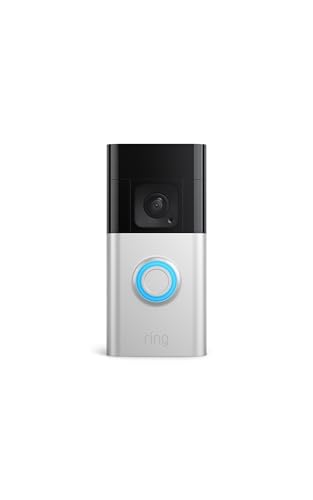
Ring Battery Doorbell Plus (2nd Gen), Head-to-toe HD+ video — Ring’s Battery Doorbell Plus represents the battery class: head-to-toe HD+ video, motion detection and two-way talk with no wiring at all. Check price on Amazon.

eufy Security Video Doorbell E340 Kit with Chime, 2K FHD, Built-In 8GB — eufy’s Video Doorbell E340 kit represents the no-subscription route, with built-in local storage and a chime included in the box. Check price on Amazon.
How to Choose a Doorbell Camera, Step by Step
Step 1: Decide the power source honestly
Battery models install in minutes with screws or adhesive mounts and suit renters and doors without wiring, at the cost of removing the battery to recharge every so often — busier doors drain faster. Plug-in models use an outdoor socket and never need charging, where a socket and cable route exist. Hardwired models draw power from an existing doorbell circuit and ring your mechanical chime, but that circuit involves a mains-powered transformer: have a licensed electrician handle any transformer or mains wiring work, and treat battery or plug-in as the DIY routes.
Step 2: Check Wi-Fi at the door before shopping further
Stand outside your closed front door with your phone and check the Wi-Fi signal and speed where the camera will mount. Brick, stone and metal doors eat signal, and a camera on weak Wi-Fi delivers delayed alerts and grainy uploads regardless of its sensor. If the signal is poor, plan a router move or a mesh node near the door as part of the project — or favour models known for strong radios and lower bandwidth demands.
Step 3: Judge video by field of view, then resolution
At a front door, what the camera sees matters more than pixel counts. A tall or head-to-toe aspect ratio shows visitors’ faces and the packages at their feet in one frame — the two things you actually check. A wide but short view cuts off parcels. Resolution in the 2K class is a good balance of clarity and bandwidth; higher resolutions help digital zoom on faces and number plates but demand more Wi-Fi and storage. Night vision matters equally: check the stated night range and whether the model offers colour night vision using ambient light or a spotlight.
Step 4: Decide storage and subscription with open eyes
Cloud subscriptions buy long video history, rich notifications with preview images, and person/package detection on many platforms — for an ongoing monthly or annual cost that accumulates over the camera’s life. Local-storage models keep recordings on the device or a home base with no subscription, trading away some cloud convenience and off-site backup. Live-view-only free tiers exist but leave you without recordings of the moment that mattered. Choose deliberately; this decision, more than any specification, determines long-term satisfaction and cost.
Step 5: Evaluate smart detection and alerts
Basic motion alerts fire for every passing car, tree shadow and spider — alert fatigue makes people mute the app within a month. Look for person detection at minimum, package detection if deliveries matter, and adjustable motion zones so you can exclude the street and pavement. Check which of these features require the subscription on each platform, because detection is where free tiers most often end. Two-way talk quality and quick-reply messages are worth testing in reviews if you expect to speak to couriers regularly.
Step 6: Confirm chime and household fit
Decide how the household hears the bell: through phones, smart speakers and displays, a plug-in chime in the hallway, or your existing mechanical chime (hardwired models only, professionally installed). Battery models cannot ring a mechanical chime. Check the app supports multiple users with their own accounts, and confirm compatibility with your smart home platform if you want doorbell presses to announce on speakers or show video on a TV or smart display automatically.
Common Mistakes When Choosing a Doorbell Camera
The most common mistake is buying a hardwired model with no plan for the wiring, then discovering the transformer work is a job for an electrician that was never budgeted. Second is ignoring Wi-Fi strength at the door and blaming the camera for the network’s weakness. Third is comparing headline prices while ignoring five years of subscription cost. Finally, buyers often choose the widest field of view and end up with a view that misses the package zone directly under the camera — the exact spot that matters.
Pro Tips Before You Buy
Read the subscription page for any model you shortlist, in full, before comparing hardware. Check the battery-removal design on battery models — some require unmounting the whole camera to charge, others have a quick-release pack. And think about the second camera later: staying within one platform keeps one app, one subscription structure and one set of alerts for the whole home.
Resolution, HDR and Night Vision in Plain Terms
Resolution figures describe pixel counts, but doorstep identification depends on pixels landing on the visitor’s face, which is governed by distance and field of view as much as sensor size. A camera that frames tightly on the doorway puts more of its pixels to work than a wider camera with a higher headline resolution. High dynamic range (HDR) matters at porches, where a bright street behind a shaded visitor defeats ordinary cameras; HDR models hold detail in both. If your door faces strong backlight — a south-facing porch under a bright sky — HDR is not a luxury but the feature that makes faces readable at midday.
Night vision splits into infrared, which renders the scene in black and white using invisible light the camera emits, and colour night vision, which uses ambient light or a small spotlight to keep colour. Colour helps describe clothing and vehicles; infrared is discreet and works in total darkness. Check the stated night range against your actual approach distance, and remember that infrared reflects off nearby walls and glass, which is why position — covered in our linked positioning guide — changes night performance as much as the sensor does.
Frame rate and compression decide how smooth motion looks and how much bandwidth and storage the camera consumes. For doorstep purposes, standard rates are ample; what matters more is that the camera starts recording early in the approach, which is a function of its motion sensing and, on powered models, pre-event buffering. Battery models wake on motion and can clip the first second — positioning and sensitivity tuning, again, are the mitigations.
Subscriptions, Decoded Before You Commit
Read any subscription as a multi-year contract with yourself. List what the free tier includes for the exact model — live view, alerts, how many days of video history, if any — and what the paid tiers add: longer history, package and person detection, rich notifications, warranty perks on some platforms. Then multiply the annual cost by the years you expect to keep the camera and add it to the hardware price before comparing rivals. A camera that looks expensive with local storage often wins this honest arithmetic by the third year.
Trials deserve suspicion: many cameras ship with a free trial that quietly converts the experience, so features you fall in love with in month one may be paywalled in month two. During any trial, deliberately test the free-tier behaviour by checking what the plan page says, not by assuming the trial is the product. Also check household terms — whether one subscription covers every camera at the address or charges per device changes the maths for growing systems.
Local-storage models invert the trade: no ongoing cost, recordings kept in the home, and dependence on the device or home base surviving a theft or failure. Some offer optional cloud plans as an add-on rather than a requirement, which is the flexible pattern to favour if you are undecided — start local, add cloud only if you miss it.
Choosing for Flats, Houses and Businesses
Flat-dwellers and renters should start with battery models and adhesive or clamp mounts that respect lease terms, plus a plug-in chime or smart-speaker announcement since the building’s chime is off-limits. Houses with porches gain from head-to-toe views and package detection, and should plan the second viewpoint — the side path — within the same ecosystem from the start. Small businesses need longer history, multiple user accounts with permissions, and cameras rated for heavier daily traffic; the subscription tier that includes those is a business cost, not an upsell.
In every setting, buy for the door you have: its orientation, its traffic, its Wi-Fi reality and its visitors. The best-reviewed camera in the country is the wrong camera if its view misses your step, its battery cannot survive your street’s traffic, or its subscription structure offends you monthly. The checklist in this guide exists to make the choice personal, because doors are.
Smart Home Platforms and Voice Assistants
A doorbell camera lives inside a platform: its app, its subscription structure and its integrations with the voice assistants and displays your household uses. If your home runs on one assistant ecosystem, a doorbell that announces visitors on your existing speakers and shows video on your existing displays delivers daily magic that a technically superior rival, mute inside your ecosystem, cannot. Check integration claims precisely — ‘works with’ spans everything from full announcement-and-video support to a bare live-view skill — and favour the depth your household will actually use.
Matter and other interoperability standards are gradually loosening these loyalties for basic functions, but doorbell features — package detection, rich notifications, two-way talk from a display — remain platform-flavoured for now. Buy the doorbell your current ecosystem embraces, or consciously choose to start a new one; the accidental ecosystem, acquired one incompatible gadget at a time, is the outcome to avoid.
Weather, Warranty and Build Quality
A doorbell camera lives outdoors through summers, storms and frosts, so its weather rating and operating temperature range are specifications with consequences: a camera whose battery fades in your winters or whose housing admits your climate’s rain will underperform its reviews, which were written in milder places. Check the stated temperature range against your extremes, favour models with replaceable batteries where cold is severe, and read the warranty for water-ingress exclusions before assuming outdoor means invulnerable.
Build quality shows in the mount as much as the camera: a bracket that flexes produces footage that sways and false triggers on windy days, whatever the sensor. Where reviews mention theft of the camera itself, note the mounting design — security screws and locking latches are small features with large consequences on exposed doors. The camera is the household’s outermost electronic device; choose it with the respect that position deserves.
Looking More Closely at the Details That Decide It
Most discussions of choosing a doorbell camera around power, Wi-Fi, video and household fit stay at the level of headlines, yet the outcome is usually decided by smaller details that only appear once you live with the decision. Three of those details deserve attention before anything else: storage choices between local recording and subscription services, field of view that shows faces and parcels without excessive distortion, and head-to-toe framing for visitors standing close to the door. None of them looks dramatic on a specification sheet. Put together, those three decide whether you can recognise a visitor’s face at the step, find a parcel inside the frame before it disappears, and still pull up the clip a week later when a neighbour asks what happened.
Start with storage choices between local recording and subscription services. A doorbell that records to a card or hub in the hall keeps working through an internet outage, while a cloud plan quietly stops saving the moment your connection drops. Compare both arrangements at your own door, at the hour your deliveries actually arrive, and note which one still showed you the courier. A short note about a missed clip will tell you more next month than a confident memory of a smooth demonstration video.
Points to keep in mind
- Judge storage choices between local recording and subscription services in your own setting before trusting a general verdict.
- Treat field of view that shows faces and parcels without excessive distortion as a first-order factor, not a footnote.
- State plainly whether you are accepting a monthly subscription, a battery to recharge, or a narrower view, so the compromise is chosen rather than discovered.
Then consider field of view that shows faces and parcels without excessive distortion. Buyers usually learn about a too-narrow view only after the box is open and the bracket is already screwed to the frame. Test the extremes of your doorway instead: a tall visitor leaning in to press the button, a parcel tucked against the wall, and a child standing well back on the path. A camera that only frames the average caller standing in the average spot will miss exactly the callers and deliveries you bought it to catch.
Finally, weigh head-to-toe framing for visitors standing close to the door alongside the first two rather than in isolation. A taller frame often means a battery that works harder, and the widest lens can push faces at the edges into a curved, hard-to-recognise shape. A mature decision about doorbell choice names that trade-off out loud. Saying it out loud lets you pick the side your household prefers, rather than finding out in winter that the view you loved needs charging you hate.
How This Plays Out in Real Situations
Abstract advice becomes useful when it meets a real household, so consider a family mainly worried about parcels left on the step. For them the winning camera is not the sharpest one but the one whose frame reaches the doorstep and whose alert arrives before the courier walks away. Start by fixing the parcel problem alone: frame the step, set a package alert, and ignore every other feature until that job works. A family that does this often ends up happier with a mid-priced doorbell that watches the step properly than with a flagship whose frame cuts off at waist height.
Contrast that with a rural property where the router sits far from the front door. Distance rewrites the shortlist, because a camera that cannot hold a signal through two thick walls is useless however good its lens is. A weak-signal compromise that barely mattered in a flat becomes the whole decision here, while the colour night vision everyone praised in reviews fades into irrelevance. This is why copying a friend’s conclusion about doorbell choice so often disappoints: the friend optimised for a life that is not quite yours, with rooms, routines and patience that differ from your own.
Points to keep in mind
- When choosing a doorbell camera, stand at your own front door and judge the view first.
- Borrow neighbours’ alert stories for questions, then judge cameras at your own door.
- Let the delivery pattern you see every week matter more than the one dramatic break-in story that pushed you to shop.
A third pattern appears with a house on a busy road where every passing car could trigger an alert. On a road like that, the household usually wants the first setup attempt to work, because nobody enjoys re-aiming a camera in traffic noise every evening. Ten minutes spent checking where cars, buses and headlights cross the frame saves the weekend of false alerts that follows a rushed guess. If that sounds like your house, put dependable person detection and calm, configurable alerts ahead of every decorative extra.
There is also the quieter case of a home worker who needs a reliable chime in a back office. The camera records, the app notifies, yet the worker still misses callers because the phone sits on silent in another room. A chime that arrives a beat late, a notification buried under email, a preview that shows the path but not the person: each is small, and together they decide whether callers get answered. Naming the weak link precisely points straight at its fix, whether that is a plug-in chime, a smart speaker announcement, or a louder mechanical bell.
A Practical Method You Can Repeat
When opinions conflict, a repeatable method settles the question of choosing a doorbell camera around power, Wi-Fi, video and household fit better than another hour of reading. The method has four moves. First, write down the doorbell’s one essential job at your door, such as catching parcels on weekday afternoons or letting you speak to callers while you are out. Second, gather evidence in that exact setting. Third, change or compare one variable at a time. Fourth, judge each candidate against the list you wrote before you opened a single product page, so one glowing review cannot quietly rewrite your priorities.
In practice that means actions such as these: confirm whether an existing chime matters to people inside the house; decide how you feel about subscriptions before comparing camera features; and compare running effort — charging, cleaning and reviewing — as well as features. Each is deliberately unglamorous. Worked through calmly, they cut a shelf of near-identical doorbells down to two or three that genuinely fit your door. Follow them in sequence and you can retrace exactly why the winner won if a partner questions the choice later. Shuffle them together in one excited evening and you end up comparing subscription prices before you know whether the camera can even see your step.
Points to keep in mind
- choose the camera your household will keep enabled, not the one with the longest list
- sketch who visits, what they carry and where they stand at your door
- stand at your door and check Wi-Fi strength before falling for any model
Equally important is what to record. Useful notes for doorbell choice include the date and time, the place, what else was happening at the time, and a simple verdict in your own words. Across a week those jottings expose the pattern that matters: parcels clustering before school run, the signal dipping when the microwave runs, the porch light washing out faces after dark. Decisions built on those patterns hold up, and if you ever contact a manufacturer about a faulty unit, dated notes about signal drops carry far more weight than a general complaint.
Allow the doorstep tests a few evenings rather than one hurried lunchtime. The time is repaid the first month, when neighbours are still swapping cameras they bought in haste while yours simply keeps recording. Most people do not need more information about doorbell choice; they need their own information, gathered calmly in their own setting, and this method is simply a way of collecting it without drama.
Living With the Decision Over Time
The first week with any choice about choosing a doorbell camera around power, Wi-Fi, video and household fit is a poor predictor of the first year. In week one the battery is fresh, the trial subscription unlocks every feature, and nobody has yet had to climb up and wipe rain off the lens. Picture the same doorbell in its sixth month instead: the novelty has gone, the trial has ended, the nights are longer, and it still has to catch the postman without anyone remembering to tend it.
Long-term satisfaction usually rests on unexciting qualities connected to privacy controls including zones, audio settings and data handling and chime compatibility and how visitors know the bell worked. Qualities like a lens that stays clear, a battery that lasts the season promised, and an app that opens quickly decide whether the doorbell fades into the background or nags at you weekly. When you compare candidates, weight those everyday qualities above the headline features, because a reviewer tests a doorbell for a fortnight while your household will rely on it for years. Ask anyone who has owned one through a full winter what still bothers them, and the answer is almost never the resolution that persuaded them to buy it.
Points to keep in mind
- Check the app, battery, and night vision again during any cooling-off period after buying.
- Homeowners keeping one doorbell for years value replaceable batteries and honest weather sealing most.
- Revisit your choice if parcel deliveries multiply or you start working away from home regularly.
Maintenance deserves a plan rather than good intentions. Put the doorbell jobs on a rhythm you already keep: wipe the lens when you clean the porch light, top up the battery when you change the hallway clock, and review stored clips when you take the bins out. Small habits like these stop the slow slide into a dead battery on the one day a parcel goes missing, and they keep you noticing early if the picture has crept off the step. In the context of doorbell choice, that plan mainly means keeping an eye on privacy controls including zones, audio settings and data handling before it turns into a bigger problem.
Finally, leave yourself permission to change your mind about the doorbell when your household changes. Moving home, changing work, a new household member or a new device can all reorder the priorities around doorbell choice. A doorbell that suited a quiet flat is not a failure because a busier house with a longer path has outgrown its range. Going back to your doorstep notes turns the replacement into a quick, informed upgrade instead of another month of tabs, videos and conflicting advice.
Mistakes to Avoid and Signs You Chose Well
Doorbell buyers repeat the same handful of errors often enough to list them upfront. One is this: buying a wide view that still crops a tall visitor’s face at close range. Another, just as common, is the opposite excess — choosing alerts so sensitive that everyone in the house mutes them within a week. And a third, quieter error is forgetting that battery life falls in cold weather and busy locations. Look closely and all three are lapses of attention at the buying stage rather than failures of judgement or intelligence. Each one starts when a single shiny detail, perhaps a launch discount or a dramatic demo clip, is allowed to stand in for the whole picture of life at your front door.
Avoiding them does not require expertise, only a pause. Before you pay, challenge your favourite directly: what would have to go wrong at my door for this model to annoy me daily, and have I actually checked that point? Which everyday doorway moment, the school run, the late delivery, the dog walker at dawn, have you not actually stood outside and tested? What am I assuming about power source as the decision that shapes installation and upkeep that I have not verified? Ten minutes of hostile questioning, aimed at your own favourite option, is the cheapest insurance available in the whole process of choosing a doorbell camera around power, Wi-Fi, video and household fit.
Points to keep in mind
- Interrogate your leading candidate hard before you pay anything.
- Judge success by quiet, ordinary evidence over several weeks.
- Try small corrections before concluding that replacement is necessary.
How will you know the decision was right? Watch for ordinary evidence: whether visitors hear feedback and understand that the bell rang; whether faces and parcels are both recognisable in test footage; and how long installation and setup genuinely take at your door. None of these announces itself with fanfare. You notice them as things that quietly stop going wrong: nobody shouts that the courier came, nobody re-rings because they heard nothing, and nobody asks you to check the app. That calm at the front door is what the money actually bought, and it tells you more than any badge printed on the packaging.
When the doorstep evidence disappoints, respond in proportion rather than ripping everything out. Many disappointments with doorbell choice yield to a small correction — a setting, a position, a habit, an accessory — rather than a complete replacement. Work through the small corrections first, changing one thing at a time and noting the result, exactly as the earlier doorstep method suggests. Save replacement for structural mismatches, such as a camera whose frame can never reach the step or a battery model fitted where only wired power makes sense. Keeping that distinction clear will save you more over the years than any single discount you might chase this week.
One More Round of Checks Before You Settle
Before you buy, run one last doorstep rehearsal that seasoned doorbell owners swear by, testing face framing, parcel view and chime response even when your shortlist feels settled. It concerns motion detection that distinguishes people and parcels from passing traffic and smart-home platform support for announcements on speakers and displays, two aspects that reveal themselves slowly. Put both through their hardest ordinary test on purpose: have someone walk the path at dusk carrying a parcel while a housemate triggers the speaker announcement inside. The point is not to hunt for faults but to find out where your chosen camera’s comfortable limits sit while returning or exchanging it is still painless.
Tell the rest of the household what those tests showed, in plain terms they can act on. A setup for doorbell choice is a household system, not a personal gadget, and other people’s routines will find edges yours never touches. Hearing their complaints in the first fortnight, while settings can still change, stops the slow drift into muted notifications and ignored alerts that later gets blamed on the camera itself. Settle together which alerts stay on and which get silenced, note the agreement on the fridge or in a shared phone note, and treat that little agreement as part of fitting the doorbell properly.
Points to keep in mind
- Push your shortlisted doorbells at dusk once, before ordinary life does.
- Write your must-haves beside the door measurements, so product pages cannot distract you later.
- Stop tweaking the detection zones once callers and parcels are caught reliably and the street stays quiet.
Then stop optimising. Every doorbell reaches a point where another evening in the settings menu buys a barely visible gain at the cost of an evening of your life. If your own doorstep evidence, the log of caught callers and quiet nights you have been keeping, says the camera works, then let it get on with working. Save your tinkering energy for the gadget in the house that genuinely is misbehaving. A fresh round of doorstep checks can wait until a move, a new phone or a changed routine gives you a real reason, and your old notes will make that round far quicker. With doorbell choice, that stopping point usually arrives once how comfortably the camera fits the platforms and routines already in your home stops changing from week to week.
Worked Examples That Make the Trade-Offs Concrete
One worked buying scenario beats abstract advice, so follow it closely. Imagine a rural property where the router sits far from the front door. Faced with that weak signal, most buyers reach straight for the priciest, most feature-stuffed doorbell on the shelf. Yet the binding constraint in that picture is usually chime compatibility and how visitors know the bell worked, and no amount of spending elsewhere relaxes it. That example only ends well when the signal and chime problems are tackled before anything else, because extra resolution on a camera that keeps dropping offline is decoration, however impressive the sample footage looked.
What to watch for
- Name the governing limit before shortlisting doorbells.
- Translate every example into your own doorway, path length and delivery habits before trusting its conclusion.
- If you keep re-aiming the same camera for the same missed parcel, the problem is the framing you chose, not the settings you keep adjusting.
Now change one variable: imagine a household already invested in one smart-home platform and its displays. The cameras on the shelf and the buying advice are exactly the same, yet the correct choice flips, because how the household lives with its screens has changed. This is the single most transferable lesson in the whole subject of choosing a doorbell camera around power, Wi-Fi, video and household fit: context is not a detail around the decision, it is the decision. Read every recommendation through the filter of your own hallway, your own Wi-Fi and your own visitors, and distrust any verdict that pretends those things are irrelevant.
A third example works as a warning. Picture a household that skipped the early checks, committed quickly, and spent the following month applying fixes for assuming a chime will work because a previous doorbell rang it and then for overlooking subscription needs until the trial period expires. Each remedy bought a quieter week, because each calmed the symptom it aimed at while the wrong chime assumption underneath stayed exactly as it was. The cost was not only money; it was confidence. By the time the household finally tested the chime circuit and the signal properly, nobody trusted their own doorstep decisions any more. These worked examples exist so you can skip that miserable sequence entirely: test at your real door, with your real household, before the money leaves your account.
Use these examples as templates rather than stories. Swap in your own porch, your own path, your own delivery times and your own router position, then run the same reasoning again. If the winner changes once your details go in, that tells you something valuable about which of your priorities is really in charge. If the same camera wins under several versions of your life, you have found a sturdy choice, the kind that keeps earning its place beside the door year after year. Applied to doorbell choice, the detail that most often changes the conclusion is smart-home platform support for announcements on speakers and displays.
A Decision Flow When You Feel Stuck
Indecision about doorbell choice usually means two good criteria are pulling in opposite directions, not that you lack information. When that happens, stop researching and start ranking. List the four to six things your doorbell genuinely must do, from catching parcels to working with your existing chime, and force them into a strict order. Ranking feels forced for the first minute, then it suddenly bites, because rival doorbells rarely fail across the board: each falls down on one criterion, and the ranking tells you whether that criterion sits at the top of your list or near the bottom.
What to watch for
- Order your buying priorities before comparing any more doorbells.
- Cross out any camera that fails a genuine doorstep deal-breaker, then compare what survives on paper, side by side.
- Between two capable doorbells, pick the clearer night image over a longer feature list.
Next, apply a simple elimination pass connected to weather resistance for an exposed door compared with a sheltered porch. Strike off any camera that fails a true doorstep deal-breaker, and be strict about the word: a deal-breaker means a flaw that will still irritate you on a plain weekday next winter, not a line that merely looks weak in a comparison chart. This pass is often brutal and always useful. The survivors will fit on one short list you can genuinely test at your door, and confidence built on those tests is the kind that lasts.
Then test the survivors against the effort needed to charge or maintain the camera through winter and whether visitors hear feedback and understand that the bell rang in your own setting, on the same day if you can, so conditions stay comparable. Jot a score beside each test straight away, while the cold fingers and the missed alert are still fresh in your mind. Most people are startled by how different that written score looks from the verdict they were carrying in their heads, because memory keeps the dramatic demo while notes keep the typical Tuesday, and your life happens on typical Tuesdays.
If two finalists still tie, break the tie on daily-life grounds and feel no guilt about it: which one is kinder to charge, simpler for a partner to answer, and easier to swap if it fails in year three? A tie between two good doorbells is common, and at that point the honest truth is that either will guard your step perfectly well. Picking one today and enjoying it beats spending another week hunting for a difference your household will never actually notice. For doorbell choice, the easiest option to live with is usually the one that handles weather resistance for an exposed door compared with a sheltered porch with the least fuss.
Seasonal, Household and Long-Term Angles Worth Planning For
Conditions change across the year, and a decision about choosing a doorbell camera around power, Wi-Fi, video and household fit that is tested in only one season carries hidden risk. Low winter sun blinds lenses that behaved in June, frost shortens battery life, and the dark school-run evenings bring a completely different crowd past your gate. Testing all four seasons before you buy is impossible, so ask the winter question out loud instead: in the darkest and busiest week of your year, will this battery, this lens and this signal still cope at your door?
What to watch for
- Ask how the doorbell handles low winter sun, Halloween crowds, and summer delivery surges.
- Ensure an elderly relative can answer a call through the app without your coaching.
- Plan who charges batteries and reviews clips, and confirm the subscription terms before cancelling later.
Households also change from inside. A doorbell answered today by one confident phone user will be inherited by partners, children, grandparents and guests, each with different patience for apps and alerts. The setups that last are the ones a visitor can use cold: a button that obviously rings, a chime that obviously sounds, and a short note by the door for anything beyond that. When you evaluate doorbell choice, spend one minute imagining the least technical person in your life facing it alone. That minute is a surprisingly accurate quality test.
Add up the total effort the doorbell will ask of you across its whole working life, not just the effort of buying it. Count the ongoing attention honestly: the battery swaps in the rain, the lens wipes, the clip reviews, the app updates, and ask whether that rhythm genuinely fits the time your household has. A doorbell that wants weekly attention from a household that can only offer monthly attention will slowly fall out of use, however clever its electronics are. A doorbell whose upkeep fits the household’s real rhythm will outlast a cleverer one that demands weekly attention. With doorbell choice, the recurring effort worth counting most honestly is the effort tied to chime compatibility and how visitors know the bell worked.
Finally, think about the exit before you need it. When this doorbell eventually comes down, will the bracket holes match anything else, and can the account and clips be wiped cleanly? Keep the box for the first month, save the receipt, and jot down the settings you settled on, so a future swap or house move stays a calm half-hour job. That is not pessimism; it is what turns one purchase into accumulated household knowledge, so the next decision about doorbell choice starts from experience instead of from a search box.
Related Guides
- best security cameras for front door
- best home security cameras for under 200
- best security cameras for home without subscription
- best security cameras for apartments
- how to install a doorbell camera
- wired vs wireless doorbell camera
- do doorbell cameras need Wi-Fi
Frequently Asked Questions
Do doorbell cameras require a subscription?
Not always. Many work without one for live view and basic alerts, but video history and advanced detection often sit behind a plan. Some models are built around local storage with no subscription at all. Compare the total cost over three to five years, not the first month, and check exactly which features the free tier includes for the model you want.
Which is better, battery or hardwired?
Battery is simpler and safer to install yourself, suits renters, and works anywhere — with periodic recharging as the trade-off. Hardwired never needs charging and can ring a mechanical chime, but installation involves a mains-powered doorbell transformer and should be done by a licensed electrician. Plug-in models sit between the two where an outdoor socket exists.
What resolution do I need in a doorbell camera?
For identifying faces at conversational distance and reading the scene at your door, the 2K class is a practical sweet spot. Field of view and aspect ratio matter more: a head-to-toe view that includes the ground shows packages, which a higher-resolution wide view can miss entirely. Night performance deserves equal weight, since many doorstep events happen in the dark.
Can a doorbell camera work without Wi-Fi?
Some recording functions can, with local storage, but you lose remote viewing, phone alerts and cloud features — the main reasons people buy one. A doorbell camera without Wi-Fi behaves more like a recorder you check later. Our linked explainer covers exactly what works and what does not in that setup.
Will a video doorbell ring my existing chime?
Battery models generally cannot ring a mechanical chime; they use phone alerts, smart speakers or a plug-in chime accessory. Hardwired models usually can, when professionally installed on a compatible circuit. Check the manufacturer’s compatibility list for your chime type before assuming, and budget for a plug-in chime if you go battery.
How long do doorbell camera batteries last?
It varies enormously with traffic: a quiet door may go months between charges, while a busy street-facing door recording constantly may need charging far more often. Motion settings, video length, temperature and Wi-Fi strength all affect it. Choose models with easily removable batteries, and expect to tune motion zones to extend battery life.
How long should I test a doorbell camera before deciding it fits?
For most households, a focused week of ordinary use tells you more than a month of occasional reading about choosing a doorbell camera around power, Wi-Fi, video and household fit. Test the doorbell at breakfast time, at dusk and during one genuinely busy delivery window, keep the short notes described above, and then decide. Stretching the trial beyond that point seldom changes the verdict; it mostly postpones a decision your own doorstep evidence has already settled.
What should I recheck first if my new doorbell disappoints at dusk?
Return to the simplest explanation before replacing anything. Recheck the basics connected with weather resistance for an exposed door compared with a sheltered porch, repeat your most reliable test in your most familiar setting, and change one variable only. If a calm retest at your own door still disappoints, the mismatch is probably built into the choice itself, and your notes will pinpoint whether it is the frame, the power or the signal that failed you.
Is a higher-resolution doorbell worth paying more for at my door?
Only when the higher tier improves something your own routine actually stresses, such as night performance and exposure when a porch light switches on. If your own notes show the frustration actually comes from missed alerts or a weak signal, extra resolution will change nothing you feel at the door. Judge any pricier doorbell against the evidence from your own step, not against the best-case footage in the manufacturer’s reel.