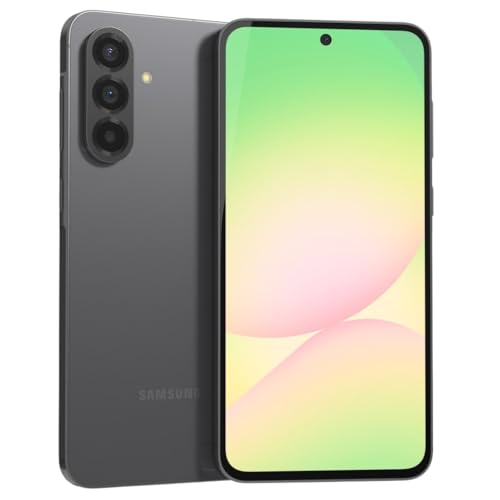
Learning how to choose a 5g phone is less about the 5G logo — nearly every new phone has one — and more about which 5G. Networks run on different bands with wildly different behavior: low-band 5G reaches far but runs at 4G-like speeds, mid-band delivers the big real-world gains, and millimeter-wave is blazing in the few places it exists. A phone that supports your carrier mid-band frequencies is a genuinely faster phone; one that does not is a 4G phone wearing a 5G badge.
This guide turns band charts into buying decisions. You will check your carrier bands first, then weigh the usual phone questions — updates, storage, battery, camera — through a 5G lens, because 5G changes two of them: it can drink battery faster on weak signal, and it makes your carrier choice part of the phone purchase itself.
Disclosure: As an Amazon Associate, kajuandouglas.com earns from qualifying purchases. Links to Amazon on this page are affiliate links; they cost you nothing extra. Listing details such as price and availability change often, so check the current Amazon listing before you buy.
Quick answer: match the phone bands to your carrier network — mid-band support (such as C-band or 2.5 GHz, depending on carrier) is the one that matters — buy from your carrier market official lineup or a fully compatible unlocked model, then apply normal priorities: long update policy, enough storage, and battery sized for 5G real life.
Gear for This Guide
Verified examples of the two buying profiles — broad-band unlocked flagships at two tiers — plus the charger neither box includes.

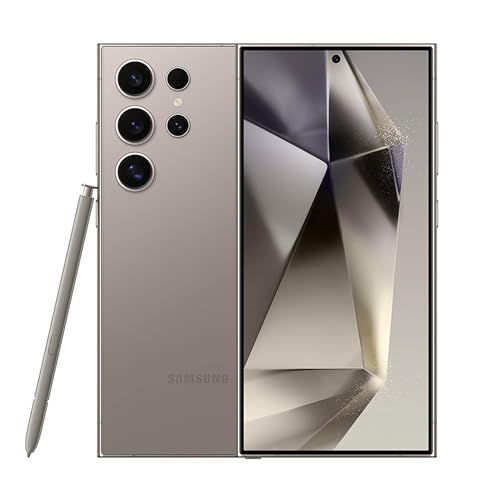
Samsung Galaxy S24 Ultra Cell Phone, 256GB AI Smartphone, Unlocked Android, 200MP, 100x Zoom Cameras, Fast Processor, Long Battery Life, Edge-to-Edge Display, S Pen, US Version, 2024, Titanium Gray — An unlocked US flagship with the broad band support this guide preaches — the buy-once profile for people who may switch carriers or travel. Check price on Amazon.

OnePlus 12R, 8GB RAM+128GB, Dual-SIM, US Factory Unlocked Android Smartphone, 5500 mAh Battery, 50MP Camera, 80W Fast Charging, 2024, Iron Gray — An unlocked value flagship with full US 5G support and very fast charging — the antidote to 5G battery anxiety, at a tier below the flagships. Check price on Amazon.
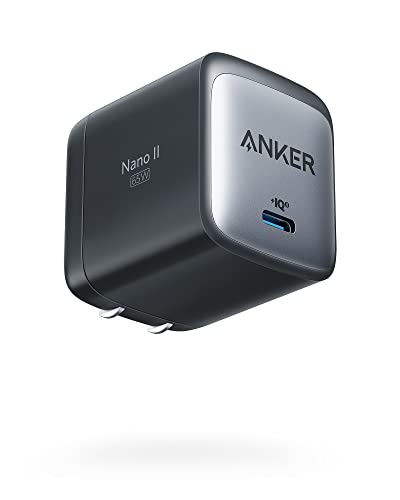
Anker Nano 65W GaN II PPS USB C Charger, Fast Compact Foldable Charger — 5G life includes faster top-ups; a proper GaN USB-C charger restores a 5G phone quickly and serves every other USB-C device you own. Check price on Amazon.
In this guide
What You Need
- Your carrier name and the plan you are on
- The places you actually use data: home, office, commute, travel routes
- Your current phone, to note where your signal is weak today
- A budget tier in words: entry, mid-range, or flagship
- Any brand preference, and whether you will buy unlocked or via the carrier
Your carrier publishes a coverage map and a list of compatible devices. Those two pages, plus this guide, are the whole research kit — band numbers look intimidating and are actually just a matching exercise.
How to Choose a 5G Phone: Step by Step
Step 1: Learn the three flavors of 5G in one minute
Low-band 5G uses frequencies similar to 4G: excellent range and building penetration, modest speeds. Mid-band is the sweet spot — several times faster than 4G in real use, with workable range — and it is where carriers have built most aggressively. Millimeter-wave is the headline-grabbing tier: extraordinary speeds over very short distances, found in dense downtown pockets, stadiums, and airports. For buying purposes: low-band is table stakes, mid-band is the prize, millimeter-wave is a bonus you should never pay a premium for unless you live inside its tiny footprint.
Step 2: Match bands to your specific carrier
Each US carrier built its mid-band on different frequencies — one leans on 2.5 GHz, the others on C-band around 3.7 GHz, with extra bands layered over time. A phone sold for your carrier market in the last few years supports its carrier bands; the danger zone is imported or grey-market models and very cheap phones that technically do 5G but skip your carrier mid-band. Check the exact model band list against your carrier published bands, or simply buy the carrier or manufacturer US-market version. Ten minutes of matching here decides your speeds for years.
Step 3: Decide unlocked versus carrier model
Carrier models guarantee band and feature compatibility — Wi-Fi calling, visual voicemail, and the carrier full 5G feature set — and come with promotions. Unlocked manufacturer models travel between carriers, receive updates without carrier staging, and carry no carrier bloatware, but you must verify band support yourself and a few carrier features occasionally need setup. For most people on a major carrier who keep phones for years, an unlocked flagship or mid-ranger from the manufacturer US store is the sweet spot; for anyone unsure about bands, the carrier model is the safe default.
Step 4: Apply the update-policy filter, 5G edition
Networks evolve: carriers refarm spectrum and add bands, and phone software updates keep modems and carrier settings current. A phone with a long update commitment — up to seven years on flagship lines, four to six on good mid-rangers — stays tuned to the network far longer. A cheap 5G phone with two years of patches is a poor match for a fast-moving network. This filter matters even more for 5G than it did for 4G, because the network underneath your phone is still being built.
Step 5: Size the battery for real 5G life
5G modems work harder than 4G ones, especially hunting signal at the edge of coverage, and a phone that spends its day on weak 5G can drain noticeably faster than the same phone on strong 4G. Look for reviews testing battery on 5G specifically, favor larger batteries and efficient processors, and check that the phone lets you control 5G behavior in settings — most do. Fast charging is the practical antidote: a phone that recovers quickly at a coffee stop forgives a hungry modem. Do not let this scare you off 5G; just buy battery with your eyes open.
Step 6: Then judge the phone as a phone
With bands matched and battery sized, the rest is the normal craft: storage one tier above your current use, a screen you can read outdoors, a camera judged on low-light and motion samples, and extras — water resistance, wireless charging, microSD — matched to your life. Our general Android choosing guide linked below goes deep on each. The 5G-specific work you did in the first steps is what makes this phone different from a 4G pick; everything after is about not wasting a good network match on a phone you dislike holding.
Common Mistakes
Buying an imported model for the discount
The classic 5G mistake: a cheaper international variant that connects — on low-band — while missing your carrier mid-band entirely. You get a 5G icon and 4G speeds for the life of the phone. Band lists are checkable in minutes; the discount is never worth a permanently slower phone.
Paying extra for millimeter-wave support
Millimeter-wave is spectacular inside a stadium and absent on your street. Some models charge for the capability or include it only in carrier variants. Unless your daily life happens inside its small footprint, it should be worth exactly nothing in your decision — mid-band support is where your money belongs.
Assuming every 5G phone works on every carrier
All three major carriers run 5G, on meaningfully different band mixes, and a phone built for one may give a lesser experience on another. Switching carriers later with an unlocked, broadly compatible flagship is easy; with a narrow-band budget model, it can mean a new phone. Buy breadth if you might move.
Ignoring your actual coverage
A great 5G phone on a carrier with weak coverage at your home and office is a worse purchase than a good 4G-era phone on the carrier that covers your life. Check the map, ask neighbors, and weight the places you spend your hours. The network is half the product; choose it like it matters.
Forgetting the plan itself
Some plans throttle, deprioritize, or exclude the fastest 5G tiers. A flagship on a restricted plan can underperform a mid-ranger on a full plan. When you buy the phone, review the plan in the same sitting — the two purchases are really one.
Pro Tips
Test with your own SIM during the return window: run speed tests at home, at work, and on your commute at your usual hours. The return window exists for exactly this, and real places beat coverage maps every time.
Look for your carrier mid-band by name in the phone specs — n41, n77, n78 and their kin are the numbers that matter; our bands explainer linked below translates them.
If you travel internationally, favor unlocked flagships: their band lists are the broadest, and eSIM support makes landing-day data painless.
Keep the box band list. If you switch carriers in two years, that spec sheet is how you will know in one minute whether your phone comes with you.
5G Readiness Beyond the Phone: Plans, Coverage and Your Real Map
A 5G phone is one third of a system whose other two thirds are the plan in your name and the network in your streets, and choosing the handset well means auditing both before the handset is allowed to be exciting. Start with the map that matters, which is not the carrier’s national advertisement but the small geography of your actual life: home, workplace or campus, the commute between them, and the handful of places you travel to repeatedly. Mid-band 5G — the variety that delivers the noticeable speed and capacity improvements — has been built unevenly, dense in cities and along major routes, thinner elsewhere, while low-band 5G reaches widely but performs much like good 4G. A phone chosen for a city life and a phone chosen for a rural life can therefore be different correct answers, and the honest question is never whether a model has 5G, but whether it has your 5G: the specific bands your carrier uses in the specific places you live, verified against the carrier’s own band information rather than against a shop’s assurance.
The plan audit is quicker and just as decisive. Confirm that your current plan actually includes 5G access at full priority, because older and cheaper tiers sometimes include the signal icon while managing speeds, hotspot allowances or video quality in ways that make a new phone feel oddly ordinary. Confirm, too, what happens in the places your life leaves the home network: roaming arrangements, travel passes and the phone’s ability to work on other carriers’ bands if you move, study abroad or switch providers for a better deal. A phone is a three-to-five-year commitment worn daily; the plan is a monthly decision. Buy the phone for flexibility across plans, and the plan for the life you are living this year — in that order, and the 5G system you assemble will still make sense when either half of it changes.
The Radio Details That Quietly Decide Quality
Beneath the band list sit qualities no advertisement headlines and every owner feels. Antenna design and modem efficiency decide how a phone holds a weak signal at the edge of coverage — in the basement office, the rural kitchen, the train cutting — and they vary between models in ways that specification sheets express poorly and long-term reviews express well. Carrier aggregation, the technique of combining several bands into one faster, more resilient connection, is where mid-range and flagship phones quietly part company in busy places: the flagship holds its speed in the stadium and the station because it can drink from several taps at once. Voice quality rides the same radios, through modern voice services whose reliability depends on the phone’s support for your carrier’s particular implementation. None of this can be comparison-shopped from a band chart. It is learned from reputable long-term testing, from owners on your own carrier in your own area, and from a returns window used honestly in your weakest-signal places during the first week — which is, not coincidentally, exactly where this guide recommends testing any new phone before the marriage is final.
Choosing for Longevity: Updates, Battery and the Three-Year Test
Judge every candidate against the phone you will own in its third year, because that is most of its life. Software support length is the first gate: a phone whose maker commits to many years of operating system and security updates stays safe, compatible and saleable, while one abandoned early becomes a liability however glorious its launch. Battery health is the second gate, since the battery is the component guaranteed to age; models with accessible battery-health information, sensible charging features that limit overnight wear, and a service route for replacement age with dignity. The third gate is the network itself, which is still maturing: a phone generous with bands and modern radio features is buying insurance against the network your carrier will operate in three years, not just the one it advertises today. Apply those three gates in order and the field narrows with unusual honesty, because they cannot be gamed by launch photography or first-week benchmarks. The best 5G phone, in the only sense that survives contact with ownership, is the one whose radios, battery and support are all still serving you in the year the marketing has forgotten.
Camera, Screen and the Phone Beneath the Radio
The main guide’s final step — judge the phone as a phone — deserves its full weight, because 5G is the feature buyers research most and use most invisibly, while the screen and camera are the features they will actually experience ten thousand times. A display you love, readable in your sunlight and kind at your bedtime brightness, will please you more across three years than any speed test ever run. A camera system matched to your real subjects — people indoors, documents, landscapes, concerts, children’s sport — repays its choice in every album you keep. Battery endurance across your longest day, a size your hand and pocket accept, storage sized for your photo and application habits with the same profile-and-margin method this series teaches for laptops: these unglamorous fundamentals are where ownership satisfaction is manufactured. Let 5G qualify the shortlist, by all means — bands, support, radio quality — and then let the phone itself win or lose the final, because you are not buying a modem with a screen attached. You are buying the object you will touch most in your daily life, and it should win on touch.
Buying Channels, Imports and the Warranty Reality
Where you buy a 5G phone matters more than in most categories, because the radio makes geography destiny. Carrier models arrive pre-provisioned for that network’s bands, features and voice services, at the cost of update timing influenced by the carrier and a device sometimes configured for one network’s convenience. Unlocked models from the maker offer freedom, cleaner software and easier switching, provided their band list genuinely covers your carrier — a verification, as this guide insists, performed against documents rather than assurances. Imported models are the trap with the friendly price: a phone built for another region may lack your carrier’s decisive mid-band entirely, may never be certified for its voice services, and may carry a warranty that evaporates at the border. The savings are real and the risk is total, which is a bad trade for the device your life runs on. Buy through channels with workable returns, run the weak-signal test in your own geography during the first week, and keep the paperwork with the same discipline this series recommends for laptops — because a phone’s warranty, like a laptop’s, is only as real as your ability to produce it on the worst day of its life.
Myths That Sell Phones, Retired One by One
Separate the purchase from its mythology before paying. The myth that more 5G band numbers on a list means better service for you: what matters is overlap with your carrier’s deployed bands, not the length of the catalogue. The myth that the fastest demonstrated speed predicts your experience: your experience will be written by coverage, capacity and signal quality in your places, at your hours. The myth that a flagship radio justifies a flagship price for every buyer: mid-range phones with the right bands and aggregation serve most lives indistinguishably, and the premium buys camera, screen and support more honestly than it buys connectivity. The myth that 4G is finished: it remains the resilient foundation under every 5G connection you will make this year, and a phone’s 4G quality still matters in the countryside of every network. Retire those four, and what remains is a clear, almost calm purchase: the right bands, an honest plan, a phone you love using, and support that lasts. Calm purchases, in this series’ long experience, are the ones still being praised in year three.
For Parents, Gift-Buyers and First-Phone Decisions
Buying a 5G phone for someone else — a teenager’s first serious phone, a parent’s long-overdue upgrade, a graduate’s launch gift — changes the weighting without changing the method. For a younger user, durability, repairability, parental and account controls, and a plan whose limits cannot generate a frightening bill matter more than radio heroics; the right bands on the family’s actual carrier still apply, because a phone that cannot use the home network properly fails before any other virtue is consulted. For an older relative, screen legibility, call quality, battery endurance and the patience of the setup you will personally perform are the true specifications, and the most loving choice is often the phone whose support horizon is longest, since it postpones the next disruptive migration furthest. For any gift, include the unglamorous completions: the case, the carrier confirmation, the transfer afternoon, the paperwork filed. A phone given completely — working on its network, carrying its owner’s accounts, protected and backed up — is a gift of connection. A phone given as a bare box is a project wearing a ribbon, and the method in this guide is how you tell the difference before the wrapping paper comes off.
The Decision, Compressed: A Checklist for the Shop
- Your carrier’s deployed 5G bands — especially its mid-band — confirmed from the carrier’s own information, and present on this exact model’s list.
- Your plan confirmed to include full 5G access, with hotspot and roaming terms you understand.
- Update commitment checked in years, for both the operating system and security patches, from the maker’s published policy.
- Battery endurance judged against your longest day, with charging speed and battery-health features noted.
- The phone beneath the radio — screen, camera, size, storage — tested in your hands and matched to your real subjects and habits.
- Channel and warranty verified for your region, returns window known, and a weak-signal test planned for your own geography in week one.
Run that list and the noise of the category — the band charts, the speed demonstrations, the launch superlatives — falls away, leaving a purchase that can be explained in one calm sentence: the right network, in the right places, in a phone you love, supported for years. Sentences like that are what this series exists to manufacture, one technology at a time.
5G at Home, at Work and in Between: Matching the Phone to a Life in Motion
Different lives tax a 5G phone in different currencies, and naming yours sharpens every earlier section. The commuter’s currency is resilience: signal held in stations, tunnels’ edges and crowded carriages, aggregation keeping a connection useful when a thousand phones compete, and battery surviving a day that includes hours of exactly that work. The home worker’s currency is different — Wi-Fi will carry most of the load, and the phone’s 5G matters as the backup that saves a working day when the broadband fails, which argues for hotspot capability and a plan that treats tethering generously rather than as an afterthought. The traveller’s currency is breadth: bands that overlap across regions and carriers, roaming that behaves, and an unlocked flexibility that lets a local plan rescue an expensive itinerary. The rural owner’s currency is reach: low-band support, antenna quality at the fringe, and a carrier whose map is honest about their valley rather than optimistic about their postcode. None of these lives needs the same phone, and all of them are failed by the same mistake — buying the demonstration instead of the geography. Name your currency before you shop, and the shortlist assembles itself around your life with a precision no advertisement can match.
Environmental and Value Thinking for a Device You Replace Most Often
Phones turn over faster than any other technology in this series, which makes their purchase the household’s most repeated environmental and financial decision. The disciplines that govern it well are by now familiar: buy the device that fits completely, so no companion purchase patches its gaps; choose the support horizon that lets it serve its full intended life; protect it physically, since screens are its commonest casualty; and when its front-line years end, hand it on in working order — to family, to a refurbisher, to a second life as someone’s first smartphone — after the verified wipe and account removal this series prescribes at every transition. A 5G phone chosen by the method in this guide is unusually well suited to that cascade, because its generous bands and long updates are exactly the qualities a second owner, perhaps on another carrier in another town, will need. Value, in the end, is not the discount at the till. It is the years of service per unit of money and material, summed across every owner the phone will ever have — and by that arithmetic, the careful purchase wins every time it is made.
Reading a Specification Sheet Like an Owner, Not a Fan
Close the research phase by learning to skim a phone listing for the lines that predict ownership, ignoring the lines that predict applause. Find the band list and check your carrier’s mid-band first — thirty seconds that outweigh the entire camera presentation for connectivity purposes. Find the update policy, in years, and treat its absence from the listing as information in itself. Find the battery’s capacity and, more usefully, its endurance in independent long-term testing, plus the charging behaviour that decides whether a short plug-in is a rescue or a gesture. Find the storage tiers and apply your profile honestly, remembering that photographs and applications grow across the phone’s life exactly as coursework grows across a laptop’s. Note the water resistance, the screen’s outdoor legibility and the repair ecosystem in your town. Everything else on the sheet — the launch colours, the benchmark theatre, the camera’s zoom arithmetic — can be enjoyed after those lines have voted. Owners read sheets in that order because owners know which lines they will still be living with in year three, and a buyer who adopts the owner’s eyes before purchase rarely needs the owner’s regrets afterwards.
When to Wait, When to Buy: The Release Calendar Without the Fever
Phone launches arrive on a metronome, and the calendar tempts buyers into two opposite errors: purchasing in launch week at full price for novelty a month will erase, or deferring indefinitely for a next model whose improvements shrink with each cycle. The sober middle treats the calendar as pricing information rather than as destiny. A model a few months into its life has been tested by owners on your carrier, its early software faults have been patched, and its price has begun its honest descent — often the sweetest spot in its whole commercial life. The previous generation, checked against the band and update gates in this guide, is frequently the value champion outright, since radios and support horizons change more slowly than cameras and colours. Buy when your current phone’s battery, support or damage makes the need real, choose the mature model over the newborn where the gates allow, and let the launch calendar keep its fever to itself. Connectivity, of all features, rewards the unhurried: networks mature monthly, and a phone bought calmly into a maturing network will feel newer for longer than a phone bought breathlessly into a young one.
A Worked Example: Three Buyers, Three Right Phones
Watch the method choose, three times, and notice how little the answers resemble each other. The city professional, living on a mid-band-rich network, commuting through capacity-hungry stations, chooses a mid-range phone whose band list and aggregation are exemplary, spends the flagship difference on storage and a longer support horizon, and never once feels the compromise the marketing predicted. The rural student, whose carrier’s honest map is mostly low-band with mid-band in the university town, chooses for antenna quality and battery, verifies the town’s bands are covered, and accepts that home performance will resemble excellent 4G — which, described honestly in advance, disappoints nobody. The travelling consultant buys unlocked breadth: bands overlapping across the regions on the itinerary, dual-line capability for local data, and a support policy that survives borders. Three buyers, three budgets, three different correct phones — and not one of them chosen by a speed demonstration. They were chosen by geography, plans and lives, which is to say by evidence, which is to say by the only method this series has ever recommended for anything.
Confidence to Close: Owning the Choice for Its Whole Life
End the purchase the way this series ends every purchase: by stopping. Once the bands are verified, the plan audited, the support horizon confirmed and the phone itself loved in the hand, further research purchases only anxiety, because the remaining differences between your finalists are smaller than the difference between a phone set up calmly in its first week — as the companion guide describes — and one configured in a rush at midnight. Buy, set up, audit in your own geography, and then retire from the category’s conversation until this phone’s own support horizon calls you back, years from now, with the method still in your pocket. That is the complete arc of choosing a 5G phone well: not the fastest handset, not the longest band list, but a verified fit between a network, a plan and a life — a fit that will still be true when the launch coverage is forgotten and the phone is simply, reliably, yours.
What Good Connectivity Feels Like When Nobody Is Measuring It
It is worth describing the destination, because speed tests cannot. Good 5G, in a life, feels like nothing in particular: the map that loads before the junction, the photograph that sends before the conversation moves on, the document that is simply there when the train leaves the tunnel, the call that holds its quality through the walk between buildings. It feels, in short, like the absence of a whole category of small friction — and that absence is purchased not by the fastest radio but by the most consistent one, in your places, on your carrier, inside a phone whose battery and support let the consistency run for years. Buy for that feeling and you will find, as this guide’s worked examples found, that the specification sheet rearranges itself into a new order of importance: coverage honesty first, radio resilience second, endurance third, and the headline numbers — the ones the advertisements shout — trailing politely behind, where experience says they belong.
The Network Is Still Growing: Buying Into a Moving Target Gracefully
A final perspective steadies the whole decision. The 5G networks your phone will use are not finished artefacts but building projects, improving quarter by quarter in coverage, capacity and sophistication — which means the phone you buy today will, in a real sense, become a better-connected device each year without being replaced, as the ground beneath it improves. That reverses the usual technology anxiety. The risk is not that the network will leave your phone behind quickly; the standards were designed for longevity, and a band-generous, well-supported handset rides the improvements for years. The real risk remains the local and the personal: the wrong bands for your carrier, the wrong plan for your usage, the wrong phone for your hands. All three are checkable today, with the method in this guide, at no cost but attention. Attend to them, and time itself becomes your phone’s ally — a rare and pleasant position in consumer technology, and a fitting last reason to buy calmly, completely, and only once.
Buy once, then, and let the network do the upgrading for a change. Your part — the bands, the plan, the phone in the hand, the support on paper — is finished the moment the checklist is ticked, and it stays finished for years. Few purchases in modern technology repay a single careful hour so completely or so quietly. Spend the hour, and then spend the years on everything the connection was bought to carry.
One Last Test Before the Money: The Weak-Signal Errand
If any doubt survives the checklist, settle it with shoe leather rather than with more reading. Take your finalist — borrowed, demonstrated, or bought inside a returns window you fully intend to respect — to the weakest place in your ordinary life: the basement car park, the far platform, the relative’s village, the office’s interior room. Make a call, load the map, send the photograph, and watch not the icon but the behaviour. A phone that works there will work anywhere your life actually goes, and a phone that falters there has told you the truth at the only moment it was free to learn. Sellers of good phones welcome this test because their products pass it in the places that matter. Let yours sit it, in your geography, before the marriage — and then, pass or fail, you will never again have to wonder whether you chose well. Wondering, in this series’ long experience, is the most expensive feature a phone can have, and it is the only one this guide guarantees to remove.
Remove it, then, and remove with it the last excuse for postponing the purchase your current phone’s battery has been requesting for months. The method is in your hands, the checklist is short, the network is ready in more of your places than it was last year — and on the evidence of everything in this guide, so are you.
A Note Addressed to the Reader Still on a 4G Phone That Works
You are this guide’s easiest reader to serve, because you need nothing urgently and can therefore choose perfectly. Your working 4G phone is not an embarrassment to be corrected; it is a negotiating position. Let it carry you until a candidate passes every gate in this article at a price that respects your patience — the right bands for your carrier’s maturing map, the support horizon in writing, the phone beneath the radio genuinely loved in the hand — and then move once, completely, with the setup guide beside you and your old device kept for its settling week. Readers who upgrade from strength, on evidence, at their own pace, are the ones whose new phones feel miraculous for the right reasons: not because the old one was failing, but because the new one was chosen. That is the note to end on, because it is the whole philosophy of this series compressed into a single purchase — buy when ready, buy on evidence, buy once — and a 5G phone bought that way will still be proving the philosophy right on the day its successor is chosen by exactly the same rules.
Chosen by those rules, the phone in your pocket stops being a topic — of bands, of speeds, of other people’s launches — and becomes what every guide in this series ultimately wants its subject to become: infrastructure for a life, noticed only in the moments it quietly saves. Buy it, set it up as its companion guide describes, and go and live the life it was bought to connect.
Live it, specifically, in the places this guide kept returning to — the platform edge, the weak-signal kitchen, the border, the deadline — and notice how rarely the phone enters the story as anything but the solution. That rarity is the return on your careful hour, paid daily, in the only currency connectivity has ever really used: your attention, left free for everything else.
Free attention is, in the end, what every article in this series has been selling under a different technology’s name. Spend yours on the life the phone connects — the people, the work, the places — and let the small, verified machine in your pocket do what it was chosen, so carefully, to do: connect it, quietly, for years.
Save the completed checklist with the phone’s paperwork, in the backed-up place this series recommends for every device’s documents, because it is the purchase’s memory: proof, for a future self courted by a louder launch, that this phone was not merely bought but derived — from a map, a plan and a life — and that derivations, unlike impulses, do not need to be re-litigated every September.
Derivations, unlike impulses, also appreciate with age — because every year the phone serves faithfully is another year of evidence that the method, and not luck, was what chose it.
Related Guides
- best 5g phones for t mobile
- best phones for 5g
- best 5g phones under 200
- best micro sd card for android phones
- best spy apps for android phones
- 5g bands explained
- how to fix 5g not working on a phone
- how to set up a 5g phone
Frequently Asked Questions
Do I need a new SIM or plan for 5G?
Usually your existing plan on a major carrier includes 5G access, though the fastest tiers and hotspot allowances vary by plan — check yours rather than assuming. A very old SIM can occasionally limit features; carriers replace them free, and eSIM activation avoids the question entirely. When you set the phone up, confirm the 5G icon appears in a known coverage area; our 5G setup guide walks through the settings that matter.
Is 5G noticeably faster than 4G in real life?
On mid-band, yes, unmistakably: downloads that took minutes take seconds, uploads for creators transform, and congested areas hold up better. On low-band, speeds resemble good 4G — the benefit there is capacity and future-proofing rather than drama. Millimeter-wave, where it exists, is faster than most home broadband. Your experience will be a blend, weighted by where you spend your day, which is why the coverage-first advice in this guide matters more than any benchmark.
Will 5G drain my battery?
It can, modestly, especially on weak signal where the modem works hard, and early 5G phones earned the reputation honestly. Current models are far more efficient, and settings let you prefer battery-friendly behavior. The practical approach: buy a phone with a healthy battery and fast charging, and do not obsess — most users notice a small difference on heavy days, not a crippling one. A phone hunting any weak signal, 4G included, drains fast; coverage quality is the real battery spec.
Should I wait for better 5G phones?
The networks and phones are both mature enough that waiting buys little: mid-band coverage is built out, current phones support the relevant bands, and update policies are long. The sensible moment to buy is when your current phone needs replacing. One caveat: if your carrier has announced a specific new band launching in your area imminently, confirming your shortlisted phone supports it is worth a five-minute check.
Can a 5G phone work on a 4G-only plan or area?
Yes — 5G phones are fully backward compatible and will use 4G wherever 5G is absent, which includes plenty of rural areas. You lose nothing by buying 5G capability early; the phone simply uses the best network available at each moment. That compatibility is also why a 5G purchase is safe even if your local coverage is still mostly 4G: the phone grows into the network as it builds.
What do the band numbers like n77 or n41 mean?
They are the standardized names of 5G frequency bands — n41 is the 2.5 GHz band central to one carrier mid-band build, n77 covers C-band frequencies used by others, and low-band and millimeter-wave have their own numbers. You do not need to memorize them; you need your carrier list and the phone list to overlap on the mid-band entries. Our 5G bands explainer, linked in the related guides, translates the whole chart into plain decisions.