Disclosure: As an Amazon Associate, kajuandouglas.com earns from qualifying purchases. Links to Amazon on this page are affiliate links; they cost you nothing extra. Listing details such as price and availability change often, so check the current Amazon listing before you buy.
The 2.1 vs 5.1 soundbar question looks like arithmetic but is really about what you watch and where you sit. The numbers describe channels: a 2.1 system has left, right and a subwoofer; a 5.1 adds a centre channel and two surround channels. On soundbars, those extra channels may be real speakers in the bar, virtual processing, or — in 5.1 systems with rear speakers — actual speakers behind you. The label alone does not tell you which, and that distinction decides whether the upgrade is real.
This comparison explains what each layout does with films, TV, sport and games, what the centre channel contributes to dialogue (arguably more than the surrounds contribute to effects), and how room and seating should arbitrate. It also covers the middle option many buyers miss — 3.1 — which captures the dialogue benefit of 5.1 without the surround complexity, and is for many households the correct answer hiding between the two headline numbers.
2.1 vs 5.1 soundbar: The Short Answer
Choose 2.1 for simple, tidy TV sound with strong bass in small rooms and for speech-and-sport viewing on a budget. Choose 5.1 for films and games in a main living room, especially with real rear speakers. If dialogue is your main complaint, a 3.1 bar captures the key benefit — the centre channel — without surround speakers to place.
In this guide
Side-by-Side Comparison
| Factor | 2.1 | 5.1 Soundbar |
|---|---|---|
| Channels | Left, right, subwoofer | Left, centre, right, two surrounds, subwoofer |
| Dialogue | Good; voices share the stereo channels | Better; dedicated centre channel anchors speech |
| Surround effects | Stereo width only (or light virtual processing) | Real envelopment if rear speakers included; otherwise simulated |
| Bass | Subwoofer included — strong | Subwoofer included — strong |
| Room fit | Any size; ideal for small rooms and flats | Suits main living rooms with space behind the seat |
| Setup | Bar plus sub; minutes | Bar plus sub, plus rears to place and power if included |
| Best content | Broadcast TV, sport, news, casual films, music | Films, prestige TV, gaming |
| Upgrade path | Usually a sealed system | Often part of an expandable ecosystem |
How to Decide, Step by Step
Step 1: Ask what the surrounds will be made of
A ‘5.1 soundbar’ may deliver its surround channels three ways: extra drivers in the bar angled to bounce sound off walls, processing that simulates surround from fewer drivers, or separate rear speakers. Only the third is true surround. The first can work in suitable rooms; the second is an effect, enjoyable but not placement. Before comparing prices, establish which kind of 5.1 you are looking at — the label is identical and the experiences are not.
Step 2: Weigh the centre channel separately
The centre channel is 5.1’s quiet hero: it anchors dialogue to the screen and lets you raise speech without raising everything. If your household’s complaint is dialogue — the most common complaint in all of TV audio — the centre channel alone justifies stepping beyond 2.1, and a 3.1 system delivers it without surrounds. Judge this feature on news, drama and sport commentary at low volume, where its value is unmistakable, rather than on an action demo.
Step 3: Check the room for rear speaker reality
Real rear speakers need positions beside or behind the seat and a power socket each. If your sofa backs onto a wall, rears can sit at its ends or on stands close behind; if the room offers nowhere, a 5.1 system’s advantage shrinks to its centre channel and processing. Be literal about this: pace the room, find the spots, check the sockets. A 5.1 system whose rears live in their box is a 3.1 system bought at a 5.1 price.
Step 4: Match the layout to the content calendar
Broadcast TV, news, sport and casual viewing use the centre and front channels and barely touch surrounds; films, big-budget series and games exploit the full layout. If films are a monthly event and sport is nightly, 2.1 or 3.1 serves your actual life. If film night is a household institution, 5.1 with rears earns its complexity every week. Let the calendar decide, and be suspicious of any demo that uses only helicopter scenes to sell you channels your Tuesdays will never use.
As you work through this guide, keep the bigger picture in mind. Our roundup of best soundbars for surround sound shows how the main options compare, and the companion piece on soundbar vs home theater system covers the neighbouring decision in the same detail.
Sound Quality Differences That Actually Matter
Bass is equal: both layouts include a subwoofer of similar intent, so the low end is not the differentiator people expect. The differences are dialogue (centre channel), envelopment (surrounds) and soundstage stability across a wide sofa, where the centre channel keeps speech centred for off-axis viewers who, in a 2.1 system, hear dialogue pulled toward the nearer side. For a single viewer in a small room, these differences compress; for a family across a wide sofa in a main room, they are the difference between good and right.
Processing quality can blur the categories: a well-made 2.1 bar with excellent drivers and a strong dialogue mode can outperform a cheap 5.1 bar on everything except literal rear effects. Channel count is a layout, not a quality grade. The sensible buying order is build and driver quality first, centre channel second, surrounds third — which is another way of saying a good 3.1 is the sweet spot of the entire soundbar market for most living rooms.
Who Each Option Suits
2.1 suits small rooms, flats, bedrooms, second TVs, sport-and-speech households, and anyone who wants the subwoofer’s film weight without speakers behind them. It is also the honest choice when the sofa sits against the wall and rears would be inches from ears, where surround becomes distraction. Simplicity is a genuine feature here: fewer parts, fewer things to pair, position and explain to guests.
5.1 suits film and gaming households in main living rooms with space behind the seating and an appetite for immersion. With real rears it is a true home-cinema layout in miniature, and in expandable ecosystems it can be reached in stages. If your room and calendar support it, the step from 2.1 to a genuine 5.1 is the largest single experiential jump in soundbar land — larger than any wattage or brand difference within a layout.
Ready to Buy? Start Here

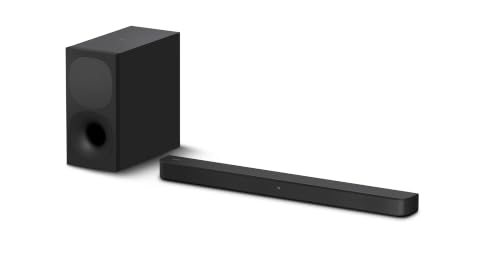
Sony HT-S400 2.1ch Soundbar
A 2.1-channel soundbar with a separate wireless subwoofer, Dolby Digital decoding and Bluetooth. The separate sub is the classic 2.1 advantage: deeper bass for films and games than a slim bar alone can manage. Check price on Amazon.

LG S40T 2.1ch Soundbar
A 2.1-channel soundbar with a wireless subwoofer and AI Sound Pro processing, designed to pair neatly with LG TVs, including control through the TV interface on compatible models. Check price on Amazon.

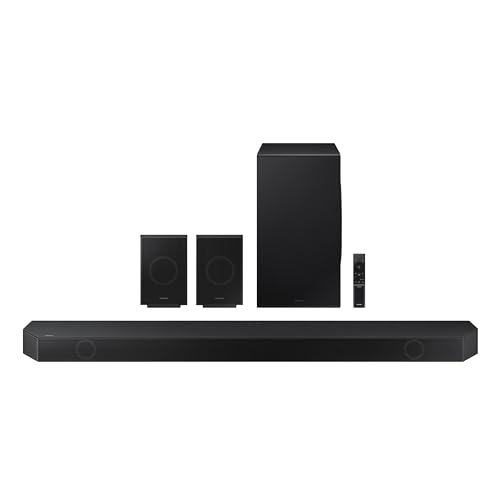
Samsung HW-Q600C 3.1.2ch Soundbar
A 3.1.2-channel soundbar with a centre channel for dialogue, up-firing drivers for Dolby Atmos, a wireless subwoofer and HDMI eARC. Samsung’s Q-Symphony lets it play together with compatible Samsung TV speakers. Check price on Amazon.

Samsung S60D 5.0ch Soundbar
An all-in-one 5.0-channel soundbar with wireless Dolby Atmos and no separate subwoofer, designed for tidy setups where extra boxes are not welcome. SpaceFit Sound Pro tunes it to the room on compatible setups. Check price on Amazon.
Common Mistakes
Assuming every 5.1 soundbar has rear speakers
Many simulate surround from the bar alone. The experience differs fundamentally from discrete rears — check what is physically in the box before paying for the number.
Ignoring 3.1 entirely
The centre channel is the upgrade dialogue sufferers actually need, and 3.1 delivers it without rear speakers to house. For speech-led households it is often the correct purchase.
Buying 5.1 for a sofa against the wall
Rears need breathing room behind or beside the seat. Crammed against ears, they distract rather than envelop, and the money would have served better in a stronger front system.
Comparing on channel count instead of quality
A quality 2.1 beats a flimsy 5.1 on dialogue, music and build. Layout multiplies quality; it does not substitute for it.
Pro Tips
- Dialogue problems? The centre channel is the fix — 3.1 or 5.1.
- Films weekly with room behind the sofa: 5.1 with real rears.
- Sport, news and small rooms: a good 2.1 is complete, not a compromise.
- Always ask what physically produces the surround channels.
Going Deeper: Context That Helps
Returns windows are part of the buying process for audio gear, and you should use them deliberately. Sound is personal and room-dependent, so a product that reviews well can still disappoint in your space. Buy from sellers with clear return policies, keep packaging until you are sure, and test with your own content at your own volumes in the first days — not the night before the window closes. A structured test, with the same three songs or scenes each time, reveals differences that casual listening misses and turns a vague feeling into a decision you can act on.
Hearing safety deserves a mention in any audio guide. Comfortable TV and music listening sits well below the levels that risk hearing damage, but portable speakers at parties, and headphones especially, can creep upward in noisy environments as you compete with background sound. If you have to shout to be heard over your own system, it is too loud for long sessions. Many devices offer volume limiting — worth enabling for children — and taking listening breaks during long sessions protects both your ears and your enjoyment, because tired ears judge sound poorly.
A soundbar’s biggest advantage is also its limitation: everything lives in one wide box under the TV. That makes setup simple and dialogue clear for most viewers, but the left and right channels are only as far apart as the bar is wide, so true stereo separation is narrower than two separate speakers can give. Virtual surround processing tries to widen the picture with psychoacoustic tricks, and on many films it works surprisingly well from a single seat. Understanding this trade-off helps you choose: if you mostly watch dialogue-heavy TV from one sofa, a bar is ideal; if you listen to music critically across a wide room, separate speakers still lead.
HDMI eARC is the connection that matters most on a modern soundbar. It carries full-quality audio from the TV — including Dolby Atmos from streaming apps and consoles — down a single cable, and it lets the TV remote control the bar’s volume. Optical connections are reliable but limited to older surround formats and cannot carry Atmos from most sources. When a soundbar misbehaves — no sound, wrong format, lip-sync drift — the cable and the TV’s audio output settings are responsible far more often than the bar itself, so always check the TV’s menu for eARC, passthrough and PCM settings before assuming the bar is faulty.
Dialogue clarity is the reason most people buy a soundbar, and it depends on the centre channel and on processing, not raw power. Film mixes bury speech under music and effects, and TV speakers point that sound at the wall or the floor. A bar with a dedicated centre channel, or a dialogue enhancement mode that lifts the vocal frequency range, fixes the nightly ‘what did they say?’ problem better than simply turning the volume up. If you watch late at night, look for a night mode that compresses loud effects while keeping speech level — your household will thank you more than for any surround effect.
A wireless subwoofer changes what a soundbar can do more than any other single feature. The bar handles voices and effects; the subwoofer, placed near a wall or corner, reproduces the low rumble of films and the body of music. Because low bass is hard to localise, the sub can live beside the sofa or next to the TV stand, wherever a power socket is convenient — it only needs power, since the audio link is wireless. If a bar sounds thin, first check that the subwoofer is paired, powered and not turned down in the settings before concluding the bar itself is weak.
Soundbar sizes should match the TV, mostly for looks and partly for sound. A bar much narrower than the TV looks lost and spreads sound over a smaller width; a bar wider than the TV stand risks overhang. Measure the stand, check the height of the bar against the bottom edge of the screen so it does not block the picture or the TV’s remote sensor, and leave a little clearance in front of up-firing Atmos drivers. Wall-mounting is an option on most bars, but a stand is simpler, kinder to cables and easier to reposition while you fine-tune the sound.
Room size decides how much soundbar you need. In a bedroom or small flat, a compact bar already plays far louder than you will use, and a huge flagship adds cost without benefit. In an open-plan living space with high ceilings, sound dissipates, Atmos height effects weaken because they rely on ceiling reflections, and a bar with a separate subwoofer — or the option to add rear speakers later — earns its keep. Be honest about the room you have rather than the room in the advertisement: most soundbar disappointment comes from buying for the wrong space, not from buying a bad product.
Soundbars and gaming have a specific requirement: low latency. Audio that arrives late feels as wrong in a game as late video, and some TV processing adds delay to both. Connecting a console through the TV with eARC passthrough, or into the bar itself where it has HDMI inputs, and enabling game mode on the TV keeps sound and action together. If voices in cut-scenes drift from lips, the fix is almost always a setting — the TV’s lip-sync or the bar’s audio delay adjustment — rather than a defect, and it is worth learning where that setting lives before you need it mid-game.
Firmware updates quietly fix many soundbar problems. Manufacturers patch HDMI handshake bugs, app issues and format support through updates delivered over Wi-Fi or USB, and a bar that has sat in a warehouse may ship with early software. When you set up a new bar, run its update before judging it; when an old bar develops a new quirk after a TV update, check for a bar update too, because the two devices negotiate constantly over HDMI. Keeping the maker’s app installed on your phone makes these updates painless and also unlocks EQ and level controls the remote may not offer.
A soundbar is not only for films. For music, most bars sound best in a stereo or music mode with virtual surround switched off, because surround processing smears the stereo image that music is mixed for. Bluetooth and Wi-Fi streaming make the bar the easiest speaker in the house to play music through, which is why many households end up using it daily for radio and playlists. If music matters to you, judge a bar with your own favourite tracks during the return window, at your normal volume, from your normal seat — film demos in a shop flatter almost everything.
Accessibility features deserve more attention than they get. Many bars offer dialogue modes with several levels of voice boost, some TVs can send audio to both a bar and hearing aids or headphones at once, and Bluetooth output on some models lets one listener use headphones while others use the bar. For households where one person struggles with TV sound, these features change daily life more than surround formats do. Check the manual’s accessibility section before buying if this matters to you — the information is rarely on the box but often present in the product.
Placement rules for soundbars are simple but strict. The bar belongs at ear height when seated, or as close as the TV stand allows, centred on the screen, with its front edge near the front of the stand so sound does not reflect off the stand’s surface. Never put a bar inside a closed cabinet: the doors and shelves block and colour the sound, and heat builds up. Up-firing Atmos bars additionally need a clear path to a flat ceiling — beams, ceiling fans and very high or vaulted ceilings all weaken the height effect, though the bar will still sound good as a normal surround bar.
Frequently Asked Questions
What do the numbers 2.1 and 5.1 actually mean?
They count audio channels. The first number is the main speakers: 2 is stereo left and right; 5 is left, centre, right and two surrounds. The ‘.1’ is the subwoofer channel, present in both. A third figure, as in 5.1.2, counts height channels for Dolby Atmos. On soundbars, always ask how the channels are produced — by separate speakers, by extra drivers in the bar bouncing sound off walls, or by processing — because the same number can describe very different physical systems.
Is 5.1 worth it for watching TV and sport?
Mostly for the centre channel rather than the surrounds. Broadcast TV, news and sport commentary gain clarity and stability from a dedicated centre, especially across a wide sofa. The surround channels contribute atmosphere — crowd noise in sport is genuinely pleasant in surround — but they are garnish for this content. If TV and sport are your diet, a 3.1 system captures the substance of the upgrade; full 5.1 earns its premium when films and games join the menu regularly.
Does 5.1 sound better for films than 2.1?
Yes, in a room that can accommodate it — films are mixed for surround, and a 5.1 system with real rear speakers reproduces effects moving around you, a stable centre image for dialogue and a wider, more convincing sound field. A 2.1 system plays the same film downmixed to stereo with a subwoofer: still a vast improvement over TV speakers, with strong bass and clear sound, but the envelopment is absent. The gap is experiential, not subtle, which is why film households gravitate to 5.1 despite the extra hardware.
What is a 3.1 soundbar, and should I consider it?
A 3.1 soundbar adds a centre channel to the 2.1 layout — left, centre, right and a subwoofer — without surround speakers. It deserves consideration because the centre channel is the component that fixes dialogue, the most common TV sound complaint, while avoiding rears to place and power. For speech-heavy viewing, wide sofas and rooms without rear positions, 3.1 is frequently the smartest purchase in the category. Film devotees with suitable rooms should still step to 5.1 for the full layout.
Can I upgrade a 2.1 soundbar to 5.1 later?
Only if the bar belongs to an expandable ecosystem that offers compatible rear speakers — some do, most do not. A sealed 2.1 system cannot gain channels; its electronics have no surround outputs and no way to add them. If there is any realistic chance you will want surround within the system’s life, buy into an expandable range at the start, even if you begin with the bar alone. This is the soundbar market’s most expensive assumption, so verify expandability in the specifications, not in a salesperson’s optimism.
Do I need rear speakers for 5.1 to be worthwhile?
For films, they are where most of the 5.1 advantage lives: without them, surround is simulated from the front, which widens the sound but cannot place effects behind you. The centre channel still justifies part of the upgrade on its own. Judge a bar-only 5.1 system as a strong front system with convincing processing, and a 5.1 system with rears as true surround. Both are legitimate products — but they should be priced and chosen as the different things they are.
What the Extra Channels Actually Do During a Film
It helps to follow a soundtrack through both systems. A car approaches from behind the camera, passes the hero and recedes ahead. A 5.1 layout with real rear speakers can place that journey in physical space: the sound genuinely begins behind you and travels. A 2.1 bar must suggest the journey within the width of the bar, using level, tone and processing cues. Good bars do this cleverly, and for many scenes the suggestion satisfies, but it is a sketch where the 5.1 system paints with the room itself. Neither is fraudulent; they are different amounts of information delivered to your ears.
Dialogue, and why 3.1 keeps entering the conversation
Dialogue in film mixes lives in the centre channel, and this is where the comparison quietly rearranges itself. A 2.1 bar shares voices between left and right drivers; a 5.1 bar and a 3.1 bar both give voices a dedicated centre driver. Many households whose real complaint is mumbling actors are not choosing between stereo and surround at all — they are choosing between shared and dedicated dialogue reproduction, and a 3.1 bar answers their actual problem for less money, less wiring and no rear placement puzzles. Surround should be bought for surround’s sake, not as an expensive route to clear speech.
Test this in person if you can: play the same quiet dialogue scene on a 2.1 and a 3.1 bar at the same modest volume, from one seat off-centre. The dedicated centre usually holds the voice steady and intelligible where the stereo bar lets it drift and thin. That single comparison has redirected more purchases than any channel-count argument, because it addresses the frustration that sent the buyer shopping in the first place.
Virtual Surround: The Third Option Wearing a Disguise
Many 2.1 and 3.1 bars offer virtual surround processing that attempts to widen and wrap the sound using psychoacoustic tricks. Judged fairly, the best of it is enjoyable: the soundstage broadens, effects feel less trapped in the box, and a sense of space appears in rooms where rear speakers will never be welcome. Judged honestly, it does not place a sound behind you with the physical certainty of a speaker behind you, and it can sound phasey or tiring on dialogue if applied indiscriminately, which is why a defeatable mode and a good plain presentation matter.
When virtual is genuinely enough
Virtual surround is enough when the room forbids rears, when most viewing is television rather than film, when listeners sit close and central, and when the alternative is not a 5.1 system but television speakers. It is not enough when the buyer dreams specifically of envelopment, watches many action and horror films — genres that compose with the rear channels — or sits in a large room where the trick’s geometry cannot reach. The technology is a legitimate answer to a constraint, and a disappointing answer to a dream; knowing which of those you have is the whole decision.
Room calibration and head-related processing keep improving, and some premium bars use reflected sound from side walls to create real, if room-dependent, width and wrap. Those systems blur the categories further, but they remain hostage to the room: symmetrical walls at sensible distances flatter them, while an open-plan side or a wall of glass starves one channel of its reflection. If you are tempted by such a bar, your room’s symmetry is a specification as real as any in the brochure.
Rooms and Seating: The Geometry Test
Before counting channels, draw the seating. A single central sofa with space behind it is 5.1’s ideal stage. A sofa against the rear wall compresses the rear channels into the listeners’ ears, where they distract rather than envelop, unless mounted high and run quietly. Corner seating, L-shaped arrangements and multi-purpose rooms where people watch from several places all dilute the benefit of precise rear placement, because the sweet spot that flatters the main seat short-changes the others, while a good 2.1 or 3.1 bar serves every seat more evenly.
Small, medium and large rooms
In a small room, a quality 2.1 or 3.1 bar often sounds more coherent than a budget 5.1 system whose rears are squeezed into corners and whose subwoofer overwhelms the space. In a medium room with a cooperative layout, 5.1 comes into its own and the upgrade over a bar alone is clearly audible in film after film. In a large or open-plan room, even 5.1 bars reach their limits, and the conversation should widen to premium systems with larger subwoofers or to component theatres, because channel count cannot compensate for a room that drinks sound.
Ceiling and wall construction whisper in the background of this test. Stud walls and hard surfaces reflect energy that helps reflected-surround designs and can make rear speakers lively; heavy soft furnishings absorb and calm everything, favouring direct sound from real speakers. There is no universal winner, only the match between a particular system and a particular room, which is why confident general advice on this topic should always be treated with polite suspicion.
Counting the True Cost and Effort of Each Layout
A 5.1 bar system asks for more than its purchase tier suggests: power sockets for wireless rears, stands or mounts to place them properly, time to position and level them, and a household agreement that speakers now live behind the sofa. A 2.1 bar asks for a shelf and an afternoon. Neither demand is unreasonable, but they belong in the comparison, because a 5.1 system bought without its placement budget — rears left in a cupboard, or perched on the floor behind the sofa — performs below the 2.1 bar it was meant to surpass, at greater cost and with greater resentment.
Running costs of complexity
More boxes mean more remotes unless control is well integrated, more wireless links to stay paired, more firmware to keep current and more small failures to diagnose: a rear that has unplugged itself, a subwoofer that has lost its pairing after a power cut. None of this is difficult, but it is not nothing, and households vary in their appetite for it. The simplest system that meets your real ambition is a principle that protects both enjoyment and weekends, whichever channel count that principle selects.
Conversely, do not let fear of modest complexity veto a genuine ambition. Setting up rear speakers is an afternoon’s work, level-matching them is guided by most systems’ apps or test tones, and the result, for a film household, pays that afternoon back for years. Complexity is a cost, not a catastrophe, and the honest comparison weighs it once, in proportion, alongside everything else.
A Decision Procedure You Can Finish Tonight
Answer four questions in writing. What do we watch most, by hours: dialogue television, sport, films, games or music? Where will rear speakers physically stand, named by furniture, not by hope? How many seats must the system serve well? And what is our appetite for setup and upkeep, honestly, on a tired Friday? Films dominant, rears placeable, one main seat and a willing installer point to 5.1. Television dominant, no honest rear placement, several seats and a low appetite point to 2.1 or, for dialogue devotees, 3.1.
The upgrade-path check
Finally, check whether the 2.1 or 3.1 bar you favour can grow: some platforms accept the same maker’s subwoofer or rears later, turning today’s simple purchase into tomorrow’s surround system without waste. If that path exists and appeals, the either-or framing dissolves, and you can buy for today’s room and budget with a clear conscience. If it does not exist, choose for today without apology; most households’ rooms and habits are stable enough that buying for a hypothetical future system is the surest way to own the wrong system in the present.
Listening Tests That Separate the Layouts Honestly
If you can hear both layouts before choosing, design the test to expose their true difference rather than their shared virtues. Use a film scene with genuine rear activity — rain, a crowd, a street behind the camera — and play it on each system at the same modest volume, from your real seat. Then play a dialogue scene and notice, honestly, whether the surround system also wins the category that matters most daily; it may, through its centre channel, or the simpler bar may match it. Finally play music, where the layouts converge and driver quality speaks, because a system that wins your film test but bores you with music may still be the wrong system for a music-heavy household.
Volume-matched, or the test lies
Match volumes before comparing, because the louder system wins almost any casual comparison regardless of merit; human hearing reads louder as better with embarrassing reliability. If you cannot measure, at least set both to the same comfortable dialogue level using the same scene before judging effects. Shops rarely do this, which is why shop impressions should be treated as auditions for a shortlist, not verdicts. The home trial, volume-matched, with your furniture and your films, remains the only court whose judgement you will live under.
Test from the second seat as well. Surround systems concentrate their magic in a sweet spot; simpler bars distribute their competence more evenly. A household that watches together should know what each layout offers the person on the end of the sofa, because that person’s nightly experience is part of the purchase, and a system that thrills one seat and short-changes another will generate a slow, specific dissatisfaction that no specification sheet predicts.
Content Diets, Revisited in Detail
Not all surround content uses its rear channels equally, and your diet’s composition decides what you are buying. Modern action, horror and science fiction compose with the rears as full partners; prestige drama uses them for atmosphere and place; older films and most broadcast television may send little more than ambience and occasional effects behind you; sport places the crowd there, which many viewers love and some find fatiguing over three hours. A buyer whose film diet is rich in the first categories buys real content with a 5.1 system; a buyer whose diet is the last three buys mostly potential, and should price it as potential.
Streaming quality and the rear channels
Streaming compression treats rear channels unkindly at times, prioritising the front presentation where most listeners’ attention lives. The practical consequence is that the gap between layouts narrows on some streamed content and widens on discs and high-quality streams, where the rear information arrives intact. Households that watch mostly streamed content should still hear a 5.1 advantage in envelopment, but a smaller one than disc households hear, and expectations set by a disc demonstration in a shop may not survive contact with a Tuesday-night stream. Ask, when demonstrating, what source is playing; it is part of the system you are hearing.
Games deserve a second mention because their rear usage is not ambience but information, mixed actively and constantly. A gaming household’s 5.1 system works on nearly every title, which changes the value arithmetic compared with film, where only some titles reward the layout. If games are a major share of the room’s hours, weight the rear channels as a working tool rather than an occasional pleasure, and the case for 5.1 strengthens beyond what the film argument alone would build.
The Ownership Experience, Year by Year
Year one of 5.1 ownership is delight and demonstration; year three is where the layouts’ characters settle. The 5.1 owner has speakers integrated into the room’s geography, a household trained to the system, and a standing appreciation that renews with every well-mixed film. The 2.1 owner has a system that asks nothing, survives redecoration unscathed, and moves rooms or houses without a plan. Neither year three is a failure state; they are different goods, and choosing between them is choosing which year three you prefer, which is a more useful question than which system wins a demonstration.
Failure modes and small print
Each layout fails characteristically. The 5.1 system fails by erosion: a rear unplugged during cleaning and never restored, a wireless link quietly lost, levels drifting after an update, until the system is secretly a 3.1 with furniture behind the sofa. Guard against it with an occasional surround check scene, the way you would check anything you rely on. The 2.1 system fails by ambition: the owner discovers film, the room changes, the household grows, and the bar that was perfect becomes the ceiling on a new enthusiasm. Guard against that, if the risk feels real, by choosing a bar whose platform can grow — the one specification in this whole comparison that insures against the future rather than merely serving the present.
The Resale and Hand-Me-Down Angle
Systems leave main rooms more often than they leave houses: a bar that served the lounge migrates to a bedroom, a study or a child’s room, or passes to a relative setting up a first home. Simple bars migrate beautifully — one unit, one cable, instant usefulness anywhere — while a surround system’s rears and subwoofer make it a more deliberate gift and a better fit for a single planned destination. If your household’s technology tends to cascade downwards through rooms and relatives, that cascade is a genuine point in the simpler layout’s favour, and if your main system tends to stay until it dies, the point evaporates. Either way it belongs in an honest comparison, because total service across a household, not just performance in one room, is what money actually buys.
Manufacturers’ ecosystems influence this too: a bar whose optional rears can later serve as standalone speakers elsewhere in the home, or whose subwoofer pairs with a successor bar, softens the all-or-nothing character of the platform. Such details rarely headline a product page, but for households that hate waste they can tip a close decision, and they reward the buyer who reads the small print about compatibility before the first purchase rather than after the second.
A Note on Channel Counts Beyond 5.1
The logic of this comparison extends upward: layouts with height channels and wider configurations promise more of what 5.1 promises over 2.1, and they obey the same laws. Each added channel must earn its place with content that uses it, a room that can house it and a listener positioned to receive it, and each obeys diminishing returns as the count climbs. A buyer who has understood why 5.1 sometimes beats 2.1 and sometimes loses to it owns the entire argument at every scale: channels are not virtues, they are tools, and a tool’s value is decided by the work it is given. Buy the layout your content, room and seating can keep employed, and let the numbers on the box return to their proper place — as descriptions of a system, not as its score.
What to Do If You Chose Wrong
Comfort for the worst case: a wrong choice here is among the most reversible in home technology. A 2.1 bar that leaves a film household hungry can be sold while it is current, moved to a bedroom where its virtues shine, or — if its platform allows — grown into the surround system it should have been. A 5.1 system that overwhelms a room can be simplified: rears retired to a cupboard, the bar and subwoofer carrying on as an excellent front stage, with the option of return if the room or the household changes. Neither error is a life sentence, and knowing that should lower the temperature of the decision to its proper level: a considered preference between two good answers, made with the room and the calendar as witnesses, and correctable if life disagrees.
Related Guides
These guides and roundups cover the closest decisions and fixes in this category:
- best soundbars for tv under 300
- best soundbars for bass
- best soundbars for home theater
- best soundbars for gaming
- how to choose a soundbar
- what is dolby atmos on a soundbar
Is 5.1 noticeably better for video games?
For cinematic, story-driven games played from a sofa, yes: rear channels carry genuine positional information, and hearing an environment wrap around you adds materially to immersion. For competitive play, many players prefer headphones for precision and communication, and the bar’s channel count matters far less. Judge by the kind of gaming your household actually does rather than by the most dramatic case.
What does the .1 mean, and does every system need it?
The .1 is the low-frequency effects channel, handled by a subwoofer. Almost every film soundtrack assumes one, and a subwoofer also relieves the bar of bass duties so it can handle dialogue and effects more cleanly. A small bedroom system can live without one, but for a main living-room setup the subwoofer is close to essential in either layout.
Can rear speakers be added to any 2.1 soundbar later?
No. Only bars designed for it, within the maker’s own wireless ecosystem, accept additional speakers, and the compatible models are specific. If growing the system later is part of your plan, confirm the exact upgrade path before buying the base bar, because a bar without that design will remain a finished, standalone product however good it sounds.