Disclosure: As an Amazon Associate, kajuandouglas.com earns from qualifying purchases. Links to Amazon on this page are affiliate links; they cost you nothing extra. Listing details such as price and availability change often, so check the current Amazon listing before you buy.
Learning how to choose a soundbar starts with admitting what problem you are solving. For most buyers it is not ‘surround sound’ in the abstract — it is that the TV’s speakers point backwards, dialogue disappears under music, and the volume lives at maximum. A soundbar fixes that with one box and one cable, but the range runs from simple stereo bars to full Atmos systems with subwoofers and rear speakers, and choosing well means matching the bar to your TV, your room and your ambitions in the right order.
This guide walks through the decisions: size and fit, channels and what the numbers mean, connections (where eARC matters), subwoofers and expansion, and the features that are genuinely useful versus decorative. By the end you will have a checklist that reduces a wall of similar-looking bars to two or three honest candidates for your room.
How to choose a soundbar: The Short Answer
Match the bar’s width and height to your TV and stand, choose channels by content (2.0/2.1 for simple TV, 3.x for dialogue, 5.x and Atmos for film fans), insist on HDMI ARC/eARC for one-remote control, and decide now whether a subwoofer or rear speakers are in your future — expansion must be bought at the start.
In this guide
What You Need
- Your TV’s size, and the width and height available under its screen
- Whether your TV has HDMI ARC or eARC (check the port labels)
- Room size and where you sit relative to the TV
- Your content mix: broadcast TV, films, sport, games, music
- Whether you may add a subwoofer or rear speakers later
Step by Step
Step 1: Measure the space under your TV
A soundbar must fit physically before it can impress sonically. Measure the width of your TV stand, and the gap between the stand and the bottom of the screen: a bar that blocks the screen’s lower edge or the TV’s remote sensor creates daily irritation that no sound quality redeems. Bars roughly matching the TV’s width look right and spread sound appropriately. If the TV is wall-mounted, decide whether the bar will wall-mount too — most can — and check that a bracket or mounting points are included or available.
Step 2: Decode the channel numbers
The numbers describe speakers: 2.0 is a stereo bar, 2.1 adds a subwoofer, 3.1 adds a centre channel for dialogue plus a sub, 5.1 adds surround (real or virtual), and figures like 5.1.2 add height channels for Dolby Atmos. Each step serves a content type: broadcast and casual viewing thrive on 2.1; dialogue-heavy households should insist on a centre channel (3.x); film fans in suitable rooms gain from 5.x and Atmos. Buy the channels your content uses, not the largest number on the shelf.
Step 3: Insist on the right connection
HDMI ARC or eARC is the connection to have: one cable carries the TV’s sound to the bar, and the TV remote controls the bar’s volume. eARC additionally supports the highest-quality formats through the TV, which matters for Atmos from consoles and players. Optical is a fine fallback for older TVs but surrenders remote control and format range. Bluetooth is for music from phones, not for permanent TV duty, where delay can spoil lip-sync. Check your TV’s ports before falling for any particular bar.
Step 4: Decide the subwoofer question
A subwoofer is the single biggest upgrade to a soundbar’s film performance, supplying the low effects a slim bar cannot. Many bars include a wireless subwoofer; some offer one as an add-on; some all-in-one bars forgo it for tidiness and rely on their own modest bass. Small rooms and flats may prefer the tidy route (and neighbours will agree), while film fans in houses should treat the sub as near-essential. If a sub is in your future, confirm the bar accepts one before buying.
Step 5: Decide whether you will expand later
Rear speakers turn a soundbar into genuine surround, and some systems grow step by step: bar, sub, rears. But expansion only works within the same brand’s ecosystem, and many bars cannot expand at all. If there is any real chance you will want rears within a few years, buy into an expandable system now; if simplicity is the whole point, a sealed all-in-one bar is honestly the better purchase. The expensive mistake is the middle path: a non-expandable bar and a growing ambition.
Step 6: Value the everyday features
The features you will bless nightly are unglamorous: a clear dialogue or voice mode, a night mode that tames loud effects, an honest remote or app, and automatic power and input switching with the TV. Streaming features (Wi-Fi music, voice assistants, multi-room) matter if the bar will be your music system too. Auto room calibration on some models genuinely helps in awkward rooms. Rank these by your household’s habits rather than by the length of the feature list, because you will use three of them daily and the rest never.
As you work through this guide, keep the bigger picture in mind. Our roundup of best soundbars for tv under 300 shows how the main options compare, and the companion piece on how to set up a soundbar covers the neighbouring decision in the same detail.
How to Choose a Soundbar for Films, Sport or Music
Film-led buyers should prioritise format support (Dolby Atmos if the room and ceiling suit it), a subwoofer, and the expansion path to rear speakers, because soundtracks reward all three. Sport and broadcast viewers should prioritise dialogue clarity and a good centre channel or voice mode, since commentary over crowd noise is the same mixing challenge as dialogue over a score. A wide, stable sound at modest volume matters more here than effects fireworks.
Music-led buyers should listen for stereo behaviour: many bars offer a music mode that disables surround processing, and that is how they should be judged, with your own tracks. If the bar will be the household’s main music speaker, Wi-Fi streaming and multi-room compatibility may matter more than an extra surround channel. Gamers should add low latency to the list and prefer connecting consoles via the TV’s eARC passthrough or the bar’s own HDMI input, checking that game mode and format support survive the route.
Budget Tiers in Plain Language
Entry-tier bars solve the core problem — clear, forward-facing TV sound with simple setup — and for many households that is the whole requirement, permanently met. Mid-tier adds the centre channel done properly, a wireless subwoofer, eARC and Atmos on many models, and is where film fans find their sweet spot. Premium tiers buy flagship Atmos performance, powerful included subwoofers and rear speakers, better materials and room calibration — worth it in main living rooms and dedicated film spaces, wasted on a bedroom TV.
Spend in proportion to the TV and the room. A flagship bar under a small TV in a small room is engineering without an audience, while a basic bar under a large TV in a big family room will always feel like the weak link. Also budget honestly for the whole installation: a wall bracket, a longer HDMI cable if the run demands it, and possibly the subwoofer or rears you decided are part of the plan. The bar is the headline; the system is the purchase.
Gear for This Guide

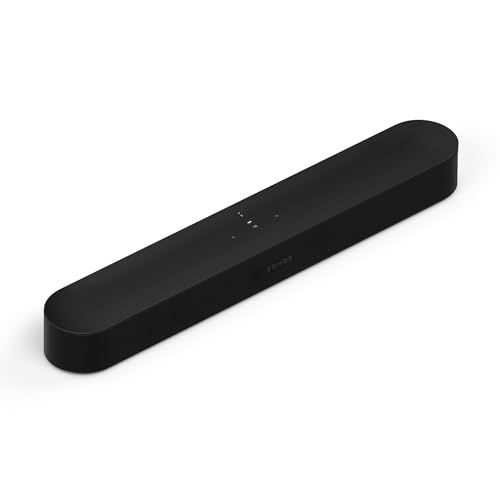
Sonos Beam (Gen 2) Soundbar
A compact Atmos-capable soundbar for smaller TVs and rooms, with Wi-Fi, voice control and the option to add Sonos surrounds and a sub later. Its size suits desks, bedrooms and apartments where a wide bar will not fit. Check price on Amazon.

Bose TV Speaker Soundbar
A compact, deliberately simple soundbar with HDMI ARC, optical and Bluetooth, plus a dialogue mode for clearer speech. It is aimed at people who want better TV sound without apps, Wi-Fi setup or a separate subwoofer. Check price on Amazon.

Sony HT-S400 2.1ch Soundbar
A 2.1-channel soundbar with a separate wireless subwoofer, Dolby Digital decoding and Bluetooth. The separate sub is the classic 2.1 advantage: deeper bass for films and games than a slim bar alone can manage. Check price on Amazon.
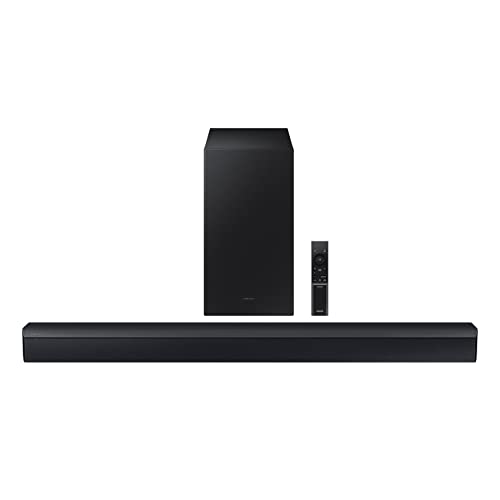
Samsung HW-C450 2.1ch Soundbar
A 2.1-channel soundbar with a wireless subwoofer, DTS Virtual:X surround processing, Bass Boost and Bluetooth. It is a straightforward example of the entry 2.1 layout most first-time soundbar buyers start with. Check price on Amazon.
Common Mistakes
Buying a bar wider or taller than the space allows
Measure the stand width and the screen’s lower clearance first. A bar that blocks the picture or the remote sensor will irritate you every single day.
Paying for Atmos in a room that cannot use it
Up-firing Atmos needs a flat, reasonably low ceiling to reflect from. Vaulted or very high ceilings waste the feature; the bar still works, but you paid for the part that cannot.
Assuming any bar can add rear speakers later
Most cannot. Expansion is brand-specific and model-specific, and it is decided at this purchase, not at the next one.
Choosing by channel count alone
A well-made 3.1 bar beats a flimsy 5.1.2 on dialogue, build and everyday sound. Channels describe layout, not quality.
Pro Tips
- HDMI eARC plus a centre channel is the sweet spot for most TV households.
- If in doubt between two bars, choose the one whose remote and app you prefer — you will use them daily.
- Check the bar’s height against your TV’s sensor before anything else.
- Expandable systems cost less bought as a plan than assembled by regret.
Going Deeper: Context That Helps
Placement rules for soundbars are simple but strict. The bar belongs at ear height when seated, or as close as the TV stand allows, centred on the screen, with its front edge near the front of the stand so sound does not reflect off the stand’s surface. Never put a bar inside a closed cabinet: the doors and shelves block and colour the sound, and heat builds up. Up-firing Atmos bars additionally need a clear path to a flat ceiling — beams, ceiling fans and very high or vaulted ceilings all weaken the height effect, though the bar will still sound good as a normal surround bar.
When a soundbar system grows, it grows in a predictable order. First the bar, then — if bass feels light — a subwoofer; then, if surround effects feel front-bound, rear speakers; the rears add more immersion per step than any processing upgrade. Systems that allow these additions let you spread the cost and learn what your room actually needs. The alternative, a complete package with sub and rears in one box, costs less overall and guarantees the parts match. Neither route is wrong; the mistake is buying a sealed all-in-one bar while expecting to add rears to it later, because most cannot.
Whatever the product, the cheapest upgrade is usually time spent with the manual and the settings menu. Manufacturers bury genuinely useful options — EQ presets, dialogue modes, level trims, firmware updates — several layers deep, and most owners never find them. An hour spent exploring settings with familiar content playing will teach you more about your system than a week of reading reviews, and it costs nothing. Keep notes of what you changed so you can undo anything that makes things worse, and change one thing at a time so you know which adjustment caused which result.
Returns windows are part of the buying process for audio gear, and you should use them deliberately. Sound is personal and room-dependent, so a product that reviews well can still disappoint in your space. Buy from sellers with clear return policies, keep packaging until you are sure, and test with your own content at your own volumes in the first days — not the night before the window closes. A structured test, with the same three songs or scenes each time, reveals differences that casual listening misses and turns a vague feeling into a decision you can act on.
Hearing safety deserves a mention in any audio guide. Comfortable TV and music listening sits well below the levels that risk hearing damage, but portable speakers at parties, and headphones especially, can creep upward in noisy environments as you compete with background sound. If you have to shout to be heard over your own system, it is too loud for long sessions. Many devices offer volume limiting — worth enabling for children — and taking listening breaks during long sessions protects both your ears and your enjoyment, because tired ears judge sound poorly.
A soundbar’s biggest advantage is also its limitation: everything lives in one wide box under the TV. That makes setup simple and dialogue clear for most viewers, but the left and right channels are only as far apart as the bar is wide, so true stereo separation is narrower than two separate speakers can give. Virtual surround processing tries to widen the picture with psychoacoustic tricks, and on many films it works surprisingly well from a single seat. Understanding this trade-off helps you choose: if you mostly watch dialogue-heavy TV from one sofa, a bar is ideal; if you listen to music critically across a wide room, separate speakers still lead.
HDMI eARC is the connection that matters most on a modern soundbar. It carries full-quality audio from the TV — including Dolby Atmos from streaming apps and consoles — down a single cable, and it lets the TV remote control the bar’s volume. Optical connections are reliable but limited to older surround formats and cannot carry Atmos from most sources. When a soundbar misbehaves — no sound, wrong format, lip-sync drift — the cable and the TV’s audio output settings are responsible far more often than the bar itself, so always check the TV’s menu for eARC, passthrough and PCM settings before assuming the bar is faulty.
Dialogue clarity is the reason most people buy a soundbar, and it depends on the centre channel and on processing, not raw power. Film mixes bury speech under music and effects, and TV speakers point that sound at the wall or the floor. A bar with a dedicated centre channel, or a dialogue enhancement mode that lifts the vocal frequency range, fixes the nightly ‘what did they say?’ problem better than simply turning the volume up. If you watch late at night, look for a night mode that compresses loud effects while keeping speech level — your household will thank you more than for any surround effect.
A wireless subwoofer changes what a soundbar can do more than any other single feature. The bar handles voices and effects; the subwoofer, placed near a wall or corner, reproduces the low rumble of films and the body of music. Because low bass is hard to localise, the sub can live beside the sofa or next to the TV stand, wherever a power socket is convenient — it only needs power, since the audio link is wireless. If a bar sounds thin, first check that the subwoofer is paired, powered and not turned down in the settings before concluding the bar itself is weak.
Soundbar sizes should match the TV, mostly for looks and partly for sound. A bar much narrower than the TV looks lost and spreads sound over a smaller width; a bar wider than the TV stand risks overhang. Measure the stand, check the height of the bar against the bottom edge of the screen so it does not block the picture or the TV’s remote sensor, and leave a little clearance in front of up-firing Atmos drivers. Wall-mounting is an option on most bars, but a stand is simpler, kinder to cables and easier to reposition while you fine-tune the sound.
Room size decides how much soundbar you need. In a bedroom or small flat, a compact bar already plays far louder than you will use, and a huge flagship adds cost without benefit. In an open-plan living space with high ceilings, sound dissipates, Atmos height effects weaken because they rely on ceiling reflections, and a bar with a separate subwoofer — or the option to add rear speakers later — earns its keep. Be honest about the room you have rather than the room in the advertisement: most soundbar disappointment comes from buying for the wrong space, not from buying a bad product.
Frequently Asked Questions
What size soundbar do I need for my TV?
Match the bar roughly to the TV’s width for looks and sound spread, and — more importantly — check its height against the gap under your screen so it blocks neither picture nor remote sensor. A bar a little narrower than the TV is fine; a bar wider than the stand is a problem. For very large TVs in big rooms, wider bars with more channels suit the scale; for small TVs, compact bars are designed exactly for them and sound better balanced than an oversized model squeezed in.
Do I need Dolby Atmos on a soundbar?
Only if your content and room support it. Atmos adds height effects from streaming films and games, delivered on soundbars by up-firing drivers that bounce sound off the ceiling — which requires a flat, standard-height ceiling and a seat in the reflection zone. In the right room it is a genuine thrill; in the wrong room you are paying for drivers that cannot do their trick. Dialogue, bass and basic surround matter more to most viewers, and a strong non-Atmos bar beats a weak Atmos one.
Is a soundbar with a subwoofer better?
For films and games, yes, clearly: the subwoofer supplies low effects and scale that a slim bar physically cannot, and it frees the bar to concentrate on dialogue and detail. For speech-led viewing in small rooms and flats, an all-in-one bar may be all you need, and kinder to neighbours. Many systems let you add the subwoofer later — confirm that before buying if you are undecided, because ‘later’ only exists within the same brand’s range.
What is the difference between ARC and eARC?
Both carry TV sound to the bar over one HDMI cable and let the TV remote control volume. eARC has far more bandwidth, so it can pass the highest-quality audio — including uncompressed formats and full Atmos — from devices connected to the TV, such as consoles and Blu-ray players. For broadcast TV and streaming apps, ARC is sufficient. For a film-and-gaming setup with an Atmos bar, eARC on both TV and bar is the combination to aim for.
Can a soundbar replace a home theatre system?
It can replace one for most households’ purposes: dialogue, respectable surround effect and tidy installation, with far less cost and clutter. A component system with separate speakers still wins on true surround placement, maximum volume and upgradeability, and dedicated film rooms justify it. The expandable soundbar systems — bar, subwoofer and real rear speakers — close much of the gap. Choose by your room and commitment, not by ideology: the best system is the one your household actually uses every night.
Should I buy the same brand as my TV?
It brings small conveniences — some TVs can control their own brand’s bar more deeply, share sound with the TV speakers, or match styling — but it is not a requirement, because HDMI ARC/eARC is a standard that works across brands. Buy the bar that fits your space, content and expansion plans; treat same-brand integration bonuses as a tiebreaker between otherwise equal candidates, not as the deciding factor.
Matching a Bar to the Way Your Room Actually Behaves
Specifications assume a tidy rectangle with a sofa centred on the screen, and very few living rooms cooperate. Before comparing models, walk the room and note where sound will be helped or hindered. Hard floors, bare walls and large windows reflect dialogue frequencies, which can make a bright, forward bar sound tiring even though the same bar sounded calm in a carpeted showroom. Heavy curtains, bookcases and upholstered furniture absorb those reflections, so a room that feels acoustically soft can flatter a leaner bar and reward a little extra treble clarity rather than more raw output.
Open-plan spaces and divided attention
In an open-plan kitchen and living area, the listening zone is rarely a single sofa. People follow a match from a stool, cook through a drama, or listen to news from the next zone entirely. A bar with a wide, even dispersion and a strong centre channel serves that pattern better than a narrow, focused design that only sounds balanced in one seat. If most viewing happens off to one side, test any candidate from your worst seat, not your best one, because a bar that collapses into left-heavy mush at an angle will annoy you every single day.
Open spaces also swallow bass. A subwoofer that feels generous in a small lounge may sound thin when it has to energise a combined room, a hallway and a stairwell at once. That is an argument for placement flexibility and a sub with genuine low extension, not for turning the bass control up until dialogue is buried. Place the sub near a wall or corner for reinforcement, keep it out of a cabinet, and judge it on whether footsteps, doors and engines have weight without a constant background rumble during quiet conversation scenes.
Small rooms, near neighbours and late-night listening
A compact room changes the priorities completely. You sit closer, so you need far less output, and reflections arrive sooner, which can blur speech. A shorter bar with good dialogue modes, a night setting that compresses loud effects, and restrained bass often beats a large system played permanently at a whisper. If walls are thin, consider how the subwoofer couples to the floor: a down-firing sub on a hard floor in an upstairs flat will travel, and no specification sheet warns you about the neighbour downstairs.
Look for granular volume steps at the low end. Some bars jump from too quiet to too loud in the first few presses, which is miserable for late-night viewing. A model whose maker has paid attention to low-level control, dialogue enhancement that does not sound artificial, and a display that dims or switches off will suit a bedroom or small flat far better than headline channel counts suggest.
Reading the Specification Sheet Without Being Led by It
Once the room is understood, the specification sheet becomes useful rather than decorative, provided you read it in the right order. Start with dimensions and weight, then connections, then supported formats, then driver layout, and only then look at power figures. A bar that does not fit, cannot accept your sources, or cannot decode the format your streaming service sends is wrong no matter how impressive the remaining numbers look on the box.
Formats, codecs and what your sources really send
List what you actually watch: broadcast television, two or three streaming apps, perhaps a disc player and a games console. Each sends audio differently, and the bar only needs to handle your list well. A household that streams everything through the television apps needs reliable ARC or eARC behaviour and solid decoding of the common streaming formats. A disc collector needs the bar, or the television passing through it, to cope with the lossless formats on discs without downmixing them into something flat.
Check downmixing behaviour too. When a surround soundtrack reaches a simple stereo bar, the bar must fold centre dialogue and effects into two channels sensibly. Good downmixing keeps voices anchored and audible; poor downmixing pushes them under music and effects. Reviews that test with real film scenes rather than test tones are the best evidence here, and a quick in-store test with a dialogue-heavy clip you know well tells you more than a demo reel designed to flatter the product.
Driver layout and why centre means clarity
A dedicated centre channel is the single layout feature most closely tied to clear speech, because film and television mixes place almost all dialogue there. In a two-channel bar, voices are shared between left and right drivers and can drift or thin out when you sit off-centre. In a three-channel or wider layout, the centre driver holds voices in place. If dialogue is your main complaint about television speakers, prioritise that layout over extra surround channels you may rarely benefit from.
Also note driver size and enclosure. Very slim bars trade cabinet volume for elegance, and physics collects its payment in midrange warmth and bass reach. That trade can be worth making in a small room or with a subwoofer doing the heavy lifting, but expect a wafer-thin bar on its own to sound wafer-thin with music. A slightly deeper cabinet is rarely an aesthetic disaster and often the cheapest sound quality you can buy.
A Sensible Audition You Can Do in a Shop or at Home
Most people choose by listening to whatever demo the retailer plays, which is chosen to sell, not to inform. Bring your own test material instead: three short scenes you know intimately. Choose one quiet dialogue scene with a soft-spoken actor, one busy action sequence with effects layered over speech, and one piece of music you have heard hundreds of times. Played on every candidate, those three clips expose dialogue clarity, control at volume, and musical honesty within minutes.
What to listen for, clip by clip
With the dialogue scene, sit in your normal position and set a comfortable volume, then ask whether you could follow every line without leaning forward or reaching for subtitles. Note whether sibilant sounds hiss, whether male voices sound chesty and bloated, and whether the voice stays put when you move one seat sideways. With the action scene, listen for whether effects stay separate from speech or collapse into a loud, undifferentiated wash, and whether the subwoofer starts and stops cleanly rather than booming on after the moment has passed.
With music, honesty matters most. A familiar voice should sound like that person, a piano should not sound like a toy, and bass lines should have pitch, not just thump. Switch any virtual surround or enhancement modes off for this test, then on again: the honest bar sounds good plain and merely different with processing, while a weak bar often depends on processing to sound impressive for the first thirty seconds and fatiguing by the tenth minute.
Testing the everyday, not just the impressive
Sound quality decides the audition, but usability decides the next five years. In the shop or during a home trial, test how the bar wakes when the television turns on, how quickly it switches inputs, whether the remote feels logical in the dark, and whether the app is needed for basic changes or merely offered for deeper ones. A bar that requires an app to adjust bass will frustrate anyone else in the household who just wants to watch the news.
Check standby behaviour and announcements too. Some bars speak their input changes aloud, some flash bright displays, and some remember the last volume, which may be a film-level roar greeting the morning news. These small behaviours are trivial in a specification list and decisive in daily life, and they are exactly what a structured audition, rather than a demo reel, reveals before money changes hands.
Planning for the Next Five Years, Not Just Delivery Day
A soundbar is usually bought alongside a television, but it will probably outlive the next television change or be moved to another room entirely. Thinking one step ahead protects the purchase. If you expect to replace the television soon, make sure the bar uses current connection standards so the new set does not strand it. If a bedroom television may inherit the bar later, its size, night modes and simplicity matter more than its ability to fill today’s larger lounge.
Expandability, honestly assessed
Some ecosystems let you add a subwoofer or rear speakers later, and some bars are finished products that will never grow. Neither is wrong, but they suit different buyers. Choose the expandable route only if you genuinely expect to add parts, because you pay for the wireless platform whether or not you use it. If you know a single neat bar is the final answer for a rented flat or a minimalist room, a self-contained model with no upgrade path often puts more of its cost into the drivers you hear every day.
Brand ecosystems deserve the same clear eye. Staying within one maker’s wireless family can make adding speakers painless, but it also ties future purchases to that family. If you already own speakers or a streamer from one ecosystem, that is a real convenience worth weighing. If you own nothing yet, do not let a hypothetical future multi-room empire dictate today’s bar; buy the sound you need now and let the empire, if it ever arrives, adapt.
Total cost and the unglamorous extras
Finally, price the whole installation in your head, in tiers rather than figures. A wall bracket, a longer HDMI lead of the right standard, an optical cable as backup, or a stand deep enough for the bar can all be necessary extras. None is expensive alone, but together they can push a stretching purchase into the next tier, where a different bar might have been the better buy. Counting them early keeps the comparison honest.
Keep the packaging until the trial period is nearly over, note the firmware version you end on, and save a photograph of your final settings. If the bar ever resets, is replaced under warranty, or moves rooms, that photograph restores in two minutes the tuning that took an evening to find. It is the least glamorous advice in this guide and, over years of ownership, among the most useful.
Dialogue, Music and Sport: Three Different Bars Hiding in One Product
Manufacturers market one bar for everything, but the three main uses pull the design in different directions, and knowing your dominant use sharpens every other decision. Dialogue-led viewing rewards centre clarity, controlled bass and a natural vocal tone. Music rewards stereo separation, honest midrange and bass with pitch and texture. Sport rewards scale and atmosphere without letting crowd noise swallow commentary, which is a balance problem as much as a power problem. A bar can be good at all three, but it will rarely be equally gifted, so rank your uses honestly before you rank models.
If films are the main event
Film soundtracks use the full dynamic range: whispers a breath above silence, then effects that test the subwoofer and the room. A film-first buyer should value headroom, a subwoofer that stays composed, and surround or height capability that matches the room. They should also value a remote and app that make mode changes effortless in the dark, because film viewing is where modes get changed most. Comfort during a two-hour film matters too; a slightly warm, unforced presentation that never fatigues beats a spectacular first ten minutes that leaves ears ringing at the credits.
Test film performance at the volume you will actually use, not at showroom volume. Many bars are tuned to impress loudly, with effects pushed forward, and sound thin or harsh when played at family levels in the evening. The bar that keeps dialogue intelligible and effects proportionate at modest volume is the one a film household will love in month six, long after the memory of a loud demonstration has faded.
If music shares the stage equally
Music exposes stereo imaging, and a single bar is physically limited: its drivers are close together, so the image will never spread like separate speakers. Good music bars compensate with careful driver angling and processing that widens without smearing, and they offer a music mode that stops trying to anchor everything to the screen. If you listen critically, accept this ceiling and choose the bar whose plain stereo tone you enjoy; if music is background for cooking and conversation, almost any competent bar suffices and television virtues should lead the decision.
Streaming features matter more to the music-led buyer: reliable Wi-Fi streaming, easy grouping with other rooms if that appeals, and an app you do not dread opening. Also consider inputs for the sources you own, such as a turntable through an appropriate preamp into an auxiliary input where offered, because a bar that cannot accept your favourite source will be bypassed, and a bypassed bar helps nobody.
Second-Hand, Refurbished and Last Year’s Model: The Smart Money Route
Soundbars improve incrementally, which makes the previous generation unusually good value when retailers clear stock or when refurbished units appear from the manufacturer. The sound of a well-kept flagship from a season or two ago will usually outclass a brand-new entry-level bar, and the features you sacrifice are often the newest streaming extras rather than anything that affects television sound. The checks are simple: confirm the remote, subwoofer and any rear speakers are all included, since missing wireless partners are expensive or impossible to replace separately.
What to verify before buying used
Test every input, not just the one the seller demonstrates, and play something bass-heavy at a fair volume to listen for rattles, buzzes or a subwoofer that has been overdriven. Check the grille and cabinet for damage that suggests a drop, and ask whether the bar has lived in a smoky or very humid room, both of which age electronics and fabrics. Confirm the model can still receive firmware updates and that its app is still supported, because an abandoned app can strand features you were counting on.
Factor the warranty position honestly into the tier you are willing to pay. A manufacturer-refurbished unit with a proper warranty is a different proposition from a private sale with none, and the saving should reflect that difference. Either way, keep your structured audition: three familiar clips, from your real seat, at your real volume. A bargain that fails the dialogue test is not a bargain, it is a cheaper route to the same frustration you were trying to escape.
A Final Shortlist Exercise That Prevents Regret
When two or three candidates remain and specifications no longer separate them, run one last exercise: write down, for each, the single thing that would annoy you most if it turned out to be true in daily life. For one it might be an app you dislike, for another a subwoofer too large for the only sensible corner, for a third a display that cannot be dimmed in a bedroom. This sounds negative, but it works because delight fades quickly while annoyances repeat daily. The bar whose worst trait you can shrug at is usually the right purchase, even if a rival wins one more feature on paper.
Then check the practicalities that paper comparisons ignore: delivery and returns terms in case your room disagrees with your choice, the length of the included cables against your furniture layout, and whether the remote is a pleasant object or a flimsy afterthought you will handle a thousand times. Choose, set a date after which you stop reading comparison reviews, and enjoy the films. Endless comparison after purchase is the one buying mistake no specification can protect you from, and the bar in your room, properly set up, will outperform the theoretically perfect bar that stayed in a shopping basket.
Related Guides
These guides and roundups cover the closest decisions and fixes in this category:
- best soundbars for samsung tv
- best soundbars for music
- best soundbars for bass
- best soundbars for large rooms
- how to position a soundbar
- 2.1 vs 5.1 soundbar
If I mostly watch news and sport, what should I prioritise?
Prioritise dialogue clarity and a strong centre image over surround effects. News, panel shows and commentary-driven sport live almost entirely in the vocal range, so a bar with a dedicated centre channel, a speech enhancement mode that sounds natural, and restrained bass will serve you better than a wider system bought for cinematic effects you rarely use.
Does the bar need Wi-Fi, or is Bluetooth enough?
Bluetooth is enough for occasional music from a phone, but Wi-Fi streaming is steadier, keeps the phone free for calls, and usually sounds better because the bar fetches the stream itself rather than receiving a compressed phone feed. If music matters daily, Wi-Fi is worth having; if the bar is purely for television, it is optional.
Should I match the bar width to the television width?
Roughly, yes, mainly for looks and for a soundstage that matches the picture. A bar close to the width of the screen anchors effects to the action convincingly. Much narrower is fine in small rooms, but much wider than the stand or screen looks awkward and can push drivers beyond the screen edges, which sounds odd with on-screen dialogue.