Disclosure: As an Amazon Associate, kajuandouglas.com earns from qualifying purchases. Links to Amazon on this page are affiliate links; they cost you nothing extra. Listing details such as price and availability change often, so check the current Amazon listing before you buy.
The smartwatch vs fitness tracker decision used to be simple — big clever watch or simple activity band — but the two categories have spent years borrowing each other’s features, until a good tracker now shows notifications and a good smartwatch tracks sleep as diligently as any band. What still separates them is philosophy: how much screen, how much software, how much battery, and how much of your attention the device asks for in exchange for its data.
This comparison works through those differences honestly — features, battery, size, price tiers and the wellness-tracking both do well — and maps each format to the people it quietly suits, so you can buy the one that matches your actual habits.
Quick verdict: Choose a smartwatch if you want apps, rich notifications with replies, payments, music and a proper screen — and you accept charging every day or two. Choose a fitness tracker if activity, sleep and heart-rate trends are the point, you want a week or more between charges, and you prefer something small, light and inexpensive enough to wear and forget.
Gear for This Guide
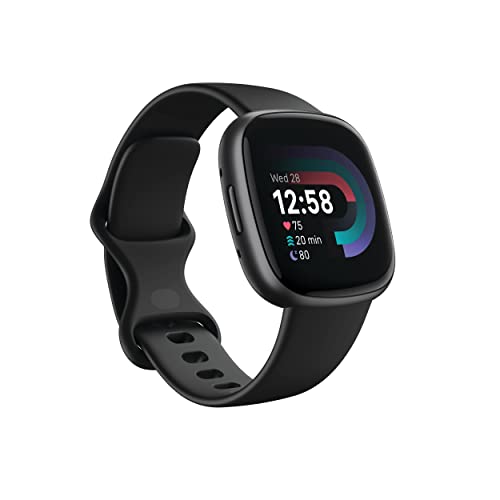
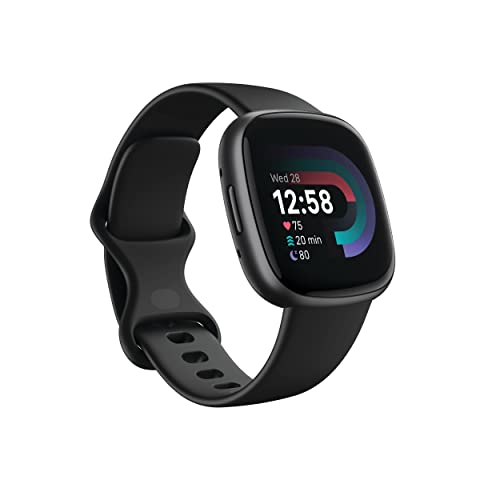
Google Fitbit Versa 4 Fitness Smartwatch — Sits deliberately on the border: a Fitbit with a smartwatch-sized screen and app touches, showing how blurred the line has become. Check price on Amazon.

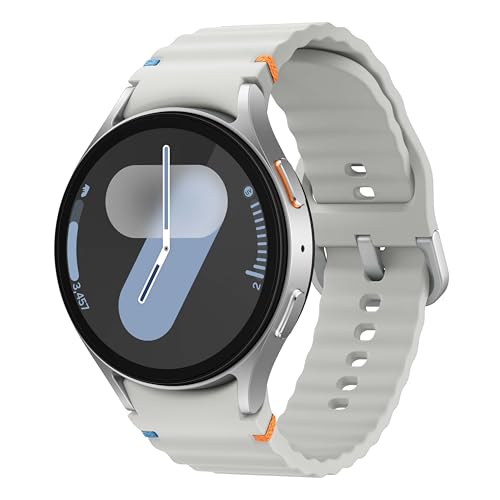
Apple Watch SE (2nd Gen) GPS 40mm — The smartwatch side in its most accessible form — full apps and integration in a compact case. Check price on Amazon.

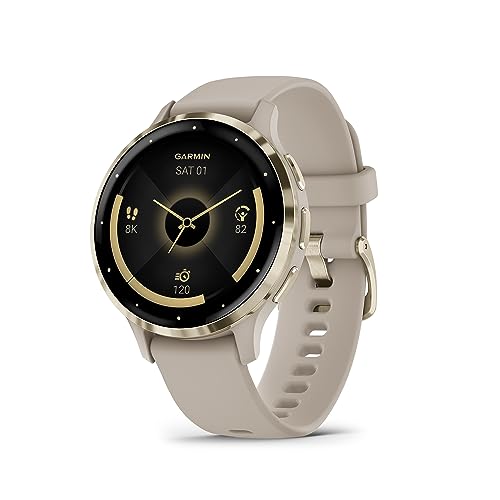
Garmin Venu Sq 2 GPS Smartwatch — A smartwatch that borrows the tracker’s virtues: long battery life and serious activity tracking. Check price on Amazon.
In this guide
Smartwatch vs Fitness Tracker: Side-by-Side Comparison
| Criterion | Smartwatch | Fitness tracker |
|---|---|---|
| Screen and interaction | Large, bright touchscreen; apps and replies | Small screen or none; glanceable basics |
| Battery life | Typically one to two days | Typically five days to several weeks |
| Notifications | Full — read, reply, act | Basic — read, rarely reply |
| Apps and extras | App store, payments, music, voice assistant | Few or none; focused feature set |
| Activity and sleep tracking | Comprehensive on modern models | Comprehensive — it is the core purpose |
| Size and weight | Watch-sized; noticeable on the wrist | Slim band; easy to forget you are wearing it |
| Phone freedom | LTE models can work phone-free | Almost always phone-dependent |
| Price position | Mid to premium tiers | Entry to mid tiers |
The pattern is consistent: a smartwatch is a small computer that also tracks you, while a tracker is a sensor that occasionally shows you things. Neither description is a criticism. The sections below explore where that difference actually bites in daily life.
Features: Platform vs Appliance
A smartwatch runs apps, stores music, pays at tills, answers messages with a keyboard or voice, and can host a voice assistant. It is a platform, with a platform’s delights and a platform’s maintenance — updates, settings, notification management. A fitness tracker is closer to an appliance: it counts steps, tracks workouts and sleep, shows your heart rate and the time, buzzes for calls and messages, and otherwise stays out of the way. Many owners discover they wanted the appliance all along; the smartwatch’s extra powers go unused after the first month, while its charging cable does not.
The middle ground is now crowded: tracker brands sell watch-shaped models with real screens, and smartwatch brands sell simplified models. When comparing a specific pair, ignore the label and compare the table above row by row — the device that behaves like a tracker will live like one, whatever it is called. Models like border models like the Fitbit Versa line in our fitness roundup deliberately straddle the line, which suits buyers who want a screen without the full platform commitment.
Battery: the Difference You Feel Every Week
This is the tracker’s decisive advantage. A device you charge weekly — or forget to charge for a fortnight — integrates into life in a way a daily-charge device cannot: it is simply always on your wrist, including through the nights that produce the sleep data many buyers wanted in the first place. Smartwatch owners solve the same problem with a routine (charging while showering, typically), and many find it painless — but it is a routine, and it must survive travel, illness and lazy Sundays.
Battery also shapes tracking completeness. A tracker with two weeks of life produces unbroken data; a smartwatch produces excellent data with daily gaps unless its owner is disciplined. If the trends are the product you are buying, continuity is a feature in itself. Our explainer on smartwatch battery life explained details what drains watch batteries and how to read manufacturers’ claims.
Tracking Quality: Closer Than the Marketing War Suggests
For steps, workouts, heart rate trends and sleep, modern devices in both categories do a comparable job for everyday wellness purposes. Smartwatches add GPS as standard more often (trackers vary — some include it, some borrow the phone’s), richer workout screens and, on some models, extra sensors. Trackers counter with comfort: a slim band is easier to sleep in than a chunky watch, and sleep data only exists if you wear the thing. Both categories present their numbers as wellness information — patterns and trends to notice, not medical measurements — and both are best used that way.
Serious athletes are the exception to ‘comparable’: neither a fashion smartwatch nor a basic tracker replaces a dedicated sport watch for training load, advanced metrics and multi-hour GPS battery. That is a third category, represented in lists like sport-focused watches in our sport roundup, and worth knowing about before a marathon plan exposes your device’s limits.
Size, Style and Social Fit
A tracker is discreet: it sits beside a conventional watch, under a shirt cuff, or alone without announcing itself. A smartwatch is a visible piece of technology with a glowing screen — which is either the appeal or the problem, depending on your wardrobe and workplace. Some smartwatch wearers also enjoy the watch-face customisation as a style feature in itself. There is no wrong answer, but there is a real one: the device you are happy to wear every day is the only one whose data you will ever see.
Who Each Option Suits
Choose a fitness tracker if your goals are activity, sleep and gentle accountability; if you hate charging things; if your budget is modest; or if you want tracking without another screen competing for your attention. Choose a smartwatch if notifications, replies, payments, apps and music genuinely feature in your day, if you want phone-free options via LTE, or if you simply enjoy the device as a watch. Choose a border model if you want a real screen and week-ish battery and can accept fewer apps.
A common and sensible pattern is the tracker as a first device: inexpensive, low-maintenance, and a honest test of whether you use wearable data at all. If after six months you are checking trends daily and wishing for replies and payments, upgrade with knowledge. If the tracker ends up in a drawer, it has saved you a smartwatch’s price to learn the same lesson. Either way, how to choose a smartwatch will help you choose within the winning format, and what a smartwatch can do explains the full range of what the smarter end of the category can do.
The Data Question: What Happens to Your History?
Whichever format you choose, your activity history lives in a platform — Apple Health, Google Fit, Fitbit, Garmin Connect, Samsung Health and their kin. Before committing, consider whether the device feeds the platform where your history already lives, because switching devices within a platform preserves your trends while switching platforms can strand them. Trackers from the major ecosystems export reasonably well; the friction is real but survivable. The deeper point is that the device is replaceable and the data is the asset: years of sleep and activity trends are worth more than any single gadget, so choose devices that treat your history as yours.
A Two-Week Test Before You Decide
If you are genuinely torn, borrow the decision from your future self: wear any basic tracker — even an inexpensive one — for two weeks and observe what you actually do. Do you check your sleep every morning, or never? Do you wish you could reply to messages from your wrist, or are you relieved the band cannot? Do you charge it happily, or resent even the weekly cable? Two weeks of behaviour answers the format question more reliably than any comparison table, including this article’s, because the difference between these devices is not capability — it is the texture of daily life with a screen that wants things from you versus a band that quietly keeps score.
Notifications: the Feature That Decides More Than Fitness
Strip the marketing away and the sharpest practical difference between these formats is not tracking at all — it is interruption. A smartwatch is a second screen for your digital life, with all the convenience and all the gravity that implies; a tracker is a filter that shows you a caller’s name and little else. People who feel hunted by their phones often find the tracker’s restraint is its finest feature, while people whose work lives in messages find the smartwatch’s replies indispensable. Be honest about which person you are, because this single preference predicts satisfaction with either format more reliably than any sensor comparison — and remember that a smartwatch’s notifications can be pruned to tracker-like discipline in setup, while a tracker can never grow replies. Flexibility argues one way; enforced simplicity argues the other.
Durability, Loss and the Economics of Wearing
Trackers are cheap enough to lose, scratch and replace without grief, and tough enough that most owners never test the question. Smartwatches are jewellery-priced glass worn on the most knocked-about part of the body, and their owners learn about screen protectors, insurance and careful sleeves. For manual workers, climbers, parents of toddlers and the generally accident-prone, the tracker’s replaceable economics are a feature as real as any sensor. Conversely, a smartwatch’s very preciousness makes some owners wear it more deliberately and enjoy it more. Count your own knock-rate honestly; wrists live very different lives.
The Hybrid Household Solution
Many households end the debate by owning both formats across different wrists and occasions: a smartwatch for the working week, a tracker for the gym bag, the festival, the building site and the holiday where charging is scarce. Because trackers are inexpensive and platforms often let both devices feed the same health account, the combination is more practical than it sounds. If this article has left you genuinely split, that may be because your life is genuinely split — and the correct purchase is the one that admits it.
Frequently Asked Questions
Do fitness trackers track as accurately as smartwatches?
For everyday wellness purposes — steps, workouts, heart rate trends and sleep patterns — modern trackers and smartwatches are comparable, and both are best read as trend information rather than exact measurements. Differences appear at the extremes: GPS quality, advanced sport metrics and sensor extras, where dedicated sport watches lead both categories.
How much longer does a tracker’s battery last?
Typically several times longer. Where most smartwatches need charging every one to two days, trackers commonly run five days to several weeks per charge depending on features and screen. That gap is the single biggest lifestyle difference between the formats.
Can a fitness tracker show my phone notifications?
Yes, most show incoming calls, texts and app alerts in basic form — enough to know whether to reach for your phone. What they generally lack is the ability to reply, install apps or act on notifications, which is where smartwatches pull ahead.
Which is better for sleep tracking?
Whichever you will actually wear all night. Trackers are slimmer and lighter, with battery that never forces a charging night off, so many people find them easier for sleep. Smartwatches track sleep just as capably if their size does not bother you and your charging routine leaves them on your wrist overnight.
Is a smartwatch worth it if I only want fitness features?
Usually not — you would be paying for apps, screens and radios you do not use, and accepting daily charging as the price. A tracker (or a sport-focused watch) serves fitness-only buyers better. The exception is if you also want GPS, music without your phone, or payments during workouts, which push back toward watch territory.
Can I wear a tracker and a regular watch?
Yes — many people do, wearing the tracker on the opposite wrist or treating the slim band as a bracelet beside a traditional watch. It is one of the tracker’s quiet advantages. A smartwatch, by contrast, replaces your regular watch rather than accompanying it.
The Middle Ground: Hybrid Devices and Tracker-Styled Smartwatches
The versus framing of this guide implies a clean border, but the market’s most interesting territory is the border itself, where devices borrow from both camps and where many buyers’ true answer quietly lives. Naming the middle ground prevents the classic error of buying a flagship smartwatch for a tracker’s job, or demanding smartwatch behaviour from a device designed as an appliance.
At one edge sit smartwatches in tracker clothing: compact, light, long-lived devices that run a real platform with apps and rich notifications, but wear the size and battery manners of a band. At the other edge sit premium trackers with colour screens, onboard music, payment support and phone-free GPS, which behave like smartwatches in everything except app ecosystems and reply depth. Between them, hybrid watches hide their intelligence behind traditional watch faces, offering activity tracking and discreet alerts with almost no screen at all, for owners who want data without a glowing wrist.
The way to navigate the middle is to stop asking which category a device belongs to and start asking the questions this guide has built: How many days between charges? How deep do notifications and replies go? Does it carry its own GPS and music? How does it look with the clothes you actually wear? A device that answers those four to your satisfaction is your answer, whatever its box calls it, and the versus dissolves into a spectrum along which you simply choose a point.
Accuracy, Revisited: What the Numbers on Each Side Can and Cannot Promise
Because both camps market tracking heavily, a sober section on accuracy belongs in any honest comparison — framed, as this site frames wellness throughout, around everyday usefulness rather than medical reliance.
Step counting on both sides is good enough for trend and motivation, which is its honest purpose; no wrist device counts a day perfectly, and none needs to, because the value lies in comparing your Tuesdays across months. Optical heart-rate sensing on both sides performs well at rest and during steady exercise, and works harder — on every device ever made — during activities with violent wrist movement or loose fit; fit and position explain more variance than brand does. GPS on devices that carry it is comparably mature across the camps, with smartwatches sometimes offering more advanced multi-band reception on premium models, a refinement distance athletes may value and walkers will never notice. Sleep staging on both sides is an informed estimate, useful for patterns — consistency, duration, the effect of late caffeine — and not a clinical instrument on any wrist at any price.
The conclusion protects buyers in both directions: do not buy a smartwatch expecting categorically superior tracking, because the tracker’s simpler sensors are often the same technology in a smaller house; and do not dismiss trackers as toys, because for the metrics most people actually use, they stand level with devices several times their price. Tracking is the shared foundation. Everything this comparison is really about — platform, notifications, battery, style — is built on top of it.
Cost of Ownership Across Three Years
The purchase prices differ famously, but three-year ownership tells a fuller story, and it narrows the gap in some places while widening it in others. Count honestly on both sides: the device, a second strap or band, a charger replacement at some point, a protection plan or a screen incident for the smartwatch’s larger glass, and the subscription temptations each ecosystem dangles — fitness services, premium app tiers — which are optional on both sides and should be counted only if you will genuinely pay them.
The tracker usually wins the arithmetic comfortably, and wins it again on replacement economics: when a tracker is lost, drowned or outgrown, its replacement is a minor household event, while a flagship smartwatch’s loss concentrates the mind and the budget. The smartwatch’s counter-argument is consolidation: it may replace a separate watch, a payment card’s daily use, a phone’s presence on runs and a pocketful of glances, and owners who genuinely use its breadth are buying several devices’ worth of service in one object. The arithmetic therefore depends, as everything in this guide does, on honest usage: breadth used is value, breadth admired is expense.
There is also the upgrade cadence to price in. Trackers are cheap enough to refresh casually as sensors improve, and their makers iterate quickly; smartwatches invite longer keeping, and reward it with software support that stretches their useful life. A buyer who loves new technology yearly may paradoxically spend less in the tracker camp, while a buyer who keeps devices for many years may find the smartwatch’s longevity the thriftier path. Know which buyer you are before the arithmetic begins, because the same three years price out differently for each.
The Social and Professional Dimension: What Each Device Says
Wearables are visible, and the two camps send different signals in the rooms of your life — a consideration too real to pretend away, provided it is weighed after function rather than before it.
A smartwatch reads as connected and contemporary; in many workplaces it is now unremarkable, and in some it is expected equipment for people whose responsiveness is their reputation. Its screen, however, can also read as distraction: the glance at the wrist during a conversation is the modern equivalent of checking a watch for the time, and everyone at the table knows the difference. A fitness tracker reads as health-conscious and unobtrusive, disappears under a cuff, and pairs peaceably with a traditional watch on the other wrist — an arrangement many professionals quietly adopt to keep both their data and their dress watch, at the cost of wearing two devices like a person with two of everything.
Occasions arbitrate. Weddings, formal dinners, certain client settings: the tracker vanishes or stays home without a thought, while the smartwatch must be dressed — strap changed, face sobered, notifications silenced — to earn its place, which it can, in its premium materials, genuinely do. Neither device is socially wrong; each asks a different amount of management, and people whose lives include many formal rooms should count that management honestly among the smartwatch’s costs, just as people whose lives are gyms and trails should count the tracker’s invisibility among its virtues.
A Decision Procedure for the Genuinely Torn
If the preceding sections leave you balanced, resolve the question by experiment and by arithmetic rather than by further reading. First, borrow or buy-with-returns a tracker — the cheaper experiment — and wear it for two honest weeks, noting every moment you wished it did more: the reply you wanted to send, the call you wanted to take, the app you reached for. That list is your personal case for a smartwatch, written by your life rather than by marketing, and if the list is empty at two weeks, you have your answer at a fraction of the smartwatch’s price.
If the list is long and specific, buy the smartwatch with the confidence of evidence, choosing the platform your phone dictates and the size your wrist approves, and keep the tracker for the duties it does better — sleep, rough sports, the days the smartwatch charges. Many households end, by this route, owning both without waste, each device doing what its nature suits. And if you begin with the smartwatch and find its attentions exhausting, the tracker remains the honourable retreat: not a downgrade, but a decision to buy back quiet at a bargain price. The versus, properly understood, was never a war. It is a dial, and this guide’s whole purpose is to help you set it where your days actually point.
Data, Privacy and Leaving: Your History in Each Camp
Years of activity and sleep data accumulate into something personally valuable — a record of your life in motion — and the two camps hold that record differently. Tracker ecosystems are typically built around a single health platform whose app is the device’s whole world, which makes the experience coherent and the export options the important question to check before years accumulate. Smartwatch ecosystems spread data across the phone’s health platform and various apps, which can be richer and more portable, or more fragmented, depending on the platform.
Before committing years to either camp, spend five minutes on three questions: can I export my history in a usable form; what happens to my data if I switch camps; and which privacy controls govern how the platform uses anonymised data. Neither camp is categorically better; both contain reputable custodians. But the questions are far easier to ask at the beginning than at the migration, and a buyer who asks them owns their record in fact as well as in feeling — a form of ownership this comparison, alone among the versus guides, cannot settle by specification, because it is settled by terms, habits and time.
Gift-Giving: Choosing Between Them for Someone Else
This comparison is often conducted by gift-givers, and their calculus differs from the self-buyer’s in one decisive way: the giver cannot audit the recipient’s days from inside, and an over-featured gift imposes its learning curve and charging rhythm on someone who never asked for them. The tracker is the safer gift in most hands — cheaper to give, simpler to love, longer between charges, and honest about its single job — while the smartwatch is the magnificent gift for the recipient whose phone platform you know, whose enthusiasm for the category is established, and whose wrist size and style you can specify with confidence.
When in doubt, give the tracker and your blessing to exchange it upward; the recipient who discovers, through the tracker’s honest two weeks, the personal list of wishes this guide describes will choose their smartwatch better than any giver could choose it for them. A gift that teaches the recipient what they want is worth more than a guess at glory, and in this category, unusually, the modest gift is also the wise teacher.
Exercise Depth: Where the Two Camps Genuinely Diverge for Athletes
For casual activity the camps stand level, as this guide has argued, but committed athletes push into territory where real divergences appear, and they deserve precise naming so that serious buyers can locate their sport on the map.
Structured training is the first divergence. Smartwatch platforms and their app ecosystems offer deeper support for planned workouts, intervals, coaching services and sport-specific metrics, and the watch’s screen and storage serve complex sessions, music and communication simultaneously. Dedicated sport trackers and sport-focused watches — which blur this comparison’s categories from the tracker side — answer with superior battery for very long events, physical buttons that work with gloves and sweat, and displays designed for a glance at speed. The lesson is that the athlete’s choice is not smartwatch versus tracker but which specialisation: the connected platform with its apps and communication, or the endurance instrument with its battery and controls, and many serious athletes own one of each for different duties, which tells you the versus was always too simple for their world.
Recovery and readiness features form the second divergence, offered now by both camps in various forms: morning summaries that gather sleep, resting trends and recent load into a suggestion about the day’s training. Framed as this site frames wellness — as companionship and pattern-spotting for everyday decisions — these features are most useful to people who will actually modulate a day’s effort by them, and pure decoration to everyone else. Buy them if you are the first kind of athlete; let them go if you are the second, and do not let their presence in a feature list tax a purchase whose real duties are steps, sleep and the school run.
Children, Parents and the Household View of This Choice
Households buy these devices for each other, and the household’s version of the comparison has its own logic, driven less by individual optimisation than by manageability across wrists of very different ages and technical confidence.
For children, the virtues rank themselves: durability, battery that survives a school week of forgetfulness, simplicity that needs no parental IT department, and communication limits a family chooses deliberately. Trackers and dedicated children’s devices dominate this ranking for good reason, and the smartwatch’s open platform is, for a young child, a liability wearing a feature list. For parents and grandparents, the ranking shifts toward legibility, reliable alerts, fall and emergency features where available, and a charging rhythm the household can build into an existing routine; here a simplified smartwatch, set up by family with the discipline this site’s setup guide describes, often serves better than a tracker whose tiny screen and minimal alerts underserve its wearer.
The household that standardises — one platform, shared chargers, a family member who knows the app — lowers the support cost of every device in it, a boring consideration that quietly decides real satisfaction in homes where one person is the unofficial help desk. Choose the camp your household can support happily, and individual optimisation can be pursued inside that camp with straps, sizes and settings. It is the domestic version of this guide’s oldest lesson: fit beats specifications, and in a household, fit is a collective property.
The Environmental and Replacement Footnote
A brief word on waste, because this choice is made millions of times and its aggregate matters. The tracker’s smaller battery, simpler construction and lower price make it the lighter object environmentally as well as on the wrist, and its cheapness encourages replacement that its simplicity discourages needing. The smartwatch concentrates more materials and more capability into one device that may displace several others, and rewards long keeping with years of software support. The greenest device in either camp is the one bought deliberately, worn daily and kept long — which returns the environmental question, like every other question in this guide, to the honesty of the original audit. Buy the device your life will actually use up, in the honourable sense, and neither camp will have wasted anything on you.
When a device does retire, pass it on where it still serves: trackers cascade beautifully to children, parents and friends beginning their own two-week experiments, and a smartwatch reset and gifted within its ecosystem can give years more service. The versus ends, for many households, not with a winner in a drawer but with both devices at work on different wrists — the comparison’s most common real-world verdict, and a perfectly respectable one.
What Each Device Does to Your Relationship With Your Phone
The deepest difference between the camps may be neither battery nor features but what each does to the phone in your pocket. The smartwatch, at its best, is a phone-reduction device: it absorbs the glances, filters the noise and lets the phone stay pocketed through meals, meetings and walks, returning a measurable quiet to its owner’s attention. At its worst, it is a second, smaller phone, importing the whole river of interruption to a place you cannot set down, and multiplying the surfaces on which the modern world can tap you.
The tracker makes a humbler promise and keeps it more reliably: it asks almost nothing, interrupts almost never, and leaves the phone relationship exactly as it found it, for better and worse. Owners seeking digital calm as a primary goal often discover the tracker is not the lesser device but the aligned one, while owners seeking to tame a phone habit they cannot otherwise escape find the smartwatch’s filter, properly configured with the discipline this site’s setup guide teaches, to be the tool that finally works. Know which project you are actually undertaking — reduction or mere measurement — because the two devices are answers to different questions, and much of the disappointment in this category is a reduction project attempted with a measuring instrument, or the reverse.
Decide, then, not by imagining the most capable device but by picturing the ordinary Tuesday your device must serve: the school run, the desk hours, the evening walk, the night’s sleep. The device that serves that Tuesday without friction, fanfare or a charger in the wrong room is the winner of this comparison — for you, which is the only verdict this guide has ever claimed to deliver.
A Final Experiment for the Reader Still Undecided
If, after all of this, the dial still will not settle, let a fortnight of your own life cast the deciding vote, using the cheapest instrument available: your phone. For two weeks, carry the phone as your only tracker, review its step and activity summaries each evening, and keep a note — physical, unembarrassed, on paper — of every moment you wished the information, the alert or the reply had been on your wrist instead of in your pocket. Note also every evening you were simply glad of the quiet.
At the fortnight’s end, read the note as the specification it is. A page crowded with wished-for wrist moments, naming replies, calls and phone-free runs, is a smartwatch brief written by your own days. A page that is mostly quiet, with a few curiosities about sleep and steps, is a tracker’s brief, equally authoritative. An empty page is the third answer, and an honourable one: save the money, wear the watch you already love, and let the category proceed without you until your days file a new brief. Decisions made this way — from evidence, at walking pace — are the ones that stay made, and staying made is the whole point of a comparison guide.
Whichever way the fortnight votes, act on it promptly and completely — buy the device, wear it daily, configure it with care — because the only genuinely wrong answer in this entire comparison is the indefinitely postponed one, in which the perfect device is researched for a season while the ordinary days it was meant to serve go unmeasured, unfiltered and unaccompanied.
How the Choice Ages: Year One Versus Year Three
The two camps age differently in an owner’s life, and projecting yourself forward is the last test this guide proposes. In year one, the smartwatch dazzles and the tracker reassures; novelty favours the platform, and the tracker’s quiet virtues — the forgotten charger, the unconsidered wrist — compound too slowly to headline. By year three, the positions often reverse in owners’ affections: the smartwatch that is still supported, still comfortable and woven into routines is a trusted instrument, while the one whose novelty faded sits in the drawer its battery died in; the tracker, meanwhile, is either still on the wrist doing its one job with undiminished honesty, or was outgrown by an owner whose two-week list of wishes finally demanded a platform.
Neither trajectory is a warning; both are patterns to recognise yourself in. Buy for the year-three relationship, not the year-one excitement, by asking which device’s daily reality — charging, glancing, ignoring, relying — you can picture yourself contentedly repeating a thousand times. The device that survives that multiplication is the right one, and it is remarkable how clearly the imagination answers when the question is framed in Tuesdays rather than in features.
Picture the Tuesdays honestly, choose the device that serves them, and then wear your choice with the confidence of someone whose decision was fitted to a life rather than to a launch event — the only fitting, in this category, that has ever lasted.
And if both devices, in the end, seem to offer more than your days require, believe your days. The history of personal technology is littered with capabilities purchased for imaginary lives, and the wrist — visible, constant, honest — is the worst place to store a fiction. Wear what your life justifies, and let the rest of the catalogue wait for the life that justifies it.
The dial, set honestly, stays set — through new models, new marketing and new temptations — because it was never pointing at a product. It was pointing at your life, and your life changes at the pace of life, not at the pace of product cycles.
Wear the winner well, charge it in its place, review the arrangement once a season against the Tuesdays it serves, and allow yourself the small satisfaction of a technology decision that was made properly: slowly enough to be honest, quickly enough to be useful, and personally enough that no subsequent launch, comparison or advertisement can unsettle it. That satisfaction, multiplied across every device category you own, is worth more than the difference between any two gadgets ever sold.
And when a friend asks, as friends reliably do, which one they should buy, you will find yourself answering with questions instead of verdicts — about their phone, their Tuesdays, their tolerance for charging — which is how you will know this comparison did its work on the one reader it was always really written for.
Questions, honestly answered, were always going to beat specifications handsomely argued in a contest judged by ordinary days, so set the dial where your days point and leave it there with a clear conscience and a comfortable wrist. Then do the least glamorous and most decisive thing in this entire comparison: wear the device you chose, every day, for the reasons you chose it, and let a full season of Tuesdays deliver the verdict. That court — your actual life, patiently accumulating evidence — is the only one with jurisdiction over this choice, and its judgements, unlike the launch events and the advertisements, have the unfashionable virtue of always being right about you.
Trust that verdict when it arrives, as it surely will, and do not reopen the case every time a new model is announced. The comparison habit is useful exactly once per purchase; indulged continuously, it becomes a way of never quite inhabiting the device you own, and the owners who enjoy this category most are invariably the ones who decided well, decided finally, and then got on with the Tuesdays the device was bought to serve.
The evidence, after all, is already accumulating on your wrist.
Let it accumulate undisturbed, and enjoy the rare peace of a decision that is finished.
Finished, and yours.
Related Guides
Can a fitness tracker handle calls and messages well enough for most people?
For many people, yes. Most trackers display calls and messages and offer quick or canned replies on Android, which covers the common need to know who is reaching you and to answer briefly. What they generally cannot do is hold a conversation, dictate freely or run the messaging apps themselves; if your wrist must be a communications device rather than an alert screen, that is the smartwatch’s territory.
Which is better for a child or teenager?
Usually a tracker or a dedicated kids’ device. They are cheaper to lose, simpler to manage, last longer between charges and focus on activity and basic communication without an open app ecosystem. A smartwatch enters the picture for older teenagers whose phone platform and responsibilities justify it, ideally through the family’s management features rather than a fully independent device.
Do I need to wear the device to bed for it to be useful?
No. Sleep tracking is one feature among many, and plenty of owners charge their device overnight and use it purely for daytime activity, notifications and exercise. If sleep patterns interest you, wear it at night for a few weeks to learn your baseline, then decide whether the ongoing data earns the habit; both camps include light, sleep-friendly models designed for exactly that trial.